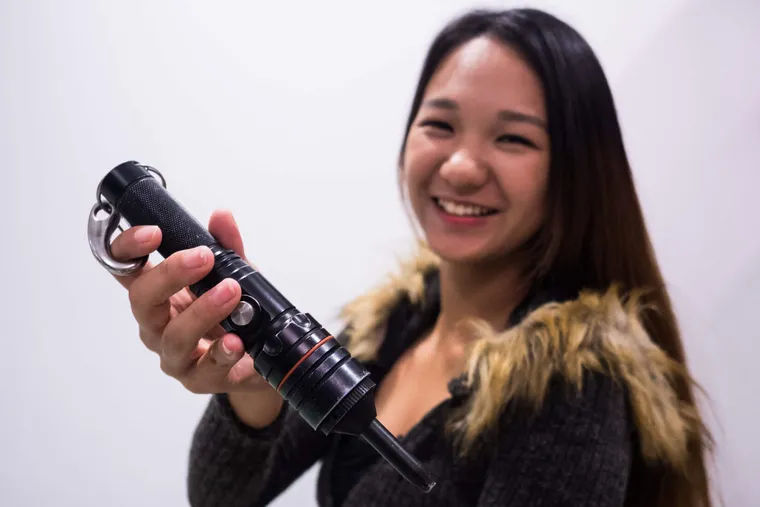
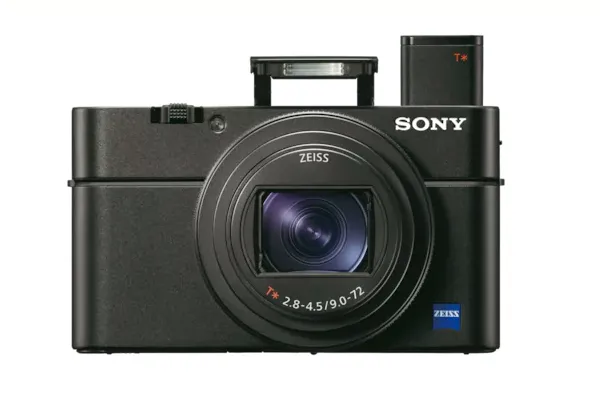
The Editor says: If you've already read [Haisia Dive Inn Classroom] How to Shoot Black-Background Macro Shots with the Olympus TG Series, you'll definitely want to take your macro photography even further with an even cleaner background. Masters of the craft often say that photography is the art of subtraction — learning how to highlight your subject and create tension within a limited frame is a journey every photographer must undertake. A big thank you to Nick from Haisia Dive Inn for sharing yet another incredibly useful tips article with us!
We've all had that nagging thought: why do the masters' photos always look so clean and impactful, while my nudibranch shots are surrounded by a jumble of weeds and clutter?!
Is it all done in post-processing? Actually, it really isn't. Many of these results can genuinely be achieved in-camera, before any editing. That said, I'm also a firm believer in appropriate post-processing. The masters may have put in the effort to shoot 100,000 frames — if we've only taken a few hundred, we really have no room to complain.
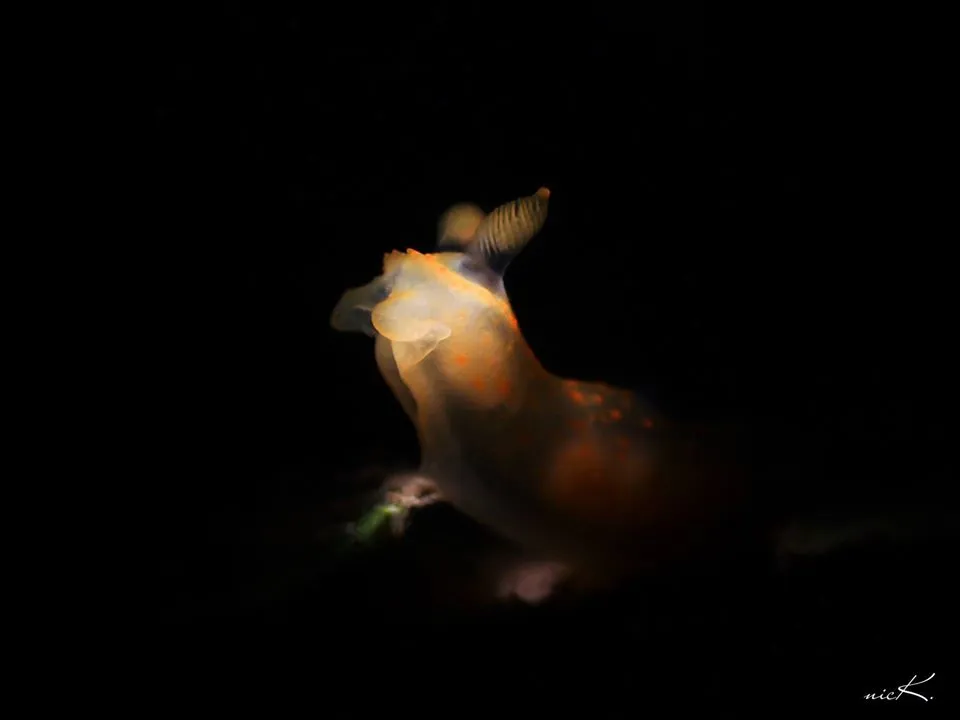
Light avoidance example 1, TG3 + minigear ms03
Haisia Dive Inn Classroom
My recommendation is to first read [Haisia Dive Inn Classroom] How to Shoot Black-Background Macro Shots with the Olympus TG Series. Once you've mastered using a Torch Snoot for black backgrounds, you can move on to learning light avoidance.
Light avoidance means: changing the angle at which your light source (video light or strobe) is projected, in order to avoid illuminating parts of the scene you don't want lit.
Light can be projected from an infinite number of angles. In plain terms: only illuminate what you want illuminated. Whatever the light doesn't reach will appear black (the seafloor, for example).
This is an advanced technique. The world of light avoidance is vast — it encompasses the fundamental principles of underwater lighting and all manner of advanced approaches, with no end in sight. You could spend a lifetime studying it and still not exhaust the subject. But that's exactly what makes it so fascinating, isn't it? I'll explain it in a straightforward, easy-to-understand way — a brief introduction to light avoidance and its practical applications — so that everyone can quickly pick up a few techniques. I firmly believe that with just a TG-series compact camera and a focused Torch, you can pull off light avoidance on your own.
All photos below were taken by me during actual dives. For teaching purposes, post-processing was limited to removing particles in the water; the light brightness has been left essentially unchanged. Feel free to share these as widely as you like without asking permission!
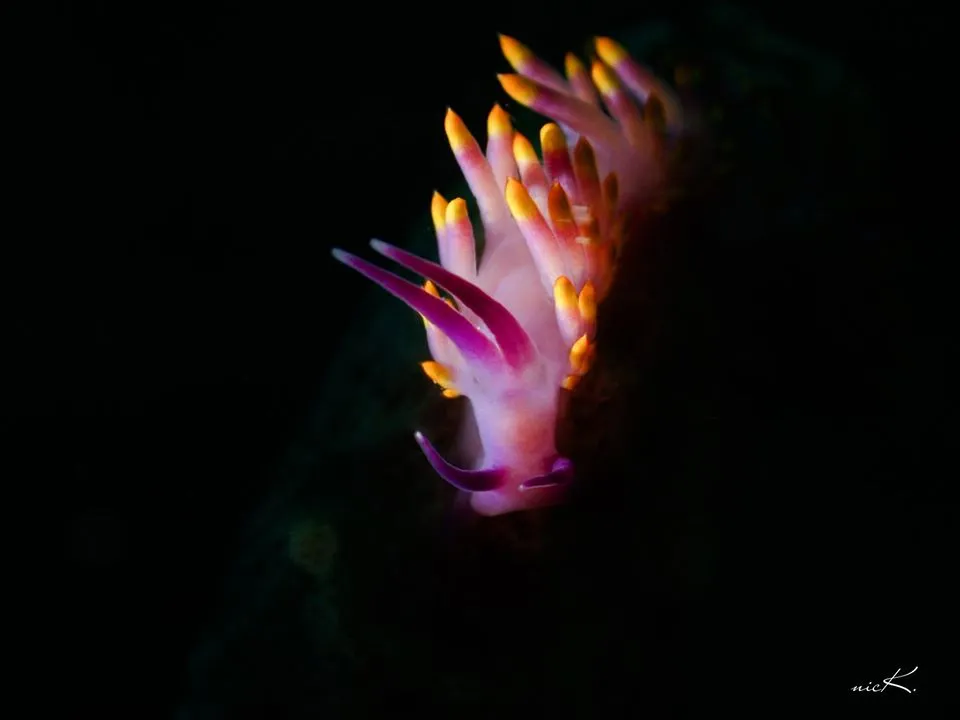
TG3 + minigear ms03
[Key Point 1] Horizontal light position = lateral lighting. Hold the focused Torch at nearly a horizontal angle. You can tilt the light head slightly up or down as you see fit. The key is to use a horizontal light position so you don't illuminate clutter on the seafloor. And that's the only key point in this entire article!
[Key Point 2] Help us share this article!
[Key Point 3] Key Point 2 is more important than Key Point 1!
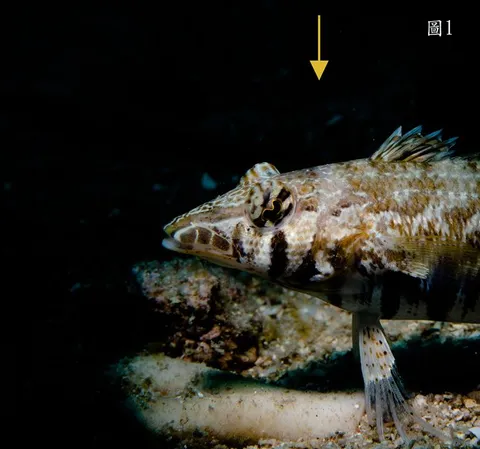
Top-down lighting (overhead light) tends to illuminate the seafloor, and the subject's belly often doesn't catch the light — can you tell where the fish's belly is?
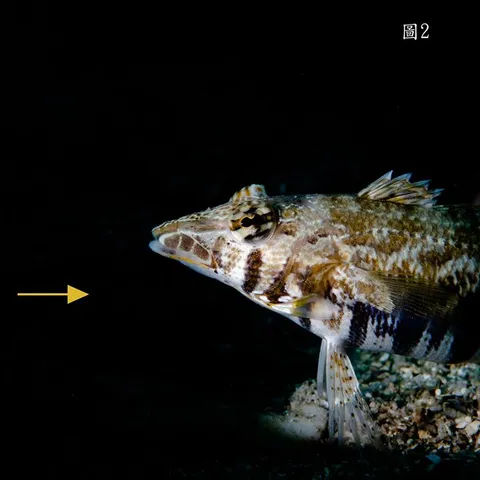
Horizontal lighting, directed left to right — the seafloor clutter improves significantly, the belly can also catch light, and with careful work you can frame just the fish with no seafloor in shot
Never underestimate your left hand — its versatility far exceeds what you'd imagine!
The standard posture for light avoidance: right hand holds the camera and presses the shutter; left hand holds the Snoot light and makes fine adjustments to the angle at any moment. You can practise this on land first — it's great fun! For ease of explanation, I'll use compass directions. Let's take a look at how the angles are distributed.
You need to understand the angles first, or the rest will make no sense at all. Think of it as a top-down (bird's-eye) view. Remember the four angle values in blue text below — the nudibranch is in the centre.
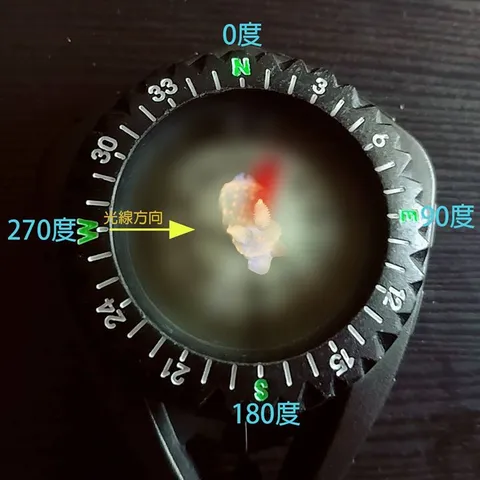
Top-down diagram
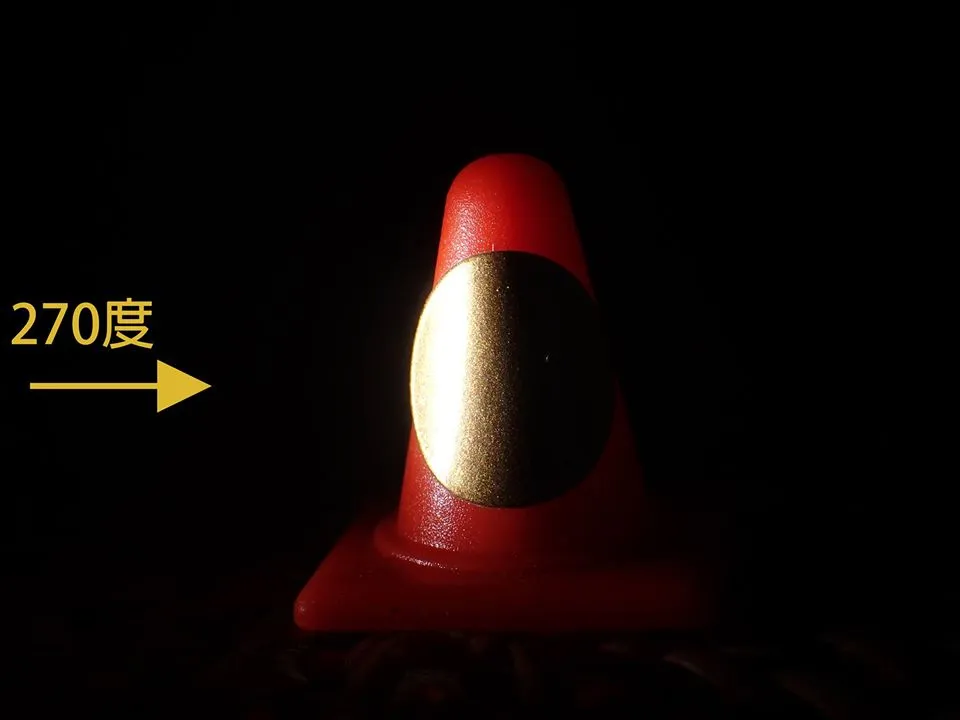
270° light position — one I use frequently; almost no seafloor visible, though you need to watch out for the right side going too dark
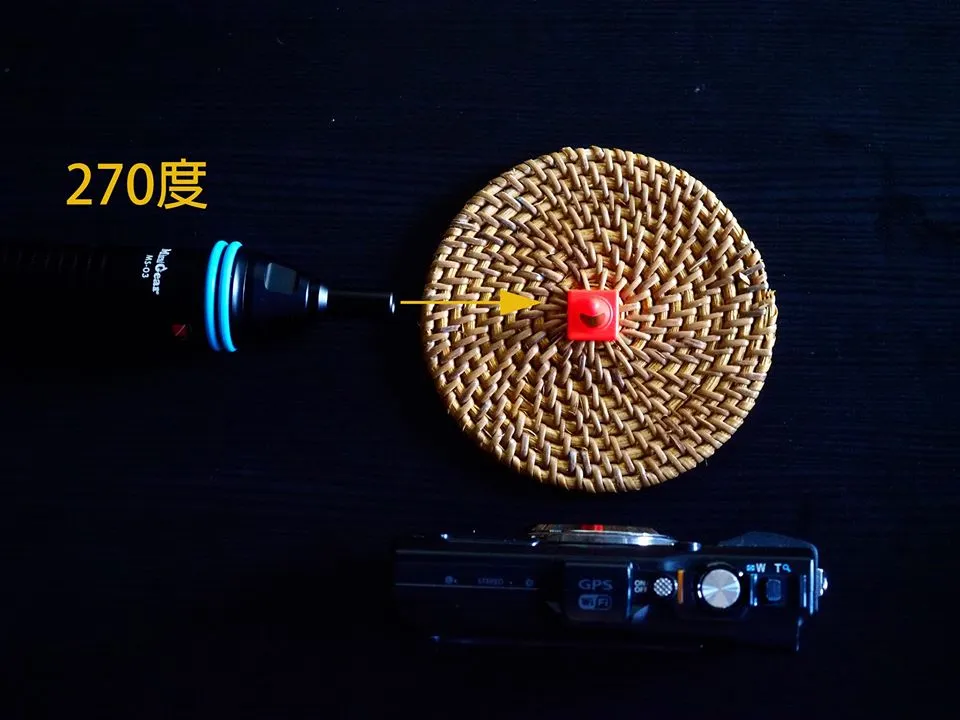
Top-down diagram
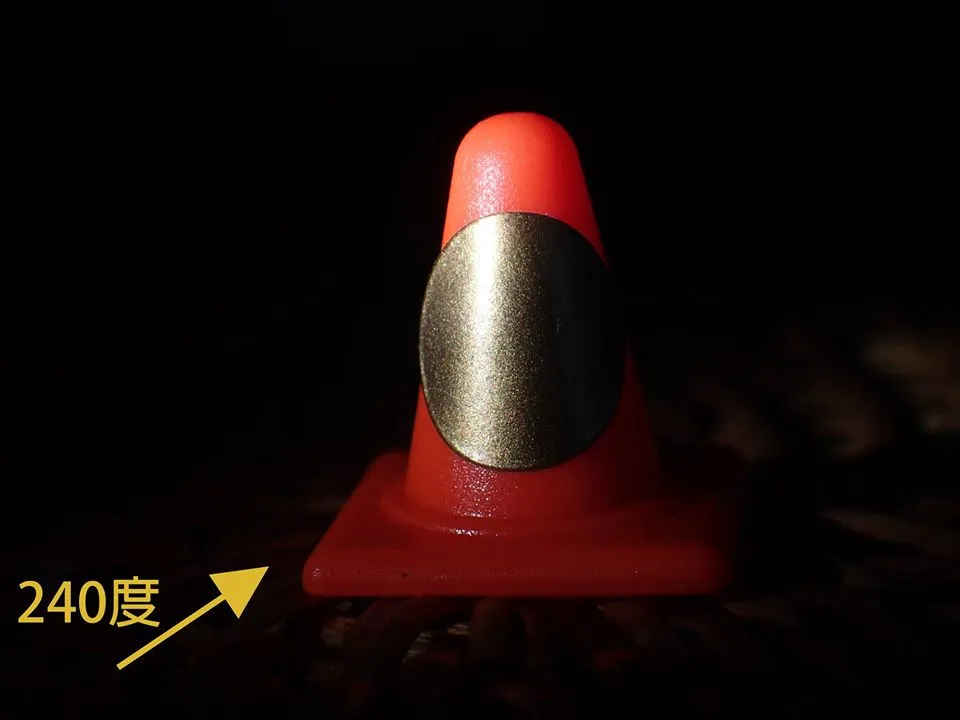
240° light position — my most recommended angle; catches frontal light on the subject while eliminating the seafloor from the frame
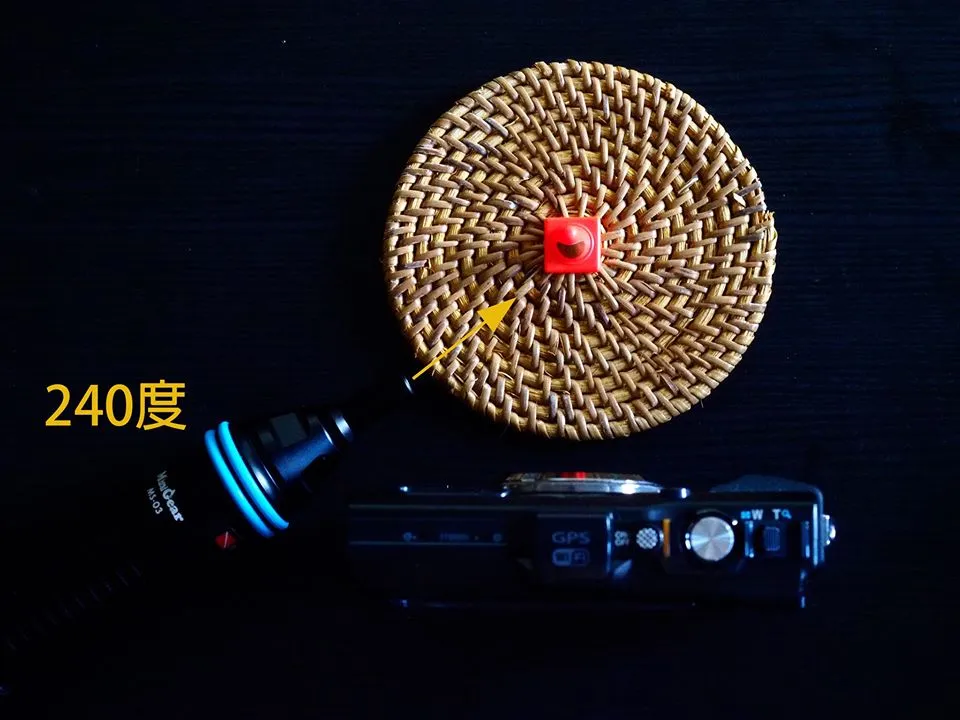
Top-down diagram
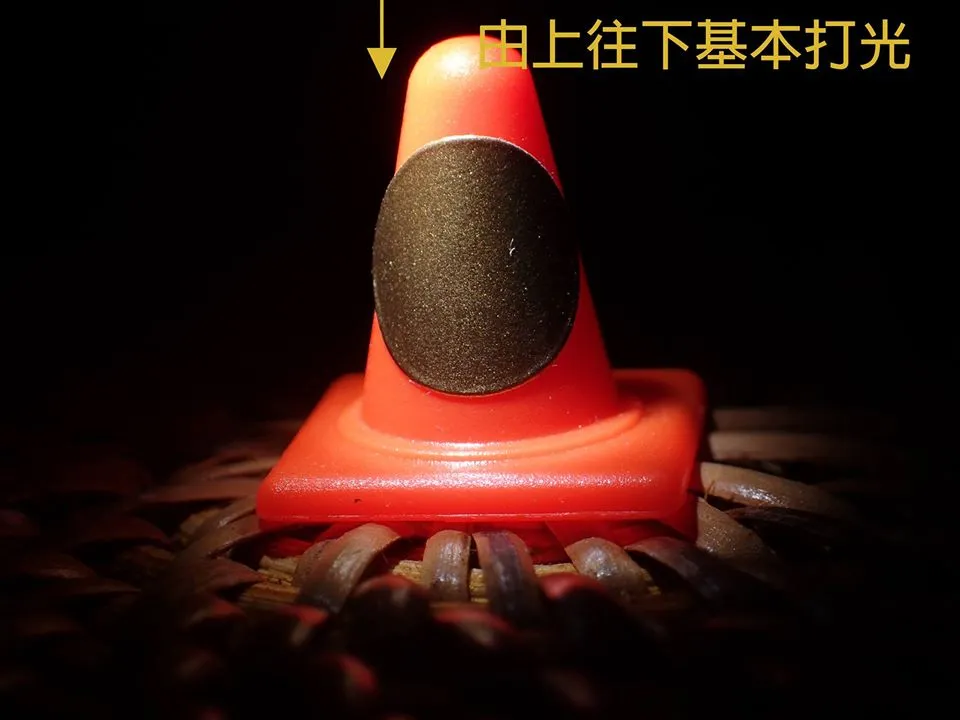
Overhead (top) light is the most basic light position — shining from above downward. It can produce great results, but tends to capture seafloor clutter
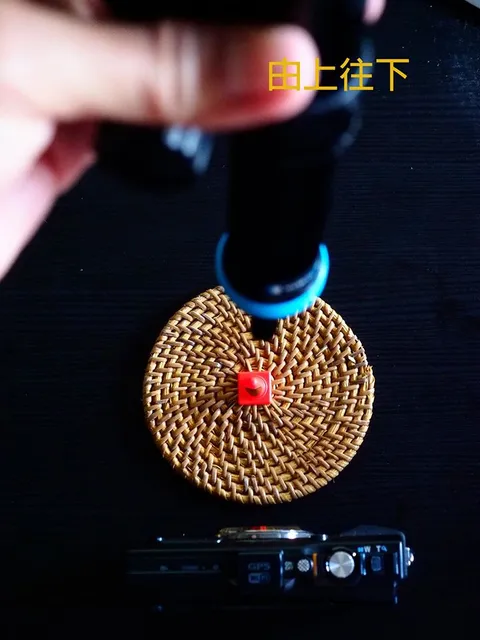
Overhead light
In summary, in terms of results, my recommended order of light positions is: 240° → 270° → overhead light.
The 240° position can illuminate the front of the subject — even a nudibranch's neck and mouth — while avoiding the messy seafloor (or, conversely, preserving a beautiful seafloor). That's why I consider it the ideal position for macro photography.
If you've understood everything above, let's go a little deeper. Let's talk about horizontal lighting and the first practical challenge you'll encounter underwater. With the TG series in particular, the issue is the very short focusing distance (working distance) — typically 1 cm or less when shooting. Take a look at the diagram and you'll see what I mean.
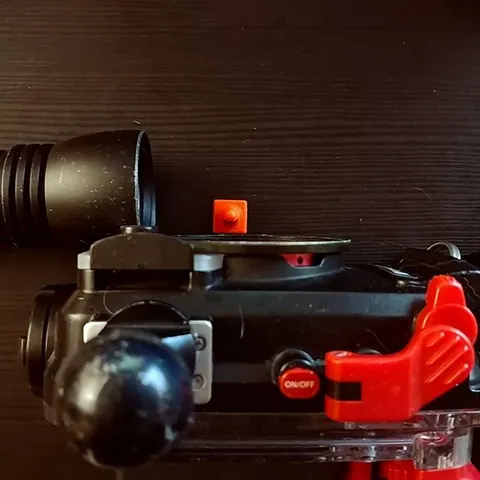
Using a standard focused Torch — there's simply no room, so only the 270° position is possible
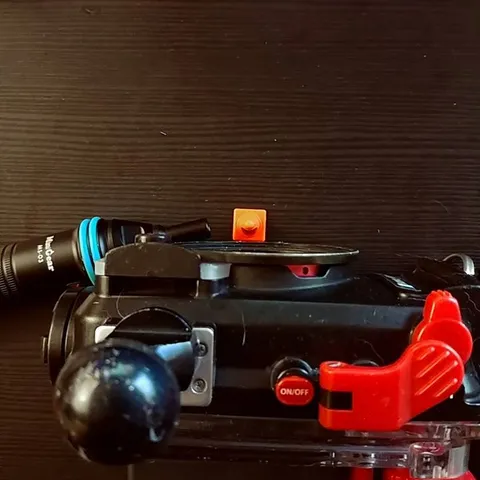
Same distance, but thanks to the slim, elongated Torch head, a little more angle is gained — approaching the 240° position.
What I want to say is: whether it's 270° or 240°, both are powerful tools for macro shooting — use them well. Practise on land as much as you can. In the two photos below, observe carefully the way light falls on the subject and how bright or dark the seafloor is. See if you've figured it out — the answers are written below each photo.
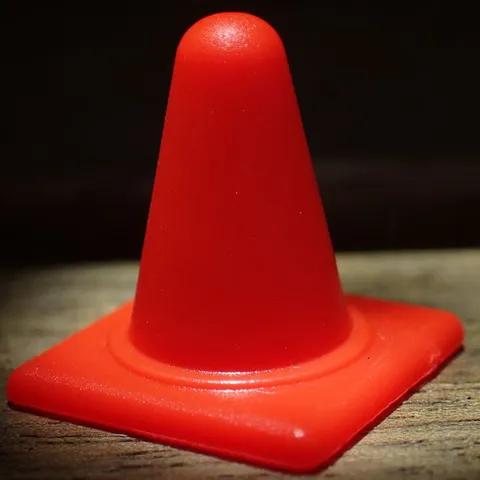
Overhead light
240° light position
With the same Torch, simply changing the angle produces different lighting on the subject and a noticeably different level of brightness on the seafloor. Finally, let's take a look at the light positions used in actual combat shots!
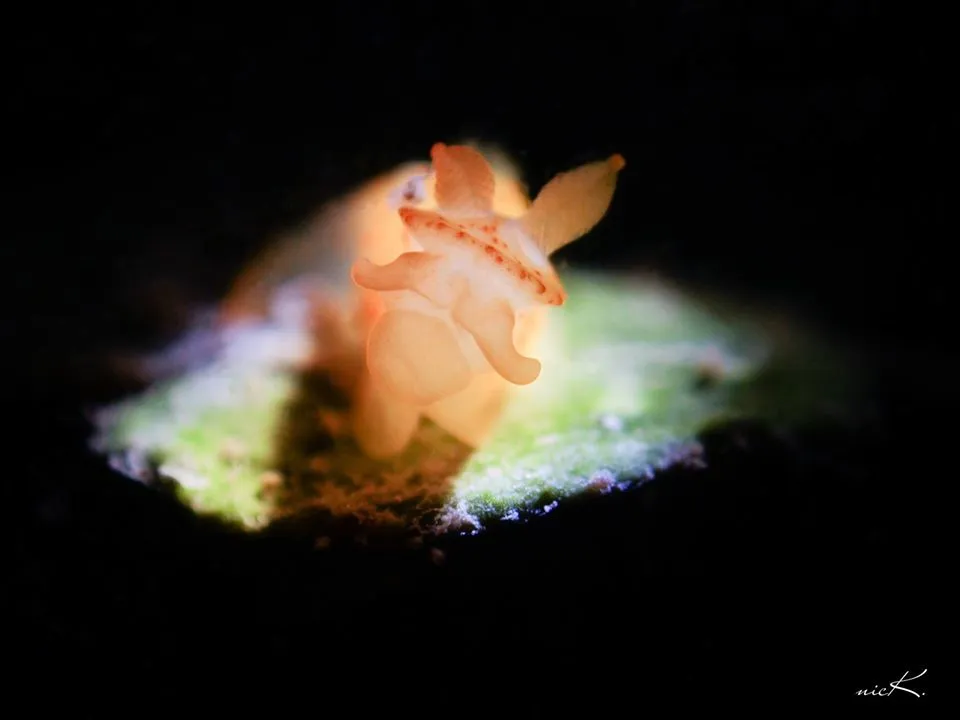
Overhead light
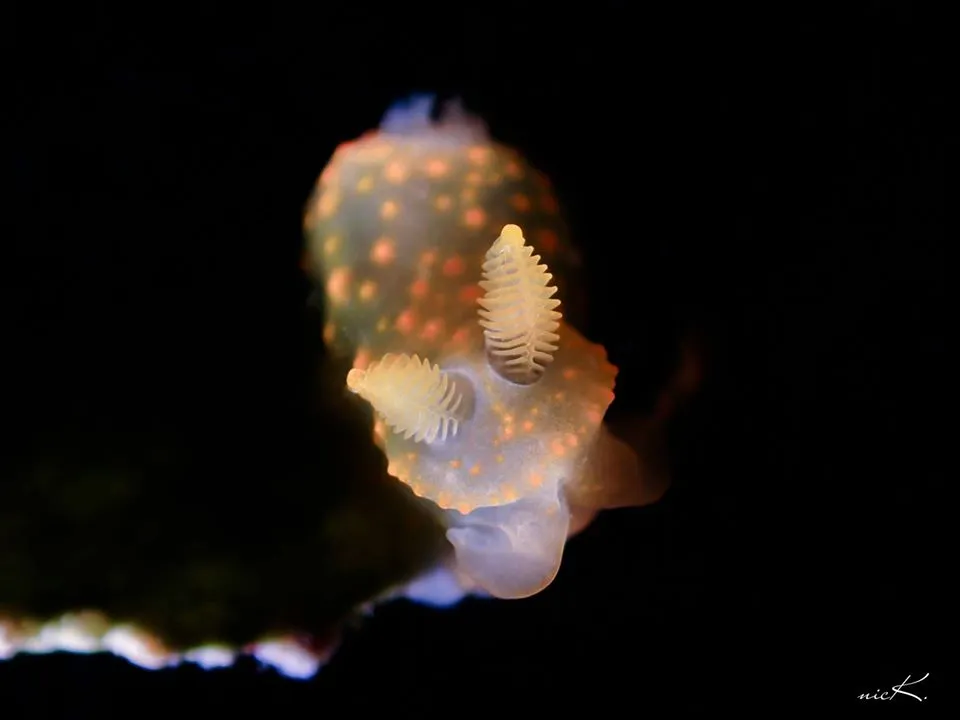
240° light position
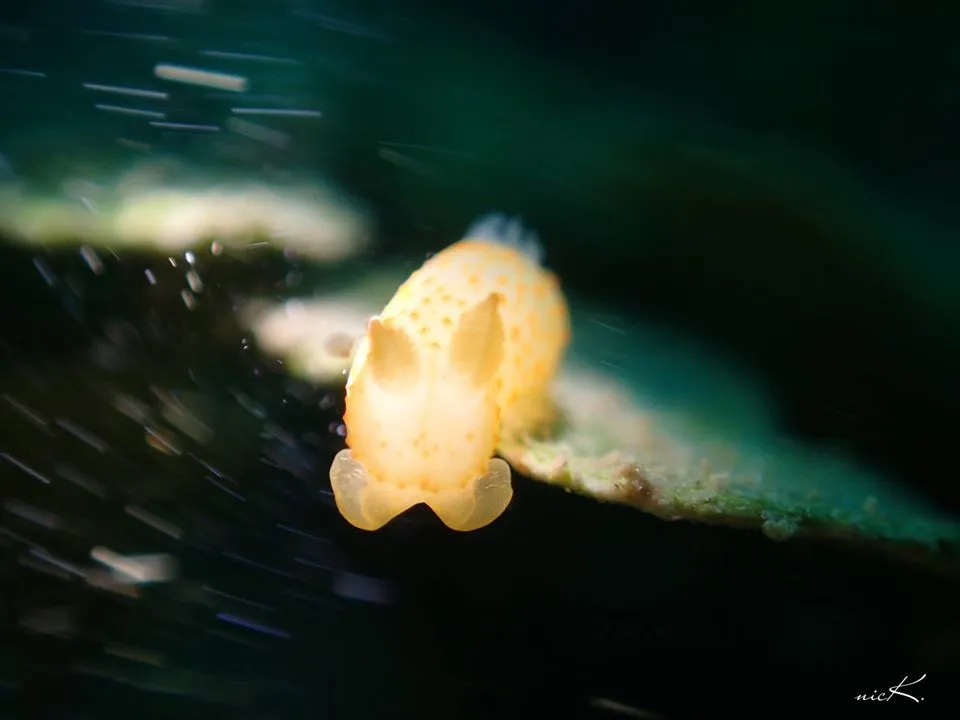
Overhead light
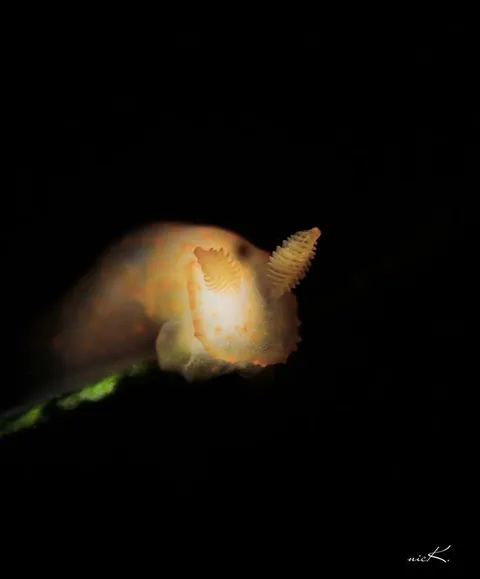
270° light position
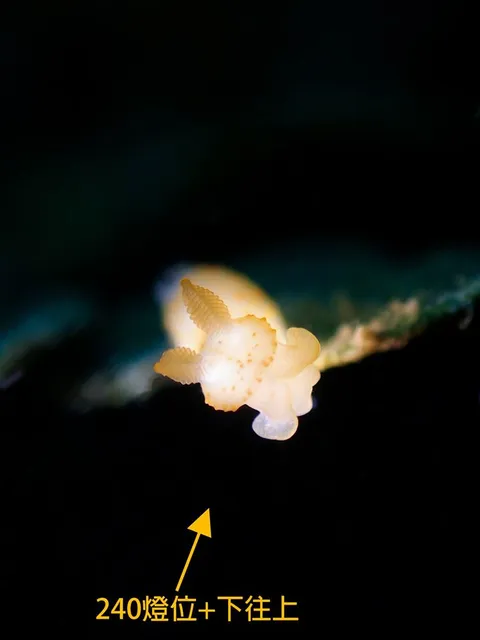
240° light position + bottom-up angle
This shot falls outside the scope of this article — it uses a different type of light avoidance position, which I'll explain in a future post
A closing thought: there's no single right way to shoot, no specific gear you must use, and colours don't even have to be perfectly accurate. What matters most is what you're trying to express through the frame. The photographer who captures the shot they themselves are truly satisfied with — that person is the master you've always admired. If you enjoyed this article, please share it far and wide!
Haisia Dive Inn / Kenting
Related links:

![[Haisia Dive Inn Lecture Hall] How to Shoot Black-Background Macro Photos with the Olympus TG Series](/_astro/18954639_1889972181327238_4345823142391115123_o_qRx1G.webp)