

Contents(11)
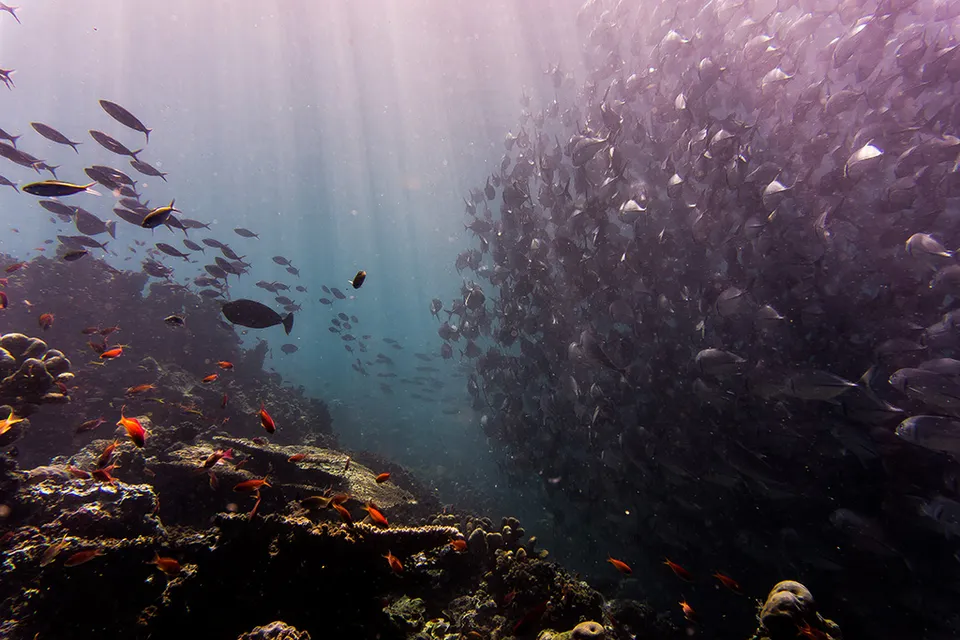
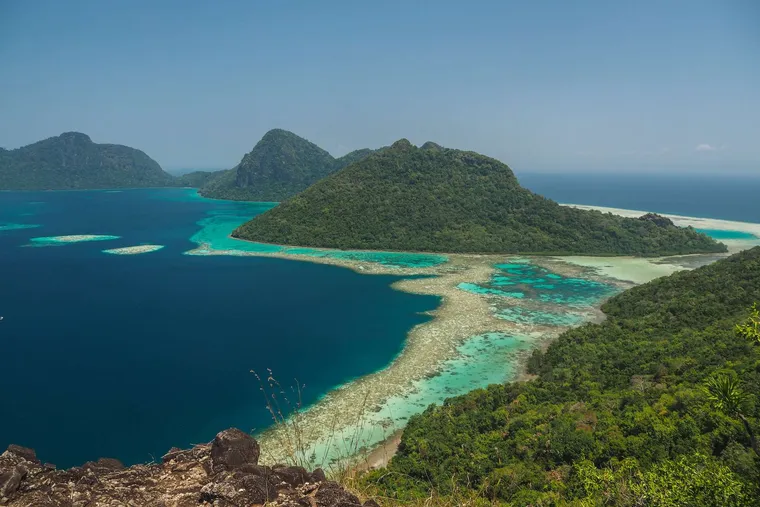
Sipadan, ranked among the world's top 10 dive sites, is blessed with extraordinary underwater topography that draws enormous concentrations of marine life. It is also a compelling case study in how assertive government intervention — through the designation of protected areas, the forced relocation of island resorts, and the collection of environmental protection taxes — has gradually turned this island into a major foreign-exchange earner for Malaysia. Taiwan's authorities might do well to take note.
Strict Government Enforcement
Before and after Malaysia's founding, Sipadan Island was legally protected as a "bird sanctuary." In 2009, the Head of State of Sabah declared the island's land area (the entire island, approximately 13.5 hectares) a "Sipadan Island Park" under the Parks Act (1984); in 2015, the surrounding marine area and coral reefs (approximately 16,846.5 hectares) were also gazetted as part of the park. Source: Wikipedia.
- All existing resorts on the island were required to vacate
- Fishing in the waters surrounding the island is prohibited
- Daily landings are capped at 120 divers (registration required)
- Each diver must pay an environmental protection tax of RM 40 per day
The above represents the Malaysian government's strict enforcement regime at Sipadan. Frankly speaking, for a country where corruption and refugee issues are fairly serious, the fact that the government has managed to enforce these rules so effectively is rather surprising. But perhaps it is precisely this strong enforcement that keeps drawing a steady stream of divers — and foreign currency — from around the world. By contrast, how many of Taiwan's numerous marine protected areas are actually being enforced in practice?
Overview of Sipadan Island
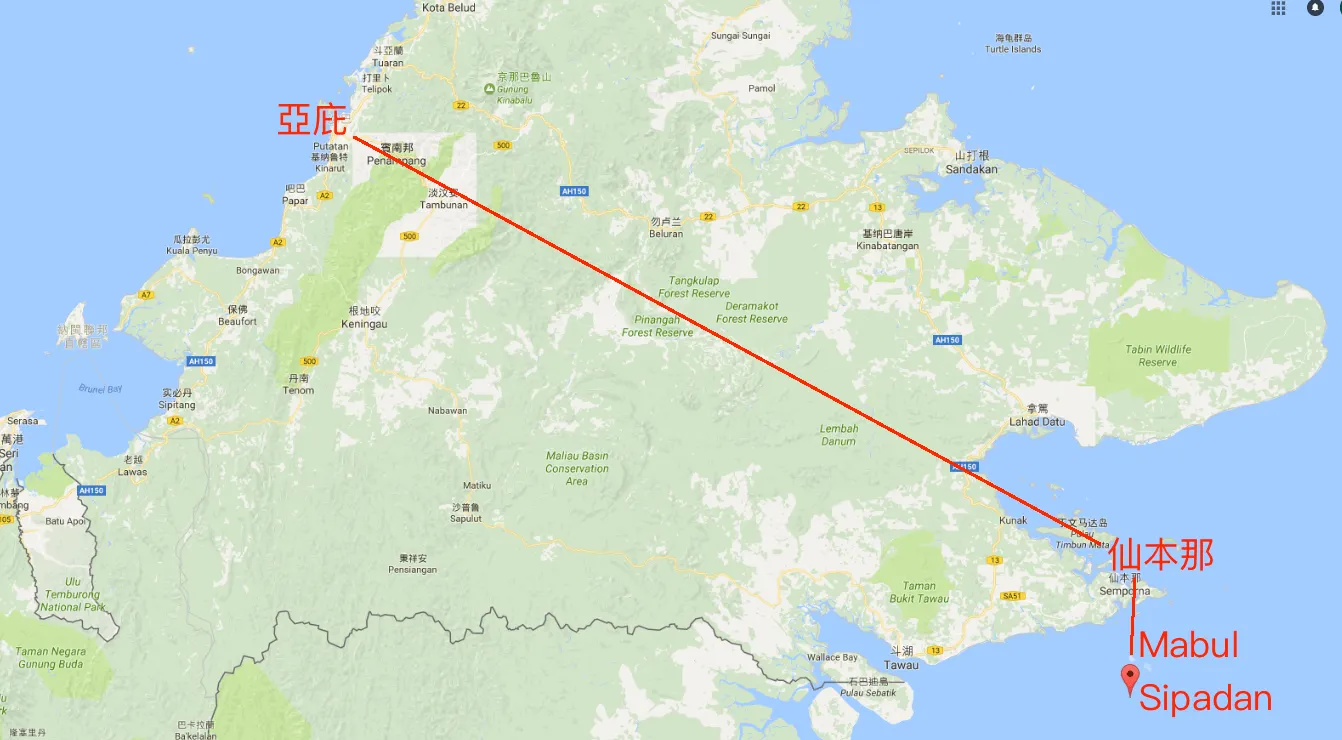
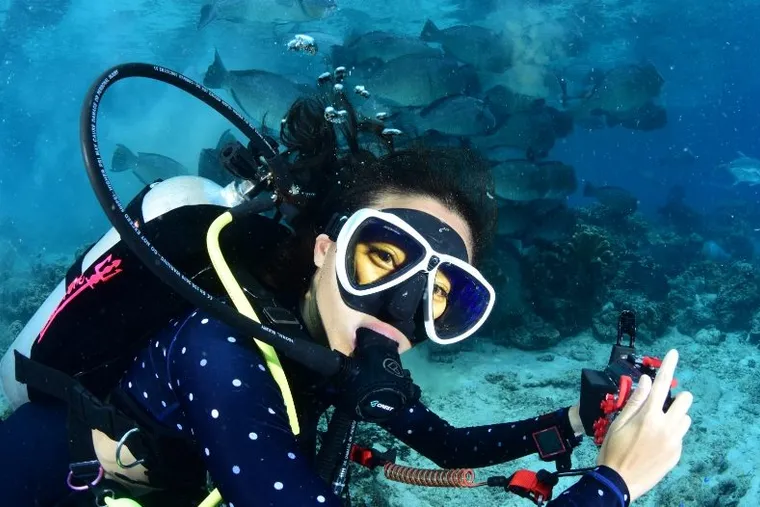
Sipadan Island lies to the east of Sabah, Malaysia. According to our trusty friend Google, the surrounding waters are known as the Celebes Sea. Sipadan is characterised by sheer wall topography, rising dramatically from a depth of 600 m on the ocean floor. It is precisely this structure that causes deep-sea nutrients to well up along the walls with the current, providing abundant food that attracts vast aggregations of fish — bumphead parrotfish, barracuda tornados, and jack schools are among its most celebrated residents.
Dive trips to Sipadan typically include other nearby islands, since daily landing permits are limited. Most dive shops schedule dives at other sites such as Kapalai Island and Mabul Island to give guests additional opportunities to explore. While these islands may not match Sipadan's biodiversity, their artificial reefs host a different array of marine life — think the enormous Grouper congregating at Kapalai's house reef, and the pygmy seahorses and pipefish that make Mabul a macro photographer's paradise.
Below is the video I filmed during this Sipadan dive trip, shot on a GoPro Hero 3+ with a red filter and a single 3,500-lumen video light.


Sipadan Dive Trip Details
Many people have asked me for details about this dive trip, so I've compiled the key information below. If you're only here for the video, feel free to skip the rest!
Flight Information:
Outbound:
Malaysia Airlines MH 0069 Taoyuan International Airport (TPE) 08:00 → Kota Kinabalu (BKI) 11:30
MH 2137 Kota Kinabalu (BKI) 13:10 → Tawau (TWU) 13:55
Return:
Malaysia Airlines MH 3052 Tawau (TWU) 12:45 → Kota Kinabalu (BKI) 13:45
MH 0068 Kota Kinabalu (BKI) 17:40 → Taoyuan International Airport (TPE) 21:00
Unfortunately, our return flight to Taiwan was delayed by two hours — something to bear in mind if you have a connecting flight!

Kota Kinabalu Airport (locals call it KK) is actually quite small. After arriving on the international terminal, just follow the yellow signs — there are Chinese-language signs so you won't get lost!

After clearing immigration, you'll spot counters offering SIM card and mobile data services — most have Chinese-language signage.
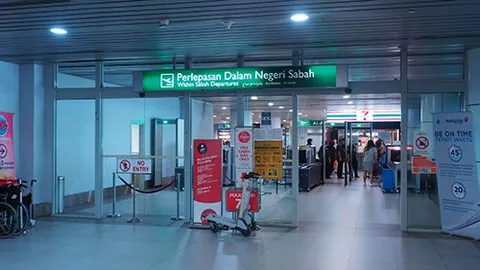
Follow the signs toward the domestic terminal — the Chinese signage reads "Sabah Domestic Departures."
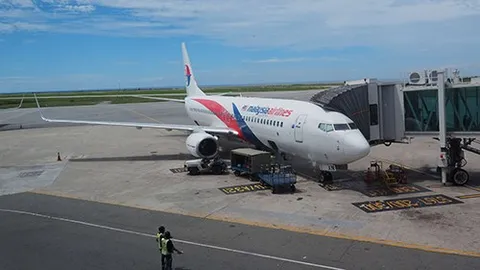
Then it's just a matter of waiting for your domestic flight.
Getting There
The drive from Tawau Airport to Semporna takes about 45 minutes. We had arranged an airport transfer through our dive shop — once we found our pickup, we were on our way and enjoying the Malaysian scenery.
Arriving in Semporna, I was surprised to find the streets full of mainland Chinese tourists. Nearly every shop sign was in simplified Chinese characters, and many of the hotels appeared to be mainland-funded. It was a vivid reminder of just how far-reaching China's economic influence has become.
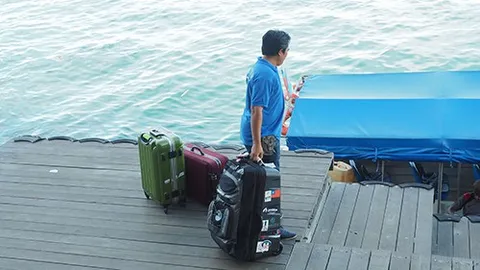
The transfer service will handle your luggage — don't try to carry it yourself. The moment they spot you struggling, they'll sprint over to help.
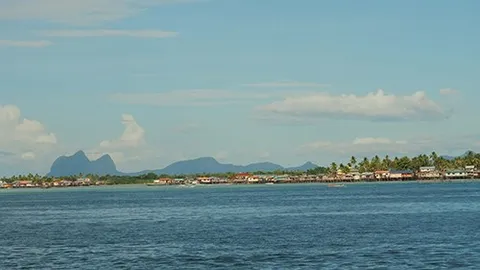
Semporna is dotted with rows of traditional stilt houses over the water.
Dive Shop: The Oil Rig Platform
On January 2nd, we boarded a boat from Semporna at around 4 p.m. and headed out to the oil rig platform. We chose to stay on the platform that night because we wanted to catch an evening platform night dive and make an early start for the Sipadan boat dives the next morning. If you're on a tighter budget, however, staying at a hotel in Semporna is a more economical option — and there's great food nearby, which I'll get to further down the page!
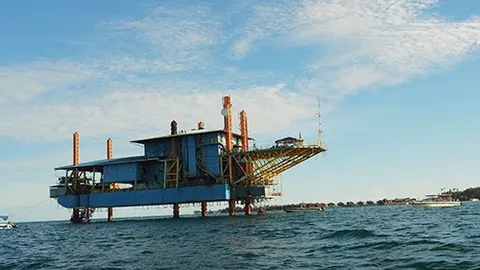
After a 45-minute boat ride, the massive oil rig platform finally came into view. The small structure visible to the right in the background is Mabul Island.
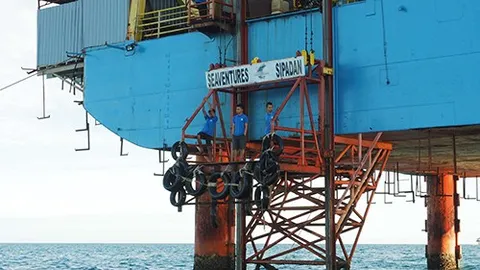
The legendary elevator dive! Getting on and off the platform requires this lift — no other way up or down~
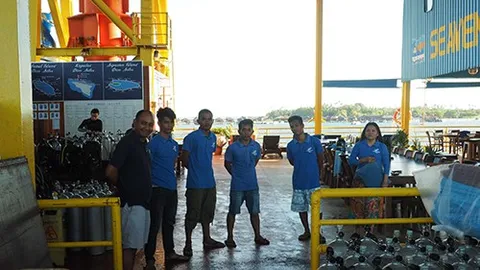
The staff greeted us warmly upon arrival.
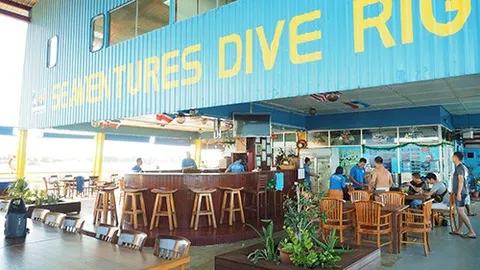
The lobby bar and communal lounge area.
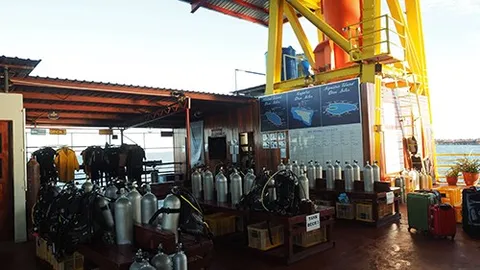
The neatly organised equipment area.
Upon arrival, a dedicated dive guide showed us around and organised our gear into individual labelled baskets. For the entire trip, our scuba tanks were assembled and swapped by the crew after every boat dive — an absolute luxury. The kitchen served unlimited meals three times a day plus afternoon snacks. The food leaned a bit on the oily side, but was generally quite palatable. Shrimp and large Grouper were served so generously it was as if they were free. If you like to drink, it's worth bringing your own alcohol, as drinks purchased on the platform are on the pricey side.
As for accommodation and safety — the rooms were honestly nothing special. We stayed in a twin-share room that was compact but reasonably soundproofed, with no fancy decor to speak of. One thing to note: the tap water has a faint salty taste, so after showering I'd recommend rinsing off with a bottle of fresh drinking water from the water dispenser.
Many people worry about kidnapping when visiting Sipadan, but given how high the platform sits above the water, any pirates attempting to climb up would be exhausted before they got anywhere near us. On top of that, local military personnel are stationed on the platform from around 6 p.m. each evening, and a naval vessel is also anchored in the waters between the platform and Mabul Island. Our pre-trip safety concerns were well and truly laid to rest.
Diving Activities:
Diving from the platform includes three scheduled boat dives per day, with possible destinations being Sipadan Island or the aforementioned Kapalai Island and Mabul Island. Sipadan is about a 45-minute boat ride from the platform. The platform departs at 6 a.m. for early morning dives — after a light bite, you complete the first dive of the day, then have breakfast on the island after surfacing. Following three boat dives, you return to the platform, and the first order of business is tucking into lunch! For Kapalai Island or Mabul Island days, the boat departs at 8 a.m. for two morning boat dives, with a further dive scheduled after the lunch break.
The platform's biggest perk is the ability to ride the elevator straight down and do unlimited dives at any time. On days when you head to Sipadan in the morning, you can typically fit in two more platform dives in the afternoon — meaning five dives in a single day for the truly dedicated. One important note: for safety reasons, platform diving services stop at 7 p.m. As for what you can see on the platform dives — my first night dive here genuinely blew me away. Inside the reef structure you'll find batfish, bumphead parrotfish, nudibranch, and plenty of other fish in impressive numbers. Just be aware that the water beneath the platform gets quite deep, and currents can pick up — I recommend descending along the shot line and observing the 3 m safety stop.
In total, I completed 15 dives on this trip.
- 1/2: 1 platform dive
- 1/3: 3 boat dives at Sipadan Island, 2 platform dives
- 1/4: 3 boat dives at Kapalai Island and Mabul Island
- 1/5: 3 boat dives at Sipadan Island, 1 platform dive
- 1/6: 2 boat dives at Kapalai Island and Mabul Island
One very important point: because Sipadan operates a daily quota system, there is no guarantee you will get to dive there even if you book a Sipadan dive trip. Always confirm landing permits with your dive shop beforehand. We were very lucky to score a second landing on 1/5, and only had to pay the RM 40 environmental tax — the RM 400 service fee was waived as a complimentary gesture! Whether you get an extra landing opportunity depends on the number of guests staying at the time; when the platform is fully booked, it may not be possible at all.
Additional Activities:
The reason we only did three dives on January 4th — aside from a little laziness — was that the platform organised an afternoon excursion to Mabul Island at 4 p.m. The island has several resorts, including Sipadan Water Village and Smart Dive Resort, and we went along just for a look around.
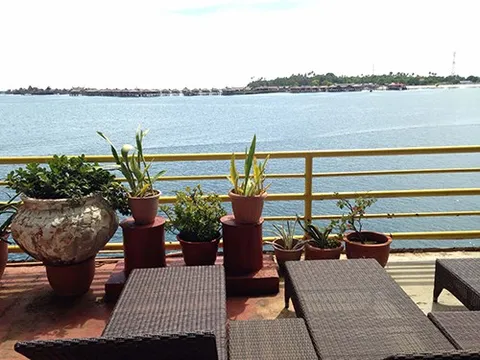
Mabul Island, directly opposite the platform.
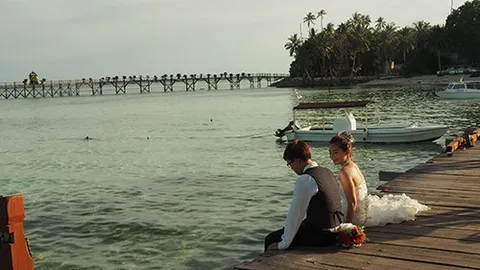
A couple having wedding photos taken on the island — unsurprisingly, also mainland Chinese tourists.
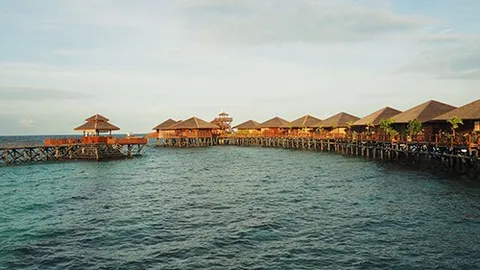
Rows of overwater bungalows stretching into the sea.
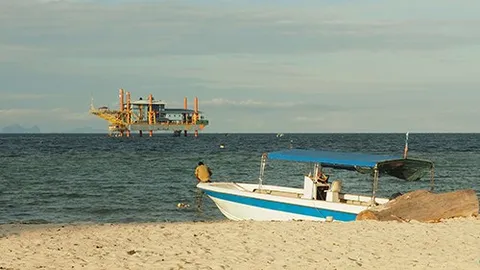
Looking out toward the platform from the beach.
The resorts themselves weren't particularly remarkable, but the living conditions of the local residents caught my attention. According to a Malaysian friend travelling with us, some of the island's inhabitants are Filipino refugees who have remained there for various political reasons. Their humble standard of living was hard to comprehend — it's a sobering reminder that people live this way somewhere in the world, and a reason to be truly grateful for what we have.
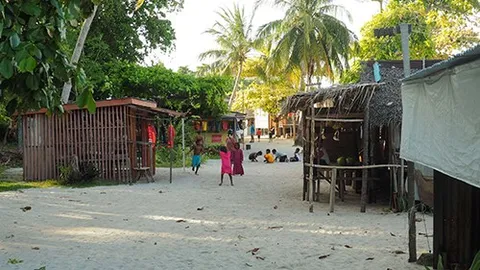
The local settlement on the island.

Sea cucumber charred on a fan grille — their dinner.
The Last Day:
On January 6th, after completing our final dives on the platform, we caught the 2 p.m. boat back to Semporna. With mainland Chinese tourists flooding the town during the holidays, it's essential to book accommodation well in advance — friends travelling with me have experienced the nightmare of finding everything fully booked.
In Semporna, you absolutely must go wild eating cheap seafood. Street vendors — many of them Filipino — walk around with buckets calling out their wares, though whether their prices beat the restaurants is something you'll need to compare yourself. They call out in simple Mandarin: "Whole tray, 200!" or "Lobster, 100!" — a testament to the remarkable spending power of Chinese tourists.
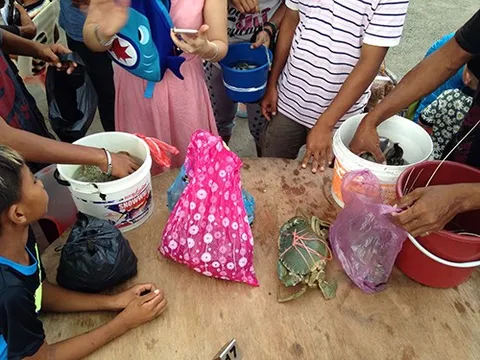
Vendors hawking all manner of fresh seafood.
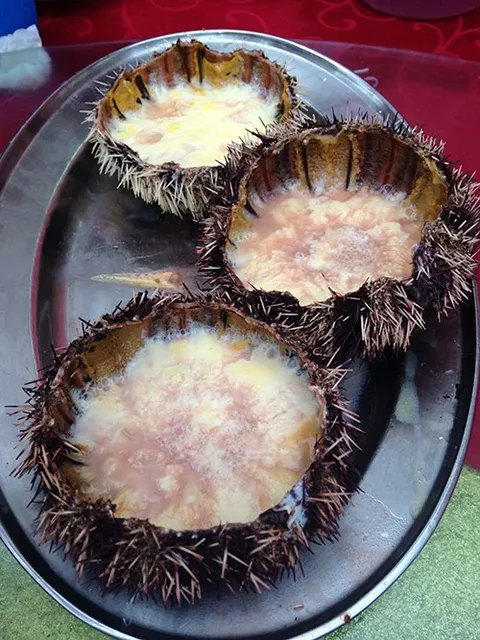
A massive steamed sea urchin egg custard — just NT$150.
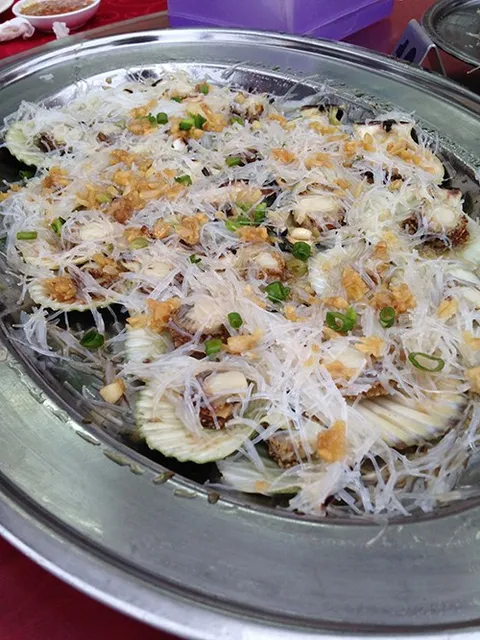
You read that right — a whole tray of scallops, also NT$150.
Trip Review:
This was my very first international dive trip. Perhaps my inexperience gives me a fresh perspective on everything I witnessed — some of what I've shared may not tell seasoned veterans anything new, but I hope it can inspire more people to appreciate the beauty of the ocean. Ratings are out of 5.
- Oil rig platform service: ★★★★★
- Oil rig platform food: ★★★★
- Oil rig platform accommodation: ★★
- Sipadan marine life: ★★★★★ (off the charts)
- Kapalai Island and Mabul Island marine life: ★★★ (though macro photographers would probably give it ★★★★★)
Water temperature in January is around 27–28°C, and air temperature on sunny days is around 29–30°C. That said, January falls within Malaysia's rainy season, and the wind can pick up and rain can roll in during the afternoons, dropping the temperature noticeably. I'd recommend bringing a wetsuit jacket for warmth on the surface. I was being a bit of a wimp and wore a 3mm wetsuit with a vest, no hood.
Why did I give the platform service five stars? Beyond the baggage handling and tank changes, every single staff member on the platform was always smiling — which goes a long way. Most importantly, when I told the team I was about to complete my 100th dive on the platform and asked if they could help me print and laminate a certificate, they got it done quickly and shared in my joy. That, more than anything, is why I'll be coming back.
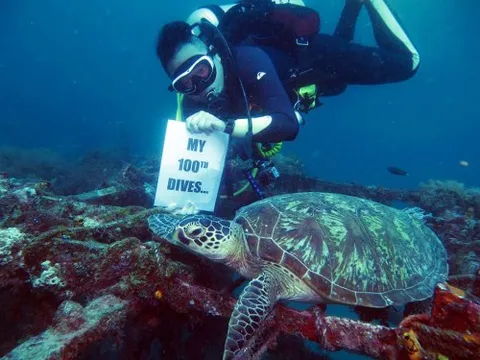
A sea turtle that posed for a photo with me.
Further Travel Information:
Frequently Asked Questions
How is a BlueTrend dive trip different from an unknown, no-name dive group?
Choosing us means full peace-of-mind protection and a smooth experience from start to finish. Every trip we run holds to three things.
First, full legal protection and a professional dive leader: we strictly follow Taiwan's travel regulations and provide complete travel-agency liability insurance, travel insurance, trip-inconvenience insurance and dive insurance. Every group is accompanied by a certified, foreign-language dive leader who joins you on both the dives and the land itinerary, liaising seamlessly with local dive shops and operators on your behalf to keep things running smoothly — the person our travellers trust most.
Second, fully licensed with secure payments: every payment goes into a licensed travel agency's account, with multiple safe payment channels (bank transfer, credit card and more) and a legal collect-and-remit receipt, so every transaction is open, transparent and protected, avoiding the fraud and dispute risks of transferring money privately to an individual.
Third, hand-picked quality we vet in person: every trip, dive site and partner shop is scouted on the ground by our own team, from the guides' professionalism and safety standards to the food, lodging, environment and service details on land, all vetted by us so you don't get caught out.
I want to sign up for a dive trip. Are there certification-level or logged-dive requirements?
Each dive site is different, so the entry bar varies. 'Bali Tulamben', for instance, is relatively beginner-friendly. 'Malapascua in the Philippines' is also beginner-friendly, but since thresher sharks tend to cruise between 20 and 30 metres, we recommend AOW certification with 20+ logged dives to enjoy this trip comfortably. For 'the Maldives' or 'Palau', we suggest AOW with 50+ logged dives for a more relaxed experience. If you're not sure whether your experience fits the trip you want, message us and our dive editors will assess it and help you find the trip you'll feel safest on.
Can I join if I'm signing up alone? How are rooms arranged?
Plenty of our travellers sign up solo! For rooms and beds, we prioritise pairing you with a same-gender traveller, and if you'd rather have your own space you can pay the difference to upgrade to a single room. For the diving, our professional leader will pair you with a suitable buddy, and with the happy vibe on our trips you'll quickly make a great group of dive friends. Many people sign up alone, make new friends, and end up organising the next trip together!
Does the trip fee include dive insurance, gear rental, taxes and instructor tips?
It depends on the trip, the destination's regulations and the local operators. Every BlueTrend dive trip has a detailed web page with a clear 'included / not included' list, transparent and with no hidden charges. All payments are collected by a licensed travel agency, with a standard-form contract for your protection.
I'm a new diver / haven't dived in a long time — will I fall behind the group?
Before you complete your booking, our team assesses a suitable trip based on your certification level and experience. Before departure, we strongly recommend taking time to refresh in Taiwan with an instructor, or a fun dive to get your feel back. On the trip itself, our professional dive leader groups and pairs everyone by experience, keeps a close eye underwater on travellers who need extra care, and steps in to help right away.
Will the photos and videos taken during the trip be shared with us?
During the dives, 'safety' is always the leader's top priority, so whenever it's suitable and safe the leader will capture great shots and record the best moments. During or after the trip, we compile a cloud album for all travellers to download, so you go home loaded with memories!
Besides your scheduled trips, can you arrange a private group charter or independent travel for me and my friends?
Absolutely! Besides group trips, we also arrange private group charters and independent travel. We can communicate, enquire and coordinate services with local operators based on your needs, saving you time and effort and taking the language barrier off your plate, to tailor the smoothest, most reassuring dive trip just for you. Contact our LINE support and our editors will arrange it for you!

![[Malaysia · Semporna] 6 Days & 6 Nights Deep in Semporna: A DIY Travel Guide to Sipadan Diving](/_astro/IMG_9503-1-scaled_Z1gdkBH.webp)