Contents(5)
Every summer, people who are less familiar with the ocean can't help but envy friends who are comfortable in the water — friends who head to the beach on a whim while they themselves might plan at most one afternoon of wave-watching and paddling, followed by a seafood dinner at the harbor. Their impression of the ocean rarely goes beyond the blue horizon and the names of fish they can't quite read on a menu. That's a real shame.
The truth is, Taiwan is surrounded by the sea on all four sides. Every county except Nantou borders the ocean, and the time and money it takes for people here to get close to the sea is extremely competitive compared to most other countries. Add to that Taiwan's remarkable geography — algal reefs and rocky shores in the north, lagoons and mudflats in the west, coral reef coastlines in the south, and the magnificent scenery of towering mountains meeting vast waters in the east — and there's something for everyone who wants to connect with the ocean.
Most people who visit the beach stick to splashing in the waves, but if you truly want to get close to the ocean and take in what's beneath the surface, three activities are worth trying: snorkeling, scuba diving, and freediving. Of course, there are many other water sports — SUP, jet skiing, yachting — all great outdoor pursuits. But if you want genuine, up-close contact with the underwater world, these three are the ones to know.
Snorkeling:
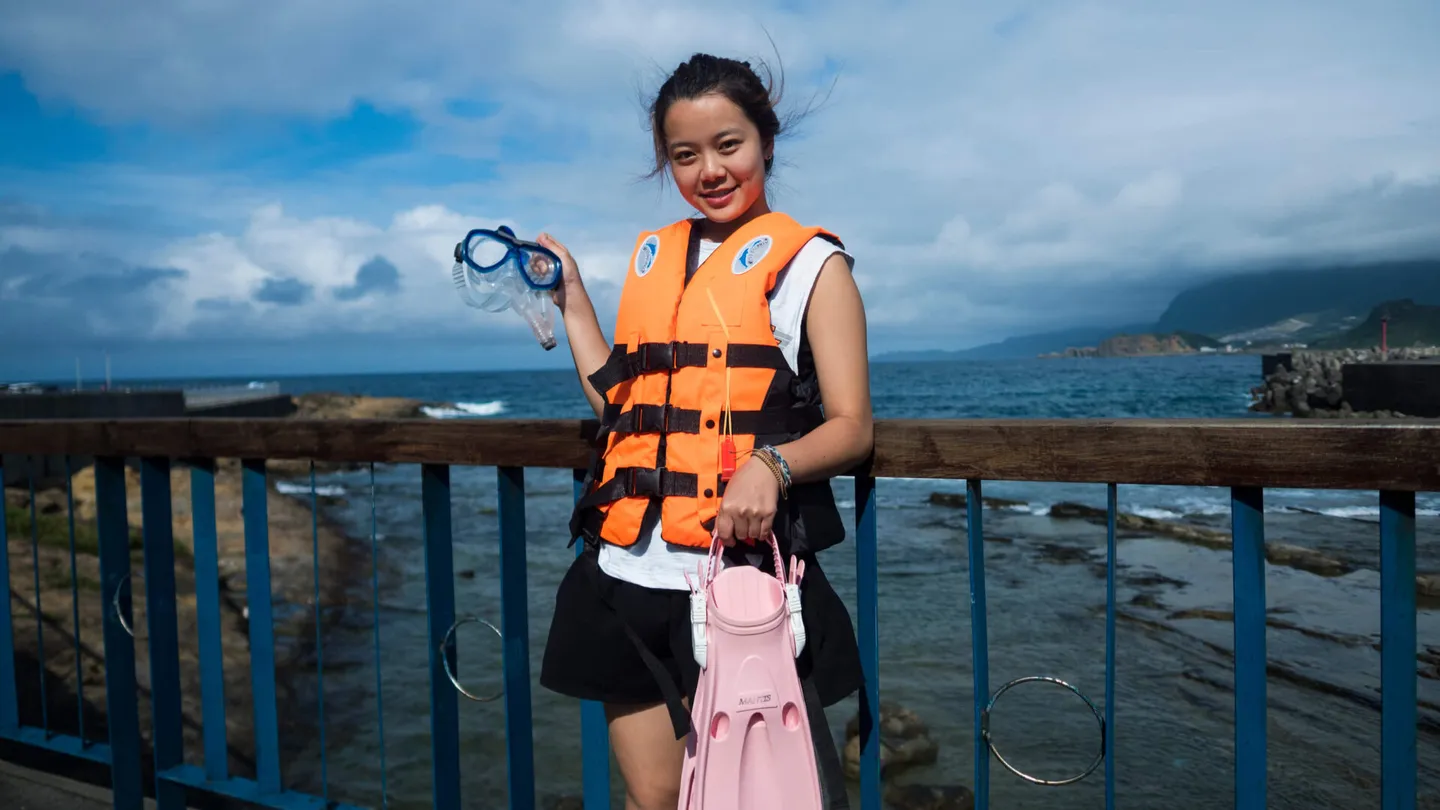
Snorkeling is the most basic and safe water activity - 揪潛水同學會
Of the three activities, snorkeling has the lowest barrier to entry. From young children in primary school to grandparents, anyone can put on a life jacket and a mask-and-snorkel set and head into the water. A professional instructor can tow participants along on the surface using a torpedo buoy or life ring, and beginners can take in the underwater scenery without even having to manage the more technically demanding fins.
Snorkeling is a relatively safe water activity. The main thing to get used to is breathing through your mouth — once you put on a mask, your nose is essentially out of the equation, and that takes a little adjustment. Instructors will typically walk you through how to use your mask and snorkel before getting in the water, and it quickly becomes second nature.
Because beginners tend to be less smooth entering and exiting the water, there's a chance of bumping against rocks when waves wash over the shore. Wearing gloves is a good idea to avoid cuts. For your body, a wetsuit or a rash guard will protect against scrapes. Unless you're very confident in the water or know the entry point well (such as a site with stair access), heading in wearing just a bikini or swim shorts isn't recommended.
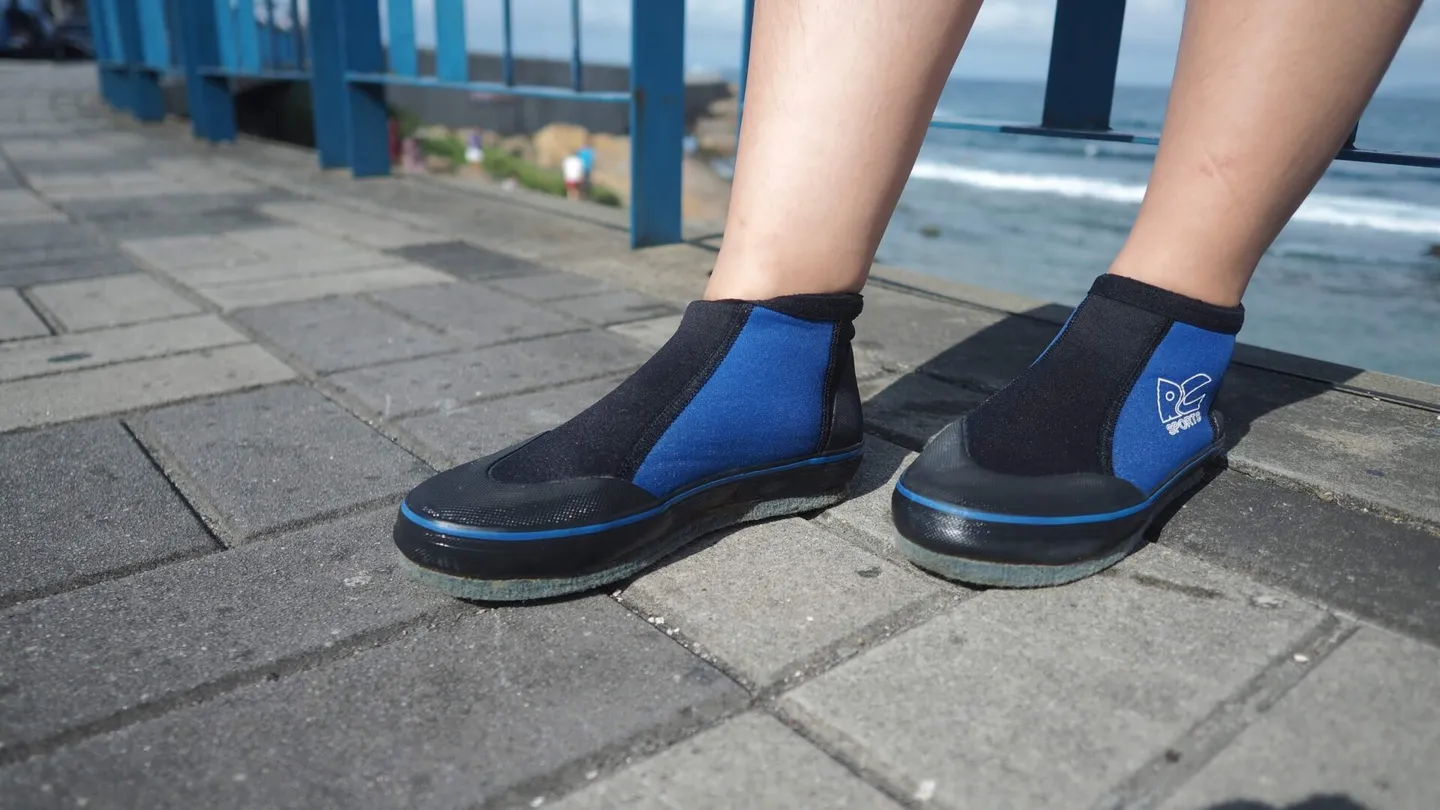
Always wear rubber-soled booties when walking along the shoreline - 揪潛水同學會
Rubber-soled booties are a must for snorkeling. Most mass-market booties have smooth rubber soles that can be slippery on wet rocks and are unsuitable for walking along the shore — look for the kind with textured, non-slip soles. Before heading out, double-check all your gear to make sure everything is in order!
Snorkeling gear:
-
Mask + snorkel
-
Booties
-
Life jacket
-
Wetsuit or rash guard


Scuba Diving:
Scuba diving — short for Self-Contained Underwater Breathing Apparatus — is an advanced underwater activity that involves carrying a scuba tank / cylinder and a BCD (buoyancy compensator). A proper certification is required to dive independently. What we're covering here is recreational diving, which, unlike more specialized technical diving, is a very safe sport when proper SOPs are followed. That said, even without a certification, you can arrange a try dive through a dive shop and have a professional instructor guide you through the weightless sensation of being underwater — including face-to-face encounters with fish!
Internationally recognized certification systems include PADI (certification agency), SDI (certification agency), and ADS, among others. As long as you follow each system's structured curriculum step by step, almost anyone can earn an entry-level scuba certification and continue building qualifications based on their interests. Non-professional scuba certifications are generally divided into the following levels (exact classifications vary by system):
-
Open Water Diver (PADI/SSI cert)
-
Advanced Open Water Diver (PADI cert)
-
Rescue Diver (PADI cert)
-
Divemaster (PADI cert)
Each system has different requirements at each certification level, but the differences at the non-professional level are minor. Find a reputable instructor with a solid teaching track record, and you'll be in good hands. Scuba diving uses compressed air from the scuba tank / cylinder to allow you to breathe underwater, opening up an entire underwater world for close observation of marine life. That's why so many divers bring an underwater camera setup and come back with one stunning shot after another.
Scuba diving gear:
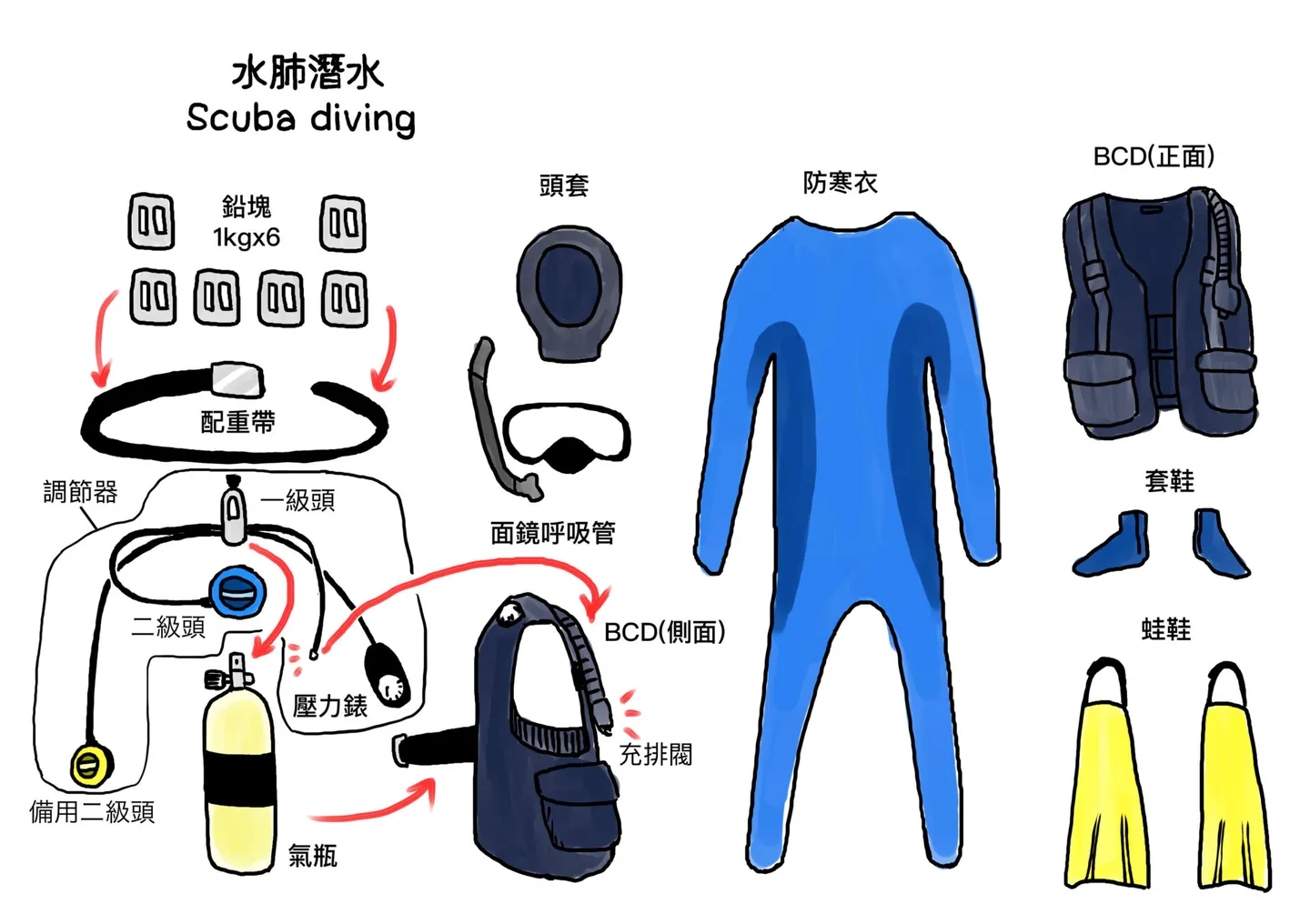
Common scuba diving equipment - Illustrator Acha
Because scuba divers spend a significant amount of time underwater, the gear adds up quickly. In addition to the weight of the scuba tank / cylinder itself, you need a regulator, a BCD, and other accessories. A wetsuit worn for warmth also increases buoyancy, which means you'll need weights to compensate. A full scuba kit can approach 20 kg in total — a real physical challenge for some people.
Underwater photography has become one of the most popular pursuits among divers in recent years. Sharing images of the ocean's beauty helps those of us on land understand what lies beneath and lifts the veil of mystery around marine life. However, the gear involved — underwater housing, arms, strobes, video lights — is not only expensive but also adds considerable weight on land, something beginners need to factor in. Still, when you see those beautiful photos being shared across social media, all the effort suddenly seems worth it.
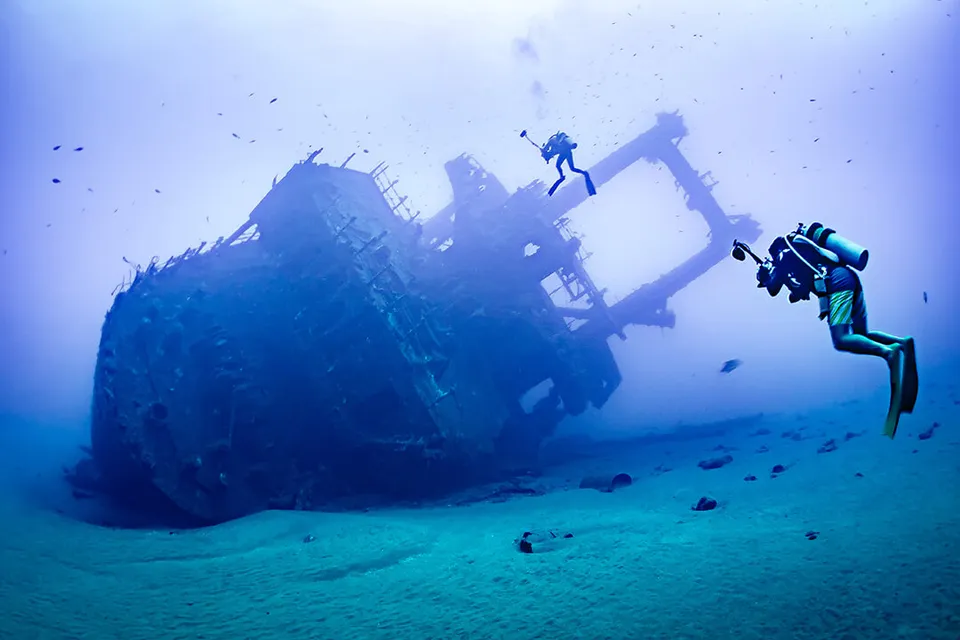
Scuba diving paired with a camera lets you capture stunning images of all kinds of underwater subjects - photo credit 歐大
Freediving:
Freediving has taken the younger generation by storm in recent years. It's an extreme sport that challenges your limits — and unlike scuba diving, it doesn't require heavy equipment. All you need is a mask, a snorkel, fins, and a modest weight system, and you can glide freely through the water. Compared to scuba diving, it's a much leaner, more streamlined water activity.
Common international freediving certification systems include SSI (certification agency), AIDA (freediving agency), CMAS, and PADI (certification agency), each with its own course structure and teaching philosophy. Simply connect with a reputable training center and work through the curriculum at your own pace to earn your freediving certification. The biggest difference between freediving and scuba diving is this: a scuba diver uses a compressed air cylinder to extend their time underwater, while a freediver descends on a single breath. That means your breath-hold capacity directly determines how long you can spend beneath the surface. Every system will teach you techniques to improve your breath-hold and water confidence — and as long as you're open to the ocean, freediving is bound to be a wonderfully relaxing water activity.
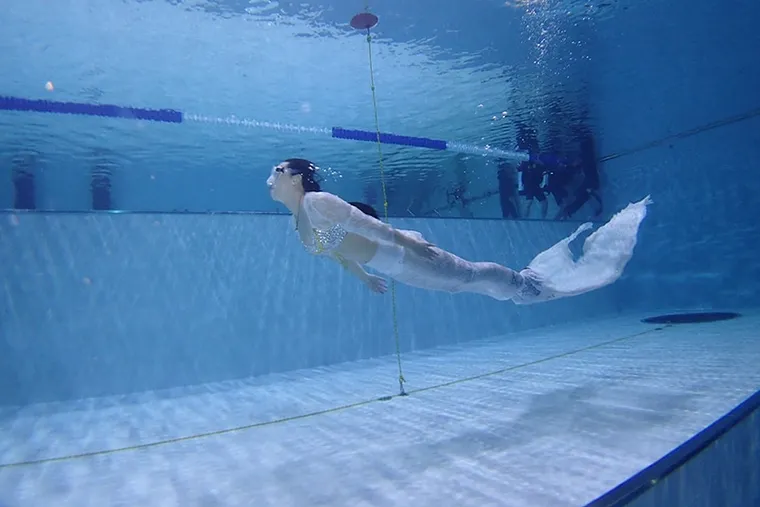
In recent years, driven in part by the popularity of Korean dramas, more and more women have been drawn to the idea of wearing a mermaid monofin and having an underwater photographer capture their best mermaid shots. Swimming in a monofin is quite different from using regular fins, so dedicated training is required before attempting it. If you've ever dreamed of becoming a mermaid, reach out to a relevant training center for more information.
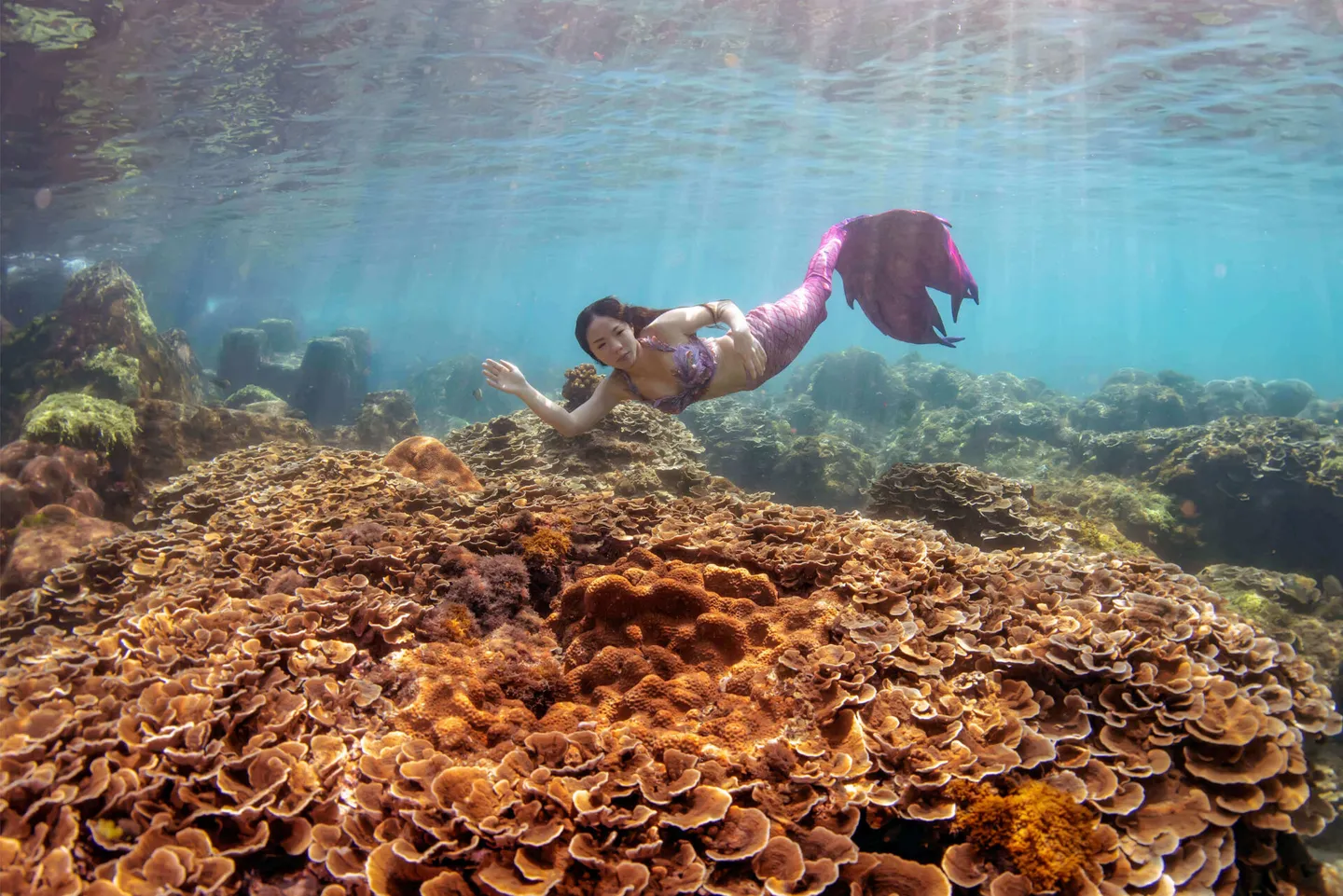
Mermaid courses have become hugely popular among women in recent years - photo credit Jammi Chen
As mentioned at the outset, freediving is an extreme sport. Most people take it up to enjoy the sensation of gliding freely underwater and to capture beautiful photographs. But there are also serious practitioners who push their personal limits. Internationally, competitive freediving covers a wide range of disciplines: static apnea (STA) (AIDA discipline), dynamic apnea (DYN) (AIDA discipline) with fins, Dynamic No Fins (DNF) without fins, no-limits (NLT), and more. If you're someone who loves pushing your physical boundaries, freediving is a fantastic place to start.
Freediving gear:
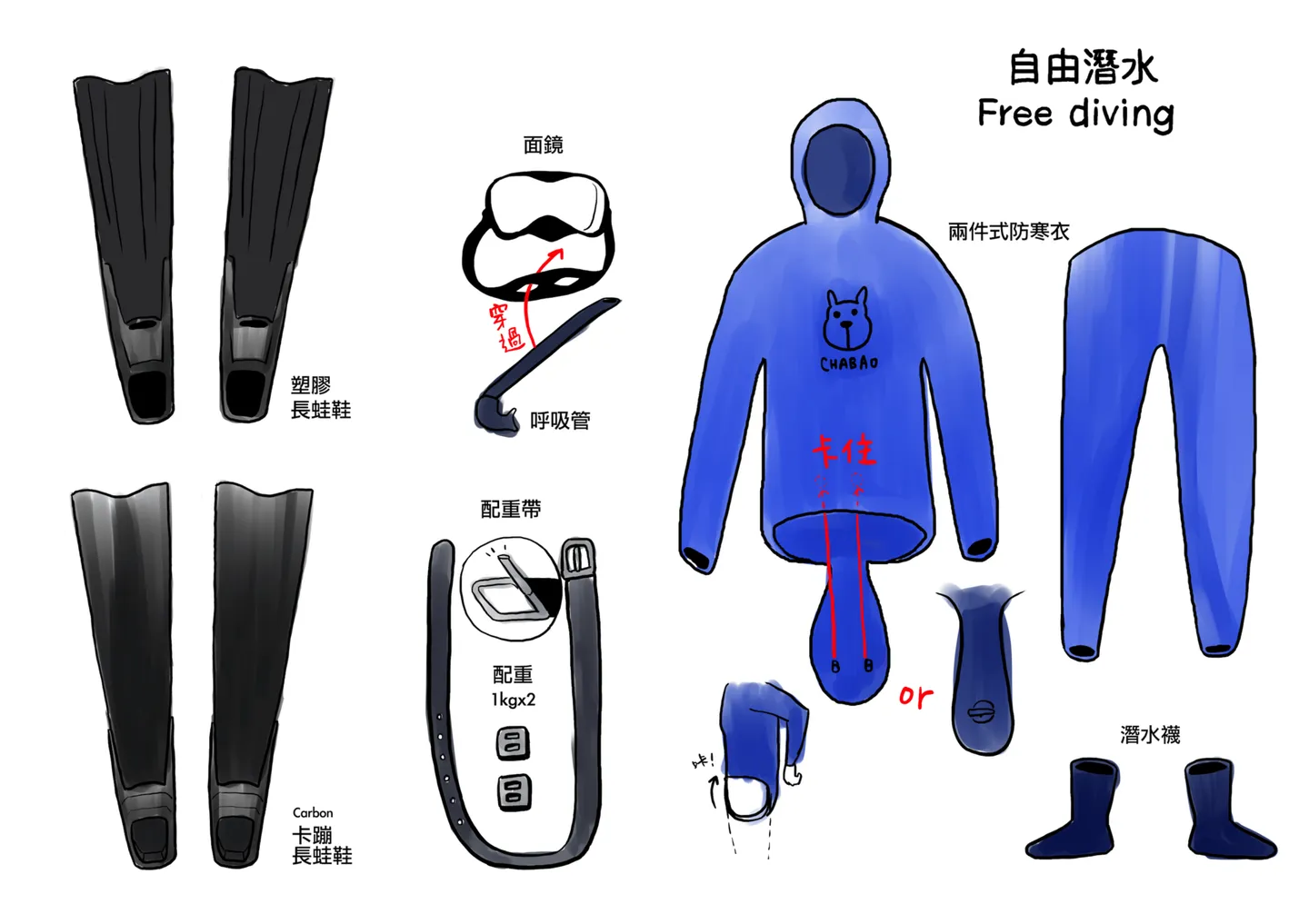
Common freediving equipment - Illustrator Acha
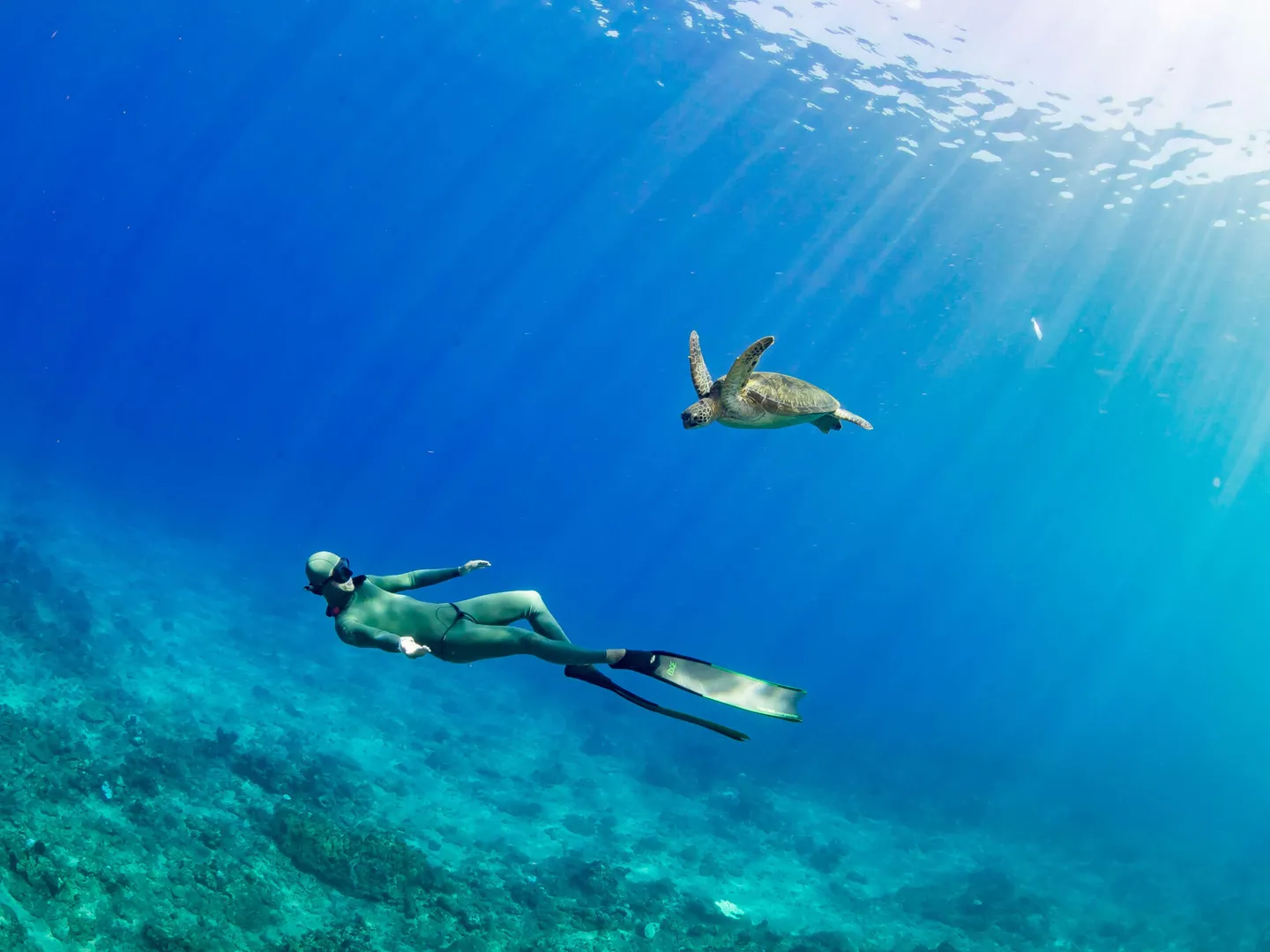
Freediving allows up-close interaction with marine life - photo credit 歐大
Scuba Diving V.S. Freediving
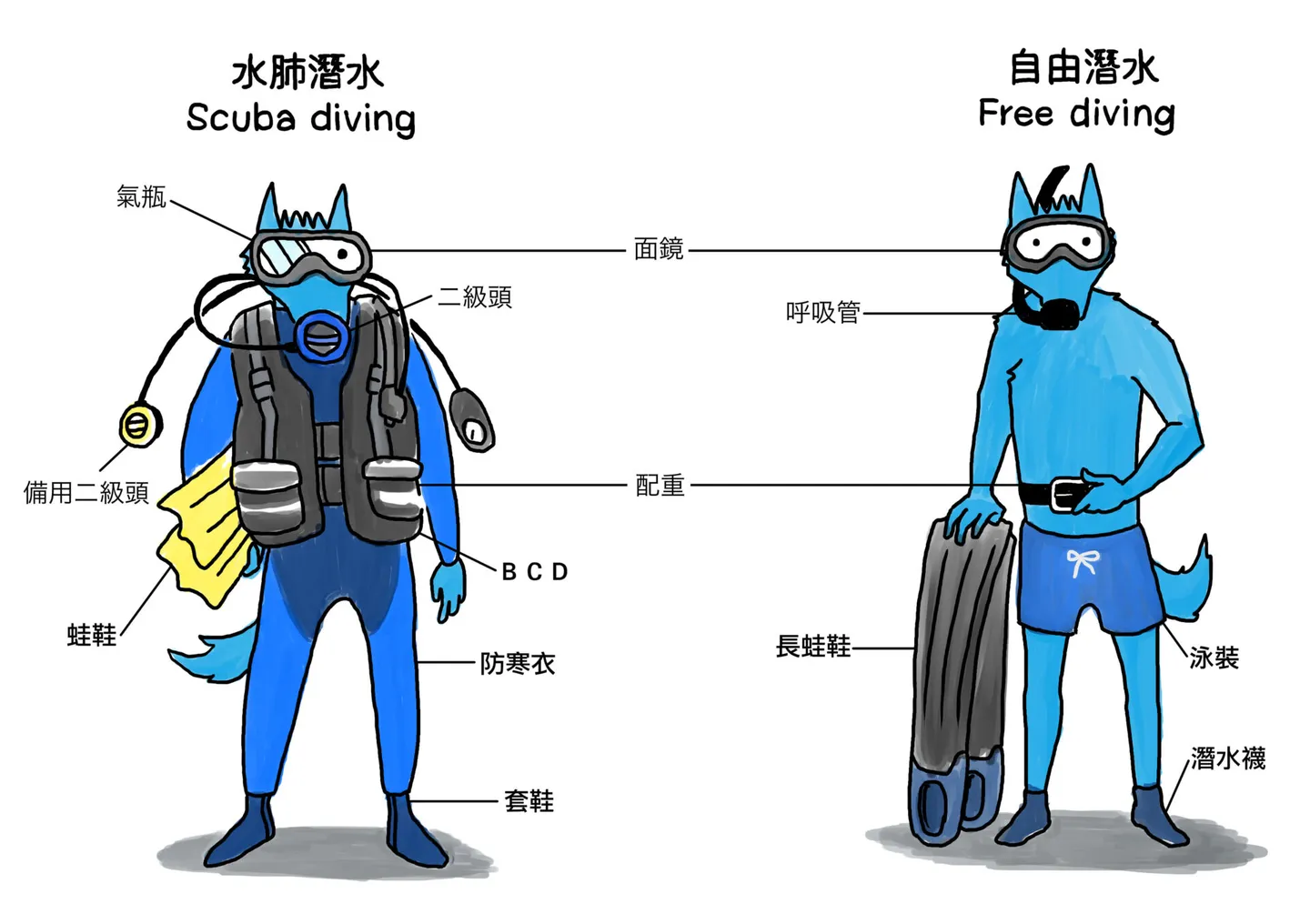
A comparison of scuba diving and freediving gear - Illustrator Acha
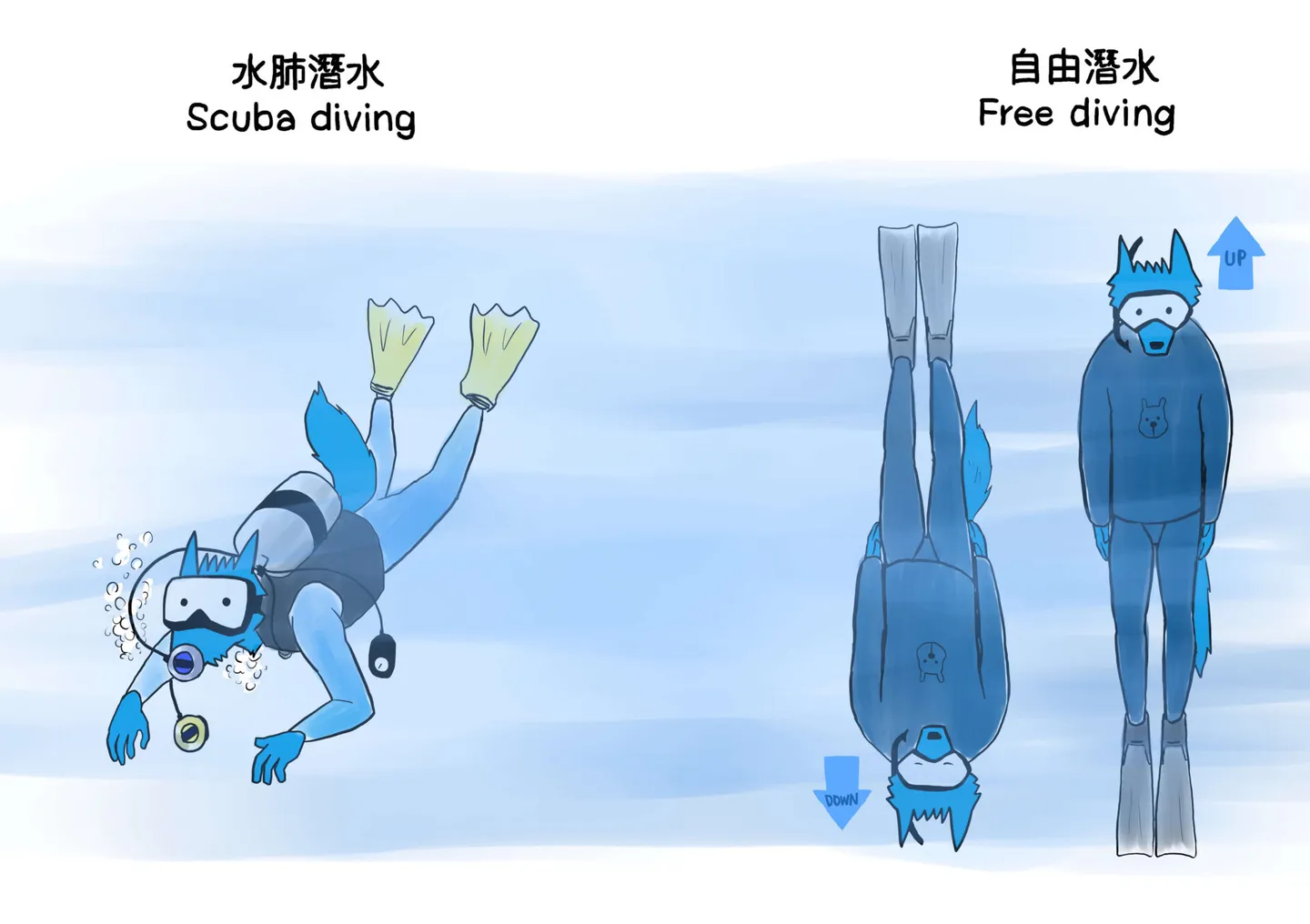
Scuba divers maintain neutral buoyancy underwater and generally move horizontally. Freedivers can move horizontally or descend and ascend vertically depending on their training or dive style - Illustrator Acha
The Editor's Totally Non-Binding Snorkeling, Scuba & Freediving Q&A:
Q: If I can't swim, can I still do any of these three activities?
A: Knowing how to swim means better water confidence and a faster learning curve. That said, there's no rule against non-swimmers participating. Because the water can feel more intimidating, just let your instructor know in advance so they can give you extra guidance and attention.
Q: Can people with strong prescriptions still participate?
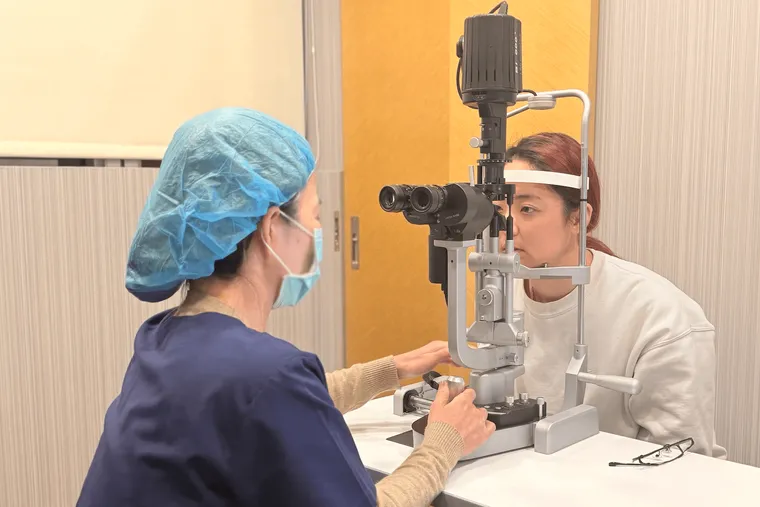
A: If you can wear contact lenses, you can use a plain (zero-prescription) mask. Alternatively, prescription masks are available on the market and can be purchased to match your eyeglass prescription.
Q: Are there any special precautions to keep in mind for snorkeling, scuba diving, or freediving?
A: Even though water activities are relaxing, the ocean is unpredictable — wind direction and currents can change in an instant. Always follow your instructor's guidance. Never go alone. Even people who are very familiar with the water or feel highly confident in their abilities should always dive with a buddy.
Q: What should I look for when choosing a shop?
A: Remember: you get what you pay for. Low prices should never be the top priority when it comes to water activities. When evaluating a shop, consider its reputation and word-of-mouth recommendations, and don't hesitate to ask about the instructor-to-student ratio, whether insurance is provided, and whether the instructors are properly certified. Once you're at the shop, take a look at how the equipment is stored and maintained. On mainland Taiwan, try dive prices are typically around NT$2,000–NT$2,500, while snorkeling runs around NT$300–NT$600, though these figures vary depending on what services the shop includes.
Related links:

Loves drawing, loves the color blue, loves the sea. After following a safe and conventional career path all the way through university, Acha finally believed she could make a living from her passion. Taking that big leap toward her dream, she was fortunate to receive tremendous support along the way. It was her first fun dive in Xiaoliuqiu that sparked the ongoing comic series Acha and the Sea. She now shares her thoughts through illustrated posts on her fan page while doing work that feels like a dream come true.