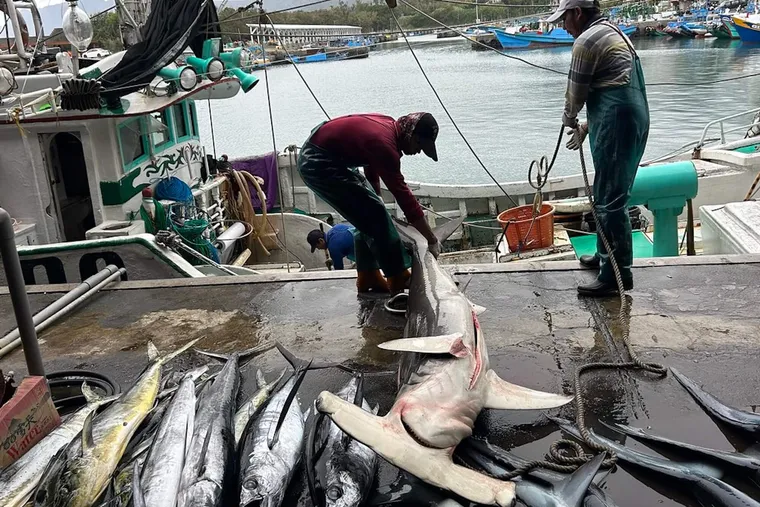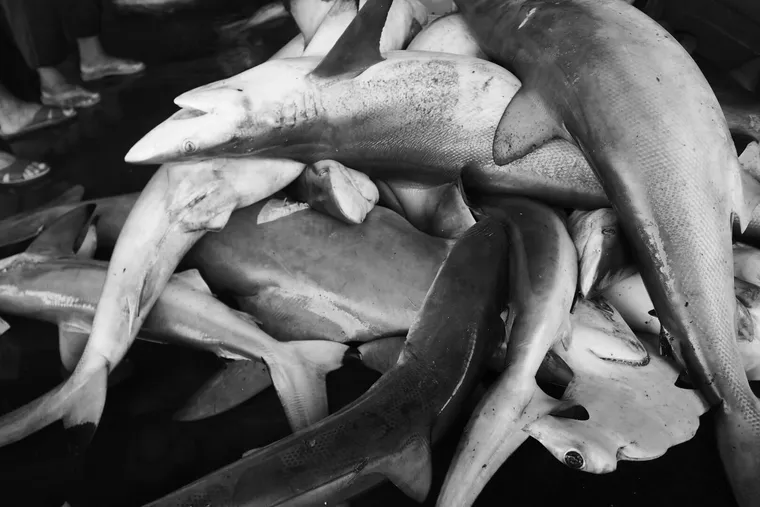


the Editor says: On March 20, 2019, a great white shark measuring 4.7 meters in length and weighing 1,170 kg was caught off Nanfang'ao, Yilan, Taiwan. Scholars have called it the largest great white shark ever recorded in the area (Apple Daily). Inside its belly were 15 unborn great white shark pups. Photos spread widely through news outlets and social media, and a wave of condemnation toward the fishermen swept through the diving community. But is the situation really as simple as everyone thinks? Let's hear a more balanced perspective from Shang-ju Pai (Shang-ju Pai), chairperson of the Taiwan Sustainable Fisheries Development Association.
I've already seen quite a few media platforms playing on people's emotions to drive clicks — and not just general outlets, but even some supposedly professional pages. This reflects how far Taiwan still is from science-based fisheries management, still stuck in a mire of affected, irrational sentiment. For those of us hoping to advance sustainable fisheries, this is a major obstacle to overcome. I also have a feeling someone will be posting questions about this topic before long, so I figured I'd just take the time to write this up now. 🦈🦈🦈🦈🦈🦈🦈🦈🦈🦈🦈🦈🦈🦈🦈
This is a news story about a great white shark recently caught off Yilan — and its pups. Wait, I meant baby sharks — shark pups! This isn't about ideology. It isn't about fishermen needing to make a living. This is a serious discussion about the state of the industry and science-based fisheries management.
Taiwanese media are sensationalist and have always loved clickbait headlines — because you love to read them! But here in this association's forum, we have a responsibility to build a correct and sustainable understanding of fisheries among our members.
Point 1: "Taiwanese Fishermen Love Catching Sharks!"
Tell me — what fisherman actually wants a shark in the hold? If they did, why would shark finning even be an issue in offshore fisheries? This shark was an accidental catch — what we call bycatch of a non-target species. What is "bycatch"? Bycatch is when "I wasn't trying to catch you, but I caught you anyway." Think of it like an uninvited, relentlessly clinging stalker showing up at your door — and you'll get the idea.
Unless this shark had been specifically harpooned — like the highly targeted method used for sailfish off Taitung — then you'd have every right to throw stones at the fishermen and say they were wrong to catch a shark.
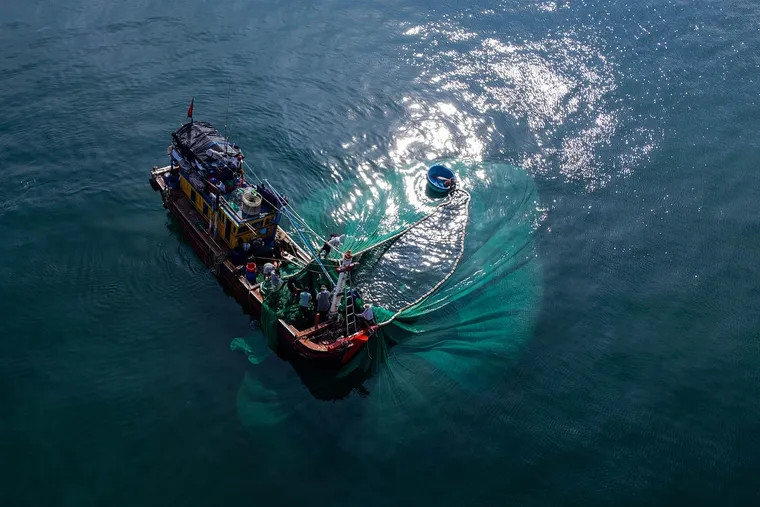
Aside from harpoons and spearguns, where you might at least consider whether you have room in your freezer before going for the kill, anyone with a decent understanding of fishing gear and methods will know that every single type of fishing gear involves bycatch to some degree.
Calling for a ban on catching non-target species caught incidentally... is frankly just a fake issue designed to solicit donations and sympathy. And it's not only net-based fishing that produces bycatch — longline fishing's bycatch rates of seabirds, sea turtles, and sharks have long been a headache for the international community, and simply improving gear cannot eliminate the problem.
And what about pole-and-line fishing — does that avoid bycatch? In practice, it just means the bycatch is unhooked and thrown back dead, which is why there are so many pufferfish dried out by anglers along the shoreline.
Point 2: "Why Didn't They Release It? There Were Babies Inside!"
The survival rate after capture varies by fishing method and by species. Fish caught in trawl nets or gillnets, for instance, are almost always dead or completely incapacitated by the time they're hauled in — while crustaceans can survive at quite high rates. Many of the live shrimp sold in markets are actually trawl-caught. When you're dealing with a massive, aggressive shark like this one, releasing it becomes an even more difficult undertaking — and at that point, what fishing method was used barely matters at all.
We all know that a healthy great white shark in the ocean will not actively attack humans — but this shark is now in a situation where its life is under threat. A bunch of hairless apes are roughly dragging it into a world where it can't breathe. It has no claws... but it does have razor-sharp teeth and a powerful tail. Or do you think the shark is going to widen its eyes, wag its tail, and sweetly surrender?
I know Aquaman can telepathically communicate with sharks, but that doesn't mean every fisherman is a superhero of the sea. "Hey! I'm going to release you! Please don't bite me!" If a great white turns around... it won't be grateful — it will bite you.
Of course, nothing like that is going to happen. Even with a sailfish — which only knows how to jab — any aggressive catch coming aboard the boat is going to get beaten hard to subdue it first. So there's no question of releasing it; it will always be a binary choice between discarding at sea or bringing it back to port.
And would you even know ahead of time that it was a pregnant female carrying pups? Male sharks are smaller, yes, but a larger shark isn't necessarily female. And do you think it's feasible to deliver shark pups on a cramped, chaotic working fishing vessel? Even if this shark had been caught in a set net, it's not like a Whale Shark — nicknamed the "gentle giant" — that can be herded back out of the net.
Point 3: "Isn't It Better to Just Discard It at Sea? Why Bring It Back?"
Under Taiwan's current "Catch Management Measures for Great White Sharks, Basking Sharks, and Megamouth Sharks," which came into effect in 2013, any great white shark caught in coastal or inshore waters must be reported by completing a "Great White Shark, Basking Shark, and Megamouth Shark Catch Data Reporting Survey Form" for submission to the relevant fisheries authority. The Fisheries Agency will then assign a designated academic institution to conduct scientific sampling and record biological data.
In other words, this fisherman complied with fisheries management regulations by bringing the carcass back to port for subsequent scientific investigation. If the shark had been discarded at sea, do you think any fisherman would voluntarily go back to port and fill out a report just to create extra work for themselves?
This isn't a fish landing declaration, and it's not an auction bid — "however big I say it is, that's how big it is." Is that how scientific management works? Beyond that: body length? Body weight? Biological characteristics? Stomach contents? Which fisherman can fill in all of that just by eyeballing a catch in the water?
If the shark had been discarded at sea, Taiwan would end up going down the same path as with manta rays — a record of zero catches nationwide. But does that really mean no manta rays are ever accidentally caught? No — it's because every time one is caught, it gets discarded at sea, because nobody wants to deal with the hassle. The fact is, this fisherman did not fin the shark and discard the body. This fisherman also did not treat catching a shark as a sport, the way some Americans do.
Point 4: "A Live Shark Could Generate Tourism Revenue — Like in Other Countries, Where It Brings in Millions Every Year"
The shark-diving tourism that generates revenue abroad is mainly based on docile, fish-eating reef sharks. For great white sharks, divers have to get into a cage to observe them. Encountering one of those famously fat great whites — the kind that's been gorging on whale carcasses and has grown utterly indifferent to everything around it — is a once-in-a-millennium event. And the shark in this case wasn't some famous dive site's resident celebrity fish, with fishermen barging into a diving paradise to haul it ashore. If it were, then yes — you'd have every right to throw stones and call the fishermen out.
Taiwan's conditions are nothing like a tropical island nation. These large, ocean-roaming migratory sharks typically appear in Taiwanese waters in areas with powerful currents, abyssal depths, and considerable distances offshore. You're also unlikely to encounter them in large numbers — most sharks in Taiwan are solitary travelers. They're even harder to track and locate than the spinner dolphins off Hualien. How exactly would you develop tourism around that?
In the central-western Taiwan Strait, large numbers of juvenile sharks do congregate at certain times of year — but those waters are murky with extremely low visibility, and the fishing grounds are very far offshore. Of course, if any operator is willing to invest and take clients out for a mud fight with baby sharks, we'd be happy to ask fishermen to help locate them! The point is: a fishing ground is not the same as a dive site.
Point 5: "It Only Sold for NT$50 per Jin"
This shark's end was not to become a bowl of NT$50 Fuzhou fish ball soup. It was sent to the Taiwan Ocean Arts Museum to be made into a specimen for educational purposes, so future generations can pay their respects.
Its contribution to science is worth far more than NT$50 per jin. Because of this shark's sacrifice — which was legally required to be reported and recorded — researchers now clearly know that great white sharks are viviparous: they do not lay egg cases like some other shark species.
Why have there been no previous records of such a large great white, or of its pups, in this area? And yet today one was caught. By analyzing oceanographic data and regional fisheries surveys, can we learn something from this? It will certainly be helpful for understanding the species' ecology and formulating future conservation policies.
Can't we study live sharks instead? For example, by attaching satellite tags — but satellite tags are expensive, and not just anyone knows how to deploy them. And remember, this was an accidental bycatch. Is it really feasible to have every single fishing vessel equipped at all times with trained specialists and tagging gear? Don't be naive. Even fisheries observers on distant-water vessels aren't present on every single distant-water fishing vessel.
In many advanced countries, fisheries statistical records are accumulated over decades as a matter of routine. Even for protected species, annual fishing surveys are still conducted — in addition to conservation and stock recovery programs — to assess the possibility of reopening the fishery. That is what genuine sustainable resource management looks like.
Taiwan's coastal fish landing reporting system is only just starting to take its first slow steps forward. Science-based management requires the long-term accumulation of data — it absolutely cannot be governed by populism and hasty legislation. Otherwise, Taiwan's fisheries will forever be like a stock you're hopelessly stuck holding. Or do you think that just discarding everything at sea — an "out of sight, out of mind" approach — is what's going to allow fisheries resources to recover?
As for the shark fin issue, it's been debated to death in this forum already. If you know anyone wealthy enough to rinse their mouth with shark fin soup three times a day, please ask them to come slap me in the face with their banknotes ❤. And before the heavy metal poisoning gets them, they'll be on dialysis from the salt in the broth first.
Finally, a question for the armchair experts online who have been jumping on the populist bandwagon to attack this incident: where exactly is your expertise, and where is your conscience? Don't shrink back now and claim I'm using too much emotional language — because when you were whipping up public outrage to drive clicks, what kind of language were you using?
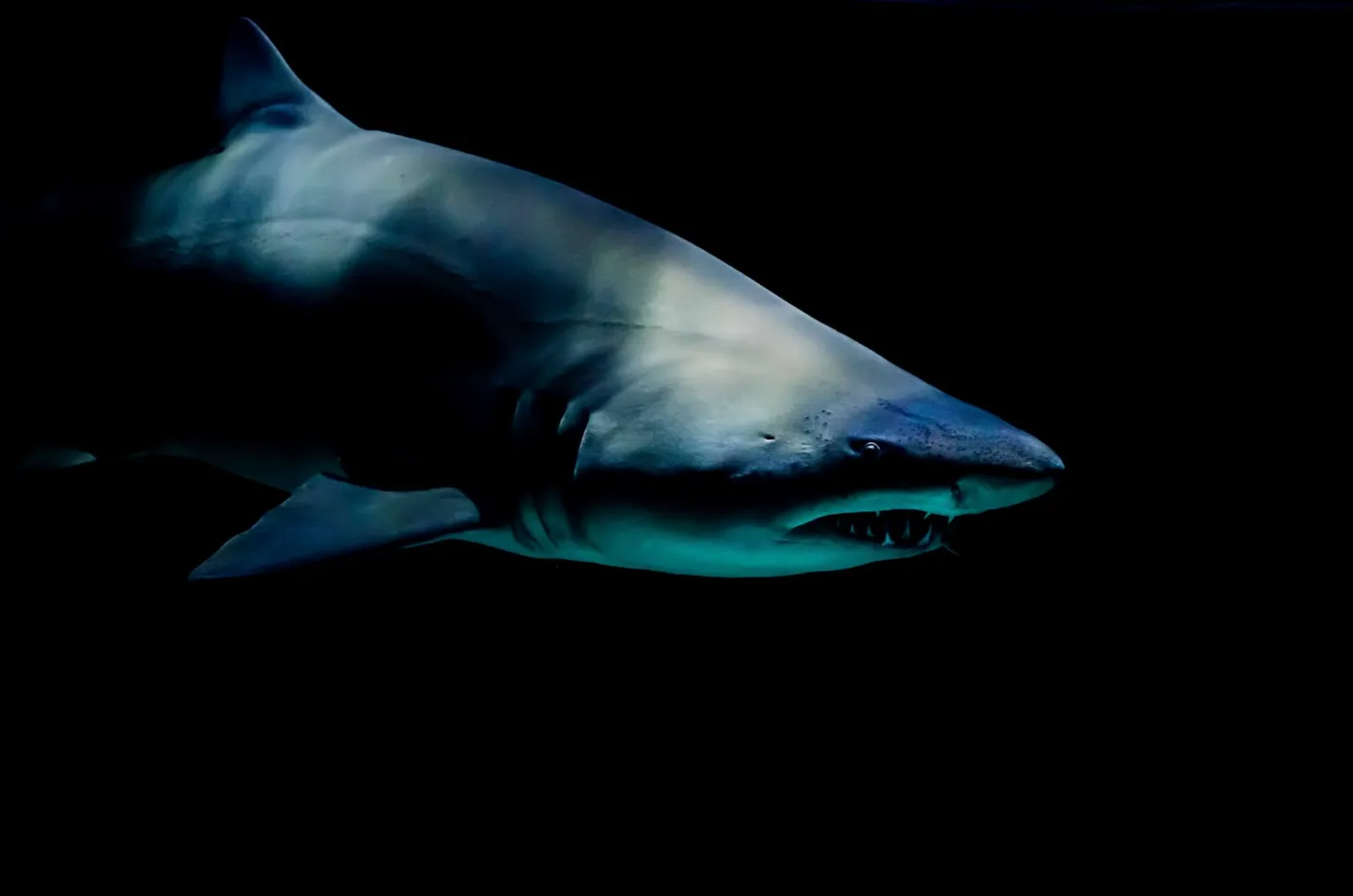
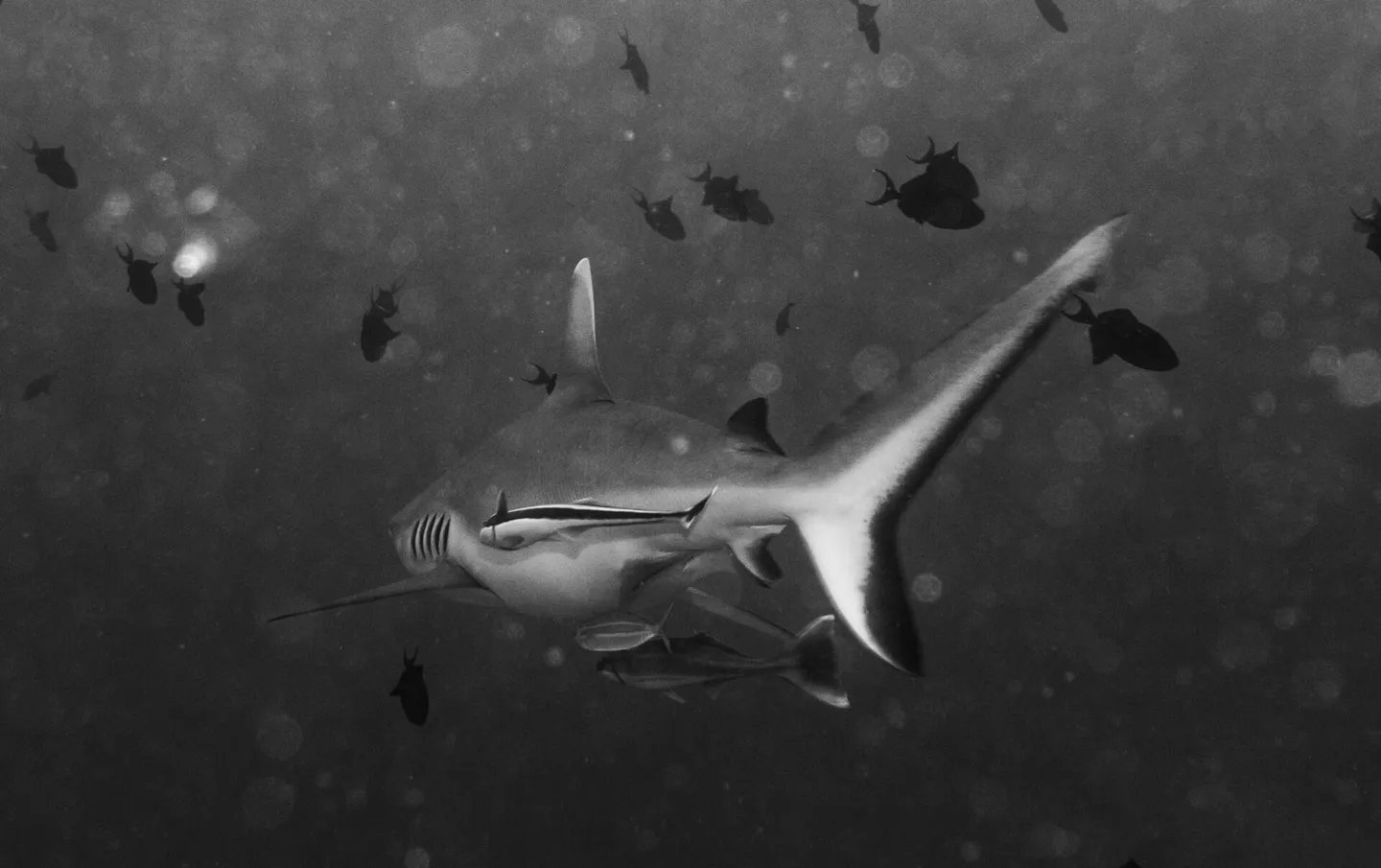
Cover image source: Photo by Laura College on Unsplash (Note: the shark on the cover is not a great white shark — it is a Odontaspis ferox, the smalltooth sand tiger shark. The Editor really does want to photograph a great white shark someday ㄒ.ㄒ)
Full article reproduced with permission from Taiwan Sustainable Fisheries Development Association chairperson Shang-ju Pai (Shang-ju Pai).
Further reading: