Contents(19)
- About the Author
- Diving Credentials:
- Getting Started with Underwater Photography
- From Snorkeling into the Underwater World
- Spotting a Whale Shark Becomes Unremarkable
- You Don't Have to Leave Taiwan to See Beautiful Tropical Fish
- Diving into a Weightless Underwater World
- Camera Selection Tips
- Waterproof Cameras Keep Getting Better
- Understanding Your Camera's Features to Get the Most Out of It
- How to Photograph Sea Turtles Beautifully
- Slow Down and Swim Alongside Sea Turtles
- How to Photograph Sea Turtles Adorably
- Where to Find Them
- 5 more sections
Taiwan's oceans are breathtaking, and there are even more wonders to explore in seas around the world. Whether you're simply snorkeling or strapping on a scuba tank to uncover the mysteries of the deep, people naturally want a camera in hand to capture the rich underwater world as a memento. With camera options constantly evolving, figuring out which one is best suited for underwater use — and capable of producing great shots — can be a real headache. Fortunately, diving expert Vanessa Yen is here to share her experience choosing underwater cameras and her tips for getting the best shots. We hope everyone can capture their own stunning images and help the people around them better appreciate the beauty of the ocean.
About the Author
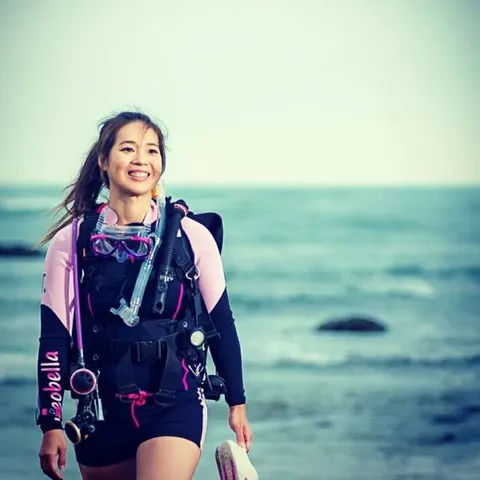
Vanessa Yen
Once a nine-to-five office worker, unwilling to settle for an ordinary life, she boldly set aside the modest achievements she had built, left Taiwan, and headed off on working holidays in Australia, New Zealand, and Japan — embarking on a backpacker lifestyle completely unlike anything she'd known before. Farmer, barista, bartender, chef… her life résumé is filled with all kinds of stories.
The boundless ocean opened the door to the world for her, turning a passion into a profession. Bitten by the blue-sea bug, she began leading students from countries around the world on underwater explorations. Diving alone wasn't enough — in 2014 she took up underwater photography, diving and shooting whenever she had a free moment. Years of self-teaching led her to develop her own methodology, capturing countless breathtaking marine scenes and unforgettable moments.
"Living the dream" was the slogan on the first dive boat she ever stepped aboard. Starting from sailing and the sea, step by step, she plunged into the underwater world beginning at the Great Barrier Reef in Australia — and she's never forgotten those words. She continues to love life and pursue her dreams through diving and travel.


Diving Credentials:
- PADI IDC Staff Instructor
- Specialty Instructor: Enriched Air Nitrox, Emergency Oxygen, Wreck Diving, Drift Diving, Sidemount, Emergency First Response
- PADI IE Exam Interpreter
- SSI Advanced Instructor
- AIDA 2-Star Freediver
Getting Started with Underwater Photography
Seventy percent of the world is ocean — not experiencing it means missing out on 70% of the world. Through simple, easy-to-learn snorkeling, anyone can catch a glimpse of beautiful marine life. But after a while, you'll find that snorkeling is like window shopping — it leaves you wanting more. Scuba diving lets you truly enter the underwater world and be part of it.
From Snorkeling into the Underwater World
Browsing all those underwater photos online, have you ever caught yourself thinking: I don't know how to dive — how could I possibly see or photograph that many fish? Here's something you might not know: many of the photos in this book were taken while snorkeling. Snorkeling and deep diving offer different shooting perspectives, and you absolutely don't need to dive deep to get a great shot.
Generally speaking, tropical coral reef waters are most species-rich and most vibrant at around 15 m depth, while greater depths hold their own surprises — scuba diving will reveal an even more expansive underwater world. But fish are fish — they swim wherever they like. With the exception of a small number of deep-sea species, the vast majority of marine creatures — sharks, sea turtles, Whale Sharks, Clownfish — can all be spotted whether you're snorkeling or scuba diving. Some locations suit snorkeling better, others suit diving, depending on the marine ecosystem and topography of the area. Snorkeling doesn't mean you'll only see the occasional small fish, and diving doesn't guarantee you'll encounter massive creatures.
Spotting a Whale Shark Becomes Unremarkable
The ocean is home to every kind of marine life. Where conditions are particularly well-suited to a certain species, that species will thrive — and your chances of seeing it increase dramatically.
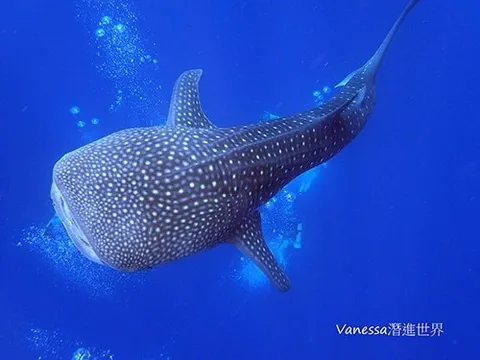
For some people, swimming with a Whale Shark is a lifelong dream. Dive thousands of times in Taiwan and you might spend years hoping to one day catch a glimpse of one. Then you arrive in the Maldives and discover that Whale Sharks simply live there. Even children on their very first snorkeling trip can see them, and the locals will say with complete nonchalance: "I saw three swim past my front door yesterday."
You may have heard talk of a barracuda tornado — in the Philippines it's considered a rare stroke of luck, and spotting one makes you want to rush out and buy a lottery ticket. Head to Sipadan and you'll soon realize the question isn't whether you'll see a tornado, but how big it will be. Venture further to the Galápagos, and you'll find that pretty much every fish appears in tornado formation.
It's just like visiting famous landmarks — if you want to see Taipei 101, go to Taipei; heading to Taitung won't show you Sun Moon Lake. If you want to see a particular creature, go to where it lives. Dive in and say hello to Clownfish (Nemo) and Dory, and experience your own real-life Finding Nemo — that's what it's all about.
You Don't Have to Leave Taiwan to See Beautiful Tropical Fish
Taiwan is surrounded by the sea on all sides, and the name Formosa didn't come from nowhere. Sitting in the Pacific Ocean with the Kuroshio Current flowing past, the waters offer excellent visibility, and the tides bring with them a rich variety of marine life alongside thriving coral reefs — from tiny macro creatures the size of ants to large manta rays, you'll find it all.
Kenting, Xiaoliuqiu, Green Island, and Orchid Island are all world-class dive sites. As Taiwanese, we are extremely fortunate — no long journey required, these dive sites are right on our doorstep.
Diving into a Weightless Underwater World
I love diving because being underwater feels free — calm and quiet. The rich ecosystem and brilliantly coloured coral of the ocean world is like a recharging station for me. Every dive leaves me energized and full of life. Its magic is something you truly have to experience for yourself. Enjoy the weightless world beneath the waves.
Camera Selection Tips
I still remember the first time I held a waterproof camera underwater. Back then, underwater photography wasn't widespread, and the options were limited — just a few camera models with add-on underwater housing. When I first started learning to shoot, the only mode I knew was the underwater preset. The vividly coloured Clownfish and sea anemones right before my eyes would come out as a wash of blue or green, and not a single shot was worth keeping. Even nudibranchs — creatures that hold perfectly still and practically pose for the shutter — came out blurry. When I tried to photograph the spectacular coral, the angles and colours were off and the images were full of backscatter, turning adorably majestic sea turtles into hazily indistinguishable blobs. After a more experienced dive instructor saw my photos, they told me: "You've still got a long road ahead of you in underwater photography — keep practising." From then on, I regularly sought advice from experienced mentors, researched online, taught myself, and grabbed every opportunity to practice in the water. Gradually, I started producing photos that were at least somewhat presentable.
Waterproof Cameras Keep Getting Better
In recent years, island holidays and water activities — such as the Songkran Festival in Thailand, surfing in Bali, snorkeling in Guam, diving in the Maldives — have become increasingly popular. The demand for waterproof cameras has grown steadily, and every summer major camera brands launch new waterproof models, and even waterproof smartphones, all competing for a share of the vast water-activity market.
Online reviews have followed suit, offering detailed comparisons of camera body design, features, specifications, aperture, and real-world test shots both on land and underwater. While these reviews serve as an important reference for consumers choosing a camera, their focus on hardware and software analysis is very helpful for seasoned photographers — but for beginners just starting out with photography, it can all feel overwhelming and hard to decipher.
Long reviews, foggy results? Precious little is said about the practical shooting techniques that matter most to users. Everyone's needs are different — the time, location, and subject matter each person wants to capture will vary. Using a handful of comparison images to illustrate the differences doesn't really help you figure out which camera suits you best, and the features needed for shooting mountains differ greatly from those needed for shooting the sea.
Understanding Your Camera's Features to Get the Most Out of It
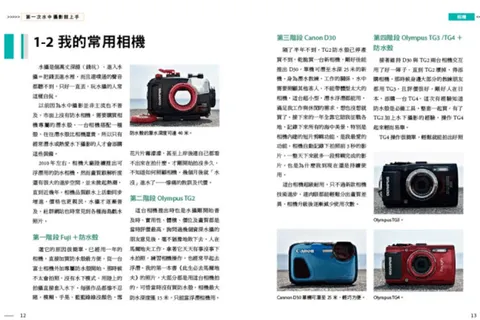
A craftsman must first sharpen their tools. In recent years, major brands have all released series of compact, lightweight cameras that are easy to carry and still deliver excellent image quality. On holiday, many people pack a waterproof camera to document the joy of their time away — but having a great tool also requires great technique. Knowing how to use it is what unlocks the camera's true value.
Line up several cameras side by side and they all look much the same — but where do the real differences lie in actual use? Does waterproof depth really matter? Does GPS make a difference to me? With so many features, how do you actually operate the camera to get great shots? Should you just shoot in one mode the whole time? Does AUTO get you through everything? Beyond sports mode, are there other useful settings for capturing moving subjects? Is the underwater mode the only option in the sea? Is sunset mode really the best mode for photographing sunsets? How do you decide on aperture and shutter speed?
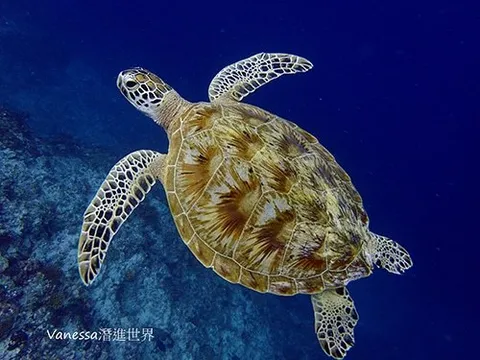
How to Photograph Sea Turtles Beautifully
Sea turtles are naturally adorable creatures that everyone adores, and they've always enjoyed enormous popularity and fame. They live long lives and take a long time to mature — like humans, they need 20–30 years to reach adulthood. Their main diet consists of soft-bodied creatures such as sponges and jellyfish. Young sea turtles tend to swim away when they see people, but the older they get, the less wary they become — I imagine that with age they've simply seen enough of the world to take things in stride.
Slow Down and Swim Alongside Sea Turtles
Sea turtles are gentle by nature and will not proactively attack unless they feel threatened or in danger. They are fast swimmers, so when you spot one, slow down and stop. Rushing toward them in excitement may frighten them away. Take it slow and there's no problem getting a photo together.
How to Photograph Sea Turtles Adorably
Placing a sea turtle against a backdrop of colourful coral can make the background too busy, making it harder to make the turtle stand out. The simpler the background, the better. If the background is too complex, try shooting a close-up or frame the turtle so it fills as much of the photo as possible. Shooting from below with the sun behind the turtle creates a beautifully shimmering effect — definitely worth trying.
Beyond still photos, when a sea turtle is gliding along slowly, press the video record button to capture its free and graceful journey through the ocean.
Where to Find Them
The most commonly encountered species is the Green Sea Turtle. Xiaoliuqiu in Taiwan, Sipadan in Malaysia, and Hawaii are all world-renowned sea turtle destinations where sightings are plentiful and you can see as many as you like. Sea turtles can also be encountered in ocean waters all around the world.
Shoot from Below for Dazzling Results
To capture a brilliantly shimmering sea turtle, shoot from below looking upward — with the sun as a backdrop, the turtle will appear to glow with a radiant light. It's absolutely worth trying. And in addition to still photos, whenever a sea turtle is swimming slowly past, press the video record button on your camera or phone to capture its free and graceful movement through the sea — it's a truly precious experience!
The Captivating and Endearing Manta Ray
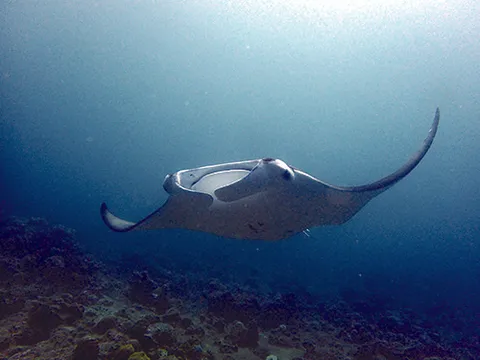
The manta ray is a remarkable large-bodied Stingray. The largest can reach up to 7 m in width. Their main diet consists of plankton and small fish, which they feed on by filter-feeding — two cephalic fins at the front of their mouths help funnel food in. When they swim, they move like a bird in flight, beating their wings through the water. They sometimes like to circle around people or glide in loops, making them utterly captivating.
During their migration and breeding season, you may even witness dozens of them together — a truly spectacular sight. Both snorkelers and divers can experience the joy of swimming alongside them. If you want to capture them on camera, hold your excitement and stay completely still — chase after them and they'll swim away.
A Species in Urgent Need of Protection
Search for manta rays online and you'll typically encounter content about slaughter, capture, and endangered status. The manta ray is listed as Vulnerable on the IUCN Red List, facing threats from both accidental bycatch by fishermen and deliberate commercial hunting. If the situation does not improve, they could face extinction.
Manta rays have been spotted in Kenting, Taiwan, yet before anyone had the chance to go and find them in the ocean, they turned up at the fish market instead. Looking over at neighbouring countries like the Philippines and Indonesia, which have once again expanded their marine protected areas, is genuinely humbling. Perhaps we have yet to find the right balance between the fishing industry and marine tourism. We need to establish clear prohibitions on capture — no grey areas — and work harder to protect their right to survive.
The Laid-Back Giant: Whale Shark
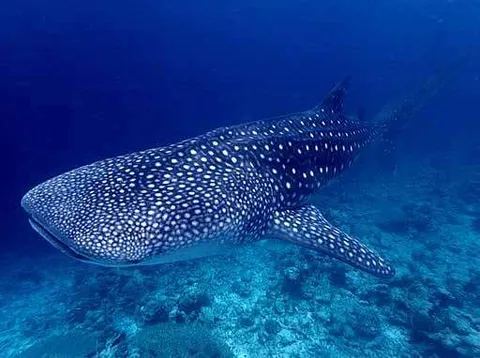
The Whale Shark is the largest fish in the ocean. In Madagascar it is known as marokintana ("many stars"); the Javanese of Indonesia call it geger lintang ("fish with stars on its back"). With its soft, rounded shape, it has affectionately been nicknamed the "tofu shark" in Taiwan.
Most Whale Sharks live in shallow waters of less than 50 m, so snorkelers can interact with them up close. Swimming with a Whale Shark is the greatest wish of many ocean enthusiasts. The photos on the right were all taken while snorkeling.
The Whale Shark is the gentle giant of the sea. When feeding, it opens its enormous mouth like a vacuum cleaner, drawing in food. Its temperament is calm and it always seems completely at ease. As it swims, its tail fin sways side to side like an elegant lady out for a leisurely stroll — but don't be fooled by its apparent unhurried pace: you'll have to swim flat out just to keep up with its tail. Whether you're diving or snorkeling, keep moving — the moment you stop, you'll fall behind.
Common Locations
Only a handful of countries in the world offer reliable Whale Shark encounters. The most famous Whale Shark destination is the Maldives, where conservation is prioritised — no feeding and no captivity — allowing Whale Sharks to roam the Indian Ocean freely. Whale Sharks can also be seen roaming freely in Sipadan, Malaysia, and in Mexico. In neighbouring countries, wild feeding encounters can be found in Cebu in the Philippines. The aquarium in Okinawa is not recommended.
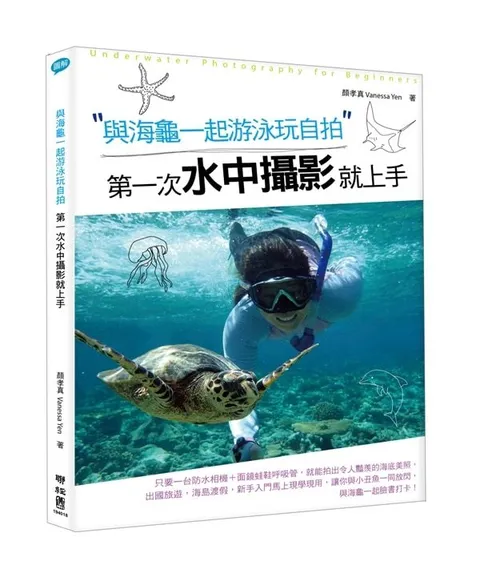
Purchase link: Books.com.tw
Author's Facebook: Vanessa Yen