Contents(9)
- Beyond Legal Regulations — What Matters Even More
- 1. Your Own Freediving Skills and Ocean Experience
- 2. Choosing a Commercial Tour
- 3. Accident Prevention When Swimming with Whales and Dolphins
- 4. What Matters More Than Comparing Prices
- 5. The Ocean Belongs to Everyone Who Loves It
- 6. The Risk of Hypothermia
- Related Links
- Further Reading
the Editor says: In recent years, more and more people have been passionate about travelling abroad to seek out whales and dolphins. While swimming alongside these captivating marine mammals, diving safely and respecting marine life is of the utmost importance. This article is reprinted from a piece shared by Fishman Freediving instructor Audrey, inviting us to dance with these deeply sentient ocean beings — with reverence and respect.
Beyond Legal Regulations — What Matters Even More
Around 2015–2016, I began switching from scuba diving to freediving. At first I struggled to adjust — without the heavy gear and scuba tank to help with neutral buoyancy, I had to rely on a single breath and my own two legs to move through the water.
Back then, bringing professional underwater photography equipment on trips wasn't as popular in Taiwan, and diving wasn't done purely for portrait shots. More people were holding cameras to photograph underwater creatures. Freediving was also treated as an extreme sport, encompassing skills like spearfishing and depth diving.
Later, as freediving became more widespread, people's reasons for learning began to shift toward wanting beautiful photos and videos like those of online influencers. Some women who had been learning scuba even switched to freediving because they felt scuba gear didn't look as photogenic. As a freediving, mermaid, and underwater dance instructor, I have always believed that diving carries real risks and requires solid theoretical knowledge and ocean literacy — including marine biology and water safety — before one can dive happily and come home safely.
But as diving has gradually become more casual and influencer-driven, these fundamentals are increasingly overlooked. I often say that there is a great deal that certification courses don't teach, and instructors themselves must continue learning from many sources — just like passing a driving test doesn't mean you're ready to take the car on the road. Returning to the subject of swimming with marine animals: when natural, recreational whale and dolphin encounters are turned into a commercial model — whether in Sri Lanka, Tonga, Mauritius, or Japan, all destinations frequently visited by Taiwanese — the activity may be legal in location A and illegal in location B.
Beyond legal regulations, a diver's behaviour, foundational competence, and respect for the ocean are what matter most! On the flight back to Taiwan, I'd like to share a few key points about swimming with whales and dolphins:


1. Your Own Freediving Skills and Ocean Experience
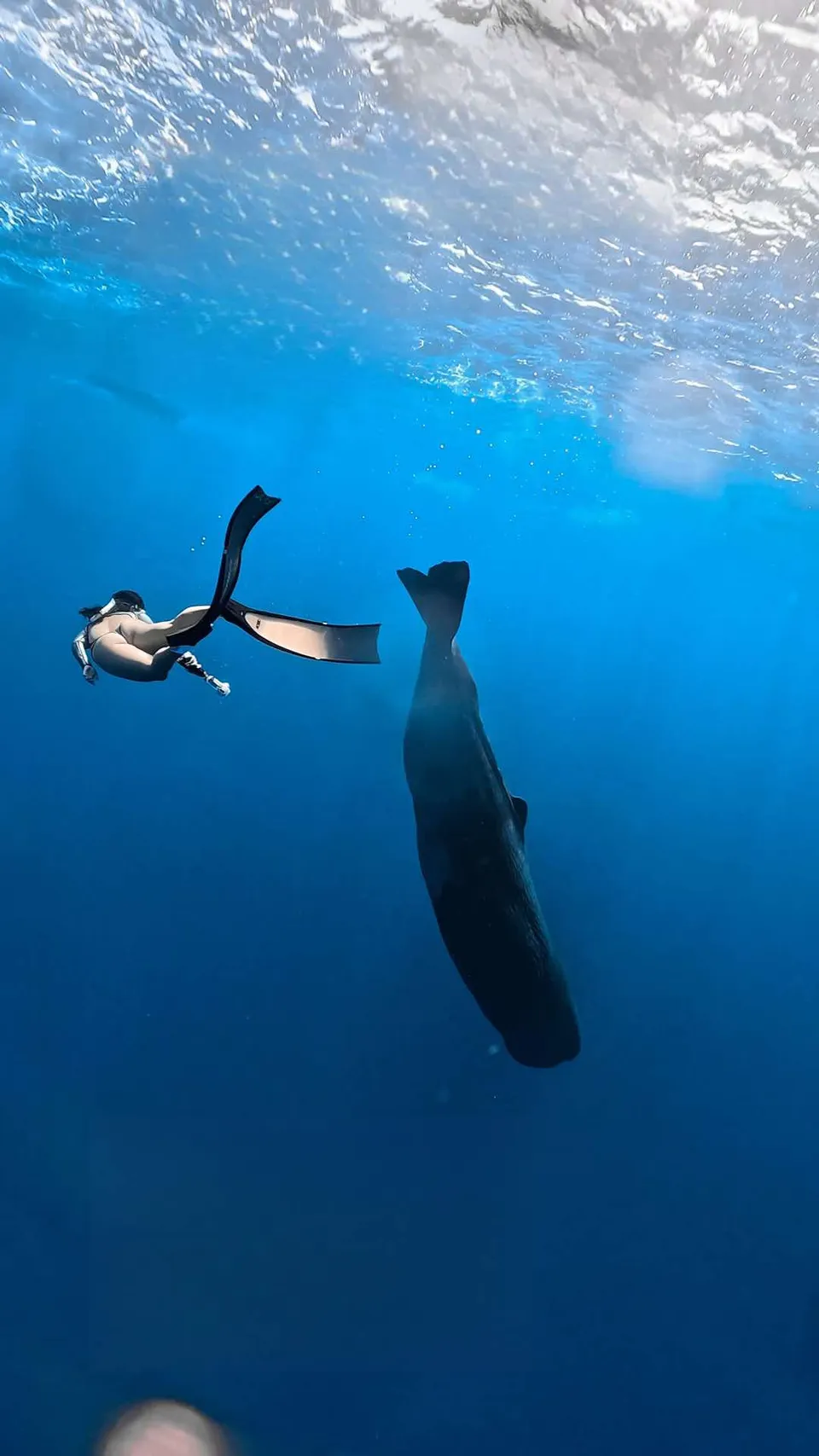
Freediving courses in Taiwan are typically conducted in deep pools or calm, sheltered waters. When swimming with whales and dolphins, however, you will almost certainly encounter a variety of sea conditions and currents. Before joining a trip, honestly assess yourself:
- Given the currents and waves, from which part of the boat should you enter the water?
- Are you able to clear your mask and snorkel repeatedly in quick succession?
- Can you control your direction to avoid colliding with marine animals, the boat hull, or the propeller at the stern?
- Do you have a safety awareness, a dive buddy system, and the ability to stay within rescue distance of your buddy?
- If you become separated from your buddy or the boat, can you manage on your own?
2. Choosing a Commercial Tour
Students who have taken my courses know that I place very high demands on safety. I generally do not take on simultaneous roles of photography and teaching/supervision for multiple participants — especially in open water. When photography is involved (whether being photographed or shooting), it is usually impossible to properly look after students' safety at the same time.
Does the group you're joining have participants at a comparable level to you? Is there someone you know well and can mutually watch out for? Or does the tour include a dedicated safety instructor? In freediving, supervision cannot be a one-to-many arrangement, because the instructor or safety diver is also diving on a single breath — if multiple people require rescue assistance simultaneously, who gets helped first? This is why "buddy capability matching, student-to-instructor ratios, and safety supervision arrangements all matter enormously."
Fishman Freediving and Mermaid Ocean have, over many years of diving activities, only accepted our own students on trips. This is because the instructors understand each student's individual capabilities and can arrange buddy safety pairings accordingly. We also train students in freediving skills, rescue techniques, and ocean safety — and we always have safety coverage on our outings.
If you are joining a group trip organised online, please evaluate carefully — including "the organiser's ocean competence, experience, crisis management ability, rescue capability, professional certifications, whether a licensed travel agency is involved, insurance, and more."
Holding a freediving instructor certification and having underwater photography experience does not automatically qualify someone to run paid, professional activities in open water. Additional experience and safeguards are required.
Fishman Freediving Instructor Audrey
Online group trips are everywhere, but since it's your life, you should never simply hand it over to someone else or rely entirely on another person. Carefully assess whether a given trip and group are right for you.
3. Accident Prevention When Swimming with Whales and Dolphins
On this same trip, in the same stretch of ocean, one person was bitten by a shark (because they grabbed and touched the shark's tail), and another was struck by a boat's propeller at the stern — both were transported to hospital for treatment.
I often say that prevention is better than cure. Touching marine life should always be avoided; in fact, you should maintain a safe distance. Yet sometimes — due to the goal of getting a shot, insufficient skill, or the unavoidable (being jostled, boat wake, or current) — contact happens. There is a difference, however, between accidental contact and deliberate touching. Either way, if it results in injury to yourself or damage to the animal or environment, the consequences are irreversible.
4. What Matters More Than Comparing Prices
Teaching, underwater photography, safety supervision, boat operation, dive guiding, and group leadership are all distinct professional disciplines. Enjoying safe, professional services comes at a fair and corresponding cost.
If you want to save money, going independent is actually the cheapest option — but to do so you need equivalent skills yourself to forgo those services. If you're organising a group trip and want to cut costs, your participants also need to have a certain level of ability (along with verifiable certifications and confirmed competence). Of course, everything can only be minimised as much as possible. If you hold a certification but haven't been in the water for a long time? Before a trip, most organisers will ask about your personal best, your dive travel history, and when you last dived or trained.
When weighed against all of this, life itself is priceless. One time might be luck — or you may simply have been fortunate enough to be well looked after. But you can't dodge the odds every single time, and life doesn't give you a second chance.
5. The Ocean Belongs to Everyone Who Loves It
Everyone has different motivations for learning freediving, mermaid swimming, or underwater dance. Even as the environment and trends change, every person can approach the ocean with their own sense of purpose. The very first lesson of an AIDA (freediving agency) Level 2 course makes this clear: freediving has a wide range of applications — you can love competition, spearfishing, simply observing marine life, underwater photography, fitness training, or pushing your personal limits.
The ocean and diving are not the exclusive domain of bikini influencers and glamorous models. Male divers often remark that some instructors and underwater photographers only look after and photograph the attractive women, editing only the most social-media-worthy clips and images because that's what drives views. But if you have collected fees for instruction, an activity, or photography services, every single client and student has paid — and each one is a human life.
That said, this kind of dynamic rarely has just one side to blame. Everyone has the right to choose, and everyone can make their own assessment.
6. The Risk of Hypothermia
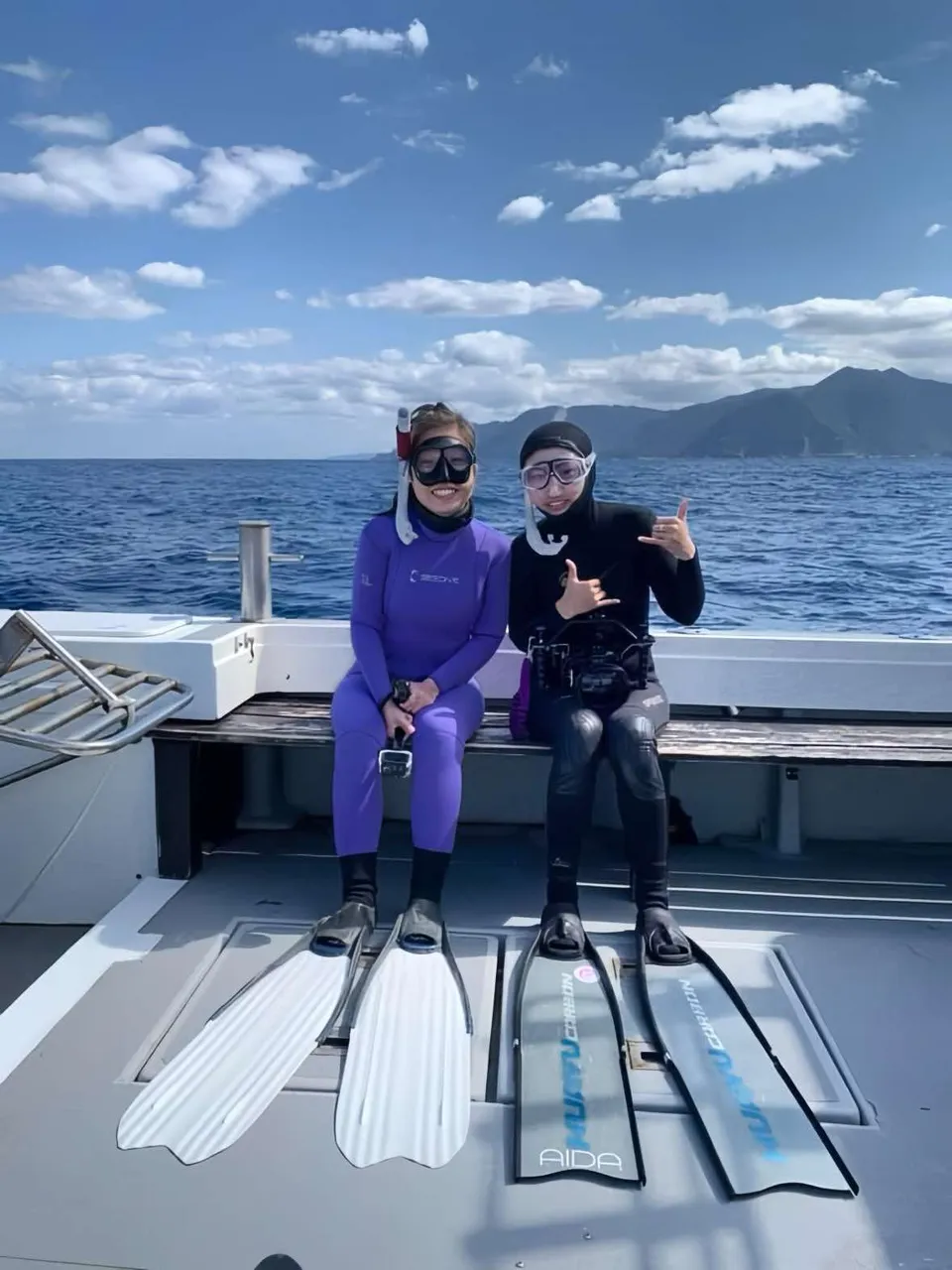
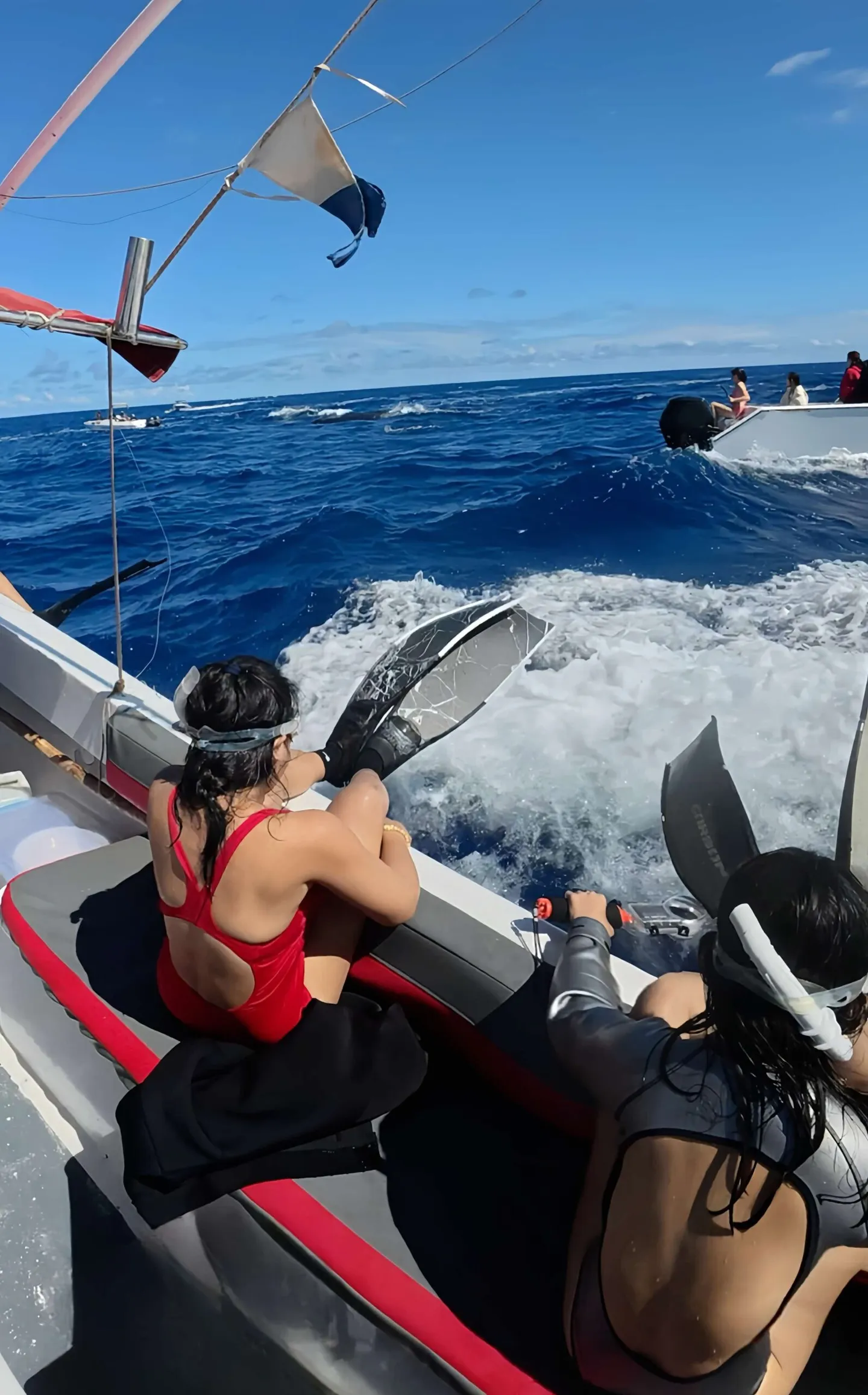
Boat dives typically involve long hours at sea, and conditions can change in an instant. Whale and dolphin encounters in particular may require extended searching and waiting. Most people opt for a rash guard or a boat jacket, but in windy or rainy conditions — or on a smaller vessel — even these may lead to hypothermia over an extended period. I recommend preparing a thicker, button-up waterproof rain jacket to wear over your outer layer, or a waterproof outer garment that covers your body core down to at least mid-thigh.
Hypothermia is a risk that people frequently overlook. Freediving theory also addresses it: when hypothermic, you cannot hold your breath and dive effectively, your heart rate is affected, and hypothermia can lead to shivering, confusion, and cardiac arrest faster than a lack of water or food. Bring a thermos of hot water and some quick-energy snacks as well.
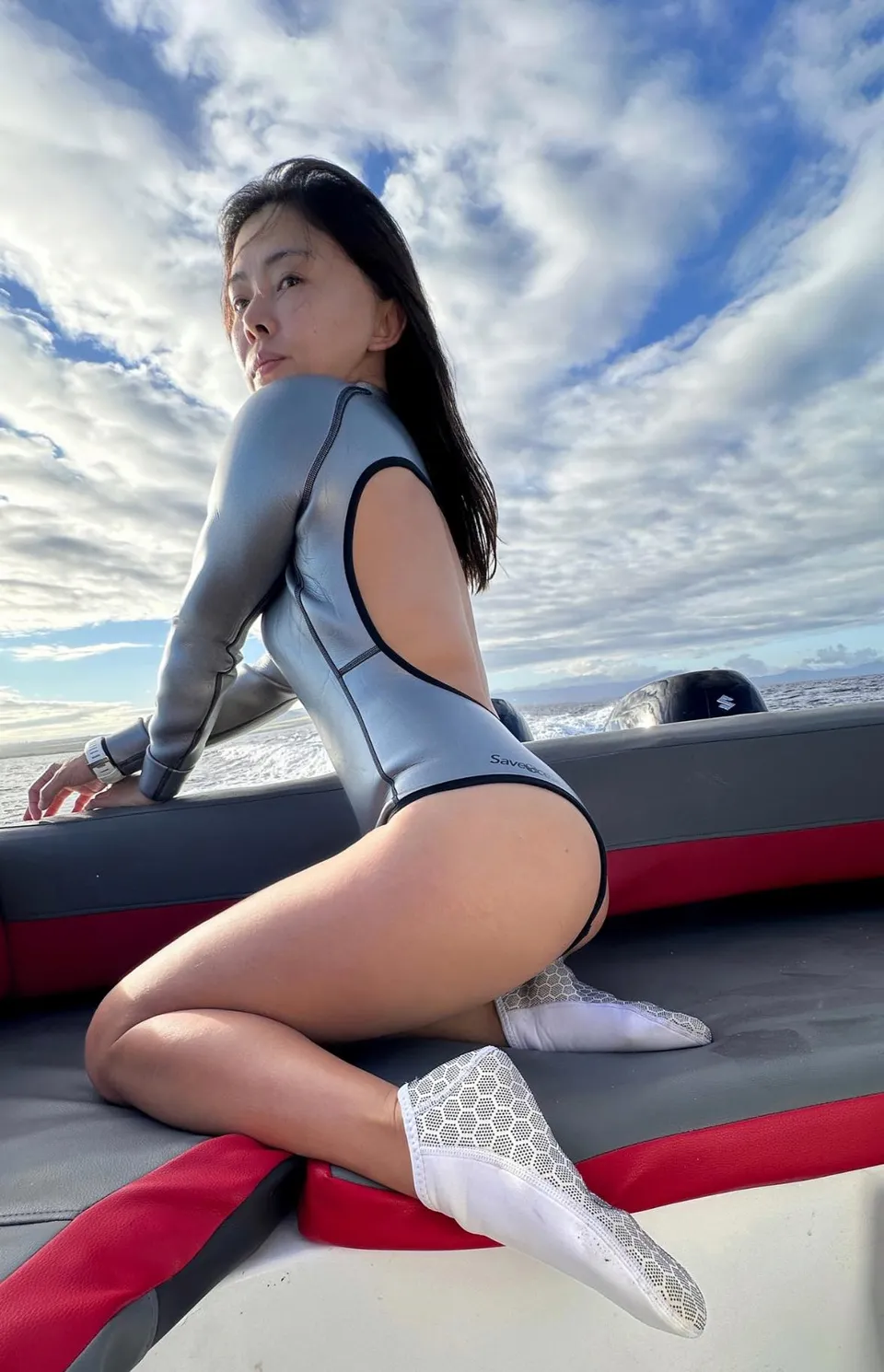
The above was written on 8 October 2024, beneath the skies of the Indian Ocean. Thank you to my students for capturing such beautifully composed photos — but most of the time I don't look like this. The real picture is usually exhausted and dishevelled, or bundled up head-to-toe in a wetsuit. Fishman Freediving Instructor Audrey.
Fishman Freediving Instructor Audrey
Related Links
Further Reading