Contents(3)
After exploring the dive sites in our Taiwan Diving Environment Overview – Northern Taiwan and Taiwan Diving Environment Overview – Southern Taiwan editions, it's time to take you even further afield. This time we'll be introducing the outlying island dive sites of Green Island, Orchid Island, and Penghu. Because these destinations are less accessible, the editors' reach is somewhat limited — we warmly welcome contributions from fellow divers to help us flesh out the dive site and dive shop listings. Every helping hand is greatly appreciated!
Green Island
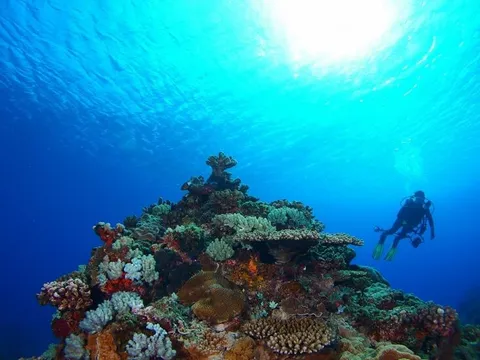
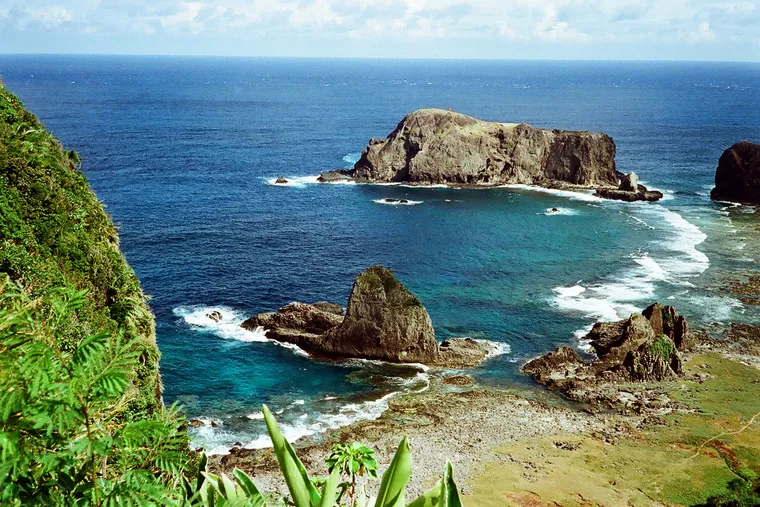
Green Island is renowned for its world-class visibility. Photo Credit 揪潛水同學會
Green Island lies in the Pacific Ocean to the southeast of Taiwan. The island has an irregular quadrilateral shape and covers an area of approximately 16 km², making it Taiwan's fourth-largest island. Fringing coral reefs surround the island on all sides, supporting a rich underwater ecosystem. Because it sits within the path of the Kuroshio Current, water temperatures remain above 20°C year-round — dropping to a winter low of around 22°C and climbing to a summer high of 30°C, with an annual average of approximately 25°C. These warm temperatures are ideal for coral growth. Its remote location — accessible only by ferry or small aircraft — limits human disturbance, and underwater visibility typically reaches 30–40 m, making it an outstanding destination for dive travel.
When southwesterly winds prevail in summer, the island's southwestern waters are more affected. In winter, when the northeast monsoon dominates, diving on the northeastern side is generally not recommended. The typhoon season in summer also requires extra attention: not only does visibility deteriorate after a typhoon passes, but driftwood accumulating in the harbor can lead to the island being cut off for up to a week. Keep this in mind when planning a dive trip.
Tidal range around Green Island is generally small, but the interplay between the island's shape, coastal currents, and the Kuroshio creates complex current conditions. Always listen carefully to your dive guide's briefing before entering the water, and pay close attention to tidal changes throughout the dive — at certain sites the temperature difference between high and low tide can reach 5°C, and current speeds also vary significantly with the season. When diving dramatic topographies such as the Grand Canyon or the Crack of Heaven, watch for sudden downwellings or upwellings, and maintain neutral buoyancy at all times to stay at a safe depth.
Because the average annual water temperature is 25°C, and because the island's Huoshaoshan and Amei mountains shelter it from seasonal winds, both summer and winter offer suitable dive sites. Ask your dive shop to plan your dive trip according to current sea conditions and weather. The dive sites below are categorized according to the fisheries resource reserve zones designated by the Taitung County Government.
- Nanliao Zone: From Guiwan Nose northward to just south of the airport, with Shilang Ecological Reserve at its center. Coral coverage here reaches 50%, making this the island's hub for snorkeling and ecotourism. Southwesterly winds in summer can stir up white-capped waves, so take extra care when entering and exiting the water.
Notable dive sites: Airport Fault, West Reef, Shilang Marine Reserve, Large Mushroom, Pole Reef, Six-Meter Reef, Clownfish Island (Nemo Island).
- Zhongliao Zone: From the airport northward to just west of Guanpian Nose. The Chaikou Ecological Reserve within this zone is famous for its hard coral colonies, with coverage as high as 75%. Guanpian Nose boasts the greatest diversity of nudibranchs on the entire island. This zone is almost entirely unsuitable for diving in winter, so pay special attention to this when planning your itinerary and choosing accommodation.
Notable dive sites: Suiyang Warship Reef, Zhongliao Harbor, Chaikou Marine Reserve, Yanglao Reef, Fazi Reef, Guanpian Nose.
- Guanpian Zone: From Guanpian Nose eastward to south of Guibei Bay. The main features are reef clusters interspersed with gravel beaches, well-developed igneous rock formations, and striking marine erosion scenery carved by wave action. Diving in this zone is not recommended once the northeast monsoon picks up.
Notable dive sites: Guanpian Outer Reef, General Rock, Crack of Heaven, Grand Canyon, Three Rocks, Loumen Rock Outer Reef, Nanzi Lake Outer Reef, Youzi Lake, Blue Cave, Gunshui Nose, Pegasus Wreck, Hot Spring Tower, Ziping Outer Reef, and more.
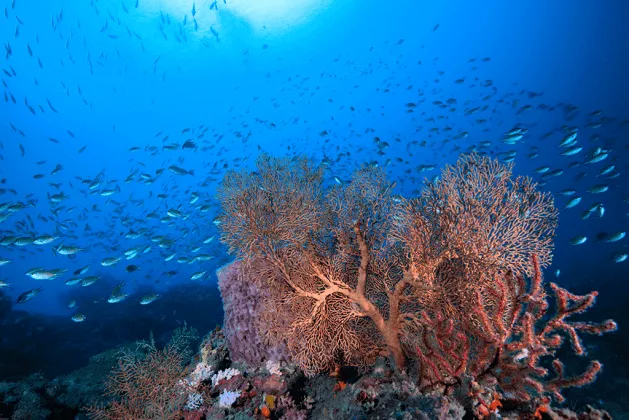
- Guiwan Zone: From the Dabaisha dive trail northward to just south of the northern entrance of Dago Tunnel. Although the coastline here is short, it is the most frequently visited diving zone on the island. The massive gorgonian / sea fan gardens on Dabaisha Independent Reef are the zone's standout attraction.
Dive sites in this zone include: Guiwan Whip-Coral Forest, Jizai Reef, Horseshoe Bridge, Church, Steel Reef, Dabaisha Independent Reef.


Orchid Island
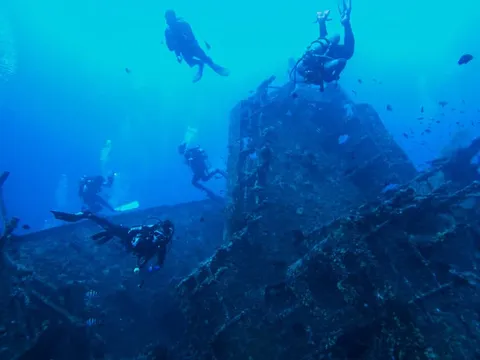
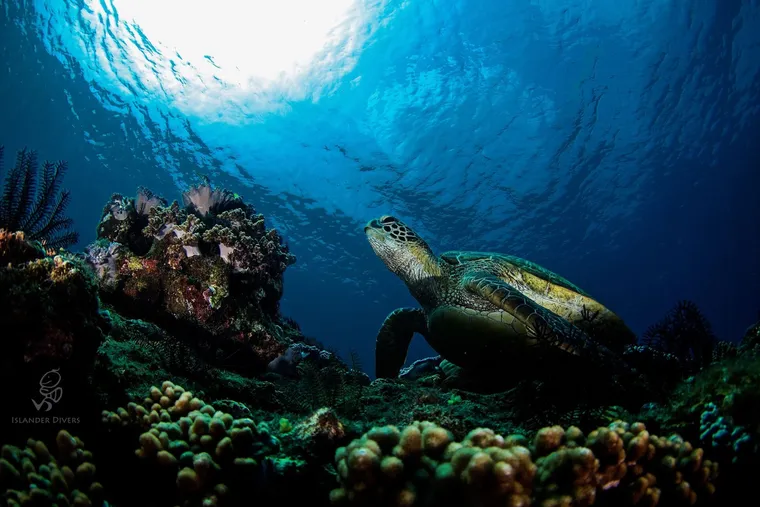
Crystal-clear visibility and great depths are the hallmarks of Orchid Island.
Orchid Island's earliest name was Pongso-no-Tawo, meaning "Island of People." In Hokkien, a phonetic approximation gave it the name Hongtouyu (Red Head Island). In 1946 it was renamed Orchid Island (蘭嶼) because of the abundance of Phalaenopsis orchids growing there. Located to the southeast of mainland Taiwan, Orchid Island is the second-largest outlying island after Penghu. Riding a scooter around the island takes roughly an hour and a half, and the permanent population of approximately 5,000 residents preserves a vibrant Tao (Dawu) indigenous culture that stands in striking contrast to life on the Taiwanese mainland.
The best diving season for Orchid Island runs from March to September — aside from summer typhoons, conditions are excellent for diving. Orchid Island is famous for its exceptionally high visibility, which can exceed 50 m, and for its deep diving opportunities. Sitting in the path of the Kuroshio, water temperatures stay between 21°C and 29°C year-round. However, due to the influence of the northeast monsoon and the Kuroshio, strong downwellings are frequently encountered at Orchid Island dive sites. The stretch between Siao Tao Gou and Old Man Rock is a well-known drift diving zone. Sudden strong currents should also be watched for at Airport Outer Reef, Warship Rock, and Twin Lions Outer Reef — boat captains should monitor conditions closely and be ready to modify the dive plan at any time.
Orchid Island's dive sites are divided into four main zones based on the island's tribal communities. Because the island is sizeable, travel time between dive sites should be factored into your dive plan; finding a suitable dive shop with appropriate transport arrangements will make your entire dive trip far more comfortable.
- Hongtou Village to Yuren Village Nearshore areas are mostly sandy seabed and are susceptible to southwesterly airflows that can blanket coral surfaces with sediment, making the underwater topography relatively monotonous. However, moving a little further from Hongtou Harbor, the terrain becomes progressively more varied with increasing distance from shore. The Siao Tao Gou area features a prominent headland; summer current speeds reach 1–3 knots, and the corners of rock walls are prone to forming downwellings and upwellings — divers must pay close attention.
Notable dive sites: Badai Bay Wreck, Badai Bay Aquarium, and Airport Outer Reef.
- Yeyou Village This zone is mostly a gravelly sand shoreline, though hard coral colonies are present in reasonable numbers. Located on the southwestern side of Orchid Island, it becomes the preferred site for introductory and training dives as soon as the northeast monsoon season begins. In some spots, dramatic depth changes have produced dense aggregations of hard and soft corals, and most of these dive sites are very close to the coastal highway, making them easily accessible as shore dives.
Notable dive sites: Blue Cave and Yeyou Fault.
-
Langdao Village Located on the northern side of the island, Langdao's dive sites are mostly near the coastal highway and are the easiest shore dive sites to access on the whole island. The nearshore topography on this side is dominated by fringing reefs, with large concentrations of hard coral between 3 m and 15 m depth, rich biodiversity, and varied terrain — divers sometimes have to squeeze through crevices in the reef, which has become a distinctive feature of diving here. Dive sites include Twin Lions, Mother Hen Rock, and Jade Girl Rock. However, because this side faces north, diving here is not recommended once the northeast monsoon sets in.
-
Dongqing Village The dive sites here are known for their dramatic undulating topography — underwater, the scenery sometimes resembles a ring of mountains, offering a sense of exhilarating openness. Sites like Yongxing Reef feature dense aggregations of coral and fish, making them ideal for underwater photography. Wild Silver Small Canyon and Crack of Heaven also reveal natural corridor-like formations and are well worth a visit. All of these sites involve considerable depth, and boats typically do not anchor here, making neutral buoyancy control especially critical.
Penghu
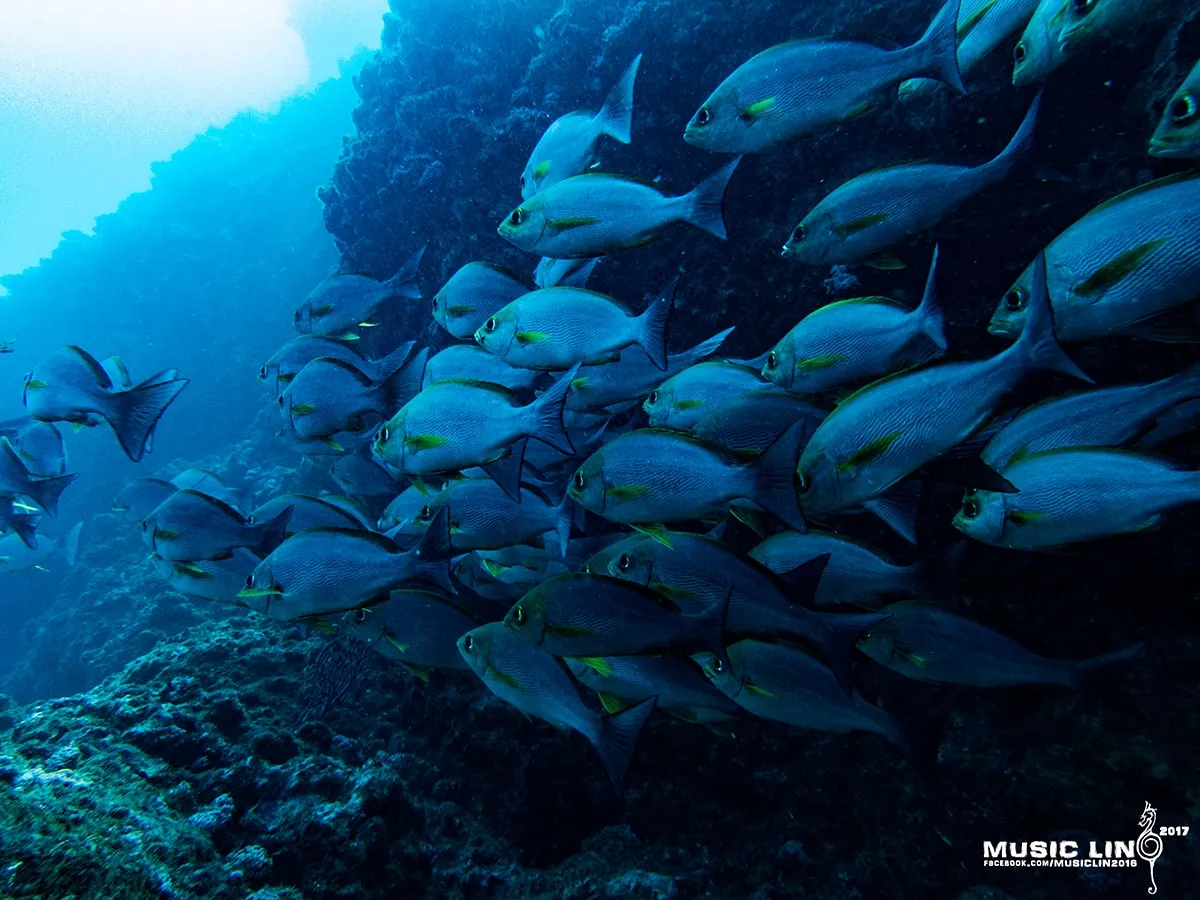
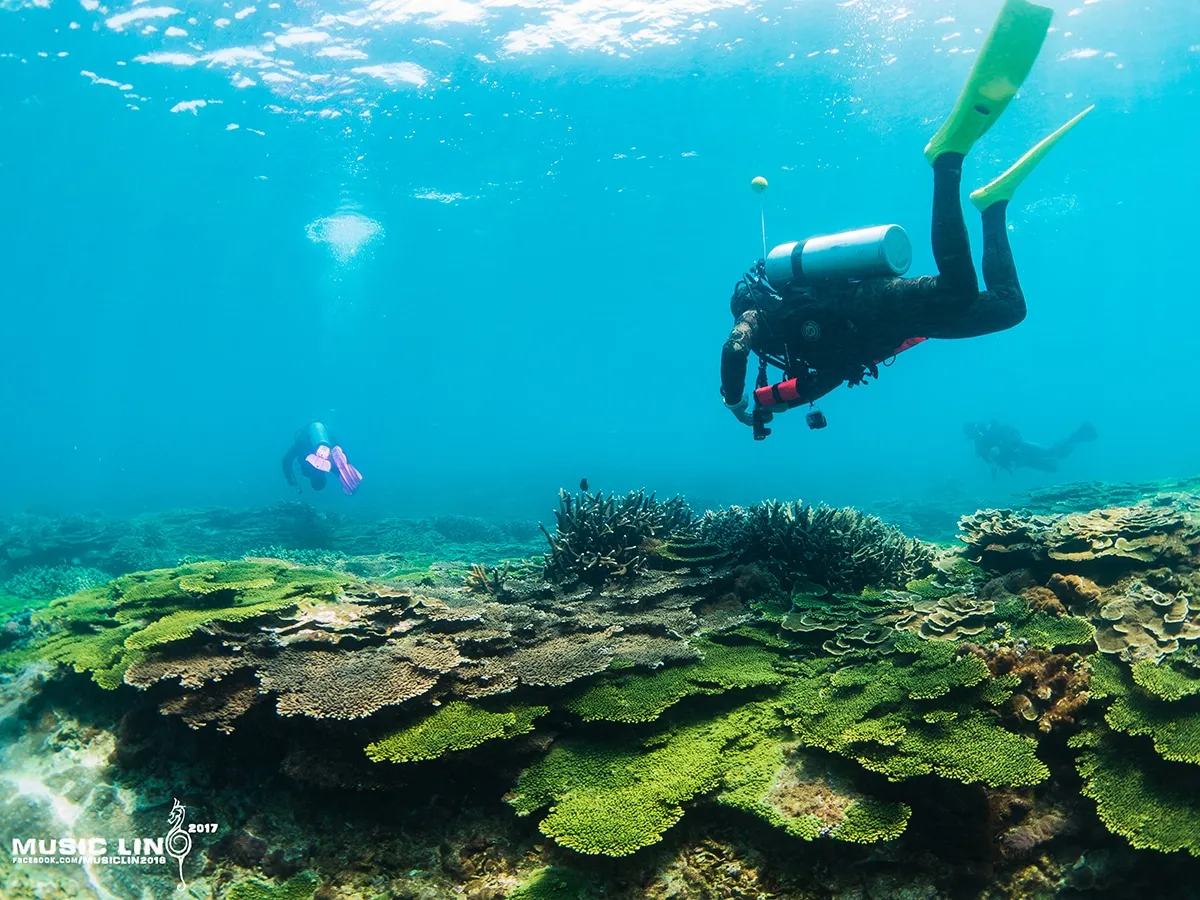
A dive trip to Penghu will treat you to some truly surprising experiences. Photo Credit Music Lin
Penghu is located to the west of mainland Taiwan and is Taiwan's largest outlying island group. Its widespread volcanic basalt formations create an underwater landscape unlike anything found elsewhere in Taiwan. The shallow coastal waters enjoy abundant sunshine year-round, and the warm waters of a Kuroshio branch current flowing through the area supply ample nutrients for both soft and hard corals, in turn attracting thriving fish populations.
The Sinan Four Islands (Southern Four Islands) have in recent years been actively promoted by the government into a national park, and under the watchful eye of many ocean conservation advocates, the ecosystem is gradually recovering its former richness. This marine area has been called Taiwan's "species seed bank," reflecting how well-suited the environment is for nurturing marine life. The Southern Four Islands encompass the main islands of East Yupingyu, West Yupingyu, Dongji Island, and Xiji Island, along with 13 surrounding islets.
Penghu is swept by the northeast monsoon in winter (October through March of the following year) and by southwesterly winds in summer. Strong wind days total as many as 223 per year, leaving only 132 days suitable for water activities. The recommended diving season is July, August, and September; accounting for the impact of typhoons on sea conditions before and after they pass, the number of actually suitable diving days in Penghu is not many. The annual average sea temperature is 23.7°C, dropping to 12–26°C in winter and ranging from 23–31°C in summer.
Currents in the Penghu area are mainly influenced by the China Coastal Current and the Kuroshio. Except during extreme weather events such as typhoons or cold surges, the current flows in a fairly stable direction. Particular attention should be paid to tidal shifts — at certain spots the topography can cause sudden whirlpool currents. Divers should be especially vigilant, and it is advisable to avoid diving during the peak of tidal changes.
- Southern Four Islands — Dongji Island & Xiji Island Dive Zone
Dongji Island is composed of basalt, and apart from sandy beaches on either side of the harbor entrance, the coastline consists mainly of marine-eroded sea cliffs; shore diving is not recommended here. Coral reefs ring the entire island: the shallows on the eastern side provide calm water ideal for snorkeling, while the northeastern corner, near the marine erosion platform, offers rich topography and abundant fish life well suited to recreational diving.
Popular dive sites: Donggong Front, Daping Front.
Xiji Island has coral reefs concentrated along its southern side. The waters feature dramatic basalt formations and large aggregations of fleshy soft corals, with fish weaving throughout — an excellent choice for a dive trip. Popular dive sites: Flower Wreath Park, Xiji Castle.
- Xiji Fault — East Yupingyu & West Yupingyu Dive Zone
East Yupingyu is a basalt mesa. Coral here is dominated by families Acroporidae, Poritidae, and Pocilloporidae. The eastern side of the island features boulder reefs and a five-meter reef rising from sandy terrain, offering varied topography. Currents are moderately strong and run from southeast to northwest. Marine erosion features — channels and caves — are prominent here, and fish life is abundant.
Popular dive sites: Tazai North, Laizai Tail, Five-Meter Reef, Boulder Reef, Zhongzi West, Erwen South.
West Yupingyu is a Penghu nature ecological reserve; landing on the island and diving in its surrounding waters is not permitted. Nevertheless, its towering sea cliffs and surrounding islets make it a highly worthwhile dive destination. According to a 2009 survey, West Yupingyu has the highest coral coverage of all the Southern Four Islands, meaning its coral ecosystem and marine species diversity are comparatively rich.
Popular dive sites: Ecological Corridor, Qingtian Rock, West Yupingyu North, Sand Path Maze.
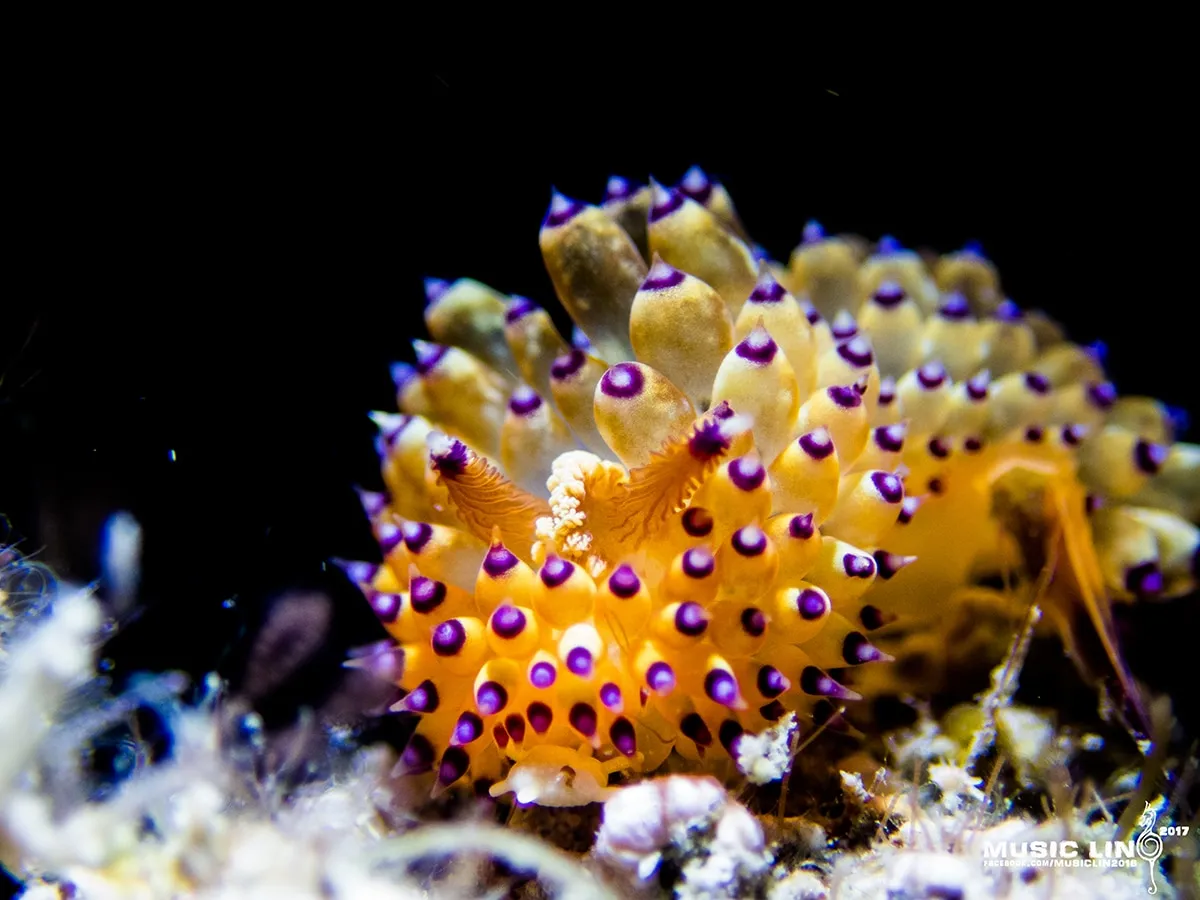
Penghu is also an excellent destination for macro photography. Photo Credit Music Lin
Frequently Asked Questions
How is a BlueTrend dive trip different from an unknown, no-name dive group?
Choosing us means full peace-of-mind protection and a smooth experience from start to finish. Every trip we run holds to three things.
First, full legal protection and a professional dive leader: we strictly follow Taiwan's travel regulations and provide complete travel-agency liability insurance, travel insurance, trip-inconvenience insurance and dive insurance. Every group is accompanied by a certified, foreign-language dive leader who joins you on both the dives and the land itinerary, liaising seamlessly with local dive shops and operators on your behalf to keep things running smoothly — the person our travellers trust most.
Second, fully licensed with secure payments: every payment goes into a licensed travel agency's account, with multiple safe payment channels (bank transfer, credit card and more) and a legal collect-and-remit receipt, so every transaction is open, transparent and protected, avoiding the fraud and dispute risks of transferring money privately to an individual.
Third, hand-picked quality we vet in person: every trip, dive site and partner shop is scouted on the ground by our own team, from the guides' professionalism and safety standards to the food, lodging, environment and service details on land, all vetted by us so you don't get caught out.
I want to sign up for a dive trip. Are there certification-level or logged-dive requirements?
Each dive site is different, so the entry bar varies. 'Bali Tulamben', for instance, is relatively beginner-friendly. 'Malapascua in the Philippines' is also beginner-friendly, but since thresher sharks tend to cruise between 20 and 30 metres, we recommend AOW certification with 20+ logged dives to enjoy this trip comfortably. For 'the Maldives' or 'Palau', we suggest AOW with 50+ logged dives for a more relaxed experience. If you're not sure whether your experience fits the trip you want, message us and our dive editors will assess it and help you find the trip you'll feel safest on.
Can I join if I'm signing up alone? How are rooms arranged?
Plenty of our travellers sign up solo! For rooms and beds, we prioritise pairing you with a same-gender traveller, and if you'd rather have your own space you can pay the difference to upgrade to a single room. For the diving, our professional leader will pair you with a suitable buddy, and with the happy vibe on our trips you'll quickly make a great group of dive friends. Many people sign up alone, make new friends, and end up organising the next trip together!
Does the trip fee include dive insurance, gear rental, taxes and instructor tips?
It depends on the trip, the destination's regulations and the local operators. Every BlueTrend dive trip has a detailed web page with a clear 'included / not included' list, transparent and with no hidden charges. All payments are collected by a licensed travel agency, with a standard-form contract for your protection.
I'm a new diver / haven't dived in a long time — will I fall behind the group?
Before you complete your booking, our team assesses a suitable trip based on your certification level and experience. Before departure, we strongly recommend taking time to refresh in Taiwan with an instructor, or a fun dive to get your feel back. On the trip itself, our professional dive leader groups and pairs everyone by experience, keeps a close eye underwater on travellers who need extra care, and steps in to help right away.
Will the photos and videos taken during the trip be shared with us?
During the dives, 'safety' is always the leader's top priority, so whenever it's suitable and safe the leader will capture great shots and record the best moments. During or after the trip, we compile a cloud album for all travellers to download, so you go home loaded with memories!
Besides your scheduled trips, can you arrange a private group charter or independent travel for me and my friends?
Absolutely! Besides group trips, we also arrange private group charters and independent travel. We can communicate, enquire and coordinate services with local operators based on your needs, saving you time and effort and taking the language barrier off your plate, to tailor the smoothest, most reassuring dive trip just for you. Contact our LINE support and our editors will arrange it for you!