Following the previous introduction to Taiwan Diving Environment Overview – Northern Taiwan, you should now have a general sense of the dive sites in northern Taiwan. Next, we turn our attention to the southern part of the main island to see what kind of wonders Xiaoliuqiu and Kenting have in store for divers!
After reading this article, the Editor also recommends checking out the Taiwan Diving Environment Overview – Outlying Islands!
Southern Outlying Island – Xiaoliuqiu
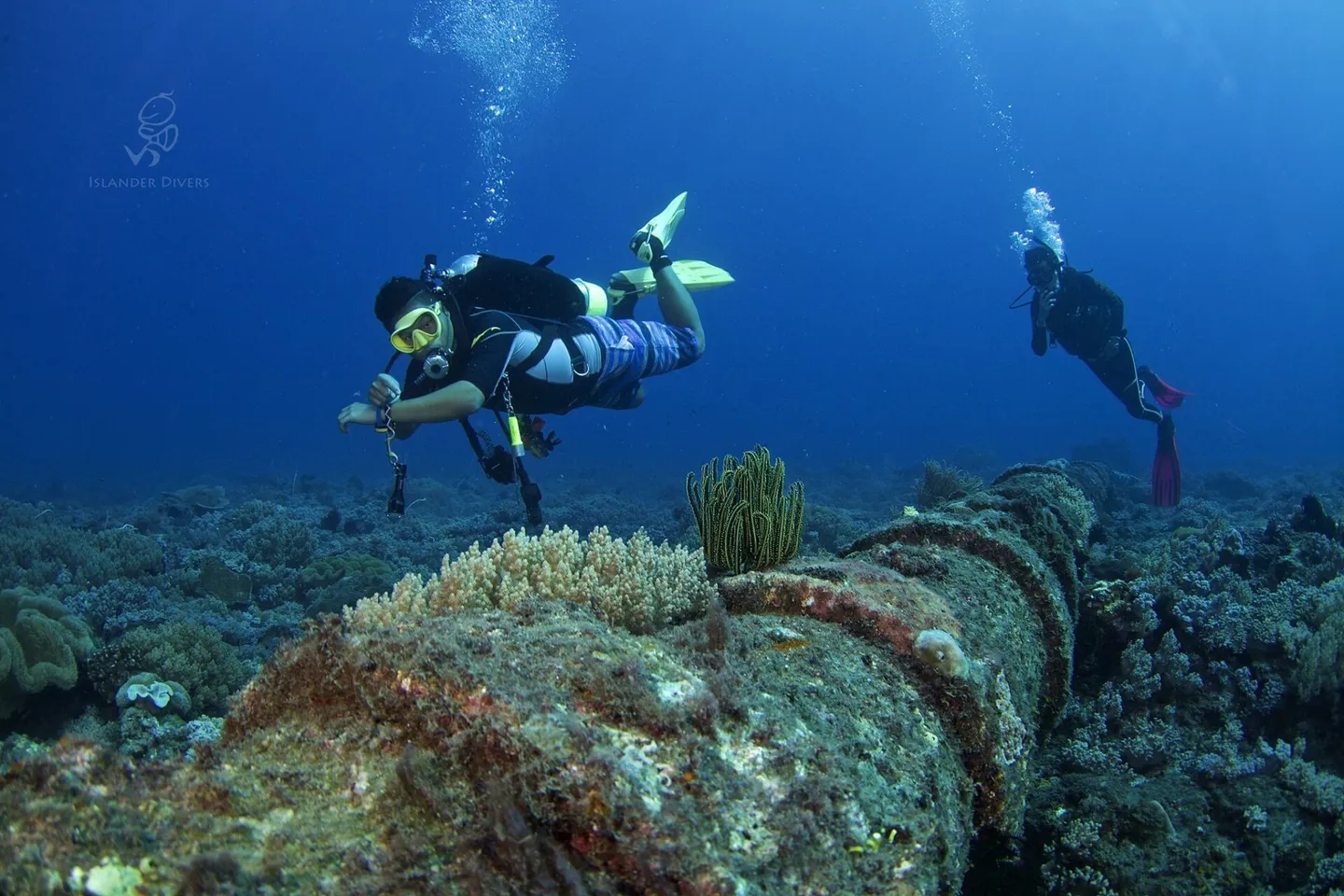
One of the highest concentrations of sea turtles in the world. Photo Credit 島人海洋文化工作室
Xiaoliuqiu is located to the southwest of the main island of Taiwan and is a coral reef island. You can get there by taking the High Speed Rail to Kaohsiung Station or the Taiwan Railways to Kaohsiung Station, then transferring to a shuttle taxi to Donggang (shuttle from HSR Kaohsiung Station to Donggang pier is NT$200 per trip; from Kaohsiung Train Station to Donggang pier is NT$150 per trip), and finally boarding a speedboat to Xiaoliuqiu (see the Xiaoliuqiu ferry timetable). Xiaoliuqiu is one of Taiwan's most accessible and affordable dive destinations in terms of transportation costs.
Influenced by a branch of the Kuroshio Current, Xiaoliuqiu enjoys the highest average annual sea temperature of anywhere in Taiwan, remaining above 25°C year-round — an average of 25.0°C in January and 29.4°C in July. In winter, its sea temperature is more than 3°C warmer than the January average of 22.0°C recorded at Houbihu in Hengchun, another well-known tropical resort area in Taiwan, making Xiaoliuqiu one of the best places in Taiwan to enjoy snorkeling and other ocean activities during the colder months. The island's warm waters also nurture more than a thousand species of coral reef.
Xiaoliuqiu is especially famous for its congregation of sea turtles. Sea turtles are migratory animals and would not normally linger in one place for long, yet surveys have recorded over 200 turtles as permanent residents in the waters surrounding Xiaoliuqiu — a truly remarkable sight. This can be attributed to the fact that Xiaoliuqiu was the first area in Taiwan to enforce a mandatory net-free zone within three nautical miles of shore. In addition to strict enforcement by the local fishermen's association, the "Xiaoliuqiu Marine Volunteer Team" has been actively removing abandoned fishing nets and ghost nets from surrounding waters, quietly transforming the area into a habitat where sea turtles can thrive. In 2015, a diver even spotted a passing Whale Shark, further proving that Xiaoliuqiu's conservation efforts have been bearing fruit. Whether snorkeling, diving, or simply standing on shore, you stand a good chance of encountering sea turtles here. Please resist the excitement of chasing or touching them, as doing so can cause harm. Simply stay still and move slowly — a turtle might just mistake you for another marine creature and swim over to say hello. Beyond sea turtles, Xiaoliuqiu is also home to other fascinating marine life, such as garden eels.
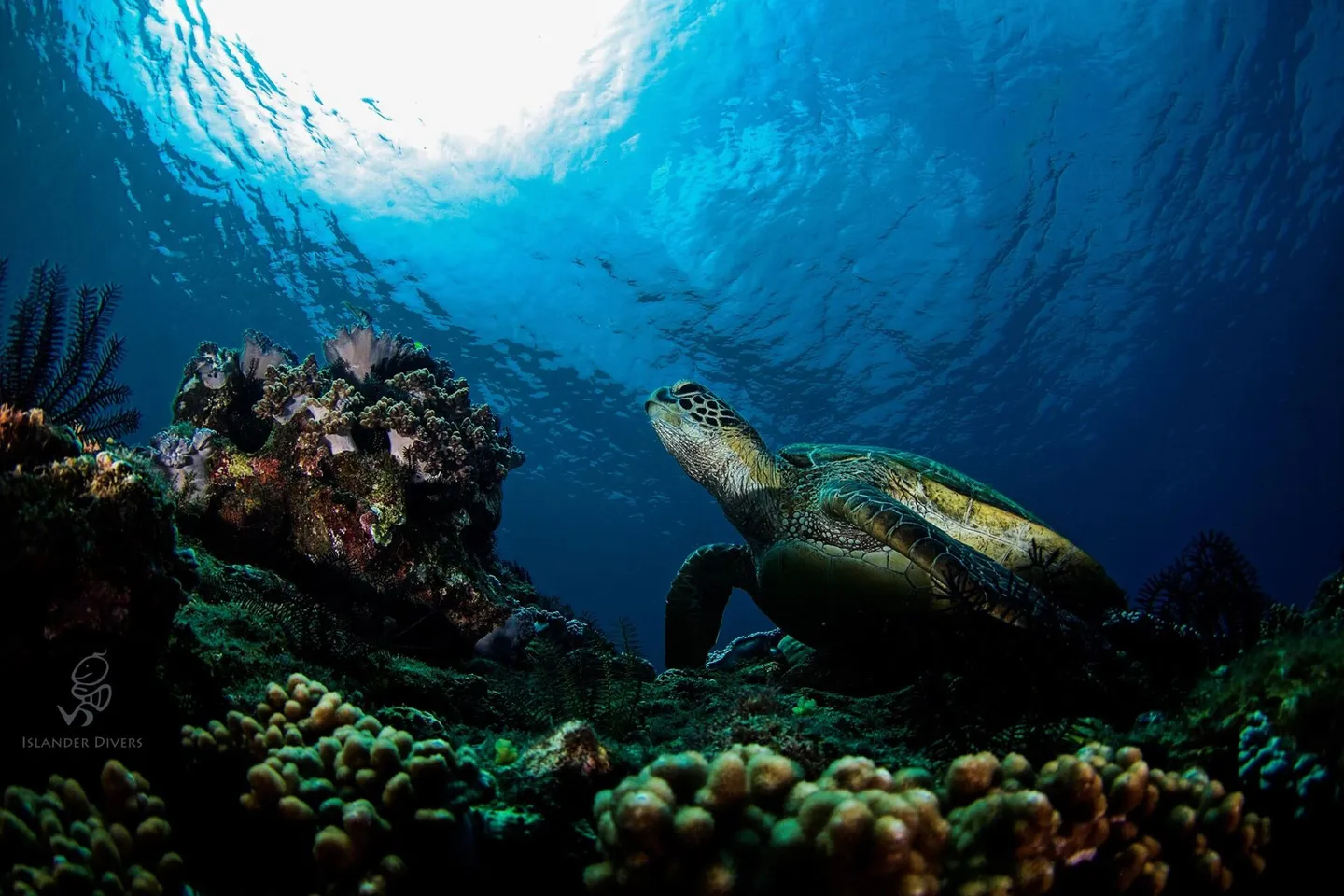
Up-close encounters with sea turtles in their natural habitat. Photo Credit 島人海洋文化工作室
In addition to sea turtles, one of Xiaoliuqiu's notable dive sites is an artificial reef wreck — the Zhen Hai warship. However, as it sits at considerable depth and experiences variable currents, it is advisable to check with local dive shops beforehand to determine whether conditions are suitable for a dive on any given day.
Xiaoliuqiu's dive sites can be divided by dive type:
Shore dives: Vase Rock, Soft Coral Zone, Hard Coral Zone, Haiban Bay, Dafu West, Zhong'ao Beach, Duozaiping
Boat dives: Zhong'ao Wreck, Power Plant Site, Haizi Kou (Zhen Hai Wreck), Wugui Cave Drift Zone, Venice Wreck, Broken Wreck, Pole Reef, Beauty Cave Drift Dive


Southern Diving Destination – Kenting
Kenting sits at the southernmost tip of Taiwan in a tropical climate zone. The annual average temperature is around 23°C, and underwater temperatures range from approximately 24 to 28°C, making it a highly suitable dive destination. Located within Kenting National Park, conservation practices here are more comprehensive than in most other parts of Taiwan, resulting in comparatively rich underwater ecosystems. Thanks to its geography, suitable dive sites can still be found even in winter when the seasonal "Luoshan Wind" (foehn wind) picks up. With dive sites ranging from beginner training spots to advanced boat dives, Kenting is an excellent place to plan a diving trip.
In summer, southerly winds combined with frequent typhoons reduce visibility considerably. Another concern is that illegal water sports operators occupy much of the coastline — high-speed boats and jet skis pose serious safety hazards for divers. It is therefore advisable to avoid the peak summer holiday season and instead visit in winter or spring for a more peaceful dive experience. Because Kenting is suitable for diving year-round, dive training centers are plentiful throughout the area, allowing you to shop around and find the dive site plan that best suits you.
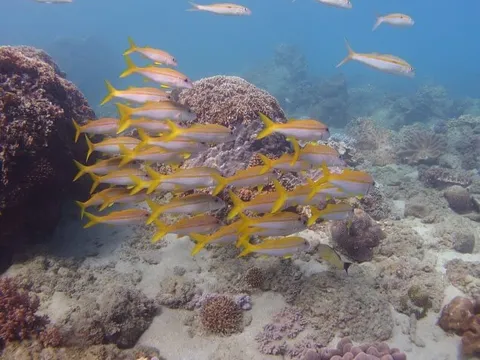
Stunning schools of fish inside the Houbihu marine protected area in Kenting. Photo Credit 林佑平
Kenting's notable dive sites:
- Nuclear Power Plant No. 3 Outlet: This is one of the most popular training and introductory dive sites in the Kenting area. Average depth does not exceed 15 m, yet the site offers remarkably diverse marine life — barracuda schools, cuttlefish gatherings, Giant Grouper, Triton's trumpets, and during night diving, the entire seabed carpeted with sleepy rabbitfish. Because the shoreline is rocky reef terrain, extra caution is required when entering and exiting the water if surf is present.
Sites in this area: Drain Outlet, Left Bank of Outlet – Fish Feeding Zone, Garden Soft Coral Zone
- Houbihu Boat Dives: The most famous boat dive sites at Houbihu are the Twin Peak Blue Cave and Independent Reef, which are featured on nearly every boat dive itinerary. Shore dives include a fish feeding area and soft coral zone. Being a marine protected area with the added benefit of regular fish feeding, this site boasts an abundance and diversity of fish life that rivals many overseas dive destinations. The bottom is mostly fine sand and coral reef, so good neutral buoyancy is essential for maintaining visibility and safety, and for avoiding damage to the marine ecosystem.
Sites in this area: Twin Peak Blue Cave, Independent Reef
- Hejie Wreck: Hejie is another popular Kenting dive site. In addition to the partial wreck remains resting at around 30 m, the site regularly features sea turtles, stingrays, and schools of migratory barracuda. Beyond fish-watching, Hejie is best known for macro photography — on shore you'll see enthusiasts arriving with ever-larger camera rigs, all to photograph ever-smaller nudibranch subjects. At 15 m depth, a flame scallop has also taken up permanent residence and become something of a local landmark. Nearby, Wanlitong and Shanhai offer additional sites well-suited for beginner training.
Sites in this area: Hejie, Wanlitong, Shanhai
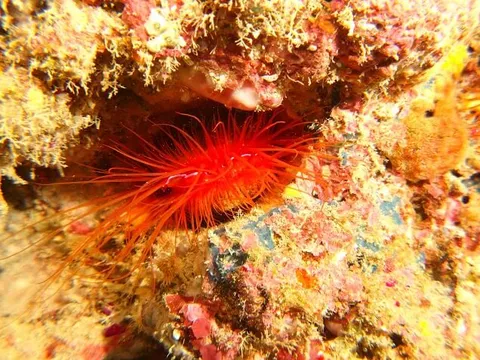
The flame scallop — a unique resident of Hejie. Photo Credit 林佑平
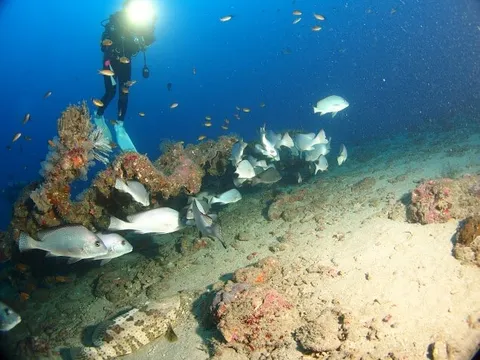
A school of fish sheltering beneath the wreck
Frequently Asked Questions
How is a BlueTrend dive trip different from an unknown, no-name dive group?
Choosing us means full peace-of-mind protection and a smooth experience from start to finish. Every trip we run holds to three things.
First, full legal protection and a professional dive leader: we strictly follow Taiwan's travel regulations and provide complete travel-agency liability insurance, travel insurance, trip-inconvenience insurance and dive insurance. Every group is accompanied by a certified, foreign-language dive leader who joins you on both the dives and the land itinerary, liaising seamlessly with local dive shops and operators on your behalf to keep things running smoothly — the person our travellers trust most.
Second, fully licensed with secure payments: every payment goes into a licensed travel agency's account, with multiple safe payment channels (bank transfer, credit card and more) and a legal collect-and-remit receipt, so every transaction is open, transparent and protected, avoiding the fraud and dispute risks of transferring money privately to an individual.
Third, hand-picked quality we vet in person: every trip, dive site and partner shop is scouted on the ground by our own team, from the guides' professionalism and safety standards to the food, lodging, environment and service details on land, all vetted by us so you don't get caught out.
I want to sign up for a dive trip. Are there certification-level or logged-dive requirements?
Each dive site is different, so the entry bar varies. 'Bali Tulamben', for instance, is relatively beginner-friendly. 'Malapascua in the Philippines' is also beginner-friendly, but since thresher sharks tend to cruise between 20 and 30 metres, we recommend AOW certification with 20+ logged dives to enjoy this trip comfortably. For 'the Maldives' or 'Palau', we suggest AOW with 50+ logged dives for a more relaxed experience. If you're not sure whether your experience fits the trip you want, message us and our dive editors will assess it and help you find the trip you'll feel safest on.
Can I join if I'm signing up alone? How are rooms arranged?
Plenty of our travellers sign up solo! For rooms and beds, we prioritise pairing you with a same-gender traveller, and if you'd rather have your own space you can pay the difference to upgrade to a single room. For the diving, our professional leader will pair you with a suitable buddy, and with the happy vibe on our trips you'll quickly make a great group of dive friends. Many people sign up alone, make new friends, and end up organising the next trip together!
Does the trip fee include dive insurance, gear rental, taxes and instructor tips?
It depends on the trip, the destination's regulations and the local operators. Every BlueTrend dive trip has a detailed web page with a clear 'included / not included' list, transparent and with no hidden charges. All payments are collected by a licensed travel agency, with a standard-form contract for your protection.
I'm a new diver / haven't dived in a long time — will I fall behind the group?
Before you complete your booking, our team assesses a suitable trip based on your certification level and experience. Before departure, we strongly recommend taking time to refresh in Taiwan with an instructor, or a fun dive to get your feel back. On the trip itself, our professional dive leader groups and pairs everyone by experience, keeps a close eye underwater on travellers who need extra care, and steps in to help right away.
Will the photos and videos taken during the trip be shared with us?
During the dives, 'safety' is always the leader's top priority, so whenever it's suitable and safe the leader will capture great shots and record the best moments. During or after the trip, we compile a cloud album for all travellers to download, so you go home loaded with memories!
Besides your scheduled trips, can you arrange a private group charter or independent travel for me and my friends?
Absolutely! Besides group trips, we also arrange private group charters and independent travel. We can communicate, enquire and coordinate services with local operators based on your needs, saving you time and effort and taking the language barrier off your plate, to tailor the smoothest, most reassuring dive trip just for you. Contact our LINE support and our editors will arrange it for you!