Contents(6)
The Editor says: Staying aboard a luxurious yacht for a liveaboard has always been the dream diving experience for divers everywhere. Yet while liveaboard diving is commonplace in Thailand, the Maldives, and beyond, it has never truly taken root in Taiwan — a country that proudly calls itself a maritime nation. The issue is shaped by government policy and public attitudes, and it has repeatedly limited Taiwanese people's opportunities to get close to the ocean. Fortunately, in 2018 Montefino Yachts led the industry by building Taiwan's first liveaboard yacht. Not only does this vessel elevate Taiwan's dive tourism industry to an entirely new level, it also challenges Taiwan's bizarre culture of keeping people away from the sea — with the hope of returning the right to the ocean back to the people.
What Is Liveaboard Diving?
A liveaboard is a convenient and popular way to dive abroad. The basic idea is that you live on the boat — no need to worry about accommodation or meal planning. It's a relaxed cycle of diving, eating, and sleeping, making it a wonderful option for city dwellers who want to completely unwind through diving.
In addition, liveaboards typically sail at night. That means after finishing your dives at point A in the morning, the boat sails overnight to point B, and by the next morning divers are refreshed and ready to jump in again. A single liveaboard trip lets you experience multiple dive sites, cutting out the time spent on land transport. On board, you simply eat, sleep, chat about diving, and share underwater photos — pure bliss!


Taiwan's First Liveaboard Yacht
Although Taiwan's marine recreation industry is still in its early stages, the country's yacht manufacturing sector is world-class. In 2018, Taiwan overtook the United States to become the fourth-largest producer of large yachts globally, and the top producer in Asia. The Editor was invited to join the trial liveaboard trip, which featured a yacht built by Taiwan's leading yacht manufacturer, Montefino Yachts. Let's start by feasting our eyes on the 4K footage shot by ocean videographer Mingge!
The itinerary departed from Kaohsiung Port on Thursday evening, sailed overnight to Kenting, conducted diving activities in Kenting waters on Friday and Saturday, then arranged diving around Xiaoliuqiu on Sunday before returning to Kaohsiung Port. According to Montefino Yachts, in addition to the Kenting–Xiaoliuqiu route, they plan to develop island-hopping dive itineraries to Penghu, Green Island, and Orchid Island as well. Who knows — someday an island-hop all the way to Yonaguni in Okinawa, Japan, for Hammerhead Sharks might even be on the cards!
This vessel was designed with a multi-purpose concept in mind: it can serve as a general yacht for social gatherings, and with the seat cushions removed, the deck transforms into a dive boat with fixed scuba tanks. Every clever design element was intended to give the boat a versatile new life. The yacht is named Victoria 76 — as the name suggests, it is a 76-foot large yacht whose sleek profile draws plenty of onlookers when moored at the dock.
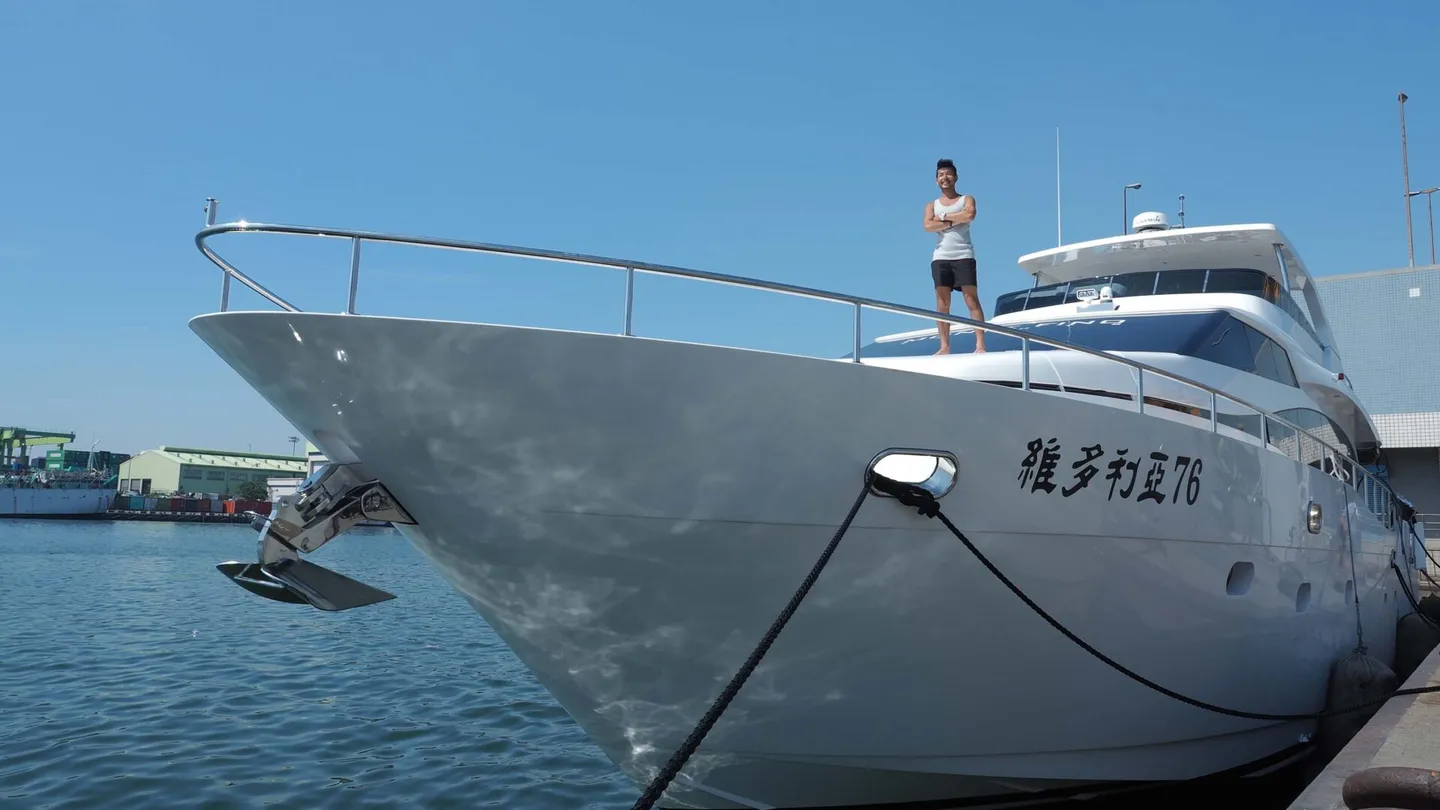
With the Editor as a scale reference, you can see just how enormous the boat is.
What Facilities Does the Liveaboard Yacht Have on Board?
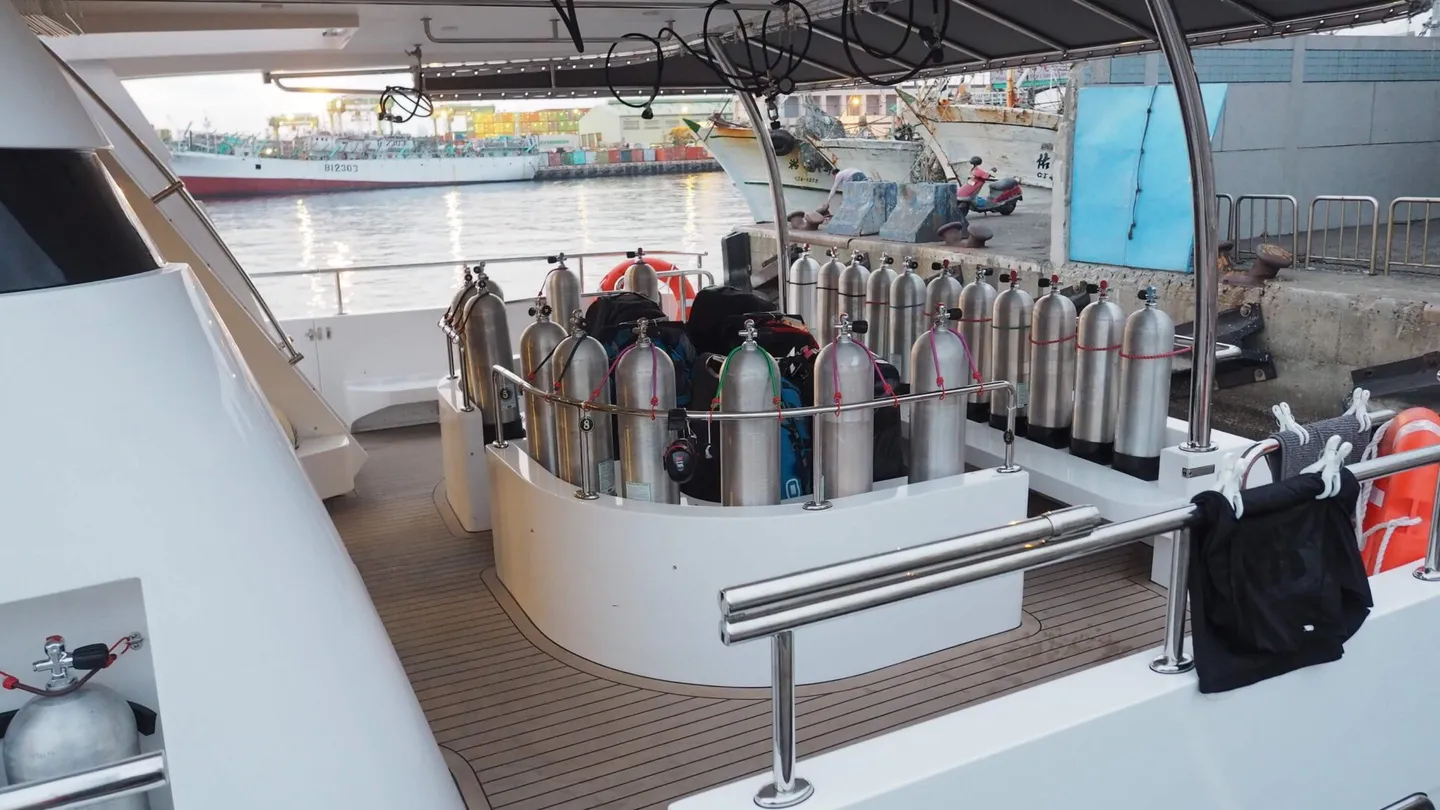
Scuba tanks secured on the aft deck
The boat features a unique design: all dive gear is mounted directly on the cylinders. After completing a dive, crew members use the overhead filling valve to top up the tanks on the spot — no need for a large bank of spare cylinders waiting to be swapped out, which also saves precious space on board.
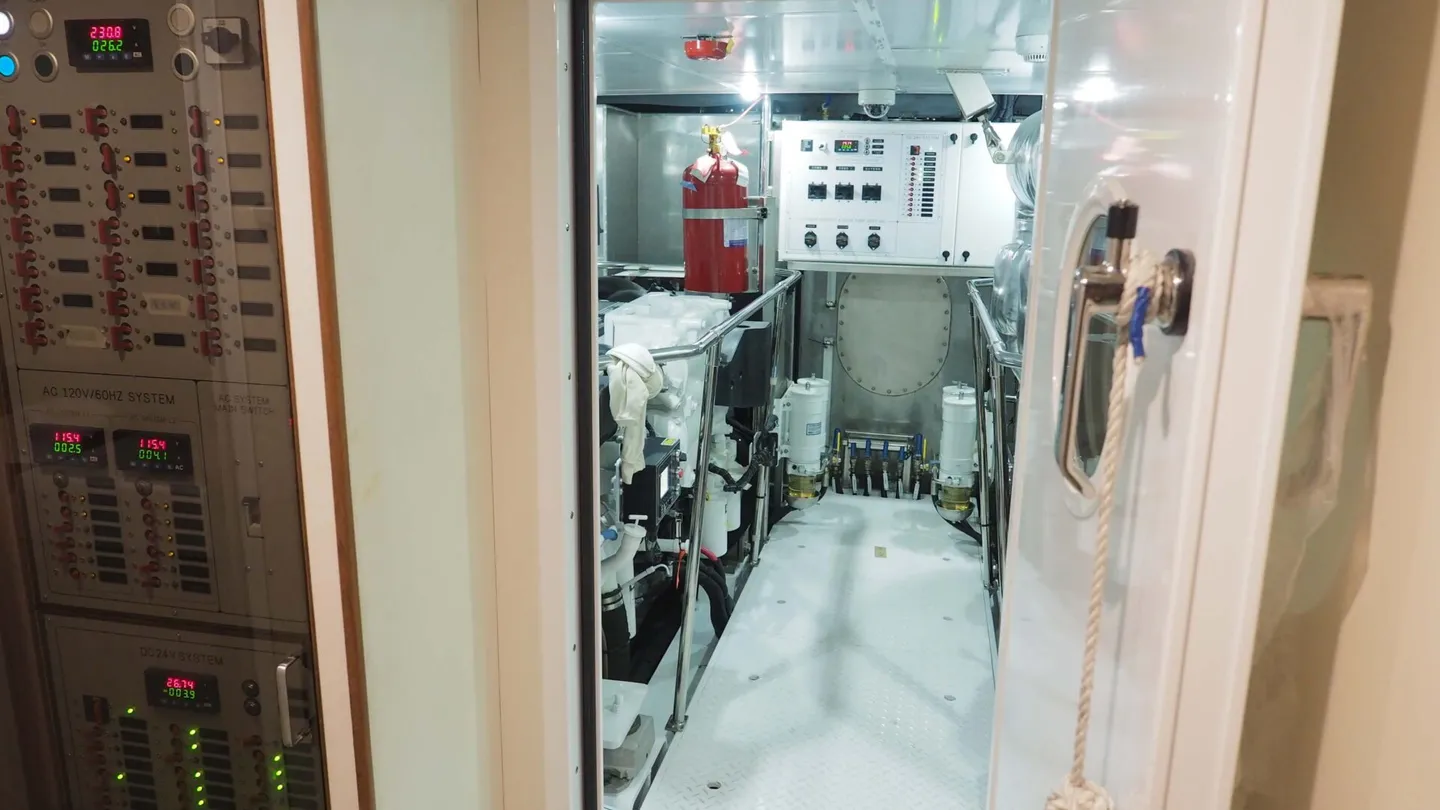
The air compressor is housed beneath the aft deck. It typically runs while divers are underwater to replenish the reserve air supply, and the heavy soundproofed hatch means you're barely aware it's operating throughout the trip. Montefino Yachts also plans to offer enriched air nitrox (EANx) cylinders in the future, to cater to divers keen on exploring deeper sites.
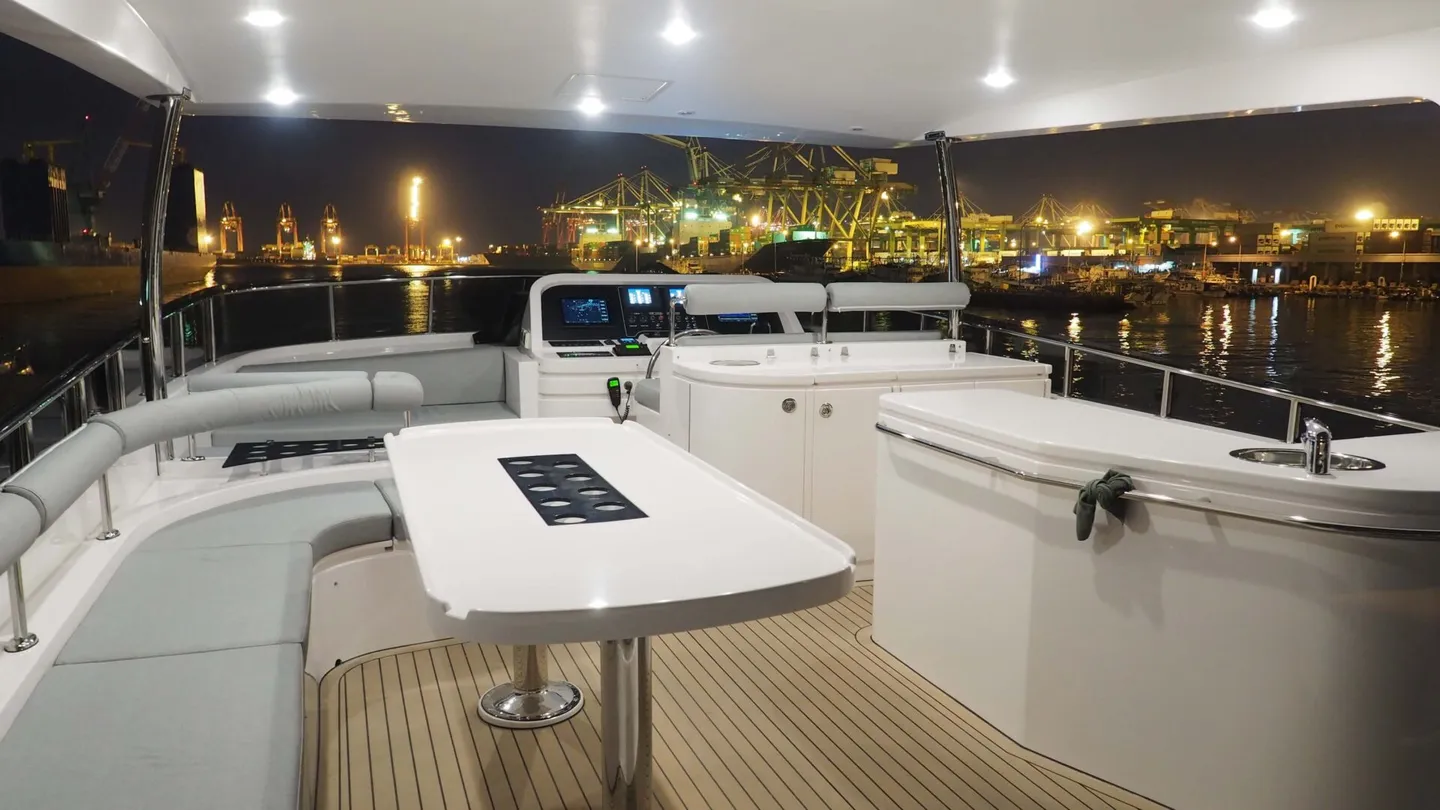
Moving up to the upper deck, the décor is anything but ordinary. During the voyage, the Editor's favourite pastime was climbing up to the upper deck to soak up the sun and feel the sea breeze — and to chat with the captain about how to pilot the boat.
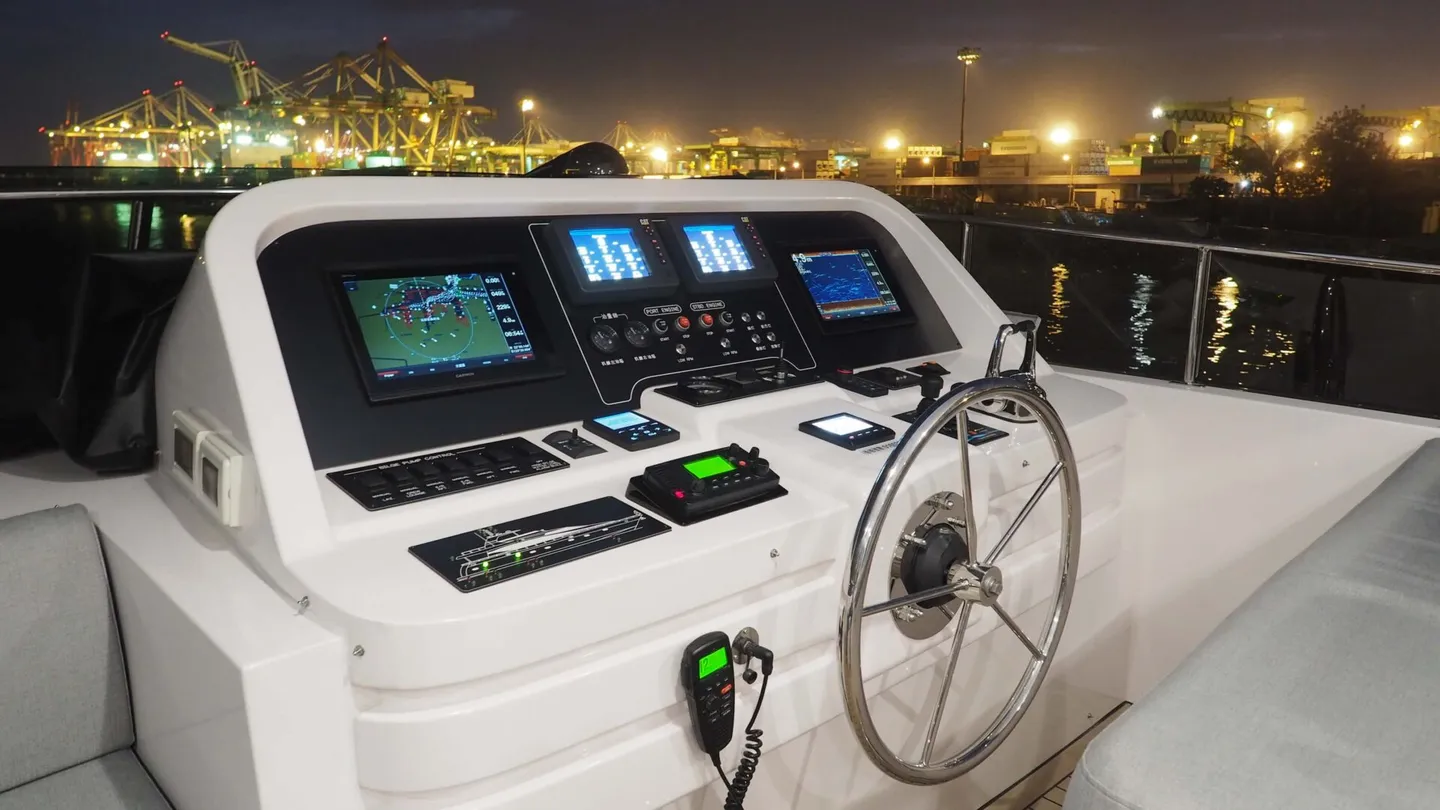
This entire massive yacht can be navigated from just this instrument panel.
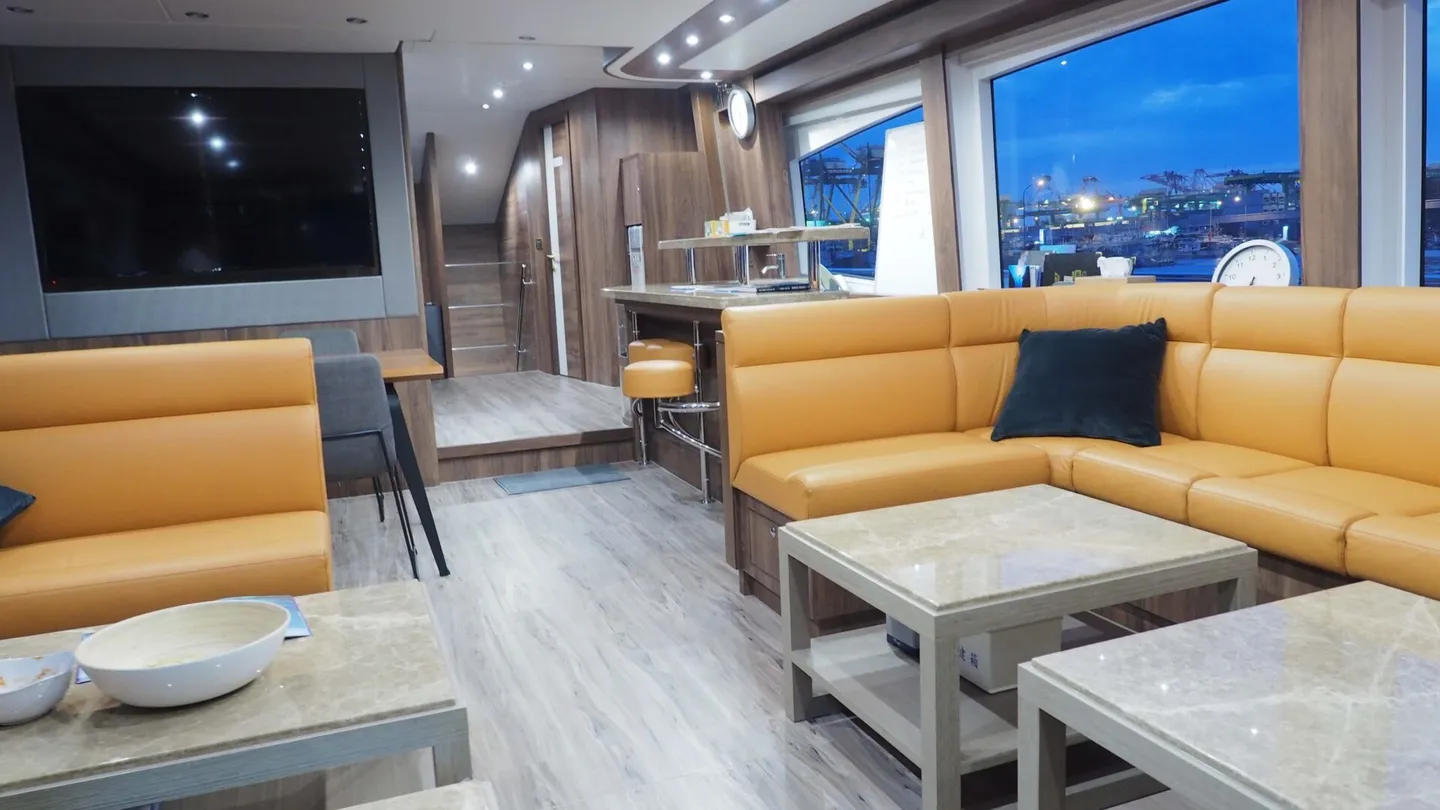
After the upper deck, let's head back down to the main deck saloon to see what else is on offer. Those who run hot need not worry — the air conditioning on this boat is exceptionally powerful, and the interior spaces are thoughtfully laid out, complete with sofas, a TV, a bar, a refrigerator, an oven, and more. It's fully equipped for parties, liveaboards, and all manner of gatherings.
A full dive trip is planned for 16 diving guests, accompanied by 4 dive guides (strictly following a 1:4 instructor-to-guest ratio), plus 2 chefs, a captain, and other crew members. At full capacity the boat carries 26 passengers — yet despite this, the space never feels crowded.
Now let's take a look at the sleeping quarters and the more essential human needs. Heading down the stairs to the lower deck, the cabins consist of one 4-person cabin and two 6-person cabins, with the remaining rooms reserved for crew.
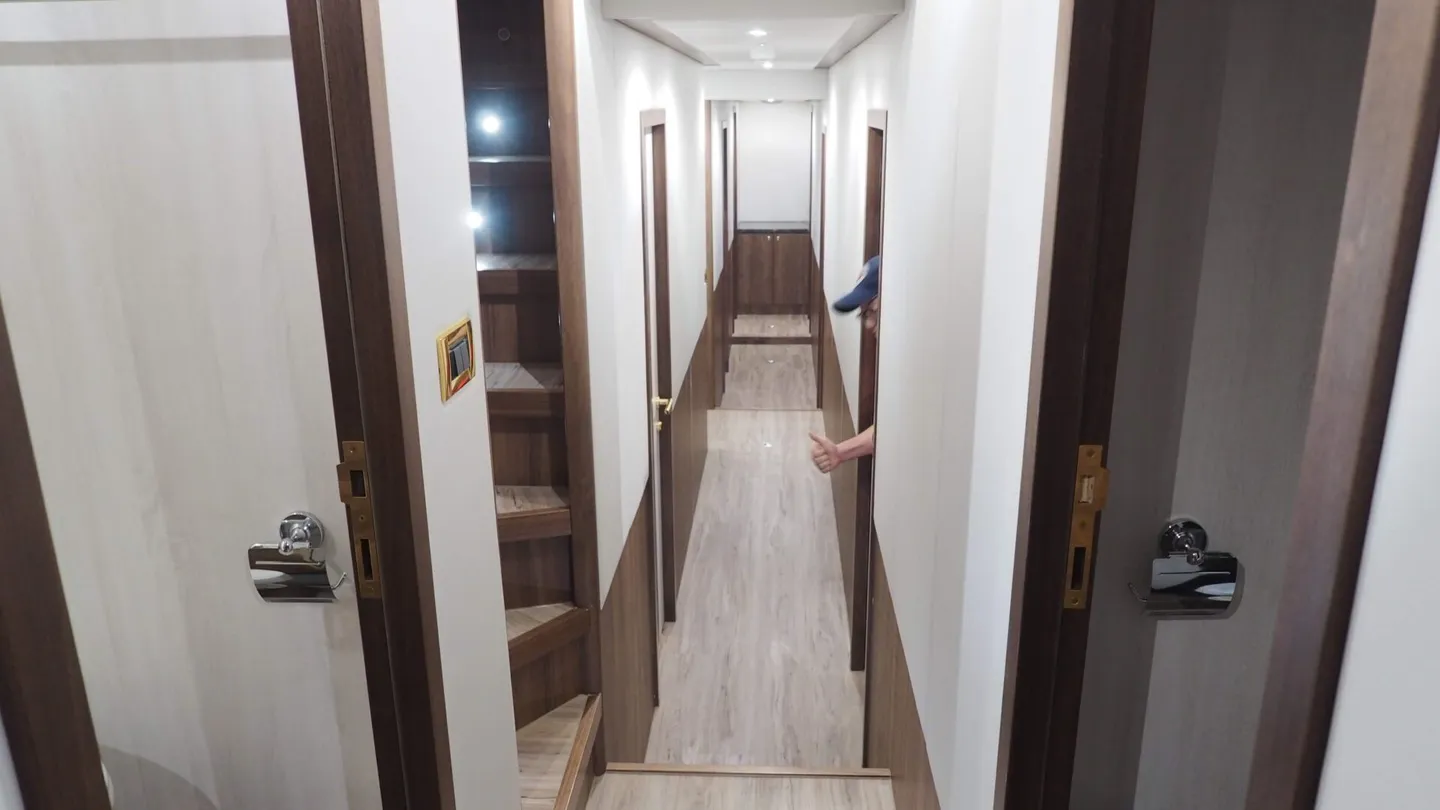
The cabin area on the lower deck
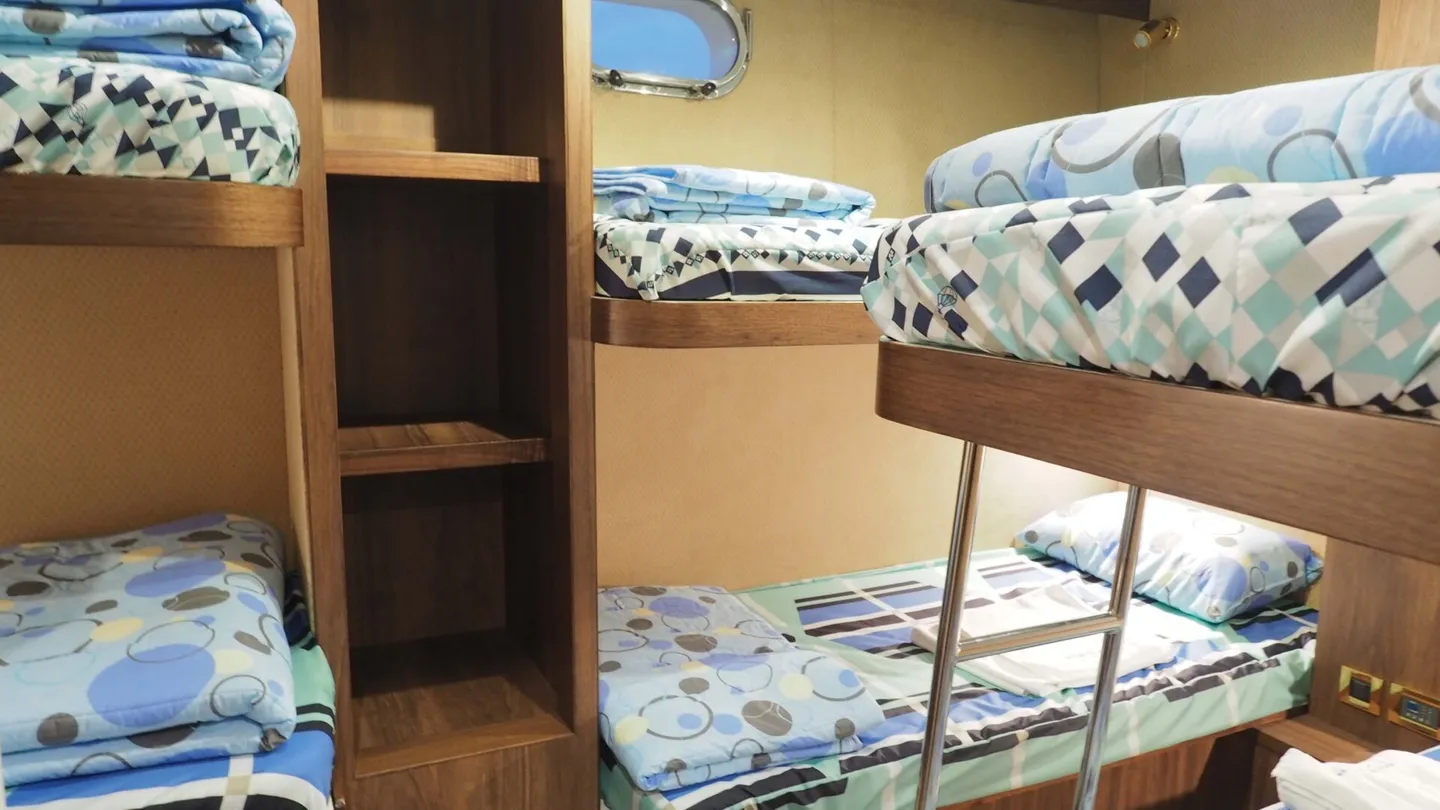
Bunk beds in the six-person cabin

Two power outlets provided at every bunk
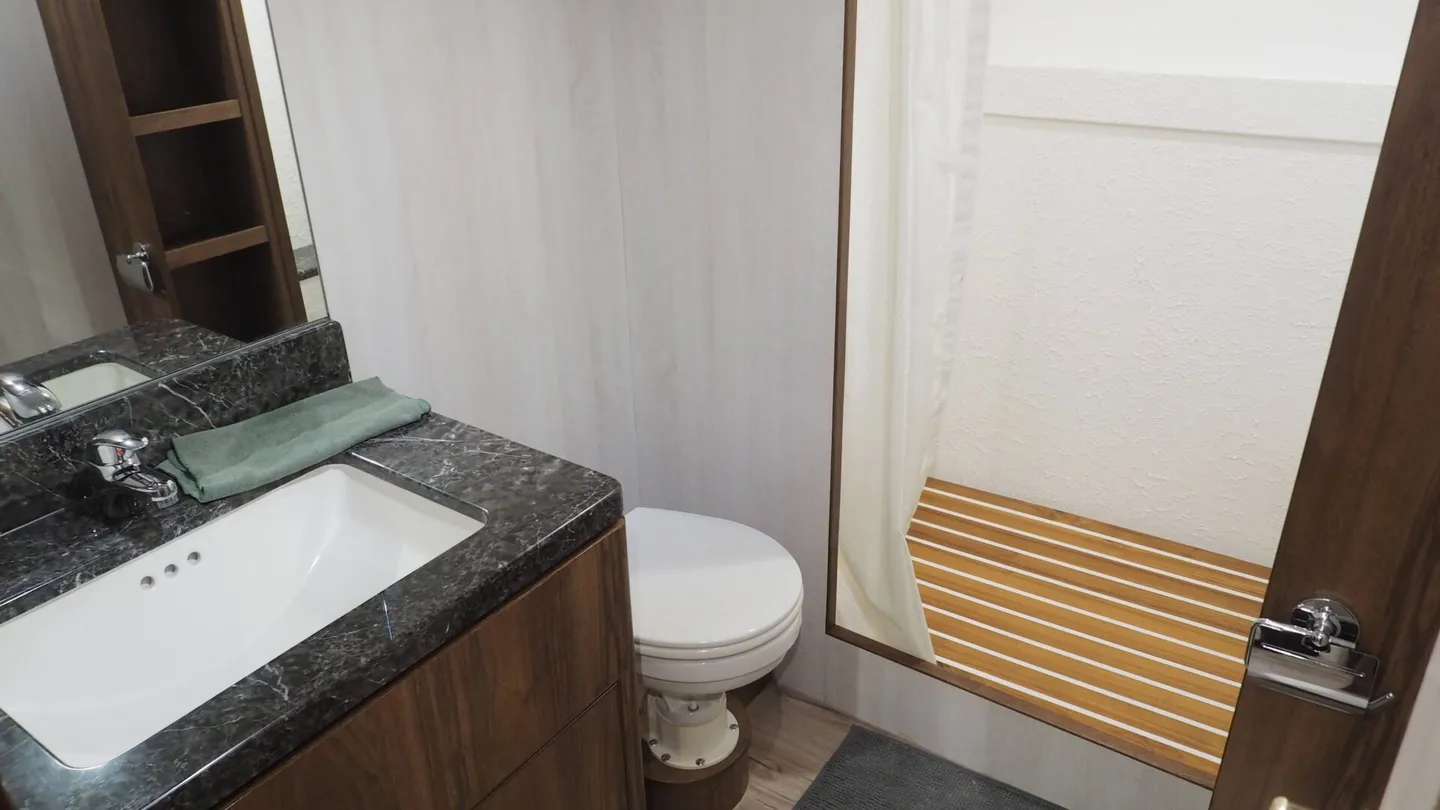
The bathroom facilities are spotlessly clean and comfortable.
At this point you're probably wondering: since you're living on a boat, will you get seasick? Whether or not you do ultimately comes down to your individual constitution, but this boat is equipped with stabiliser fins — essentially a set of lateral fins mounted underwater that automatically pivot up and down and side to side when waves hit, dampening the effect of the swell. According to the data, the system reduces vessel movement by 75% when at anchor and by up to 85% while underway!
https://www.youtube.com/watch?v=09QHIy3WLeE
Start watching from the 25-second mark to see the stabiliser fins working underwater.
Diving Activities Available on the Liveaboard:
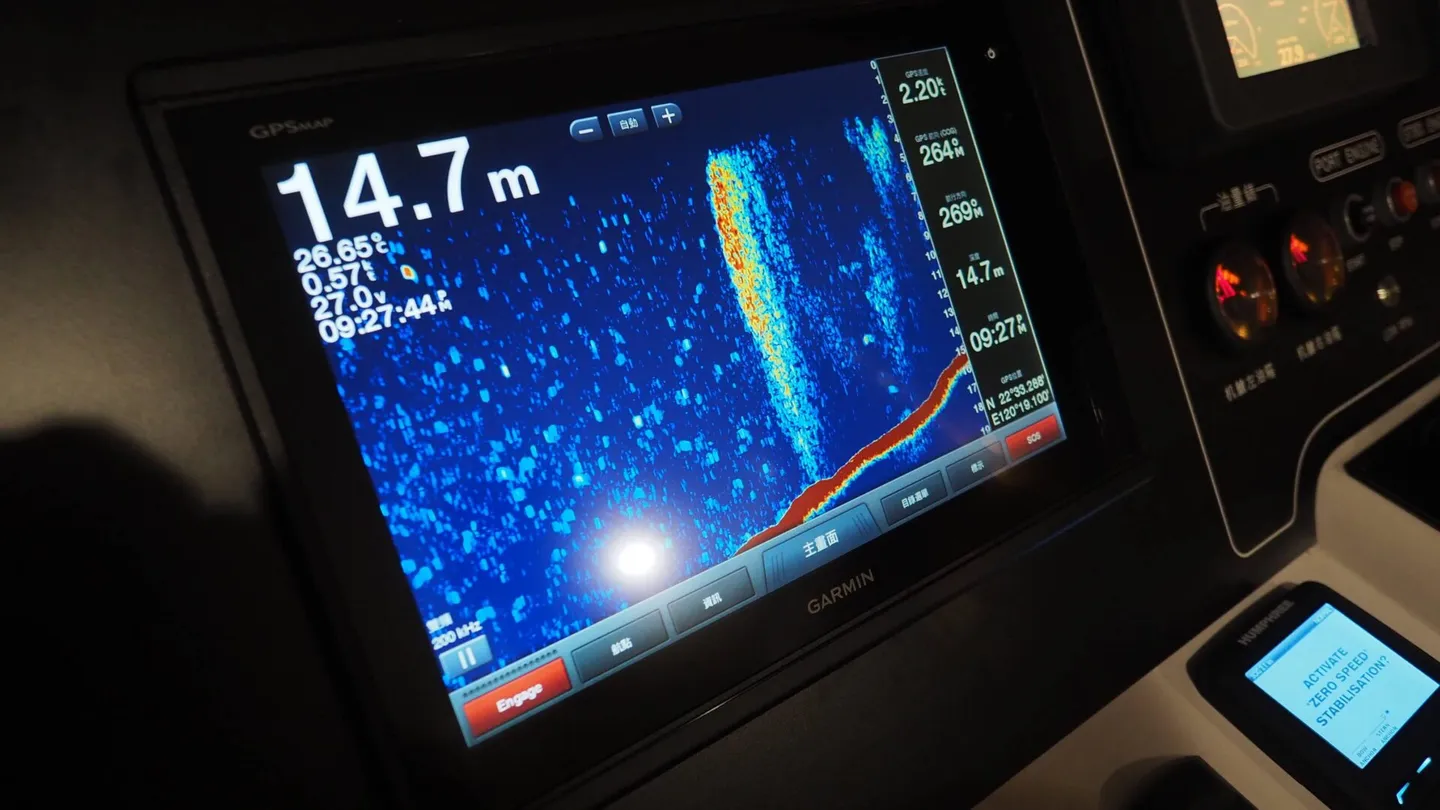
The boat is equipped with an impressive array of high-tech gear, including thermal imaging cameras for night navigation, a fish finder, and underwater sonar. When we descended on the Venice Wreck off Xiaoliuqiu, we used the underwater sonar to land precisely on the wreck — a significant bonus for dive safety.
Speaking of diving, let's enjoy a clip of the Xiaoliuqiu Venice Wreck filmed by Mingge (remember to watch in high resolution)!
https://www.youtube.com/watch?v=s8971KE4u_o&feature=youtu.be
After each dive, you can rinse off with fresh water directly on the aft deck — and it's warm water, which really won the Editor over!
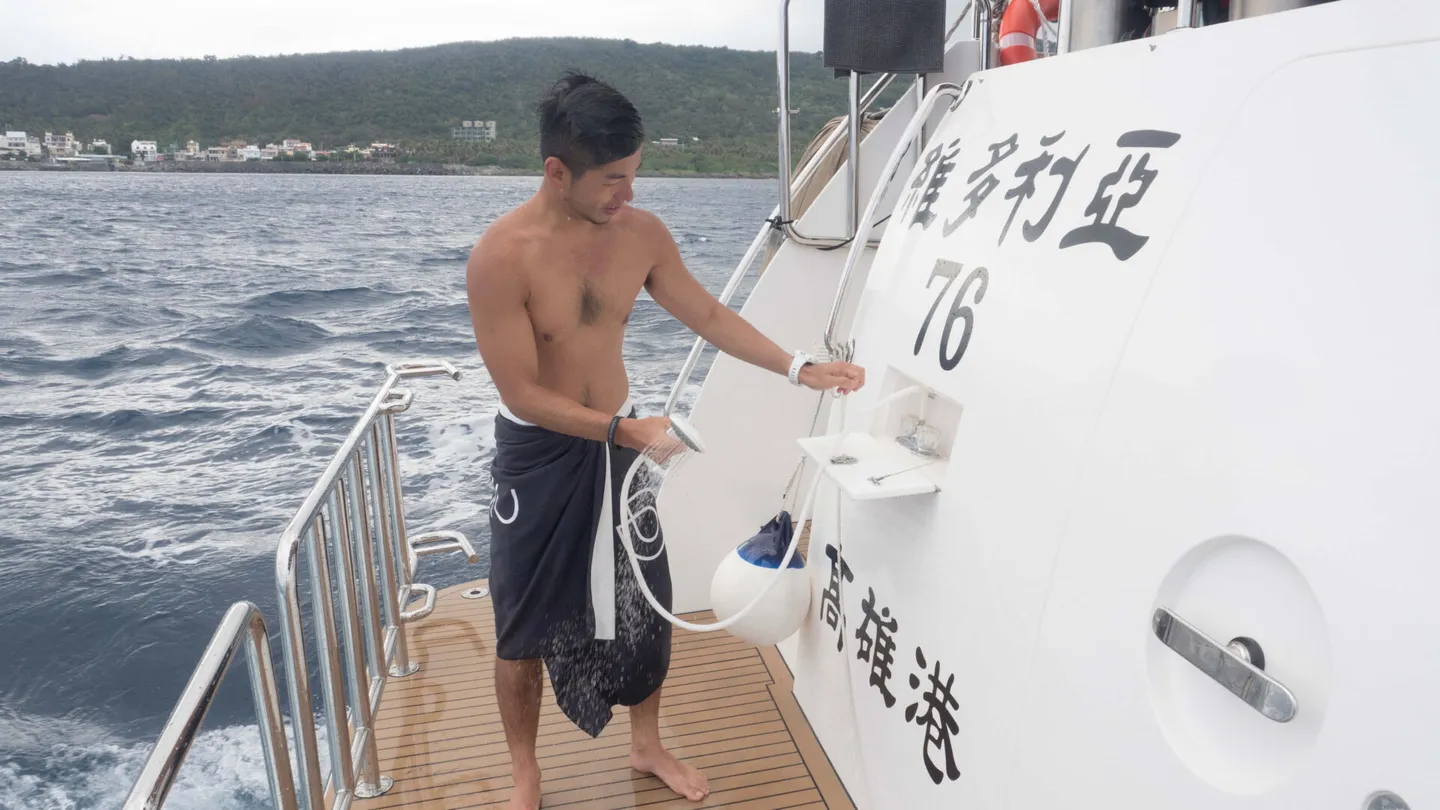
The freshwater rinse station on the aft deck
Beyond the diving itself, don't forget to appreciate Taiwan's beauty from a different perspective!
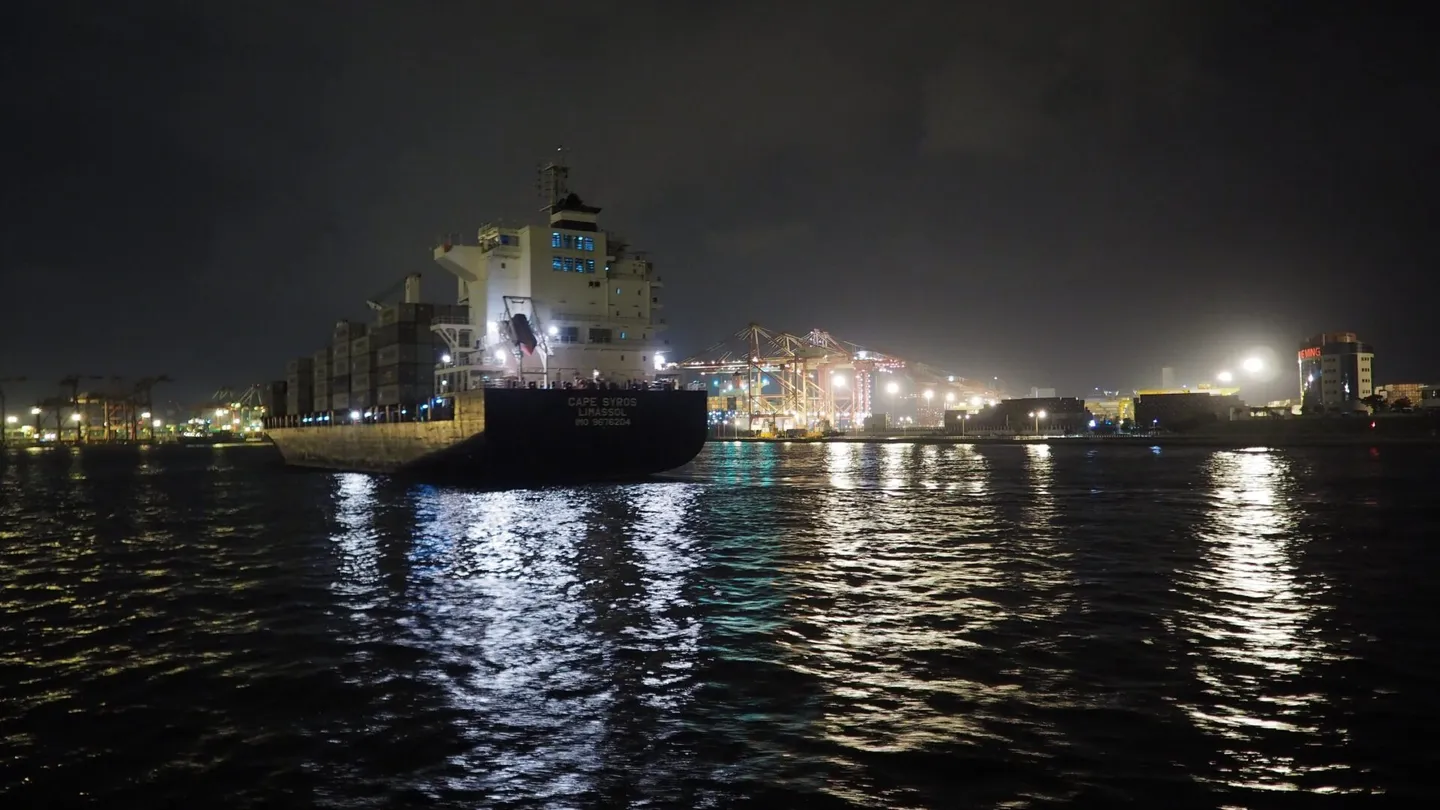
A rare opportunity to take in the Kaohsiung Port night skyline from the sea
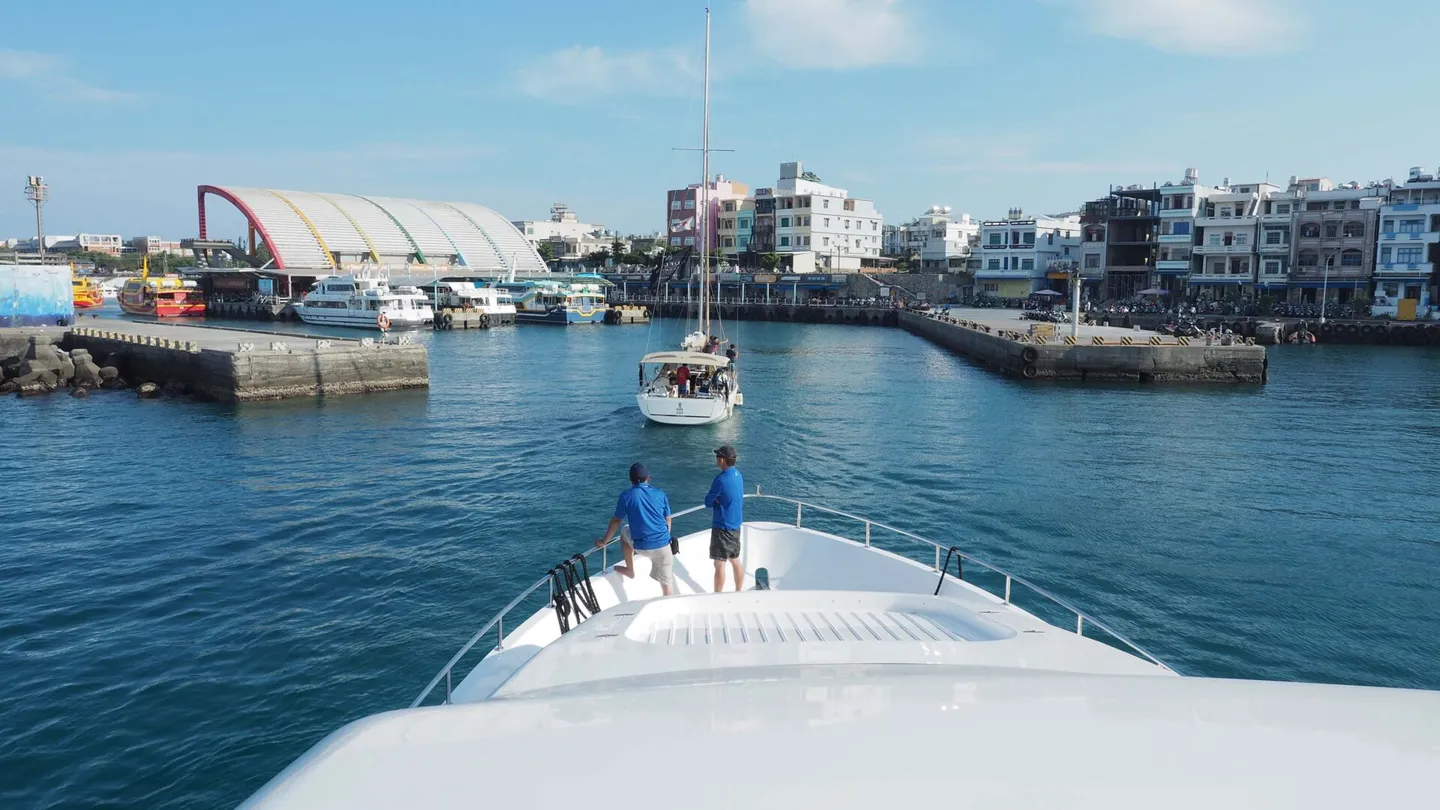
Arriving at Xiaoliuqiu in a whole new way
This yacht is nothing short of a wellspring of fresh energy for Taiwan's dive tourism industry, prompting us to view diving from an entirely new angle. For instance, when foreign visitors come to dive in Taiwan, their biggest concerns are usually transportation to the dive sites, accommodation, and meals. Shore diving, which they may not be used to, can also put them off. A liveaboard product occupying a distinct position in the market could therefore attract a whole new segment of guests.
Before mid-2018, the team was still working out the most suitable operating model — covering route planning, logistics, dive guides, and pricing strategy. None of that, however, turned out to be the real obstacle. The greatest challenge in promoting liveaboard diving in Taiwan is, astonishingly, an ally turned adversary: the Taiwanese government.
Customs Clearance Required for Every Liveaboard Departure!!
It will surprise no one that putting out to sea in Taiwan requires notifying customs — something that feels utterly inconceivable to many Taiwanese who have lived abroad. The regulations are full of baffling red tape. For example, a vessel registered as a recreational fishing boat (the category most dive boats fall under) must strictly comply with same-port-in-same-port-out rules. Even if a boat wants to temporarily moor at another port to rest, crew members are strictly forbidden from setting foot on land — otherwise the Coast Guard will come looking for a chat.
Things are even more complicated if the vessel is registered as a yacht. Not only are commercial ports and fishing ports off-limits for mooring, you also have to scramble for a precious berth at one of the few yacht marinas. And if you want to apply for a different-port-in/different-port-out arrangement for a planned yacht voyage, the process is labyrinthine — and you may well encounter all manner of bizarre reasons for rejection.
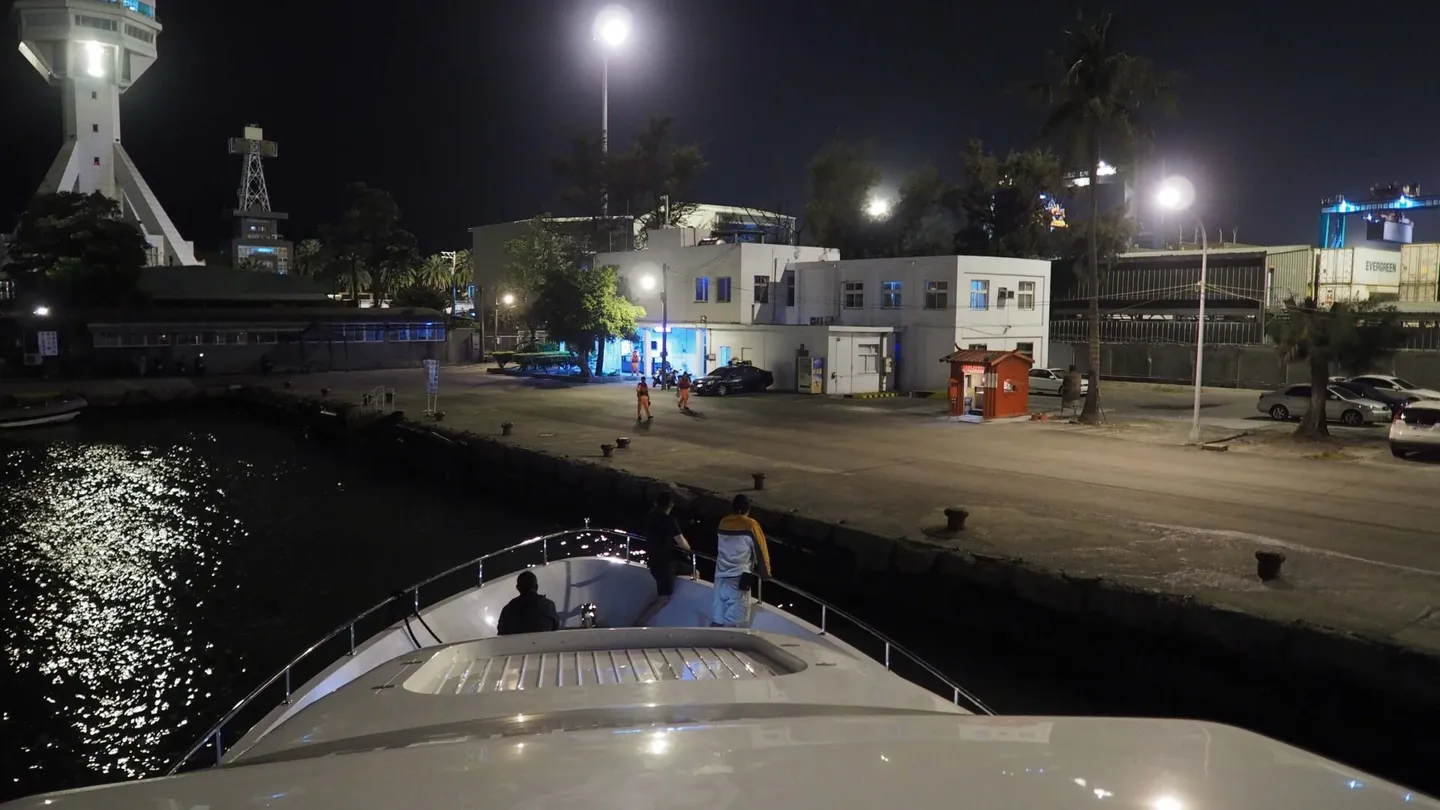
Checking in with the Coast Guard before departure is a mandatory procedure.
For example, Houbihu Port refused entry on the grounds of shallow water depth — claiming vessels above a certain length could not dock there. But is that really true? In fact, local residents simply did not welcome outside vessels, and the local management authority turned a blind eye to the existing regulations and found excuses to say no.
Fixed-schedule liveaboard diving requires stable, predictable route planning. The vision is to one day depart from Kaohsiung, stop at Xiaoliuqiu, Kenting, Green Island, and Orchid Island, completing a southern Taiwan island-hopping itinerary. If even the most basic cross-port entry and exit procedures are hampered at every turn — and docking at a port depends on luck or the mood of a bureaucrat — the professionalism of the liveaboard product suffers enormously. For a government that claims to champion marine tourism, this amounts to a self-inflicted slap in the face.
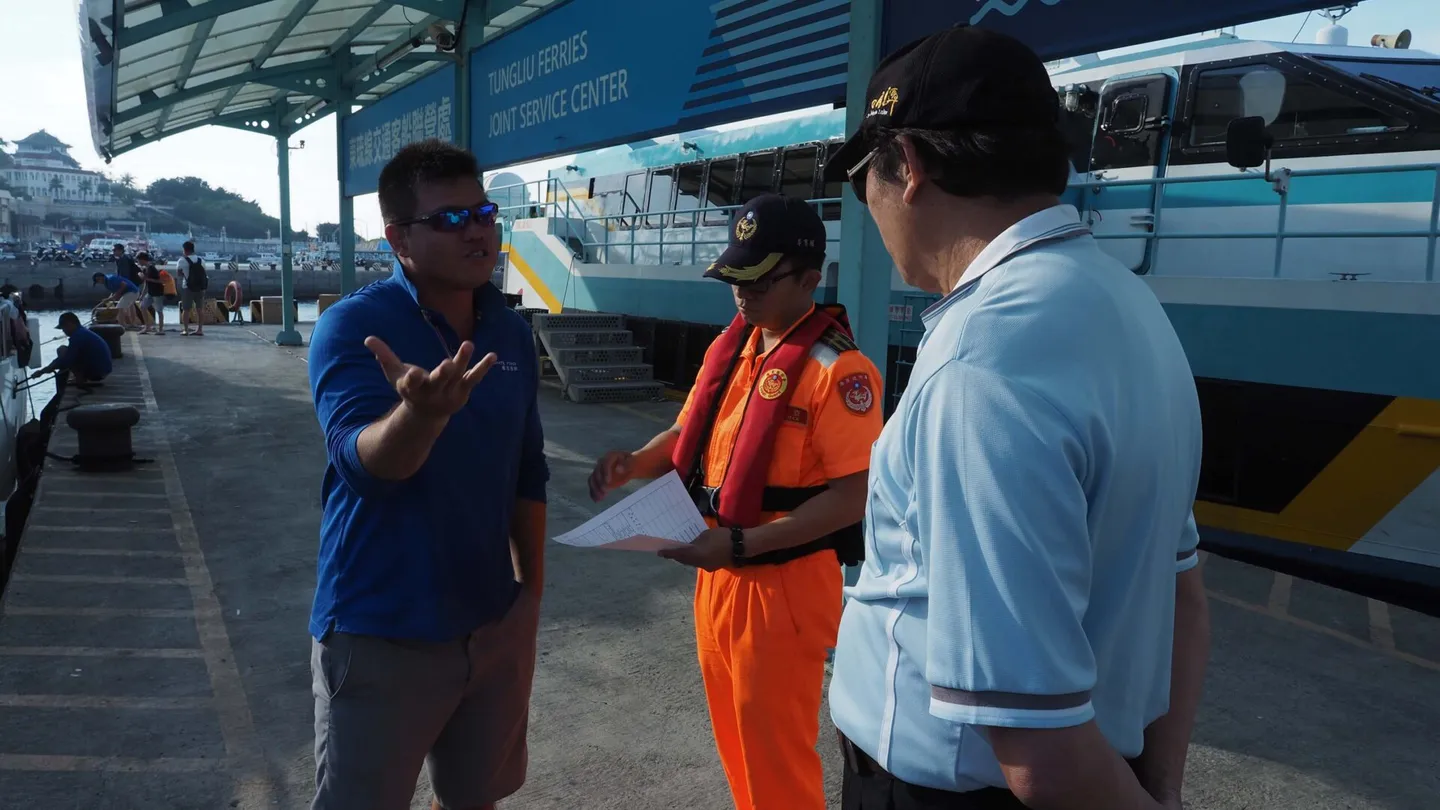
Mooring at Xiaoliuqiu also hit a wall.
But Does Taiwan Still Have a Chance to Develop Liveaboards?
One delightful surprise on this trip was discovering that a fellow passenger was none other than the Chairman of Montefino Yachts and President of the Taiwan Yacht Industry Association, Gong Junhao. When we encountered a string of baffling government obstacles during the voyage, we couldn't help but ask why Montefino was still pushing ahead with this venture despite everything.
Chairman Gong said: "Because Taiwan's underwater world is truly beautiful. We have such abundant resources, yet we keep allowing them to be damaged or ignored. Perhaps by taking this step today, we have a chance to challenge the government's outdated thinking. Perhaps one day, we can let more people see the beauty beneath Taiwan's waters."
While running a liveaboard operation in Taiwan right now makes it nearly impossible to break even — let alone recoup the enormous cost of building the yacht — sustaining this conversation and continuing to push against the barriers may eventually open new horizons.
Perhaps it was fate: when we dived at a fish cage near Xiaoliuqiu, we discovered a sea turtle that had been hooked by an abandoned fishhook, hanging silently from the bottom of the cage. If we can help more people rethink their relationship with the ocean, perhaps the sea will mean something more to humanity than just a source of protein.
Extended reading: