Contents(6)
Drysuits are an essential piece of thermal protection for divers in cold-water regions, but as the diving population across Asia continues to grow, drysuits are steadily gaining market share year after year. Beyond outstanding thermal insulation, drysuits also offer the added benefits of keeping divers isolated from polluted water and eliminating the need to shower after surfacing — advantages that have earned them a dedicated following in the diving market. However, because drysuit manufacturers rely on imports from factories in Europe and North America, damaged suits have historically had to be airfreighted back to the original manufacturer for repairs — a process that is not only time-consuming but also puts a significant dent in divers' wallets.
Fortunately, Junior Scuba — the authorised Waterproof distributor in Taiwan — introduced the island's very first drysuit repair equipment in 2023 and invited Waterproof's factory product manager, Henrik Borg, to Taiwan to share his invaluable drysuit repair expertise. The goal is to give drysuit users in Taiwan access to high-quality, cost-effective repair services right at home. Follow the Editor as we pull back the curtain on Taiwan's first dedicated drysuit repair station!

Waterproof factory product manager Henrik Borg
2018 Best Drysuit Award Winner — Waterproof
"FACING REALITY" is the brand ethos of Waterproof. Since its founding in Gothenburg, Sweden in 1984, this guiding philosophy has continuously driven the refinement of its products. Every Waterproof product must undergo rigorous in-house simulated testing to face the icy waters and demanding dive environments of Northern Europe. Using specialised equipment (which Henrik Borg jokingly calls a "washing machine"), the company tests the tolerance of drysuit seams and materials under extreme conditions — all in order to face the most honest realities of the underwater world.
All Waterproof products must pass stringent testing before leaving the factory to ensure they meet quality standards
Waterproof also actively embraces environmentally responsible corporate CSR policies — for instance, packaging materials used when shipping drysuits are designed to minimise single-use plastic waste. That said, the materials used to manufacture drysuits are themselves synthetic, and a viable eco-friendly alternative does not appear to be on the horizon in the near term. Henrik Borg therefore believes Waterproof's mission is to engineer products with exceptional durability — extending the usable lifespan of each suit as long as possible, thereby reducing the consumption of the Earth's resources.
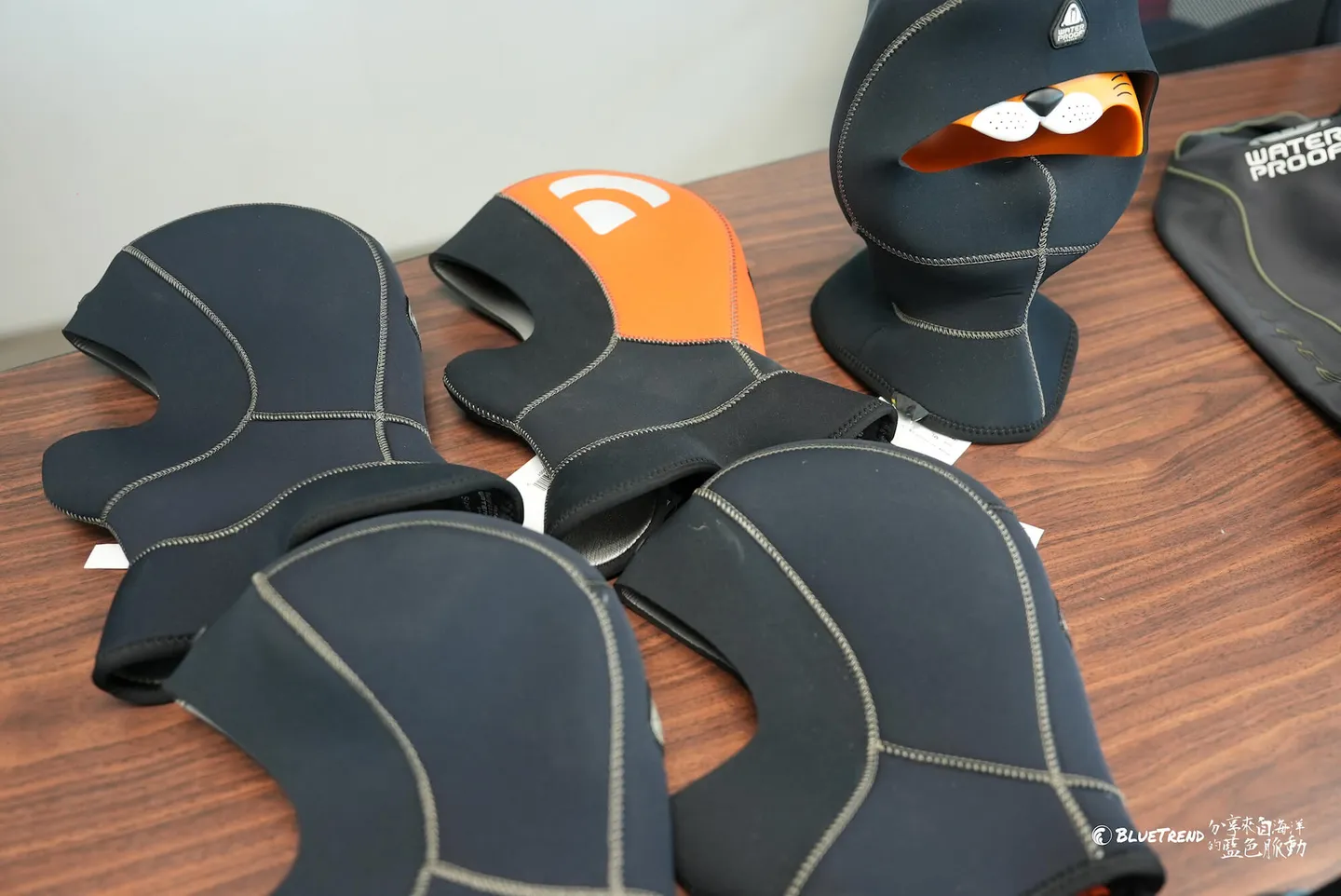
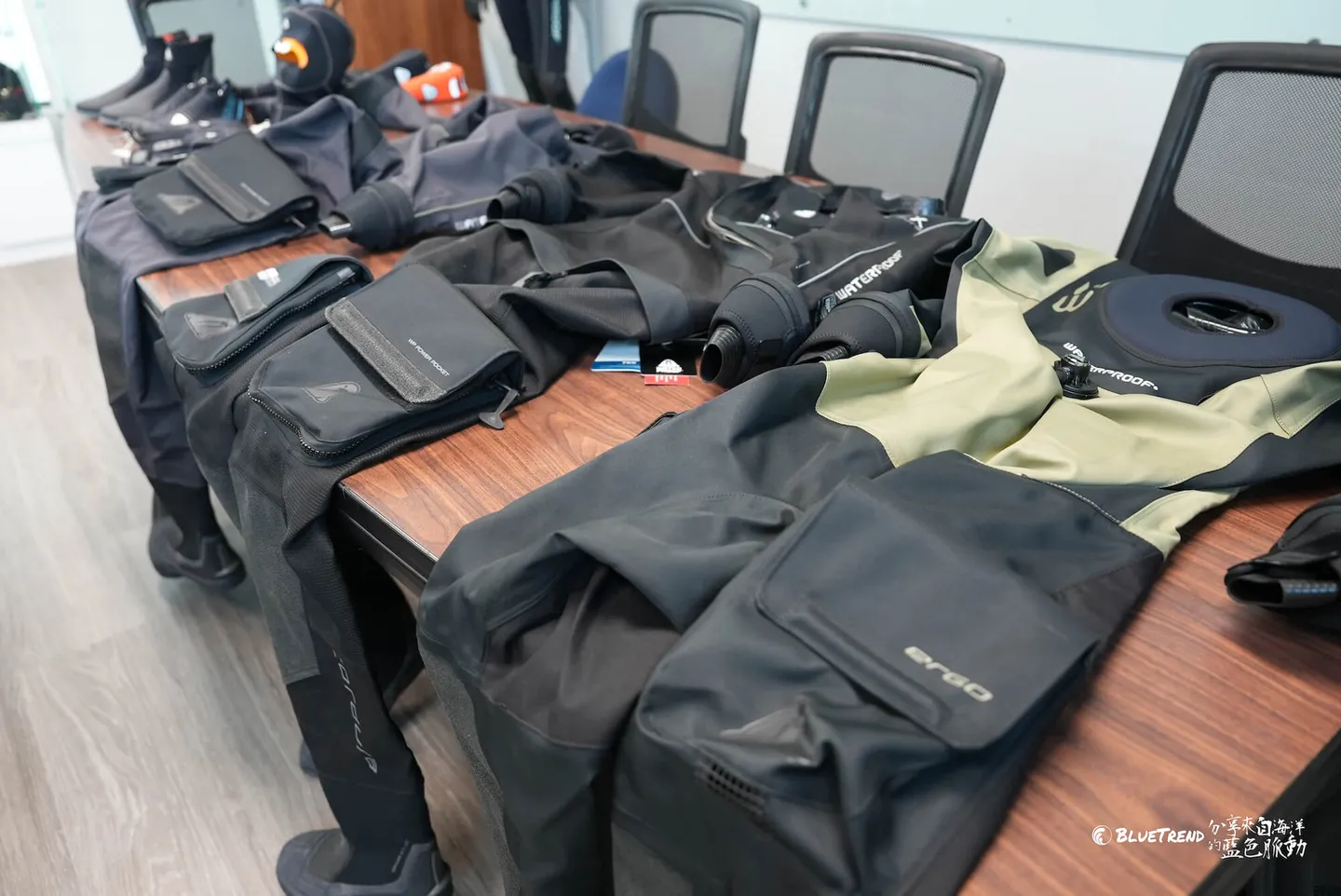
In addition to the drysuits themselves, Waterproof offers a full range of drysuit accessories


How to Check a Drysuit for Leaks
As a drysuit accumulates more dives over time, leaks are an inevitable issue that every drysuit user will eventually encounter. Foreign objects can cut through the material, stitching can fray and tear under stress, or even small pebbles can puncture the suit — all of these can cause a drysuit to leak. Before Taiwan had an established drysuit repair facility, shops had no choice but to airfreight suits back to the factory for servicing, a process that consumed a great deal of time while the round-trip shipping costs added up to a considerable expense.
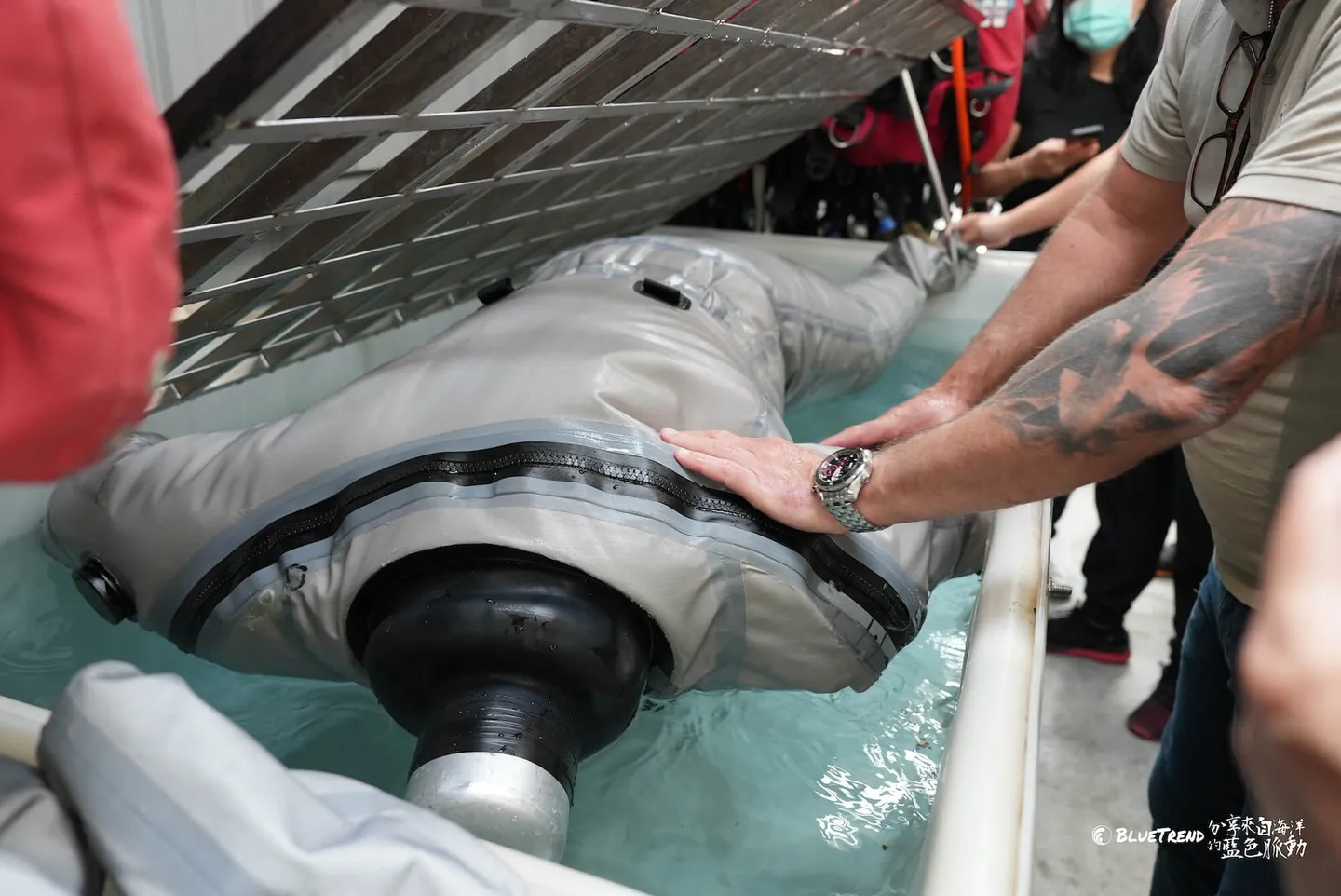
With Junior Scuba's introduction of Taiwan's first drysuit repair station, however, these headaches are now a thing of the past! The first step is to turn the drysuit inside out, inflate it fully, and submerge it in water. This inside-out approach is necessary because the outer surface of a drysuit has complex seam lines, multiple layers of fabric, logos, and pockets — all of which can interfere with pinpointing the source of an air leak.
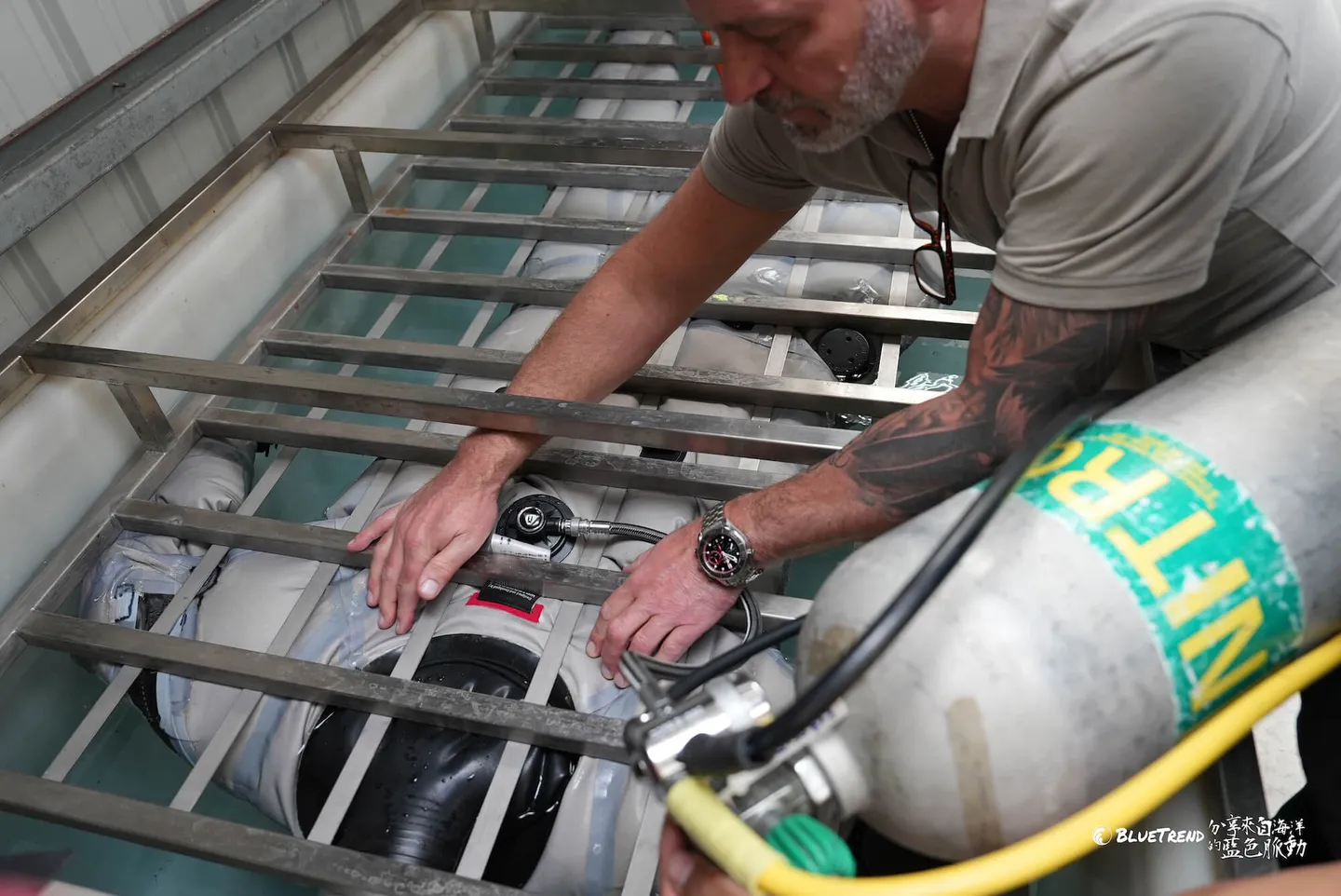
The drysuit is turned inside out and "pressed" into the water to check for air leaks
Once bubbles are spotted, the leak site is marked. The suit must then be left to dry completely in the shade before any repair work can begin.
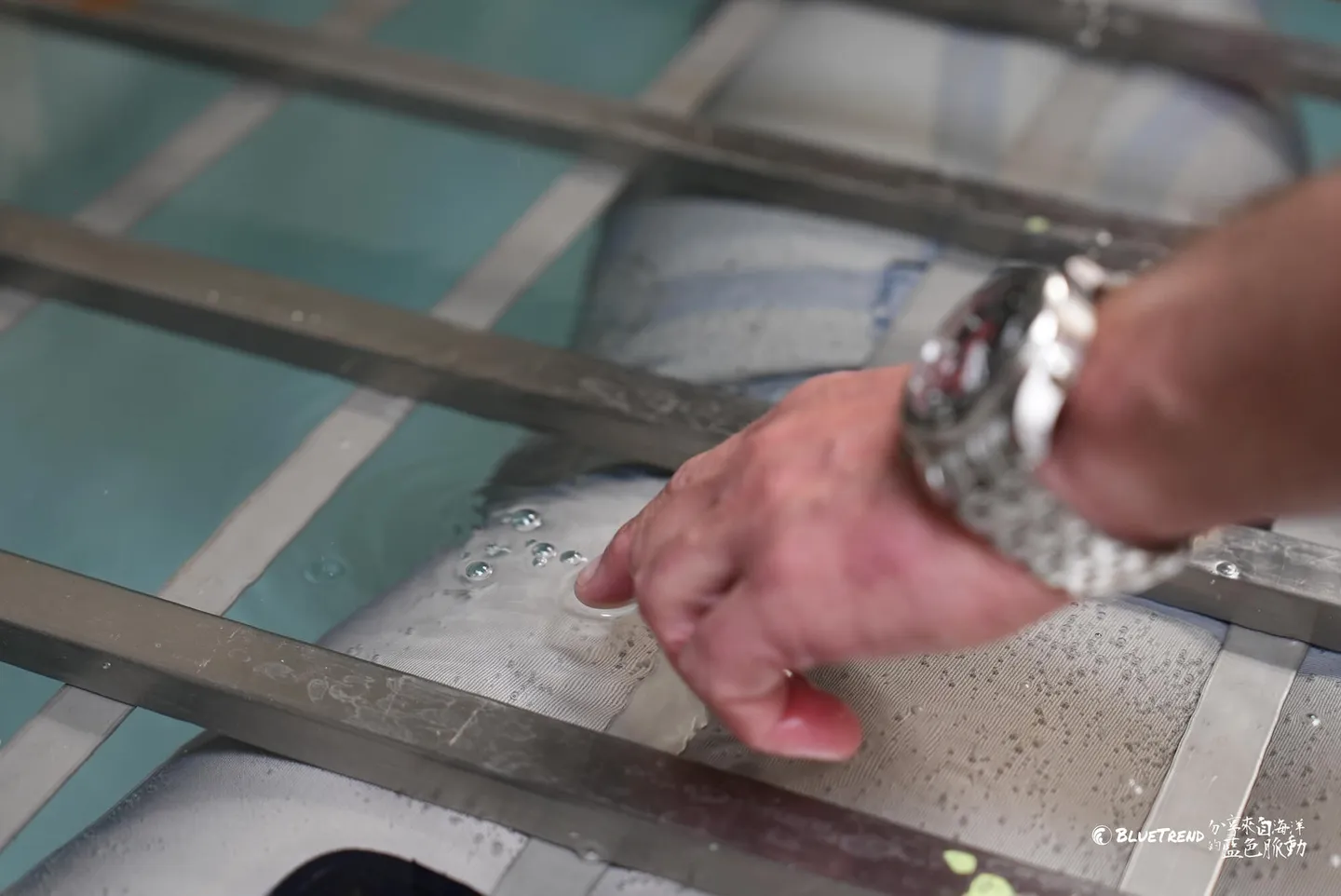
Air bubbles spotted — the location is marked and set aside for further processing
How to Repair a Drysuit
Drysuit repair is a genuine field of expertise in its own right. Different drysuit models are constructed from different materials, and different sections of the same suit may use different fabrics — for example, breathable membrane materials, neoprene for the integrated socks, and composite fabrics for high-end models. Each material requires its own specific adhesives, hardeners, and heat-press techniques, so repairs must always follow the manufacturer's instructions to avoid compounding the damage.
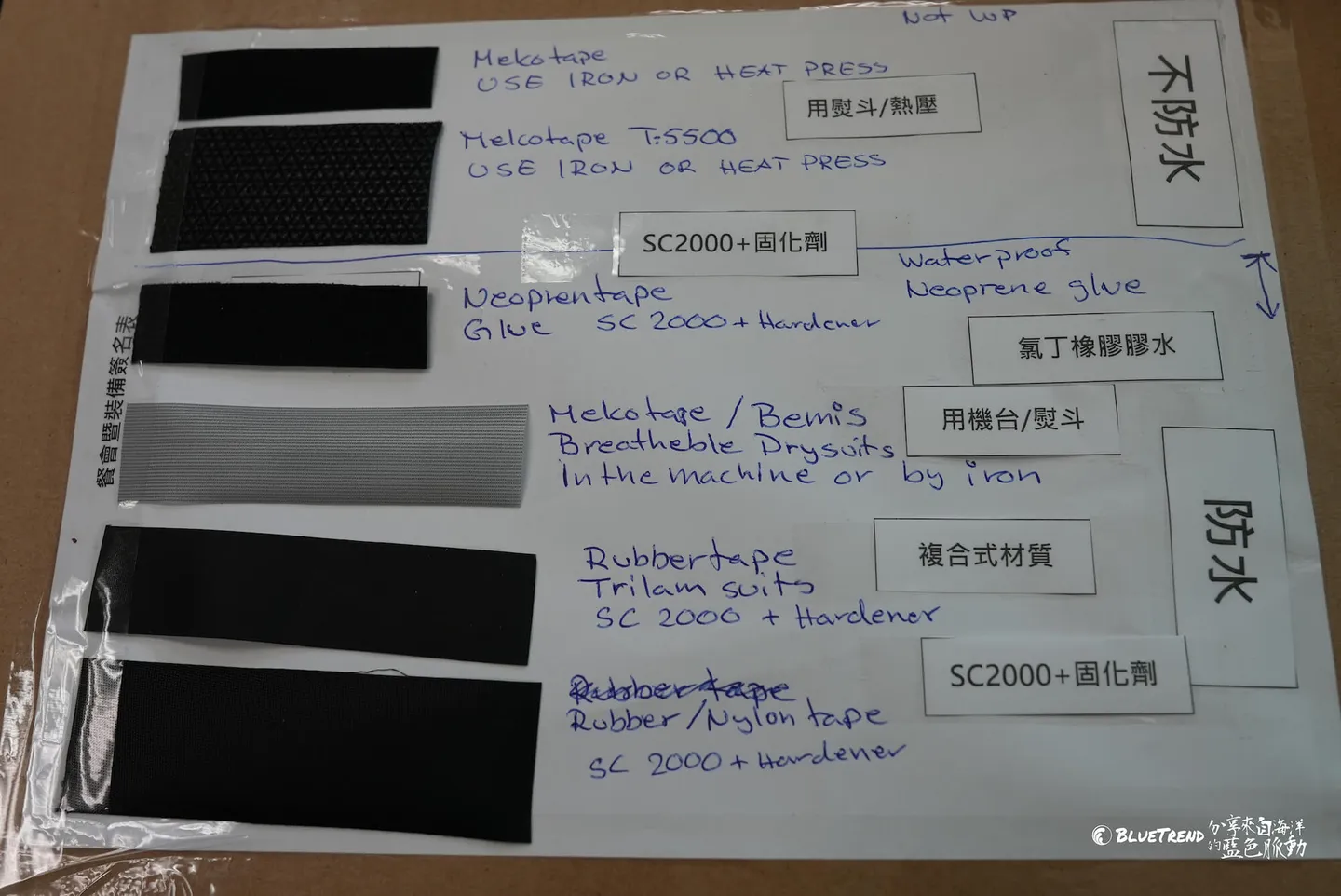
Different drysuit materials require different bonding methods
During the course, we started with the most straightforward task: patching a small hole. What looked like a simple operation turned out to conceal the deep craft of a factory technician. Even just the adhesive alone involves considerable know-how — the mixing ratio of glue to hardener, the number of coats to apply, and the heat-pressing technique after bonding. After working through the whole process, we finally managed to patch one small hole.
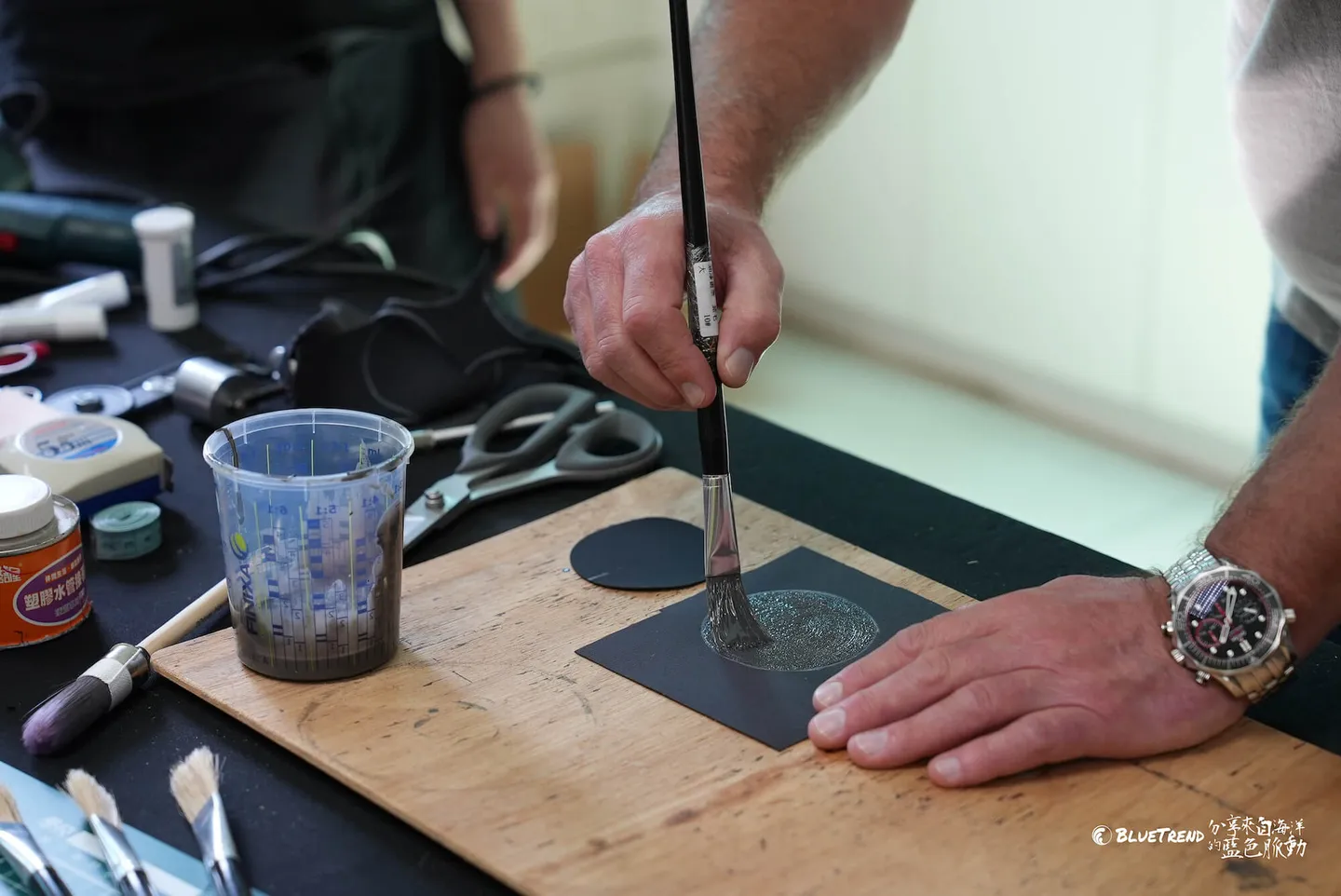
Applying adhesive to a drysuit repair is an art form in itself
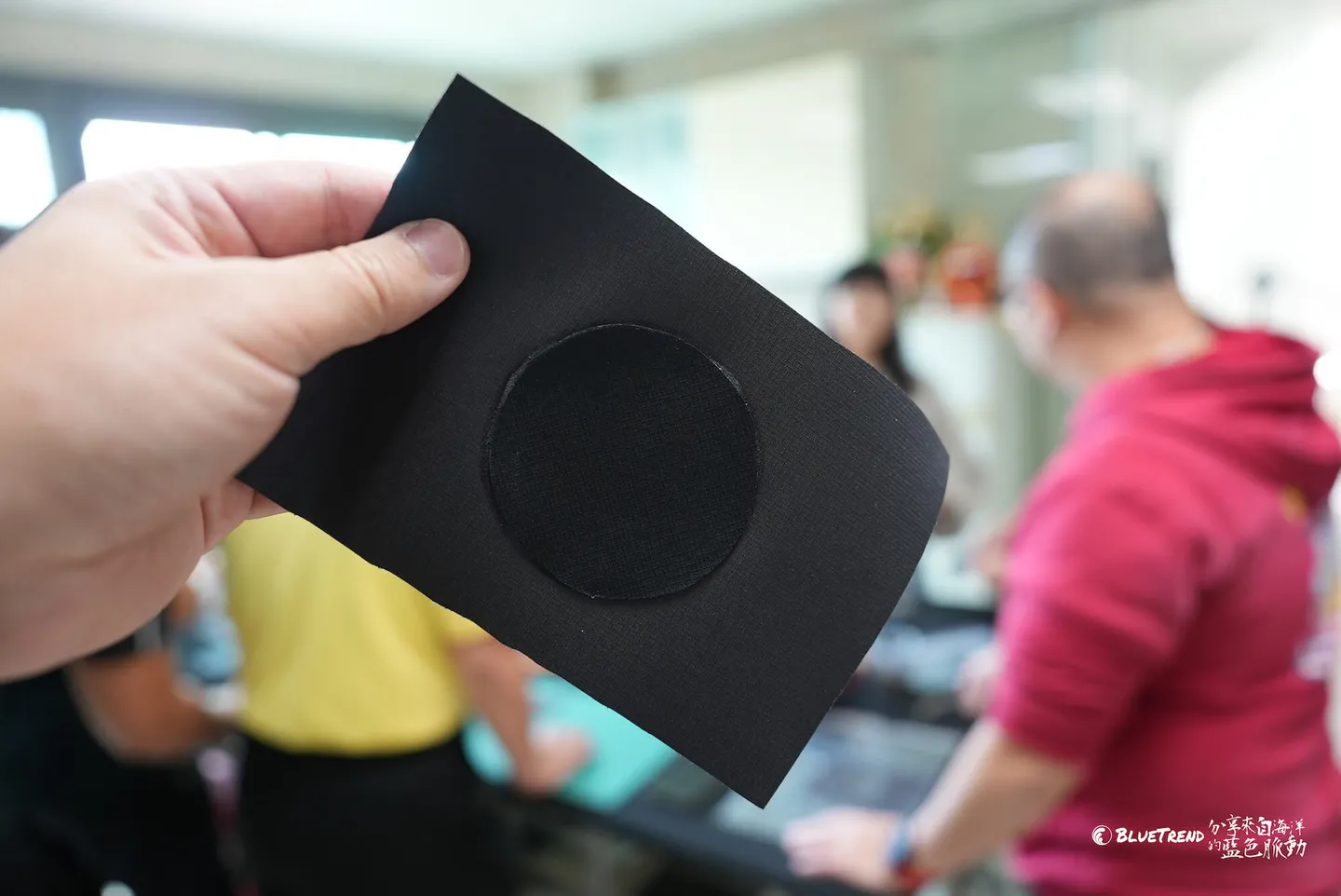
The small hole repair is finally complete
The Factory Course Even Covers Bootie Replacement
Divers in Taiwan who use drysuits are probably all too familiar with the fact that Western drysuits typically come standard with integrated socks. Given that shore diving makes up a larger proportion of diving in Taiwan, a pair of booties with a textured, scrubbing-pad-style sole tends to suit local divers much better. The Waterproof factory drysuit maintenance course generously covered how to replace an entire pair of booties — no secrets withheld. After a full day of training, however, the Editor came away firmly convinced that it is still best to leave this job to the authorised distributor, because the adhesives, tools, and time required all represent a substantial hidden cost.
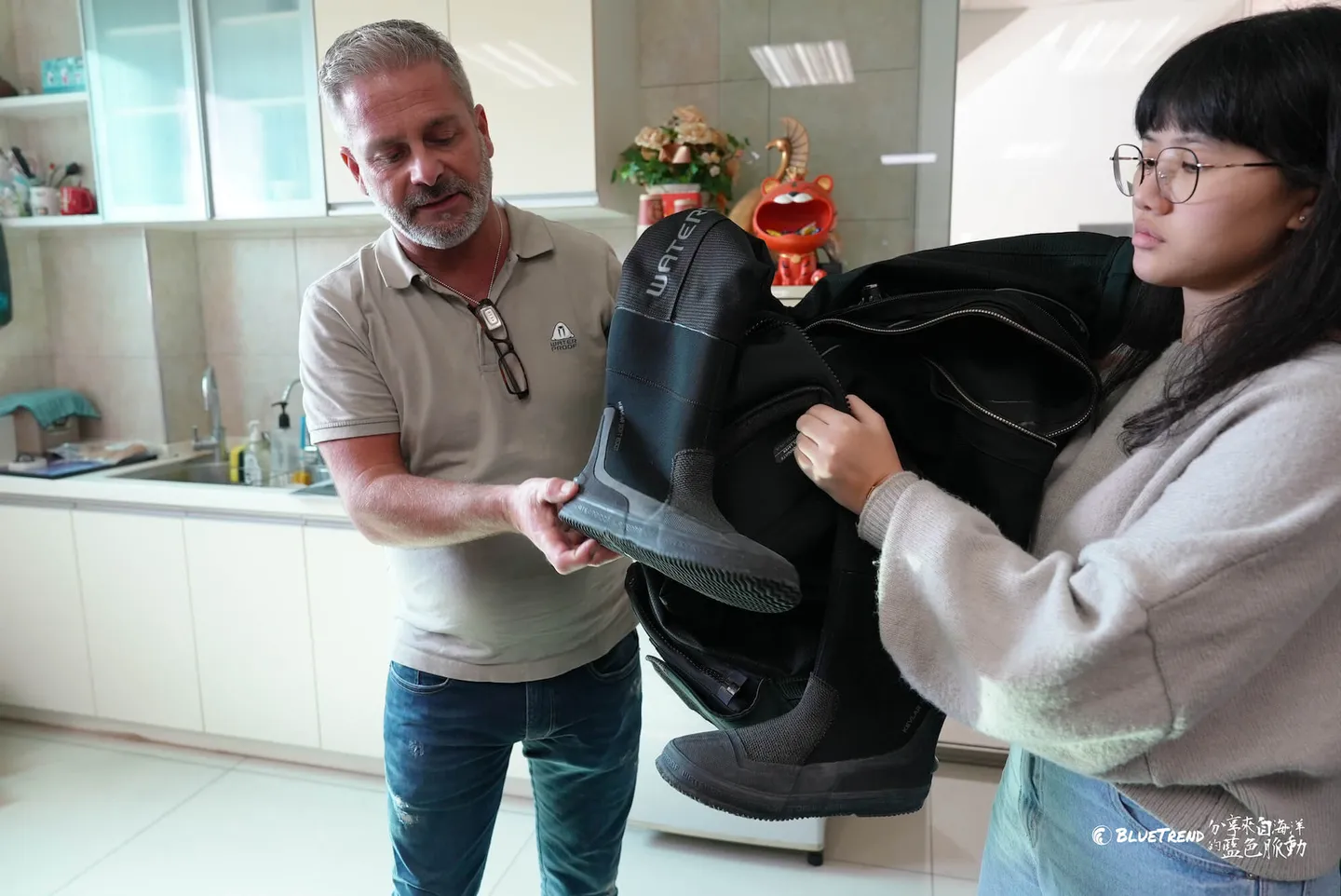
The product manager explains the bootie replacement process
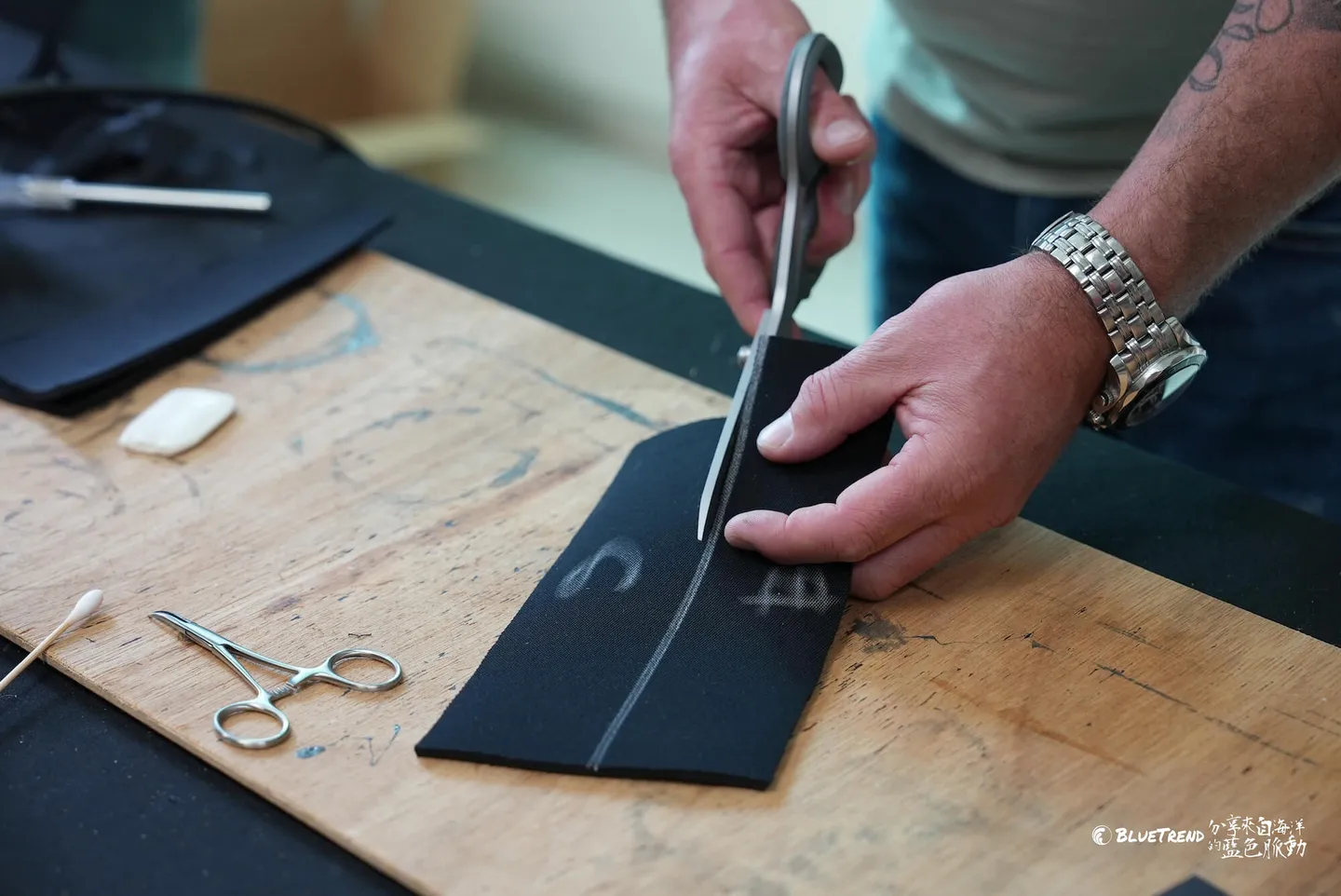
The product manager demonstrates how to replace a pair of booties
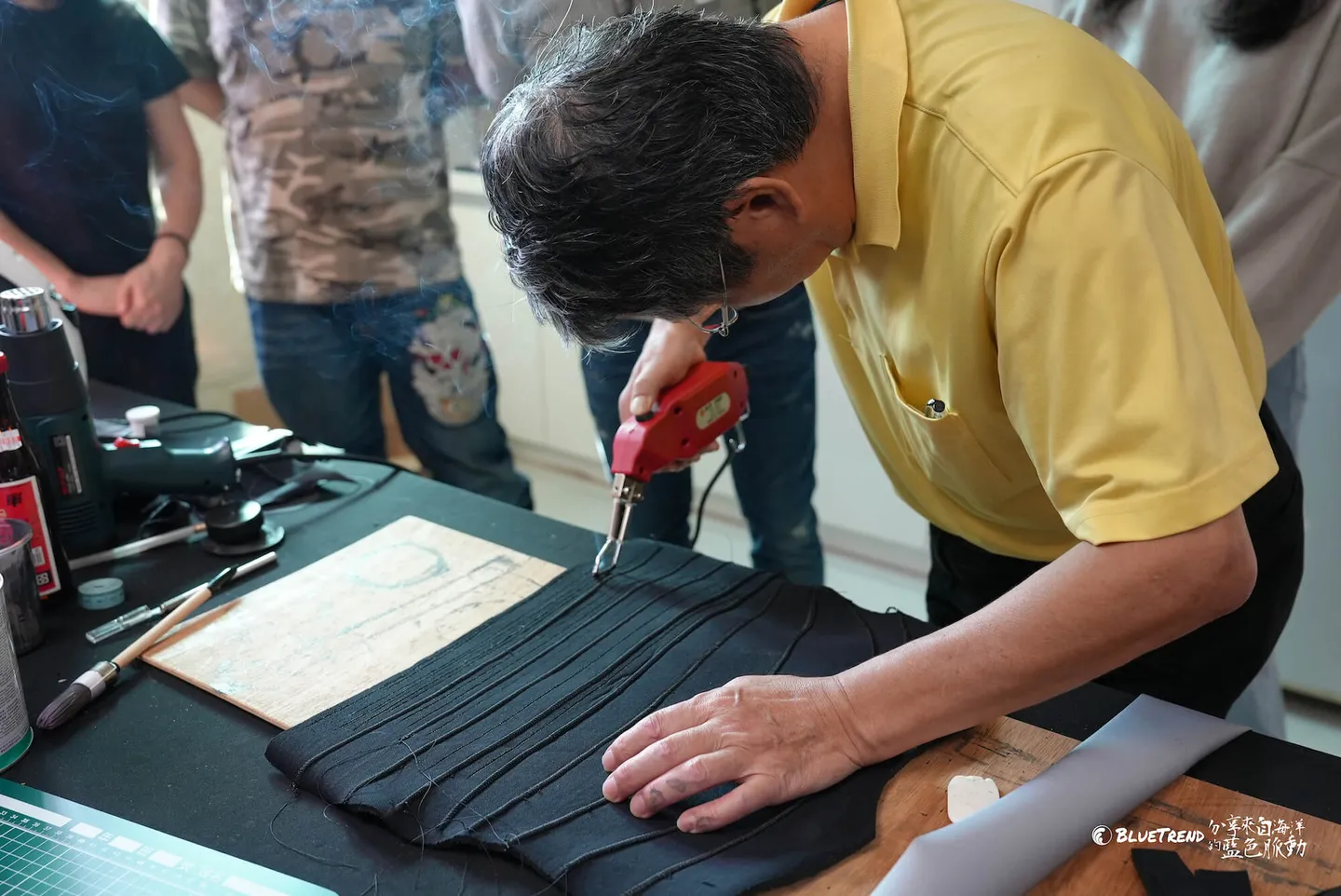
Course participants get hands-on experience stitching a drysuit themselves
Taiwan's First Drysuit Repair Station Sets Up Shop in Chiayi
All the demonstrations above showed how drysuit repairs can be carried out by hand, but certain drysuit materials can be serviced using machinery — reducing labour costs and improving repair quality. This is precisely why Waterproof's Taiwan distributor, Junior Scuba, made a significant investment to bring in repair equipment, establishing the island's first professional drysuit repair facility in Chiayi, with the aim of providing customers with the most prompt and comprehensive after-sales support possible.
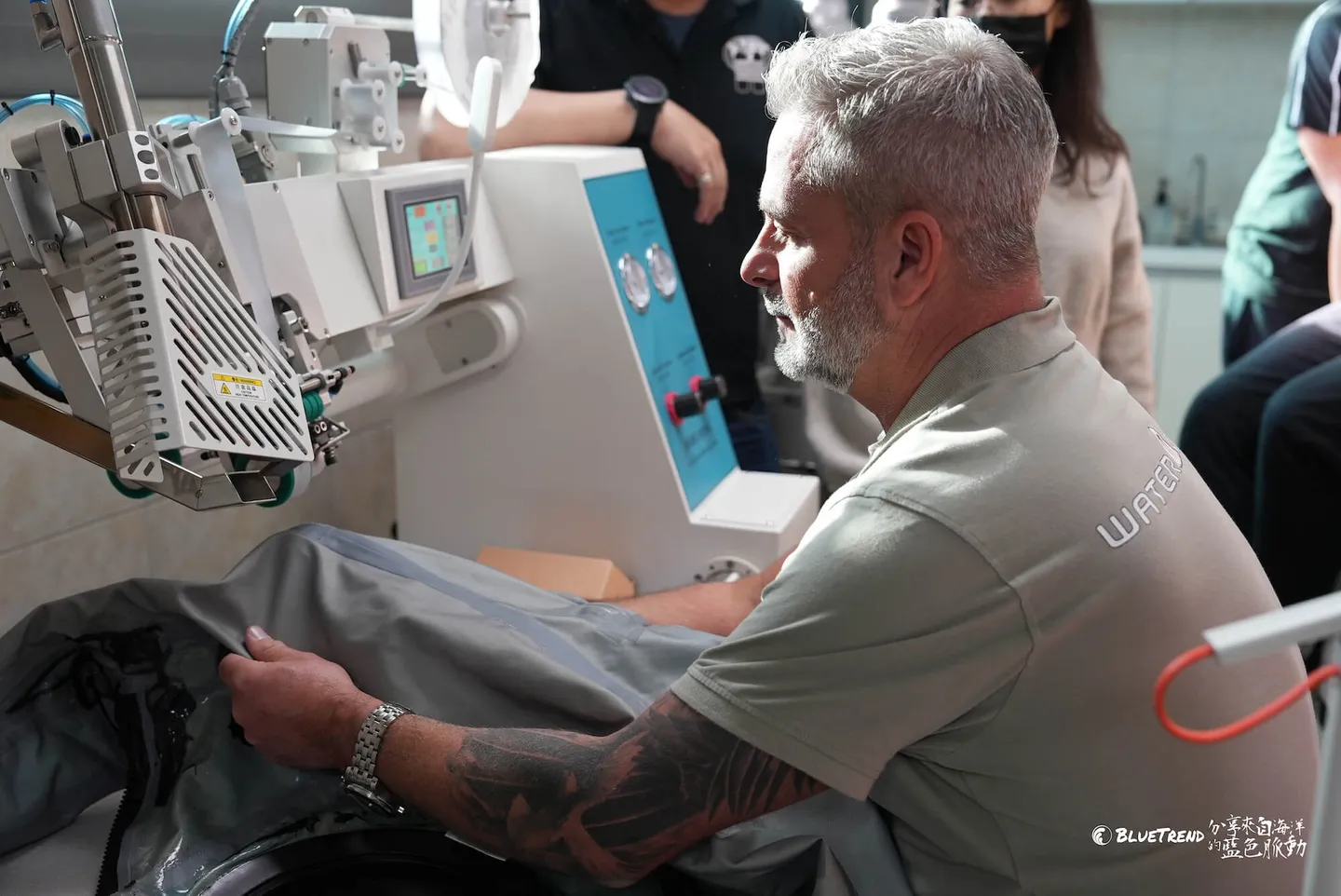
The product manager demonstrates how to use the machine for drysuit repairs
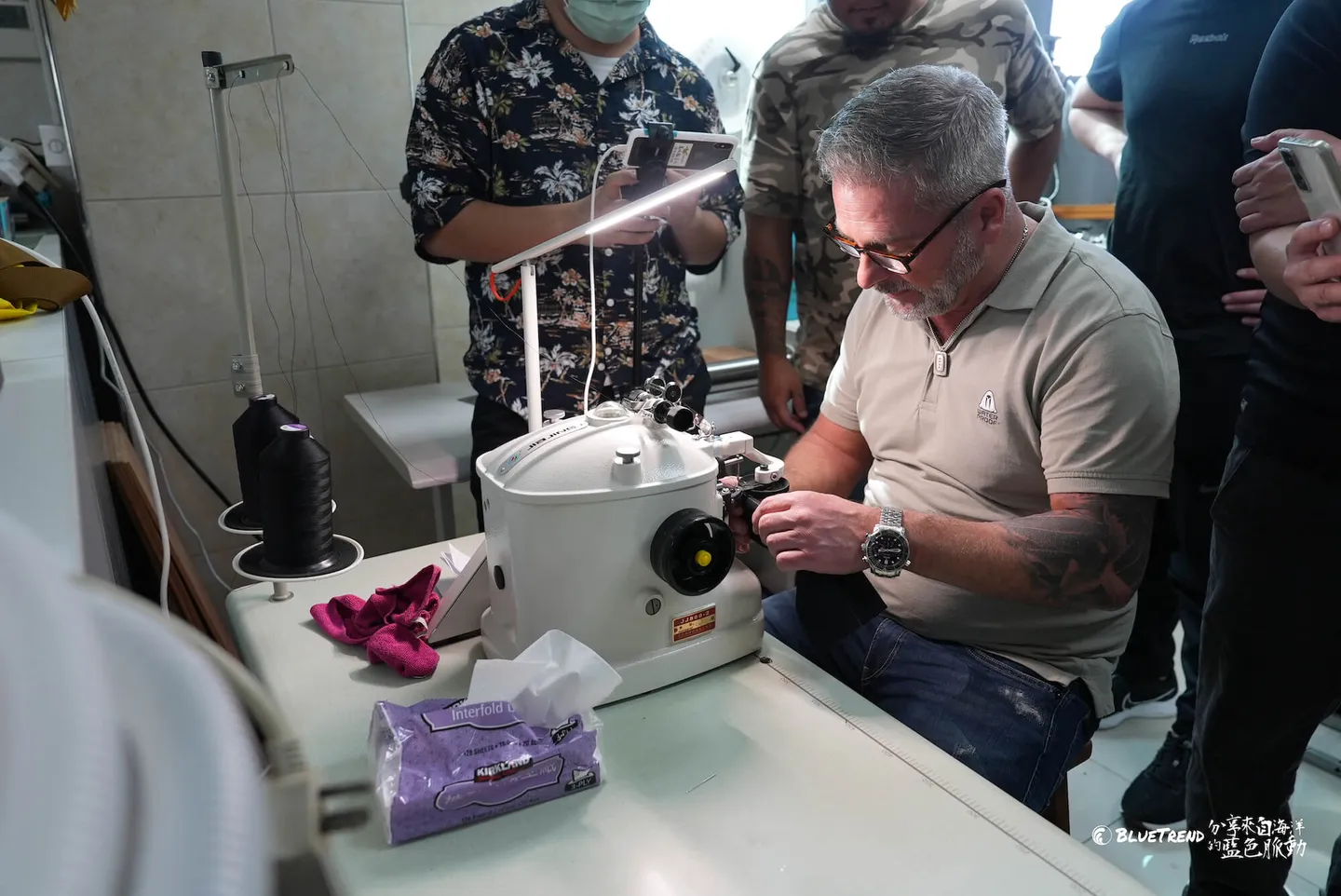
For certain drysuits, machine-assisted repairs can dramatically reduce labour costs and improve repair quality
Course Takeaways
After a full and intensive day of training, the Editor came away with a deep appreciation for just how specialised drysuit repair truly is. Beyond understanding the materials and construction of each suit, the knowledge of which adhesive to use, which tools to select, and how to apply them correctly represents an accumulation of experience passed down through hands-on expertise. We are genuinely delighted that Waterproof's Taiwan distributor, Junior Scuba, has taken the initiative to establish the island's first drysuit repair station — meaning that from now on, after purchasing a drysuit, Taiwan divers can enjoy a level of after-sales service on par with what you'd receive from an overseas factory.
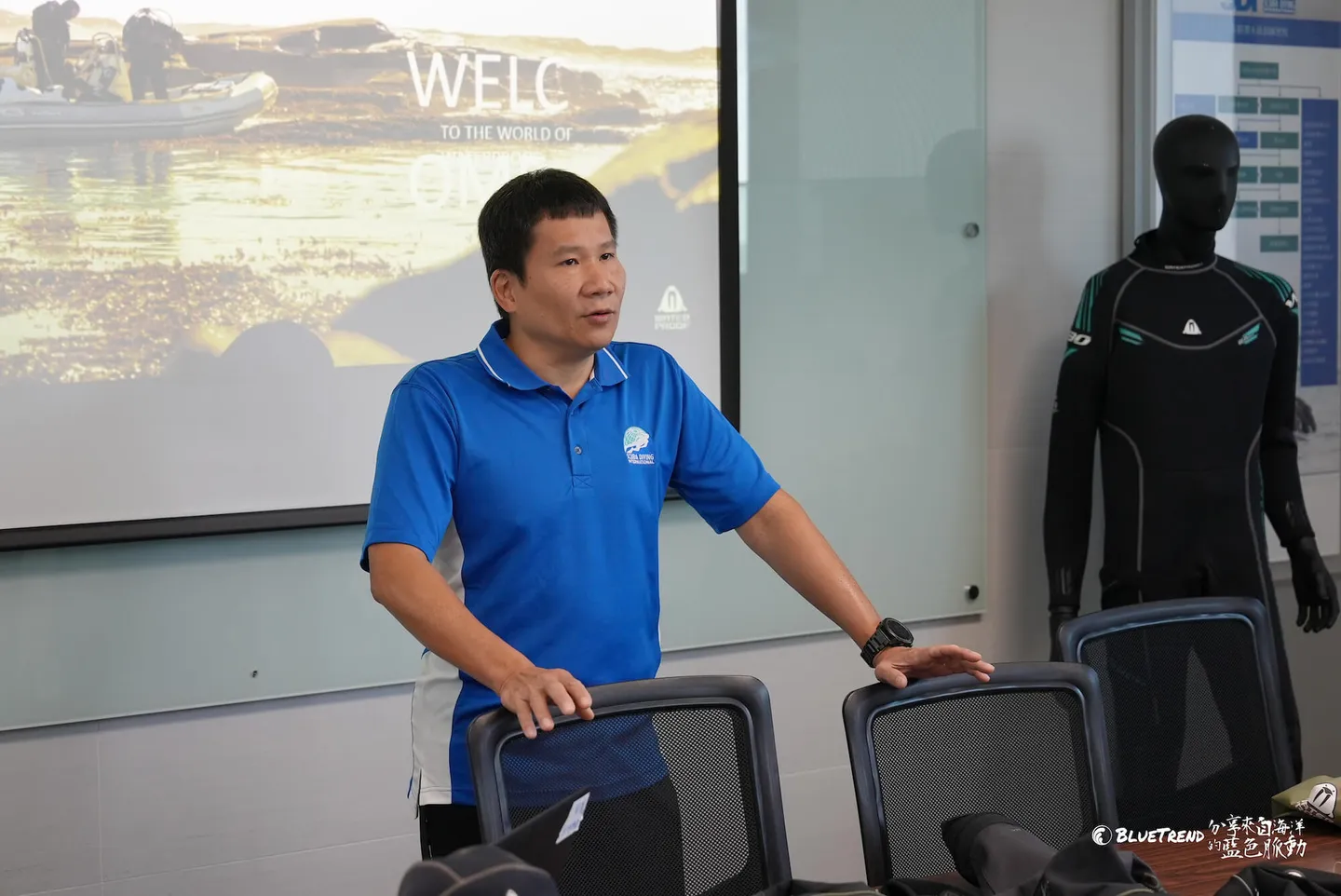
The head of Junior Scuba, Waterproof's authorised distributor in Taiwan
As for how to choose the right drysuit, the answer ultimately comes down to each individual's budget and diving habits. Even within the Waterproof product line alone, options range from breathable travel-oriented materials to cut-resistant composite fabrics — and the functionality is reflected in the price tag. You should weigh your own diving habits carefully before choosing the product that best fits your needs. One instructor who attended that day shared that, because of the nature of his work, he dives frequently. His wetsuit wears out at a rate of roughly one per year, and within three years the cumulative cost of replacements would have been enough to purchase an entry-level drysuit outright — all while a drysuit also offers the advantages of isolating the wearer from polluted water and allowing divers to walk straight into the cabin after a boat dive without needing to change. As a result, his club has been gradually making the switch to drysuits for their diving activities.
It is also worth noting that drysuit use is a specialised skill covered by its own certification course. Be sure to seek out a qualified dive instructor in your area to complete the proper training — improper use can not only damage the drysuit itself but may also increase diving risks.
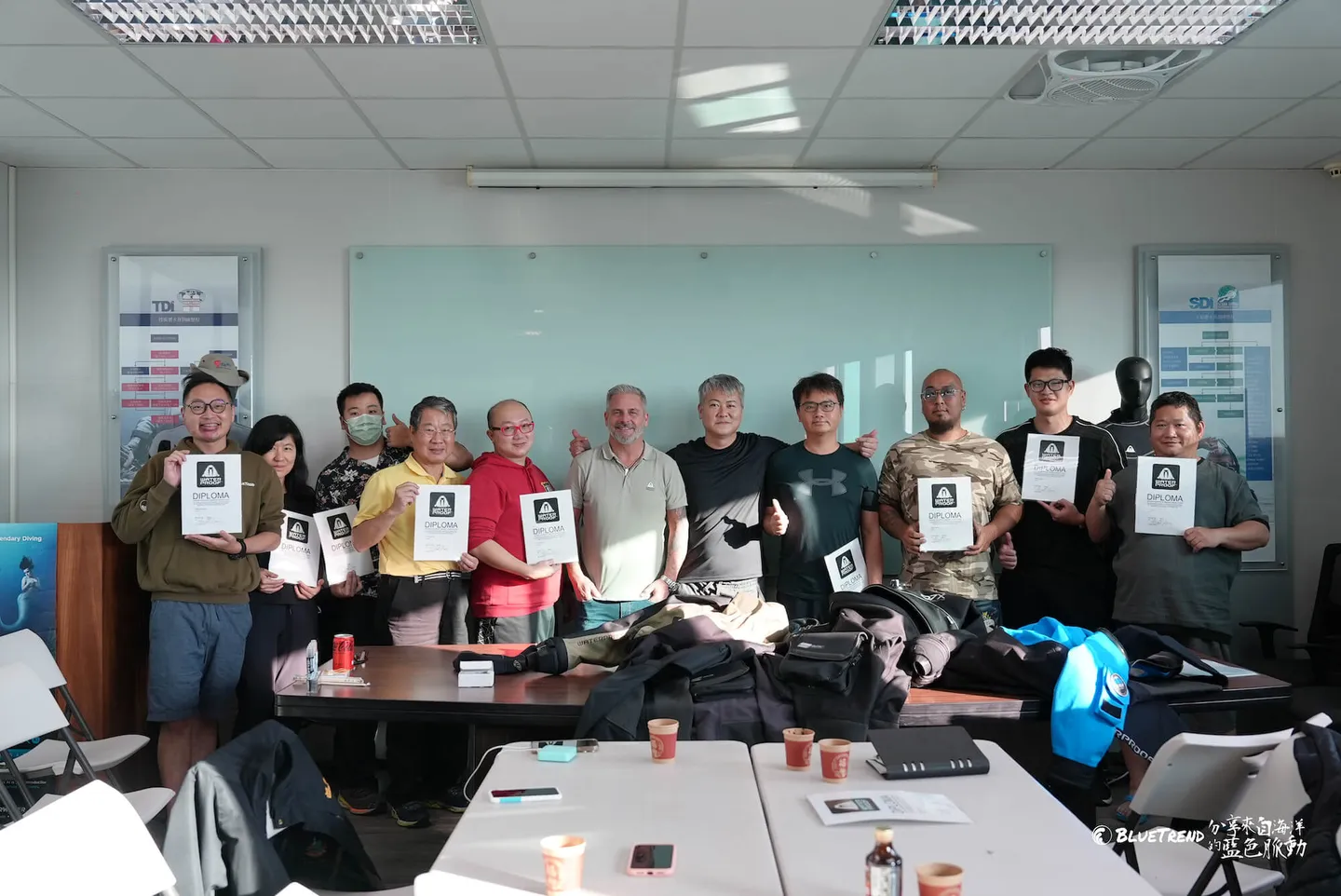
The Waterproof factory drysuit training course gives you a deeper understanding of drysuit repair principles
Further reading:

![[Dive Class with Divingmate] Drysuit Myth-Busting: Debunking the 3 Biggest Misconceptions](/_astro/IMG_7469-scaled_QL2M8.webp)