When divers enter the water, there's one awkward, heavy piece of equipment they simply can't leave behind: the scuba tank / cylinder strapped to their back. Underwater, undeterred by water pressure or changes in depth, it steadily supplies air so we can freely take in all the wonders of the underwater world. Every so often, though, you hear about someone breathing from a tank with a strange odor. Besides accidental contamination of the air supply during filling, a more likely culprit is a tank that hasn't been serviced in years. While a neglected, odd-smelling tank may not pose an immediate danger, there's no guarantee that aging O-rings or a contaminated air supply won't cause discomfort during a dive — increasing the risks in the water. That's why sending your tank in for an annual service is so important!
But Can't You Just Check the Outside of the Tank for Anything Unusual?
According to professional instructors, once a tank has been used a certain number of fills or has reached a certain age, it must be completely disassembled for a detailed inspection. The tools and expertise required are beyond what the average diver can handle — the job must be handed over to a qualified specialist instructor. For example, the SDI (SDI (certification agency)) | TDI (TDI (certification agency)) | ERDI system offers the professional SDI VISUAL INSPECTION PROCEDURES course, which helps instructors and dive shop operators carry out annual tank servicing in a more systematic way.

Leave tank servicing to the professionals — for peace of mind
Generally speaking, tanks are recommended for servicing after a certain number of years or fills. Taking Taiwan's Northeast Coast as an example, the dive season runs roughly from the Dragon Boat Festival to the Mid-Autumn Festival each year. As water temperatures drop and the northeast monsoon sets in, dive shops along the coast gradually close up or cut back their hours. While divers begin migrating south like migratory birds — or jetting off to warmer destinations for dive travel — instructors at the shops get to work servicing equipment and tanks. The effort involved is no less demanding than teaching and guiding clients during the peak season.
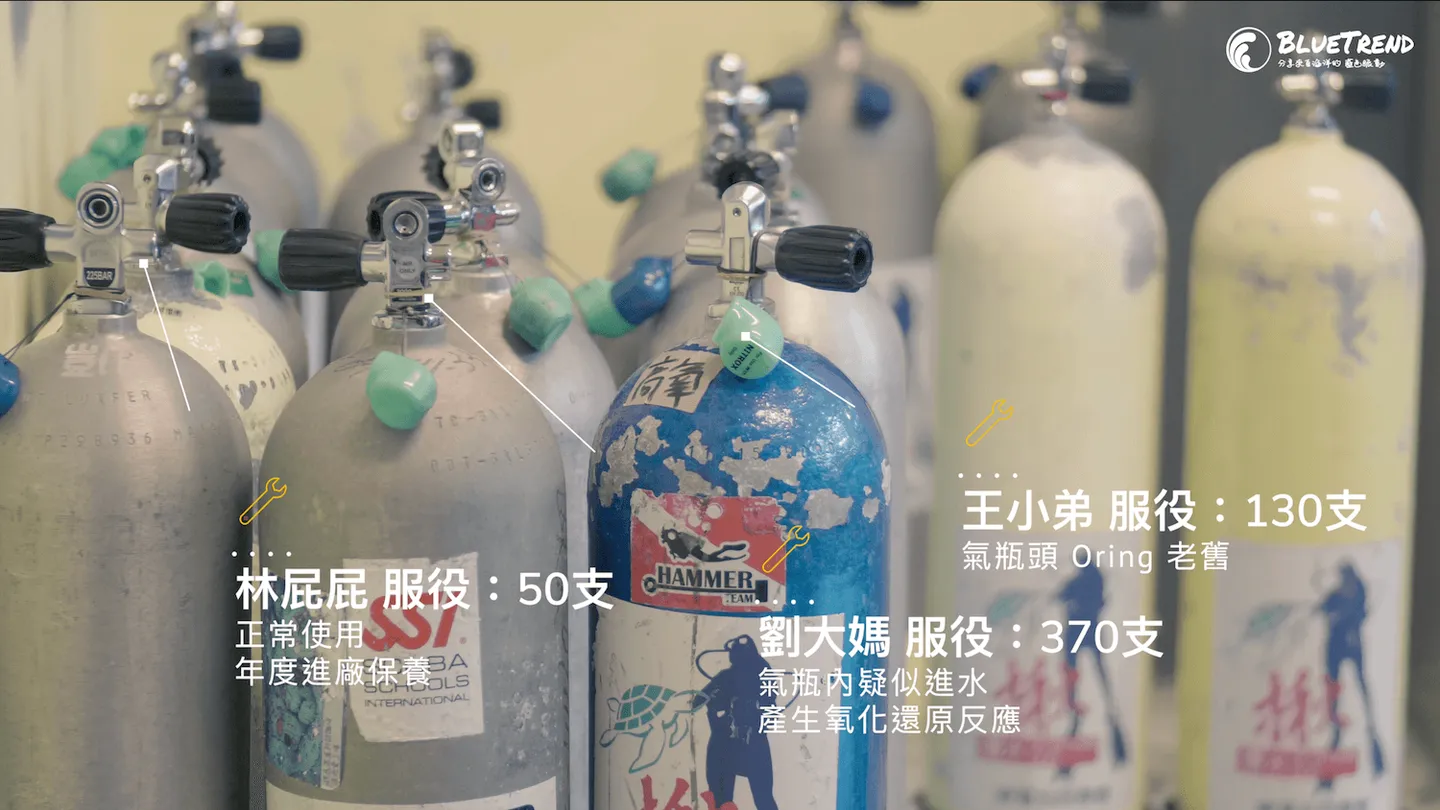
A shop full of tanks — the sight of them alone signals a serious test of willpower


Tank Servicing Steps
Tank servicing can be broken down into several procedures:
-
Bleed the tank
-
Remove the tank valve
-
Full disassembly
-
Ultrasonic cleaning
-
Internal visual inspection of the tank
-
Oxygen-compatible reassembly
-
O-ring replacement
-
Reassembly and testing
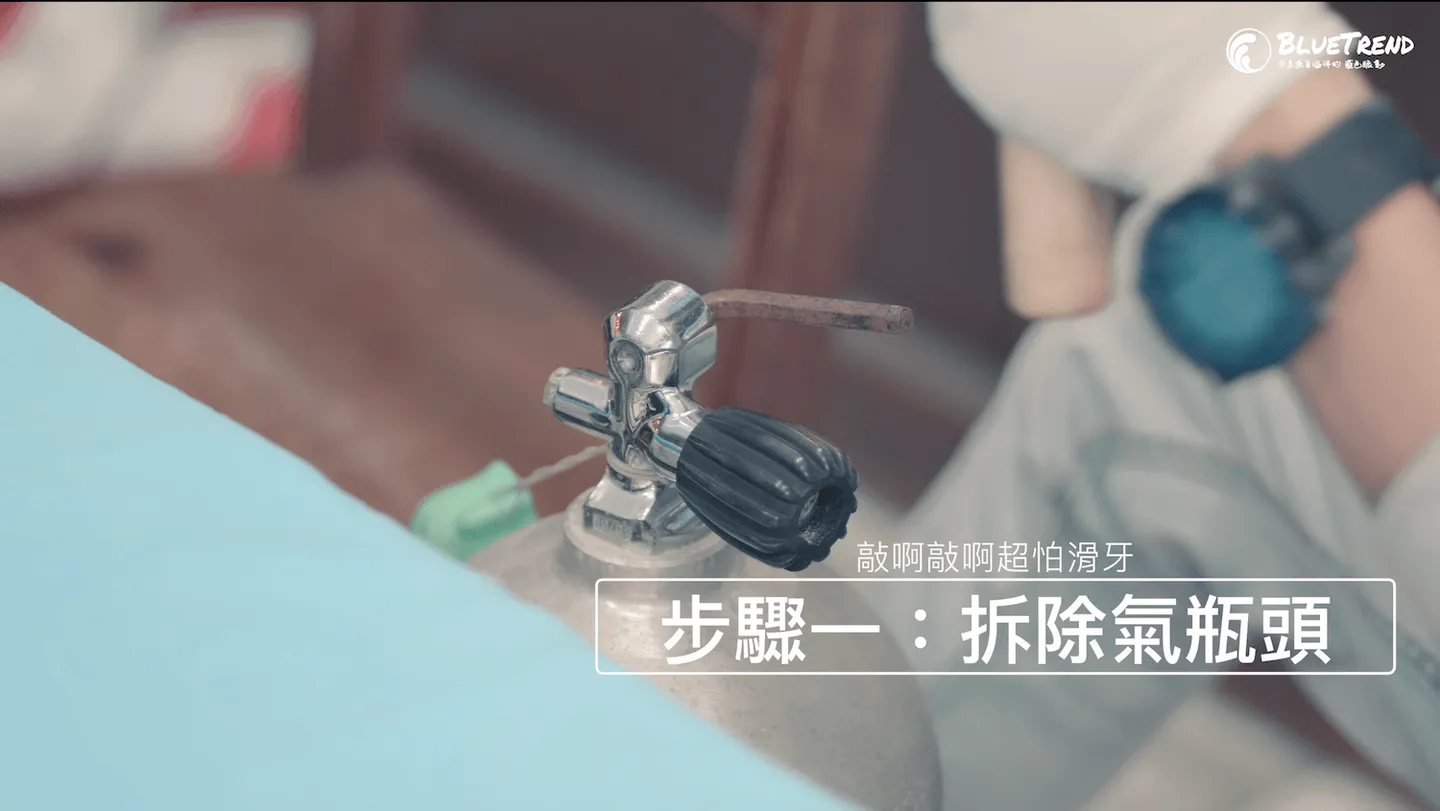
Stripped threads are the highest-risk step in the process
As straightforward as the list above looks, the Editor actually took part in a servicing session and quickly realized that diving is, at its core, a labor-intensive, grueling industry. First, you thoroughly wash the outside of the tank, fully bleed the air, and then remove the valve. This step alone is the first brutal challenge: a valve that hasn't been removed in some time will be seized on so tight that you'll end up throwing every tool you have at it. Failing to get it off isn't the end of the world, but if the tank's burst disc plug accidentally strips its threads in the process, you'll be calling the shop owner for a quote on a whole new assembly — goodbye!
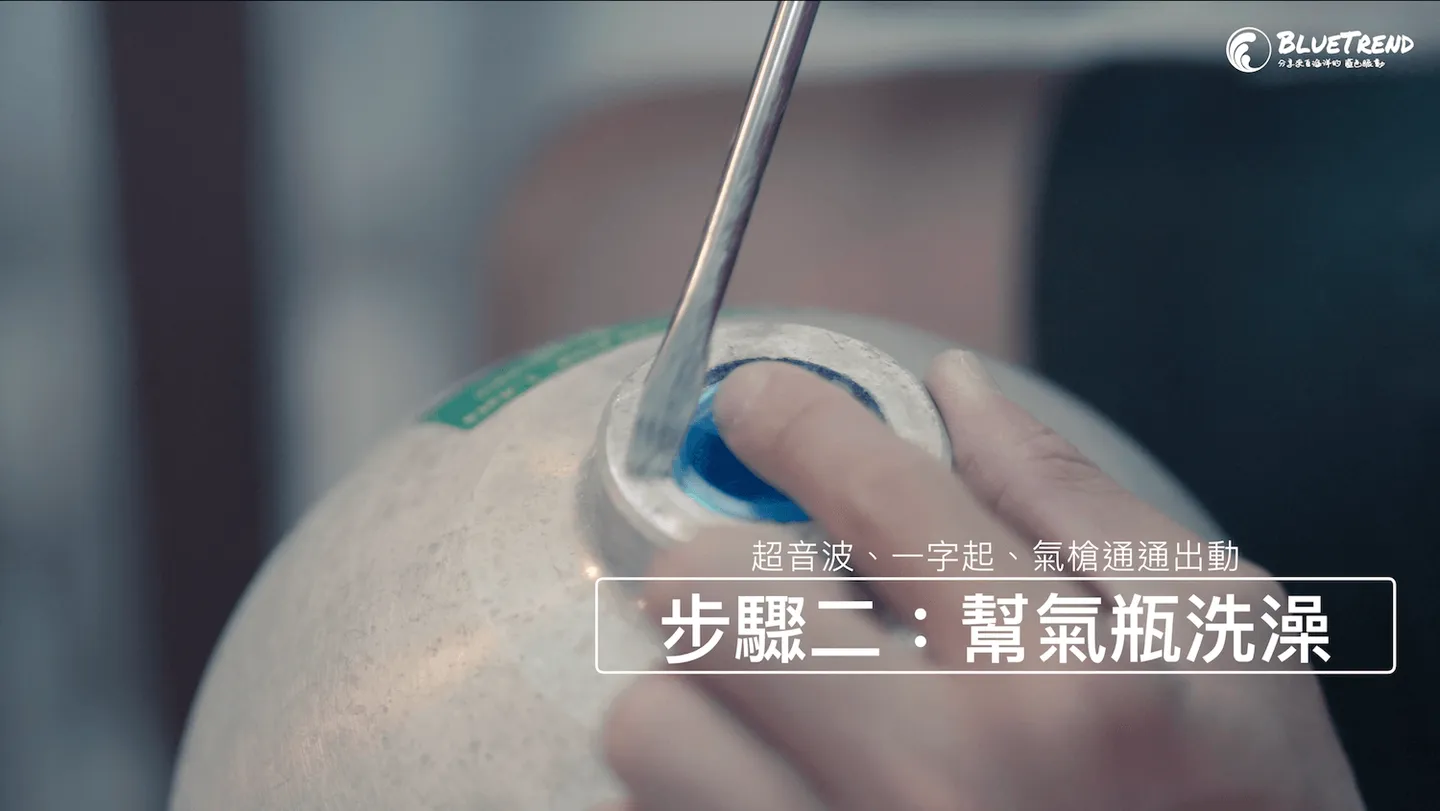
Next, it's bath time for the tank! First, the entire valve assembly is disassembled and sent into an ultrasonic cleaner. That's when you'll see the thick layer of oxidized residue caked onto O-rings that haven't been serviced in years — out with the old, in with the new! The contact area between the valve and the aluminum tank also develops a layer of white scale due to the galvanic potential difference between the two metals. Out comes the flathead screwdriver to scrape it all away.
The most critical part of tank servicing is the VIP (Visual Inspection Procedures) internal check. The inspection instructor peers through the tiny tank opening to look for signs of oxidation caused by seawater accidentally entering the tank. One instructor shared the story of a tank they once opened that was lined with a thick layer of white foreign matter inside — it's honestly hard to imagine whether the diver who breathed from that tank had been nauseous underwater.
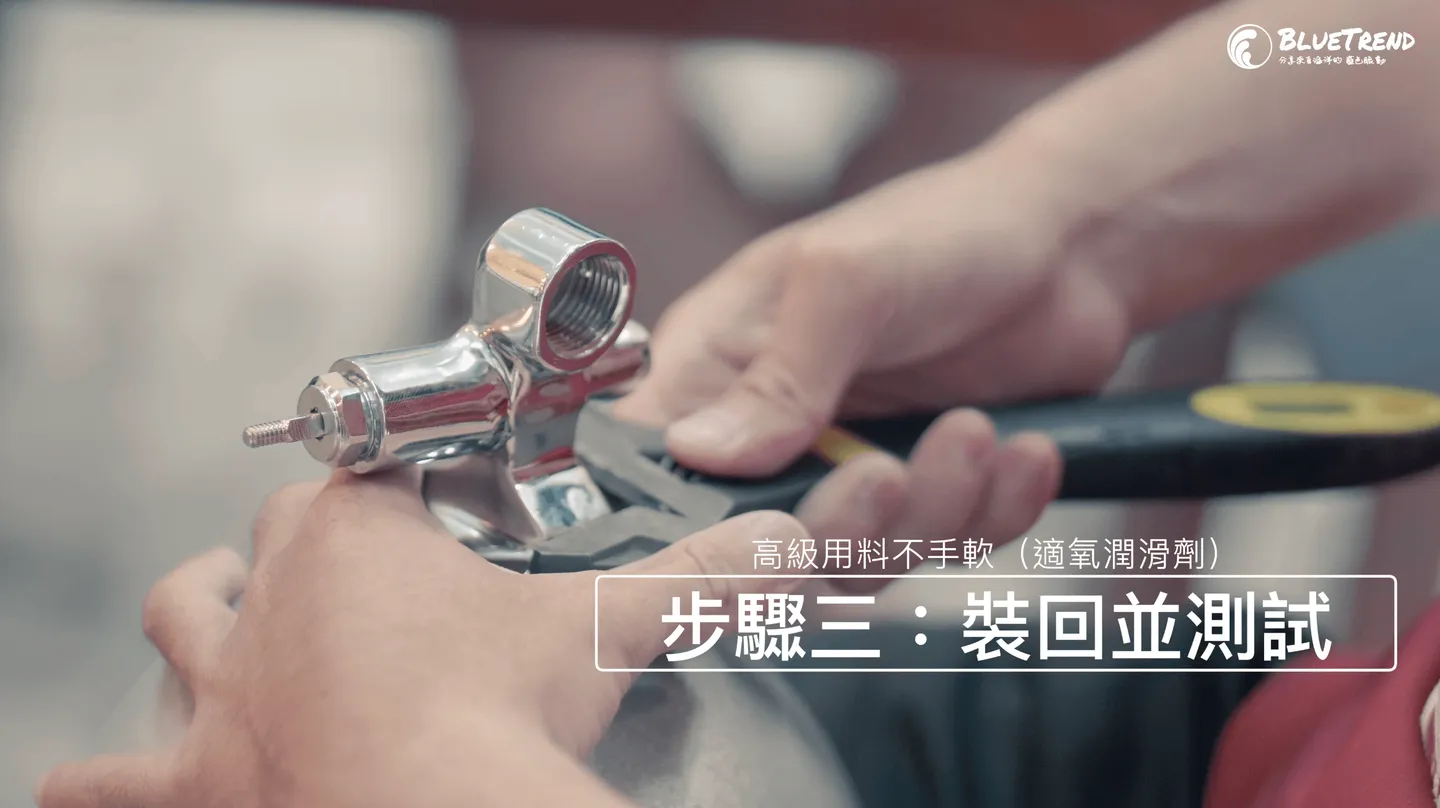
Oxygen-compatible reassembly is the final hurdle — knowing how to put everything back together correctly is where the real expertise lies
The final step is reassembling the valve from scratch, using the premium oxygen-compatible lubricant (CHRISTO-LUBE MCG-111). Because many divers now use nitrox tanks, the reassembly process requires proper oxygen-compatible handling to extend the tank's service life. In fact, when servicing dive equipment such as first stage regulators and second stage regulators, disassembly is rarely the hardest part — the real challenge is reassembling everything correctly and calibrating all the parameters accurately. Tank servicing is no different: it's not uncommon to reinstall the valve, open the air supply for a test, and suddenly discover a leak — leaving you no choice but to sigh and take it all apart again for another careful inspection.
The Editor observed the inspection instructors work hard throughout the day, from 9:00 a.m. to 4:00 p.m., and in all that time they managed to fully service just 10 tanks. At the end of the day, glancing over at the remaining 100-plus tanks quietly waiting their turn, my respect for dive instructors quietly grew a little more. Dive instructors provide a service through sheer physical effort and professional expertise — and we hope all divers will stop chasing rock-bottom prices at all costs. Only fair rates lead to professional service. Otherwise, the next tank you breathe from might be one that hasn't been serviced in ages. But hey — would you even know?
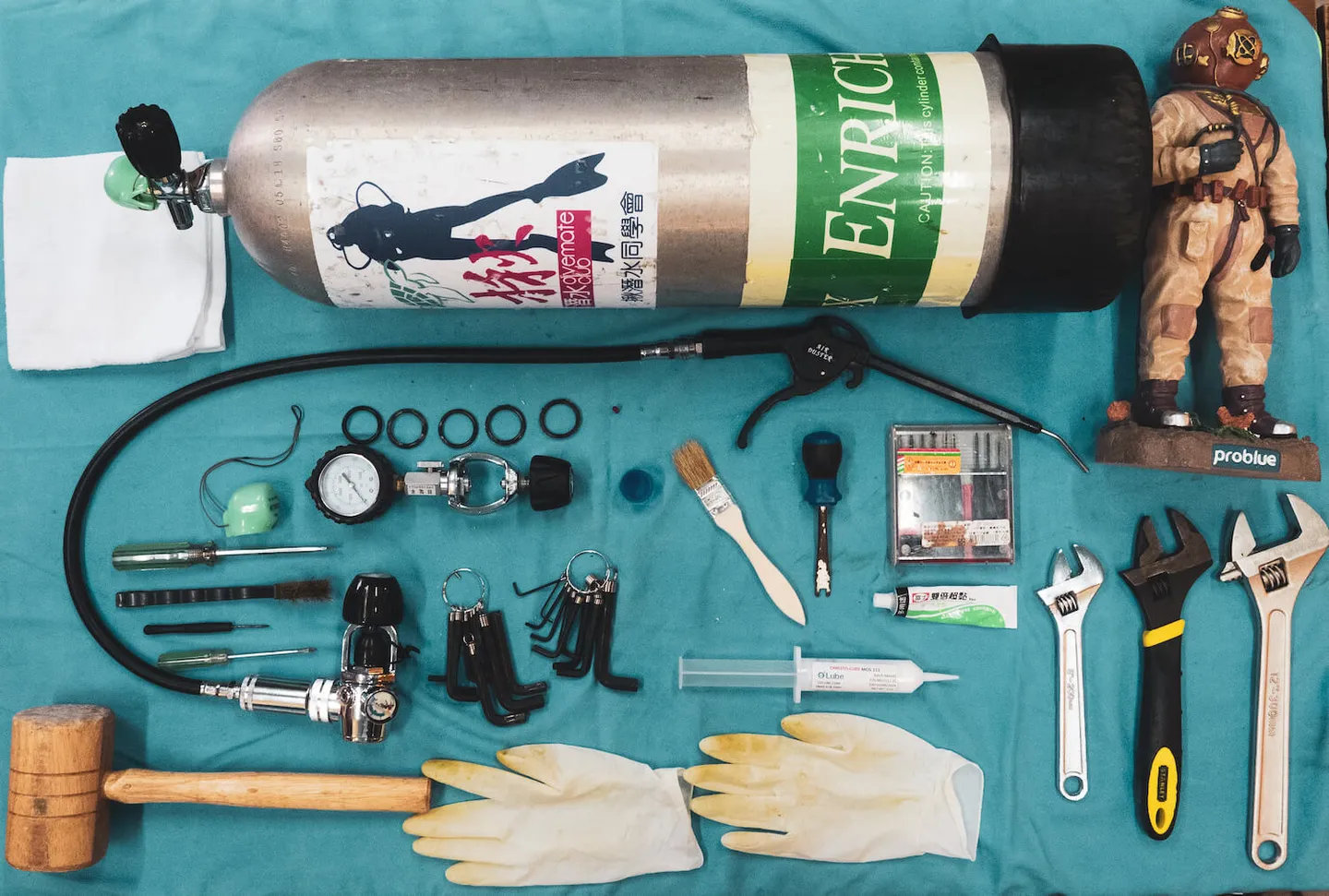
Tank servicing runs on conscience — whether it's actually been done is something only the dive shop knows
Related links:


![[Kyotaro's Underwater Photography School] SONY RX100 or Olympus TG6? How to Choose?](/_astro/%E5%B7%A5%E4%BD%9C%E5%8D%80%E5%9F%9F-1-5_1b6de2.webp)