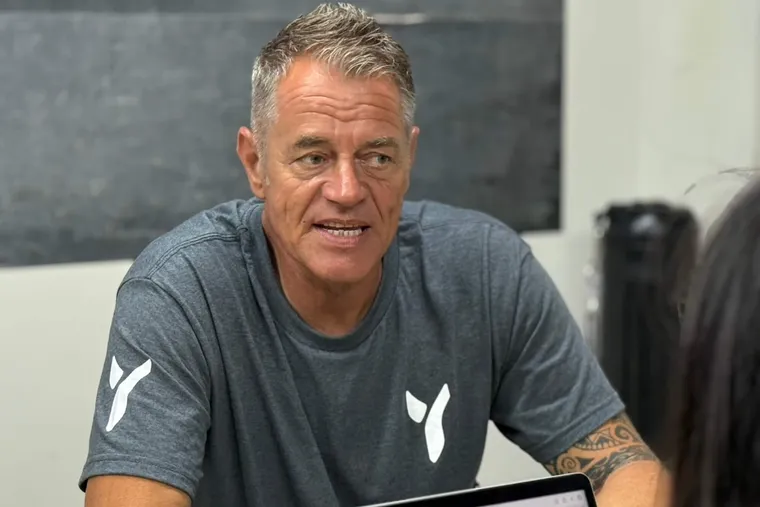
BlueTrend has supported several ocean advocacy initiatives in Taiwan, including the Wanghai Bay Dive Map crowdfunding campaign and the CrowdBidding campaign. Throughout these efforts, UTD (Unified Team Diving) has stood by us with a spirit of giving back to the ocean. Through our collaboration, we've also developed a deeper relationship with UTD. We suspect most of you are just as unfamiliar with the world of technical diving as we once were — which is exactly what inspired us to pull back the curtain on this rapidly growing global dive system through a short interview. We're very grateful to Max, the Asia-Pacific general representative for UTD, for sitting down with us. Before diving into the interview, let's take a quick look at what UTD is all about!
About UTD
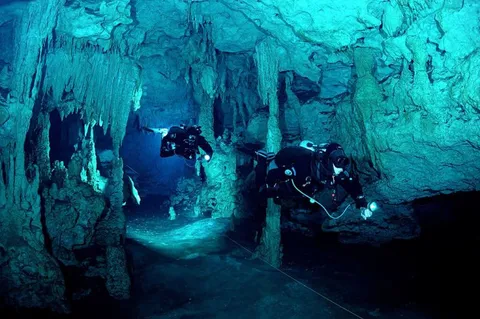
UTD stands for Unified Team Diving — a name that speaks for itself. The organization advocates for standardized equipment to ensure divers are prepared for the unexpected situations that arise in technical diving. At another level, UTD places strong emphasis on buddy teamwork, expecting every dive buddy to be fully capable of handling their partner's emergencies. Headquartered in San Diego, USA, UTD has approximately 9,000 certified divers worldwide and is renowned for pushing the limits of cave diving and wreck diving. In just eight years since its founding, UTD has rapidly expanded to countries across the globe.
Beyond being a training system, UTD is also a designer of technical diving equipment. Its signature sidemount system is engineered specifically around the demands of technical diving — from BCD designs that protect inflation and deflation valves from abrasion during cave diving, to internal bladder frameworks that secure gas in place, allowing optimal trim and balance when using multiple cylinders.


Interview
Spark (hereafter S): Can you share more about how UTD came to be founded?
Max (hereafter M): UTD was founded by two individuals — Andrew Georgitsis and Jeff Seckendorf — whose backgrounds are remarkable in their own right. Andrew Georgitsis was a South African Olympic water polo player who later emigrated to the United States, where he explored most of the major technical diving systems. Jeff Seckendorf is a triathlete in his sixties and an extraordinary endurance athlete. Both founders are also certified light aircraft instructors. When establishing UTD, they wove professional athletic training methodologies and aviation safety training principles directly into the UTD curriculum, while also bringing the fundamentals of technical diving down to the recreational diving level.
S: UTD is known for technical diving — what are some of the core commitments in your training approach?
M: Let me start with UTD's foundational philosophy, which can be broken down into two areas: equipment and personal skills. On the equipment side, we follow the Doing It Right (DIR) philosophy of technical diving. For example, all team members use standardized equipment so that in an emergency, no one is fumbling with unfamiliar gear. In conventional recreational diving, the octopus / alternate second stage is always a secondary, often inferior piece of kit — but under DIR, when your dive buddy needs help, the alternate air source they use should be of the same quality as the primary second stage regulator. There are actually many ways in which DIR diverges from recreational diving norms. On the personal skills side, we advocate for doing things right from day one — what we call the Law of Primacy (it's a bit tricky to translate directly). Put simply, we incorporate the training principles used by Olympic athletes, with a strong emphasis on muscle memory. For instance, right from the first lesson, we teach students to control their breathing to maintain neutral buoyancy — build that habit early, and you'll never be a bottom-scraper later on (laughs). Conversely, if a student starts out kneeling on the pool floor, that muscle memory is already formed, and it takes twice the effort to teach them to hover properly afterward.
Doing It Right (DIR) — Wikipedia
S: But even after completing their Open Water Diver course, most beginners still struggle with neutral buoyancy. How do you actually get students to achieve it on day one?
M: A short video will make it clear.
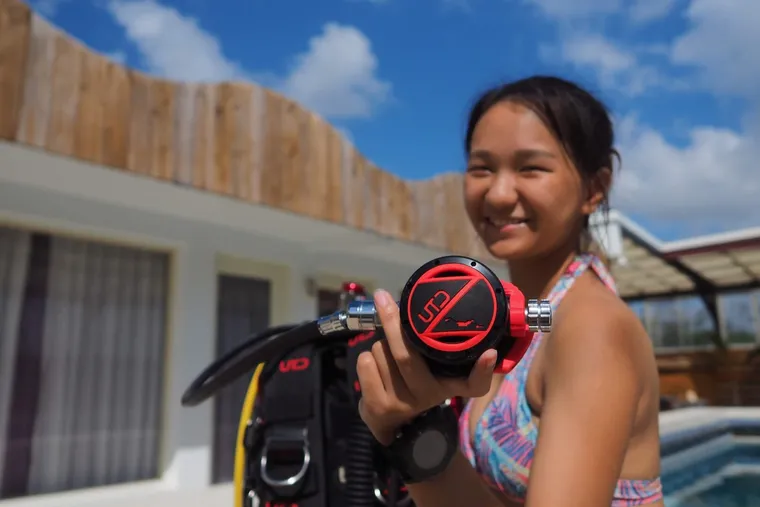
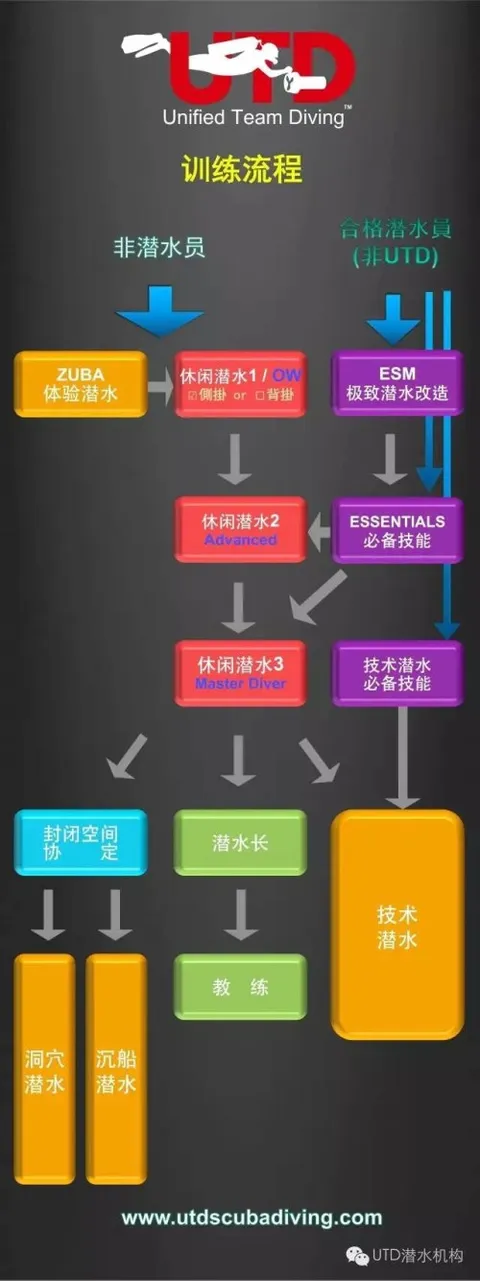
UTD developed a surface air supply device called the ZUBA. On the very first day of class, unlike a typical recreational diving course where students suit up in full gear and jump into the pool, we take a completely different approach. When students can't adapt to the weightless environment right away — made worse by flailing fins, and gear that's too heavy — it's not uncommon to hear instructors asking students to carry 10 kg of weight into the water. Instead, we guide students through a few simple steps toward neutral buoyancy:
- Build water comfort: Jump in without any gear — just a swimsuit. No mask either, so students get used to being underwater without one.
- Find neutral buoyancy: Breathe through the ZUBA surface air supply and gradually develop a feel for neutral buoyancy, using breath control to move up and down.
- Add equipment progressively: Introduce the mask, wetsuit, scuba gear, and fins one at a time, calculating the positive and negative buoyancy of each item to determine the right weighting. (Because UTD uses standardized equipment, these buoyancy calculations are straightforward.)
Within a single 3-hour pool session, students can learn to swim without a mask and achieve precise neutral buoyancy. Pretty remarkable, isn't it?
S: If a diver already certified under another system wants to join UTD, do they have to start from scratch?
M: We offer a crossover program called ESM for divers from other systems. It's not that other systems are wrong — it's about UTD's commitment to standardization. The goal is to bring new members up to speed on the unified concepts and equipment used by the team, so everyone is operating on the same platform.
S: Could you share another way UTD differs from other systems or philosophies?
M: Do you know why ascent rates should not exceed 18 m/min? If you ask most instructors, they probably can't tell you — because it doesn't actually come from any theory. It's an accidental holdover. During World War II, U.S. Navy underwater demolition teams had to descend wearing extremely heavy equipment and were hoisted back to the surface by a winch. The speed of that winch happened to be 18 m/min, and somehow that figure became the unquestioned standard.
UTD has developed its own Min Deco decompression theory. Simply put: if you've completed a dive at 30 m, most dive computers will direct you to stop at 3 m for a safety stop before surfacing. We instead guide students to stop at 15 m for 1 minute, ascend to 12 m for 1 minute, then to 9 m for 1 minute, and continue ascending in stages. We once conducted a verification study in Europe comparing these two decompression approaches — drawing actual blood samples after dives and testing for the presence of silent bubbles. The results showed that divers following UTD's decompression theory had significantly fewer silent bubbles in their bloodstream than those using conventional methods. After multi-dive days or deep dives, divers who follow UTD's decompression theory can board a flight immediately, while divers using other systems typically face an 18–24 hour no-fly waiting period.
Furthermore, UTD anticipates that every student may eventually move into technical diving, so gas planning is far more rigorous. In a typical recreational dive, a dive guide might tell students to turn around when the pressure gauge (SPG) reads 50 bar. But under the dive buddy concept, your reserve gas should — in an emergency — be sufficient to safely return both divers to the surface after completing all required decompression stops. Gas management is therefore taken very seriously.
S: As the Asia-Pacific general representative, are there any concerns you have about the development of diving in Taiwan?
M: Taiwan is surrounded by the ocean on all sides — compared to other countries, it's incredibly easy for us to get in the water. That ease, paradoxically, means divers here tend not to invest as much time, money, or seriousness into diving as a professional pursuit. On top of that, dive instructor certifications have become too easy to obtain. With an insufficient domestic market, dive shops and freelance instructors are caught in a fierce race to the bottom on pricing, and teaching quality simply can't improve under those conditions. I worry that Taiwan could end up like Sanya in Hainan Island. Sanya has such an oversupply of instructors that everyone is undercutting each other just to get students. The introductory dive experience there has become what we jokingly call "hotpot-style diving" — an instructor grabs two students' tanks in each hand, takes them down for five minutes, then it's over. Did those people actually experience the joy of diving? Will any of them ever come back to learn properly?
S: Are there any special plans to promote UTD in Taiwan in the future?
M: Diving is genuinely a lot of fun — it's not just about watching fish. There's room for all kinds of creative competitive events. We hope to one day host underwater scooter performance competitions in Taiwan — imagine a course set up with rings and obstacles on the bottom, where competitors must navigate their scooters through each one in sequence or perform specific maneuvers. The goal is to elevate diving to the level of a true sport. Here's a video of our co-founder Jeff Seckendorf performing with a scooter gripped between his feet while swimming alongside dolphins:
https://www.youtube.com/watch?v=EZwmXZeIpIE
Thank you for taking the time to read this introduction to UTD. We hope that more people will join UTD in the future and realize their dream of entering the world of technical diving. We'll continue to interview experts from all corners of the diving world — so let's explore the ocean together!