Contents(4)
The Editor says: According to statistics, one in five fish sold globally comes from illegal fishing, and the most common form of fraud is labelling lower-value catches as higher-value species. The Aquaculture Stewardship Council (ASC) uses the concentrations of these elements to create individual fingerprints for all seafood, a method known as trace elemental fingerprinting (TEF), and is leveraging this technology to combat global seafood fraud. Follow along as BlueTrend explores this remarkable technique! <Full article reprinted from China Dialogue Ocean: Chemical Fingerprints Make Seafood More "Transparent" >
Whether it is farmed or wild-caught, tracing seafood completely from source to table is an enormously challenging problem. Seafood supply chains are highly complex, often involving multiple countries and dozens of companies, leading to a serious lack of transparency in the industry and rampant fraudulent practices. Seafood is one of the highest-volume commodities traded globally. FAO data show that in 2020, total global fisheries and aquaculture production of aquatic animals reached 178 million tonnes, a figure projected to rise to 202 million tonnes by 2030. Seafood is the primary source of protein for approximately 3 billion people worldwide.
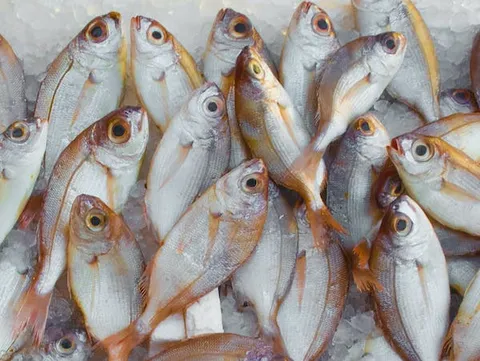
photo credit:mali maeder
Yet one in five fish sold globally comes from illegal fishing, with an annual value of US$23.5 billion at 2009 prices (approximately US$42 billion when adjusted for inflation). The most common form of seafood fraud is mislabelling — passing off lower-value species as higher-value ones, such as labelling yellowfin tuna as bluefin tuna.
A March 2021 analysis by The Guardian found that nearly 40% of 9,000 seafood samples collected from restaurants, fishmongers, and supermarkets were mislabelled. The analysis consolidated 44 seafood studies, including a 2018 study that found the UK and Canada had the highest mislabelling rates (55%), followed by the United States (38%).
Full Supply Chain Traceability for Seafood
The seafood industry is under increasing pressure to achieve full supply chain traceability. Wendy Banta, Head of Supply Chain Assurance at the Aquaculture Stewardship Council (ASC), notes that "increasing transparency equates to greater accountability and assurance: being able to trace where seafood comes from means that a company's sustainability claims can actually be verified."
The ASC is a non-profit organisation responsible for developing standards for sustainably farmed seafood. To improve traceability, the seafood industry is increasingly turning to technology to verify the origin of seafood and to detect whether it was caught sustainably and legally. For example, scientists and regulators can trace the origin of samples by analysing natural chemical markers found in seafood shells, bones, and soft tissues.

photo credit:Shukhrat Umarov
China Dialogue Ocean consulted Catherine Longo, Chief Scientist at the Marine Stewardship Council (MSC), about these technological developments. She said: "The biggest advantage of improving forensic methods for seafood supply chains is the ability to identify fraud risks precisely, quickly, and effectively — including species substitution and falsified country of origin." The MSC is a non-profit organisation that sets standards for sustainable fisheries worldwide.


Seafood Trace Elemental Fingerprinting
"Trace elements" such as selenium, potassium, and zinc are ubiquitous in water, soil, and air, and they are also present in trace amounts in the soft tissues of every living organism. The concentrations of these elements can be used to create individual fingerprints for all seafood — a method known as trace elemental fingerprinting (TEF). One study found that TEF achieved 100% accuracy in determining the capture locations of blue mussels and soft tissues. TEF can therefore be used to verify seafood origin claims. Seafood producers and non-profit organisations such as the ASC have already begun using TEF and machine learning to combat fraud and improve supply chain transparency. Banta explains: "The ASC's approach combines elemental analysis with advanced mathematical modelling, which allows for better differentiation of samples from different geographic regions with greater certainty."

photo credit:Francesco Ungaro
Over the past decade, TEF has been used as a forensic tool to verify the authenticity of a wide range of food products, including fruit, honey, and meat. Recent research suggests that TEF holds enormous potential for verifying the origin of seafood, particularly farmed shrimp. In 2021, the ASC tested this technology in a pilot programme in Vietnam — one of the world's largest shrimp-producing countries — and found that TEF could correctly match unlabelled samples to their place of origin, with the organisation reporting an accuracy rate of 95%.
Chemical Fingerprinting
Another tool that can be used alongside TEF to combat global seafood fraud and illegal fishing is "chemical fingerprinting." This technique makes use of isotopes — variants of elements with slightly different masses — whose differing masses give each isotope its own physical properties, causing them to behave differently within the water cycle.
A team of scientists at the University of South Australia, led by marine ecologist Zoe Doubleday, is developing chemical fingerprinting. Doubleday notes that TEF works well for distinguishing one population of shrimp from another. However, other factors — such as an animal's metabolism and the time of day — can also alter the concentrations of trace elements in fish and seafood. As a result, trace elemental fingerprinting is less stable and consistent than chemical fingerprinting when it comes to identifying the origin of a species.
Doubleday and her team are developing an oxygen isotope chemical fingerprinting method. These natural chemical markers, found in shells and bones, are similar across many different marine animals. Oxygen isotopes are determined by the composition and temperature of the ocean rather than by an animal's biology, making them useful for determining where an animal came from.
"An octopus, a clam, and a fish living in the same bay will all have the same chemical values," Doubleday explains. "We have developed a technique applicable to many different seafood species, as well as a more universal marker, in an attempt to (determine) the true geographic location."
As technology advances, the cost and difficulty of regulation are both decreasing, making it simply not worth the risk to attempt seafood fraud — Catherine Longo
The method scientists use involves extracting oxygen isotopes absorbed into the calcium carbonate found in the shells and bones of different seafood species, and then analysing the chemical and geographic origin of the isotopes using a spectrometer. The team has also mapped the chemistry of the global ocean, allowing them to pair isotope data with specific locations.
Doubleday says this approach is particularly well-suited to tracking animals that live at different latitudes and temperatures. Using chemical fingerprinting technology, researchers can calculate and determine whether fish, cephalopods (such as squid and octopus), and shellfish originate from the tropical waters of Southeast Asia or the cooler waters off southern Australia. They have recorded a location accuracy rate as high as 90%.
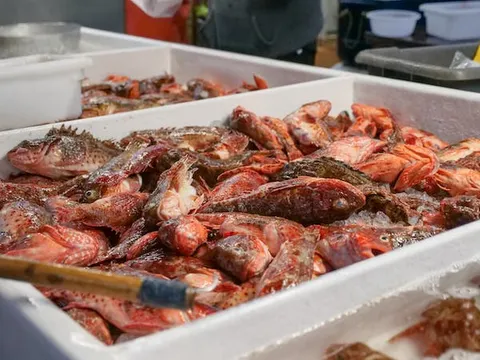
photo credit:Kindel Media
Doubleday says: "Japan and where I live in southern Australia are at roughly the same latitude, so species from both places will have similar values. We're working on a new marker influenced by geology that can help us refine (results like these) — clearly, there are many animals living at similar latitudes."
Chemical fingerprinting uses oxygen isotopes and is therefore better suited to examining a wide variety of seafood: "With oxygen isotopes, you're analysing the ratio of elements, not their quantity."
Scientists can determine the origin of a sample by analysing the ratio of light to heavy isotopes of a given element within it. This ratio varies according to climate, location, and environmental conditions. "It is governed by a number of physical laws, whereas trace elemental fingerprinting can only detect the concentration of an element," Doubleday adds.
A Scientific Solution at Scale
Doubleday suggests that, for example, government agencies could use chemical fingerprinting to inspect seafood at the processing stage — a stage at which shells are typically discarded and can easily be archived.
An MSC spokesperson also told China Dialogue Ocean that chemical fingerprinting is an important tool that could extend testing coverage beyond a limited range of species, enabling the technology to be used to monitor entire markets.
In 2021, a research report co-authored by MSC's Longo analysed the ability of chemical fingerprinting technology to detect fish capture locations. The MSC spokesperson said the report showed that these techniques hold great potential for broader application. Currently, a lack of empirical research validating the accuracy of the technology across a wider range of aquatic species and water bodies remains a barrier to its development.
This technology is still in its early stages and has a long way to go before practical application. The University of South Australia team's next step is to test samples of unknown origin, while scientists will continue to map the global ocean's chemistry.
Banta says it remains unclear whether tools such as chemical fingerprinting are susceptible to changes in ocean chemistry and temperature — there are several variables and unknowns, one of which is long-term climate change. The MSC also agrees that it will be necessary to continue tracking changes in the chemical elements that define product characteristics in order to ensure detection accuracy.
Doubleday cautions that this technology is not a silver bullet against seafood fraud: "No single method can solve all problems — a multi-pronged approach is needed." Other tools include DNA tracing, blockchain technology (used to improve supply chain transparency), and electronic monitoring equipment on board vessels. "If there are resources to combine multiple methods to determine origin, the level of certainty will be much higher," Doubleday concludes.
Longo says: "Increasing the level of digitalisation in supply chain operations and product traceability can be a powerful deterrent to fraud. As technology advances, the cost and difficulty of regulation are both decreasing, making it simply not worth the risk to attempt seafood fraud."
Full article reprinted from: China Dialogue Ocean — Chemical Fingerprints Make Seafood More "Transparent", Author: Isabelle Gerretsen, Published: 2023-11-07
Editor-in-charge: Jenny Tsai
Further Reading: