

Contents(3)
The Editor says: Every summer, as water activities grow in popularity and more outdoor enthusiasts head to the water, news reports of tragic incidents become all too common. Without a basic knowledge of the ocean, even seemingly calm waters can hide serious dangers. That's why understanding how to assess sea conditions is a fundamental skill every person should possess. This article is reproduced from Li Zhengwei's personal Facebook page.
Over the past couple of days, I've been getting more inquiries about courses, and many people have raised questions about water safety. This morning, a parent even told me she was swept out by a current in Xiaoliuqiu — it terrified her.
Essential Safety Knowledge for Water Activities
Many people actually misunderstand what makes a body of water dangerous. To be precise, assessing dangerous waters isn't just about location — it also involves tides, currents, and wave height. When sea conditions are good, almost anywhere is safe. When conditions are bad, anywhere can be dangerous. Before entering the water, check the following basic information to stay safe!


Real-Time Outdoor Sea Conditions
The Central Weather Bureau's real-time marine conditions website. This site lets you check sea temperature, wave height, and wave period. For the Northeast Coast, look at the Changtanli (near Chaoching) and Longdong data points.
Sea temperature is primarily related to currents. Sunlight only warms the top 30–50 cm of the water's surface, so use sea temperature to decide what thermal protection to prepare.
Wave height should always be read together with wave period. A wave period above 6.5 seconds makes conditions less suitable for entering the water; above 8 seconds means long-period swell. This is typically caused by typhoons or the northeast monsoon. If wave height is low but the wave period is long, it means long swells are building offshore — be aware that currents may strengthen and getting in and out of the water may become difficult, which is something beginners need to pay particular attention to.
If you're visiting an outlying island, also pay attention to wind direction. Taiwan has relatively few weather buoys, so you can only reference data from nearby buoys or use Windy to estimate likely wind direction. Outlying islands are roughly circular, so the windward side will have larger waves while the leeward side remains calm. Recently, southwest winds near Green Island have been strong, so waves on the northern and northeastern sides will be much calmer.
Understanding Tides
Many people ask me whether they need to check the tides. For surface water activities like snorkeling and SUP, tides are actually relatively unimportant. Most people assume that low tide is safer because the water is shallower — but in fact, it's the opposite. Deeper water is less likely to cause injury; in shallow water, waves can tumble you across the rocks. However, it's worth noting that each day's high tide or low tide is followed by a brief period of slack water. If the swell seems calm during slack tide and you enter the water, conditions may worsen once the tide turns, making it difficult to get back to shore.
For scuba diving, however, it is recommended to consult the day's tide chart to assess incoming and outgoing currents and the associated risk of reduced visibility from stirred-up sediment. At sites like Chaoching (Tide Boundary), for example, an incoming tide can cause the water temperature to drop suddenly by 2–3°C, and visibility can fall below 30 cm — a real hazard for scuba divers.
Coastal Topography
Generally speaking, bay headland topography is relatively safe. Inside concave bays, currents tend to be weaker and waves calmer. Convex headlands, by contrast, are more prone to strong currents. In larger bays like Longdong Bay, the areas near both sides of the bay mouth can actually be more dangerous — around Heme (和美國小前), getting in and out of the water becomes very difficult when waves pick up. And if both the swell direction and wind direction are aimed straight into a bay's mouth, conditions inside the bay won't be calm either.
Most water activity accidents are primarily the result of misjudging one's own abilities. Because most people have little experience in open-water environments — such as the open sea or rivers — they easily overestimate their capabilities. This isn't because open water is inherently terrifying; rather, it's the result of rigid, competition-style swimming instruction that overemphasises stroke technique, leaving swimmers unable to adapt to changing environments, prone to losing their bearings because they don't look where they're going, and at risk of swallowing water due to mechanical, inflexible movement and breathing patterns.
Swimming must be adaptive. Let children engage with the ocean from a young age — even in knee-deep water — so they can develop a fluid, responsive relationship with the water. That adaptability greatly increases safety. Spend time in the sea regularly, accumulate ocean experience, and you'll learn what's safe and what's not. In unfamiliar waters, find an experienced dive guide to lead the way. Most importantly, don't casually push your own limits! Respect the ocean and every living creature within it — and respect your own life.
Wishing everyone safe and happy time in the water!
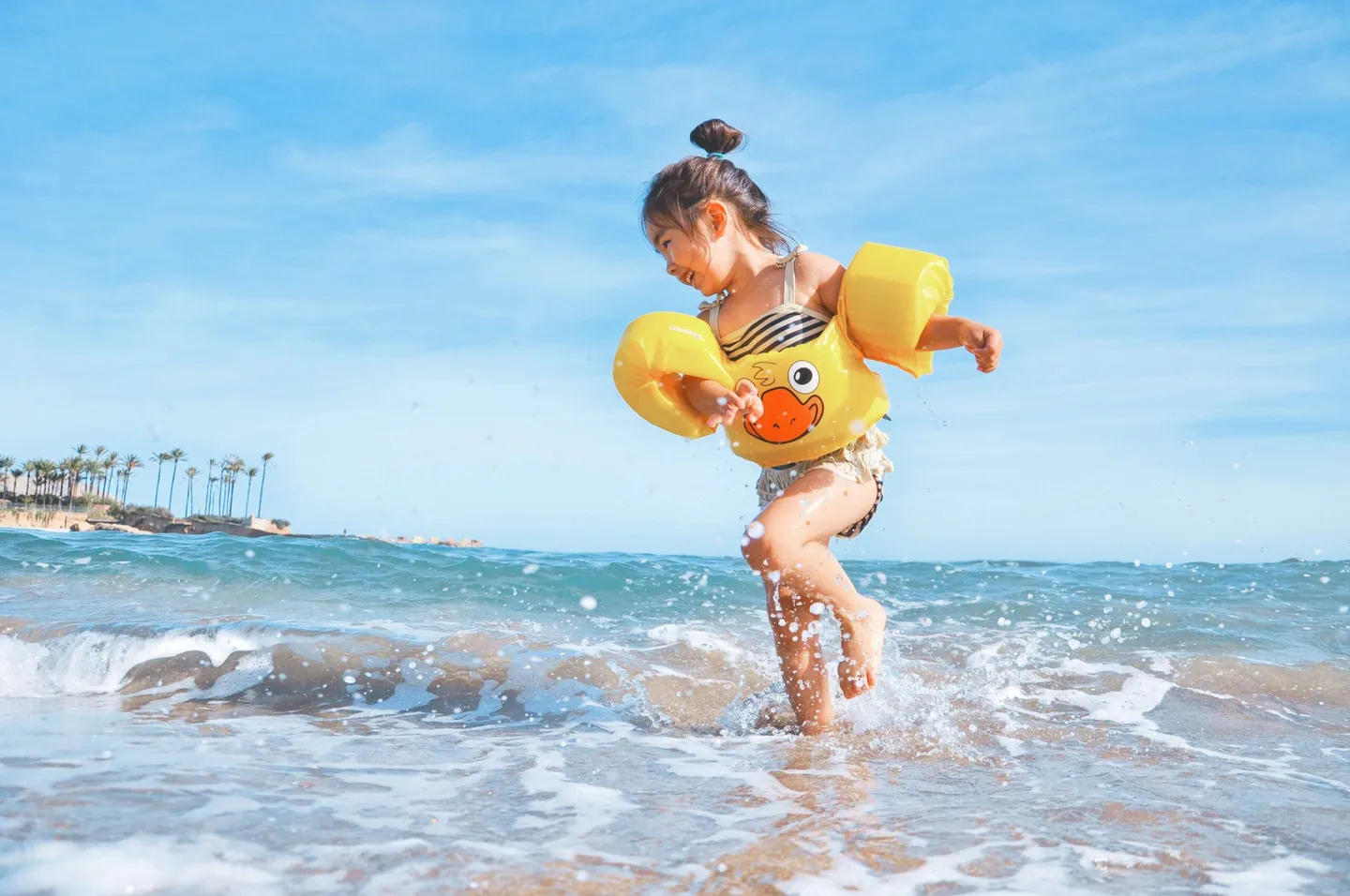
Cover photo: Photo by Leo Rivas on Unsplash
Further reading:

![[Freediving] Someone Almost Died in the Ocean](/_astro/%E8%87%AA%E7%94%B1%E6%BD%9B%E6%B0%B4bo-scaled_2ms8Tx.webp)