Contents(5)
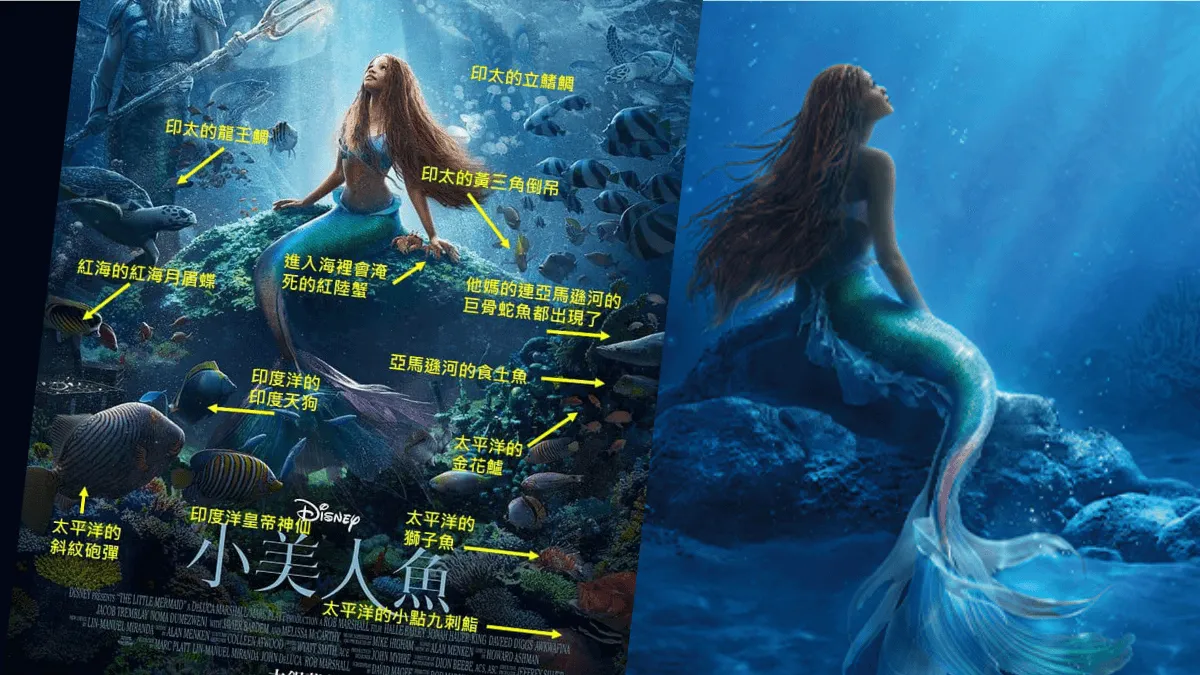
Disney's live-action The Little Mermaid is heading to theatres, and a brand-new trailer and poster have just dropped — but the moment BlueTrend's editor Blu took a look, something felt off! Sure enough, our good friend Wox — fish expert and author of Ocean Naturalist — came through with an annotated breakdown of the creatures surrounding Ariel's underwater world. The story is set in the Atlantic, yet nearly every animal in the poster is a non-native species. Let's take a closer look at who ended up in the wrong ocean!
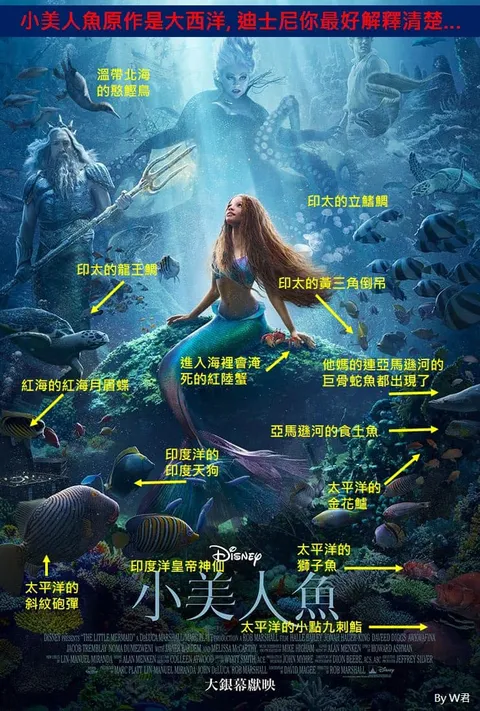
Poster source: Disney. Yellow annotations source: Li Cheng-Lu
Sebastian, the Little Mermaid's Sidekick, Is Actually a Land Crab
You've probably wondered at some point: is Sebastian the crab or a lobster? Wox has the answer — he's actually a red land crab. Based on the film's character model, he appears to belong to the family Ocypodidae or Gecarcinidae, recognisable by his tall, compact body and slender legs. Unlike their aquatic relatives, these land-dwelling crabs have adapted to breathing air. If you were to submerge them in the ocean, they could actually drown!
The World's Most Famous Red Land Crab — The Christmas Island Red Crab
The most celebrated red land crab in the world is the Christmas Island red crab (Gecarcoidea natalis), found primarily on Christmas Island in the Indian Ocean. Unlike most crabs, they live in the forest, weaving through the undergrowth as nature's clean-up crew, clearing away dead leaves and fallen branches. They do, however, require a highly humid environment. During the dry season, they retreat into the moistest patches of soil, only venturing out when it rains. When the wet season arrives — around November each year — they emerge en masse for the iconic Christmas Island red crab migration, making a beeline for the beach to spawn.
Taiwan's Red Land Crab — The Intermediate Sesarmid Crab
Here's a fun bonus fact: Taiwan also has red land crabs, most commonly the intermediate sesarmid crab (Orisarma intermedium). These crabs are usually found in tropical coastal estuary vegetation zones, relying on the moisture of riverbanks to survive. Only during the rainy season do egg-bearing females migrate down to the shoreline.
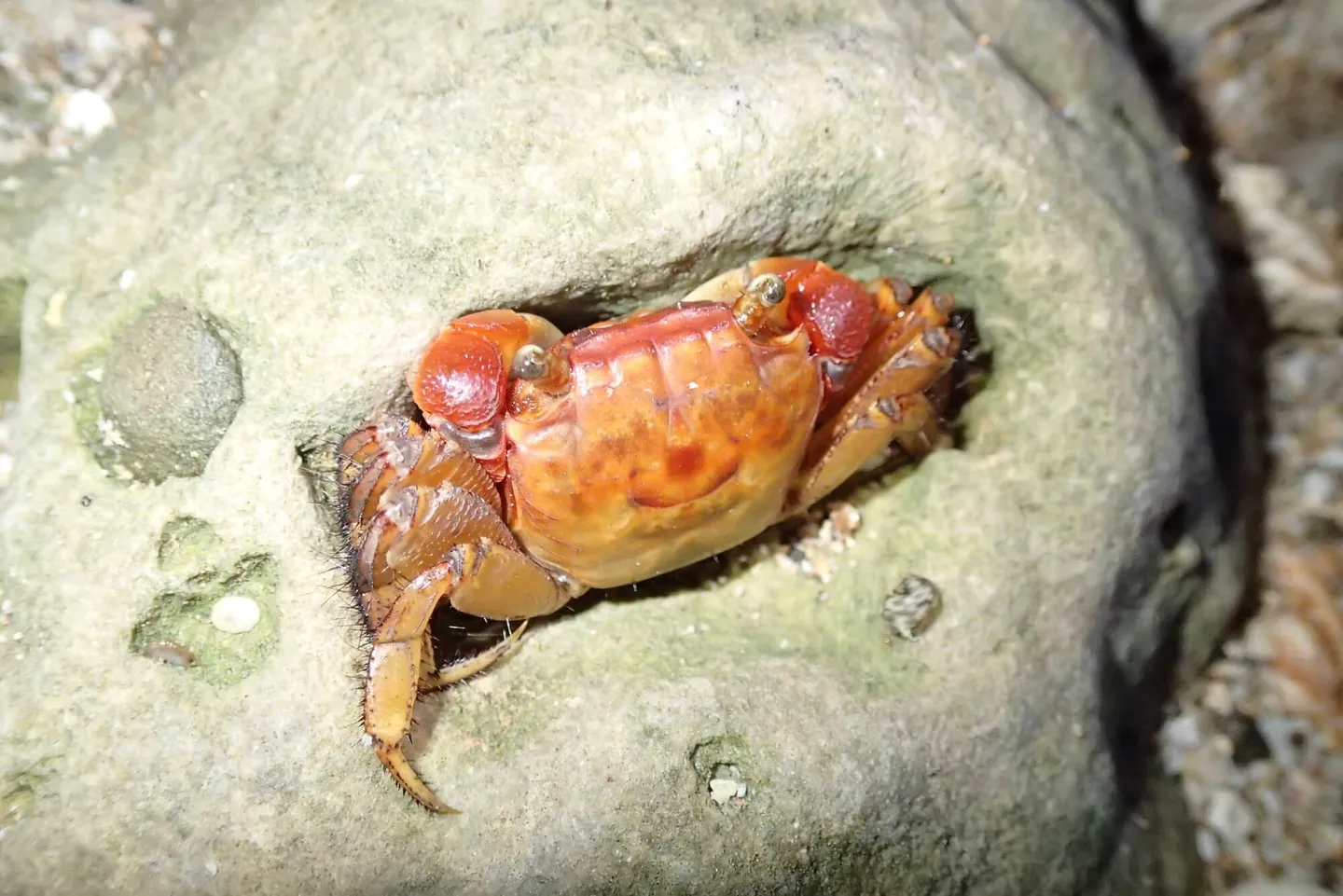
Intermediate sesarmid crab (Orisarma intermedium). Photo Credit: Li Cheng-Lu


A Freshwater Fish from the Amazon — the Arapaima
"Little Mermaid~ All that salt is going to kill me!"
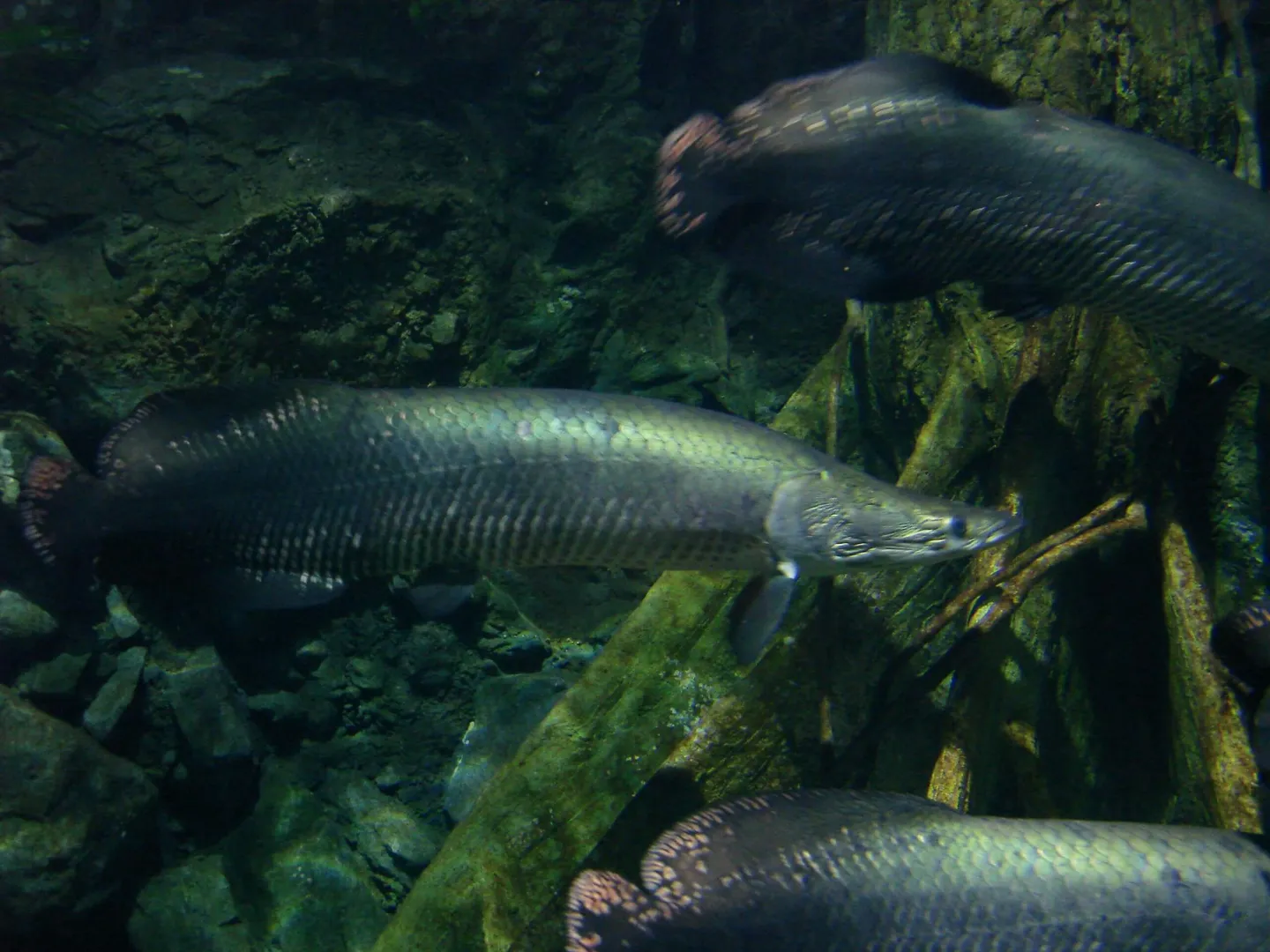
Arapaima (Arapaima gigas). Photo Credit: Li Cheng-Lu
On the right side of The Little Mermaid poster, two freshwater fish from the Amazon River make an appearance. The larger of the two is the arapaima (Arapaima gigas), also known as the pirarucu or elephant fish. Native to the Amazon basin in South America and dating back some 100 million years, it has earned the nickname "living fossil." In the real world, arapaima can grow to between 3 and 6 metres in length and weigh up to 200 kg, making them one of the largest freshwater fish on the planet.
Their enormous, overlapping scales act like a suit of armour — so tough that even piranhas can't get through. But in the Little Mermaid's underwater kingdom? The osmotic shock of saltwater would completely disrupt the fish's internal water balance, making survival virtually impossible.
How Does the Eartheater Survive? And What Does It Actually Eat?
Below the arapaima in the poster is a smaller fish — also from the Amazon — the eartheater (Geophagus sp.), a member of the family Cichlidae. Its name comes from its habit of scooping up mouthfuls of sand and sediment from the riverbed, filtering out tiny worms and shrimp to eat. From a distance, it genuinely looks like it's eating dirt! Like the arapaima, the salty seawater in Ariel's world would likely be an instant death sentence.
Indo-Pacific Wanderers That Have Strayed into the Little Mermaid's World
The vast majority of fish in the poster are not native to the Atlantic at all — they hail from the Indo-Pacific region. This warm, clear-watered zone is home to some of the world's most spectacular coral reefs, including the famous Coral Triangle, which boasts the highest marine biodiversity on Earth. Let's keep going and meet the rest of these non-native species that have somehow found their way into Ariel's world!
Lyretail Anthias
The lyretail anthias, known scientifically as Pseudanthias squamipinnis, is also found around Taiwan — including off the Northeast Coast, as well as Orchid Island and Green Island — though it prefers warmer waters, so numbers are lower in the north. These social fish are commonly seen schooling above reef structures, feeding on zooplankton. There is typically only one larger male per group. Interestingly, males flush white with excitement before spawning, and rival males will chase and compete aggressively for the chance to mate with females.
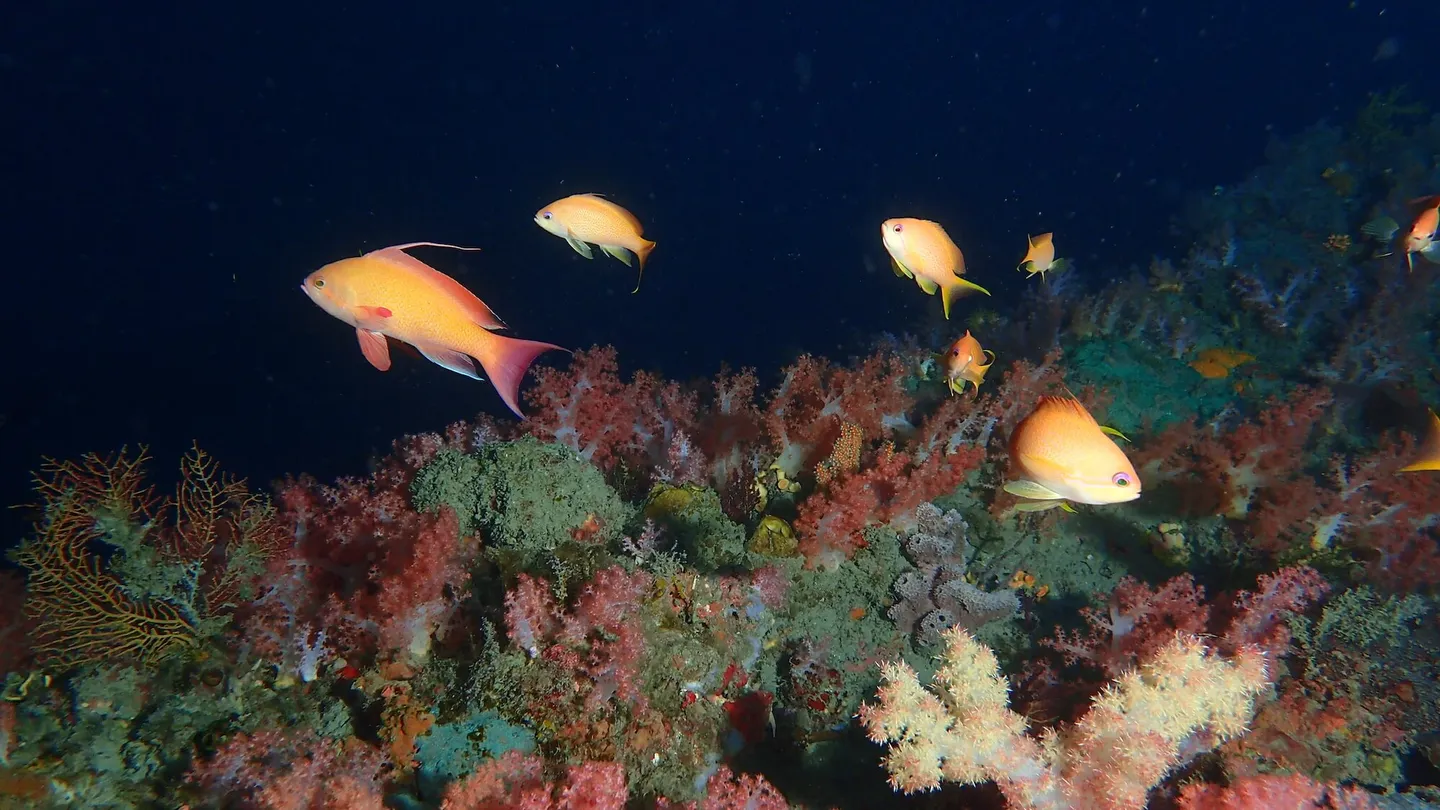
Lyretail anthias (Pseudanthias squamipinnis). Photo Credit: Lin You-Ping
Orange-Lined Triggerfish
In the lower-left corner of the poster is the orange-lined triggerfish (Balistapus undulatus). With no groove in front of its eyes and vivid orange diagonal stripes across its body, it's easy to identify. This carnivorous triggerfish feeds on a wide variety of benthic invertebrates and will occasionally hunt small fish as well.
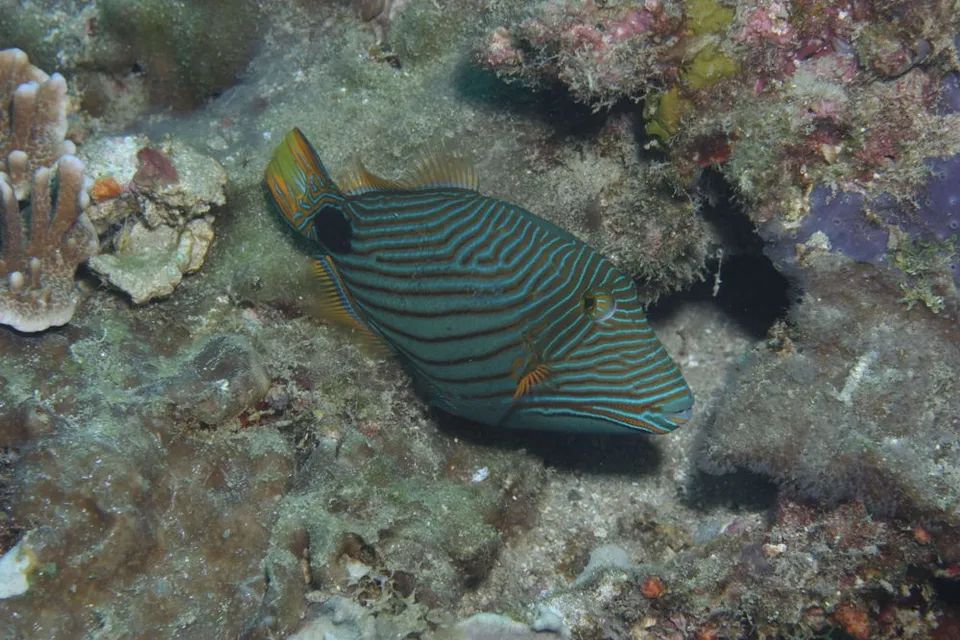
Orange-lined triggerfish (Balistapus undulatus). Photo Credit: Li Cheng-Lu
Lionfish
The Lionfish in the lower-right corner of the poster closely resembles the spotfin lionfish (Pterois antennata), with its delicately elongated, soft pectoral fin rays and brilliantly coloured body. Its personality, however, is far less showy than its appearance — this shy creature typically lives alone in the hidden crevices of reefs, with its venomous dorsal spines fanned outward as a defence against predators. It rarely strays far from its home reef or coral outcrop.
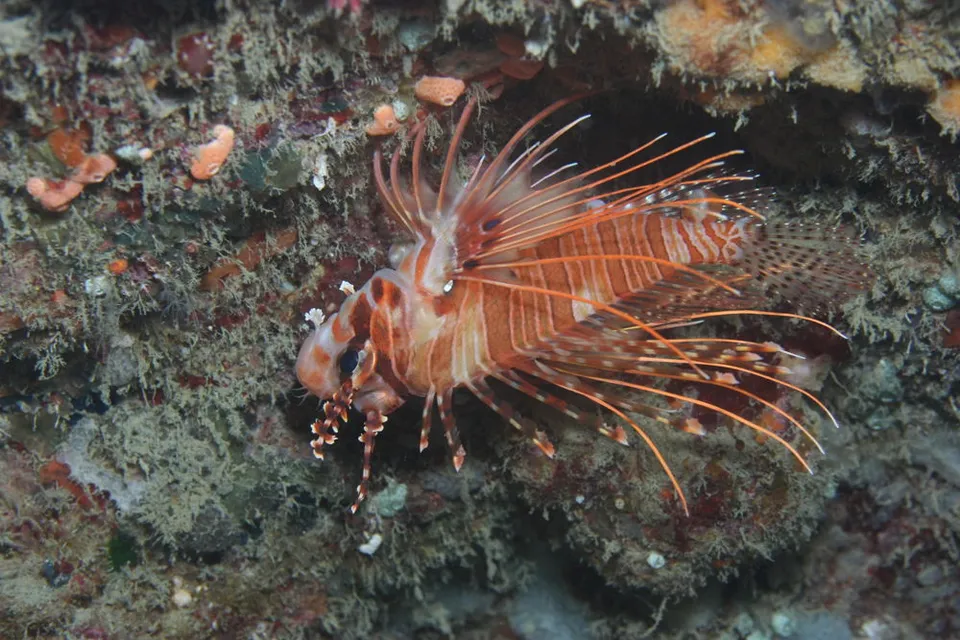
Spotfin lionfish (Pterois antennata). Photo Credit: Li Cheng-Lu
Schooling Bannerfish
The bannerfish on the poster appears to be the schooling bannerfish (Heniochus diphreutes), which is often confused with the moorish idol due to their similar appearance. Look closely, though: the schooling bannerfish has a shorter snout, and its third black band ends at the tip of the anal fin. Unlike its look-alike, it is also far more commonly seen in open water, swimming in schools and feeding on zooplankton — sometimes in groups of hundreds or even thousands.
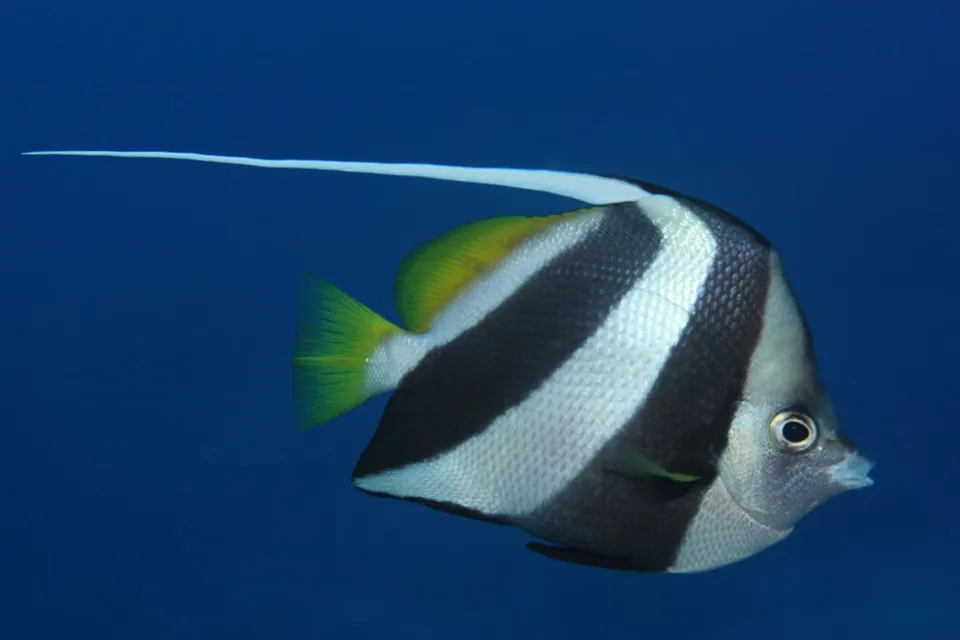
Schooling bannerfish (Heniochus diphreutes). Photo Credit: Li Cheng-Lu
Yellow Tang
The yellow tang (Zebrasoma flavescens) is a small, brilliantly yellow surgeonfish that inhabits tropical reef environments rich in coral — particularly rocky reefs dense with stony corals. It feeds on algae, using its elongated snout to forage in narrow crevices. Its striking looks have made it extremely popular in the aquarium trade, but heavy collection pressure has significantly reduced wild populations.
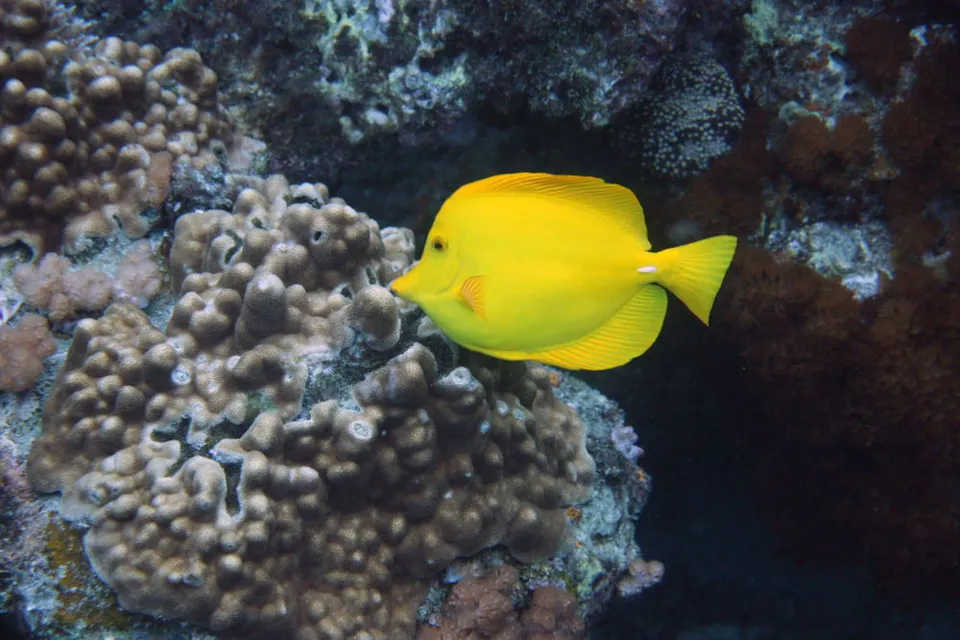
Yellow tang (Zebrasoma flavescens). Photo Credit: Li Cheng-Lu
Coral Grouper
In the lower-right of the poster, the coral grouper (Cephalopholis miniata) is a small Grouper that typically hides in the crevices of coral reefs, its body adorned with vivid blue spots. Wox has also dropped a little hint that a more detailed introduction to the coral grouper will be featured in Ocean Naturalist Volume 3 — so stay tuned!
The Napoleon Wrasse Makes an Appearance Too!
The Napoleon Wrasse — another iconic inhabitant of the Indo-Pacific — has also found its way into the Little Mermaid's world. Could it be because of its star status in the ocean? It certainly seems like a worthy poster cameo. Let's get to know it!
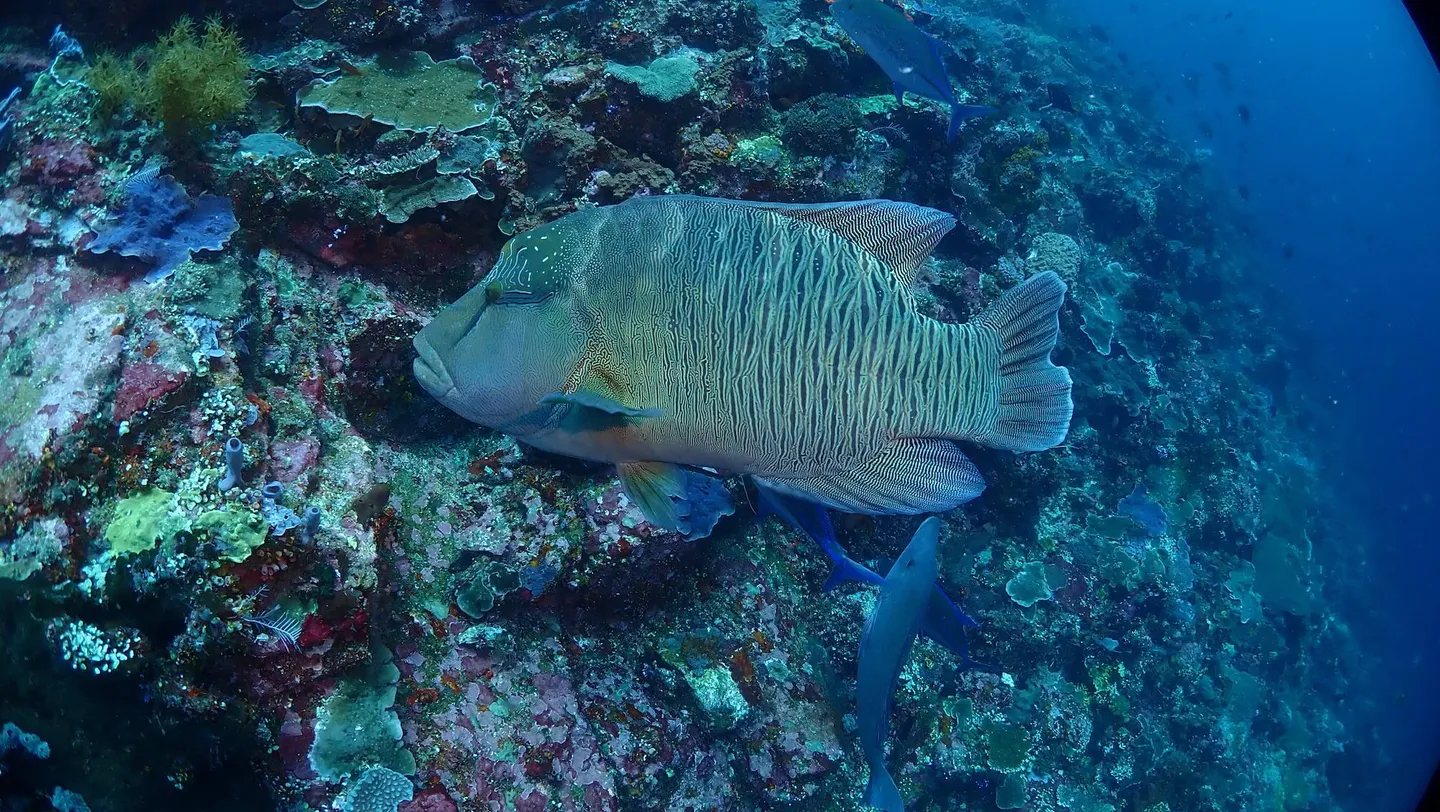
Napoleon Wrasse (Cheilinus undulatus). Photo Credit: Lin You-Ping
Napoleon Wrasse
Also known as the Humphead Wrasse or Napoleon Wrasse, Cheilinus undulatus is instantly recognisable by its pronounced forehead hump and thick, fleshy lips. This species is also remarkably long-lived — living well past 30 years is entirely normal. Fascinatingly, all Napoleon Wrasse are born female and take 5–7 years to mature; between the ages of 8 and 9, some females undergo a sex change and become male.
The Napoleon Wrasse is widely distributed across tropical coral reef waters from the Indian Ocean to the Pacific, and has been spotted around Taiwan — including off Green Island and Kenting. It can grow to over 2 metres in length and weigh around 200 kg. Its impressive size and high market value have made it a sought-after target for fishing, but consider this: leaving a Napoleon Wrasse in the water as an underwater celebrity could attract far more divers and tourists, generating even greater economic returns.
The IUCN listed the Napoleon Wrasse as an Endangered species as far back as 2004. As a top predator in the food chain, it also serves as a key indicator species for coral reef ecosystem health — protecting it means protecting the reef as a whole.
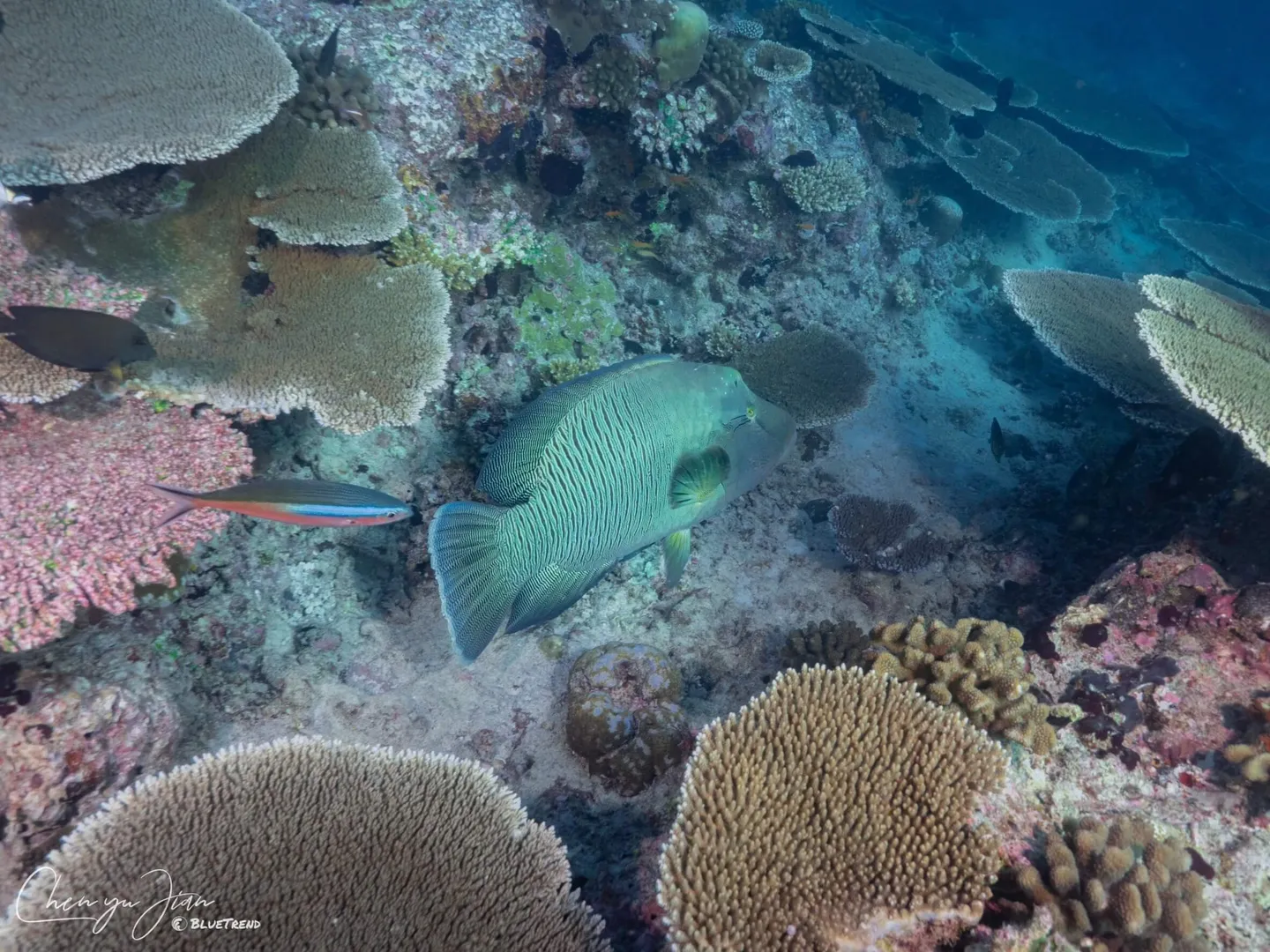
Napoleon Wrasse (Cheilinus undulatus). Photo Credit: Jian Chen-Yu
Who Else Has Strayed into the Little Mermaid's World?
Beyond the species introduced above, quite a few more ocean gatecrashers can be spotted in The Little Mermaid poster — including the northern gannet (a seabird of the temperate North Sea), the exquisite butterflyfish from the Red Sea, the emperor angelfish from the Indian Ocean, and the elegant unicornfish from the same region. Is there a particular species you'd like to learn more about? Head over to the BlueTrend Facebook page and let us know in the comments!
The live-action The Little Mermaid is set to open in Taiwan on 25 May. If you're planning to catch it, keep your eyes peeled for the marine life cameos — and come tell Blu which ocean creatures you spotted!
Many of the species introduced above can be found in volumes one and two of Ocean Naturalist, with richer, more detailed write-ups inside. Some species will also be making their debut in volume three, so look forward to that. Blu highly recommends picking up a copy of Ocean Naturalist — it's a fantastic way to level up your ocean knowledge!
A note from fish expert Wox: After I shared this post, it sparked a lively discussion online. One comment stood out: "What's so strange about it? All the oceans are connected." Think of it this way, though — imagine if a koala appeared on the African savannah in The Lion King. Because we're more familiar with land animals, we'd immediately know that's wrong. But because most people aren't as familiar with marine animals, a mixed-up ocean cast doesn't raise the same red flags. This is exactly why we believe ocean education matters so much. The oceans of our world are each home to their own unique, distinct ecosystems. We invite you to use this wonderfully chaotic poster as a starting point to get to know them better!
Further reading: