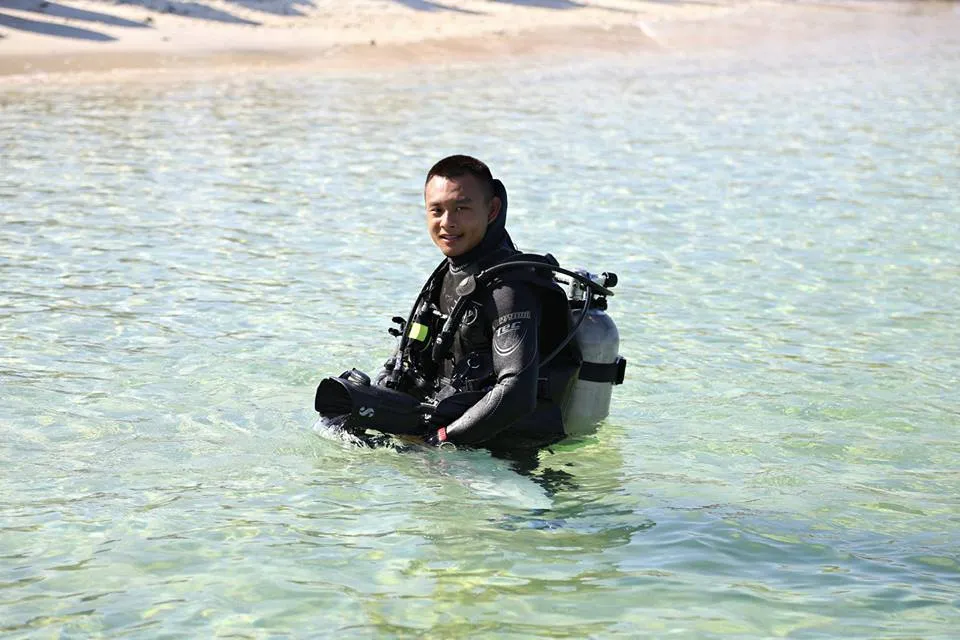
Can you imagine that Su Huai — a dive instructor who jokingly calls himself a "sea turtle obsessive" — was once so terrified of water that he couldn't even bring himself to put his face below the surface? Having lived and dived in countries from Australia to Thailand's Koh Lanta, why did he ultimately choose the tiny island of Xiaoliuqiu, Taiwan, as the place to plant his roots and bring his vision to life — even opening a marine-themed bookstore called Linger Bookstore? Now that Xiaoliuqiu has gone viral thanks to its sea turtles, what hidden concerns does he see on the horizon? We hope that as you read this article, you gain not only an understanding of a dive instructor's career journey, but also a broader perspective — through his eyes — on how Taiwan can develop a more sustainable approach to dive ecotourism.
Before I was 20, my connection to the ocean was completely blank — because I was terrified of water!
From Landlubber to Dive Instructor — Su Huai
Su Huai still remembers a snorkeling trip to Kenting with a group of classmates during his sophomore year of university. By his own account, the only word for it was "disastrous." Not only did it take him a long time to work up the courage to put his masked face underwater, but the feeling of being unable to control his own body while snorkeling left him feeling utterly helpless. His stubborn, competitive nature refused to let that experience define him, so in his junior year PE class he signed up for swimming lessons — and that decision sparked a lifelong bond with the ocean.
It came as no surprise that he was placed in the beginner group. The early days were tough, but fortunately a classmate who held a lifeguard certification was always by his side, offering guidance. That small act of encouragement pushed him one step further — toward earning his own lifeguard license. In the process of getting certified, he discovered how much he loved the feeling the ocean gave him. Even so, scuba diving was still entirely off his radar at that point.
Every young person needs at least one grand adventure. Su Huai's first extended solo trip took him to Sabah, Malaysia. While earning his entry-level dive certification there, a dive instructor at the local dive shop mentioned that the profession offered a chance to travel and live in countries all around the world. It was the first time Su Huai truly understood what a career as a dive instructor could look like.
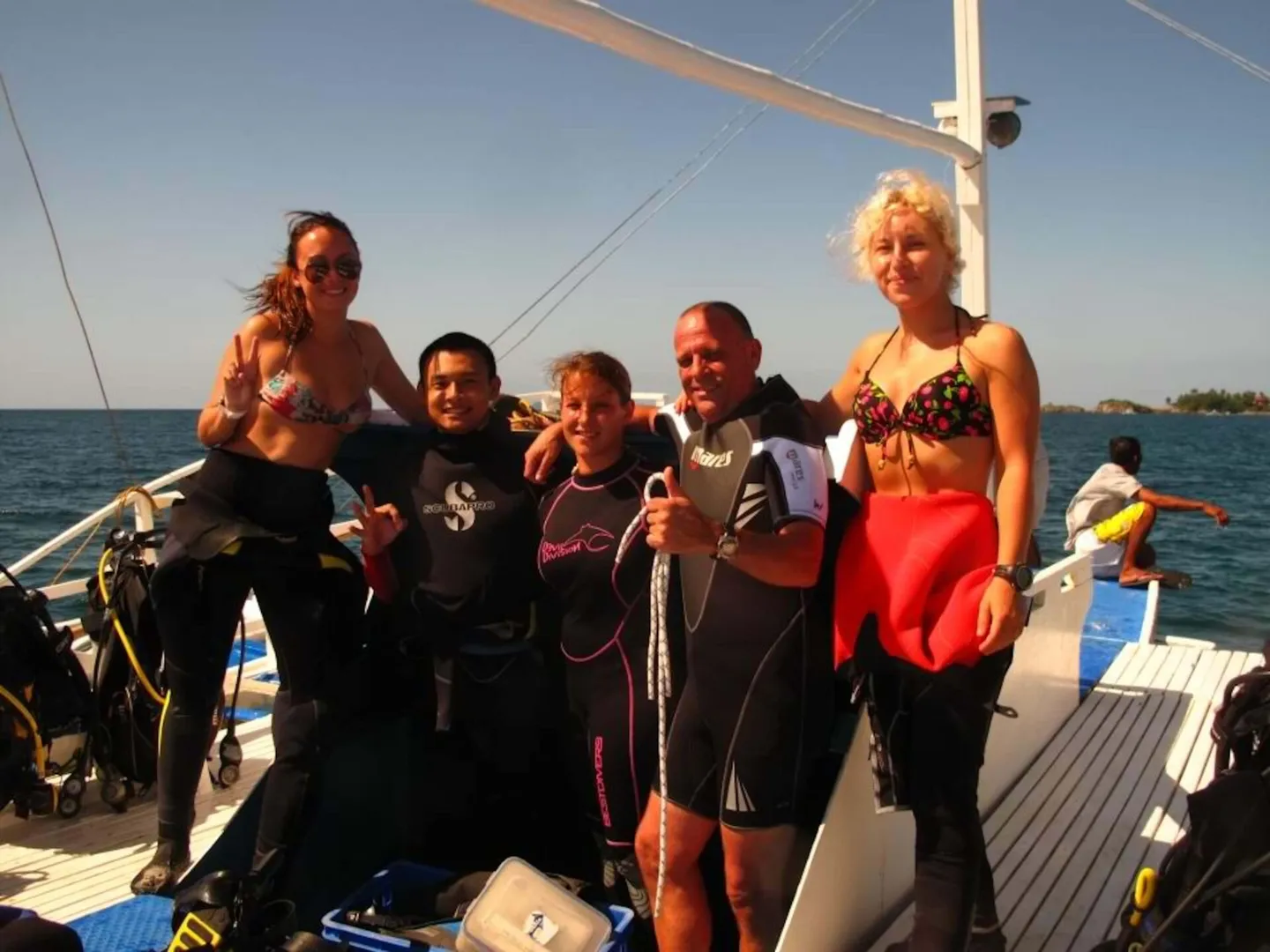
Instructor training course in the Philippines, 2013
Unlike most Taiwanese divers, Su Huai obtained the majority of his dive certifications abroad — while also working in marine recreation in Penghu every summer from 2010 to 2014, and later taking on a liveaboard position in Queensland, Australia, where he handled everything independently: trip planning, communicating with dive shops, and researching course information on his own. In our interview, he laughed and described himself as a rebel who wanted to grow in a way that was different from everyone else. Perhaps that stubborn, unconventional personality is exactly the character trait that, step by step, led him toward becoming a full-blown sea turtle obsessive.
- 2012 — Earned Divemaster certification in Koh Lanta, Thailand
- 2013 — Earned instructor certification in Malapascua, Philippines
- 2014–15 — Worked on a liveaboard in Queensland, Australia
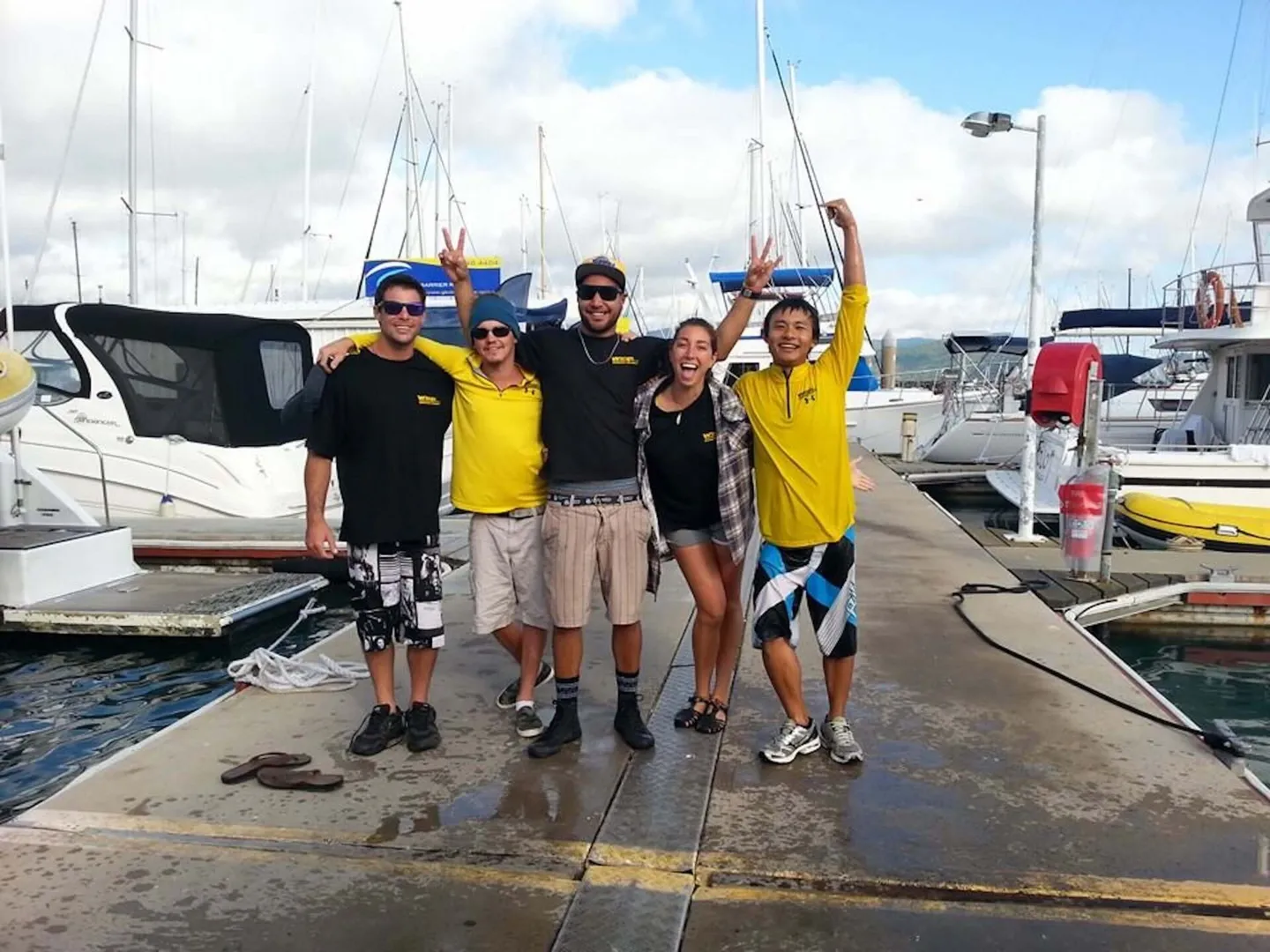
Liveaboard work in Australia, 2013–14
Once he became a professional dive instructor, he quickly discovered that passion and profession are two very different things. When diving becomes work, you must invest far more mental energy into pre-dive preparation, in-water safety, ensuring guests have a great experience throughout, and post-dive logistics — pushing yourself to deliver the best possible service rather than simply enjoying the dive yourself. Fortunately, having lived abroad for several years, he was exposed to both high-volume, assembly-line-style dive shop operations and boutique operators focused on small-group, personalized dive travel. He came home wanting to transplant everything he had experienced overseas into his own corner of Taiwan.
Taiwan offers a wide range of dive destinations. Generally speaking, the Northeast Coast is favored for instruction, while Green Island and Kenting tend to be preferred for dive travel. When he first returned from Australia, he planned to go back to the Penghu he knew best — but it was winter, and Penghu is heavily affected by the northeast monsoon, making it unsuitable for diving. Xiaoliuqiu, sheltered from the worst of the northeast monsoon and diveable even in winter, became his choice instead.
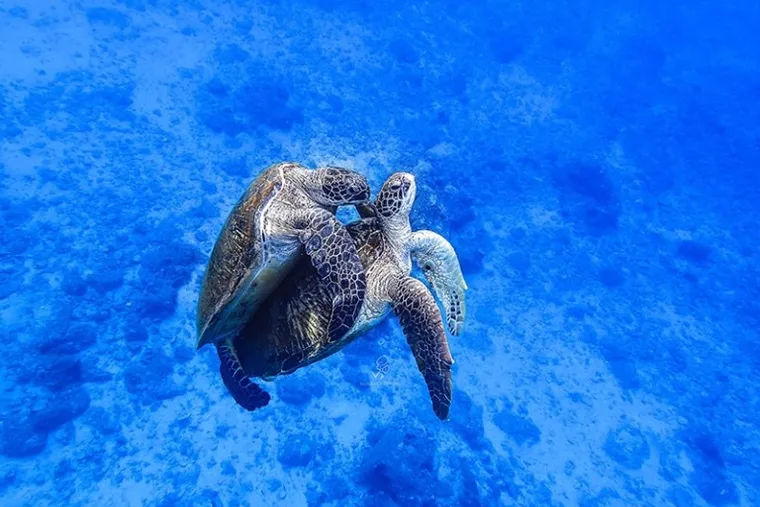
A lover of wide-angle underwater photography and big-animal encounters, Su Huai felt like he had stumbled into a treasure trove the moment he arrived at Xiaoliuqiu. The tiny island is home to an almost uncountable number of sea turtles that he can observe at fixed locations on a regular basis. From that point on, his camera was filled with all manner of adorable sea turtle portraits. Thanks to his obsessive documentation, fellow divers have been treated to a remarkable range of sea turtle behaviors — including shell-rubbing, grazing on seagrass, and mating. But pure photographic records quickly stopped satisfying his curiosity, and that is how Turtle Spot TW was quietly born.
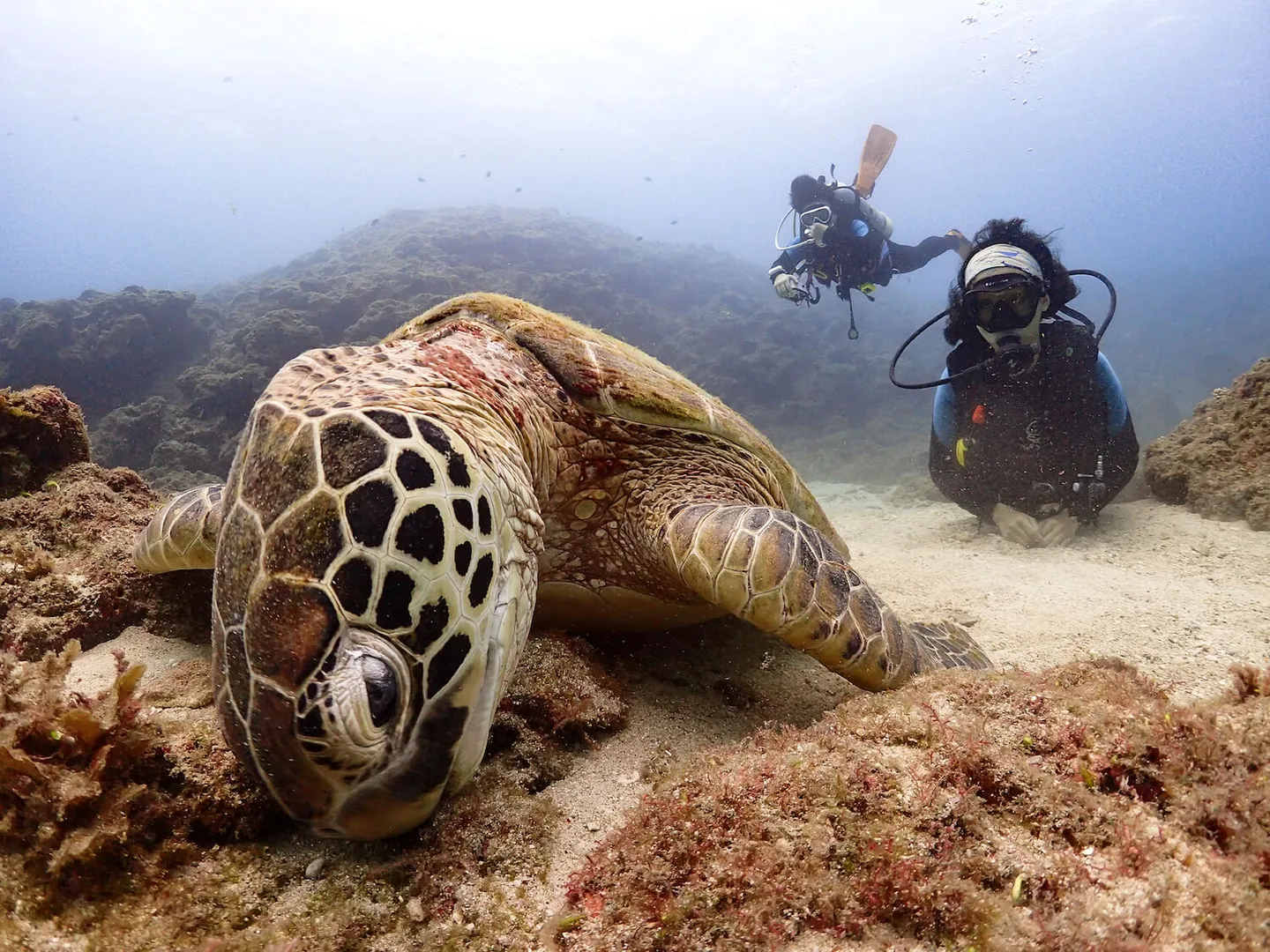
A day in the life of a sea turtle — feeding
He was curious: exactly how many sea turtles live around Xiaoliuqiu, and was the turtle he encountered on one dive the same individual he had seen before? Fortunately, a casual dinner conversation with Feng Jia-Ling — affectionately known as the "Sea Turtle Sister" — sparked an idea: why not use the citizen-scientist model and invite the public to join in identifying and recording sea turtles? Because the arrangement of scales on each sea turtle's face is unique to that individual, anyone who manages to photograph both the left and right profiles of a turtle has a chance to identify it as a distinct individual. Beginning in June 2017, they gradually collected turtle photos from divers, compiled monthly sighting reports to share on a dedicated website, and expanded the project beyond documentation to include sea turtle knowledge and ocean education content. There may even be opportunities for international collaboration in the future, helping to lift the veil on the mysterious underwater lives of sea turtles.
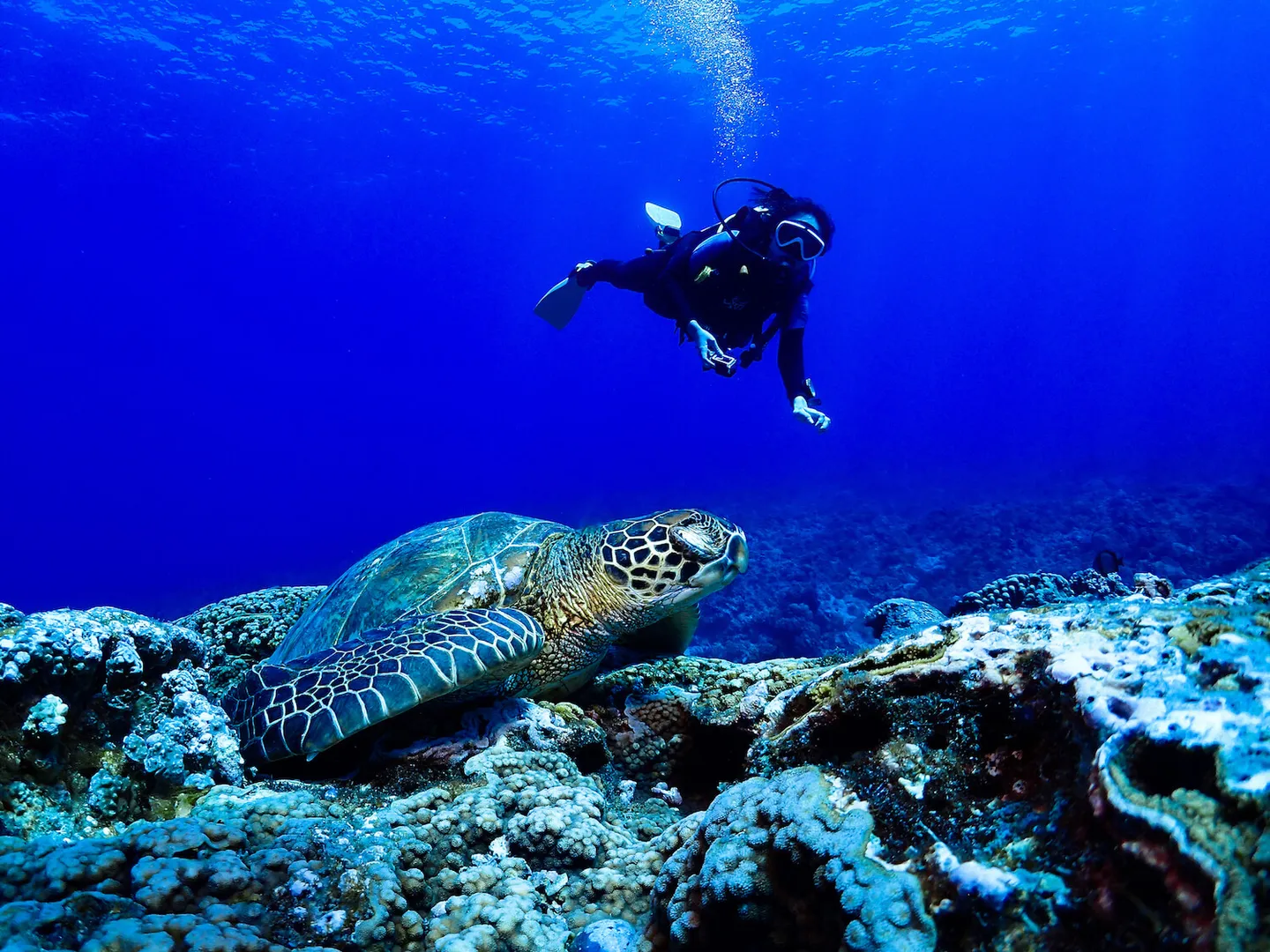
A day in the life of a sea turtle — sleeping
Everyone inevitably asks: just how many sea turtles are there around Xiaoliuqiu? From June to December 2017, Turtle Spot TW recorded 137 distinct individuals through reported sightings — but that number does not mean Xiaoliuqiu has exactly that many turtles. Turtles that are spotted tend to be those that are relatively comfortable around humans, or found at dive sites that see the most traffic. In the future, he hopes to combine different observation methods for a more complete picture. Using a drone at Duozaiping, for instance, he once observed more than 100 turtles at the same time. As funding and manpower allow, he very much hopes to share those survey results more widely.
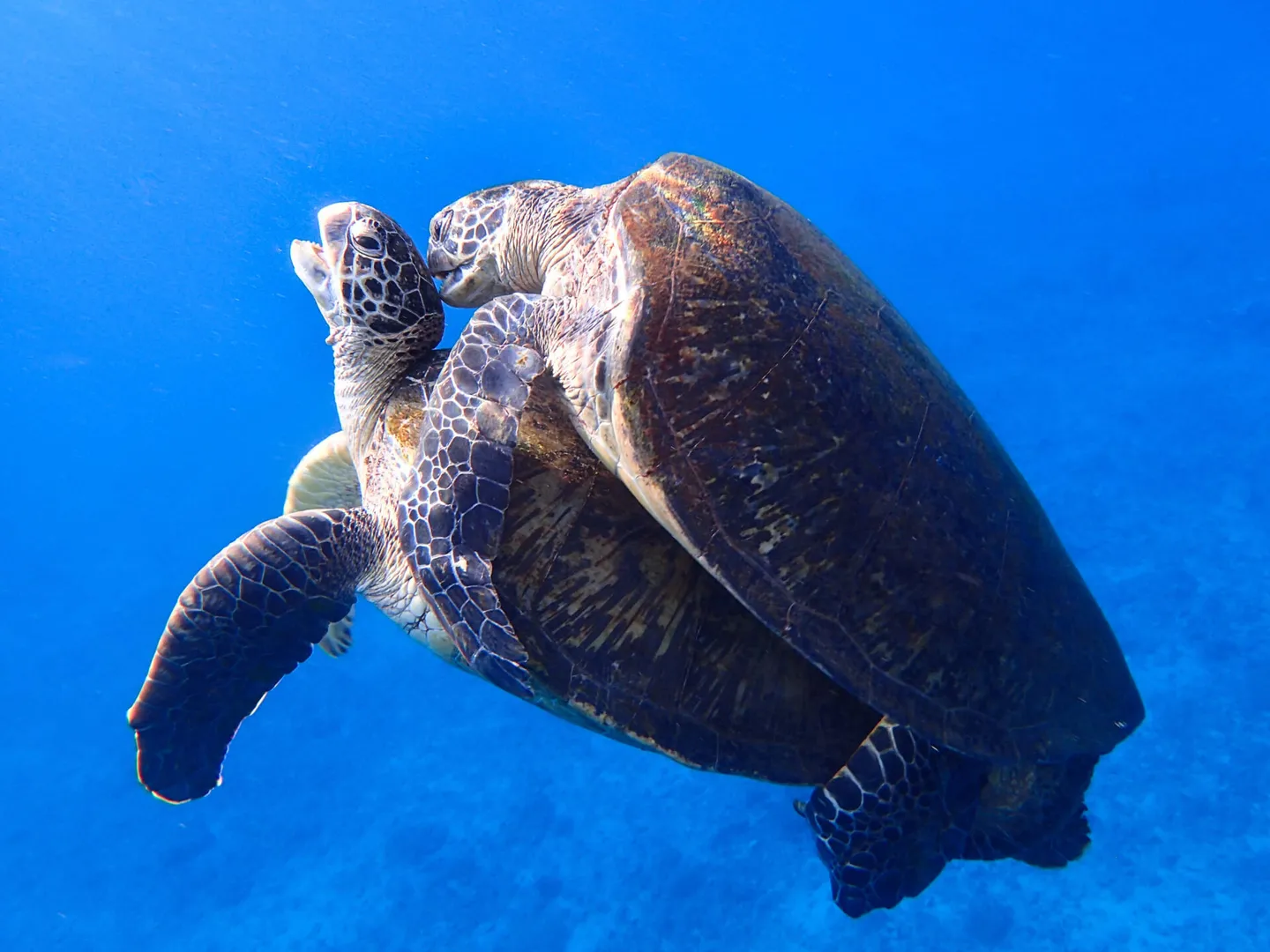
A day in the life of a sea turtle — mating
In recent years, Xiaoliuqiu has become famous for its sea turtles. Every peak season, a seemingly endless stream of tourists floods this tiny island. Because it lies relatively close to mainland Taiwan, ferry services are perpetually expanded to meet demand — but is that truly good for Xiaoliuqiu?
- Waste generated on Xiaoliuqiu must be transported back to mainland Taiwan for disposal.
- Wastewater treatment infrastructure is severely lacking; most sewage is discharged directly into the sea.
- Guesthouses and dive shops continue to multiply.
Xiaoliuqiu is like a miniature version of Taiwan. Most people are busy making money, accustomed to fast and convenient living. As we draw on natural resources to enjoy prosperity and convenience, shouldn't we stop and ask ourselves whether we can do something — anything — for the environment?


Linger Bookstore — A Bookshop by the Sea
Su Huai shared his thoughts with quiet earnestness: tourism is a double-edged sword. Unchecked, relentless development can deal a devastating blow to the environment. Visitor numbers to Xiaoliuqiu keep climbing year after year, and if a cap on total tourist numbers could be introduced, tourism might be managed in a far more sustainable and lasting way.
But rather than stand on the sidelines, he decided to act. After choosing to settle in Xiaoliuqiu in 2015, Su Huai and his partner Chen Peng-Yu began to ask themselves: beyond running a dive shop, was there another way they could inspire more people to care about the ocean and the environment? They had the perhaps naïve idea that a gentle, ocean-themed bookstore — a space dedicated to the sea and the environment, offering curated books and hosting eco-friendly events — might be enough to change something. And so, on 1 January 2018, the charming little Linger Bookstore came into being.
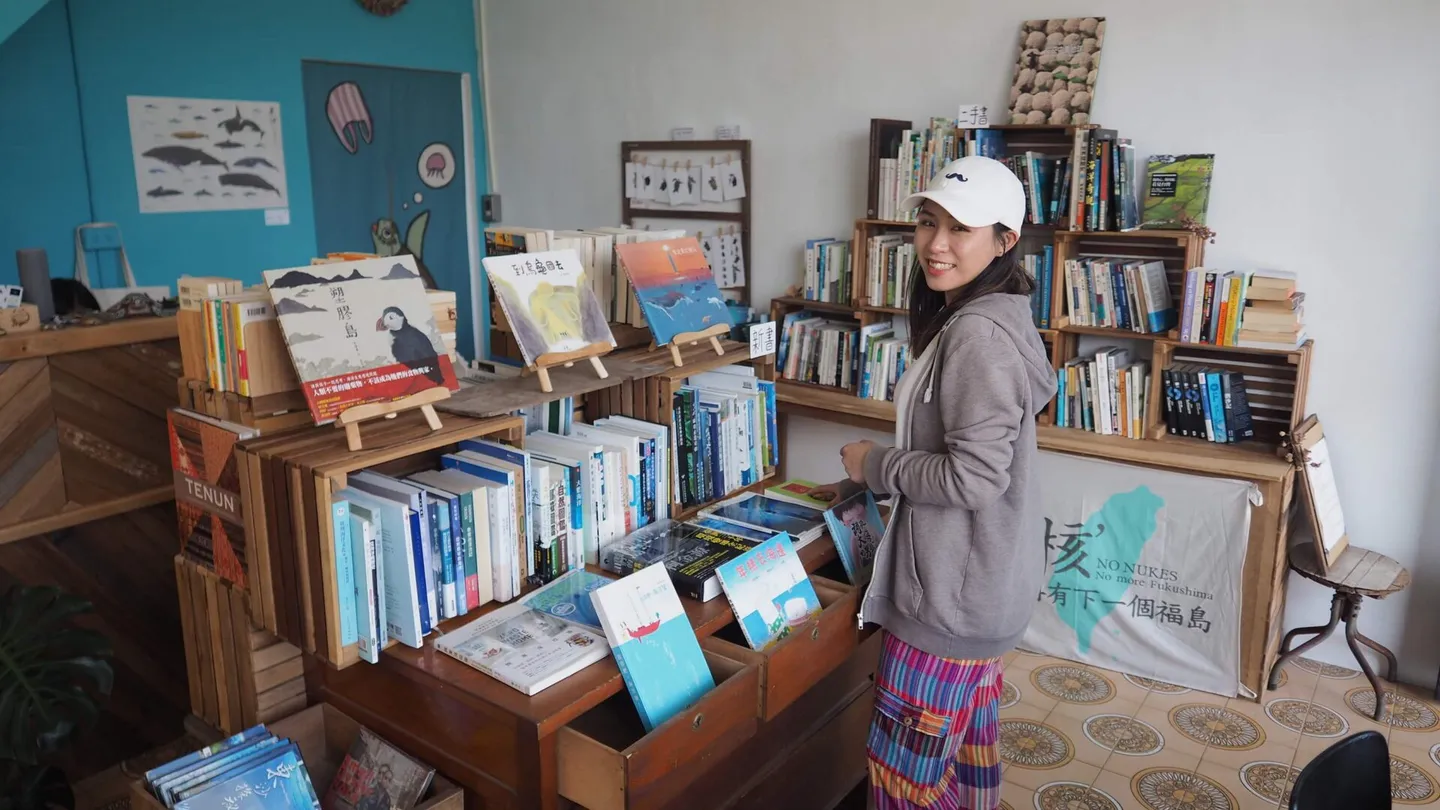
Linger Bookstore — carrying the islanders' vision of a blue ocean future
When they went to rent the space, they were fortunate to find a landlord willing to believe in them. When they shared their vision at the time of signing, the landlord was fully supportive, and as they were leaving the island after finalizing the agreement, he told them warmly: "I hope you run this well, so that we too can feel proud of what our building has become." When everyone involved in a project can stay true to a simple, sincere purpose — without fixating purely on financial returns — the world becomes a warmer place.
Linger Bookstore is more than a bookshop; it is an ocean-centered community space. They organize a rotating series of talks, inviting experienced voices and passionate experts to share their knowledge, with the goal of gradually closing the distance between the island's residents and the ocean. The distance they are talking about is not a physical one — it is about helping residents reflect, through everyday life, on their own relationship with the sea. Do you really need to take a plastic bag every time you shop? Could you proactively encourage the government to introduce visitor quotas? This is a quiet revolution of the heart, aimed at shifting what people truly care about in relation to the ocean.
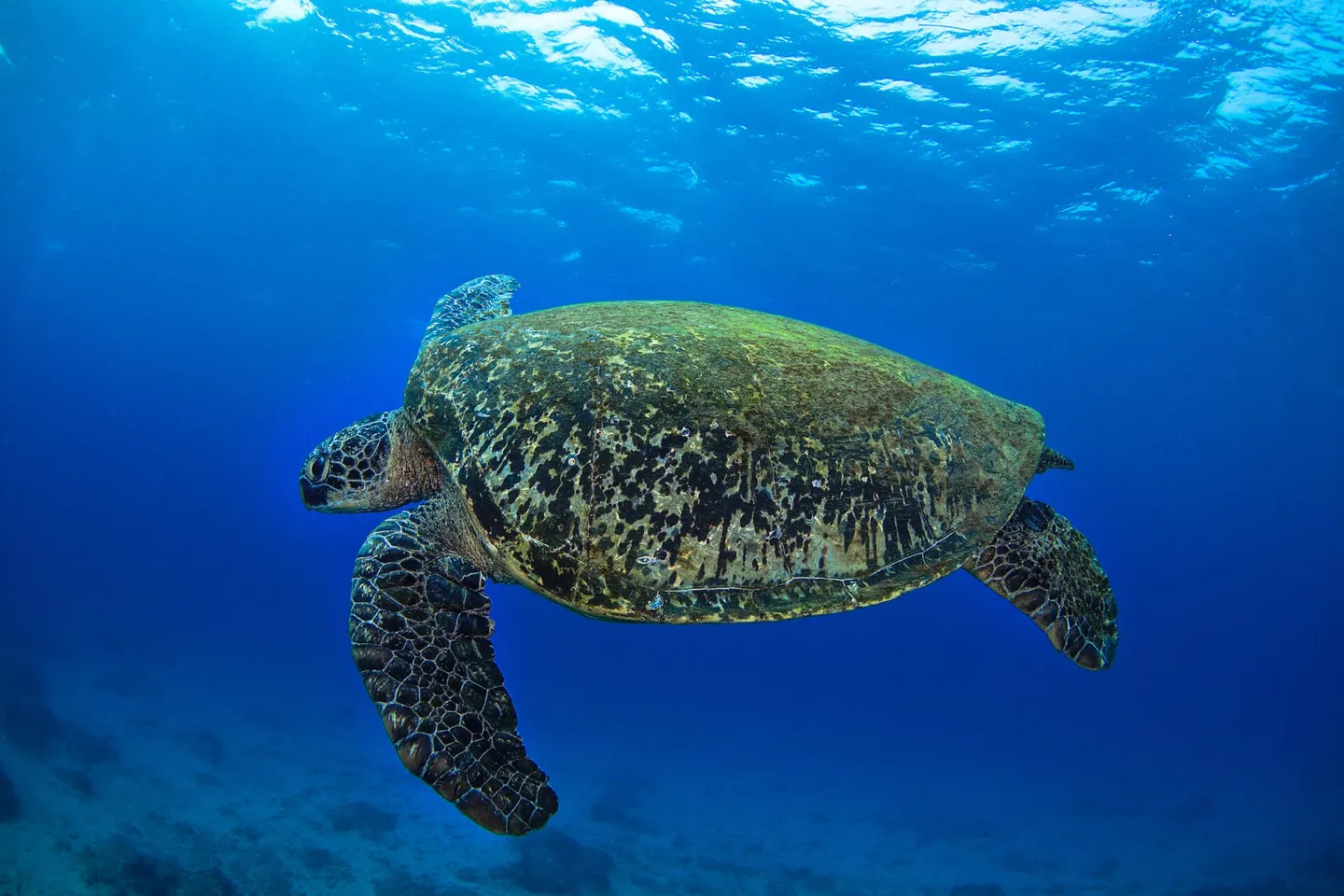
May the sea turtles of Xiaoliuqiu always have a happy home
Related links: