

![[Palau] Who Says Diving in Palau Is Hard? 3 Beginner-Friendly Dive Sites: Jake Seaplane, Iro, and Chandelier Cave](/_images/04866dac5480-1440w.webp)
Contents(5)
Palau, a world-class diving paradise, has long been celebrated internationally as one of the Seven Underwater Wonders of the World. Its stunning corals and unique dive sites attract visitors from every corner of the globe each year, with countless divers eager to explore these pristine waters. However, Palau's powerful currents and deep, dramatic wall topography make many of its famous sites — such as Blue Hole and Peleliu Expressway — somewhat challenging for beginners, typically requiring a certain level of diving experience.
Today, however, we spotlight three dive sites perfect for beginners. These spots offer calm surface conditions and a nearly current-free environment, allowing everyone from first-timers to casual recreational divers to comfortably experience Palau's underwater world. If you think beginner dive sites might be a little dull, think again! At these three locations, you'll have the chance to admire Palau's magnificent natural scenery up close, explore WWII historical relics, and even enjoy an unforgettable cave diving experience — descending into a stalactite cavern for a truly intimate encounter with nature.
Whether you're a brand-new diver just getting started or simply looking for a relaxed, enjoyable dive, these three sites will give you an unforgettable Palau adventure and reveal the endless magic of this remarkable ocean.
Palau Beginner Dive Site: Jake Seaplane
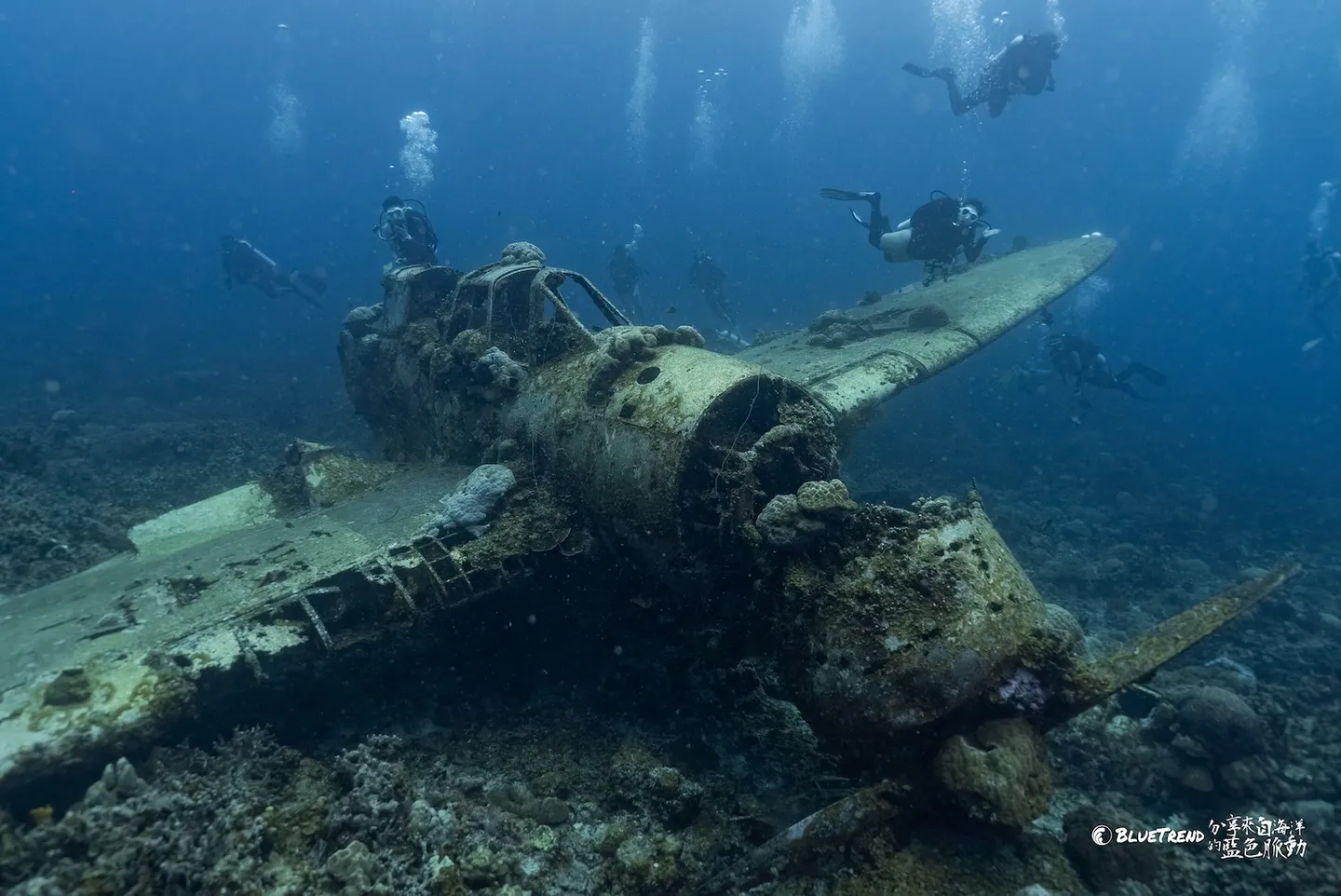
The Imperial Japanese Navy's Aichi E13A1-1 heavy floatplane — nicknamed "Jake" by Allied forces — used during World War II
Imagine immersing yourself in crystal-clear water, travelling through a time tunnel to discover a battle-worn floatplane — that's exactly what the Jake Seaplane dive site in Palau offers: a captivating journey into history!
This aircraft is an Aichi E13A1-1 heavy floatplane used by the Imperial Japanese Navy during World War II, renowned for its formidable long-range reconnaissance capability. Known at the time as the "Type Zero Reconnaissance Seaplane," it was commonly nicknamed "Jake" by Allied forces. Between 1941 and 1945, it operated out of Palau's Meyuns base, and it was likely during a mission here that the plane met its fate and sank into the sea, becoming the underwater historical relic it is today.
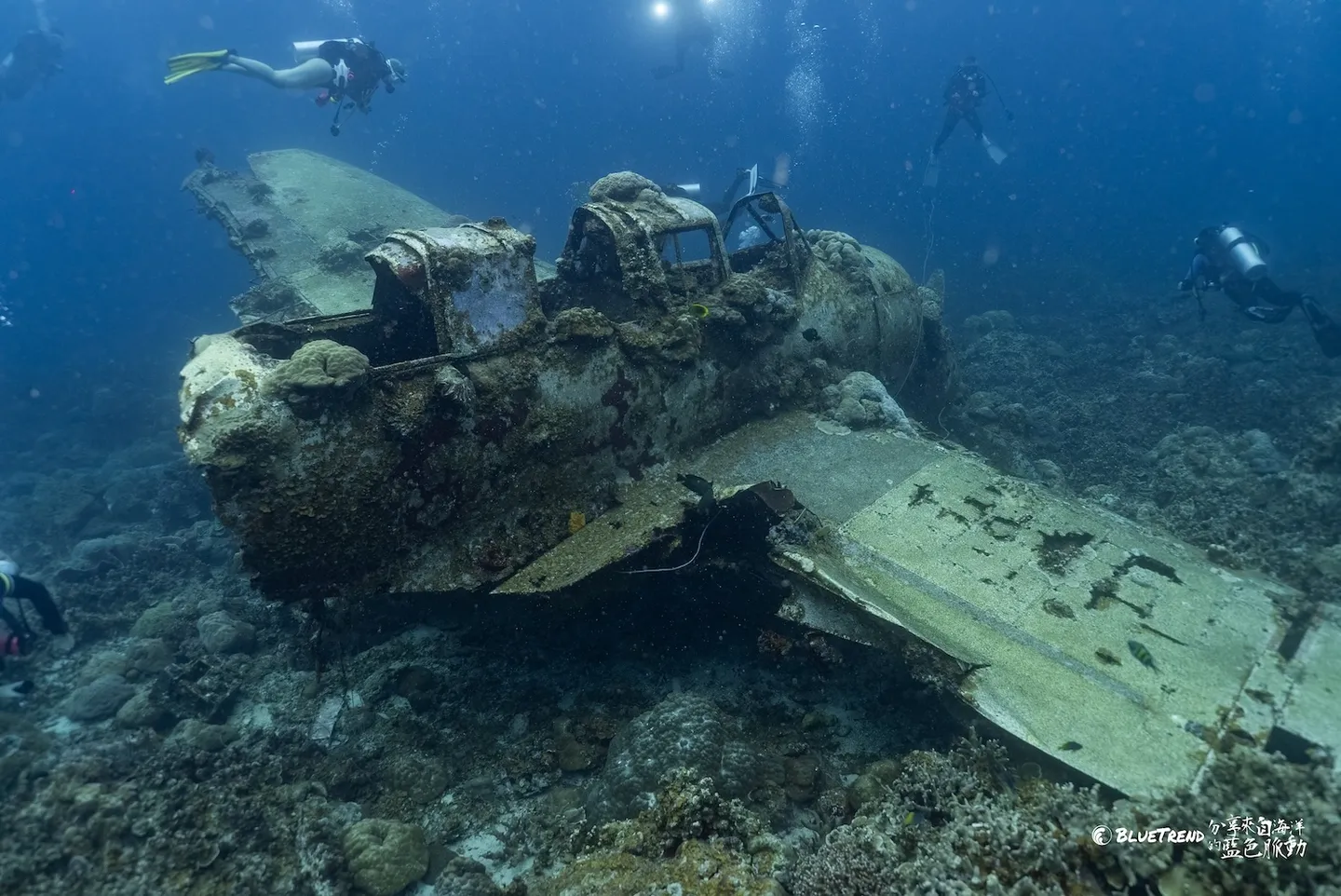
The cockpit door is well preserved; the tail section is visible just a short distance away in the lower right of this photo
The wreck rests quietly at around 15 m below the surface, with the main fuselage remarkably intact — the cockpit and propeller are clearly visible, and the tail section sits approximately 6 m from the floats. Here you can leisurely admire the aircraft draped in vibrant layers of coral, surrounded by a wealth of lively marine life.
Particularly noteworthy are the enormous giant clams gathered beneath the wings, silently standing watch over these waters. The surrounding marine life is extraordinarily rich — from vivid tropical fish and lively cephalopods to the occasional juvenile Humphead Wrasse — ensuring every dive is full of surprises.
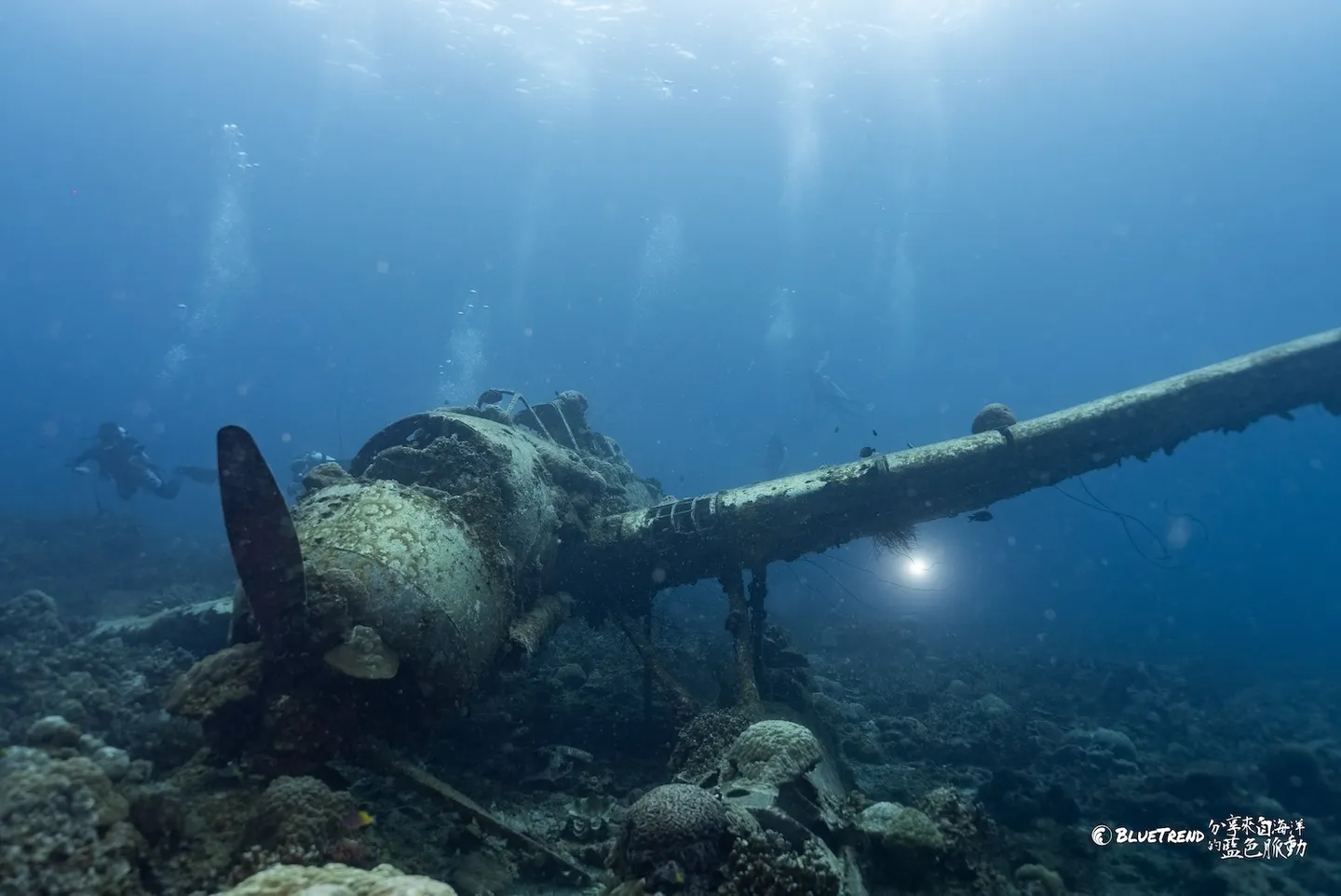
The remnants of the floats beneath the wing are still visible
Don't forget — this site is not only a paradise for underwater ecology but also a repository of precious historical artefacts. During your dive, you may discover WWII-era relics scattered inside and around the aircraft — including a radio receiver, ammunition, and even a small bomb resting quietly in the rear right section of the cockpit. Every exploration feels like opening a door to the past, bringing the weight and gravity of history vividly to life.
The Jake Seaplane dive site is a rare underwater adventure for diving enthusiasts and history buffs alike. Clear waters, abundant marine life, and enduring historical artefacts will combine to give you a truly unforgettable diving experience. Come to Palau and embark on this history-spanning journey for yourself — uncover the story hidden beneath the sea!


Palau Beginner Dive Site: Iro Wreck
Palau's waters are not only a breathtakingly beautiful diving paradise but also a dream destination for history enthusiasts. If you crave a dive adventure that blends history with nature, the Iro wreck is a must-visit.
For divers who love naval history, understanding the background of the Iro's name adds an extra layer of meaning to the experience. Although most online sources refer to it as "Iro Maru," under Japanese ship-naming conventions, "Maru" is typically used for civilian vessels. Since Iro was in fact a warship, its correct designation is simply "Iro."
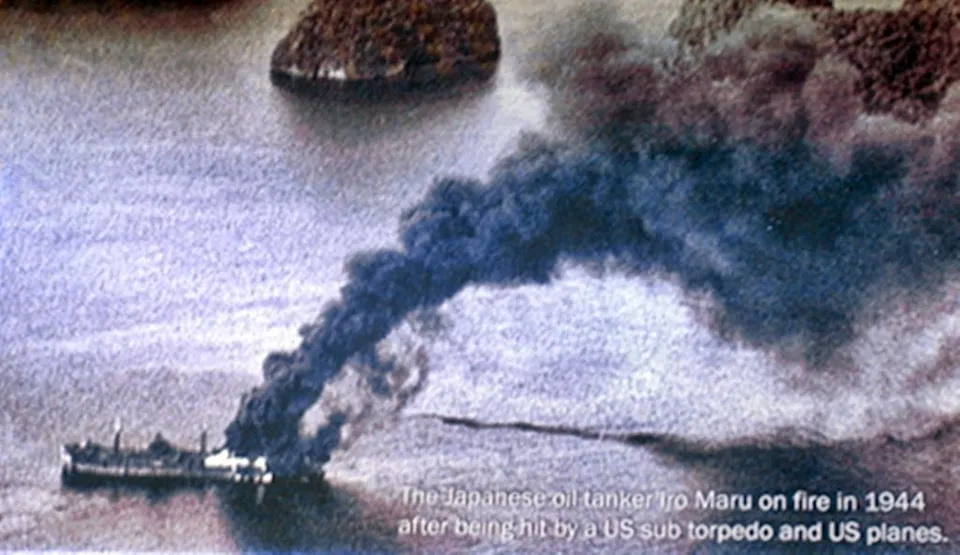
A rare photograph capturing the moment Iro was sunk
Iro was originally a Notoro-class fleet oiler of the Imperial Japanese Navy, built in 1922. Measuring 470 feet in length, she boasted enormous cargo capacity capable of carrying up to 8,000 tons of oil. During World War II, this vessel faced her fate on multiple occasions. On 22 March 1944, while sailing from the Philippines to Palau, Iro was struck by a torpedo fired by the American submarine USS Tunny, sustaining severe damage and limping into Palau for repairs. Her fate was sealed not long after: on 31 March, during Operation DESECRATE ONE, she was attacked again by carrier-based aircraft from the US Navy, and in a ferocious explosion, she sank entirely to the bottom.
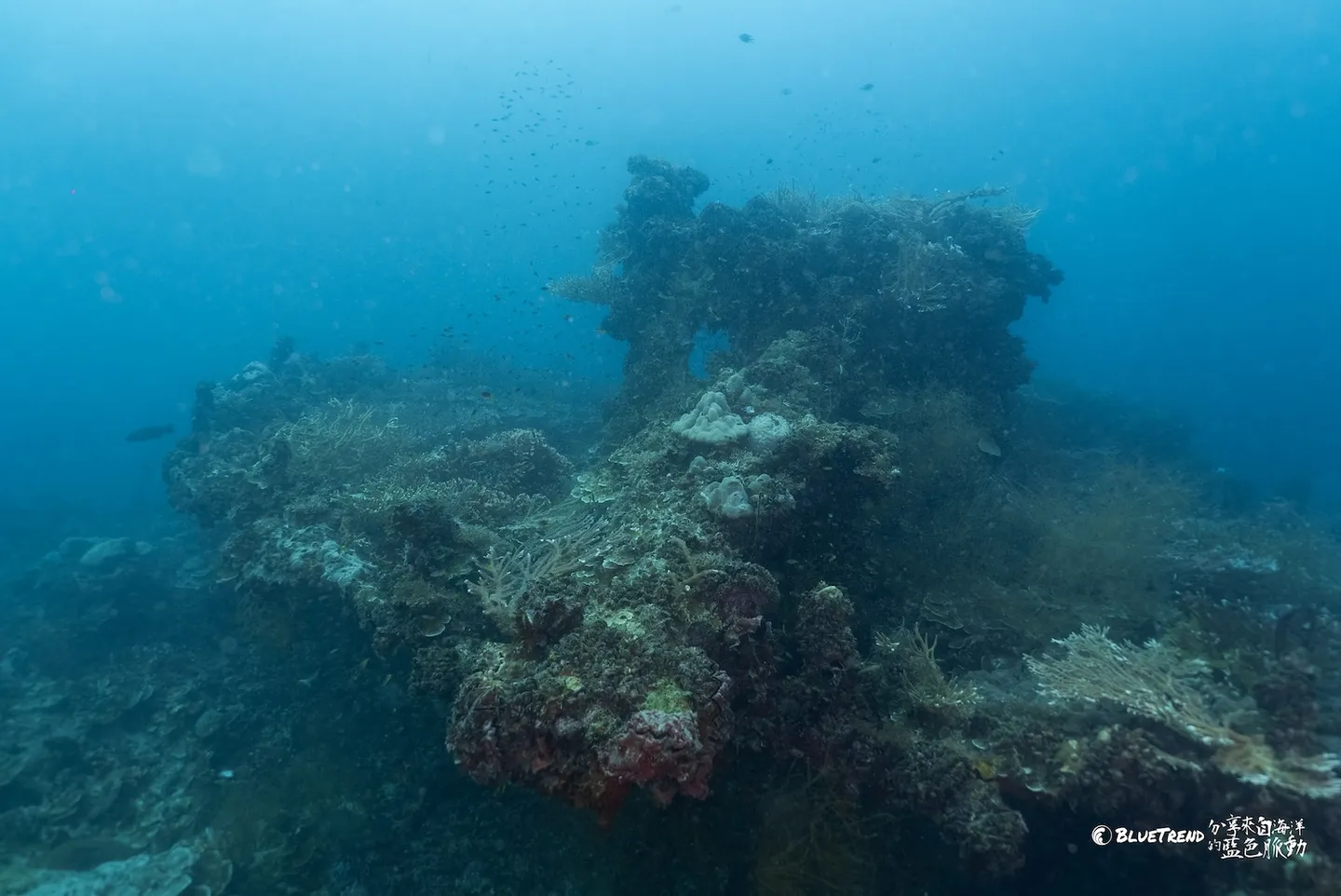
The 120 mm naval gun located at the bow
Today, the Iro's wreck lies in Palau's waters, ranking among the must-visit dive sites for divers from around the world. The current here is gentle and the surface calm, making it an ideal site for beginner divers to explore. Divers should note, however, that the seabed is covered in silt, which can frequently reduce visibility — bringing a Torch is essential.
After descending the mooring line, the first thing to come into view is the 120 mm naval gun at the bow, flanked by the rotating winch and tightly surrounded by colourful coral. As you dive deeper, you'll spot the damaged sections of the bow — wounds left by American torpedoes that tell the story of World War II. These remnants lie silently on the seabed, bearing quiet witness to the battles of the past.
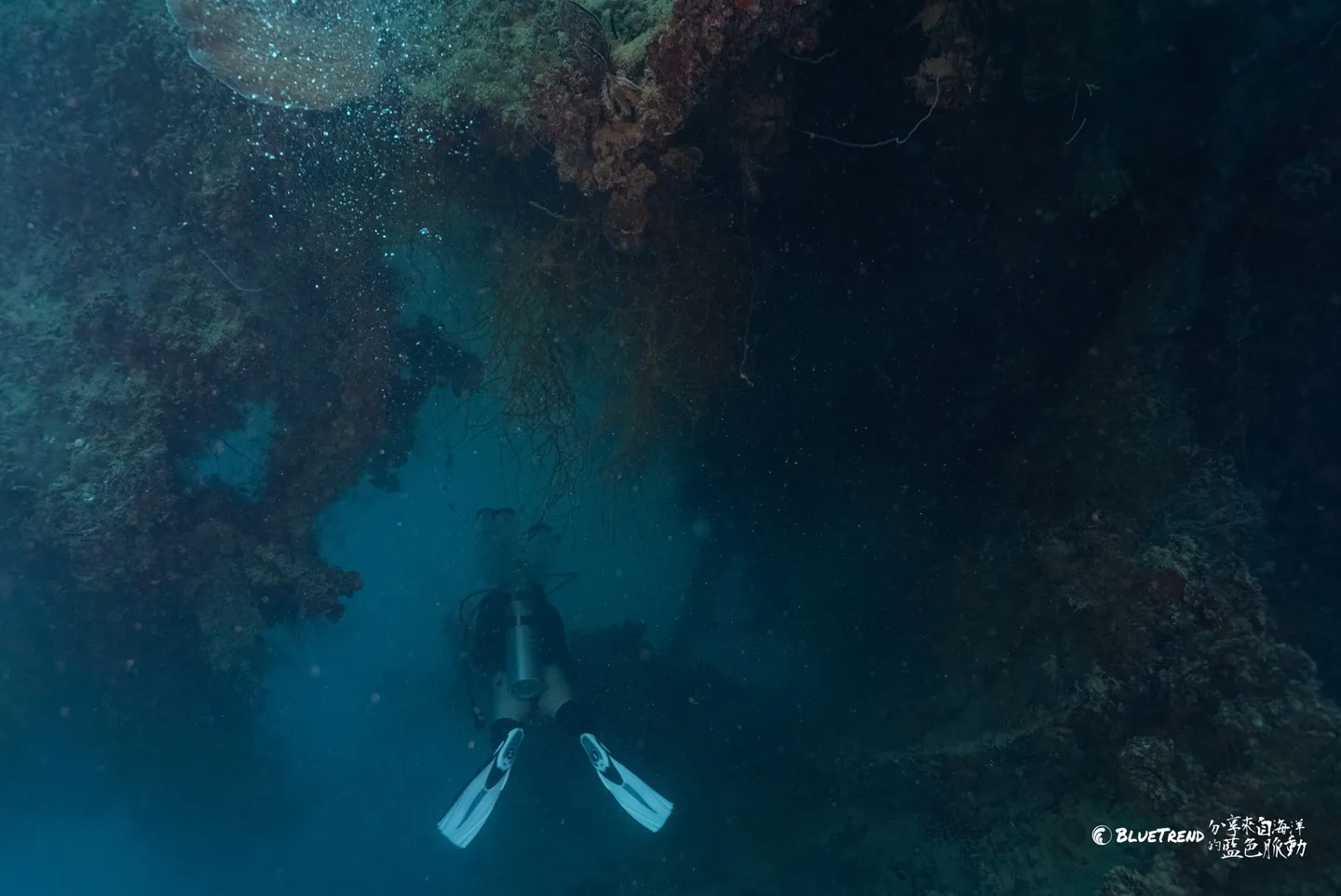
The massive hole blown through the bow by a torpedo
Continuing your exploration, you can venture deeper into the hull and discover the vast deck of this once-formidable warship. There is plenty of hull space to explore, so always carry a Torch and follow your dive guide's instructions for safety. Bear in mind that certain areas are enclosed with complex interior spaces — do not enter them independently unless you are a certified wreck diver.
As you reach the mid-section of the Iro, a series of cargo booms projecting vertically from the hull gradually come into view, and they have become a true haven for marine life. Beautiful coral covers their surfaces, attracting an extraordinary variety of sea creatures to take up residence. Along the way you are likely to encounter schools of fish weaving through every corner of this underwater "city," painting a magnificent tableau on the seafloor. Most impressive of all is the stern of the Iro, where another 120 mm naval gun is positioned — this one is in even better condition than the bow gun and makes for an outstanding photo opportunity.
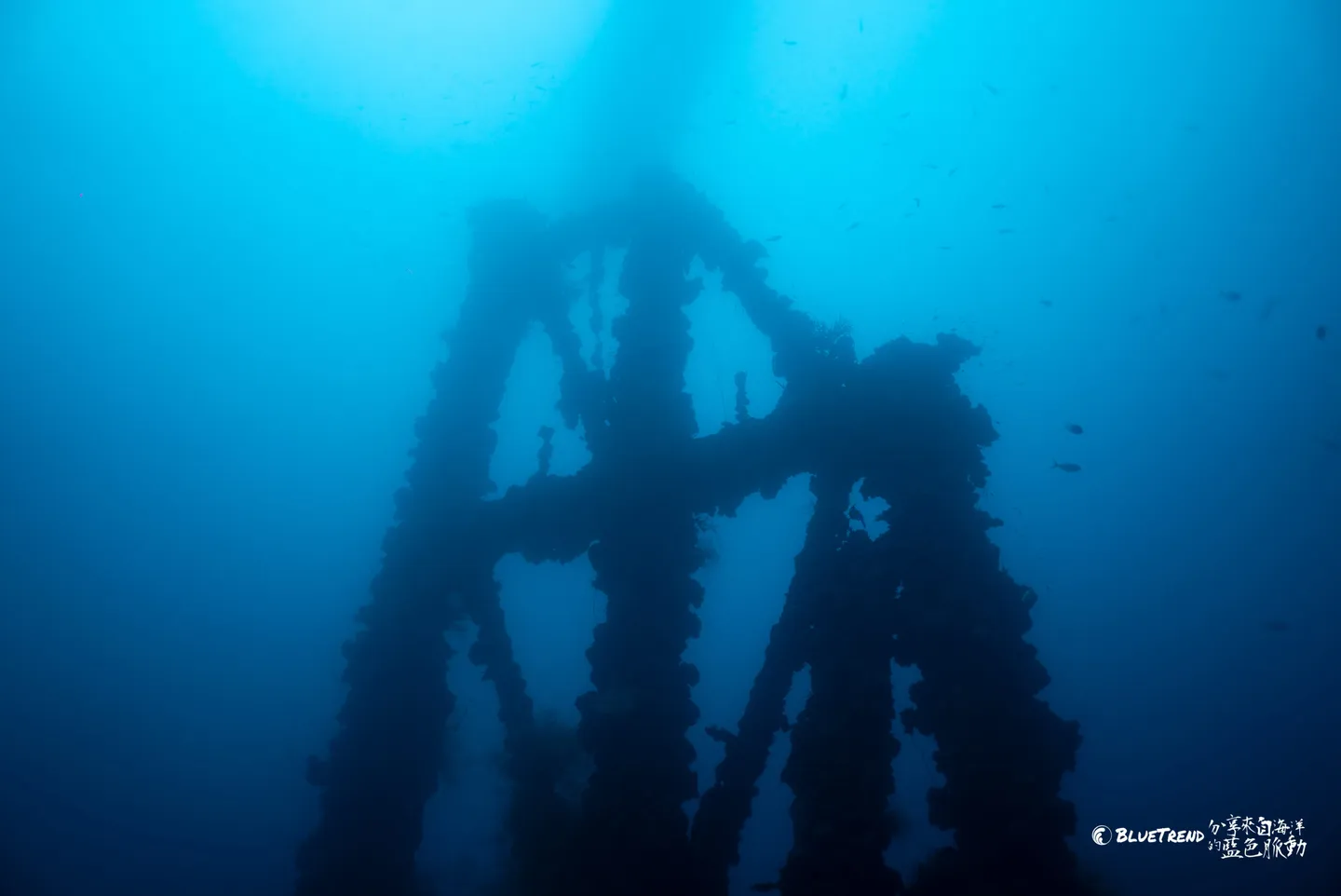
The impressive surviving cargo booms, encrusted with an abundance of marine life
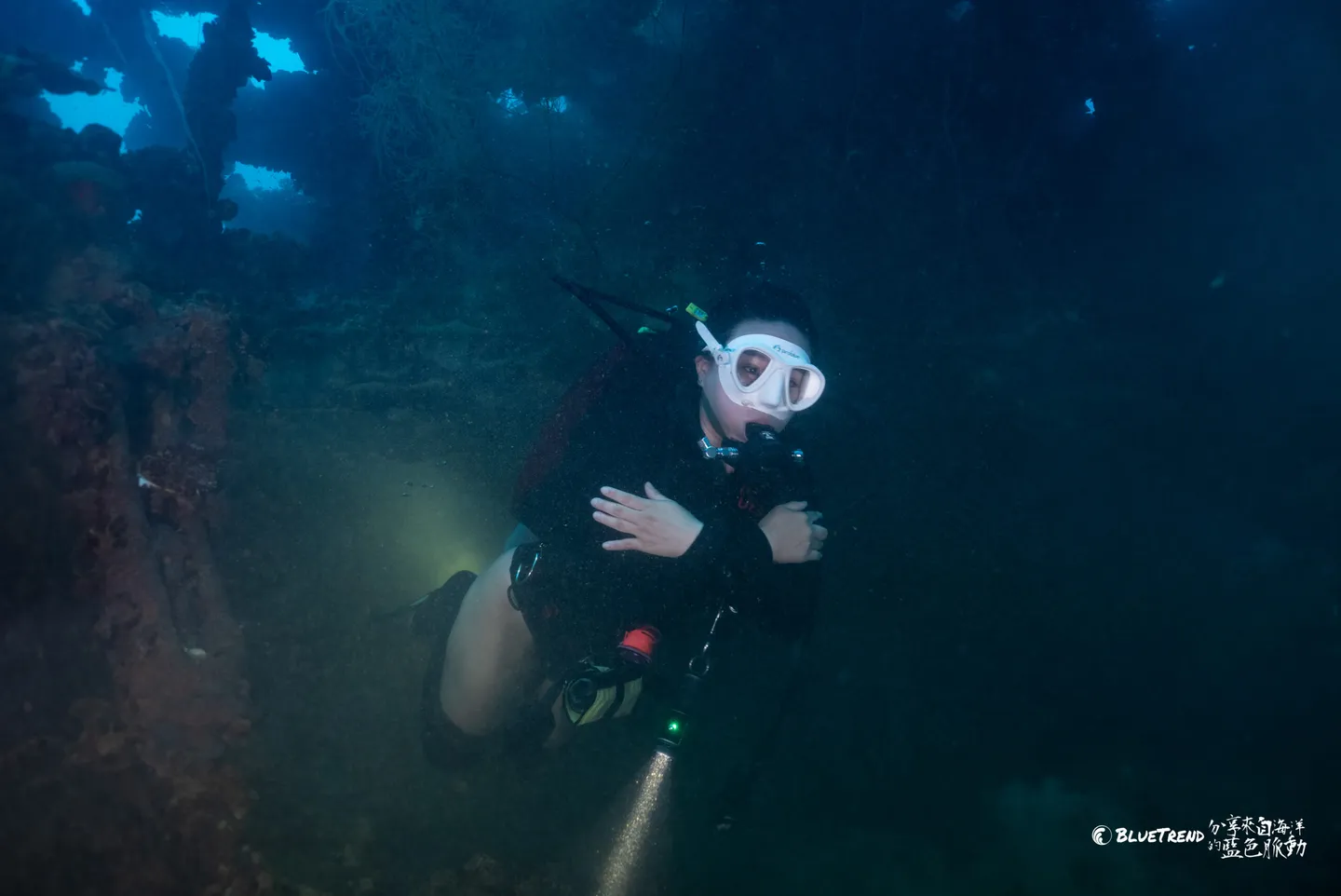
Pay close attention to your dive guide's instructions when exploring inside the hull
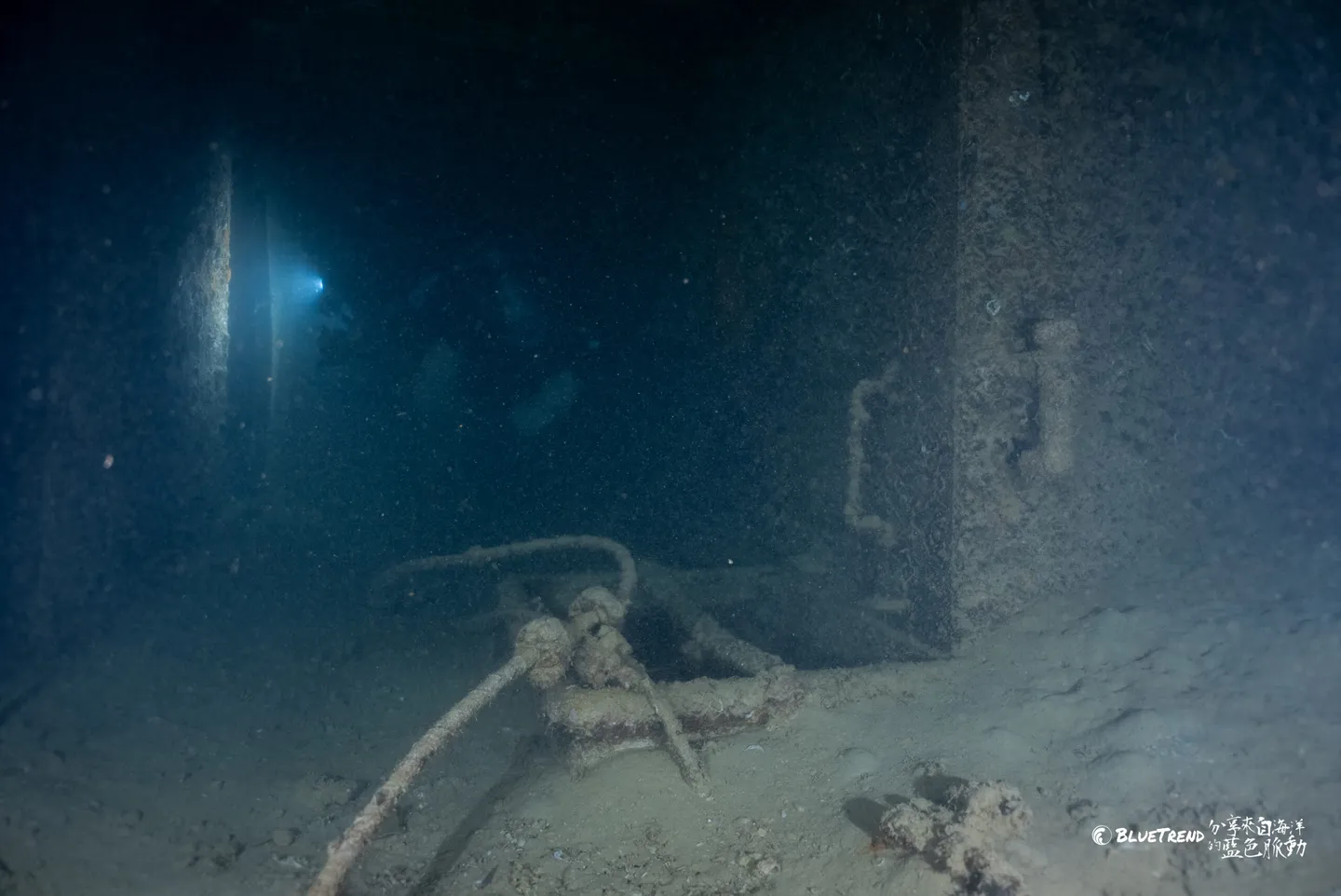
The narrow confines of the hold, steeped in an atmosphere of history
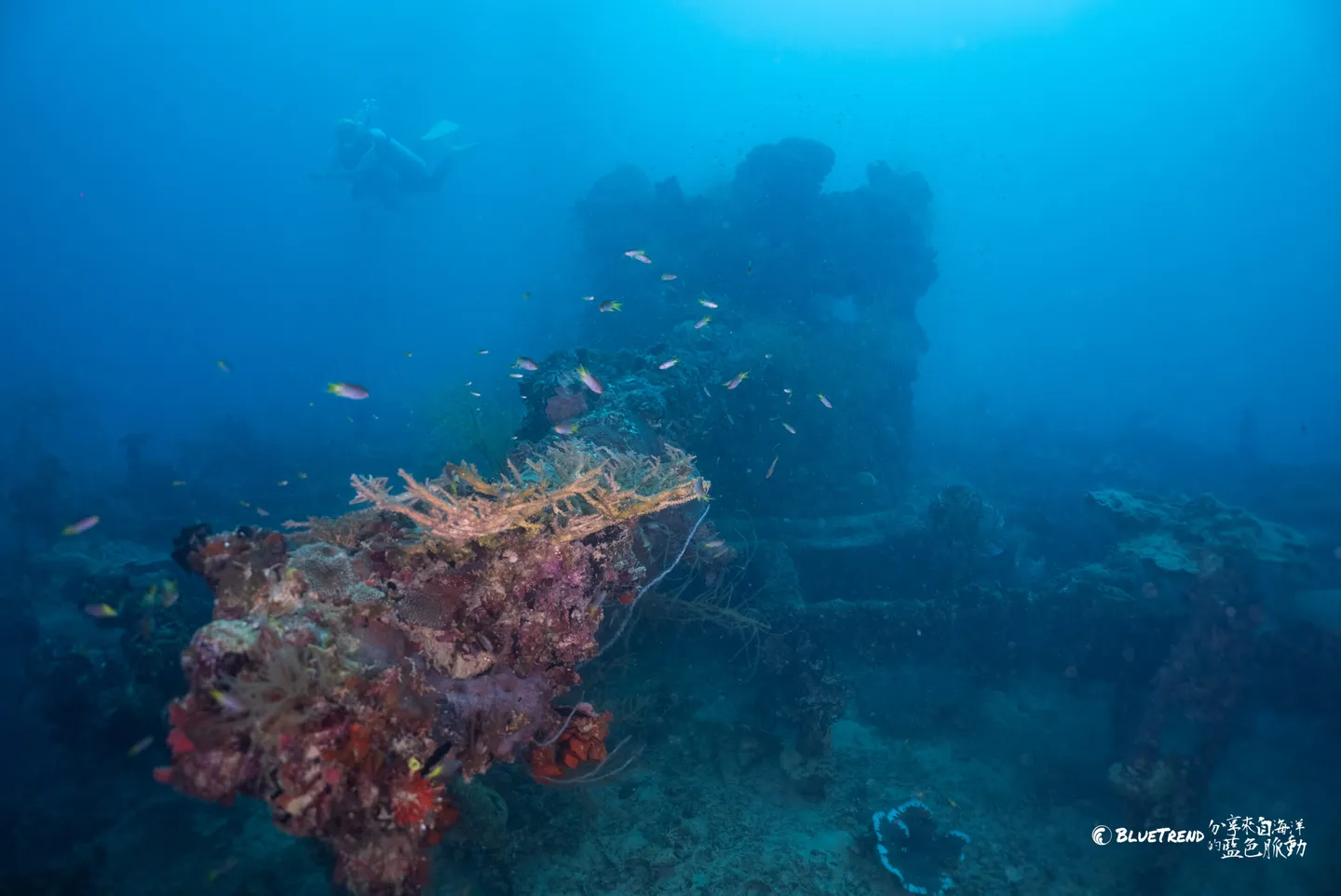
The stern's second 120 mm naval gun looks as though it's still on duty
As you begin to wrap up this dive adventure, make sure not to miss the rich marine ecosystem thriving on the cargo booms. The very tops of the booms are only about 5 m from the surface, and the ecosystem here is extraordinarily vibrant — virtually every inch reveals a different marine creature. It's a rare opportunity to witness firsthand how sea life coexists with a shipwreck and coral, forming a spectacular underwater miracle.
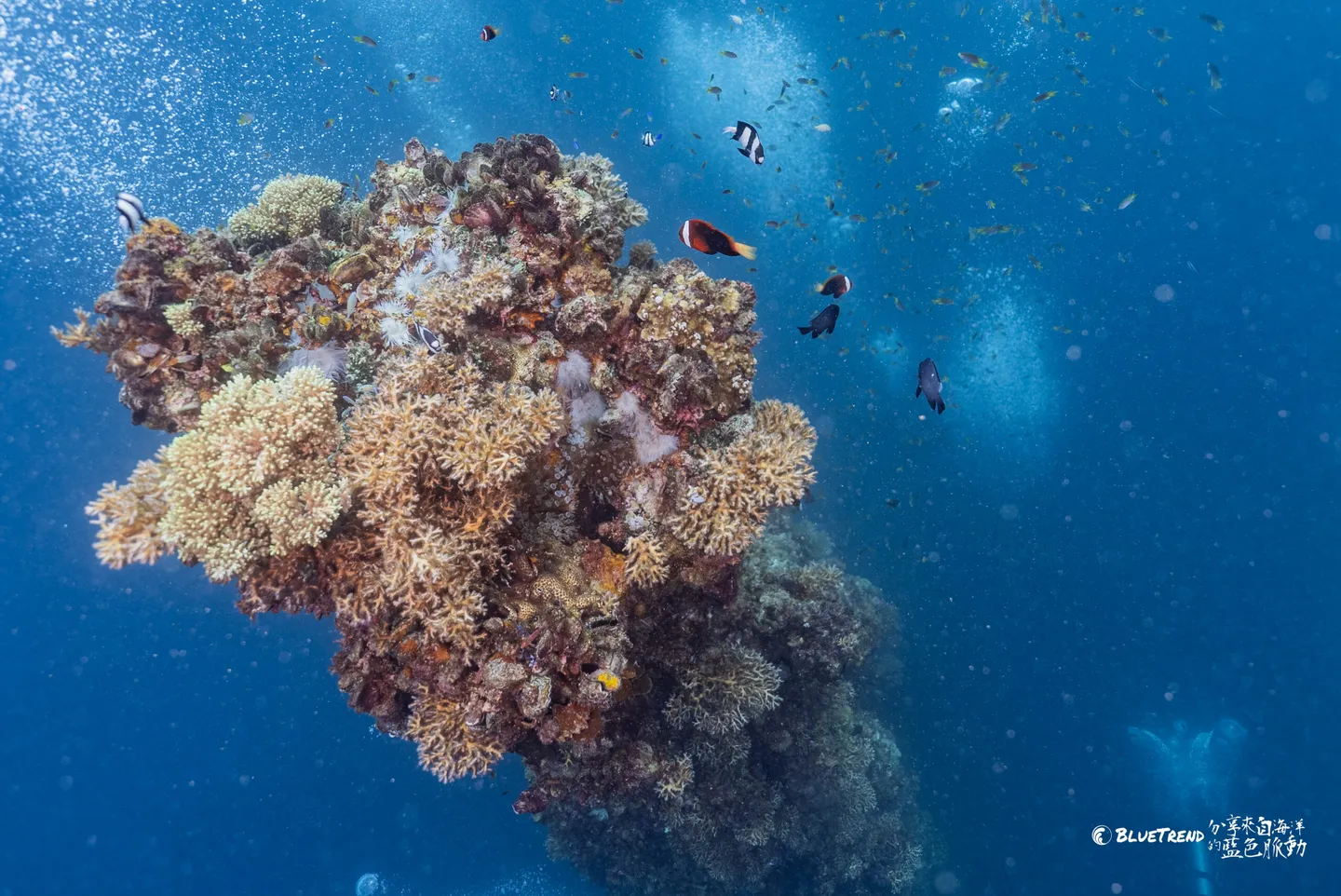
The tops of the cargo booms are blanketed in all manner of marine life, teeming with a vitality entirely their own
Palau Beginner Dive Site: Chandelier Cave
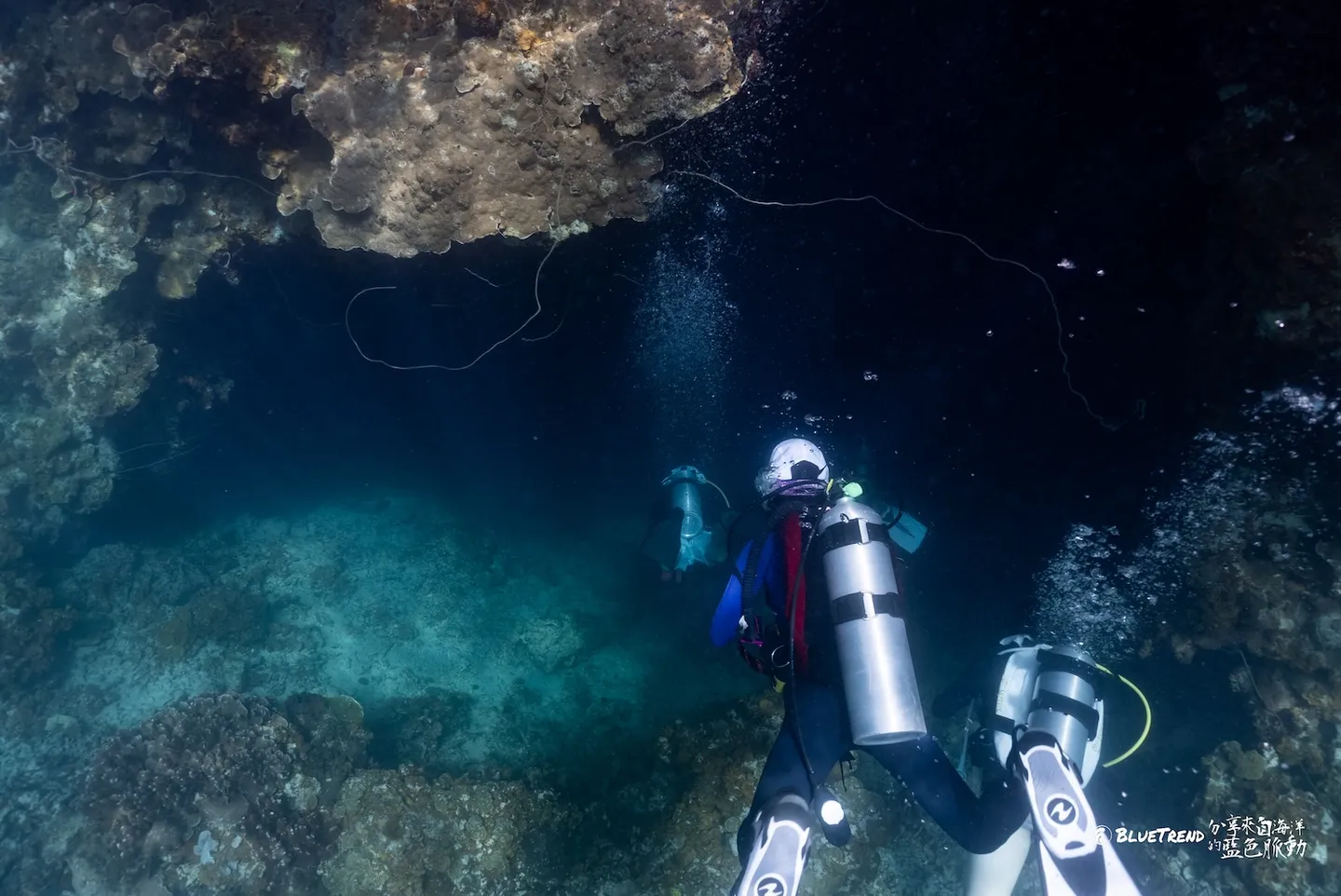
The entrance to Chandelier Cave is relatively spacious
Last on our list is Chandelier Cave, an exceptionally unique dive site where the stalactites inside the cavern resemble magnificent crystal chandeliers — a truly breathtaking sight. Chandelier Cave is tucked within Palau's sheltered bay, far from the open ocean swell, with a calm surface and a relatively low level of diving difficulty. It is often the go-to choice for divers who still have plenty of air left in their tanks.
As for how this mysterious cave was discovered, two local legends circulate. In one story, a local fisherman spotted a large fish and moved to catch it, only to watch it vanish beneath a cliff face. After searching, he stumbled upon the cave. The other story is tied to World War II: after the war ended, Allied forces clearing unexploded ordnance reportedly discovered three depth charges near the cave entrance. While preparing to remove them, they found the hidden cavern. Allegedly, if you're lucky, you may still find the remains of those three depth charges on the left side of the entrance — well worth having a look.
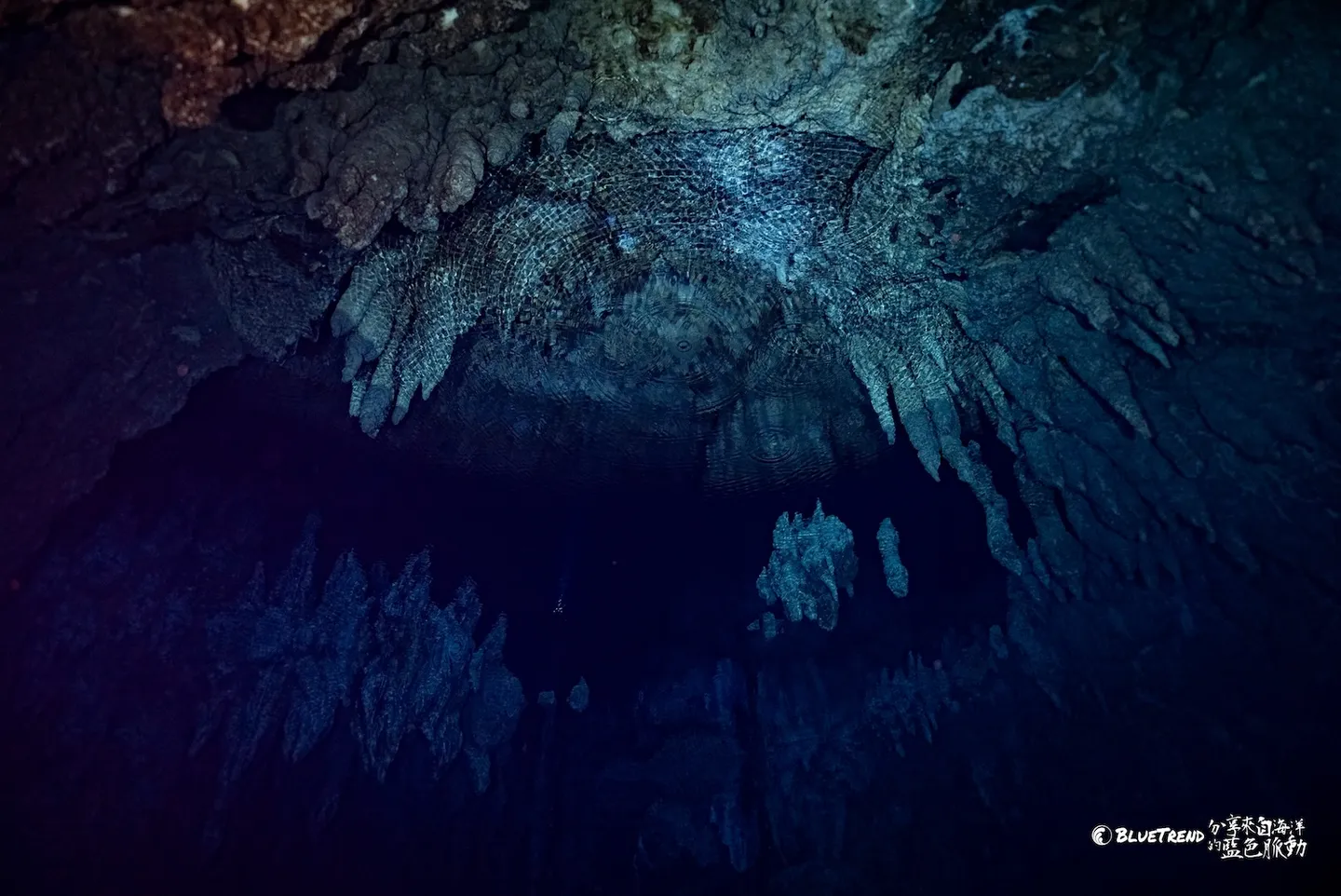
Lighting upward from below the water creates a striking, atmospheric shot
Upon entering Chandelier Cave, divers pass through four distinct chambers in sequence. The first chamber is very spacious — you can surface, remove your mask and regulator, and admire the magnificent stalactite formations overhead. After taking in the first chamber, you'll continue to explore the remaining three, each one progressively smaller as you venture deeper. Eventually, you can even remove your fins and sit among the stalactites for a photo — a truly one-of-a-kind experience.
Because Chandelier Cave is a fully enclosed cavern, marine life inside is very scarce and there is absolutely no natural light once you enter. It is therefore essential to bring a Torch and to dive with a buddy at all times. During the dive, take care not to kick up silt from the bottom with your fins, as this can rapidly reduce visibility.
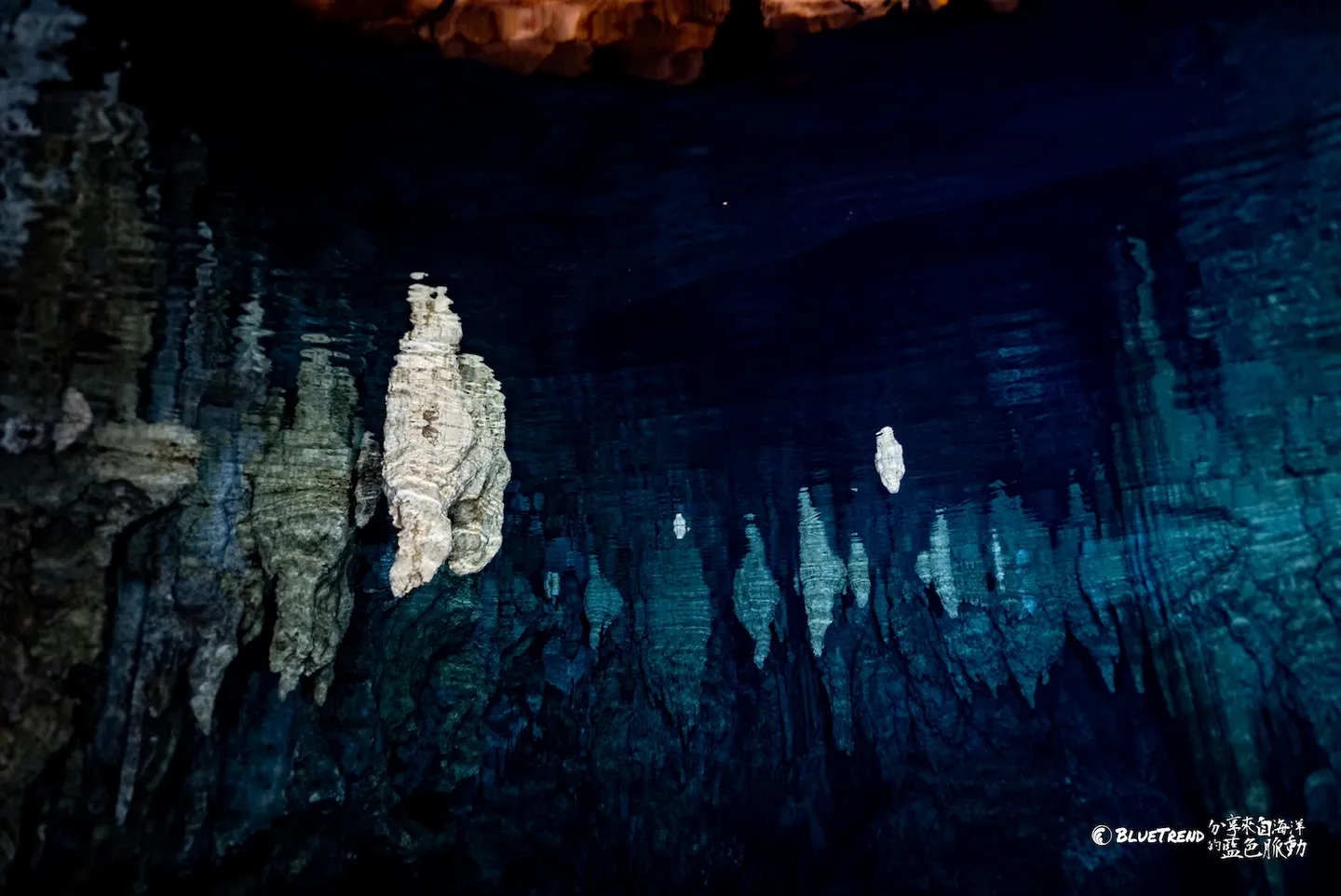
Stalactite columns descending into the water create a uniquely magical diving experience
Chandelier Cave is not only an ideal spot to experience cave diving — its stalactite scenery and one-of-a-kind ambience will add a wonderful element of surprise to your Palau diving itinerary. For beginner divers, it is a rare opportunity to explore the wonders and beauty of nature in a relaxed, accessible setting.
Related Links
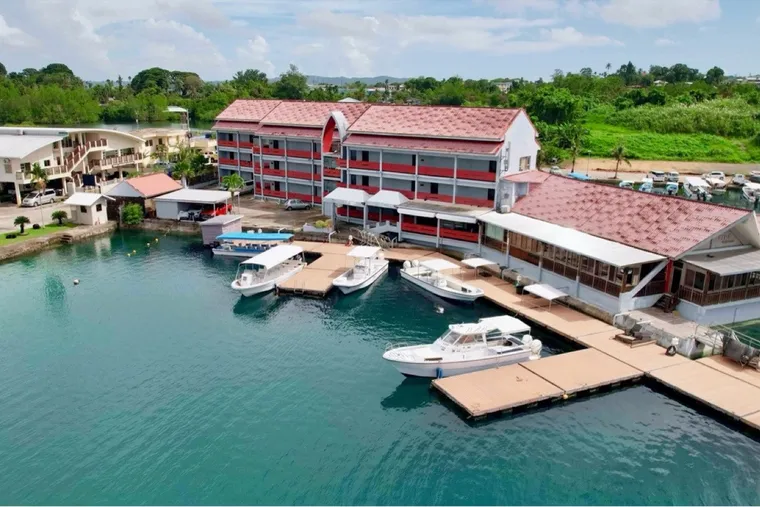
- 【Palau】Landmark Marina Hotel: A Comfortable and Laid-Back Palau Dive Accommodation Recommendation
- 【Palau】First Dive in Palau — 3 Must-Dive Sites: Blue Hole, Blue Corner, and German Channel, Warming Up for Spawn Diving
- 【Palau】Palau Travel: How to Enjoy Freediving and SUP? Hidden Gems for Food and Shopping — ft. LT DIVE
Related Reading
Frequently Asked Questions
How is a BlueTrend dive trip different from an unknown, no-name dive group?
Choosing us means full peace-of-mind protection and a smooth experience from start to finish. Every trip we run holds to three things.
First, full legal protection and a professional dive leader: we strictly follow Taiwan's travel regulations and provide complete travel-agency liability insurance, travel insurance, trip-inconvenience insurance and dive insurance. Every group is accompanied by a certified, foreign-language dive leader who joins you on both the dives and the land itinerary, liaising seamlessly with local dive shops and operators on your behalf to keep things running smoothly — the person our travellers trust most.
Second, fully licensed with secure payments: every payment goes into a licensed travel agency's account, with multiple safe payment channels (bank transfer, credit card and more) and a legal collect-and-remit receipt, so every transaction is open, transparent and protected, avoiding the fraud and dispute risks of transferring money privately to an individual.
Third, hand-picked quality we vet in person: every trip, dive site and partner shop is scouted on the ground by our own team, from the guides' professionalism and safety standards to the food, lodging, environment and service details on land, all vetted by us so you don't get caught out.
I want to sign up for a dive trip. Are there certification-level or logged-dive requirements?
Each dive site is different, so the entry bar varies. 'Bali Tulamben', for instance, is relatively beginner-friendly. 'Malapascua in the Philippines' is also beginner-friendly, but since thresher sharks tend to cruise between 20 and 30 metres, we recommend AOW certification with 20+ logged dives to enjoy this trip comfortably. For 'the Maldives' or 'Palau', we suggest AOW with 50+ logged dives for a more relaxed experience. If you're not sure whether your experience fits the trip you want, message us and our dive editors will assess it and help you find the trip you'll feel safest on.
Can I join if I'm signing up alone? How are rooms arranged?
Plenty of our travellers sign up solo! For rooms and beds, we prioritise pairing you with a same-gender traveller, and if you'd rather have your own space you can pay the difference to upgrade to a single room. For the diving, our professional leader will pair you with a suitable buddy, and with the happy vibe on our trips you'll quickly make a great group of dive friends. Many people sign up alone, make new friends, and end up organising the next trip together!
Does the trip fee include dive insurance, gear rental, taxes and instructor tips?
It depends on the trip, the destination's regulations and the local operators. Every BlueTrend dive trip has a detailed web page with a clear 'included / not included' list, transparent and with no hidden charges. All payments are collected by a licensed travel agency, with a standard-form contract for your protection.
I'm a new diver / haven't dived in a long time — will I fall behind the group?
Before you complete your booking, our team assesses a suitable trip based on your certification level and experience. Before departure, we strongly recommend taking time to refresh in Taiwan with an instructor, or a fun dive to get your feel back. On the trip itself, our professional dive leader groups and pairs everyone by experience, keeps a close eye underwater on travellers who need extra care, and steps in to help right away.
Will the photos and videos taken during the trip be shared with us?
During the dives, 'safety' is always the leader's top priority, so whenever it's suitable and safe the leader will capture great shots and record the best moments. During or after the trip, we compile a cloud album for all travellers to download, so you go home loaded with memories!
Besides your scheduled trips, can you arrange a private group charter or independent travel for me and my friends?
Absolutely! Besides group trips, we also arrange private group charters and independent travel. We can communicate, enquire and coordinate services with local operators based on your needs, saving you time and effort and taking the language barrier off your plate, to tailor the smoothest, most reassuring dive trip just for you. Contact our LINE support and our editors will arrange it for you!

![[Palau] First Dive in Palau — 3 Must-Dive Sites: Blue Hole, Blue Corner & German Channel, Warming Up for Spawn Diving](/_astro/DSC09052_Z1Gbc8g.webp)