Contents(7)
- Why Study "Underwater Archaeology"?
- Launching the Underwater Archaeology Programme: Blazing a Trail Through Uncharted Territory
- Discovering Shipwrecks: A Precious Archive of Cultural Heritage on the Ocean Floor
- A Decade of Dedication Bears Fruit — Looking Ahead to the Next Generation
- How Did You Come to Devote Yourself to Underwater Archaeology?
- References
- Further Reading
The Editor says: Underwater archaeology uses diving and survey technologies to study submerged cultural heritage — exploring the historical footprints buried by tectonic shifts, shipwrecks, and other forces. The work is enormously challenging, requiring researchers to overcome the many constraints of the underwater environment. Taiwan only began developing this field roughly 20 years ago. Tsang Cheng-hwa built a professional team from the ground up and successfully identified the historical background of multiple shipwrecks. Submerged artefacts carry immense significance for the protection and interpretation of cultural heritage, and these discoveries are sure to open new chapters in our understanding of history. Reprinted in full from Research Portal (研之有物), Academia Sinica.
Why Study "Underwater Archaeology"?
Because of tectonic shifts, changes in sea level, or the sinking of aircraft and vessels, countless human sites and artefacts have been buried deep beneath the vast ocean floor. Underwater archaeology applies professional diving and underwater survey technologies — combined with historical research and artefact conservation perspectives — to study this submerged cultural heritage. Just like archaeology on land, it is a vital endeavour that allows humanity to learn from the past and understand the present.


Launching the Underwater Archaeology Programme: Blazing a Trail Through Uncharted Territory
Remember the film Titanic? A team of experts used sophisticated equipment to descend into the deep sea, entering the hull of a colossal ship that had lain on the ocean floor for nearly a century, searching for lost treasure. In the end, the treasure was never found — but what they found was a heartrending story that moved millions.
Underwater archaeology is much the same: finding stories beneath the water, and finding treasures. But the treasure here is not gold or silver — it is precious human cultural heritage.
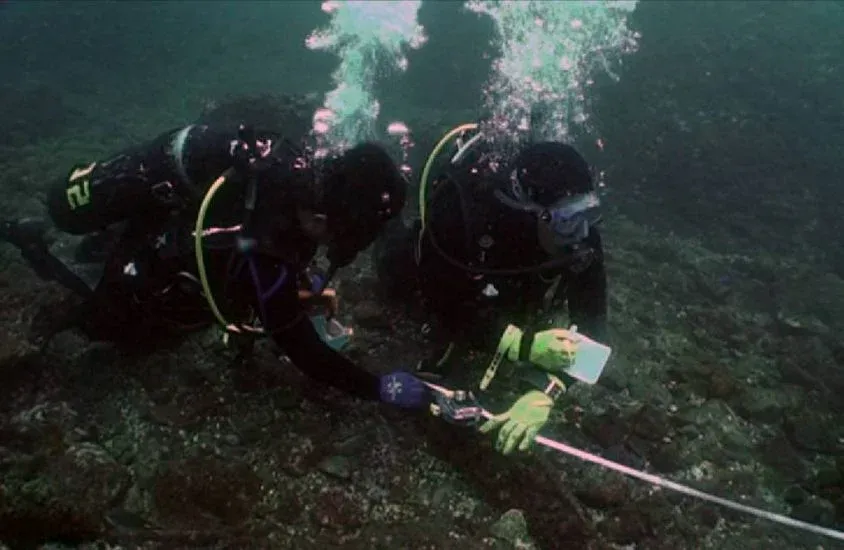
Members of the underwater archaeology team mapping the wreck of the Yamafuji Maru. Many people confuse underwater archaeology with treasure hunting or salvage operations, but underwater archaeology is both a technique and a discipline — its formal name is "underwater archaeology" (水下考古學). Photo courtesy of Tsang Cheng-hwa
Although humans live on land, millennia of tectonic change have transformed many ancient landscapes: what was once fertile ground may now lie beneath the sea, submerging the traces of our ancestors' lives. In other cases, accidents or wars have sent aircraft and vessels — along with their artefacts and records — to the bottom of the ocean.
The vast sea floor is in fact home to the footprints of human history spanning from antiquity to the present. Underwater archaeology is the field that studies them.
Moving the archaeological site to the ocean floor is an immense challenge. Water pressure, currents, visibility, and oxygen supply all limit human exploration of the deep. It was not until the invention of scuba diving in the mid-20th century, and the subsequent advances in diving and survey technology, that humanity was finally able to open a window onto the underwater world. Taiwan lagged even further behind, only beginning to develop this field roughly 20 years ago — and the domestic pioneer is Academician Tsang Cheng-hwa of Academia Sinica.
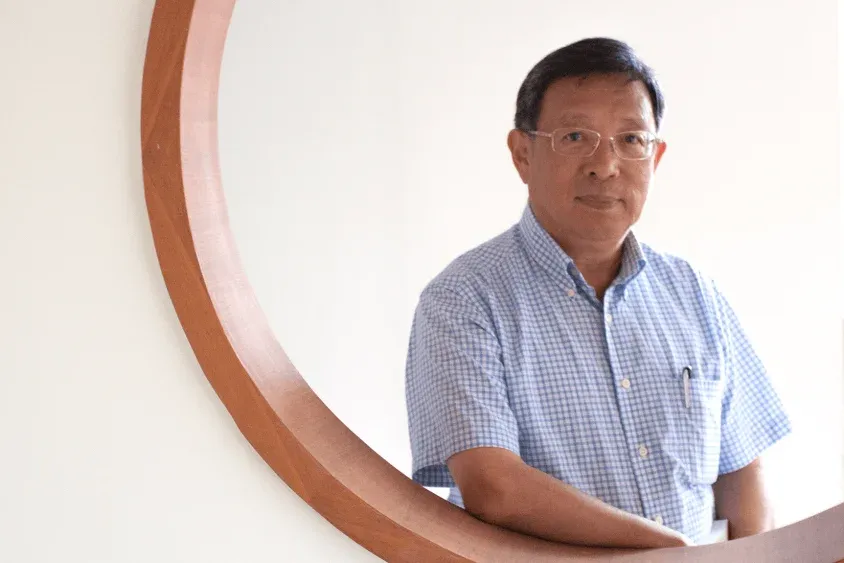
Academician Tsang Cheng-hwa, a leading authority in Taiwanese archaeology, previously spearheaded one of the country's landmark archaeological projects: the excavation of the Tainan Science Park sites. Since 2006, he has extended archaeology's reach into the sea, becoming a key pioneer in the preservation of Taiwan's submerged cultural heritage. Photo courtesy of Research Portal (研之有物)
Tsang Cheng-hwa first encountered underwater archaeology while pursuing his archaeological studies in the United States. He recognised that Taiwan is surrounded by ocean on all sides — the Taiwan Strait was dry land 12,000 years ago and has more recently served as a vital maritime trade route — making it virtually certain that numerous underwater sites worthy of study and protection existed. It was not until 2006, however, when the Executive Yuan issued the "National Ocean Policy Guidelines" in response to international ocean development trends and domestic maritime policy needs, that the government truly began to recognise the importance of submerged cultural relics.
At the time, underwater archaeology was an entirely new field in Taiwan, and its greatest challenge was simply a lack of trained personnel. As a long-time advocate for this discipline, Tsang Cheng-hwa accepted a commission from the Council for Cultural Affairs without hesitation and set about organising a professional team. It was a project built from nothing: he had to recruit experts from Australia, the United States, and Europe to come and train local staff.
We had to make archaeologists understand diving, and make diving experts understand archaeology.
Underwater archaeology relies heavily on modern scientific instruments — side-scan sonar, magnetometers, echo sounders, sub-bottom profilers, and more. Human divers can generally reach depths of around 30 m; with specialised gas mixtures this can be extended to roughly 50 m. For areas beyond human reach or too hazardous to enter, remotely operated vehicles (ROVs) are deployed instead.
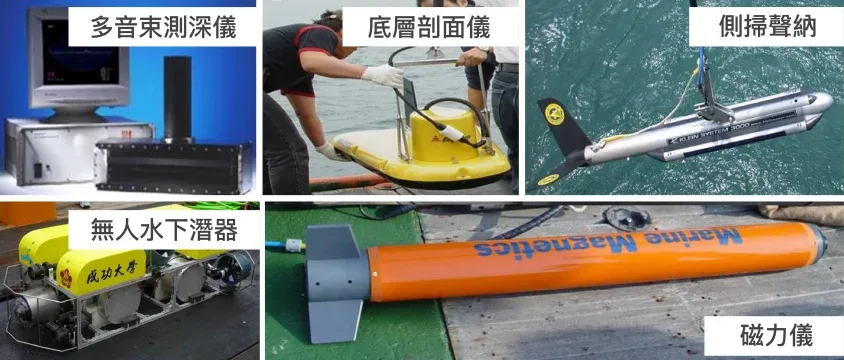
Various underwater survey instruments used by the underwater archaeology team. Photo courtesy of Tsang Cheng-hwa
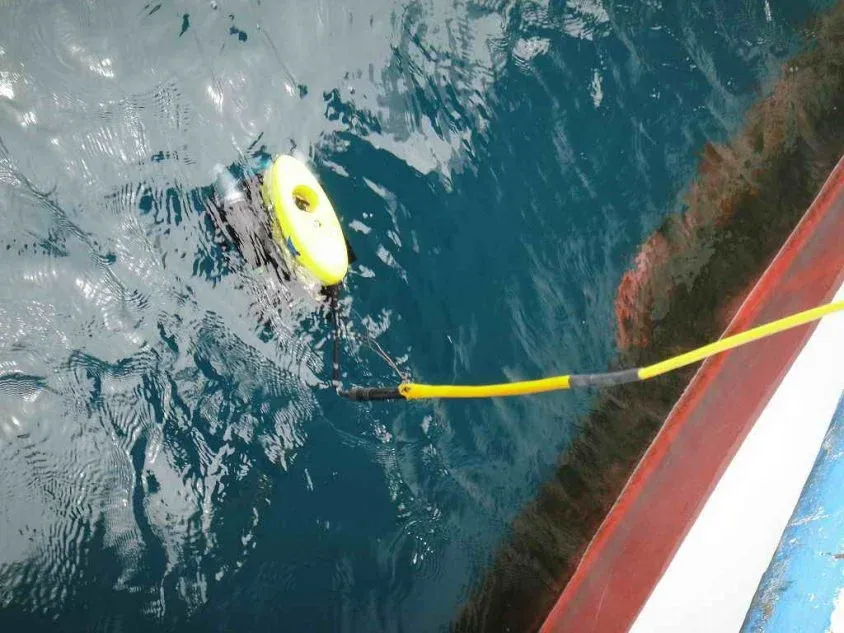
The underwater archaeology team uses a remotely operated vehicle (ROV) to verify and inspect shipwrecks underwater. Photo courtesy of Tsang Cheng-hwa
But faced with the immensity of the ocean, where does one even begin to look? This is where the archaeologist's true skills come into play. The first approach is to comb through historical documents, using natural geography and historical records to determine where sites may have existed, which sea lanes were particularly prone to disasters, and which areas are most likely to contain shipwrecks. The second approach relies on oral history.
Many fishing boat captains are, in fact, hidden experts in underwater archaeology.
Tsang Cheng-hwa chuckled: "The old boat captains know best which spots have wrecks that snag fishing nets, and which areas yield piles of pottery shards and ceramic jars when the nets are cast." The firsthand experiences of coastal fishermen and divers are invaluable data. During the site-identification phase, Tsang Cheng-hwa's team often invested considerable effort in building rapport with these individuals — and in doing so gained not only crucial intelligence, but also deep friendships and a strong sense of human connection.
Discovering Shipwrecks: A Precious Archive of Cultural Heritage on the Ocean Floor
After extensive investigation and filtering, Tsang Cheng-hwa's team designated several "survey-sensitive zones" in Penghu, Tainan Anping, Green Island, and Dongsha Atoll. Using sonar and other equipment, the team first mapped the underwater topography. After identifying more than 200 targets, they began systematically diving down to "verify" each one. To date, 85 of these targets have been confirmed as shipwrecks.
Every shipwreck discovery brings great excitement to the research team — yet that is precisely when the real "archaeology" work begins.
The first task in underwater archaeology is "identification" — determining the identity of a wreck by examining its appearance, the objects found aboard, and cross-referencing with historical documents.
So far, 17 shipwrecks have had their identities established, spanning a range of periods from the Song Dynasty to the Second World War. Four of these have been prioritised by the Ministry of Culture for registration and protected management, owing to their exceptional cultural heritage and research value.
One of these is a Qing-dynasty wreck at Kongkeyu (空殼嶼). From its cargo — ceramics, building materials, and the like — researchers can infer the trade and shipping patterns of the era. Another is the British steamship SS Bokhara, which sank in 1892 during a typhoon, claiming around 130 lives and making headlines around the world.
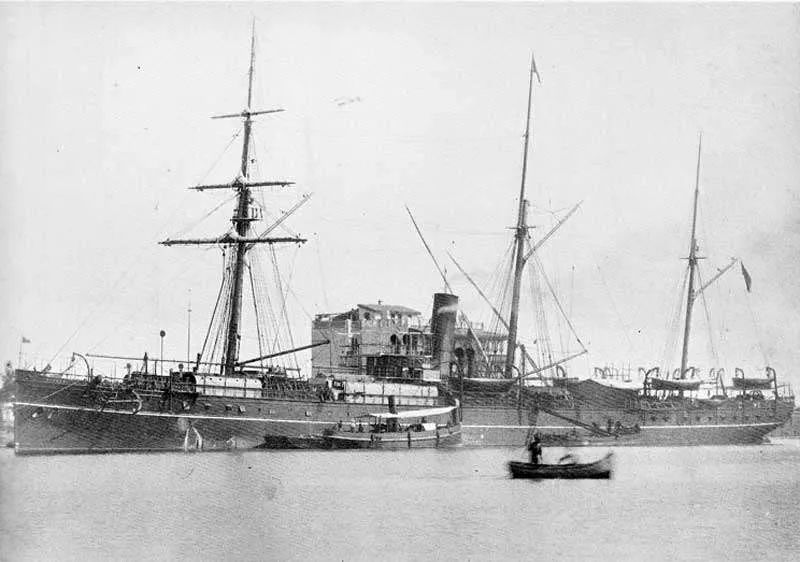
The British steamship SS Bokhara, in 1892, was carrying members of the Hong Kong Cricket Club to Shanghai for a match. On the return voyage, she encountered a typhoon off northern Taiwan and sank near Gupao Island (姑婆嶼) in Penghu, killing approximately 130 people; only around 20 survivors were rescued. Photo courtesy of Tsang Cheng-hwa
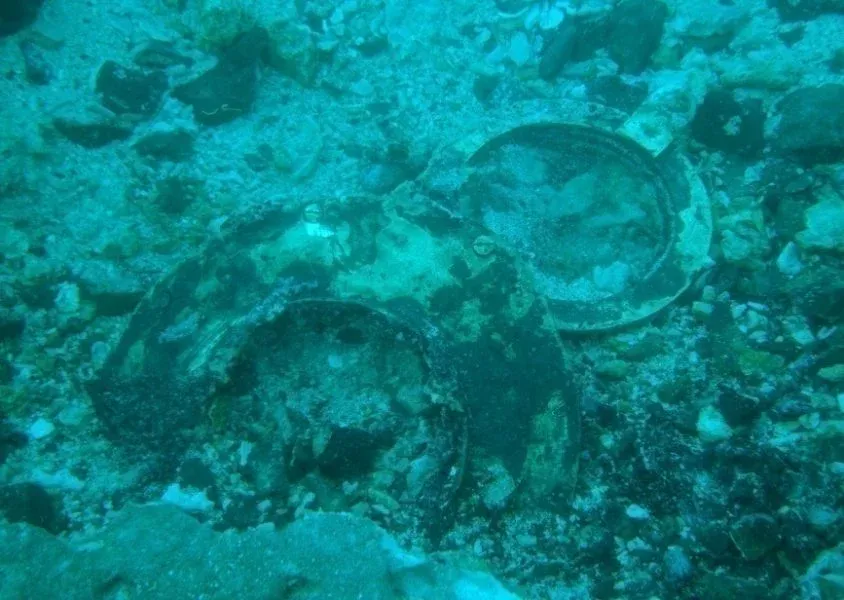
The underwater remains of the British steamship SS Bokhara, now largely covered by sand and coral. Photo courtesy of Tsang Cheng-hwa
The Guangbing (廣丙), which sank off Penghu in 1895, was among the first Western-style warships built domestically by China in the late Qing period. She took part in the First Sino-Japanese War before being captured by Japan. The Yamafuji Maru, sunk in 1942, was a merchant vessel requisitioned by the Japanese military for wartime transport and later sunk by American forces. Both ships bear witness to the turbulent and battle-scarred history of their eras.
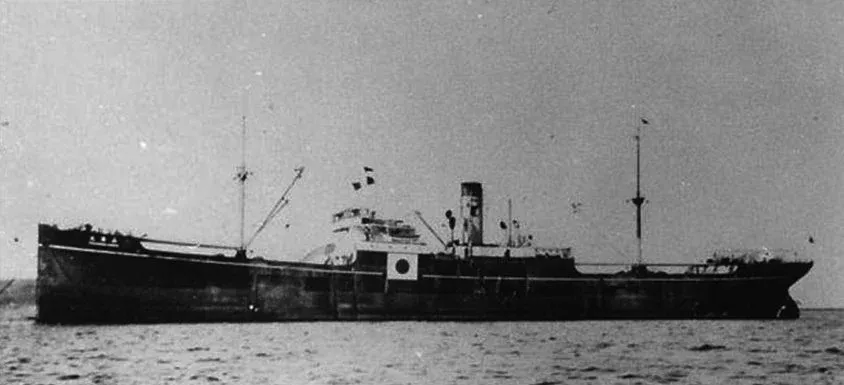
The Japanese transport vessel Yamafuji Maru sank in the waters off Penghu on 19 October 1942. Curiously, the United States claimed she was torpedoed by the American submarine USS Finback, while Japanese records describe the loss as a "grounding." Tsang Cheng-hwa notes that this kind of "conflicting account" is frequently encountered in wartime historical sources. Photo courtesy of Tsang Cheng-hwa
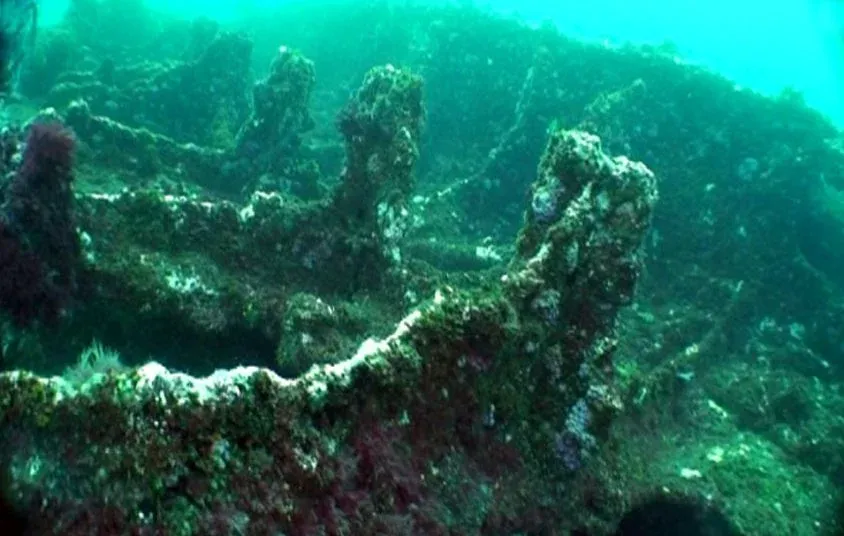
The underwater remains of the Japanese transport vessel Yamafuji Maru. Photo courtesy of Tsang Cheng-hwa
Every small artefact and every faint mark aboard these wrecks holds a story for the archaeologist to tell. But the first critical challenge is how to preserve and house artefacts discovered on the seabed.
Submerged artefacts, though exposed to corrosion by seawater and encrusted by coral, barnacles, and other organisms, have over centuries reached a state of equilibrium — like a time capsule sealing history within. Once brought to the surface, the sudden changes in light, pressure, and atmosphere can cause catastrophic damage. The research team must therefore proceed with extreme care: from the moment of recovery to the point of desalination treatment in the laboratory, conservation measures must be carefully matched to each artefact's material and condition.
Only after this painstaking process comes the time for storytelling — the analysis and interpretation of the finds. Like assembling a jigsaw puzzle, researchers gather small clues, building from individual points into lines and then into a broader picture, reconstructing what once transpired so that humanity can, through the remnants of the past, come to understand itself in the present.
A Decade of Dedication Bears Fruit — Looking Ahead to the Next Generation
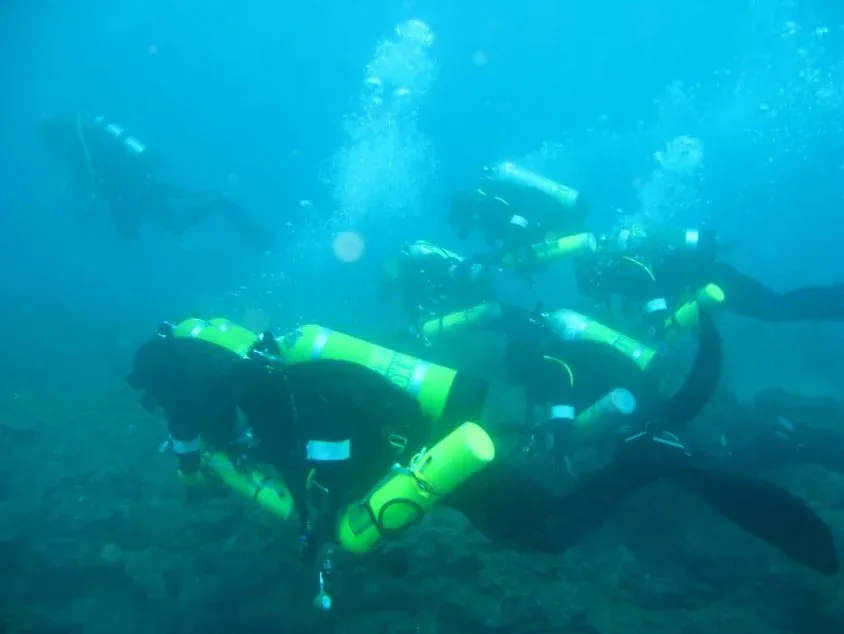
Underwater archaeology team members conducting a search and survey underwater. Photo courtesy of Tsang Cheng-hwa
Looking to the future of the underwater archaeology programme, Tsang Cheng-hwa's chief concerns are the cultivation of the next generation of specialists and the development of the submerged cultural heritage industry.
Since the research team was established in 2006, policy-level issues — such as gaps in project continuity and mismatches between training and employment — have repeatedly made it difficult to retain qualified personnel. Tsang Cheng-hwa remains undaunted. He believes that when these professionals carry their underwater archaeology expertise and vision into other fields, that too is a form of propagation. With sustained cultivation, the seeds that have been planted will one day bloom, inspiring a new wave of passionate talent. The government's forthcoming establishment of an "Underwater Cultural Heritage Research Centre" will lend greater continuity to the work of surveying and preserving submerged cultural heritage, and will be a significant boon for developing human capital in the field.
The next step is to strengthen the industry as a whole. "Sweden's Vasa Museum and the United Kingdom's Mary Rose Museum are both excellent examples — combining educational value with economic benefit," says Tsang Cheng-hwa. These two museums, each built around a shipwreck, demonstrate through careful long-term planning that it is possible not only to achieve the goal of protecting submerged artefacts, but also to generate substantial tourism value — models well worth drawing on domestically.
"But vision must be long-term. Preserving and conserving underwater cultural relics is a protracted endeavour. If it is approached with a short-sighted, get-rich-quick mentality, the result will be damaged artefacts and failed tourism ambitions alike — a lose-lose outcome for everyone." Tsang Cheng-hwa offered these words with heartfelt earnestness.
How Did You Come to Devote Yourself to Underwater Archaeology?
Many of my colleagues get seasick on the boat — I never do at all. It turns out that I was born in Qingdao, Shandong, and when I was just one year old my mother took me on a ship that rocked across the sea for over a month to Taiwan. My bond with the ocean runs deep in my DNA. (laughs)
When I was sitting for the university entrance exams, the prevailing approach at the time was to choose institutions rather than departments, so I filled in almost every faculty at National Taiwan University — the only one I left out was archaeology, which sounded terribly dull. But my high school teacher told me that archaeology was actually quite lucrative: authenticating oracle bones could earn tens of thousands of dollars a time. So I reluctantly went back and added it to my list — and nearly rubbed a hole in the form erasing and rewriting. As fate would have it, archaeology was the very department I was admitted to — an unexpected twist I never saw coming.
I did consider transferring, but during the summer break of my second year, a teacher took us to the Liyu Mountain Site (鯉魚山遺址) in Taitung to conduct fieldwork — and I discovered that archaeology was, in fact, absolutely fascinating. That was the end of any thoughts of transferring. Decades have passed in the blink of an eye, and the words of Fu Ssu-nien — the venerable former president of National Taiwan University and founder of the Institute of History and Philology at Academia Sinica — have become the motto of my life: Search to the highest heavens and the deepest earth; get your hands moving and go find things.
References
- Tsang Cheng-hwa's personal webpage
- March 2015 Knowledge Feast: "Stories of Ancient Taiwanese People" (video)
- Episode 51: Tsang Cheng-hwa's Ocean Journey (video)
- Reprinted in full from Academia Sinica Research Portal (研之有物): Opening the Treasure Chest of the Deep Sea — Tsang Cheng-hwa and Underwater Archaeology
Further Reading