

Contents(4)
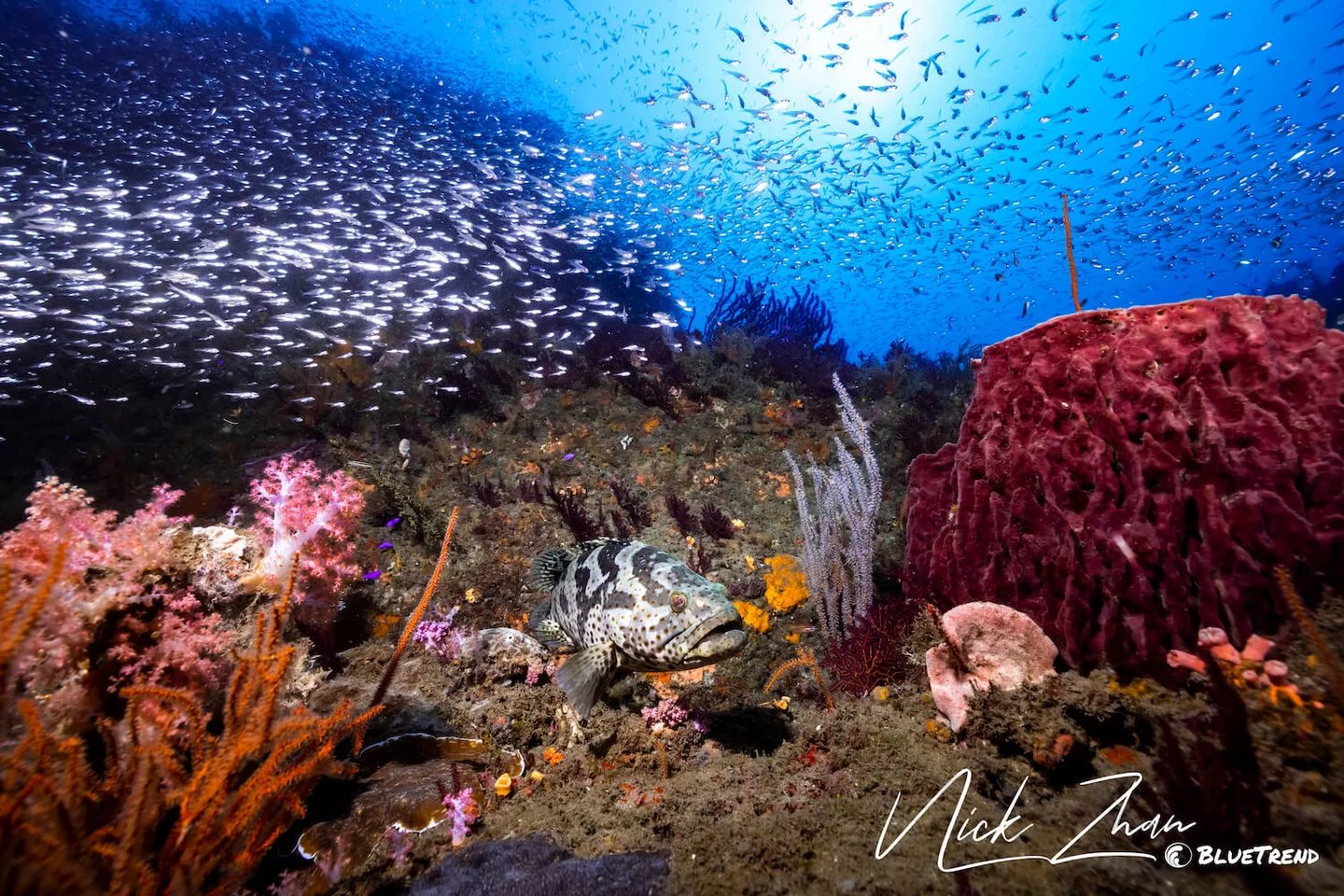
The Wanghaixiang Chaojing Bay Fisheries Resource Conservation Zone is situated on the boundary between Keelung City and New Taipei City, on the eastern side of Keelung's Badouzi Peninsula. The seaward side consists of rocky reef bays rich in fishery resources, while the landward hills were once a major coal-mining area during the Qing Dynasty. Today, the National Museum of Marine Science and Technology occupies the central portion of Badouzi, and Chaojing has been designated a fisheries resource conservation zone (no-take area), serving as a model marine protected area (MPA) for northern Taiwan.
Chaojing is located on the Badouzi Peninsula. The origin of the name "Badouzi" remains debated, but the prevailing view holds that this area was once inhabited by the Basay people — an indigenous Pingpu group — who called it "Pataw," a word in the Basay language meaning shaman or hot spring. The name was later used to evoke the "hazy, misty skies" caused by the winter northeast monsoon, and was subsequently transliterated into Hokkien as "Badouzi."
As the name "Chaojing" (潮境, meaning "tidal boundary") suggests, the North Coast spanning Keelung and New Taipei is also a zone where cold and warm water masses converge. Influenced by monsoon patterns and ocean currents, the composition of marine life and the underwater environment of the bay change dramatically with the seasons.
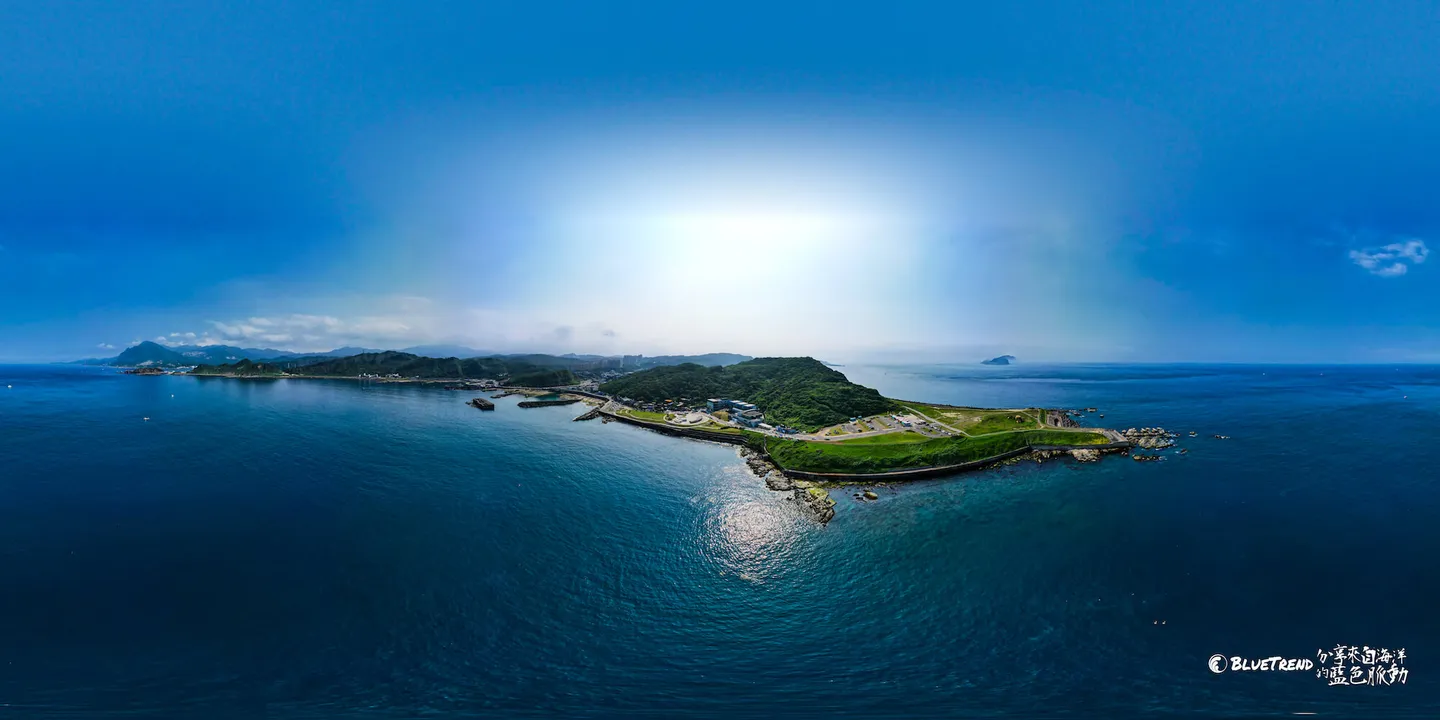
The Wanghaixiang Chaojing Bay Fisheries Resource Conservation Zone sits at a bay headland where strong currents foster a rich marine ecosystem
Chaojing is one of the few well-functioning marine protected areas in Taiwan. Equipped with a local community enforcement mechanism announced by the Keelung City Government, it is hoped that the local community will sustain these efforts going forward. Combined with marine conservation education and outreach from the nearby National Museum of Marine Science and Technology, future generations of students can come to appreciate the beauty of Chaojing and the importance of establishing marine protected areas. The site also supports marine biological surveys, long-term monitoring, and database development. Furthermore, well-structured standard survey protocols — such as reef health checks — now involve the participation of citizen scientists. This not only ensures the sustainability of local fishery resources, but also safeguards recreational resources (snorkeling, scuba diving, etc.).
The Diverse Ecology of Chaojing
The Wanghaixiang Chaojing Bay Fisheries Resource Conservation Zone is one of Taiwan's typical rocky reef landscapes, dotted with bizarre rock formations sculpted by marine erosion. Within the rocky reef ecosystem, the habitat is divided into many distinct zones, including the supralittoral zone, the high, middle, and low intertidal zones, and the subtidal zone.
Chaojing's supralittoral zone lies above the high-tide line and stands in stark contrast to the intertidal zone — it is predominantly a harsh, dry environment. Nevertheless, this zone features depressions carved by sea spray and even by organisms themselves, along with occasional pools formed by breaking surf that allow creatures to cool down and access water. When water is insufficient for cooling, most organisms seek shelter in shaded spots.
The Pacific nudibranch (Thecacera pacifica), affectionately nicknamed "Pikachu" | Photo: Nick Zhan
The intertidal zone is the area affected by tidal fluctuations. What sets the rocky reef intertidal zone of places like Chaojing apart from other ecosystems is its near-vertical banding distribution — on a single rock face, one can discern the high, mid, and low intertidal positions simply by observing the distribution of organisms. The high intertidal zone, submerged only during spring tides, hosts drought-tolerant species such as sea roaches and periwinkles; the mid-intertidal zone is home to organisms like barnacles and oysters that can survive out of water as long as they stay moist; while species that inhabit the low intertidal zone, such as nudibranchs, require more prolonged contact with water relative to the upper two zones.
Peacock mantis shrimp (Peacock mantis shrimp) are easily spotted inside reef flats | Photo: Nick Zhan


Chaojing's Secret Garden: Thriving Ecology That Draws Divers from Across Taiwan
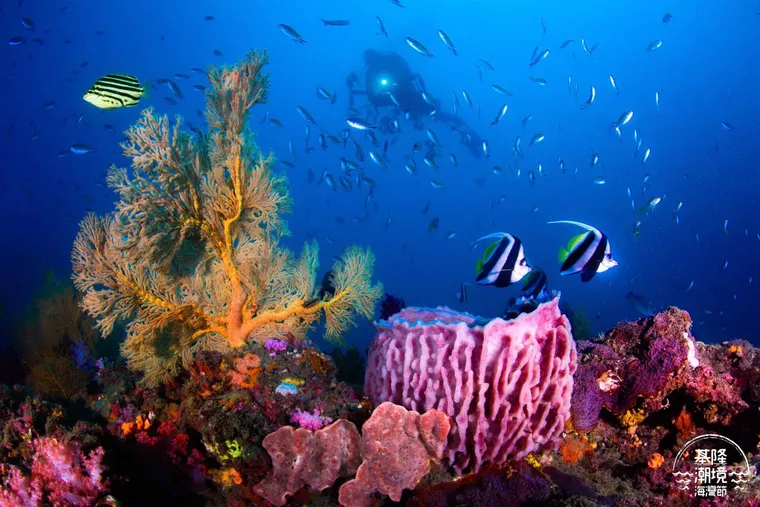
Further below the subtidal zone lies the deeper sublittoral zone, accessible only with scuba equipment — and this is the main destination for visiting divers. Water movement here is comparatively less intense than in the subtidal zone, though some surge and current persist. Combined with turbid water and low temperatures (commonly below 20°C in winter), conditions are unfavorable for reef-building corals. But every cloud has a silver lining: the seemingly harsh marine environment is not without hope. The nutrient-rich waters actually benefit the growth of soft corals. Their flexible body structures allow them to thrive in strong currents, growing vigorously and even forming unique soft coral communities.
A massive aggregation of gorgonians / sea fans at Chaojing | Photo: Nick Zhan
Divers who visit are treated to a spectacular feast for the eyes, and word of mouth has earned Chaojing Park the well-deserved reputation of "the secret underwater garden of northern Taiwan." Beyond the distinctive soft coral forests, the dominant substrate in the subtidal zone consists mainly of rock and hard coral, with smaller areas of sponge and sandy bottom. The maximum depth in the Chaojing Bay subtidal zone reaches approximately 25 m.
Although Chaojing is a straightforward rocky reef environment, its unique combination of weather and ocean conditions has created distinctive habitats for marine organisms to thrive — and those organisms, in turn, shape the micro-topography.
A Mecca for Underwater Photography
In Chaojing, underwater photographers can truly flex their creative muscles. When conditions permit, the Northeast Coast can offer the visibility needed for stunning wide-angle compositions. Experience suggests that the best dive season — when visibility is at its finest — runs from May each year through to before the first typhoon makes landfall in Taiwan. Master the tidal flow on any given day, and you're well positioned to capture breathtaking wide-angle shots. Subjects to look out for include the tiger-striped cuttlefish mating season in March, summer schools of glassfish, and the apex predators drawn in by those glassfish schools, such as greater amberjack and barracuda storms.
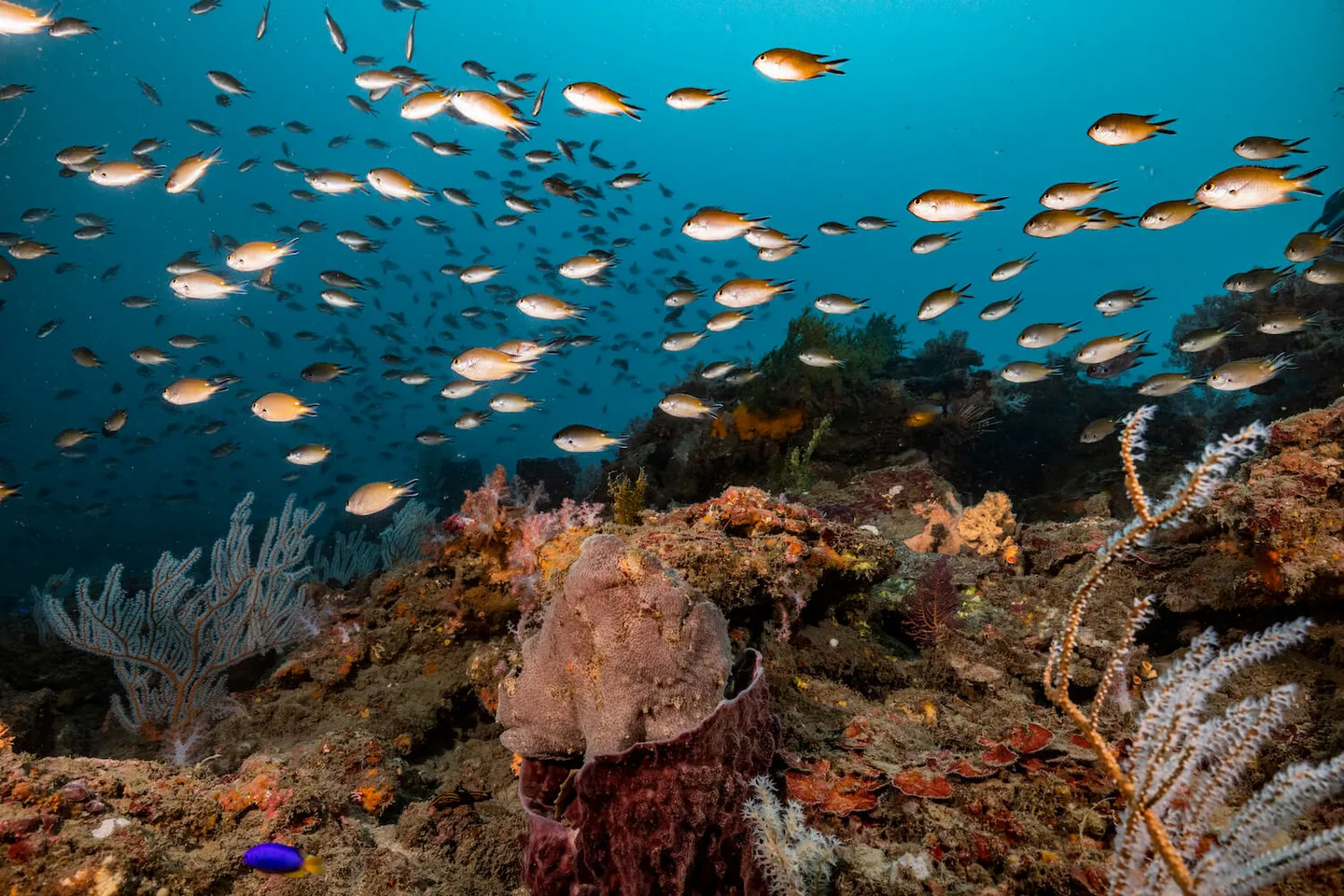
The abundant marine life within the conservation zone | Photo: Nick Zhan
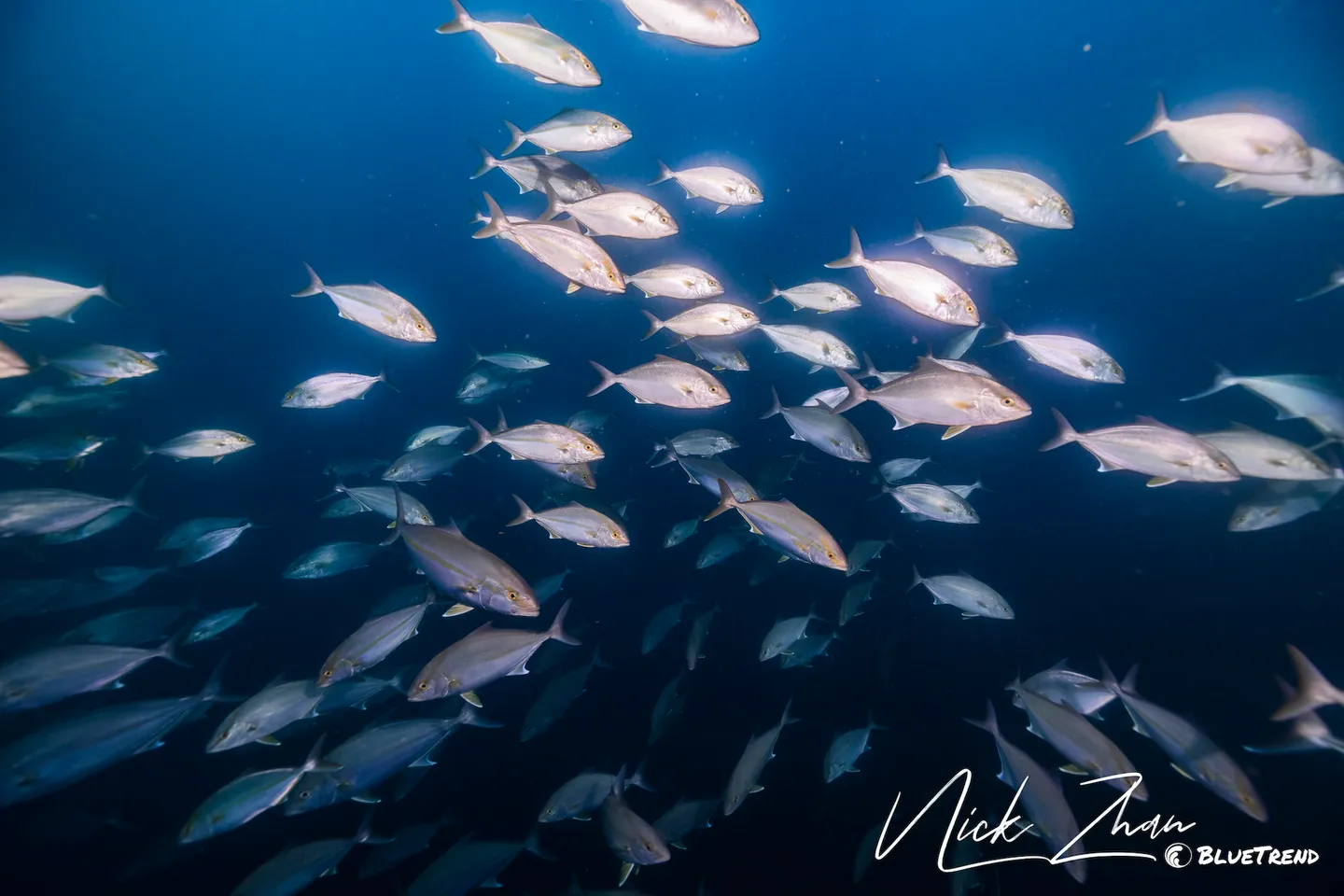
A storm of greater amberjack (Seriola dumerili) | Photo: Nick Zhan
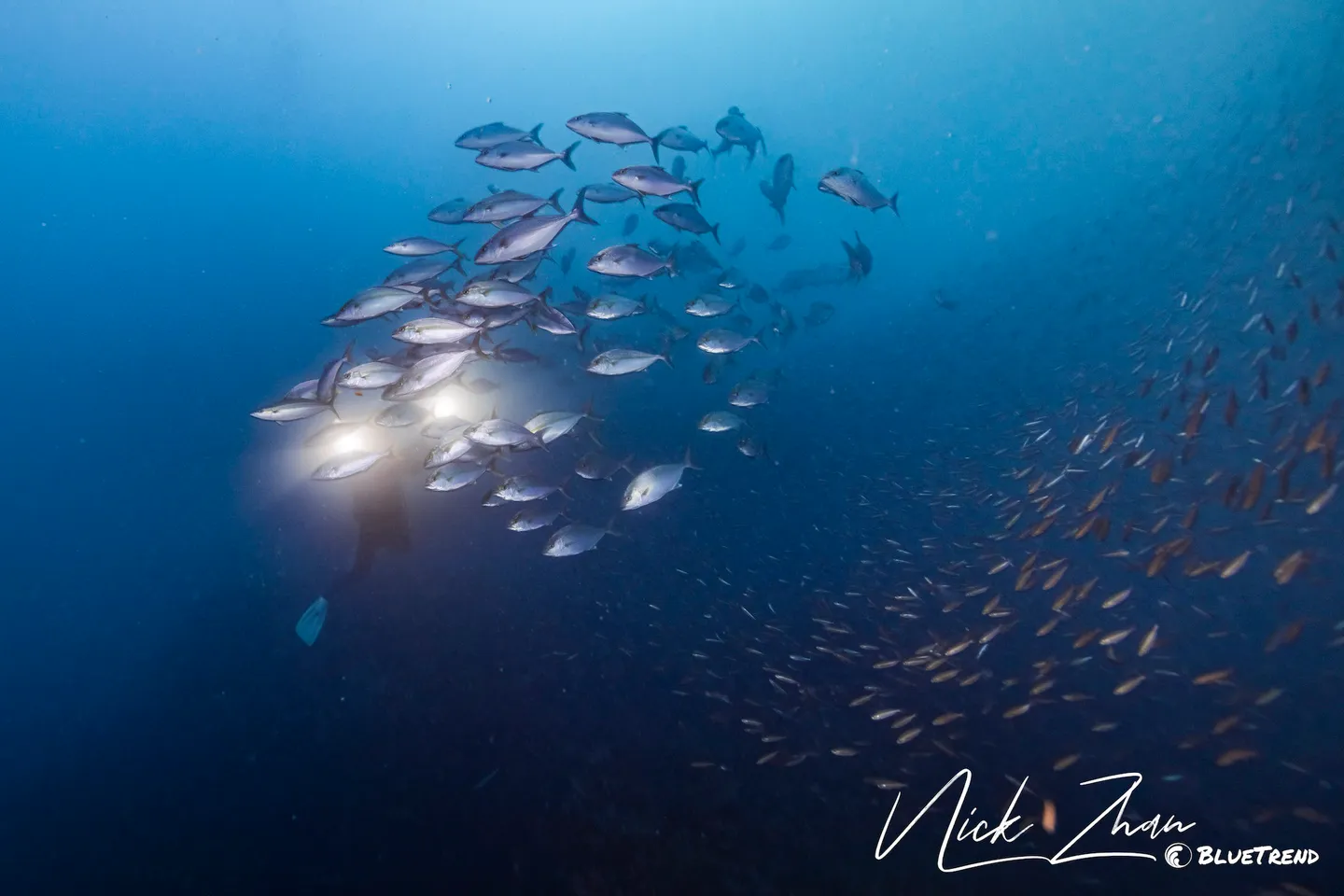
Greater amberjack (Seriola dumerili) in pursuit of small fish | Photo: Nick Zhan
Poor visibility? No problem — at Chaojing you can still bring out the macro lens and search carefully for all manner of tiny creatures hidden within the reef. Here you have the chance to photograph rare species such as pineapplefish, Kuda seahorses, and the Pikachu nudibranch. But these tiny residents require a keen eye and patient searching — consider hiring a professional macro eco-dive guide to help you track them down.
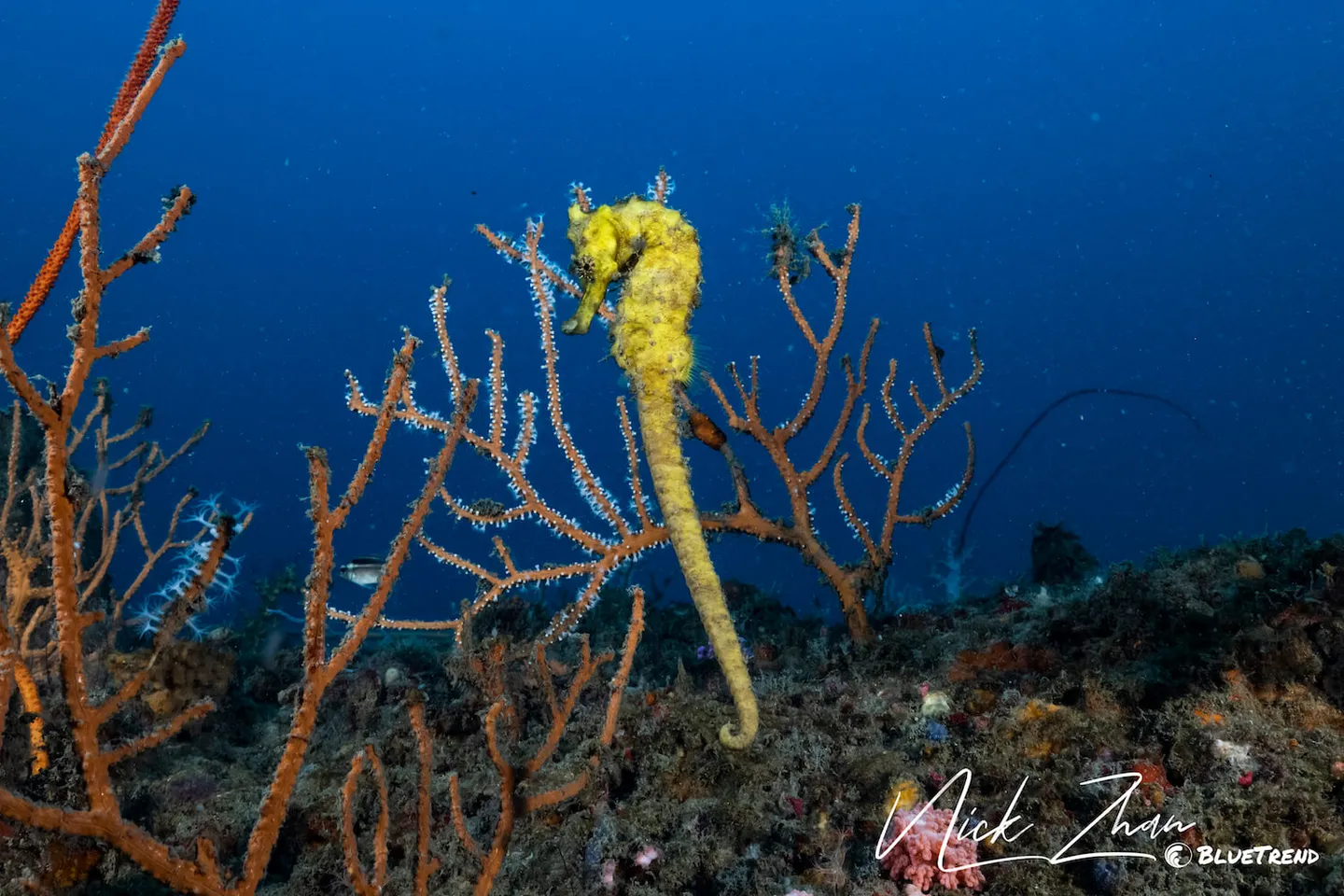
The rare Kellogg's seahorse (Hippocampus kelloggi) | Photo: Nick Zhan
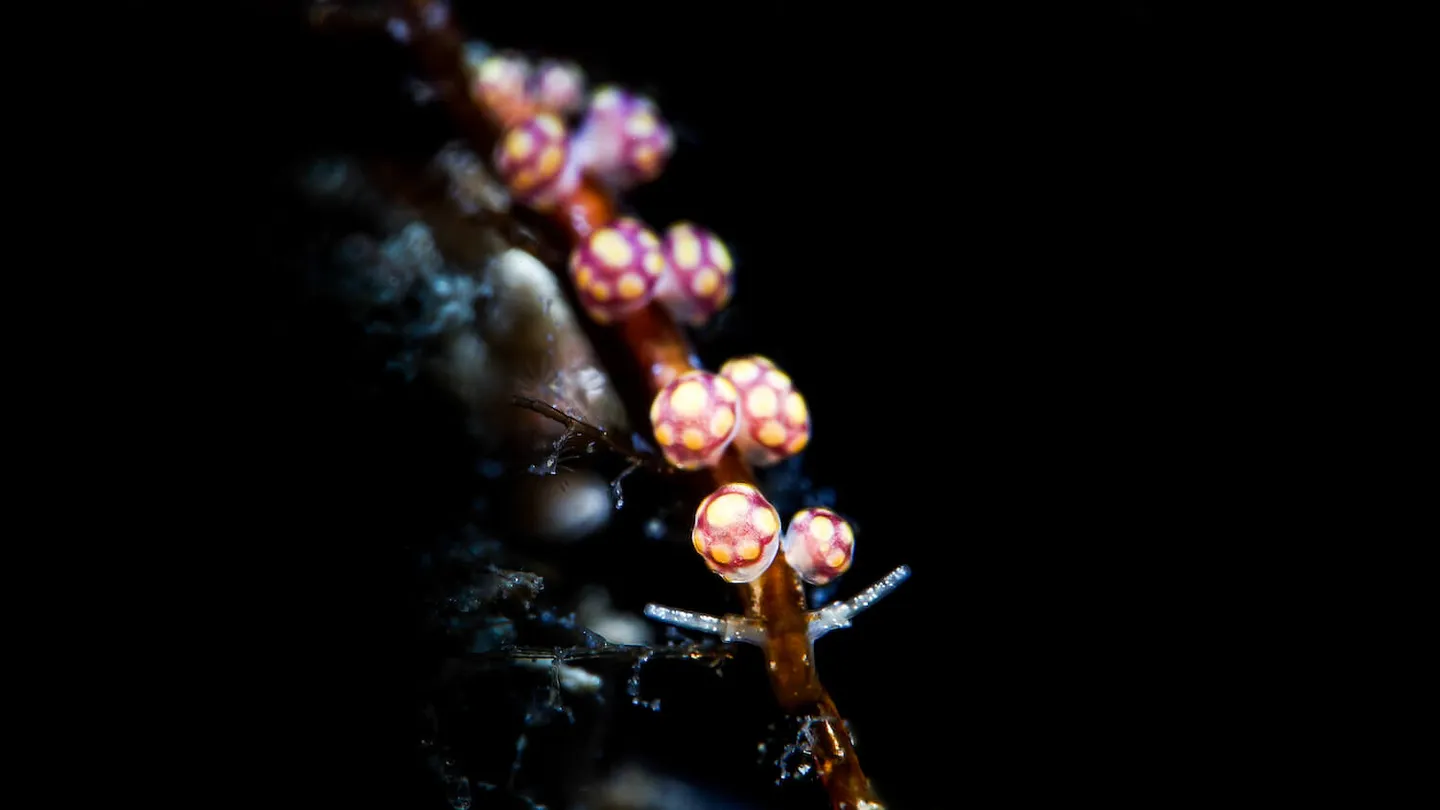
An unclassified Eubranchus nudibranch Eubranchus sp.
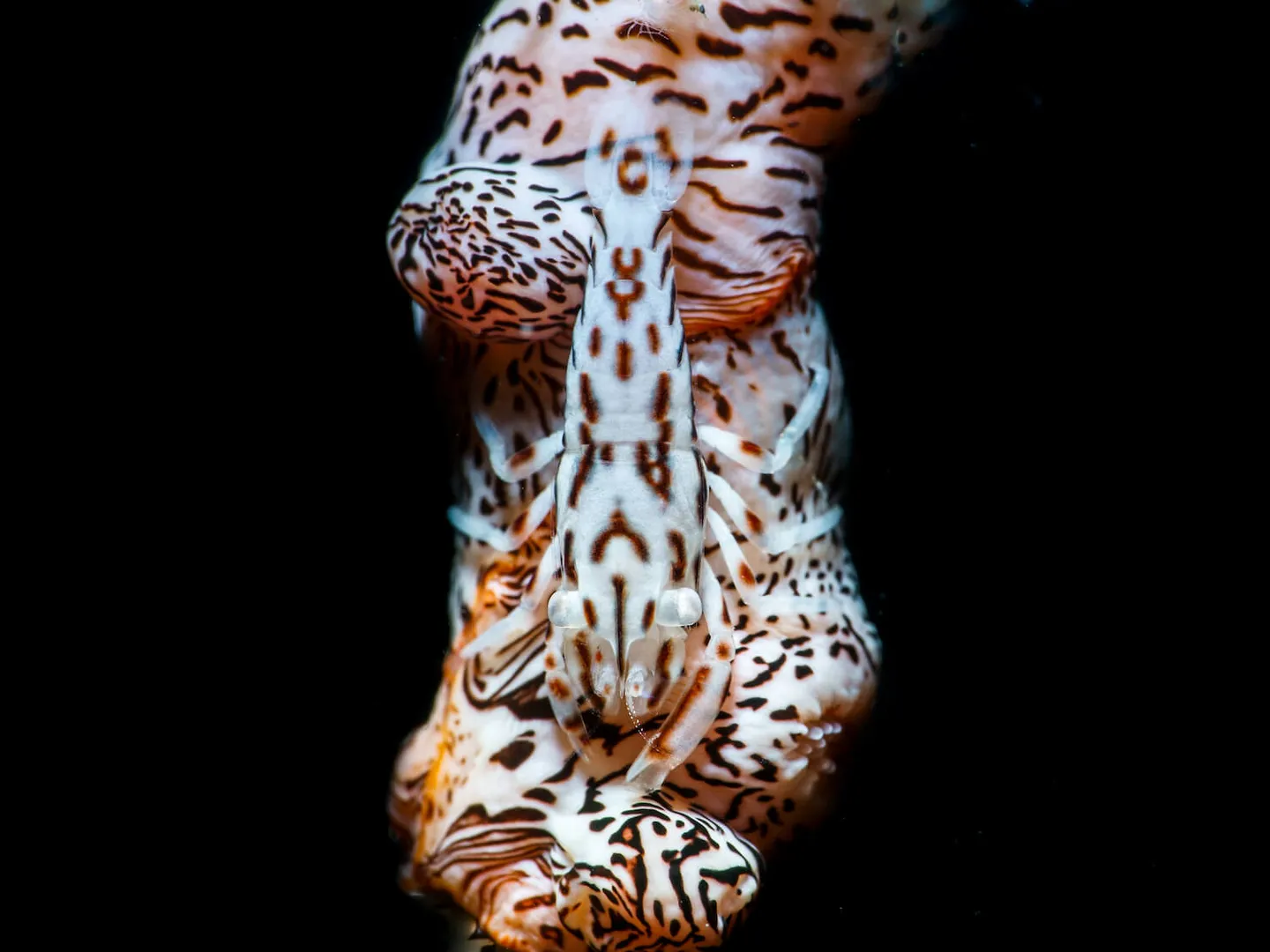
Masuda's anemone shrimp (Izucaris masudai) hiding on a leopard sea anemone | Photo: Nick Zhan
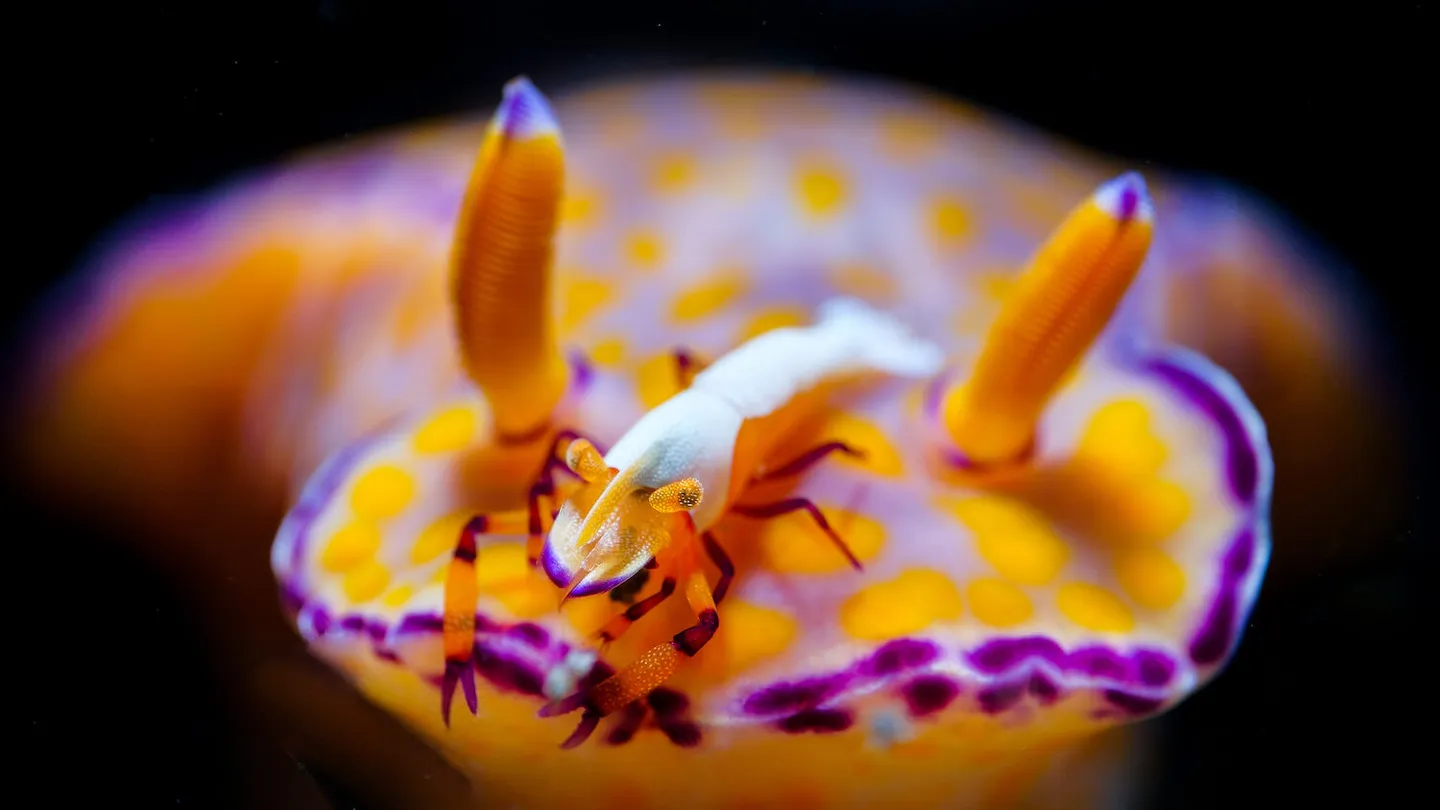
The emperor shrimp (Zenopontonia Rex), commonly called the "emperor shrimp" | Photo: Nick Zhan
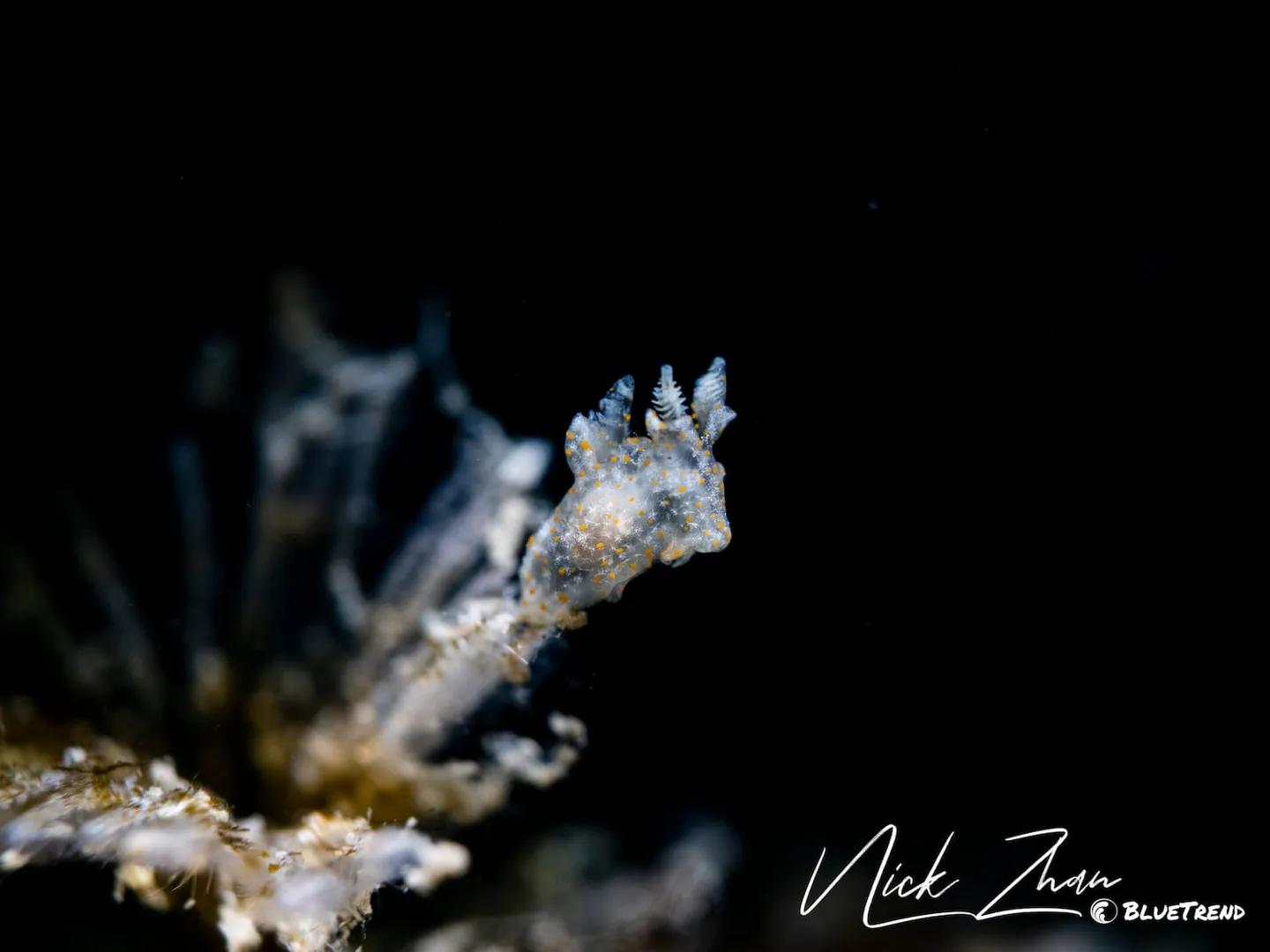
This nudibranch, nicknamed "glass noodle sheet," requires more research to understand its ecology | Photo: Nick Zhan
How Marine Protected Areas Can Be Integrated with Marine Citizen Science and Ecotourism — A Critical Direction for Taiwan's Ocean Future
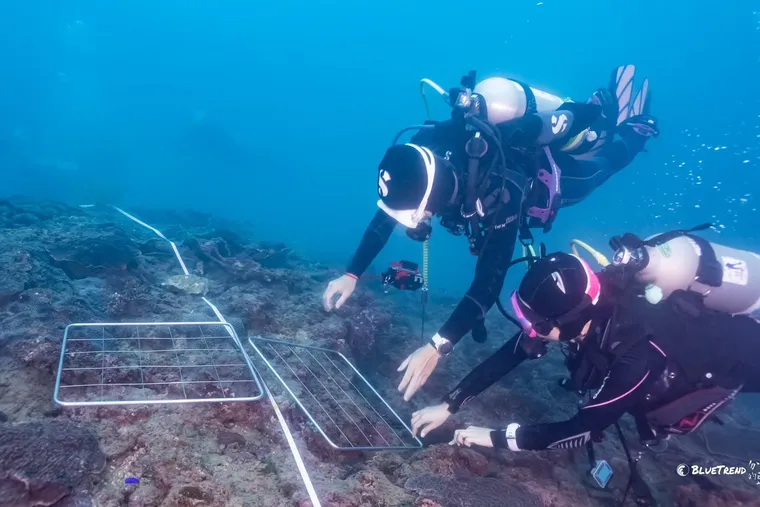
Chaojing is one of the few well-functioning marine protected areas in Taiwan. Since the conservation zone was established, the Keelung City Government has enforced strict regulations and, together with the Keelung City Fishermen's Association, the Coast Guard Administration, and the National Museum of Marine Science and Technology, has collectively shouldered the responsibilities of promoting the marine protected area from multiple angles. Marine biological surveys, long-term monitoring, and database development are also employed to deepen understanding of this bay. Moreover, well-structured standard survey protocols — such as reef health checks — now incorporate the participation of citizen scientists. This not only enables the sustainable management of local fishery resources, but also safeguards recreational resources (snorkeling, scuba diving, etc.) and helps drive the transformation of local industries.

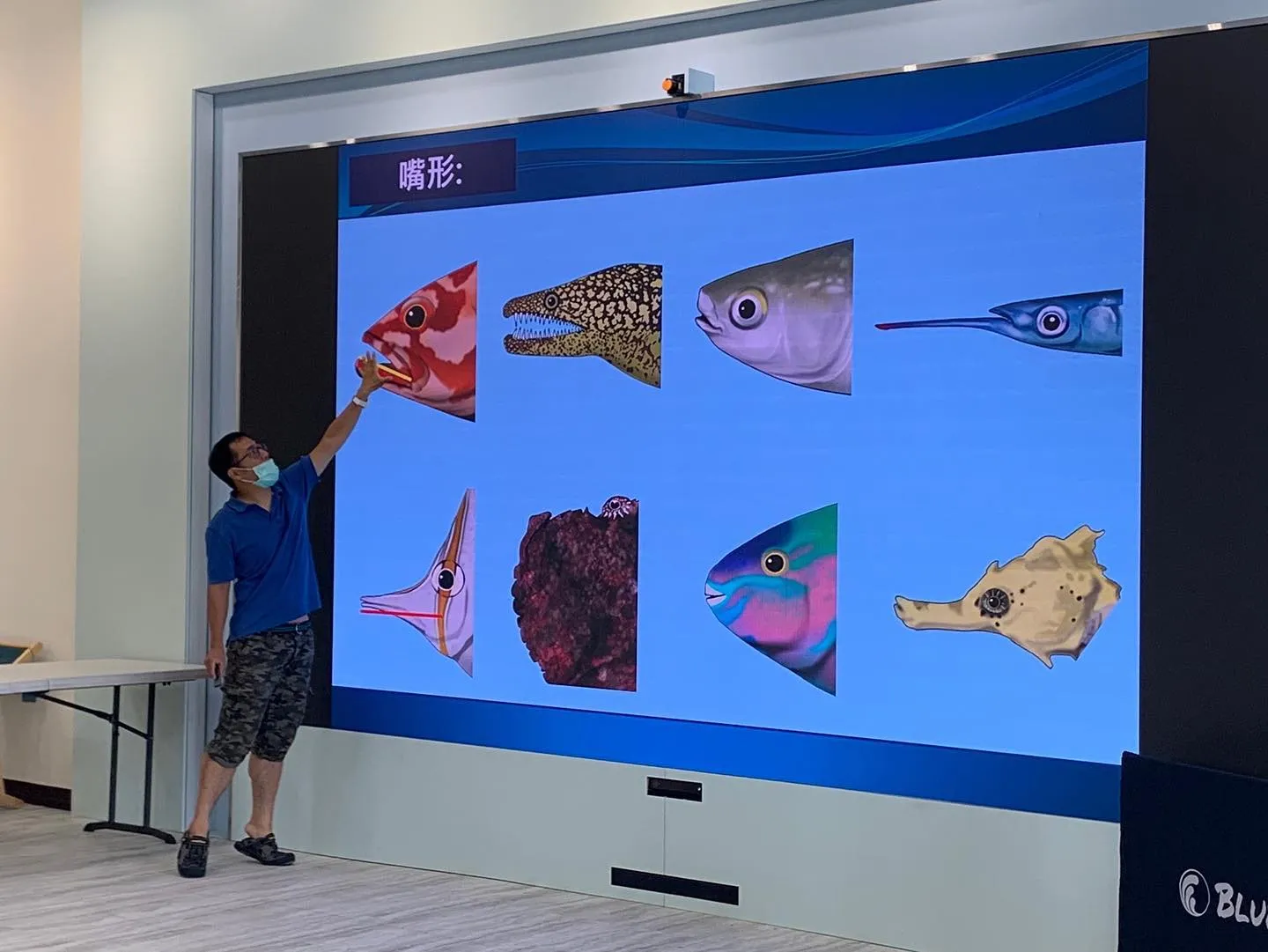
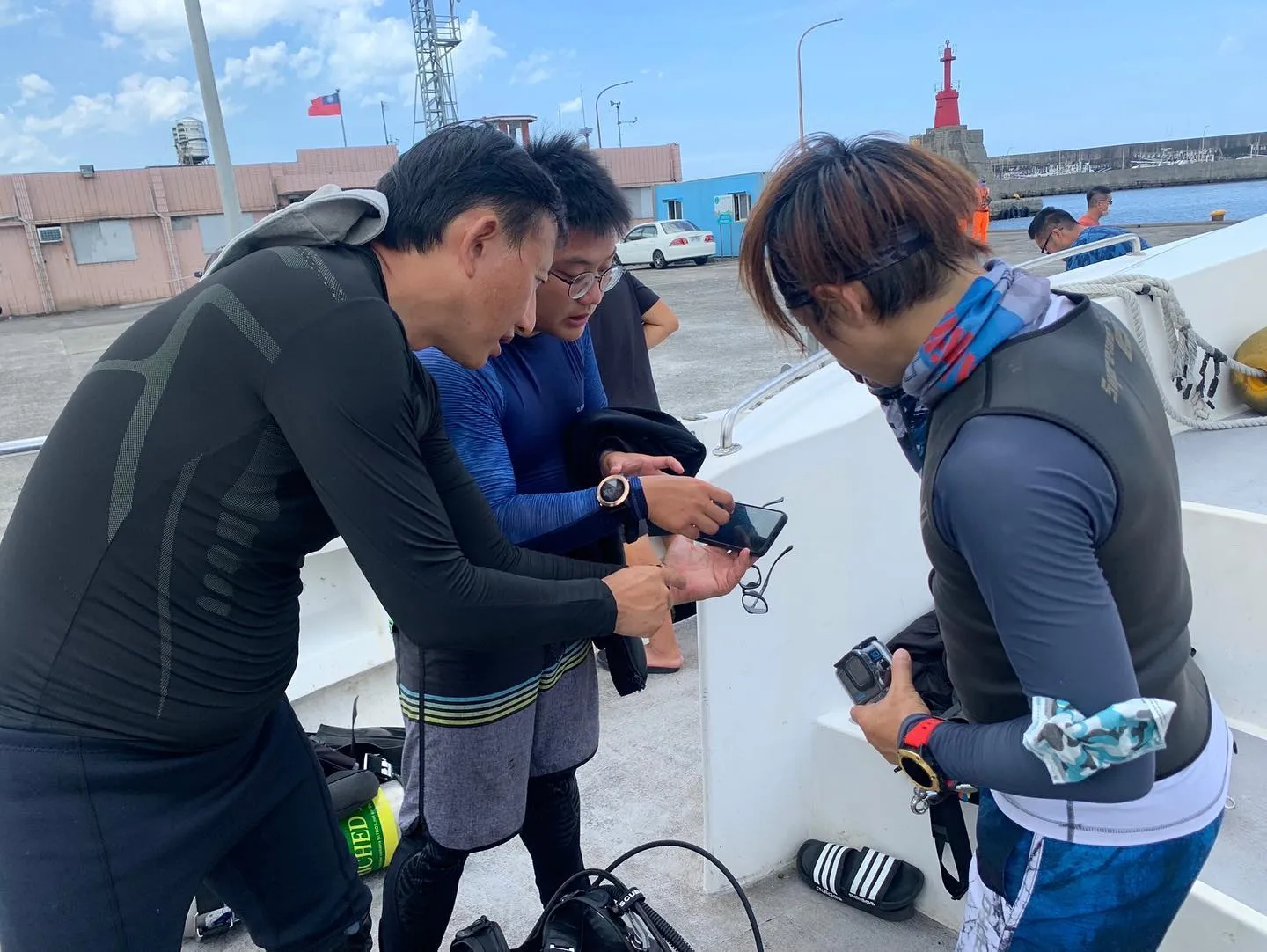
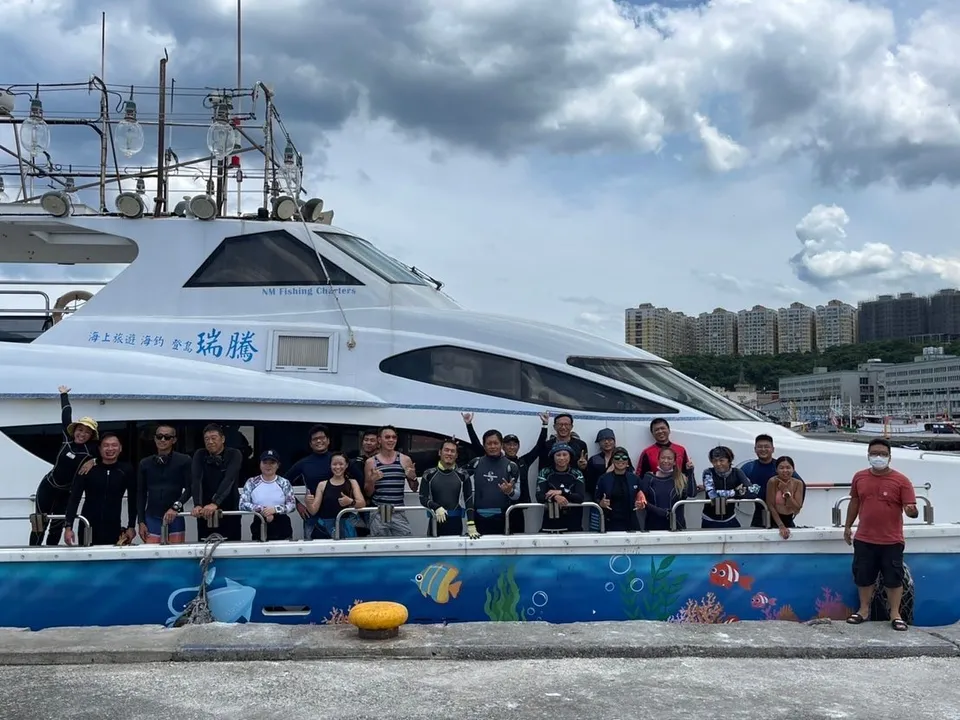
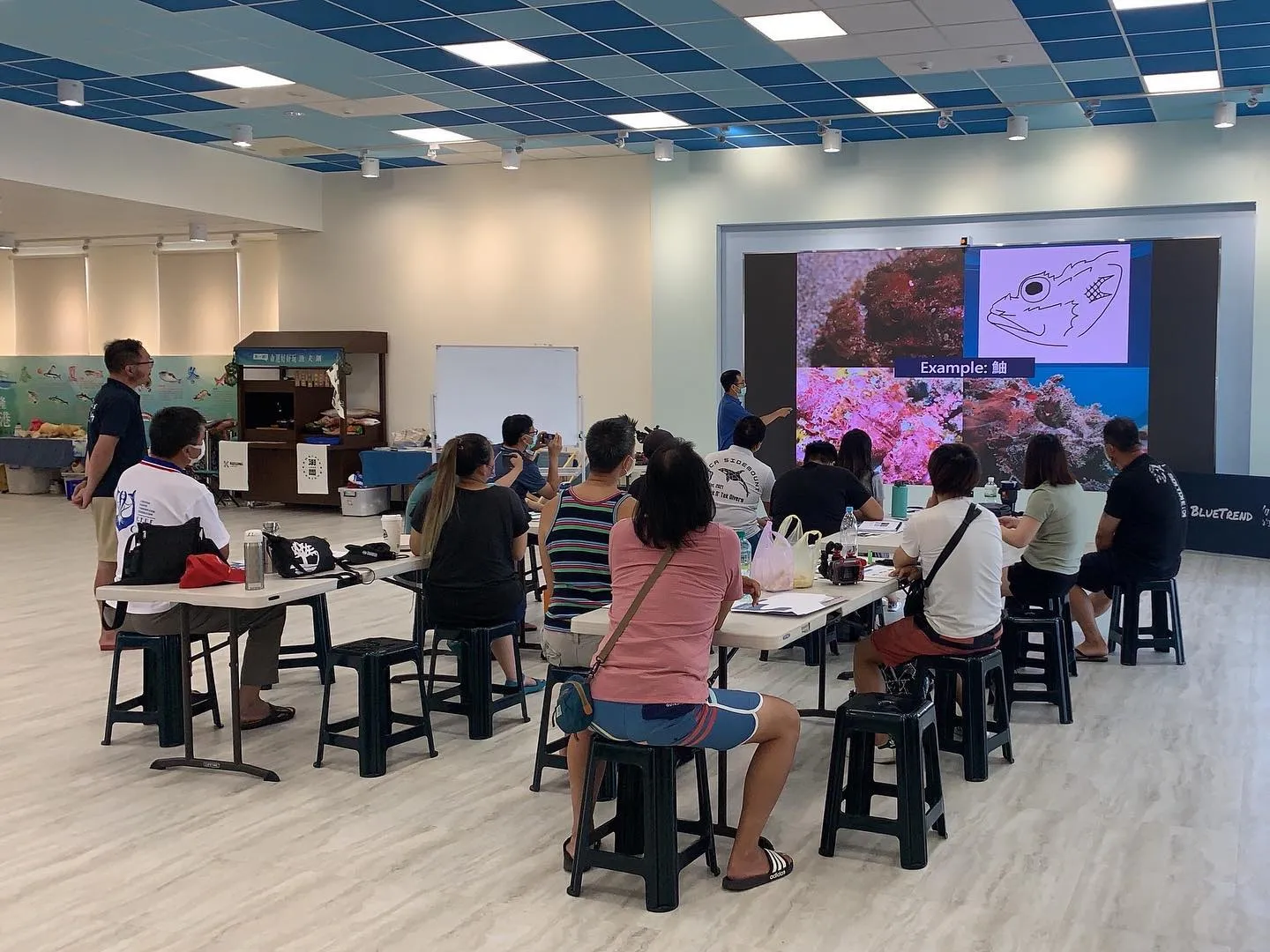
Chaojing may well have become a guiding light along Taiwan's path toward establishing marine protected areas — particularly for no-take zones on Taiwan's main island and nearby outlying islands, all of which can look to Chaojing as a reference.
Cover image source: Nick Zhan
Further reading:

![[Agriharvest] Chaojing Underwater Documentary Takes Top Prize, Capturing the Beauty and Concerns of a Marine Reserve](/_astro/%E5%BB%A3%E8%A7%92%E4%BD%B3%E4%BD%9C-%E9%82%B1%E8%8C%82%E7%91%9E-%E6%BD%AE%E5%A2%83%E5%A4%A7%E6%98%8E%E6%98%9F@%E6%B5%B7%E8%98%8B%E6%9E%9C_Z2djObj.webp)