Contents(12)
- Wang Hai Xiang Bay — A Hidden Diving Gem Just 40 Minutes from Taipei
- Support us in achieving more dreams — Wang Hai Xiang Bay Dive Map Purchase Link
- From Landfill to Environmental Education Base
- Support us in achieving more dreams — Wang Hai Xiang Bay Dive Map Purchase Link
- Dive Site Map of Wang Hai Xiang Bay
- Support us in achieving more dreams — Wang Hai Xiang Bay Dive Map Purchase Link
- Must-Visit Photo Spots After Your Dive:
- Badouzi Train Station:
- Argentina Shipyard:
- Wangyou Valley:
- Keelung Harbor — Eagle Watching and Cruise Ship Photography:
- Support us in achieving more dreams — Wang Hai Xiang Bay Dive Map Purchase Link
Wang Hai Xiang Bay — A Hidden Diving Gem Just 40 Minutes from Taipei
Surrounded on all sides by the sea, Taiwan should by rights be a place where water sports thrive. Yet for various reasons, most Taiwanese people remain surprisingly unfamiliar with the ocean. That is precisely why "Dive into Taiwan" was founded — to help Taiwanese rediscover the sea and fall in love with it. With that in mind, let's take a look at some of the dive destinations around this island nation that are well worth exploring.
The northern diving zone of Taiwan roughly spans the coastline from Keelung to the northern port of Toucheng in Yilan. Lying along Taiwan's Northeast Coast, this area is strongly affected by the northeast monsoon in winter. After October, water temperatures drop sharply, and the wild shore break that frequently surges onto the rocks makes entering and exiting the water considerably more difficult. If diving is absolutely necessary during this period, a drysuit is strongly recommended to guard against hypothermia. In summer, however, the proximity to Taipei — roughly an hour's drive — makes transport costs far lower than for other dive destinations in Taiwan. Several well-known sites feature sheltered bay topography, with calm conditions throughout the summer months. This makes the area an excellent training and teaching ground for beginners, and a top choice for experienced divers honing their underwater photography skills.
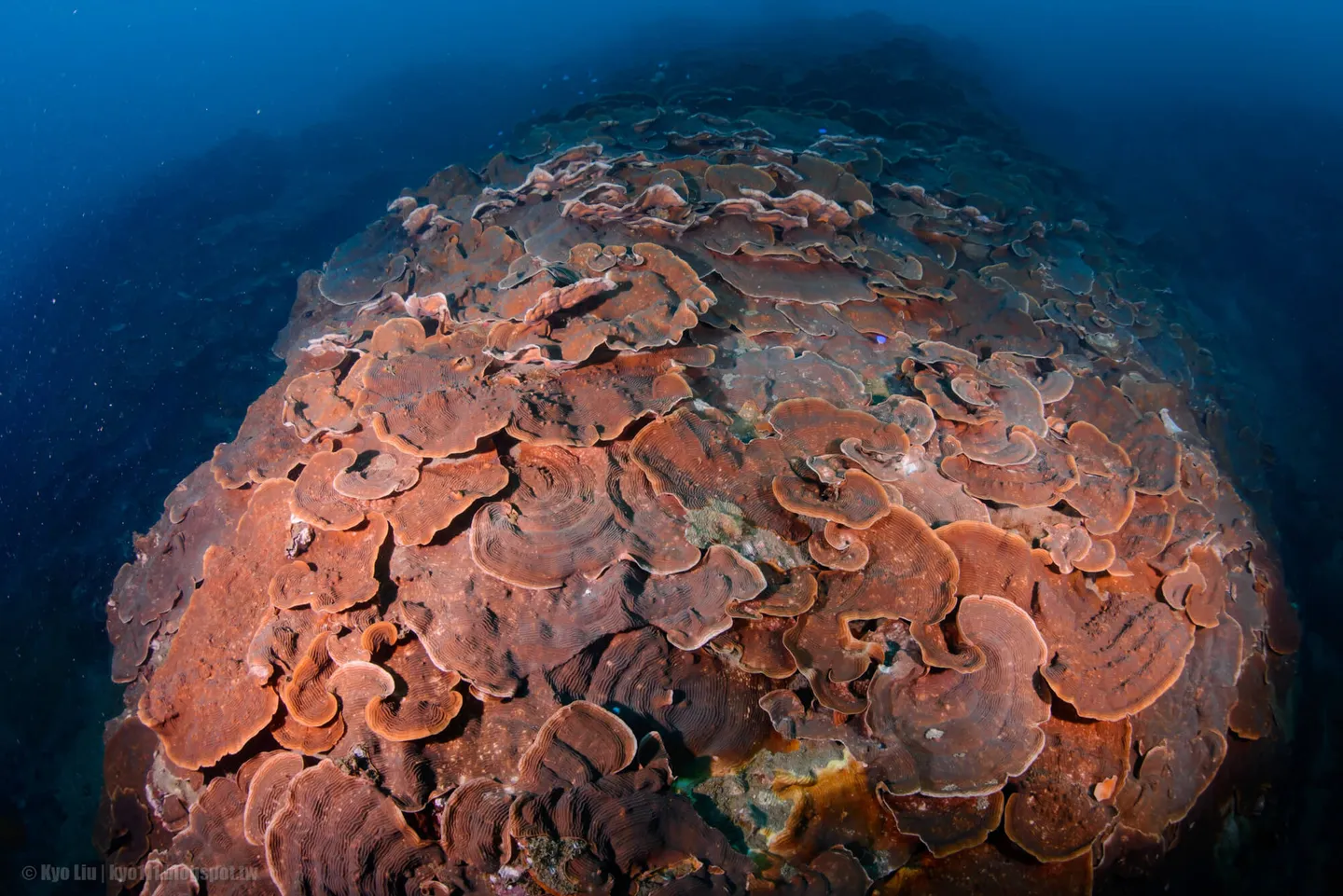
Sweeping fields of rose coral make the underwater world here even more enchanting. photo credit 京太郎
Support us in achieving more dreams — Wang Hai Xiang Bay Dive Map Purchase Link


From Landfill to Environmental Education Base
Wang Hai Xiang Bay stretches from the Badouzi Fishing Harbor in Keelung to the west, all the way to Fan Zai Ao in Ruifang, New Taipei City, to the east — a natural, sheltered bay with a long maritime history. Badouzi's fishing heritage dates back to the Qing Dynasty. Originally a separate island off the coast of Taiwan proper, it was connected to the mainland in 1937 during the Japanese colonial era, when a coastal channel was filled in to build a thermal power plant, transforming it into a peninsula. Upon completion, the plant had the highest generating capacity in all of Taiwan and served as a vital power source for the development of northern Taiwan. In 1976, to meet Keelung's growing municipal needs, the eastern side of the Badouzi Peninsula was designated as the Changtanli Landfill — jokingly referred to as the largest seaside dump in Taiwan — and remained in operation until its closure in 1992, after which it embarked on an entirely new chapter. In the 1980s, under the government's Twelve Major Construction Projects, two ocean-themed museums were planned: the National Museum of Marine Biology and Aquarium in Pingtung, and the National Museum of Marine Science and Technology (NMMST). Following years of preparation and the tendering of a government OT operating model, the NMMST opened in phases from 2012, becoming an important education hub for marine conservation in northern Taiwan.
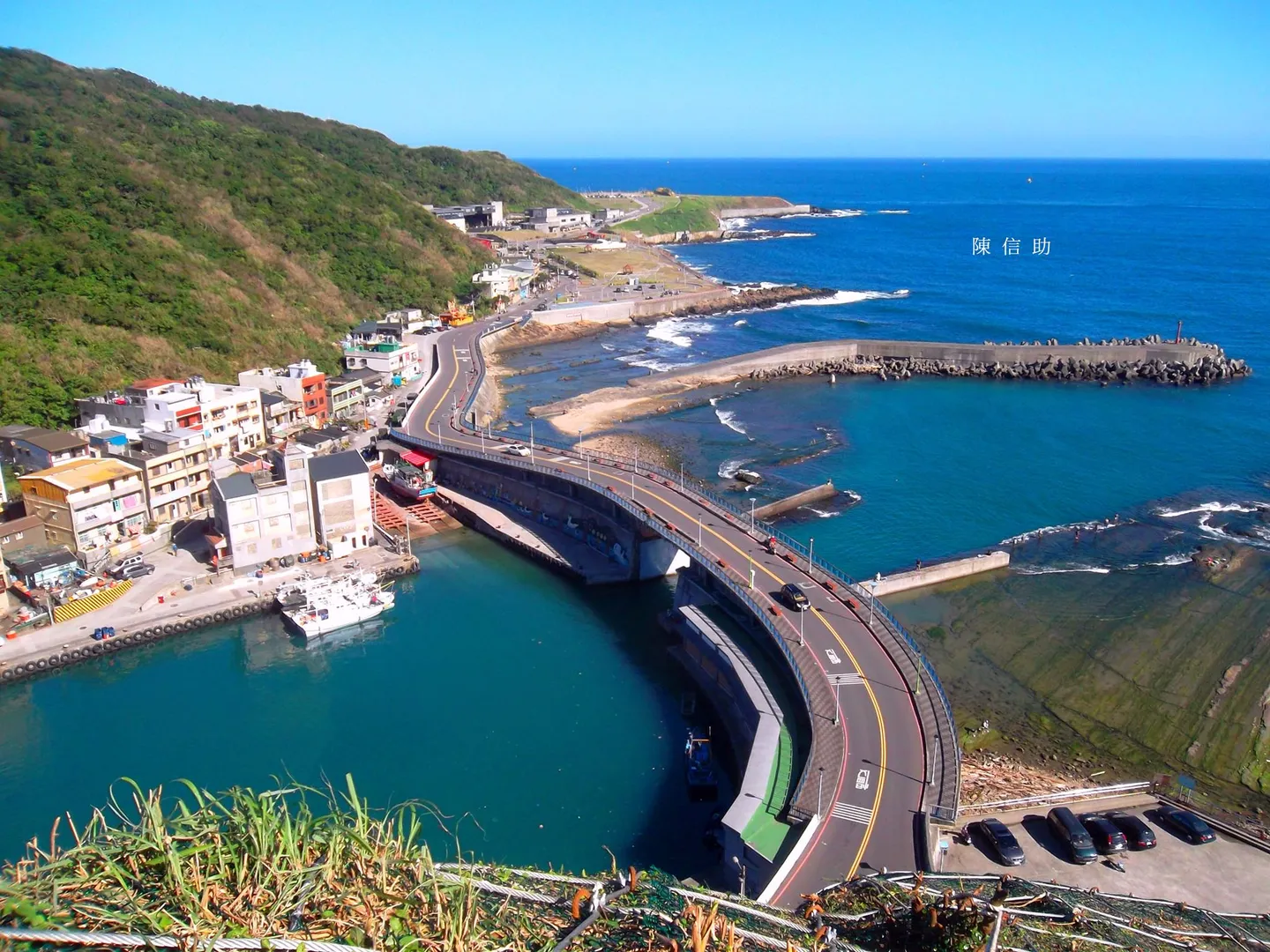
The view from Rongxuan Trail, looking out over Changtanli Fishing Harbor and Pinglang Bridge. photo credit 陳信助
It is said that the Taiwanese pronunciation of Wang Hai Xiang Bay is meng hai ang — where hai ang is the Taiwanese word for whale — meaning "watching the whales," a reminder that whales spouting in the bay were once a common sight in ancient times. The bay sits at the confluence of the Kuroshio and Oyashio currents, earning it the name Chaojing (Tidal Boundary). The dramatic seasonal shifts in oceanographic conditions bring marine life quite unlike that found at other Taiwanese dive sites. The twice-daily tidal cycles carry nutrient-rich water into the bay, supporting a remarkable diversity of fish species. The bay's natural shelter also makes it a protected nursery where juvenile fish can grow up safely — which is why the marine ecosystem here is considerably richer than at other northern dive sites.
Since 1999, the Keelung City Government has designated this area as the Wanghaixiang Artificial Reef No-Fishing Zone, and in 2016 formally established the Wanghaixiang Chaojing Bay Marine Resources Conservation Area, with the aim of creating a thriving marine sanctuary while boosting local tourism. Thanks to the prevailing currents and depth profile, the seafloor here is blanketed in colorful feather soft corals — a density and variety rarely seen elsewhere. Feeding primarily by filter-feeding, these soft corals only expand to feed under the right conditions; otherwise they contract and lie dormant to avoid the current. As a result, the same spot can look completely different at different times of day.
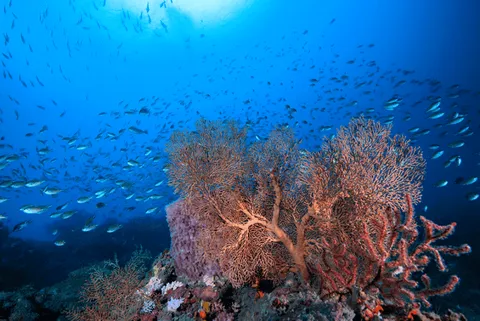
The landmark of Wang Hai Xiang Bay — an enormous gorgonian / sea fan. photo credit OWEN YEH
Other filter feeders such as sea fans, sea trees, and sponges are also common here. The fact that a massive gorgonian can be spotted on a shore dive at the Secret Garden dive site is truly remarkable. One of the star species at the Secret Garden is the sea apple — if you're a conservative air-user with an Advanced Open Water Diver (PADI cert) certification or above, it's well worth descending to take a closer look at its endearing filter-feeding behavior up close. In recent years, the fishery authorities have deployed large numbers of artificial reefs in the bay; boat dives are available to explore these structures, with notable sites including the Haijian wreck and the Steel Reef.
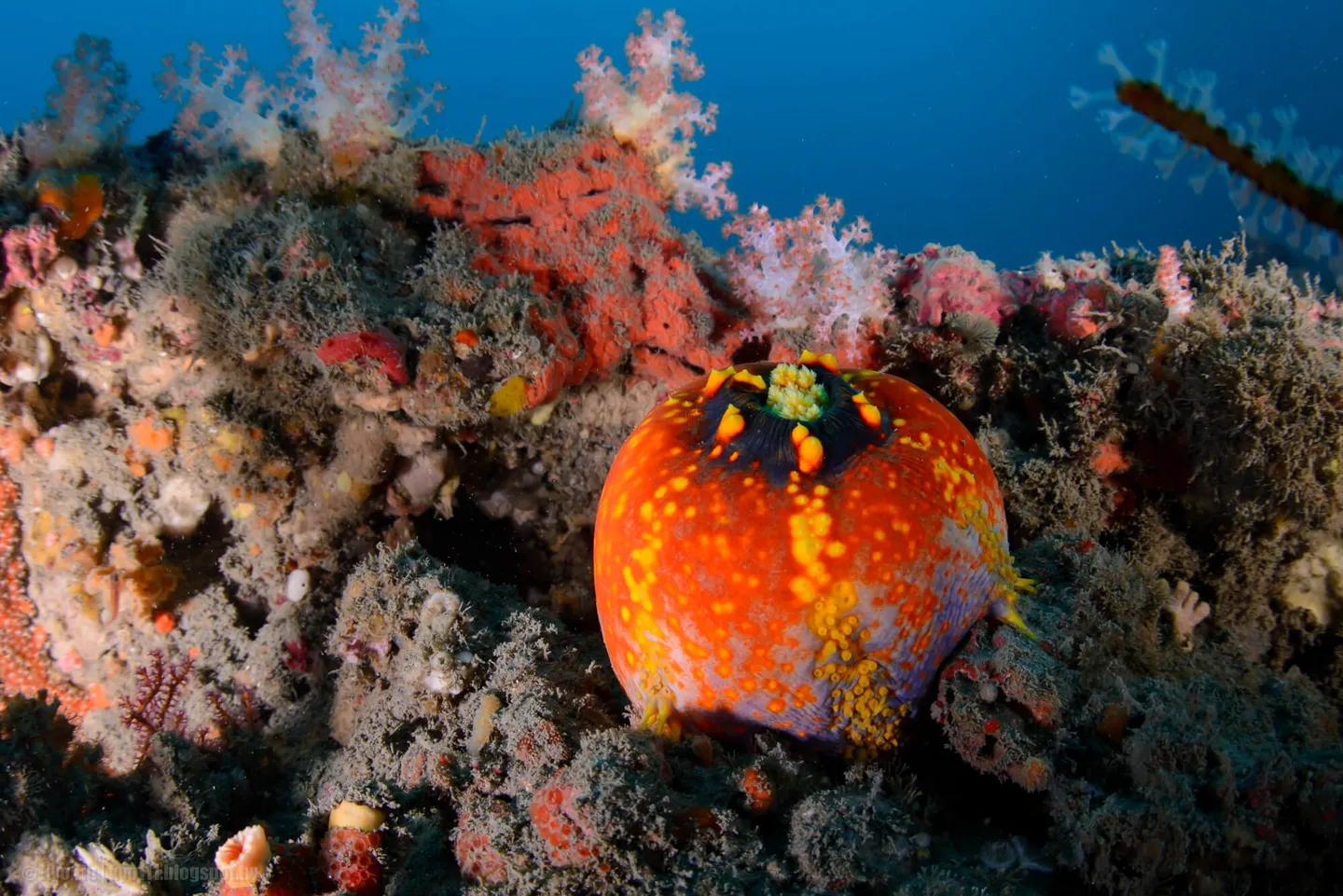
The prized sea apple of Wang Hai Xiang Bay. photo credit 京太郎
In early spring each year, before the water warms up (water temperature approximately 19–23°C), the bay serves as a nursery for juvenile fish. Vast shoals of newly hatched fry can be observed here, and their presence in turn attracts pelagic species inshore to feed. On a lucky dive, you might encounter yellowtail amberjack and other migratory fish cruising close by. In recent years, dolphins have occasionally been spotted venturing into the bay to feed. Around May, large cuttlefish gather in impressive numbers to spawn — graceful, otherworldly creatures drifting through the water like an alien fleet arriving on Earth. Watching cuttlefish spawn is a living natural history lesson played out right before the diver's eyes.
Support us in achieving more dreams — Wang Hai Xiang Bay Dive Map Purchase Link
Bigfin reef squid (Sepioteuthis lessoniana) are another special resident of Wang Hai Xiang Bay. With gorgonians so abundant throughout the bay, these squid are attracted here to lay their eggs among the gorgonian bases. Divers carrying a macro kit should take the opportunity to photograph this rare and intimate moment. In addition to the natural spawning habitat, each year passionate dive instructors install handcrafted bamboo-leaf spawning structures inside the bay, ensuring these delicate visitors continue to breed here year after year.
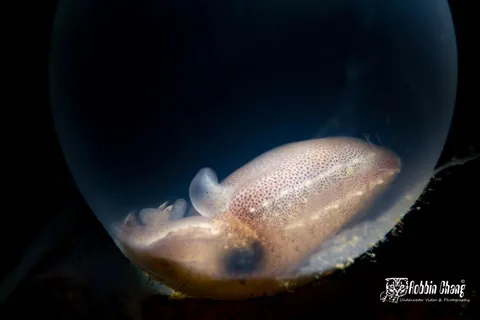
The adorable process of bigfin reef squid hatching. photo credit Robbin
The fish community is dominated by various coral reef species; however, due to human collection activities in recent years, most species — with the exception of damselfish and grunts — are limited in both numbers and size. Encouragingly, in 2017 four groupers of approximately 1 m in length were discovered to have taken up residence at the Secret Garden site — a heartening find given how rarely large specimens are encountered in Taiwan today. The bay is also an excellent macro diving destination: with a little patience, all manner of rare and fascinating small creatures can be found, including a wide variety of nudibranch species. In 2017, diver Yang Kuan-Zhi recorded Okenia hiei at Wang Hai Xiang Bay — a remarkable discovery marking the first record of this species on Taiwan's main island.
Although the bay is ecologically rich and attracts a steady stream of divers on weekends, the combination of currents and topography means that sudden silt-outs and surging currents can occur without warning. All diving here should be conducted under the guidance of a qualified dive guide, with activities planned according to the tides and wind conditions. Within the conservation area, visitors are expected to comply with all regulations — no fishing, no netting, no collection of any kind. Divers who are not yet confident in their neutral buoyancy should choose an appropriate site and refrain from diving at sensitive locations, to avoid damaging the underwater environment.
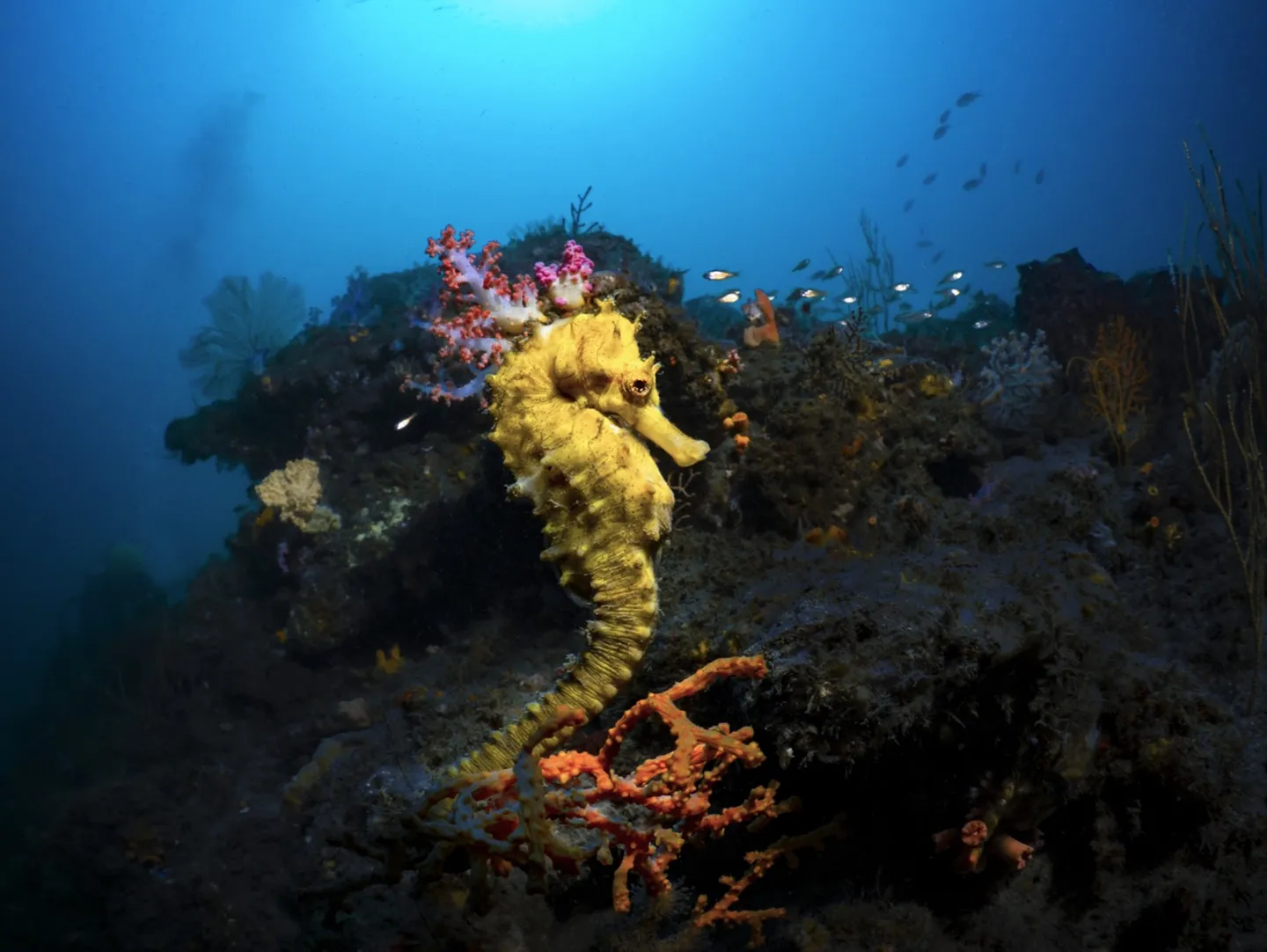
A beautiful yellow seahorse spotted in 2018. photo credit OWEN YEH
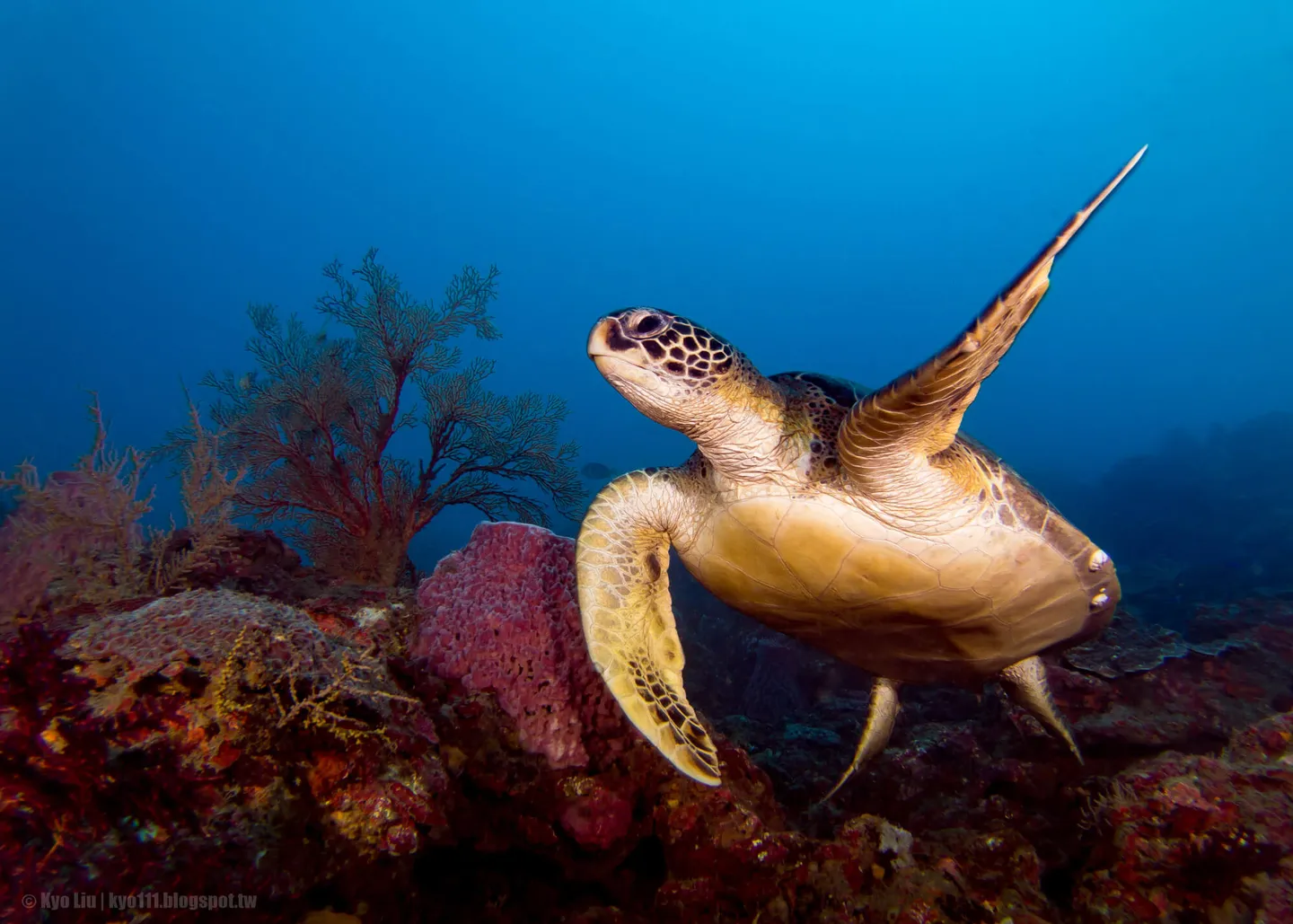
sea turtles have also taken up residence inside the bay. photo credit 京太郎
Dive Site Map of Wang Hai Xiang Bay
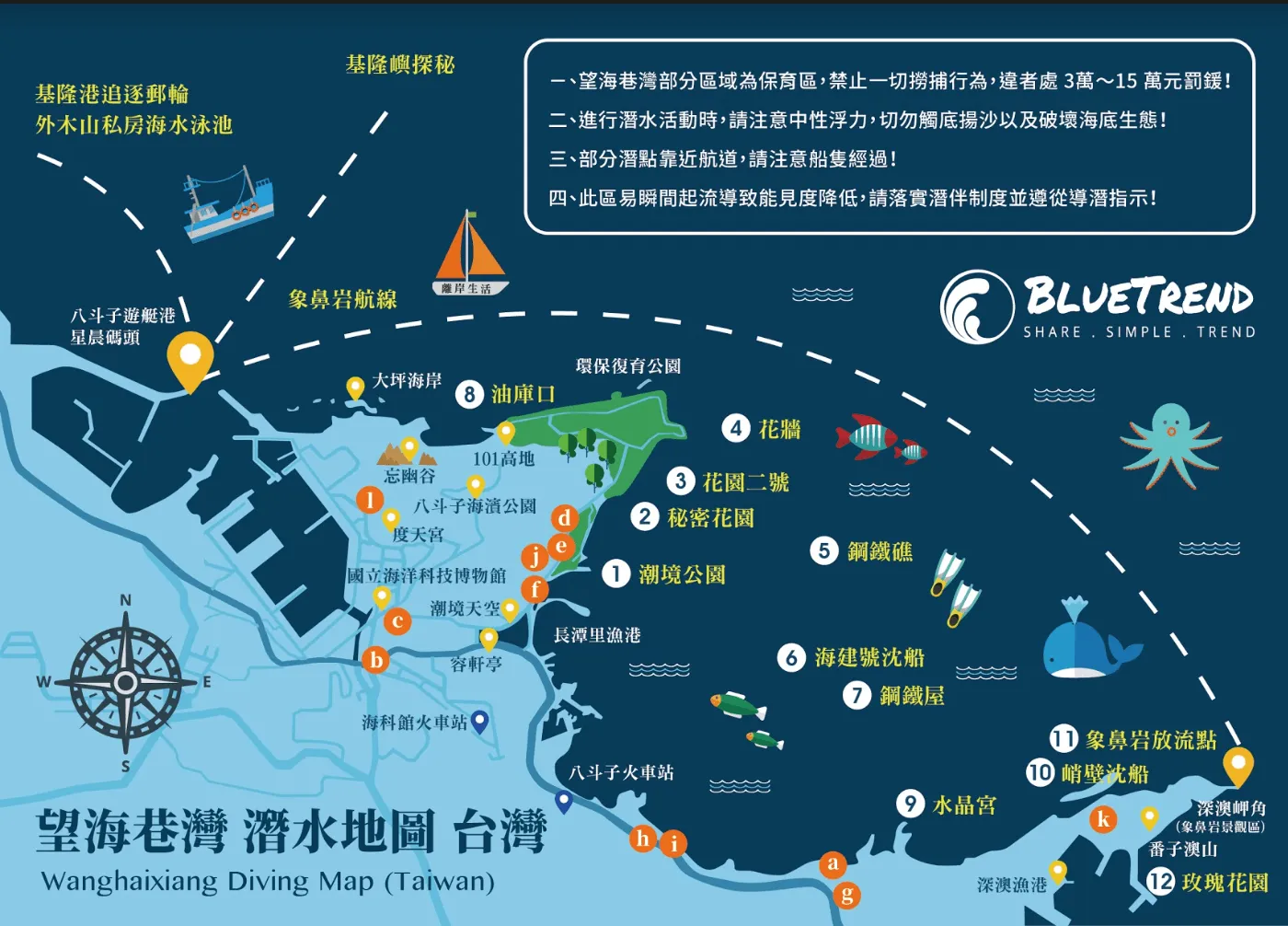
Wang Hai Xiang Bay dive site distribution. Wang Hai Xiang Bay Dive Map Purchase Link
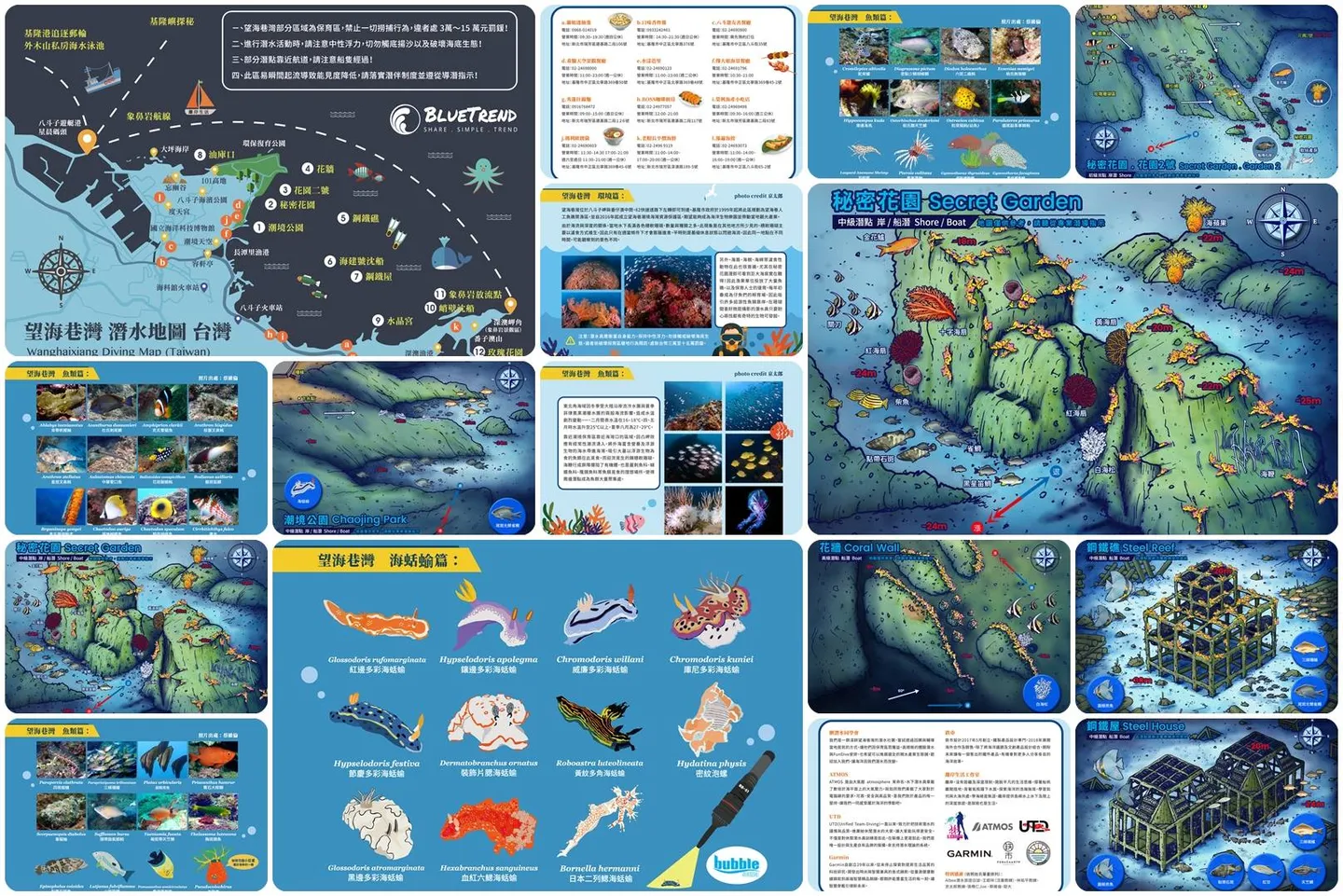
Wang Hai Xiang Bay dive map. Wang Hai Xiang Bay Dive Map Purchase Link
Support us in achieving more dreams — Wang Hai Xiang Bay Dive Map Purchase Link
Must-Visit Photo Spots After Your Dive:
Wang Hai Xiang Bay is located on the northern side of Keelung and is very conveniently accessible. Drivers can take the No. 62 Expressway directly to the area. Those using public transport can take Bus 2088 from Taipei City Hall MRT Station, or board the Taiwan Railways Shen'ao Branch Line to the NMMST Station and walk from there.
Badouzi Train Station:
Often called the "Duoliang Station of Northern Taiwan," Badouzi Train Station sits on the Taiwan Railways Shen'ao Line. Originally built to transport coal, it was decommissioned in August 1989, but was revived in December 2016 thanks to the completion of the NMMST. Perched between mountain and sea, the station's dramatic setting draws photographers and enthusiasts whenever the weather is fine.
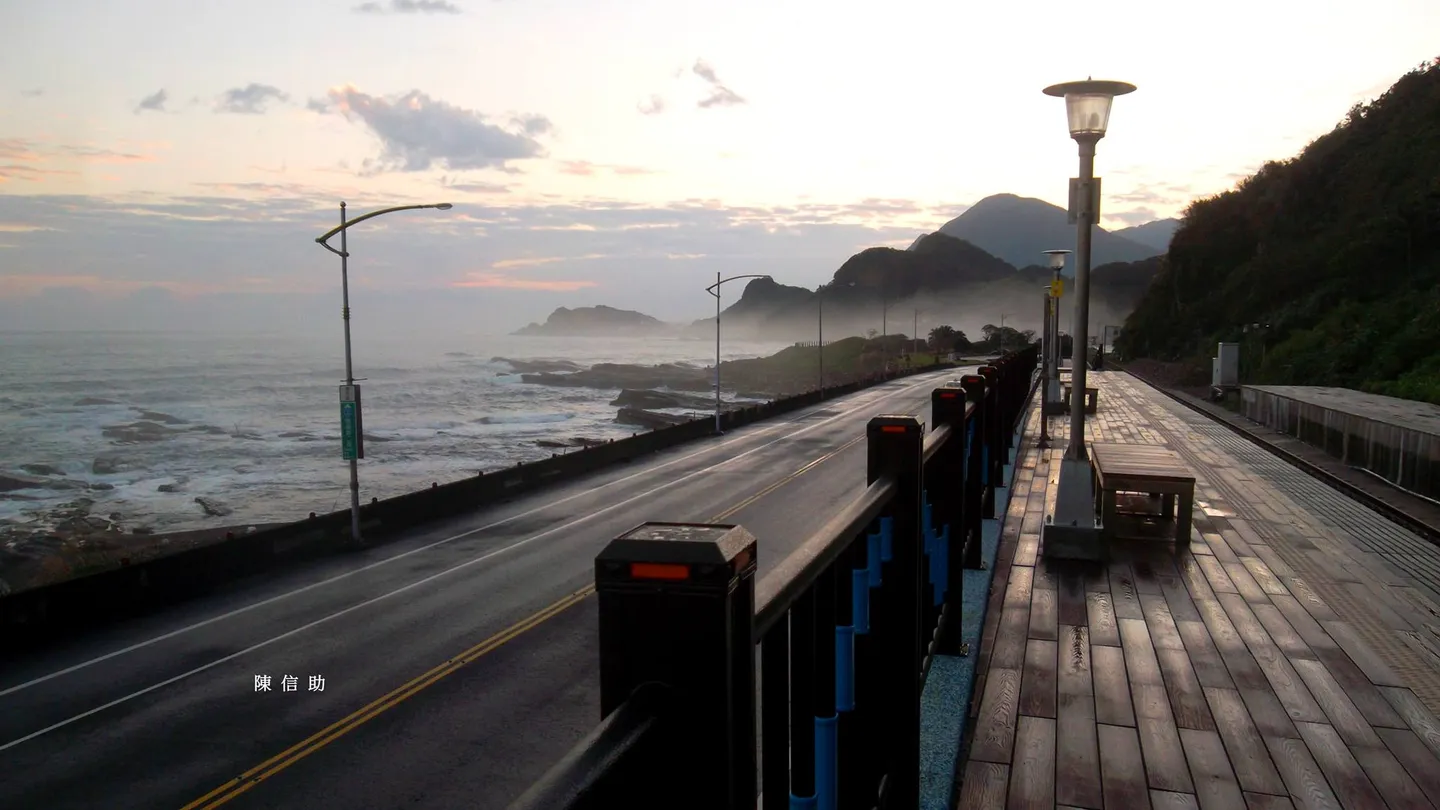
Badouzi Train Station. photo credit 陳信助
Argentina Shipyard:
The Argentina Shipyard is located at Bachimen on Heping Island. The site has a long history as a coal unloading wharf — some accounts trace it back to the Qing Dynasty, though documented records begin from the Japanese colonial era, when a tramway was built to Bachimen to support the development of the gold and copper mines at Jinguashi. The shipyard building seen today was constructed in 1967, when the American company Argentina leased the land to establish the facility; it was eventually abandoned after the operation failed. All that remains now are the crumbling concrete ruins, which possess such an evocative, weathered atmosphere that even Chris Evans (Captain America) has filmed here — proof enough of its magnetic appeal to photographers and film crews alike.
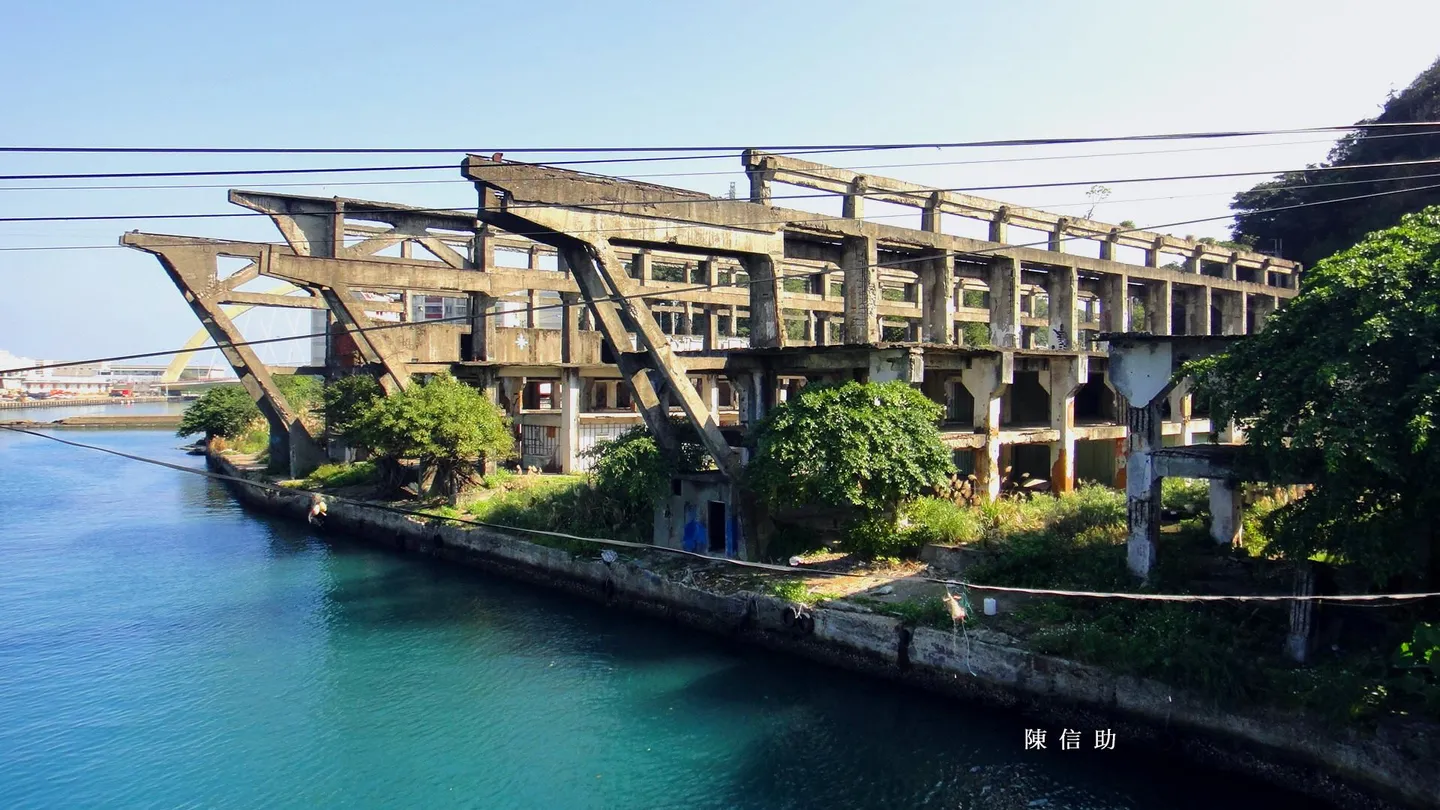
Argentina Shipyard. photo credit 陳信助
Wangyou Valley:
Touted by many as Keelung's top hidden gem, Wangyou Valley is a wildly underrated travel destination. Located uphill from the dive entry point, once you've parked your car you are immediately rewarded with a sweeping 360-degree panorama of mountains and sea. On a clear day, you can see all the way to Jiufen, and Keelung Islet rising boldly from the ocean. If your legs are up to it, a trail walk through Wangyou Valley and up to Hill 101 is highly recommended — followed by a look at the spectacular wave-cut platform at Daping on the other side of the peninsula, a testament to the awesome sculpting power of nature.
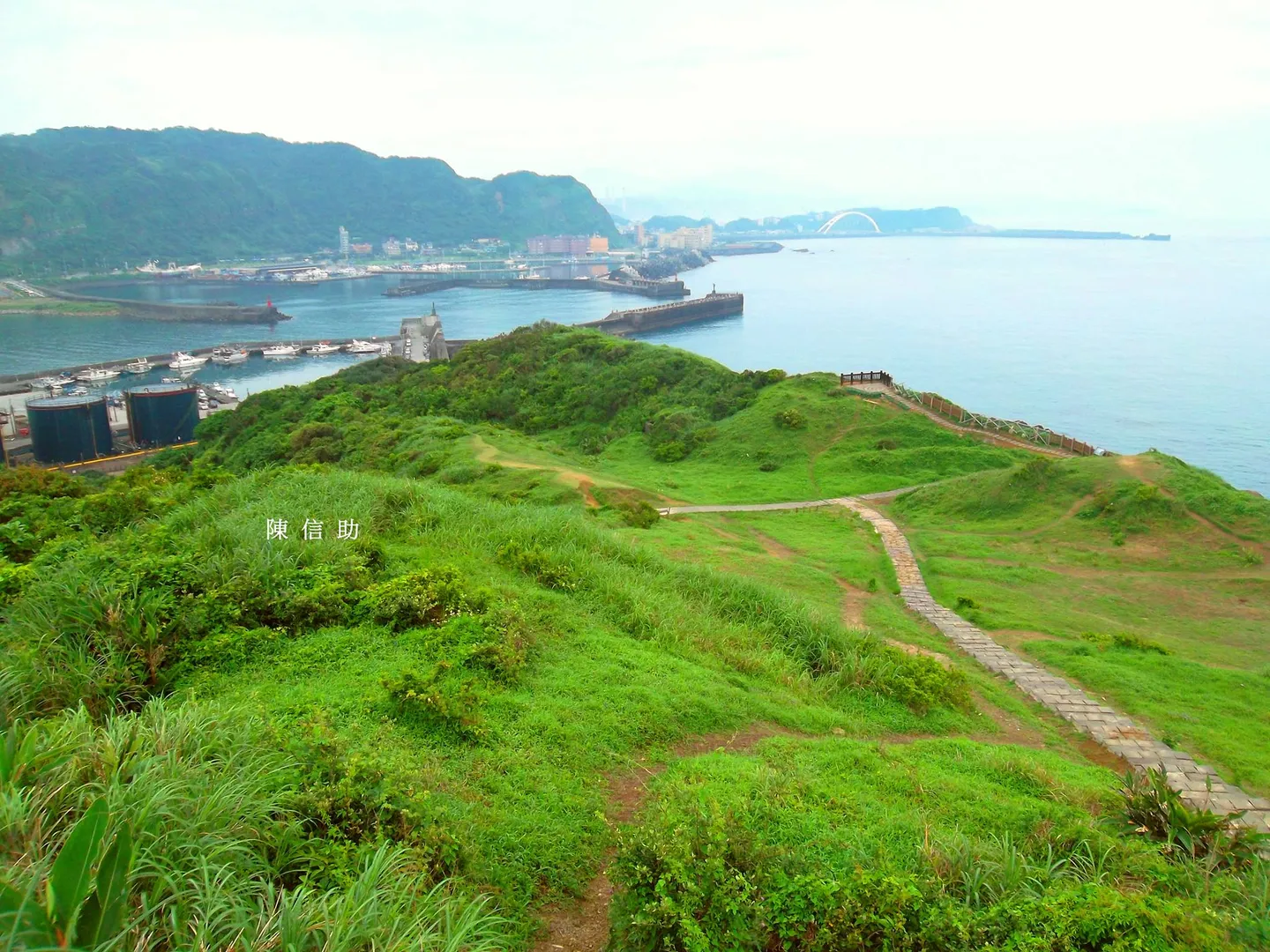
Wangyou Valley offers a breathtaking view where sea meets sky. photo credit 陳信助
Keelung Harbor — Eagle Watching and Cruise Ship Photography:
In recent years, the Keelung City Government has been actively developing cruise tourism, and in 2017 Keelung Harbor was honored as Asia's Best Homeport for Cruise Ships. Head to the Ocean Plaza by the harbor to admire magnificent ocean liners up close. If you're lucky enough to spot the black kite — Keelung City's official bird — soaring overhead, you'll have all the ingredients for a stunning composition blending human and natural beauty.
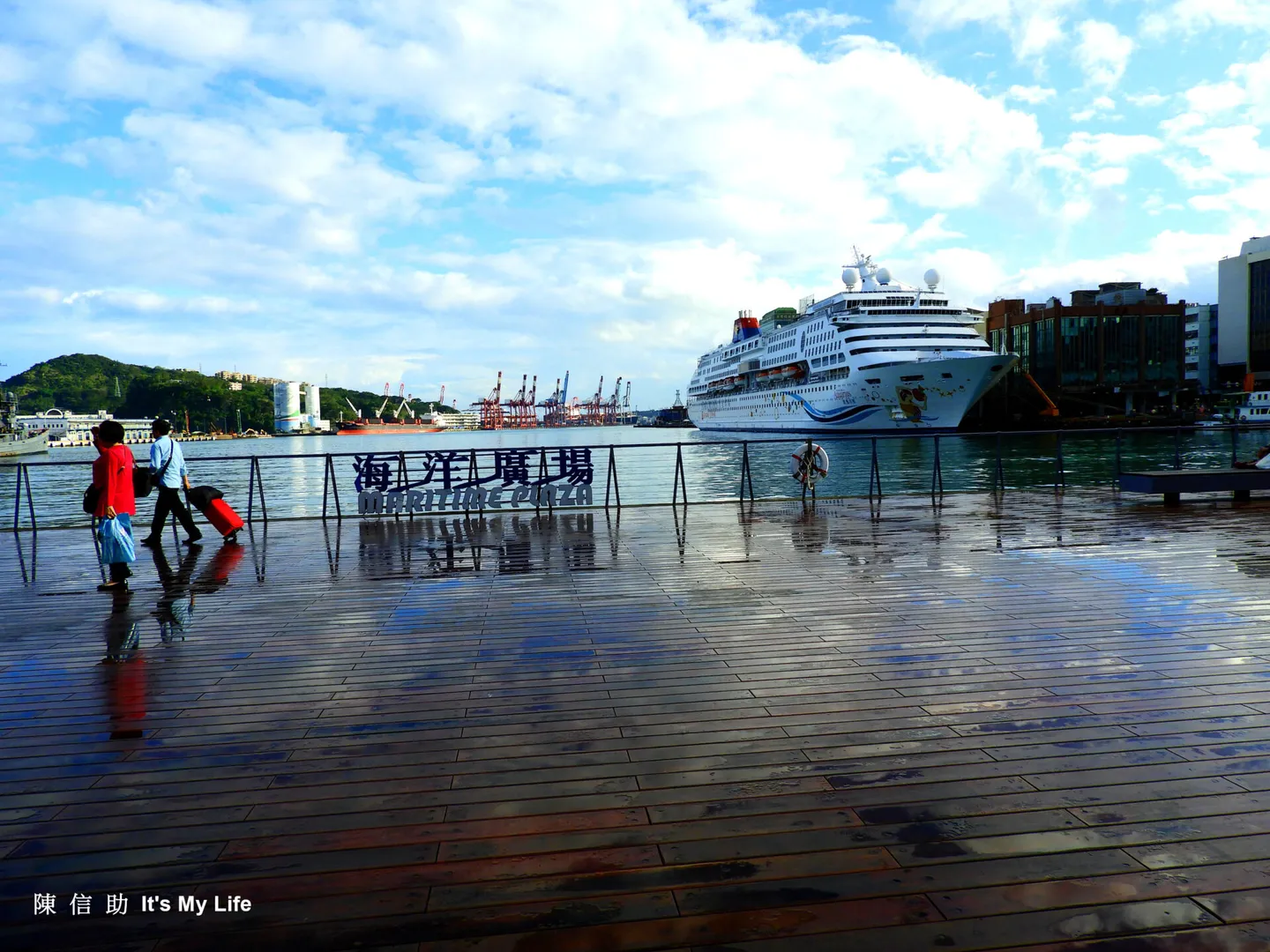
Photographing cruise ships at Keelung Harbor is another iconic experience. photo credit 陳信助
Support us in achieving more dreams — Wang Hai Xiang Bay Dive Map Purchase Link
Related Links:
Frequently Asked Questions
How is a BlueTrend dive trip different from an unknown, no-name dive group?
Choosing us means full peace-of-mind protection and a smooth experience from start to finish. Every trip we run holds to three things.
First, full legal protection and a professional dive leader: we strictly follow Taiwan's travel regulations and provide complete travel-agency liability insurance, travel insurance, trip-inconvenience insurance and dive insurance. Every group is accompanied by a certified, foreign-language dive leader who joins you on both the dives and the land itinerary, liaising seamlessly with local dive shops and operators on your behalf to keep things running smoothly — the person our travellers trust most.
Second, fully licensed with secure payments: every payment goes into a licensed travel agency's account, with multiple safe payment channels (bank transfer, credit card and more) and a legal collect-and-remit receipt, so every transaction is open, transparent and protected, avoiding the fraud and dispute risks of transferring money privately to an individual.
Third, hand-picked quality we vet in person: every trip, dive site and partner shop is scouted on the ground by our own team, from the guides' professionalism and safety standards to the food, lodging, environment and service details on land, all vetted by us so you don't get caught out.
I want to sign up for a dive trip. Are there certification-level or logged-dive requirements?
Each dive site is different, so the entry bar varies. 'Bali Tulamben', for instance, is relatively beginner-friendly. 'Malapascua in the Philippines' is also beginner-friendly, but since thresher sharks tend to cruise between 20 and 30 metres, we recommend AOW certification with 20+ logged dives to enjoy this trip comfortably. For 'the Maldives' or 'Palau', we suggest AOW with 50+ logged dives for a more relaxed experience. If you're not sure whether your experience fits the trip you want, message us and our dive editors will assess it and help you find the trip you'll feel safest on.
Can I join if I'm signing up alone? How are rooms arranged?
Plenty of our travellers sign up solo! For rooms and beds, we prioritise pairing you with a same-gender traveller, and if you'd rather have your own space you can pay the difference to upgrade to a single room. For the diving, our professional leader will pair you with a suitable buddy, and with the happy vibe on our trips you'll quickly make a great group of dive friends. Many people sign up alone, make new friends, and end up organising the next trip together!
Does the trip fee include dive insurance, gear rental, taxes and instructor tips?
It depends on the trip, the destination's regulations and the local operators. Every BlueTrend dive trip has a detailed web page with a clear 'included / not included' list, transparent and with no hidden charges. All payments are collected by a licensed travel agency, with a standard-form contract for your protection.
I'm a new diver / haven't dived in a long time — will I fall behind the group?
Before you complete your booking, our team assesses a suitable trip based on your certification level and experience. Before departure, we strongly recommend taking time to refresh in Taiwan with an instructor, or a fun dive to get your feel back. On the trip itself, our professional dive leader groups and pairs everyone by experience, keeps a close eye underwater on travellers who need extra care, and steps in to help right away.
Will the photos and videos taken during the trip be shared with us?
During the dives, 'safety' is always the leader's top priority, so whenever it's suitable and safe the leader will capture great shots and record the best moments. During or after the trip, we compile a cloud album for all travellers to download, so you go home loaded with memories!
Besides your scheduled trips, can you arrange a private group charter or independent travel for me and my friends?
Absolutely! Besides group trips, we also arrange private group charters and independent travel. We can communicate, enquire and coordinate services with local operators based on your needs, saving you time and effort and taking the language barrier off your plate, to tailor the smoothest, most reassuring dive trip just for you. Contact our LINE support and our editors will arrange it for you!