


The Editor says: As passionate divers, we tend to leap into the ocean at every opportunity during the warm summer months — but as the diving season winds down, water temperatures take a sharp nosedive. If you still want to get your diving fix, or catch a rare marine encounter during a special time of year, does that mean you're left standing on shore, staring longingly at the sea? This time, we're republishing instructor 陳徵蔚's guide to drysuit essentials. We hope everyone gets a chance to explore this unique specialty course! (Full article republished from Instructor 陳徵蔚's post: Warm and Cozy for Winter Dives! An Introduction to the Drysuit Specialty)
This past winter break, I completed a drysuit specialty instructor course.
When diving in tropical regions, most people make do with a thin rash guard or a light wetsuit. But here in Taiwan — especially along the Northeast Coast — winter water temperatures can drop below 20°C. Unless you're blessed with a superhuman tolerance for cold, most divers simply stay out of the water. As someone who gets restless after more than a week away from the sea, and who can't drop everything to head down to Kenting all the time, I needed a solution for diving comfortably in winter. The only real answer? Suit up in a drysuit.
The body loses heat in water approximately 20 times faster than on land, so even in water above 25°C some divers feel cold — which is exactly why exposure protection matters. In Kenting, where the Kuroshio Current keeps water temperatures above 20°C year-round, a 5 mm wetsuit plus a vest and hood is usually enough. But for winter diving in northern Taiwan, a drysuit is strongly recommended.
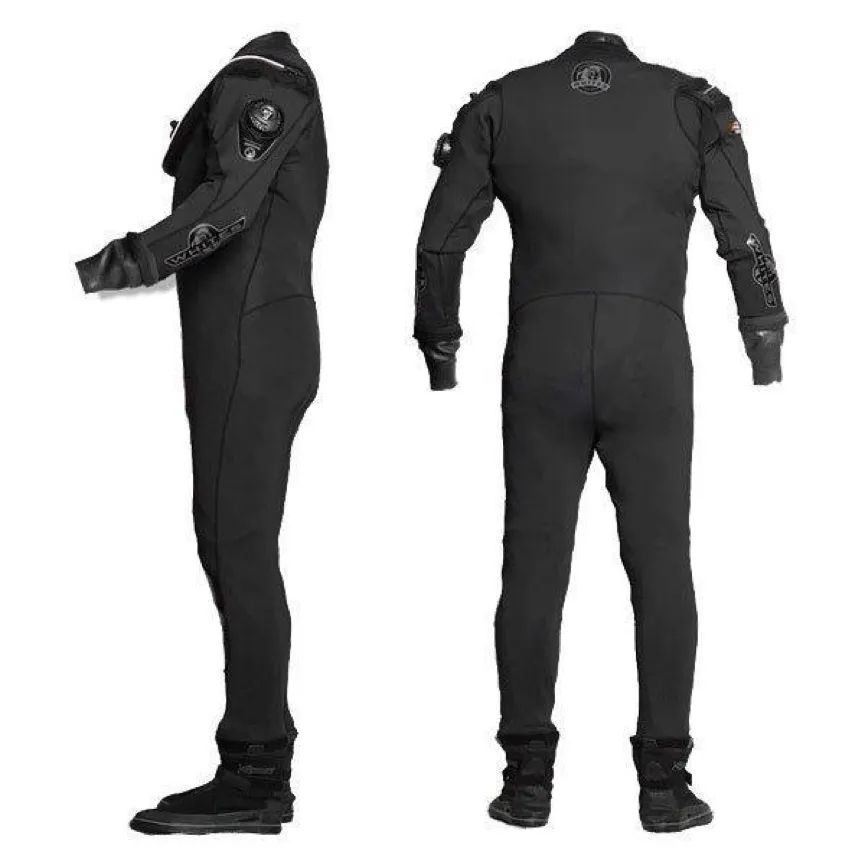
The back and side of a drysuit
A drysuit, as the name implies, keeps you dry even after you enter the water.
5 Essential Facts About Drysuits
1. The silicone wrist seals
The reason a drysuit keeps water out — and your body dry — comes down primarily to the silicone seals at the neck and both wrists. At the feet, the suit integrates a waterproof bootie that is fully attached to the suit itself. You still need to wear booties over these, though, or you'll wear through the waterproof layer and let water in!
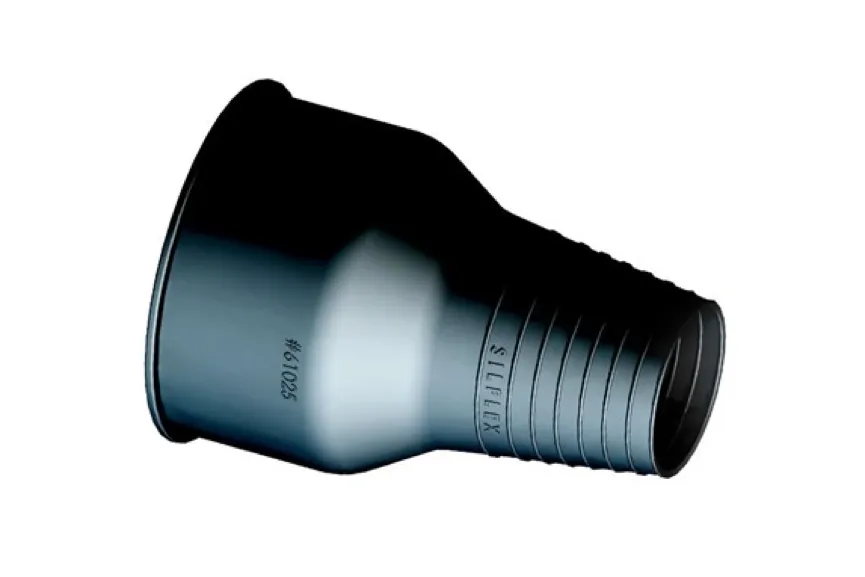
The silicone wrist seals of a drysuit
Once you zip up the long chest zipper, water is kept completely outside the suit. The chest zipper is actually two layers: the inner metal zipper provides the true watertight seal, while the outer plastic zipper protects it.
That said, a drysuit keeping you dry does not automatically mean it keeps you warm!
If you put on a drysuit over bare skin and jump in, it would feel like wearing a flimsy raincoat while naked in the water — absolutely freezing. The drysuit itself only keeps you dry; the real warmth comes from the undergarment worn beneath it.
Before putting on the drysuit, you should first layer up in thermal underwear, a long-sleeve cotton top, long trousers, and a pair of thick, comfortable socks. That's what actually keeps you warm. In the photos, I look a little bulky in my drysuit — because on top of my thermal base layer, I also added a windproof jacket that shall remain nameless out of sheer embarrassment!
2. The chest inflator valve
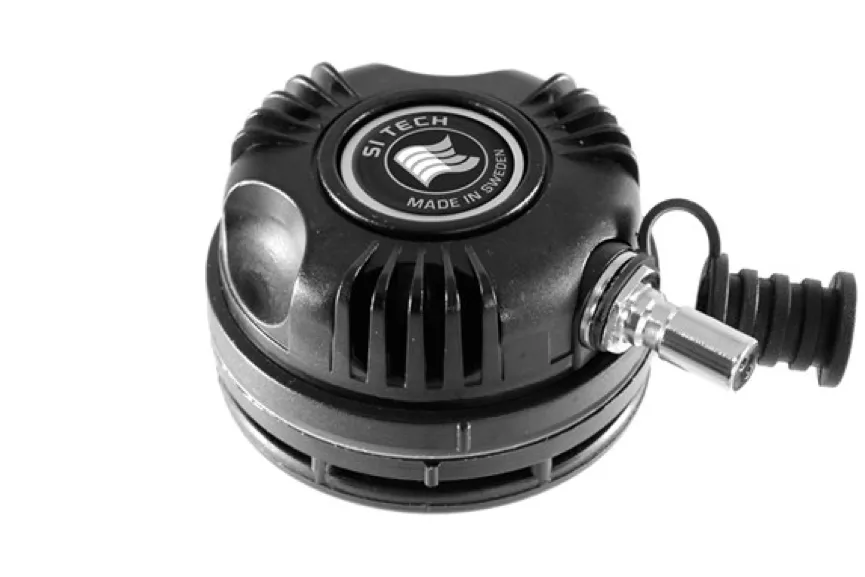
The chest inflator valve of a drysuit
On the chest of the drysuit is an inflator valve, similar to the low-pressure inflator on a BCD. A hose connects it to the first stage regulator, allowing you to inflate the suit directly with a press of the button. In other words, when diving in a drysuit, your regulator will have five hoses. Once the suit is on, the air inside it affects buoyancy, so before entering the water you'll push out as much air as possible, allowing the suit to press snugly against your body — much like vacuum-sealing a duck breast in a zip-lock bag.
As you can imagine, this feeling can be quite constricting. That's where the chest inflator comes in: a small puff of air eases the pressure and makes things considerably more comfortable. For male divers in particular, adding just a little air to reduce constriction in certain sensitive areas is, shall we say, highly advisable.
Think about it: you're already wearing multiple undergarment layers, and then a drysuit on top. Even after purging as much air as possible, the overall buoyancy in the water increases significantly. This means you'll need to add more weight when diving in a drysuit. For controlling neutral buoyancy underwater, the BCD remains your primary tool for fine-tuning, but since there is always a small amount of air inside the drysuit, you have an additional buoyancy variable to manage. On the upside, that air also becomes an extra buoyancy resource at your disposal. By adjusting your body trim, you can shift the air toward your feet, or tilt your body left and right to fine-tune balance. Once you've mastered the drysuit, you may find it actually makes trim easier than a wetsuit.
3. The exhaust valve on the left arm
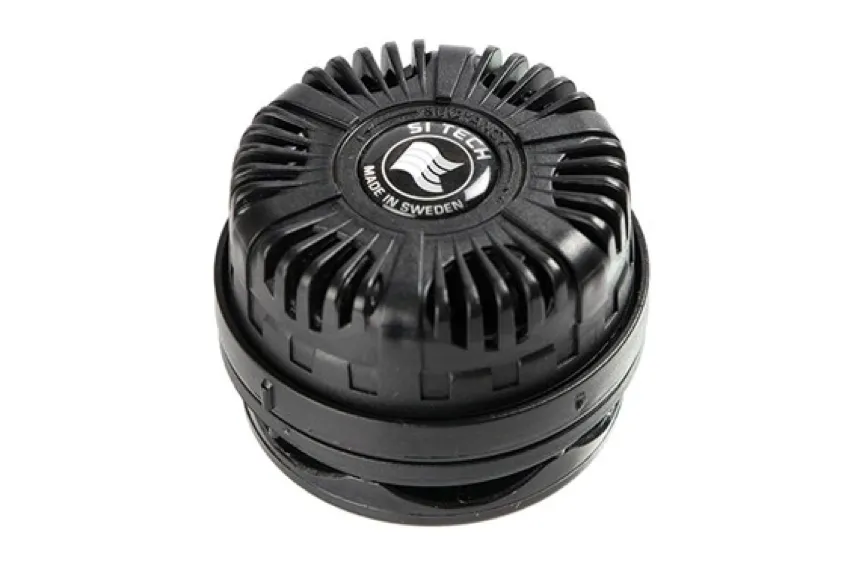
The exhaust valve on the left arm of the drysuit
On the left arm of the drysuit is an exhaust valve that can be twisted like a bottle cap to vent air, or pressed directly to release a small amount at a time. As you descend and pressure increases, you add small amounts of air to counteract the squeeze so the suit doesn't constrict too uncomfortably. When you're about to surface, that air expands as the water pressure decreases, and you need to vent it appropriately to maintain neutral buoyancy.
This exhaust valve is actually a multi-stage switch, built with a spring mechanism similar to a BCD over-pressure valve. Some divers choose to set the valve to a certain degree of openness — or even fully open — so that expanding air automatically vents when pressure builds up. The risk with fully opening it, however, is that although the valve has a non-return design, the spring can weaken over time, making water ingress more likely. Once water gets inside a drysuit, you're back to being tormented by icy seawater.
The big advantage of a drysuit is, of course, staying warm and dry! After a dive, you peel off the suit, the cold wind hits you, and your body is still dry — no chill at all. Staying in cold water without feeling cold is the drysuit's greatest selling point.
That said, drysuits do have their share of drawbacks. First: cost. A drysuit starts at a minimum of around NT$40,000 and can run well into the six-figure range — a true testament to the saying that diving will ruin your life (and your wallet).
Second, the neck seal can feel quite tight and restrictive. People with slimmer necks may find that turning their head lets water seep in, which is a real nuisance. Reduced mobility is a minor downside of diving in a drysuit. As for putting it on and taking it off, with enough practice it's no harder than a wetsuit, so that's not really a major issue.
4. The male urination valve
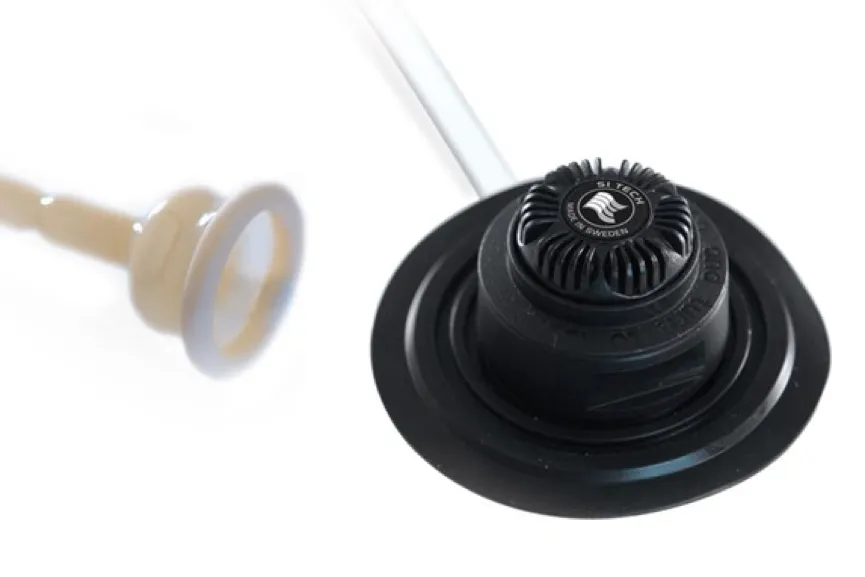
A male urination valve designed for drysuits
In my opinion, the biggest drawback of a drysuit is that you can't urinate while underwater!
Something effortless in a wetsuit becomes completely off the table in a drysuit — otherwise it's essentially the same as wetting the bed.
Fortunately, the diving industry has come up with a solution: the Pee Valve. The system works by using a urine collection cup connected via a catheter to a quick-release valve at the crotch of the drysuit. Open the valve, and you can relieve yourself with ease and dignity.
The product copy on the manufacturer's website reads something like this: "Don't let nature's call distract you or increase your air consumption. Use this device to extend your bottom time." And indeed, if you can handle bathroom breaks normally, a drysuit really has almost no remaining disadvantages. Of course, if you'd rather not spend extra on a Pee Valve, adult diapers can absolutely rescue a desperate diver in need — though they are, needless to say, far from environmentally friendly.
5. The female urination valve
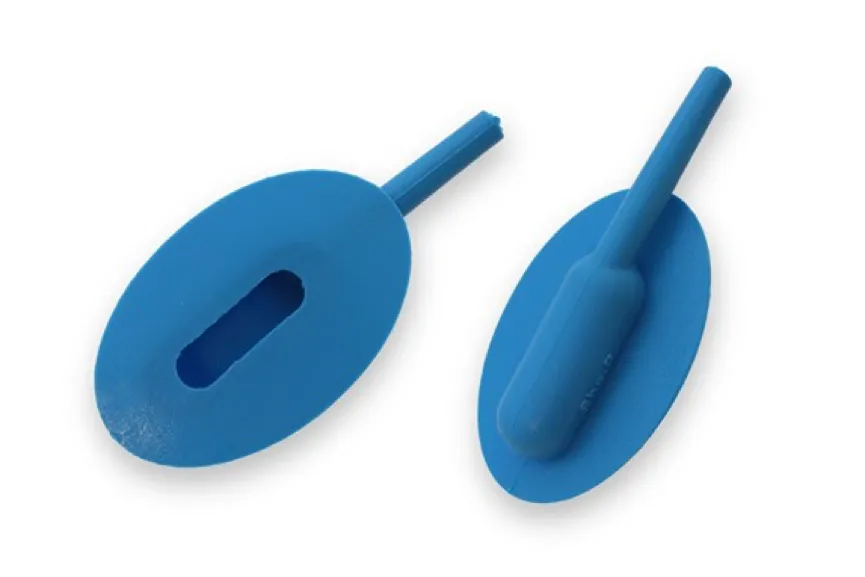
A female urination valve designed for drysuits
Female divers also have a dedicated collection cup option (the She-P), which works on much the same principle as the Weepee-style devices commonly sold for women to urinate standing up — except it connects to a tube and vents through the quick-release valve. With the issue of bathroom breaks resolved, the drysuit's most glaring disadvantage in a head-to-head with the wetsuit is essentially eliminated. At that point, whether or not to pursue drysuit diving simply comes down to personal choice. Do you want to dive in cold winter water and stay warm? This matters especially for older divers: the sudden, dramatic temperature change when a wetsuit-clad diver enters cold water can place significant strain on the cardiovascular system. Prolonged exposure to cold water not only raises the risk of decompression sickness (DCS), but also increases the likelihood of a sudden cardiac event. And if your diving ambitions stretch beyond the tropics — say, to cold-water destinations to see orca or other species, or even ice diving — then a drysuit is an obvious necessity.
In Taiwan, drysuits are primarily used during the winter months, making them a great option for dedicated divers or those who simply can't stay out of the water. Since the drysuit season in Taiwan only spans a few months each year, it may not be essential for those who dive occasionally or head to Southeast Asia in winter anyway. With a high unit cost and lower frequency of use, maintenance and care require special attention. Some drysuits are single-layer; others are double-layer (with an outer canvas abrasion layer and an inner waterproof layer). The waterproof foot booties, silicone seals, inflator valve, and exhaust valve are all replaceable components, which means a well-maintained drysuit can last ten years or more.
Is it time to invest in a drysuit and venture into colder waters? It just might open up an entirely new world of diving for you.
Further reading:


![[Dive Class with Divingmate] Drysuit Myth-Busting: Debunking the 3 Biggest Misconceptions](/_astro/IMG_7469-scaled_QL2M8.webp)