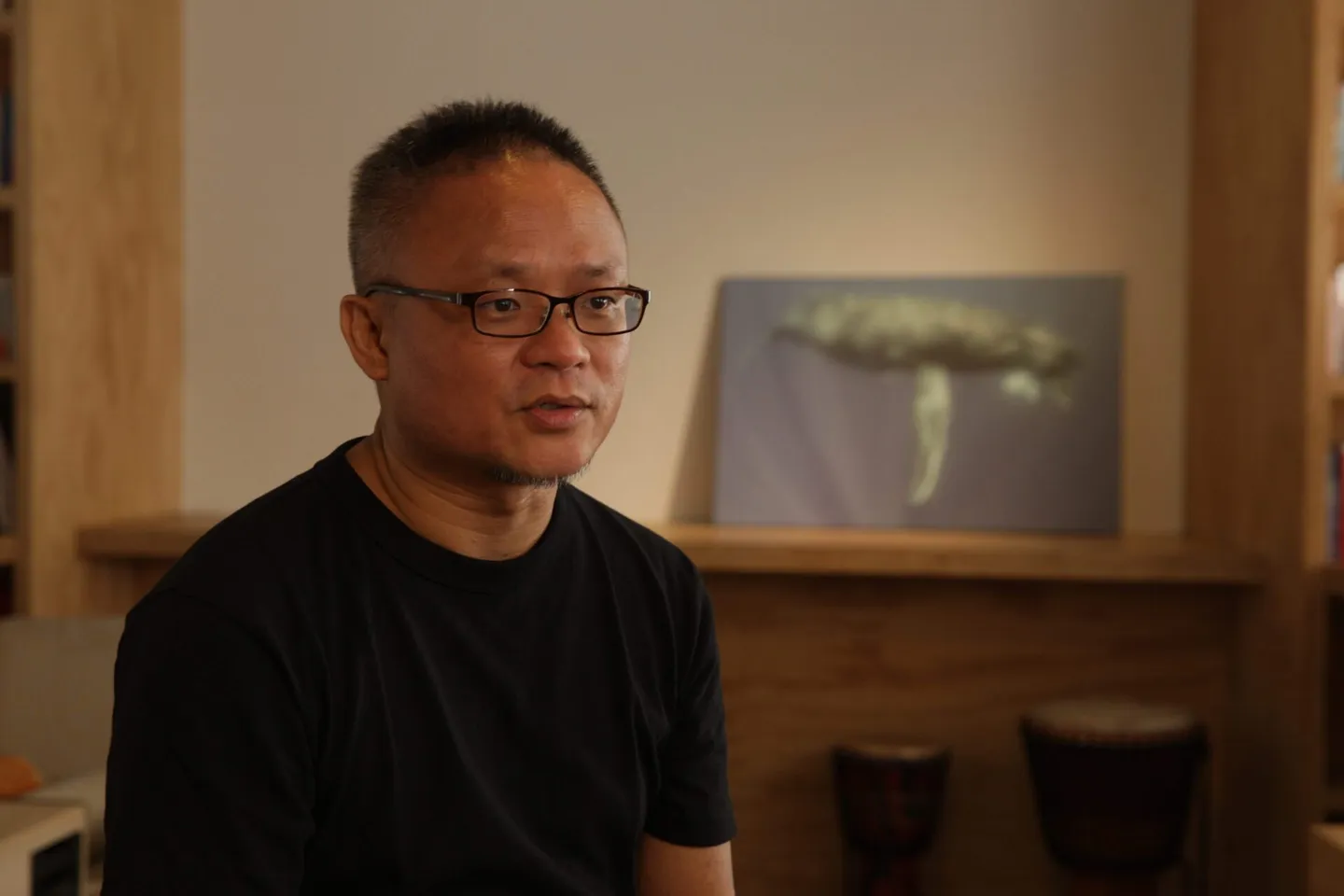


In 2018, the Editor conducted a series of interviews with ocean enthusiasts, each offering a unique perspective into the subjects' personal visions of and devotion to the sea. With the support of a publisher, the Editor was also able to bring a first book to print: Diving Into Taiwan: Fellow Islanders, Let's Return to the Ocean! 16 Ways to Fall in Love with the Sea — Through Diving, Photography, Beach Cleanups, and More. The background stories of every ocean lover featured in that book are vastly different, yet they all share an extraordinary passion for the ocean that sets them apart from the crowd. The subject of this article perhaps embodies that quality more than most — A Man and His Sea: Whale Island, directed by "Black Sugar" director Huang Chia-Chun. Whale Island Crowdfunding Page
A Man and His Sea: Whale Island
For most people, documentaries carry a fixed reputation — not only are they seen as dense and hard to follow, they are practically synonymous with slow pacing that sends audiences to sleep. But having already watched a very early rough cut, the Editor wants to share this right at the outset:
Stillness, a slow rhythm, and the purity of blue — enough to make you forget the noise of city life. The tug-of-war between life's ideals and reality, the contrast between Taiwan's culture of restricted access to the sea and the freedom of humpback whales gliding through Tongan waters — two narrative threads weave reason and emotion together. This is a documentary every Taiwanese person should see.
A documentary, as distinct from a narrative feature film, is a style of filmmaking that depicts, records, or examines the real world through a lens. As the pace of commercial society grows ever faster — with attention focused on money, profit, ROI, and other business metrics — there remains a group of people who try to capture everything happening in this world on camera. Perhaps if they don't record it now, there will be no record left to make later.
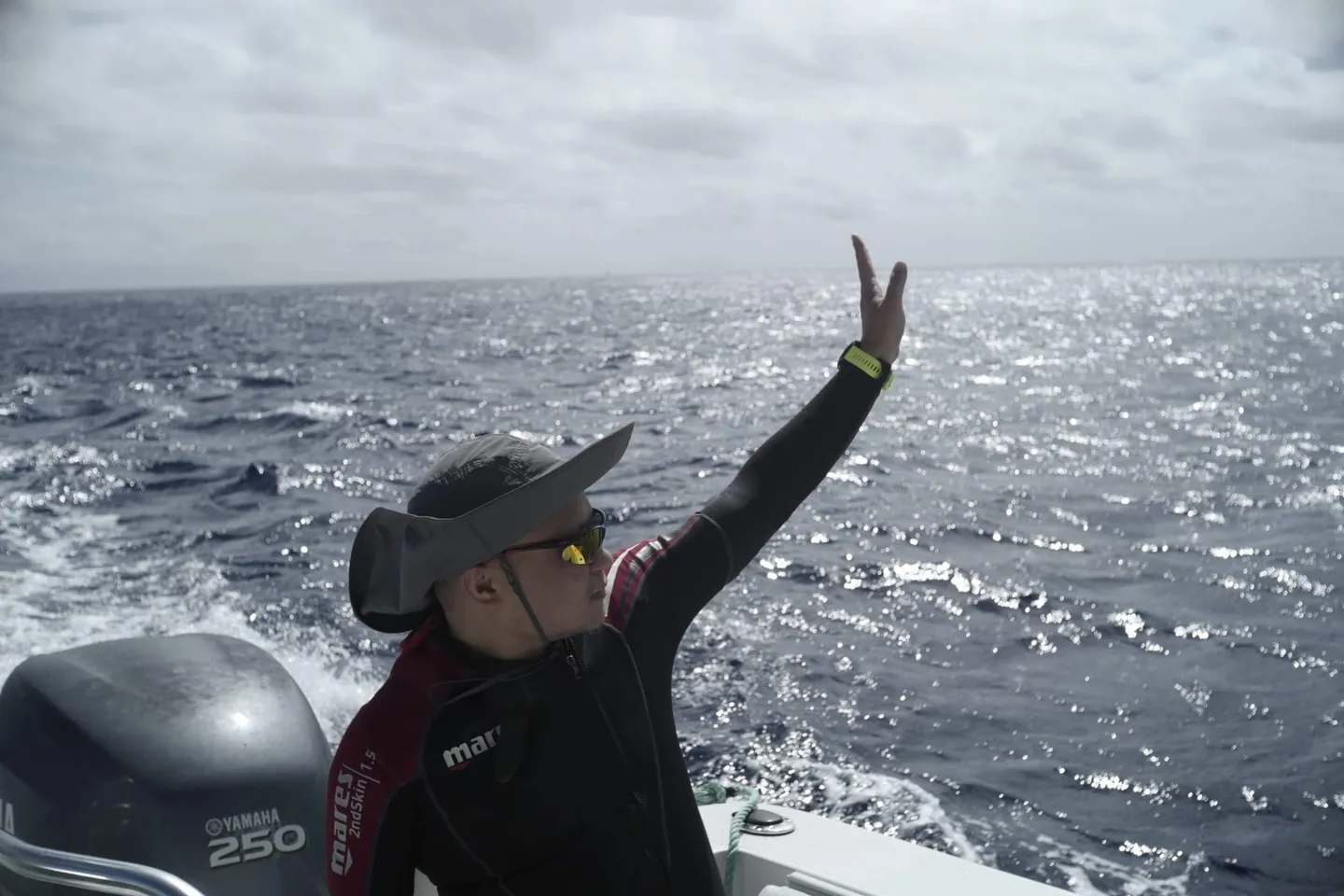
Provided by the documentary A Man and His Sea: Whale Island
After learning scuba diving seven years ago, Black Sugar was puzzled to discover that Taiwan's underwater ecosystems were nothing like what he had imagined before entering the water. He had pictured a rich, fish-filled underwater world, but reality fell far short. As time passed, that puzzlement led him to connect with like-minded friends who shared his concern for the ocean — among them the film's two protagonists, Mr. Liao Hung-Chi and Mr. Jin Lei. It happened that around that time, Mr. Liao Hung-Chi was about to begin his Kuroshio drift project, and so the idea clicked immediately: they would use the documentary format to convey the ocean as they saw it.
Shooting a documentary is, of course, quite different from shooting a narrative film. Black Sugar laughingly describes filmmaking as "Time is money!" — for narrative features, the enormous costs of cast, crew, and equipment are burning through the budget every second, which is why detailed pre-production planning, shot lists, and storyboards are essential to keep the shoot on schedule.
For a documentary, on the other hand, time is the filmmaker's closest friend. Most documentary footage cannot be scripted or staged in advance — the camera simply records the most authentic moment as it happens. Waiting, therefore, becomes the single most important factor. A Man and His Sea: Whale Island, for instance, took 3 years to film. At the same time, anyone with a camera can become a documentary director, which drastically reduces crew and equipment costs. As a result, before he began shooting A Man and His Sea: Whale Island, Black Sugar had given virtually no thought to the production expenses and post-production costs that lay ahead, let alone a theatrical release strategy. Perhaps going with the flow is yet another form of spiritual refinement for a documentary director.
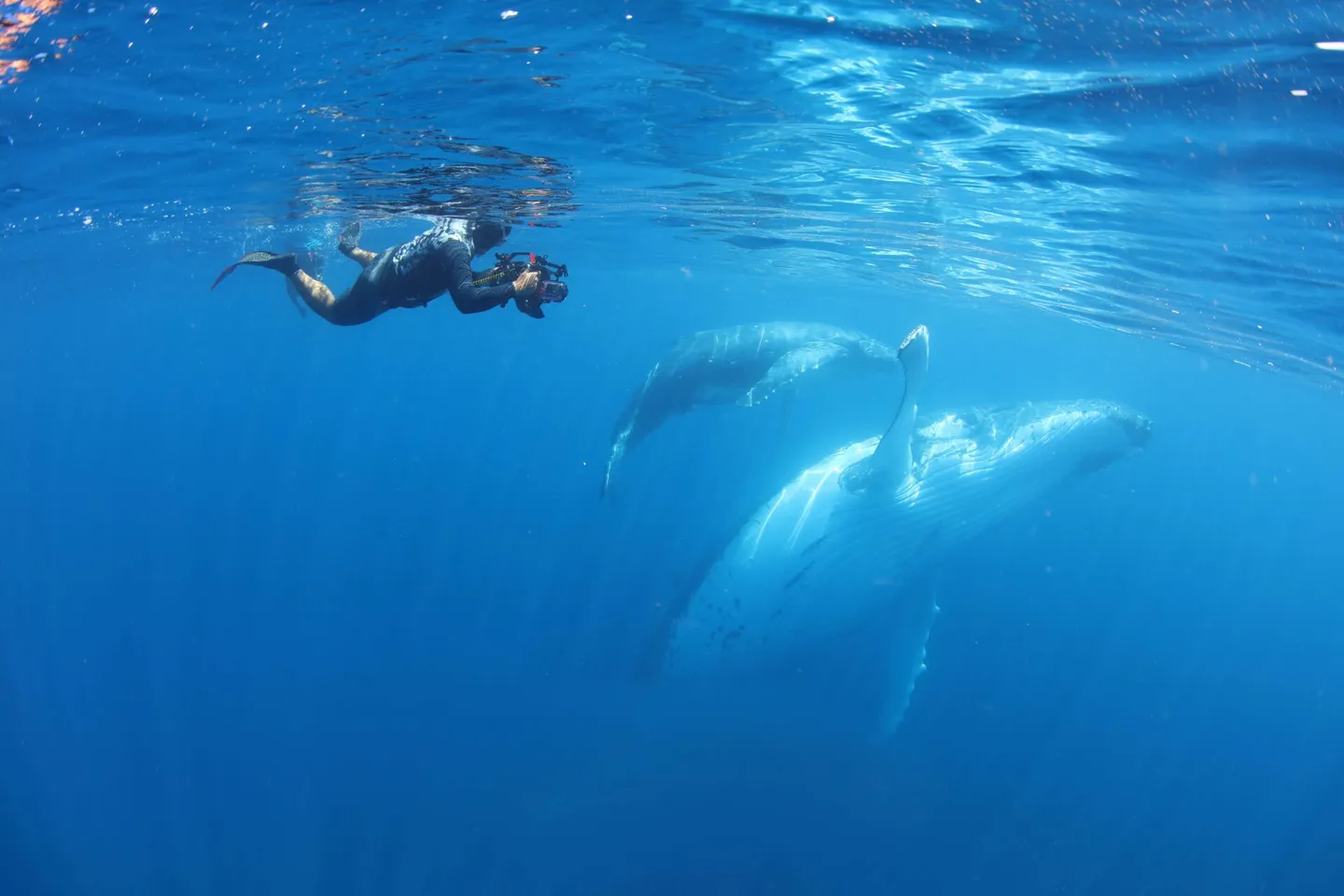
Provided by the documentary A Man and His Sea: Whale Island
If You Love Whales and Dolphins, This Documentary Is a Must-See!
In the film, Black Sugar takes the camera to the Kingdom of Tonga — more than 8,000 km from Taiwan. Anyone who has researched cetaceans, or who is a freediver or scuba diver, will be familiar with this destination, for it is one of the few places in the world where you can observe humpback whales up close in the wild. Through Mr. Jin Lei's lens, we feel as though we have been instantly transported to Tonga, swimming alongside the humpback whales at arm's length. The whales' murmurs beneath the surface leave us in awe of the wonders of the natural world.
Shifting the lens back to the waters off Hualien on Taiwan's coast, Mr. Liao Hung-Chi sets sail aboard an engine-free drift platform assembled from 36 detachable floating dock tiles, riding the Kuroshio Current out from Fenggang Fishing Port in Taichung. Mr. Liao, himself a whale-watching tour guide, explains that nearly 30 species of whales and dolphins can be spotted in Taiwanese waters — yet long-standing fisheries policies have gradually pushed the Taiwanese people further and further from the sea.
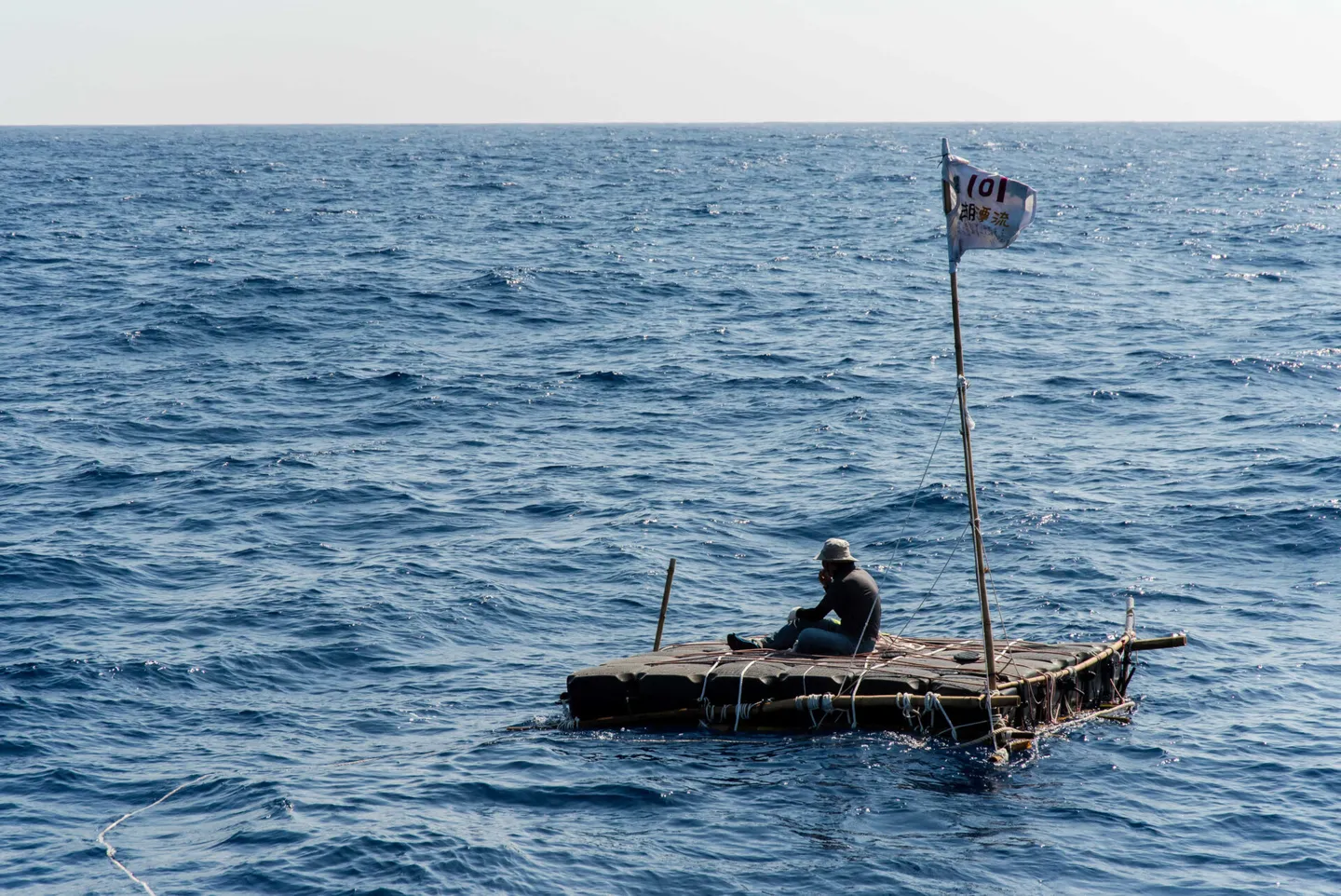
Provided by the documentary A Man and His Sea: Whale Island
Black Sugar: Taiwan's culture of restricting access to the sea began during the martial law era. A host of outdated regulations has limited the right of Taiwanese people to connect with the ocean. A deep-seated fear of the sea has greatly constrained the way Taiwanese people today imagine and relate to the ocean.
If You Are Standing at the Crossroads of Dreams and Reality, This Documentary Is a Must-See!
Beyond its stunning natural scenery, this documentary explores something far more personal: the narrative thread of a man pursuing his dreams while waging a constant tug-of-war with reality. Mr. Liao Hung-Chi chose to answer the ocean's call twenty-one years ago, and in doing so was separated from his daughter — only to be reunited with her through the sea a decade later. The scene in A Man and His Sea: Whale Island where Mr. Liao recounts the moment his daughter stepped onto a whale-watching boat is deeply moving: "The sea I have protected for decades — I wanted my daughter to see it too. That tour commentary was really for her."
Mr. Jin Lei is Taiwan's first cetacean photographer. In pursuit of one precious photograph of whales and dolphins after another, he has traveled to virtually every ocean on the planet. Yet deep in his heart, what he finds hardest to leave behind is still his family. There are times when he stays home to be with his young children as they grow — and while he watches the work of other photographers steadily improve, the spirit of adventure buried deep within him can only continue to be suppressed.
Jin Lei: My sons always refused to come out to sea with me. I only found out later that it was because they were afraid of watching me jump into the water — afraid that I would simply disappear.
Beyond his sons, Mr. Jin Lei's father is another source of conflict in his life. In the Chinese-speaking world, parents typically hope their sons will find stable work, start a family, build a home, and live a settled life. But does that template really fit everyone? Mr. Jin Lei puts it this way: "If everyone has to spend ten years reaching a certain stage in life, I'd rather spend those ten years on something I'm genuinely passionate about."
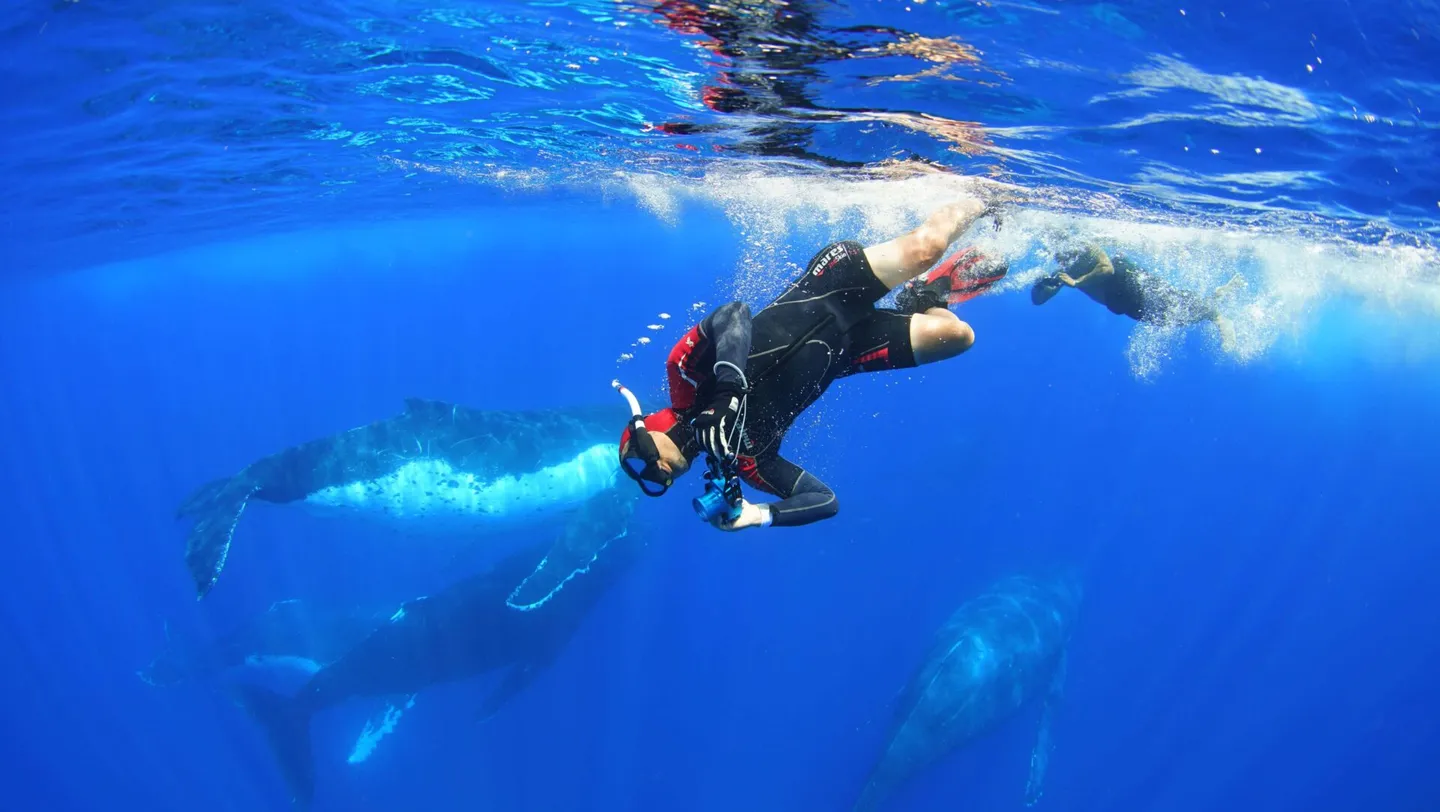
Provided by the documentary A Man and His Sea: Whale Island
The stories of these lives are not only presented to us through Black Sugar's camera — Black Sugar himself is also a protagonist within the film. During the three years of shooting A Man and His Sea: Whale Island, Black Sugar welcomed the birth of his own child. The universe is perfectly fair: every person gets exactly 24 hours in a day. How to balance family, a documentary, and daily life — that tug-of-war is, at its core, Black Sugar's own personal inquiry into life's deepest questions. Will watching A Man and His Sea: Whale Island give you the answer? No, it won't. But it will make you stop in your tracks and ask yourself: what is it, in the end, that your life is truly pursuing?
A Man and His Sea: Whale Island is currently running a crowdfunding campaign. If you'd like the chance to see this rare and remarkable ocean documentary in a cinema, your small show of support can help them go much further! Click here to support the crowdfunding campaign!!
Further reading:

![[Video] Change and Continuity in Chao Jing — A Fishing Village in Transition: First Prize Documentary, 2019 Chao Jing Bay Festival](/_astro/%E8%9E%A2%E5%B9%95%E5%BF%AB%E7%85%A7-2019-08-02-%E4%B8%8B%E5%8D%8812.56.29_ZGwc8e.webp)