"Animals are just like people — if the environment is good, everyone (whales and dolphins) will want to live here. If there's no fish (food), if it's all pollution and trash, they won't want to stay either," Captain Zhijun said quietly.
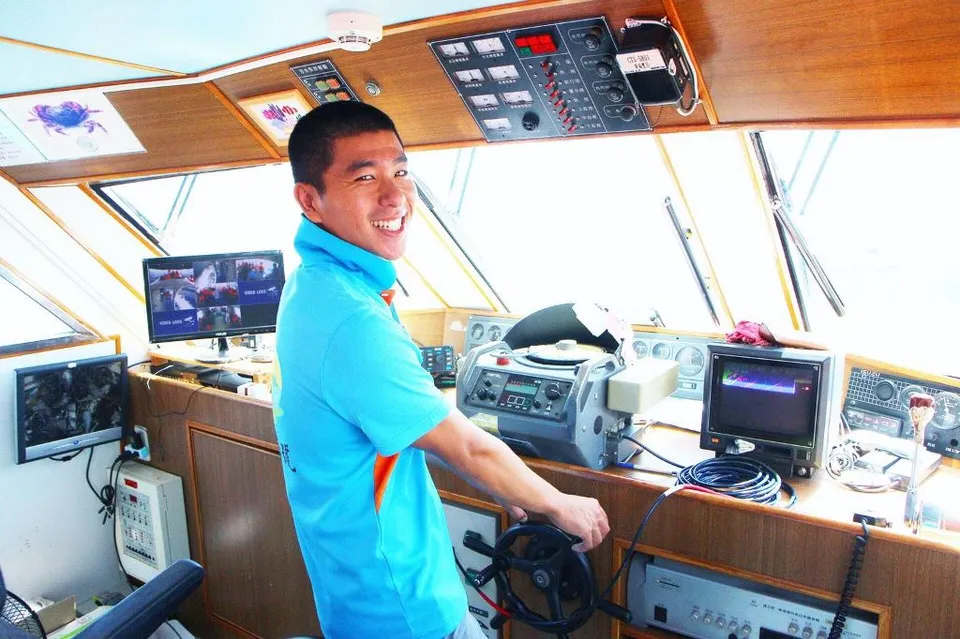
Captain Zhijun
Taking Guests to Find Whales Has Become Part of His Life
Ever since Captain Zhijun took over Xin Fufeng No. 36 from his father, taking guests out to find whales has become a way of life. So why not call it "chasing" or "pursuing" whales? Captain Zhijun explains that they never chase cetaceans — first, a boat simply cannot outrun them and would only frighten them away; second, accidents or mistakes could injure the animals. So he absolutely refuses to give chase. Xin Fufeng No. 36 only searches for whales. This approach to "whale-seeking" is itself one of Yilan's defining whale-watching characteristics. Unlike other whale-watching destinations, the whale-watching fleet around Guishan Island, Yilan, relies on dedicated scout vessels to track cetacean movements. When a scout boat locates whales or dolphins, it radios the whale-watching boats to come over — which is why the sighting rate for Yilan whale-watching tours reaches nearly 80–90%.

Xin Fufeng No. 36
On the day we set out, the sea was rough. Spray kicked up by the bow splashed repeatedly onto the deck, soaking the whale-watchers who had gathered at the front of the boat — yet no one seemed the least bit afraid. Captain Zhijun's hand is steady at the helm; he reads the sea with ease, always giving passengers advance warning of what conditions to expect so they can mentally prepare. He also kept the mood light with entertaining commentary on the sights along the way: the Eight Wonders of Guishan Island, the Milk Lake — filling the entire whale-seeking journey with laughter and smiles.
I particularly treasured those quiet moments in the wheelhouse with Captain Zhijun, watching the sea together. While the other passengers had gone ashore to explore Guishan Island, I stayed on board hoping to catch a glimpse of cetaceans, pestering him with questions like a curious child: What kinds of dolphins can be spotted off the Yilan coast? Do whale mothers bring their calves here? What is the most extraordinary thing he has ever witnessed on a whale-watching trip? I still remember him smiling as he told me that once or twice each year he has the privilege of spotting sperm whales in these waters — and that he has even witnessed the rare sight of a cetacean giving birth, as well as the breathtaking spectacle of over a hundred bottlenose dolphins leaping and dancing on the surface.
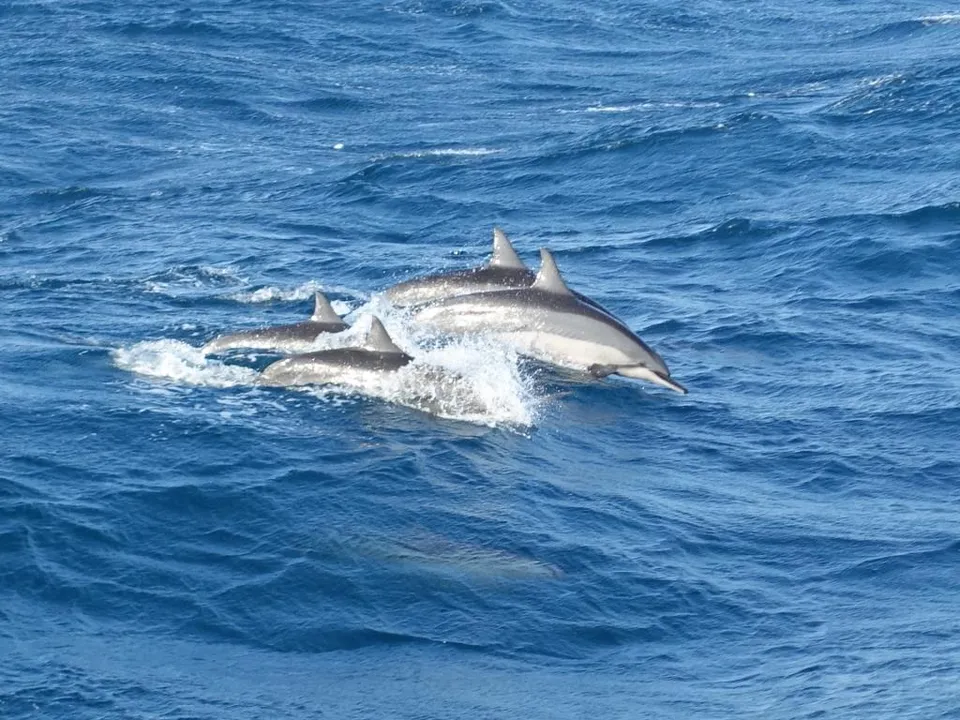
I listened, completely enchanted, as he described one encounter after another. Eventually the other passengers returned from the island, and we continued our search. Xin Fufeng No. 36 cut through the wind and waves, heading further out to sea. As the swells grew larger, so did my anxiety that we might come back empty-handed — until, suddenly, a cry rang out: "There are dolphins!" Captain Zhijun switched on the PA system: "Congratulations, everyone! Your seasickness was worth it. Look — dolphins on our starboard side! And there at the bow too!" Passengers around us began shouting: "Port side! Port side — dolphins over there too!"
What had seemed like an empty expanse of ocean moments before erupted with cetaceans in every direction. Some dolphins chased each other through the waves; others surged toward the boat, bow-riding; still others lingered alongside, threading playfully back and forth. In that instant, I genuinely felt like the luckiest person alive — able to observe these wild creatures at such close range, watching them leap and dance with such pure, unbridled joy. The gasps and laughter that rippled across the deck made it clear that everyone on board shared my delight and wonder at this chance encounter with these ocean spirits.


Captain Zhijun's Concern
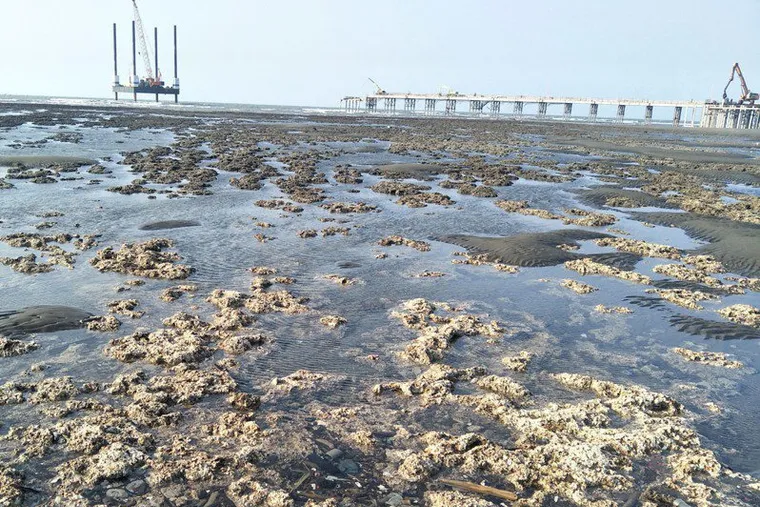
Even amid all the excitement, I found myself thinking back to what Captain Zhijun had said earlier as he gazed out at the sea: that Taiwan is truly a treasure — you don't have to travel far offshore before you're watching whales, and the variety of cetacean species is remarkable. What worries him, though, is that Taiwan's thriving seafood culture has indirectly reduced the food supply for whales and dolphins, while steadily worsening marine pollution is diminishing their desire to remain in these waters. With food becoming scarcer and living conditions deteriorating, he fears that cetaceans may gradually stop lingering here in the future.
Back home, as I sorted through the photos from the trip, I lingered over one shot of a dolphin mother and father breaching the surface with their calf. I can only hope that more and more people will come to care about marine conservation — so that these beautiful creatures can keep their home, so that cetaceans and humans can live as neighbours generation after generation, and so that our children and grandchildren will always have the blessing of encountering them up close. May every journey out into the blue always hold the promise of a spectacular whale encounter.
#海洋保育署
#友善鯨豚特派員
Further Reading:
-
【Taiwan Dive Sites】Yilan — Guishan Island Milk Lake, Underwater Hot Springs & Hairy Crab
-
【Offshore Life】OffshoreLifeStudio — In Search of the Dreamlike Milk Sea of Guishan Island
-
[New Zealand] A Diver's Dream Itinerary: Swimming with Dolphins in Kaikoura, New Zealand
-
Catch the Last Days of Whale and Dolphin Season! Dolphins Spotted Everywhere!