Contents(4)
The Editor says: Every diver has been "baptized by currents" at some point in their diving career! Chaotic currents, upwellings, downwellings, washing-machine currents… all kinds of wild flows hide different dangers, and only a calm response will see you through safely! Many thanks to Shark Brother 吳祖祥 for sharing his stories and making us feel as if we'd lived through an unforgettable dive ourselves.
"Strong currents" are the ultimate after-dive war story — seasoned divers retell them with gleaming eyes while rookies listen in wide-eyed disbelief. Over the years I've personally encountered all kinds of strong currents, chaotic currents, upwellings, downwellings, washing-machine currents, and even situations that my buddies jokingly called "near-death flows" after we made it back alive. Fortunately, I've always come out in one piece. These experiences have taught me to truly respect nature — and kept me alive long enough to share the stories.
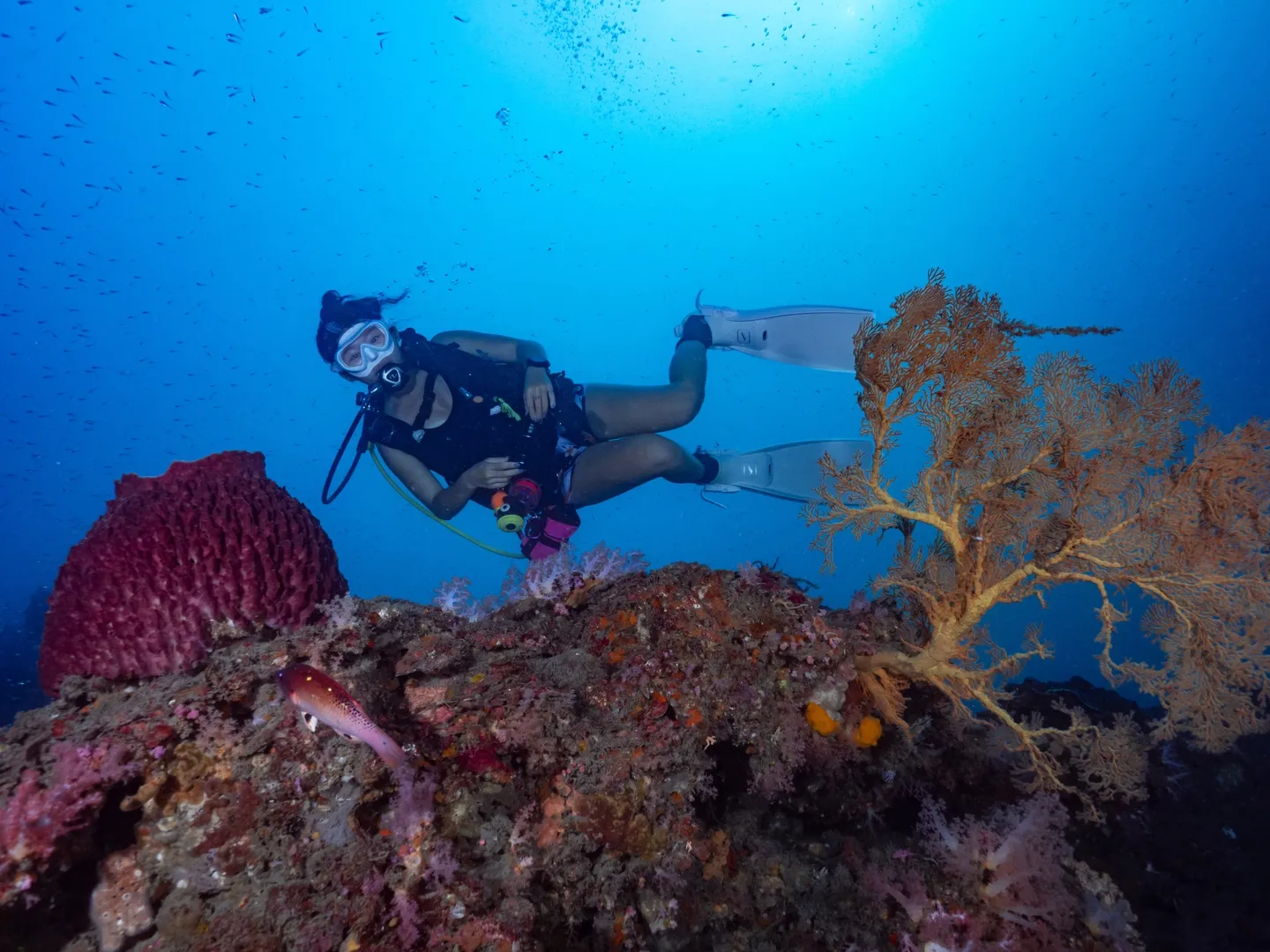
Don't panic in strong currents — staying calm is the only way through! photo credit:簡晨宇
Current speed in the ocean is measured in knots: 1 knot equals 1 nautical mile per hour, and 1 nautical mile equals 1,852 metres — meaning 1 knot is roughly 0.51 m/s, and 2 knots is around 1.02 m/s. Every experience I describe below involved currents of at least 2 knots.
Green Island's Sankuaishi, Orchid Island's Sitiaogu, and Palau's Blue Corner
These three sites all feature topography-driven currents of at least 3 knots. The first time I hit strong current at Sankuaishi, my dive buddy was gripping the reef less than 1 metre away from me — yet no matter how hard I kicked, I couldn't push through to his side. Fighting head-on against a current like that burns air fast and gets you nowhere: in less than 60 seconds my legs gave out and I was gasping. I signalled my buddy and we both let go, drifting away from the reef headland and out of the current zone. By that point we'd lost the rest of the group and found ourselves surrounded by open blue water, so we deployed the surface marker buoy (SMB) and waited for the boat.
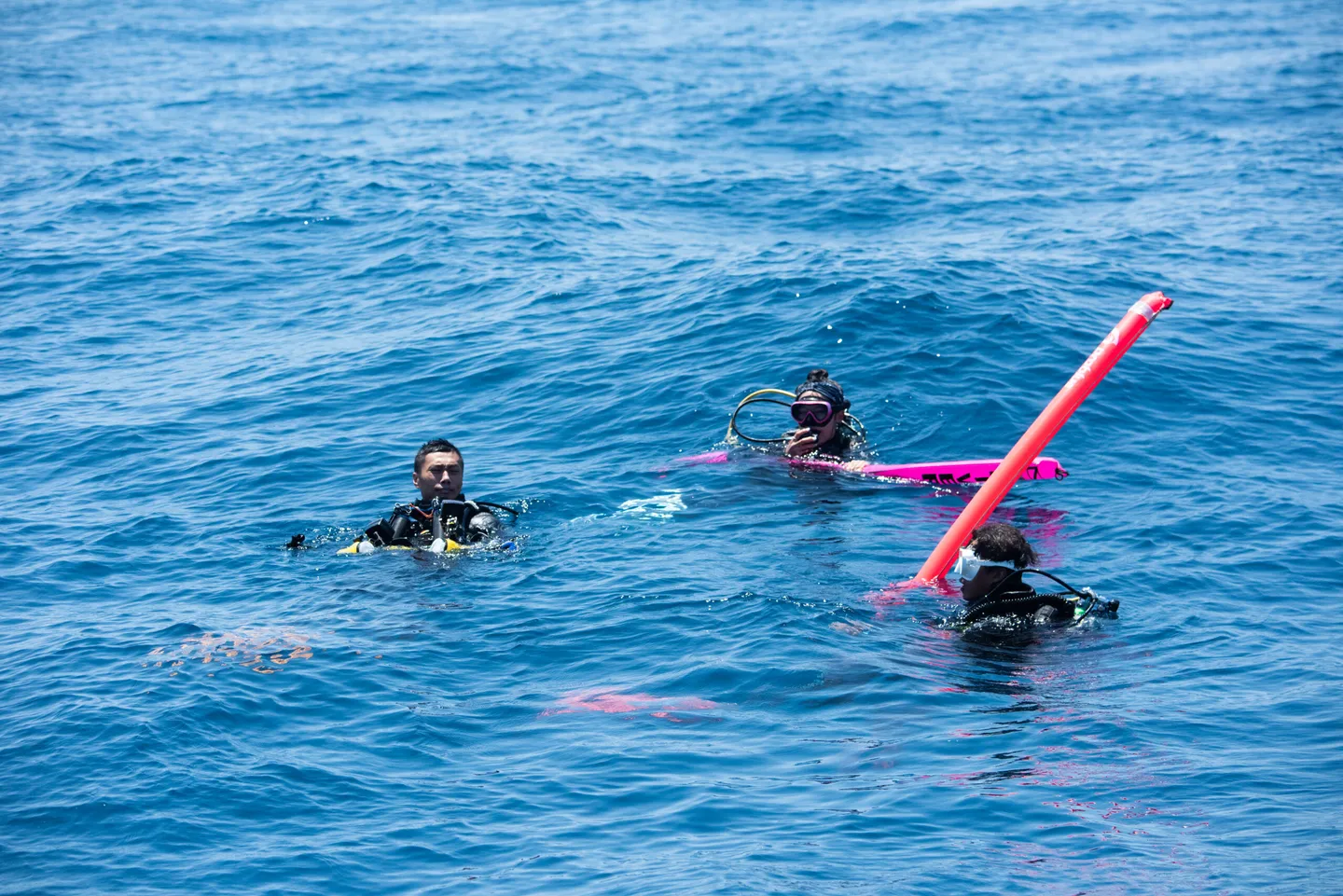
This is why knowing how to deploy your surface marker buoy (SMB) properly really matters! photo credit:小泉
At Orchid Island's Sitiaogu, while drifting along the reef wall and about to be swept into the large cave at the far end, I once — back in my early days — pulled out a reef hook and clipped onto the rock thinking I'd stop for some photos. The moment the hook snapped taut, the pull tore the plastic D-ring clean off my BC. It was my first cheap BC (which is how I learned that a BC must have stainless steel D-rings). Lesson learned: if you want to shoot photos in a strong current, first press yourself firmly against the reef with both hands to stabilise your body, then take out the reef hook and clip in — only then do you free your hands for the camera.
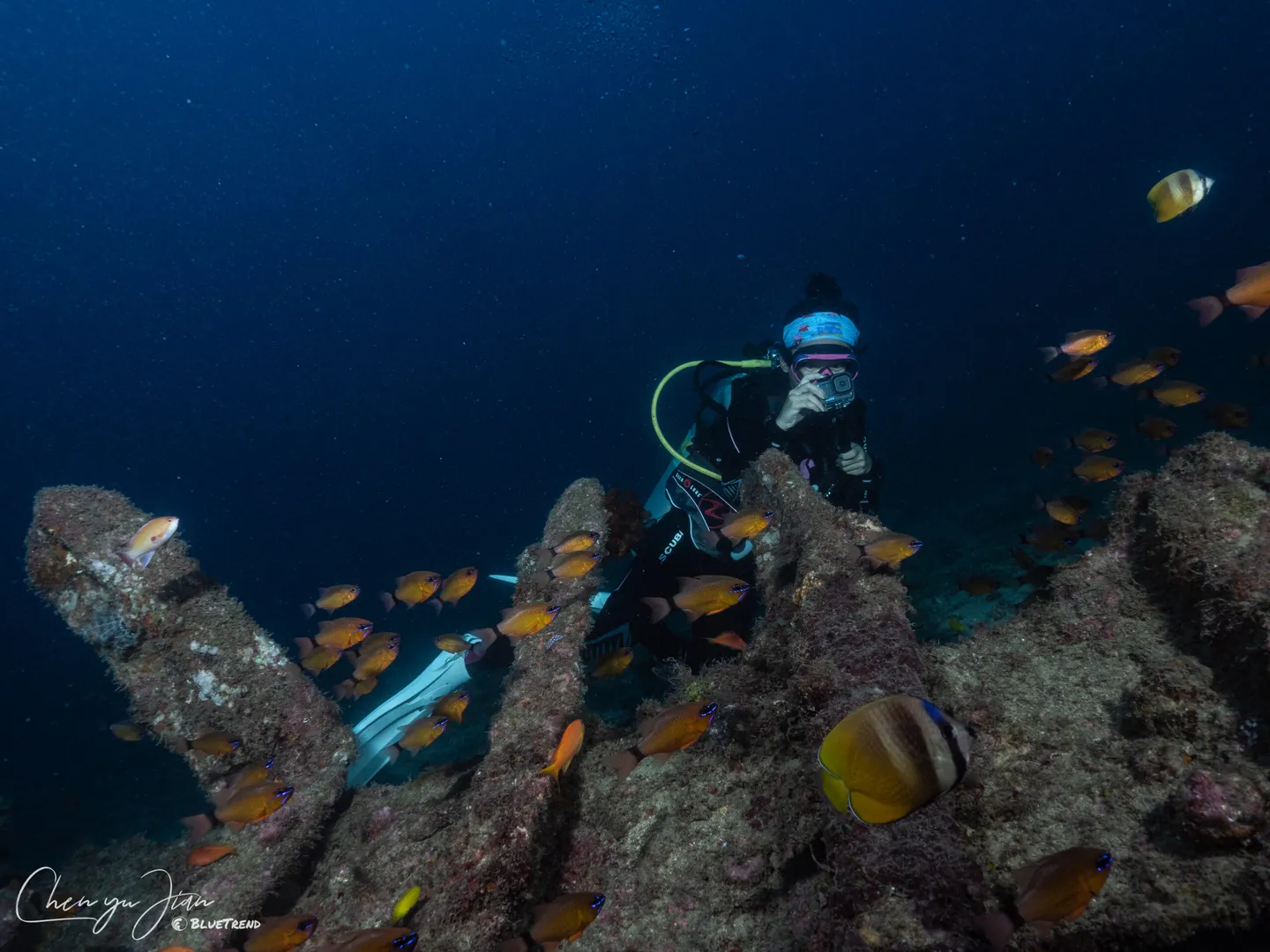
To shoot photos in strong currents, use a reef hook to clip onto the rock and free both hands for the camera! photo credit:簡晨宇
At Palau's Blue Corner, for example, preparing your reef hook and using it properly lets you hang there like a kite and enjoy watching — and photographing — the fish aggregations. It's also worth tying a few knots or loops in the hook's line so you have grip points to pull yourself back in when you're ready.


Qixing Rock, Penghu's East-West Jiji Corridor, and Japan's Mikomoto Island
What these three dive sites share is a washing-machine current that surges with the tides. Why would anyone dive in a washing-machine current? Because fish only gather when the current is running — no current, no fish. As intimidating as it sounds, as long as you have solid dive skills, a good understanding of the site's characteristics, and a calm, steady breathing rhythm, you can dart, spin, and drift right along with the fish schools — and enjoy the baptism of swirling bubbles all around you.
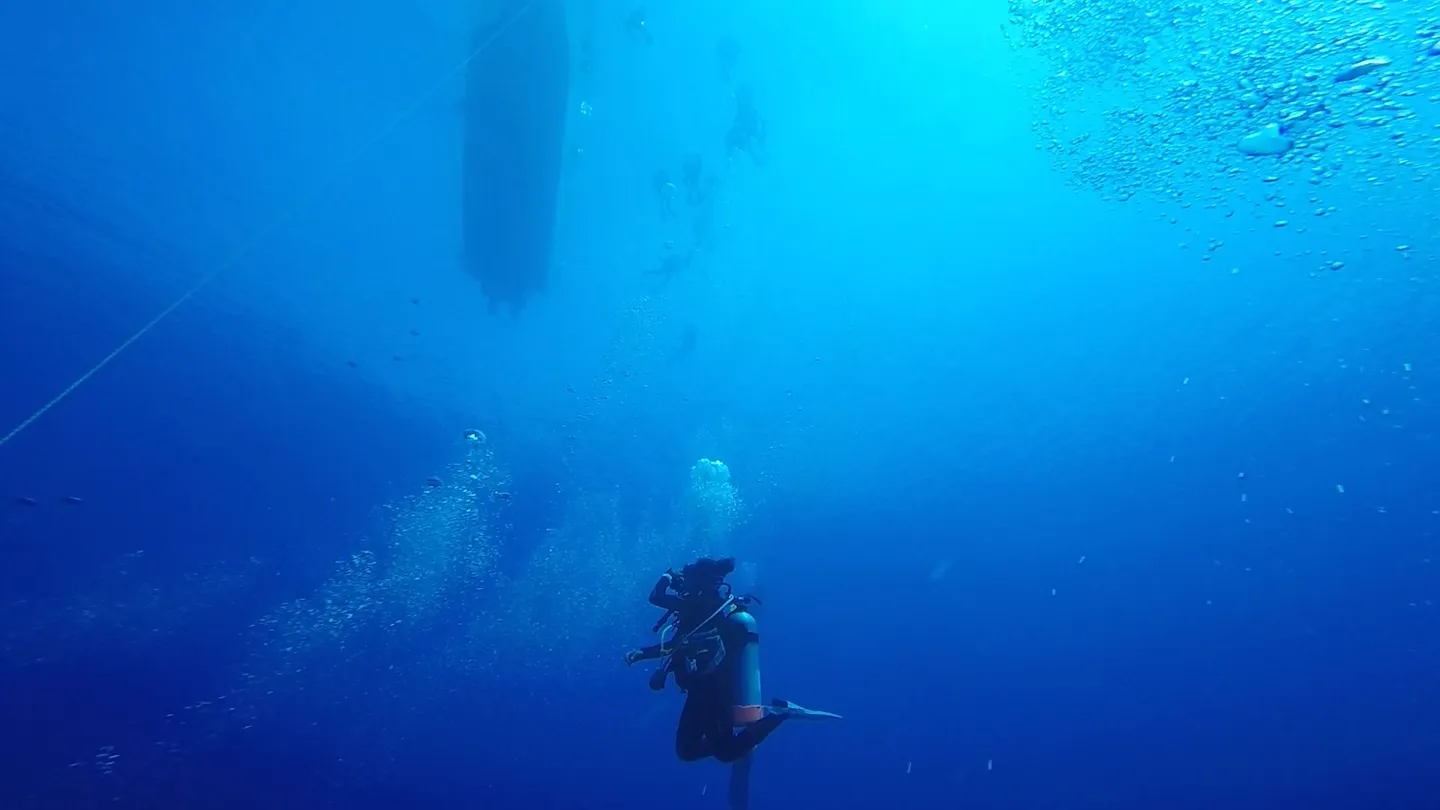
One of the most therapeutic things underwater is being enveloped in bubbles. photo credit:Jenny
Green Island's Gunshui Bi and Penghu's Dongji Wolf
Both of these sites have a gravel bottom and directional strong currents of 2–4 knots. Don't use a reef hook here — even when gripping with both hands, make sure you're holding solid rock, not loose gravel that will shift underfoot and make it impossible to stabilise yourself. Keep your body as flat and close to the bottom as possible to minimise drag, and you'll be able to relax and enjoy the Hammerhead Sharks or barracuda schools in comfort.
Gunshui Bi dives happen in winter, from January to March, when people come to see Hammerhead Sharks. The northeast monsoon blows hard at this time of year, and at this headland on the southeast side of Green Island the name says it all: "Gunshui Bi" literally means "boiling-water point" — the surface rolls and churns like a pot of boiling water, with waves frequently reaching 2–3 metres. Unless you're a little crazy, recreational divers are not advised to jump in here, because getting in is easy; getting out is not.
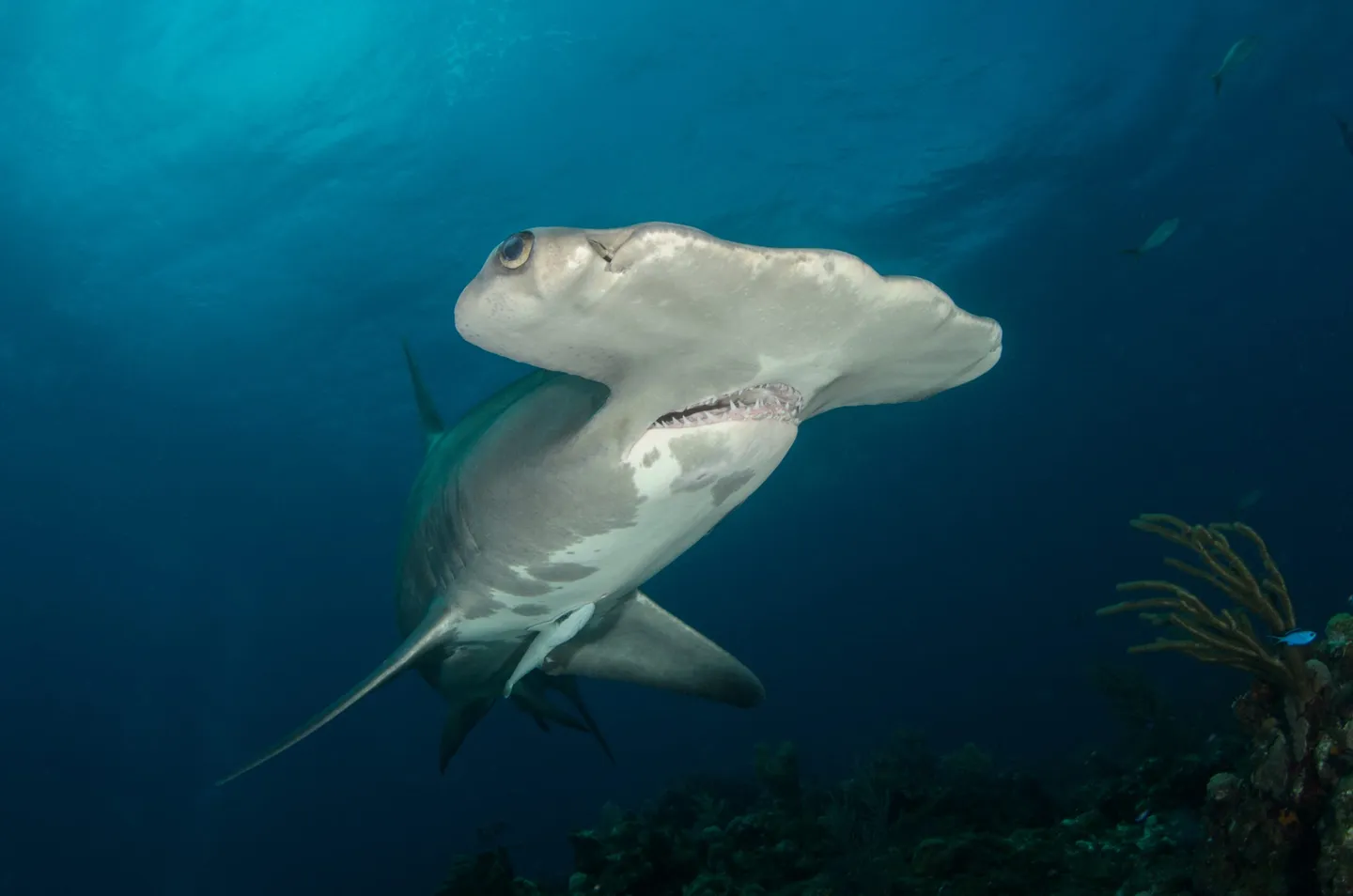
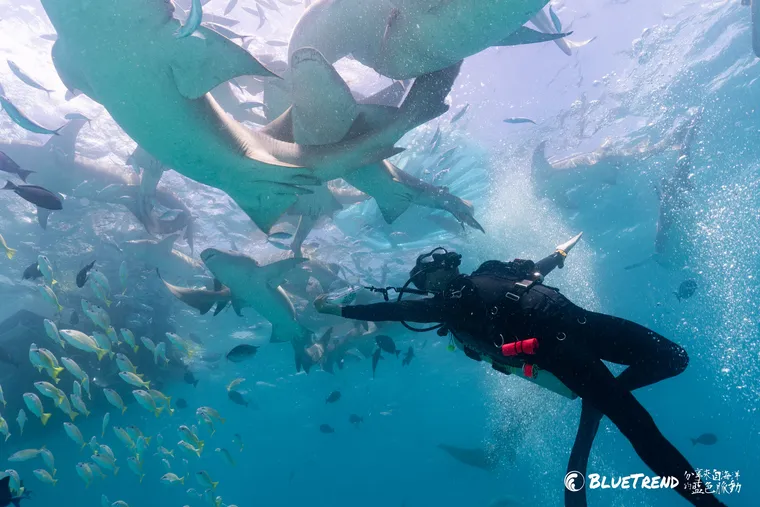
Hammerhead Shark illustration. photo credit:Ben Phillips
From the moment you enter, everyone must jump in quickly one after another and descend immediately. At around 30 m a downwelling can sometimes drag you down to 40 m — at that point you must act decisively: kick diagonally upward (don't fight the current head-on) to escape the current zone, inform the dive guide, end the dive, and ascend to the surface. When boarding the boat, hold the ladder tight, because the hull surges up and down with the swell — let go for a moment and you risk injury. Board quickly and cleanly. If you don't have what it takes, don't push your luck!
Indonesia's Komodo — Batu Bolong
Komodo in Indonesia is absolutely on every diver's must-visit list! photo credit:Nothing Ahead
This is a topography-driven current site, and on my dive there I happened to hit the moment when the tidal flow reversed direction — meaning the site served up both a powerful downwelling and a spinning washing-machine current at the same time. Truly a two-for-one experience at a single dive site. Flung around by what was roughly a 5-knot current, we made a rather undignified scramble to get out — but thankfully all nine of us (including the dive guide) made it back safely. Once was more than enough; nobody wanted to repeat it. When the group watched back the video footage over dinner, everyone still had a chill running down their spines. We collectively named it the "5-knot near-death flow" — because we really were that close. Going forward, even greater caution is the only wise approach. Click here to watch the video!
The Editor's takeaway: When you hit a current, stay calm and master the fundamentals. Respect nature, and you'll find both good fortune and safe passage!
Full article reposted from:
Further reading:
- An Ocean Movement Anyone Can Spark — 吳祖祥, Shark Brother
- Diving into Currents! What Should You Do When You Encounter a Washing-Machine Current, Downwelling, or 3-Knot Flow? 6 Dive Safety Points You Need to Know
- If You Get Swept Away, How Do You Get Rescued? How to Choose Among 4 Types of Signalling Devices — Suitable for Both Freedivers and Scuba Divers!
- 18 Common Questions from New Divers — Are You a Beginner? This One's for You!