Contents(12)
- Recommended Okinawa Diving – Kerama Islands
- Recommended Okinawa Diving – Okinawa Main Island
- Just How Expensive Is Diving in Okinawa?
- Rules to Know When Diving in Japan
- The Hidden Costs of Running a Legal Dive Shop
- Taxes of All Kinds
- Qualified Work Status
- Comprehensive Insurance
- The Choice Between Legal and Illegal Ultimately Falls to the Consumer
- Okinawa Dive Rules Channel Launches!
- Related Links
- Further Reading
Just a 90-minute flight from Taiwan, Okinawa, Japan, is a resort island blessed with crystal-blue waters, exceptional visibility, and rich marine ecosystems. It also offers a distinctly Japanese tourism atmosphere that sets it apart from nearby destinations like the Philippines and Indonesia — and it's precisely these unique qualities that have made Okinawa a favorite getaway for Taiwanese travelers.
But did you know that Okinawa is also an internationally acclaimed diving paradise? The main island alone is home to nearly 100+ dive sites stretching from north to south, encompassing stalactite caves, shark encounters, unique artificial reefs, and even the high-level, strong-current dive sites in the southern area of Itoman. Beyond the main island, the secret dive sites of Kerama Islands National Park and Aguni Island await divers from around the world eager to explore their depths.
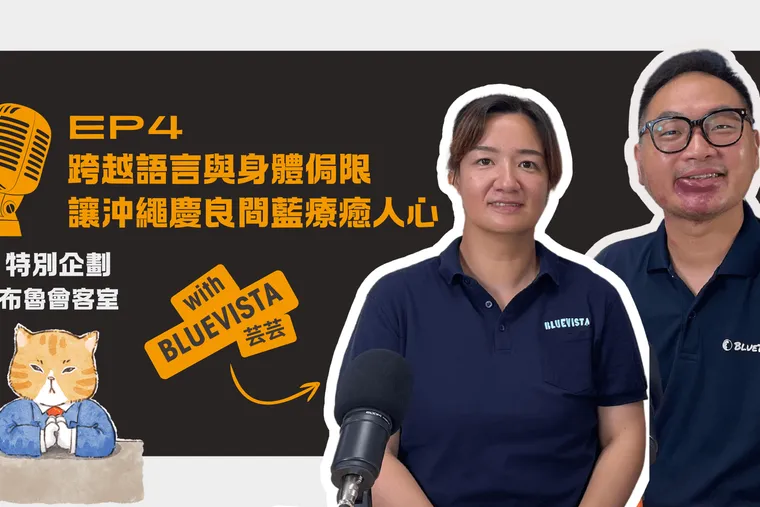
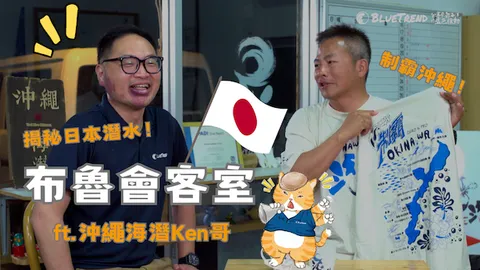
In this episode, we invited Ken from Umi Dive Oki to give all fellow divers a comprehensive and in-depth rundown.
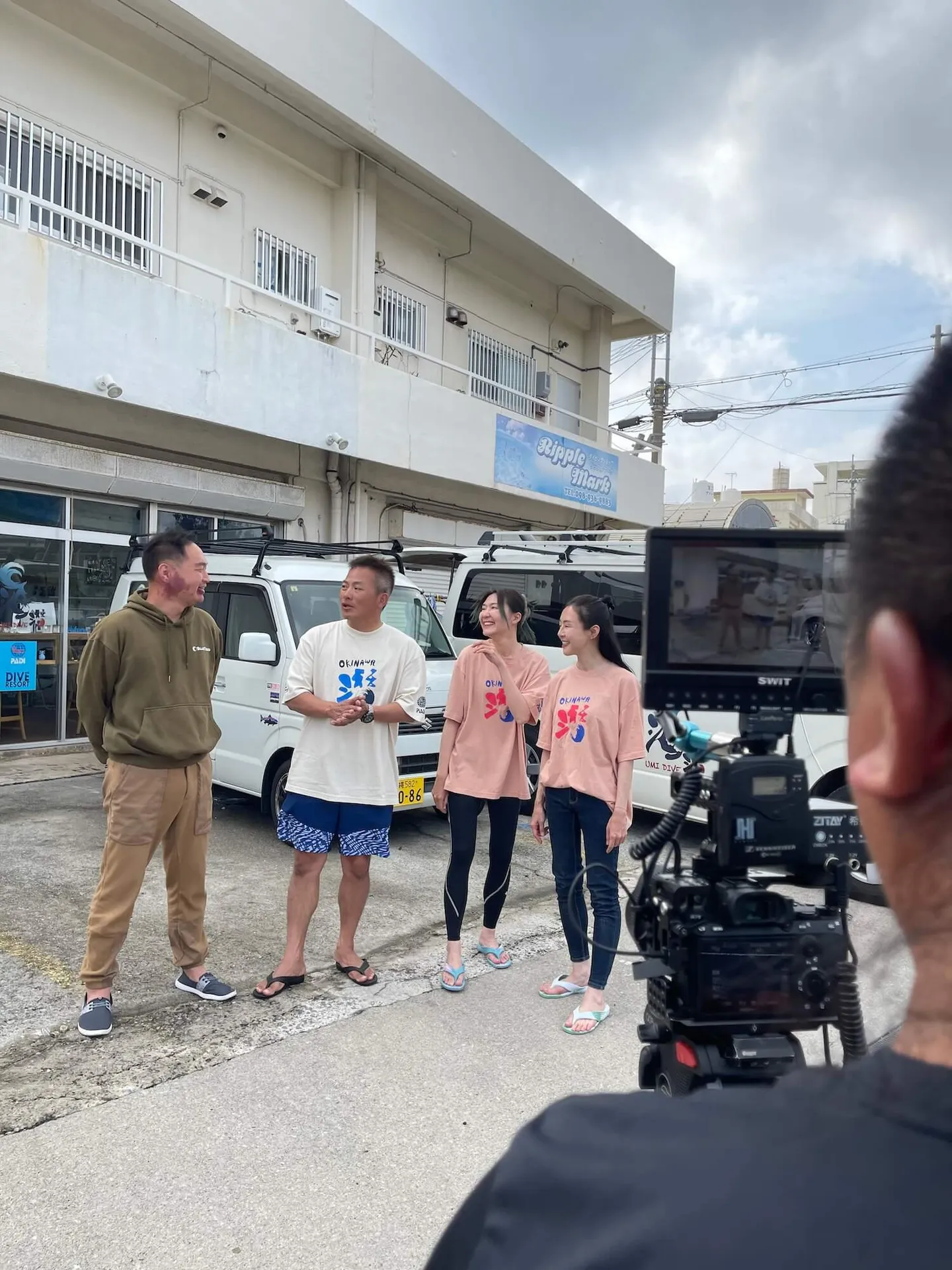
Ken from Umi Dive Oki shares the ups and downs of running a dive shop in Okinawa
Recommended Okinawa Diving – Kerama Islands
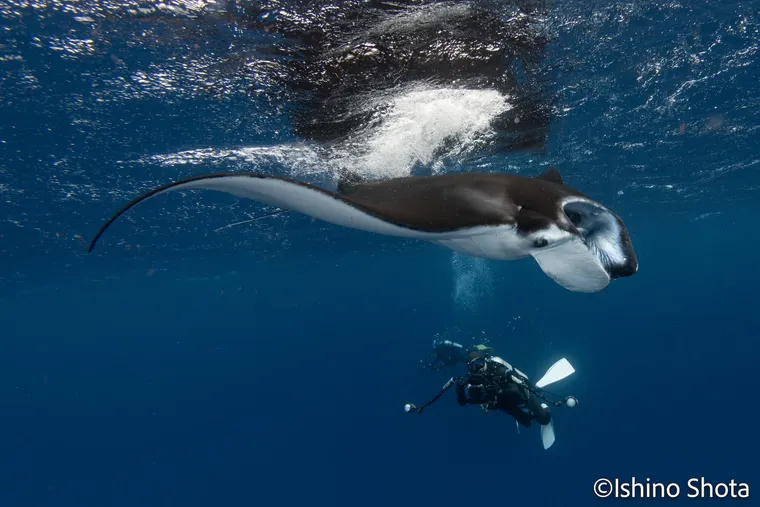
If you hold a diving certification, Ken's top recommendation is to visit Kerama Islands National Park, located to the left of the Okinawa main island. The area boasts visibility rivaling that of Green Island and Orchid Island, along with a thriving coral reef ecosystem. Situated along the path of the Kuroshio Current, divers have the chance to witness a variety of migratory fish passing through — and may even hear whales singing underwater!
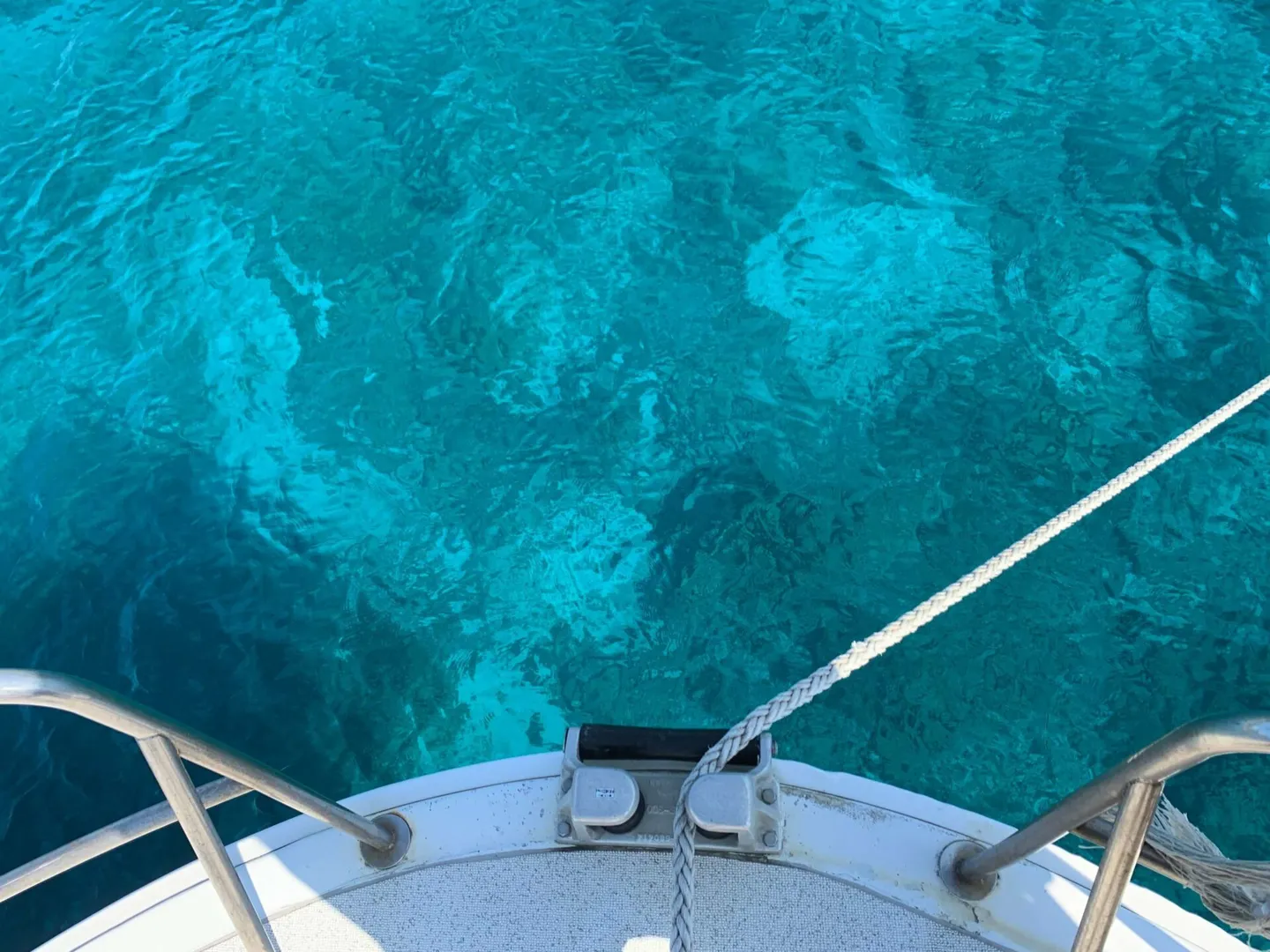
The beautiful Kerama Blue
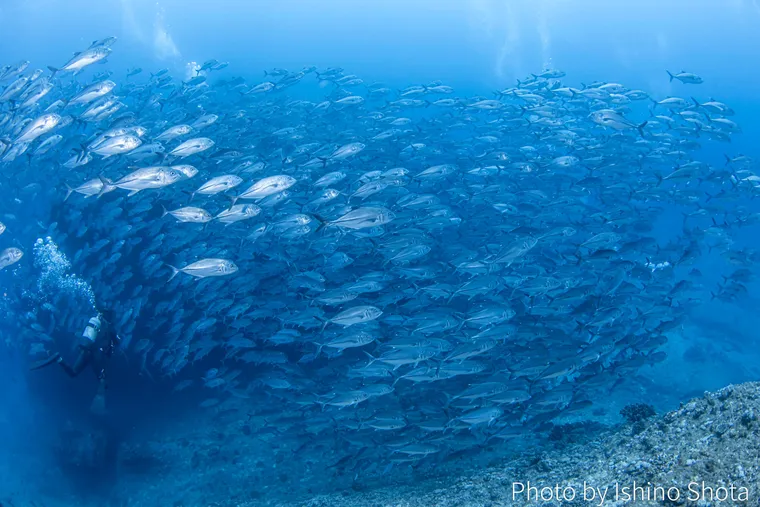
Another spot Ken highly recommends is Aguni Island (あぐにしょとう, Aguni) — a true insider dive site for anyone visiting Okinawa. Located at the westernmost point of the Kerama Islands, it takes a 2-hour boat ride from the Okinawa main island to reach this tiny gem. Here, you stand a chance of witnessing a dramatic baitball of trevally, encountering the Giant Trevally (GT) — the dream catch for anglers — as well as humphead parrotfish and more. However, few dive boats head out to this location, so if you're keen to unlock this dive site, be sure to book and plan well in advance.


Recommended Okinawa Diving – Okinawa Main Island
The Okinawa main island is dotted with nearly 100+ dive sites from north to south. Starting from the northern tip, you can "experience" cave exploration by diving into stalactite caves — an unforgettable experience for divers who have never dived in a fully enclosed space before.
Moving toward the center of the island, you can visit the USS Emmons wreck near Kouri Island. This 100m-long U.S. Navy destroyer was damaged by Japanese Zero fighter planes during World War II. Rather than risk exposing military secrets, the Americans chose to scuttle the vessel. At a depth of 45m, this is a deep dive that offers a haunting sense of wartime history.
Continuing south to Manza Mo, the highlight dive site is Dream Hole. Once inside the cave, you'll need precise neutral buoyancy control; from within the cave, the opening is shaped remarkably like Pikachu. After exiting the cave, you may also get the chance to observe various species of reef sharks swimming by.
Moving further down from Manza Mo, you'll arrive at Sunabe — the base of operations for Umi Dive Oki. This is a relatively safe and accessible site, ideal for beginners. A single dive here can take you past soft coral, an underwater mailbox, and dramatic cliff walls. Sightings of barracuda and sea turtles are also very common.
At the southern end of the Okinawa main island lies Itoman, an advanced-level dive site. Not only does the dive shop screen divers, but the boat operator also conducts a skills assessment the day before — making it an exceptionally challenging dive destination.
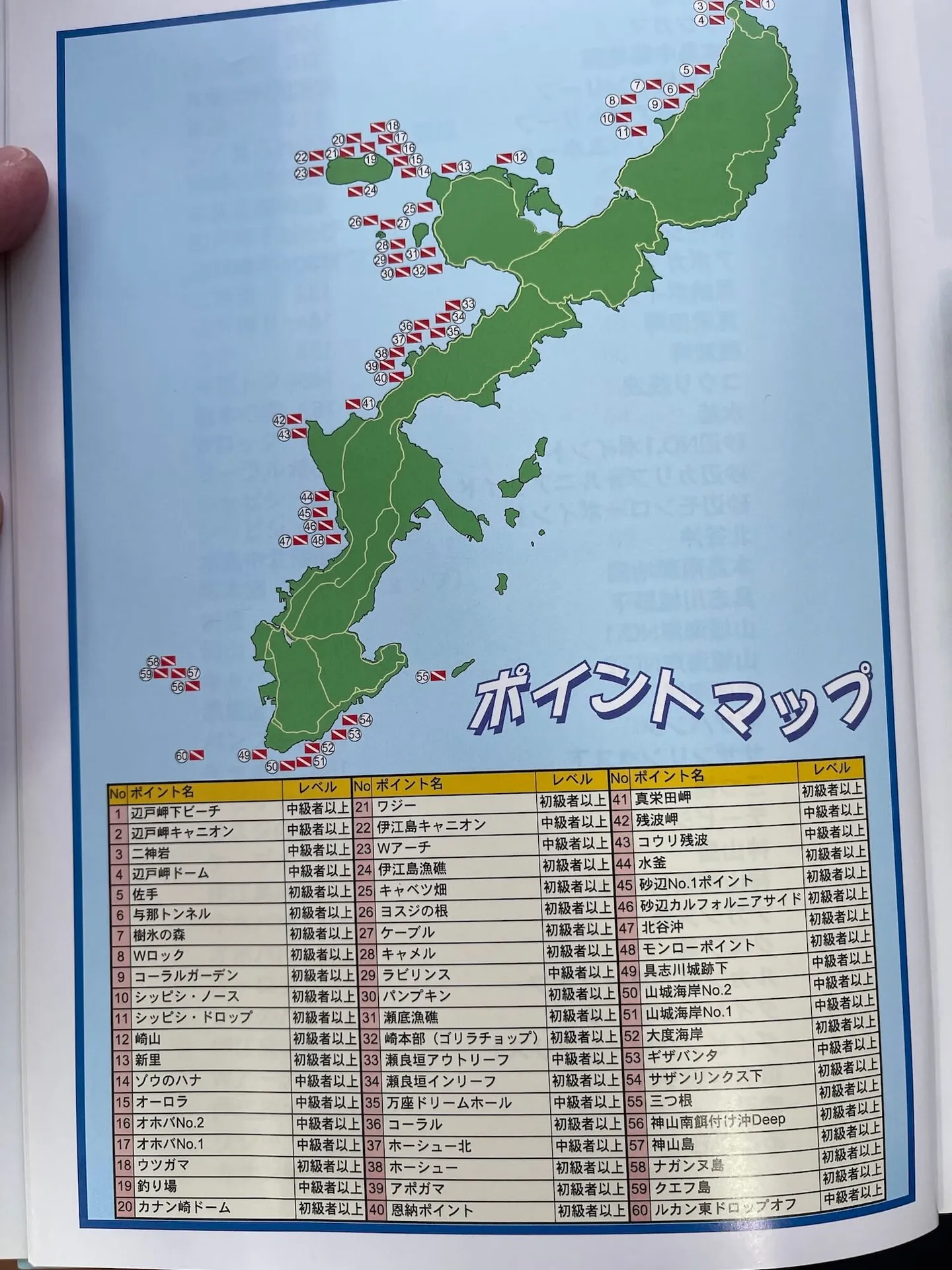
Dive sites are scattered across the Okinawa main island from north to south, waiting for your visit
Just How Expensive Is Diving in Okinawa?
On average, a Japanese-run dive shop charges around ¥24,000 for three boat dives in a day, without equipment (approximately NT$5,011 at the exchange rate on 2024.5.2). For a shop offering Chinese-language services, three boat dives per day including equipment runs around ¥30,000 (approximately NT$6,264 at the exchange rate on 2024.5.2).
For a shore dive with a single scuba tank / cylinder, prices range from ¥12,000 to ¥15,000, which includes equipment and insurance — equivalent to approximately NT$2,500 to NT$3,132.
Ken believes that because labor and living costs in Japan are high, along with various hidden overheads, the final retail price is considerably higher than in Southeast Asia or even Taiwan. That said, Japan offers a safe social environment and a comfortable travel experience — a kind of dive travel experience that no other country can quite replicate.
Rules to Know When Diving in Japan
The most important principle when diving in Japan is to avoid causing inconvenience to others.
Ken, Umi Dive Oki
It's well known that Japanese culture places great importance on not inconveniencing others, and this standard is applied equally to diving guests. If you're on a boat operated by a non-Japanese operator, you may not need to worry too much about these unspoken rules. But if you're boarding a Japanese-operated boat, you must respect local customs and etiquette — don't be the kind of traveler who falls short of that standard.
For example, where you stow your gear and how you move on and off the boat all follow specific conventions. Smoking on the boat or playing music too cheerfully can easily become a nuisance to others.
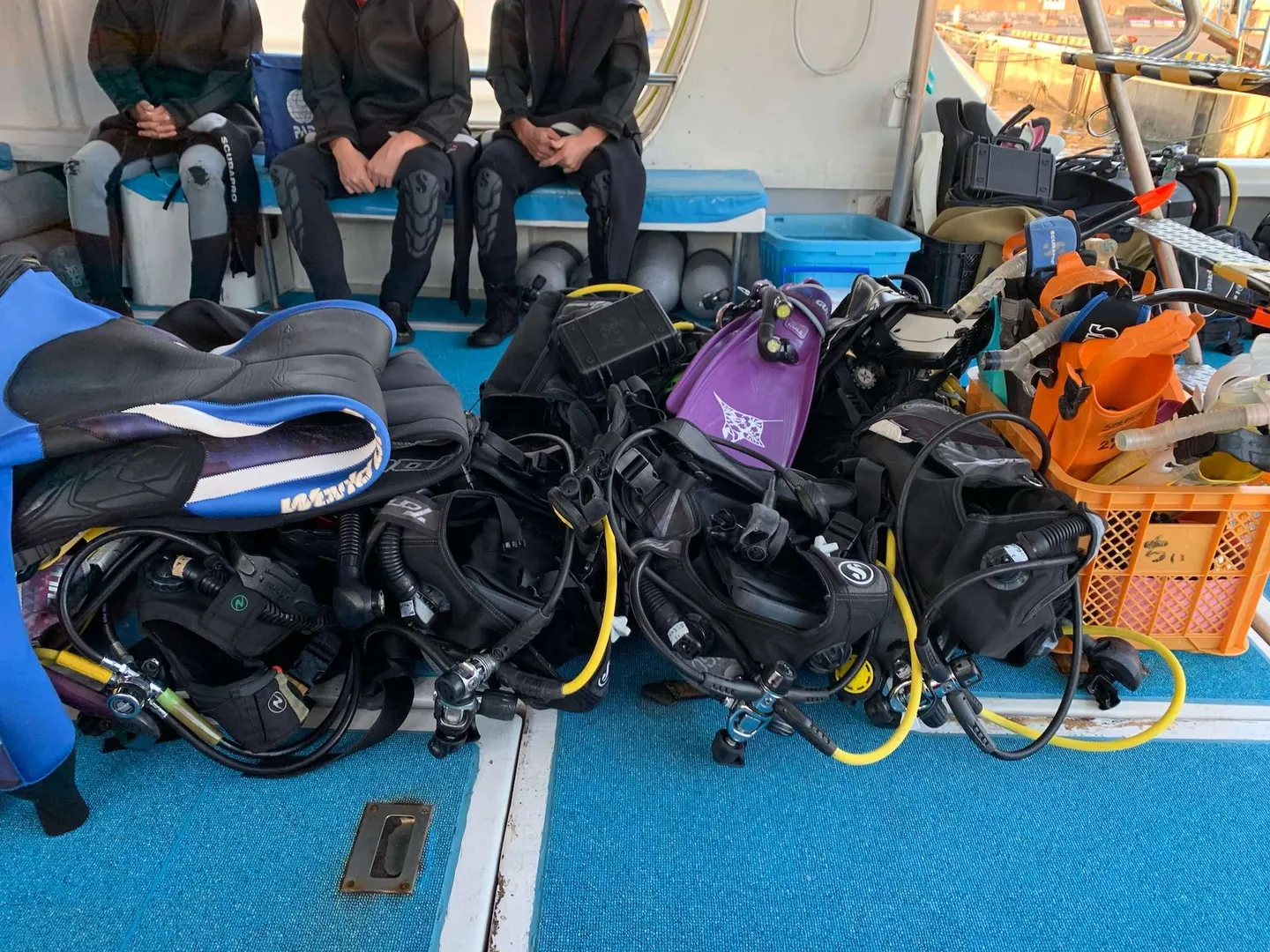
When diving in Japan, follow local etiquette and avoid causing inconvenience to others
"Punctuality" is another detail the Japanese care deeply about. Beyond the agreed meeting time, dive time is something divers frequently get wrong. In Japan, everyone is strictly required to honor the agreed dive duration. Even if your scuba tank / cylinder still reads 100 bar, when your dive time is up, you must surface on time as agreed.
Unless you have chartered the boat exclusively, any deviation will cause inconvenience to others.
The Hidden Costs of Running a Legal Dive Shop
Taxes of All Kinds
Operating a business in Japan means facing a wide array of taxes from day one — including national tax, prefectural tax, municipal tax, local tax, and corporate tax. These can account for roughly 30% of total revenue, leaving only 70% to cover actual operating expenses. The cost of running things by the book becomes immediately apparent.
Qualified Work Status
In Japan, if you wish to work as a diving professional, you must hold not only an internationally recognized dive instructor certification but also an additional Japanese national qualification — the 潛水仕 (diver's license). This is a national examination conducted entirely in Japanese, so before you can legally qualify, you'll also need to put in serious effort to master the language.
Once you have both certifications, the next challenge is your working status. As in many countries, a tourist visa does not permit you to work. You'll need to apply for a "Skilled Worker Visa" in order to legally engage in diving work in Japan. Applying for this visa also requires proof of at least three years of relevant work experience in another country.
All of these challenges quietly drive up the operating and staffing costs for anyone hoping to establish a legitimate business in Japan offering Chinese-language (or other foreign-language) services.
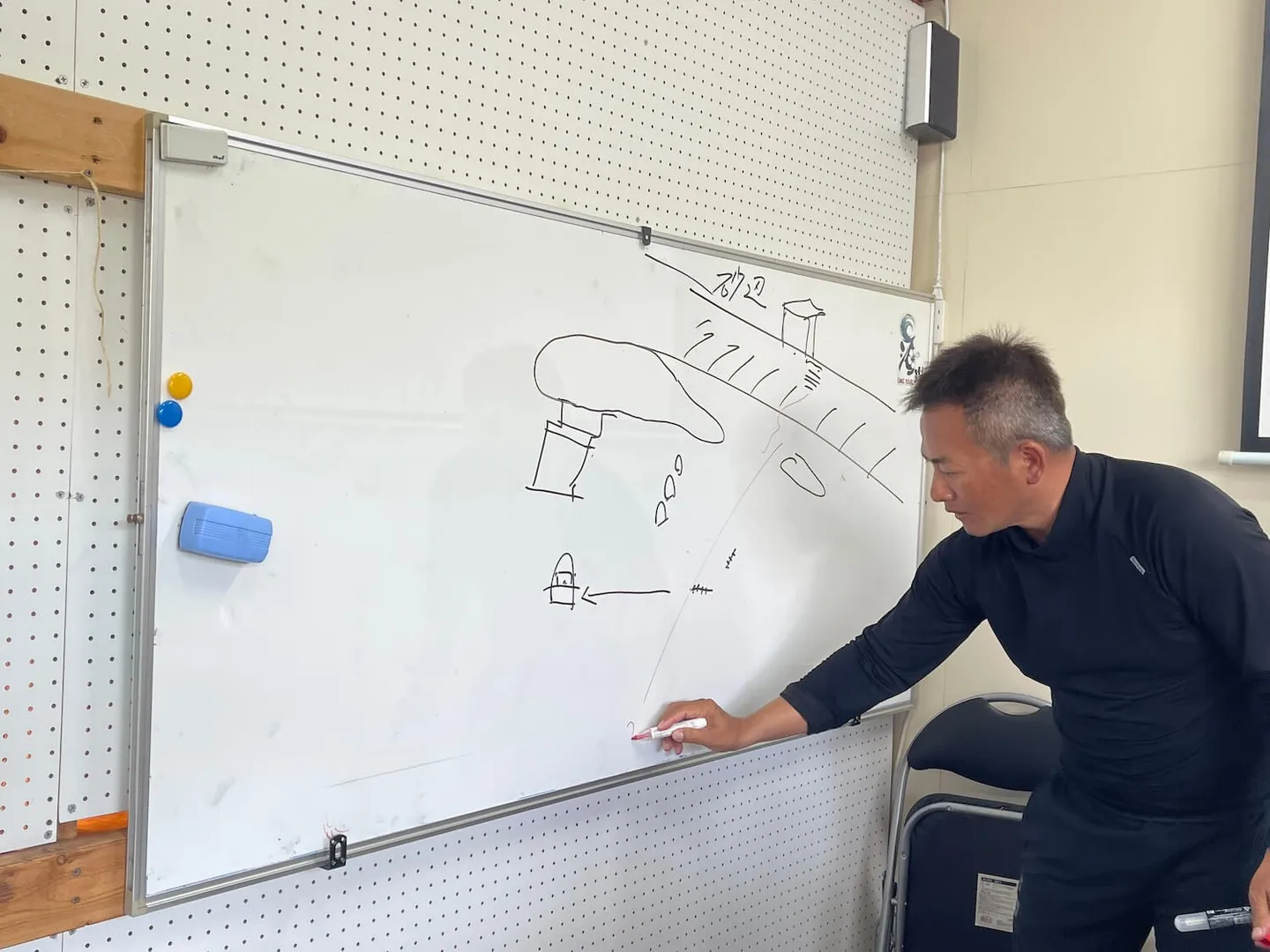
Safety is Ken's non-negotiable top priority
Comprehensive Insurance
Safety is a non-negotiable priority — and this principle is implemented even more thoroughly in Japan. The moment a customer steps into the dive shop, "facility liability insurance" kicks in. When they board the dive vehicle, "commercial vehicle insurance" is activated. When they enter the water, "dive insurance" takes effect. Of course, all of this represents a very real cost.
Ken's background is in promoting international rescue standards, so he is deeply committed to upholding safety principles and managing risk — and he has embedded this philosophy into every aspect of running Umi Dive Oki.
The Choice Between Legal and Illegal Ultimately Falls to the Consumer
Ken also shared, with some resignation, that when two shops charge the same price, the legally operating shop that provides full coverage inevitably incurs unavoidable operating costs.
Illegal operators, on the other hand, don't have to pay these costs — yet may still charge customers the same rates. Some even undercut their competitors precisely because they don't bear these expenses. Consumers may think they're getting a good deal, but they're unknowingly putting themselves at risk.
The ocean in Japan is a free ocean — but that freedom is built on whether or not you respect the environment.
Ken, Umi Dive Oki
Okinawa Dive Rules Channel Launches!

Starting May 10, 2024, Ken and his team will begin airing their brand-new original series "Okinawa Dive Rules." The show takes a fresh perspective and a new viewpoint to introduce viewers to Okinawa, following two diving novices as they progress step by step from an Open Water (PADI/SSI cert) course, building their scuba diving skills along the way — while sharing hidden-gem local itineraries full of fun, interesting, and delicious Okinawa experiences. Subscribe to the "Okinawa Dive Rules" channel now to stay up to date!
Related Links
Further Reading
Frequently Asked Questions
How is a BlueTrend dive trip different from an unknown, no-name dive group?
Choosing us means full peace-of-mind protection and a smooth experience from start to finish. Every trip we run holds to three things.
First, full legal protection and a professional dive leader: we strictly follow Taiwan's travel regulations and provide complete travel-agency liability insurance, travel insurance, trip-inconvenience insurance and dive insurance. Every group is accompanied by a certified, foreign-language dive leader who joins you on both the dives and the land itinerary, liaising seamlessly with local dive shops and operators on your behalf to keep things running smoothly — the person our travellers trust most.
Second, fully licensed with secure payments: every payment goes into a licensed travel agency's account, with multiple safe payment channels (bank transfer, credit card and more) and a legal collect-and-remit receipt, so every transaction is open, transparent and protected, avoiding the fraud and dispute risks of transferring money privately to an individual.
Third, hand-picked quality we vet in person: every trip, dive site and partner shop is scouted on the ground by our own team, from the guides' professionalism and safety standards to the food, lodging, environment and service details on land, all vetted by us so you don't get caught out.
I want to sign up for a dive trip. Are there certification-level or logged-dive requirements?
Each dive site is different, so the entry bar varies. 'Bali Tulamben', for instance, is relatively beginner-friendly. 'Malapascua in the Philippines' is also beginner-friendly, but since thresher sharks tend to cruise between 20 and 30 metres, we recommend AOW certification with 20+ logged dives to enjoy this trip comfortably. For 'the Maldives' or 'Palau', we suggest AOW with 50+ logged dives for a more relaxed experience. If you're not sure whether your experience fits the trip you want, message us and our dive editors will assess it and help you find the trip you'll feel safest on.
Can I join if I'm signing up alone? How are rooms arranged?
Plenty of our travellers sign up solo! For rooms and beds, we prioritise pairing you with a same-gender traveller, and if you'd rather have your own space you can pay the difference to upgrade to a single room. For the diving, our professional leader will pair you with a suitable buddy, and with the happy vibe on our trips you'll quickly make a great group of dive friends. Many people sign up alone, make new friends, and end up organising the next trip together!
Does the trip fee include dive insurance, gear rental, taxes and instructor tips?
It depends on the trip, the destination's regulations and the local operators. Every BlueTrend dive trip has a detailed web page with a clear 'included / not included' list, transparent and with no hidden charges. All payments are collected by a licensed travel agency, with a standard-form contract for your protection.
I'm a new diver / haven't dived in a long time — will I fall behind the group?
Before you complete your booking, our team assesses a suitable trip based on your certification level and experience. Before departure, we strongly recommend taking time to refresh in Taiwan with an instructor, or a fun dive to get your feel back. On the trip itself, our professional dive leader groups and pairs everyone by experience, keeps a close eye underwater on travellers who need extra care, and steps in to help right away.
Will the photos and videos taken during the trip be shared with us?
During the dives, 'safety' is always the leader's top priority, so whenever it's suitable and safe the leader will capture great shots and record the best moments. During or after the trip, we compile a cloud album for all travellers to download, so you go home loaded with memories!
Besides your scheduled trips, can you arrange a private group charter or independent travel for me and my friends?
Absolutely! Besides group trips, we also arrange private group charters and independent travel. We can communicate, enquire and coordinate services with local operators based on your needs, saving you time and effort and taking the language barrier off your plate, to tailor the smoothest, most reassuring dive trip just for you. Contact our LINE support and our editors will arrange it for you!