Contents(9)
- The Vision Behind the Project
- The Challenges of Becoming a Marine Citizen Scientist
- Citizen Science Biodiversity Quantitative Monitoring
- What Is Qualitative vs. Quantitative?
- Why Build a Marine Life Database?
- Photographers
- Researchers
- Marine Citizen Science Database Policy
- Join Us as a Marine Citizen Scientist
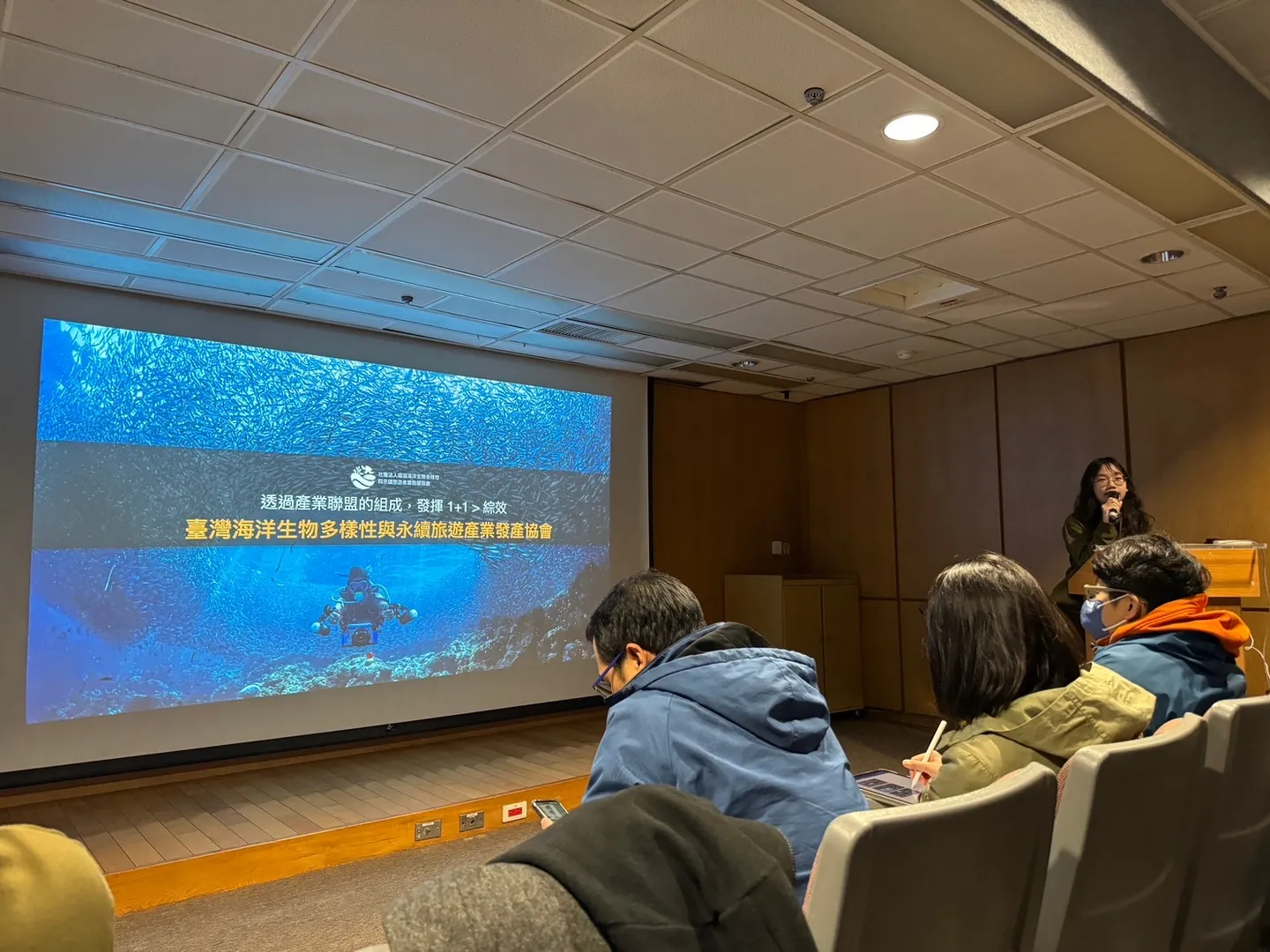
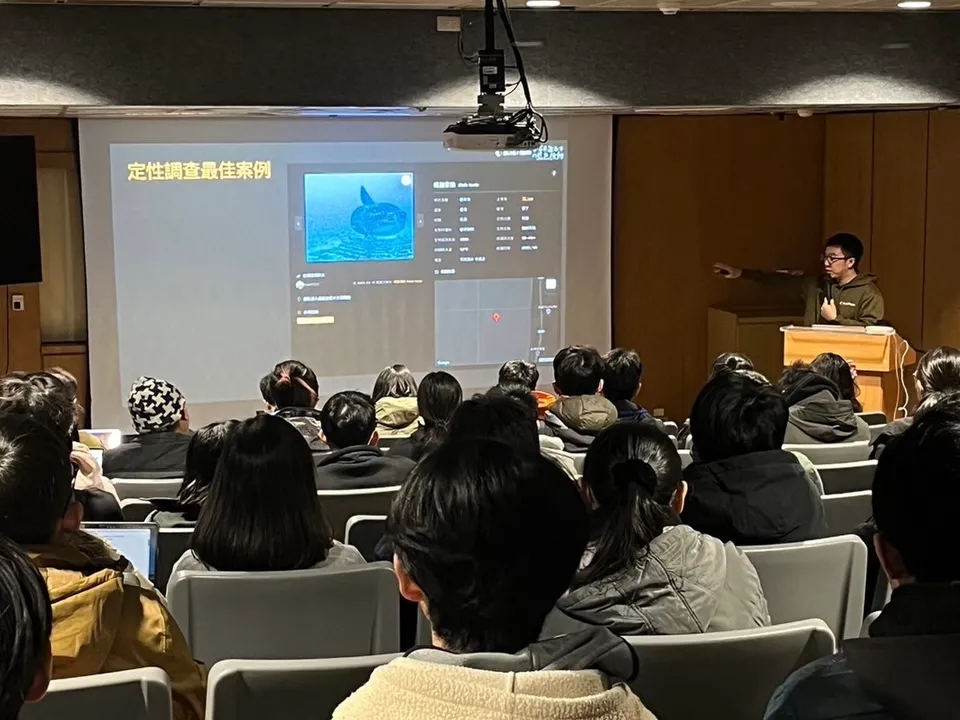
On January 24, 2024, Blu attended the 2024 Animal Behavior and Ecology Symposium, where experts from a wide range of fields gathered to share on diverse topics. Among them, the BlueTrend editorial team was honored to be invited to present on the theme of "When Citizens Meet Science." Through the sharing of project coordinator Coach A-Xian and biodiversity database planner Yu-Han, they explained the original vision behind the initiative: why was the database established in the first place? Read on as Blu takes you through it all!
The Vision Behind the Project
People take up scuba diving for all kinds of reasons. Blu has heard them all — some divers go underwater simply to zone out and enjoy a moment of quiet; others dive to conduct research; and still others dive specifically to seek out beautiful creatures and photograph them.
Coach A-Xian shared: "Whenever I spotted something beautiful and unusual underwater, I'd naturally snap a photo of it — but I often had no idea what the creature actually was. After surfacing, even the instructors around me rarely knew its scientific name. Then, on one chance occasion, I shared a photo with a marine researcher, who cried out in amazement: 'Wow! This is a species that has never been recorded in Taiwan before — and you've just documented it.'"
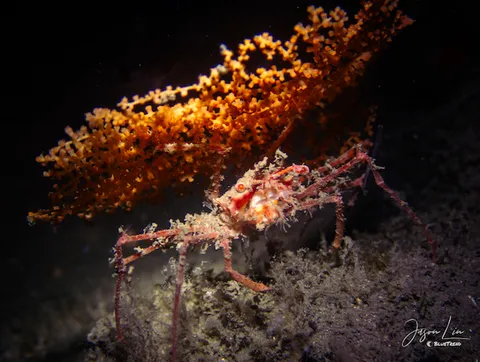
A spider crab of the family Latreiliidae, never previously recorded. photo credit:Jason Lin。
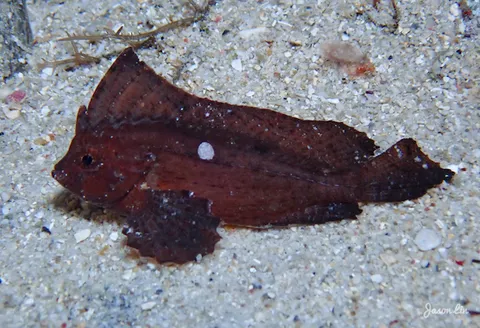
Bare-chested sailfin scorpionfish Ablabys gymnothorax. photo credit:Jason Lin。
Divers who get in the water frequently may, with a casual shot, capture an image of a species that has never been documented before — yet remain unaware of its significance simply because they don't know its scientific name. Researchers, on the other hand, rarely have enough time to dive regularly and cannot accumulate a large and diverse collection of marine life photographs. So why not bring these two needs together, fill each other's gaps, and help both parties achieve their goals?


The Challenges of Becoming a Marine Citizen Scientist
Marine citizen science is an approach to scientific inquiry in which members of the public participate in collecting ocean-related observational data across different regions and time periods. Through statistical analysis of the reported data, this participation can enrich marine databases and strengthen ocean monitoring capabilities. However, becoming a marine citizen scientist is no easy task. There are three main challenges:
-
A certain level of diving ability is required: Marine citizen scientists need to be able to dive in order to capture clear images of marine life. While outdoor activities are growing in popularity, finding a partner with diving skills remains difficult, as scuba diving has yet to become a widely accessible sport.
-
Basic underwater photography skills are needed: Beyond diving ability, marine citizen scientists also need fundamental underwater photography skills. The underwater environment differs from land photography in many ways — light refraction, buoyancy control, and visibility are all critical factors that affect the quality of images.
-
Uploading photos is somewhat cumbersome: Most databases today are cloud-based. Feedback has shown that while many divers take a series of photos on every dive, the additional step of "uploading to the database" after surfacing is enough to put most people off — leaving photos locked away on a camera memory card forever.
Citizen Science Biodiversity Quantitative Monitoring
What Is Qualitative vs. Quantitative?
| Qualitative | Quantitative | |
|---|---|---|
| Definition | A general census conducted freely within an area, recording the presence, species composition, or notable behaviors of organisms observed. | Sampling several independent plots of equal area within a region and recording the species and numbers of organisms found within those specific plots. |
| Scope | No defined specific area. | A defined specific area. |
| Frequency & Time | No defined sampling frequency or time. | A defined number of repeated samples. |
| Advantages | Can broadly collect records across a large range of areas and species. | Records are limited and controlled within the sampling area. |
| Disadvantages | Cannot provide precise, comparable data. | Collection is restricted to within the sampling area. |
| Examples | 1. Species inventory surveys. 2. Life history studies. 3. Specific behavioral observations. | 1. Substrate distribution. 2. Biological resource assessment. 3. Individual counts and biomass of organisms. |
Qualitative data provides more detail and allows for a deeper understanding of the factors behind each observation, while quantitative data accumulates a sufficient number of results to identify trends or verify research hypotheses.
The hope is that through the marine citizen science database, public participation can create a three-way win — making citizen science something that every member of the public can actively practice. Together, we can leave behind a richer record of precious marine life for this beautiful ocean, and witness positive change continuing to unfold.
Why Build a Marine Life Database?
Photographers
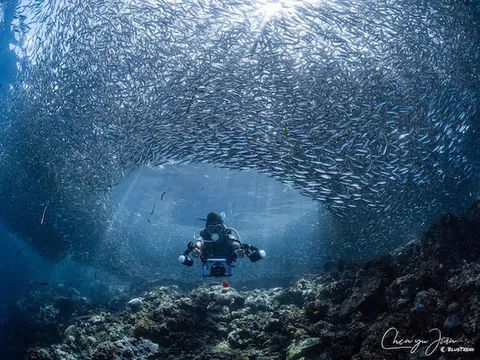
Sardine Run in Bohol. photo credit:簡晨宇
After an underwater photographer surfaces, the typical workflow tends to look like this:
-
Pick the best-looking photo and start editing it.
-
Some photographers submit it to a competition or post it on FB.
So what happens to all the other photos? Are they deleted, or sealed away on a memory card forever? Could it be that a casually discarded photo was, in fact, a once-in-a-lifetime image never captured before?
Researchers
Researchers who are occupied with academic work often lack enough time to dive and photograph marine life. If an integrated database were available, they could quickly search it whenever data is needed — efficiently collecting information and records. This way, every photograph has the chance to become an important piece of research data.
| Sharing Photos on Social Media | Building a Database | |
|---|---|---|
| Data Organization | 1. Social platforms cannot require uploaders to fill in data fields. 2. Social platforms cannot export all data records. | 1. Data formats can be standardized for easy readability. 2. Data is organized systematically, saving significant manual labor. |
| Community Identification Mechanism | Allows everyone to participate in species identification, but without moderation, errors are likely. | 1. Community identification is integrated, embodying the spirit of citizen science. 2. Researcher verification is added to reduce data error rates. |
| Ease of Uploading | Uploading is extremely convenient — just post something. | Uploading is more complex, and many people give up because of this. |
While social media allows photos to be shared quickly and conveniently, systematic information management is far more important in the long run. The future ambition is to make the database multilingual and extend its reach worldwide, enabling divers everywhere to submit marine life photos from their own regions.
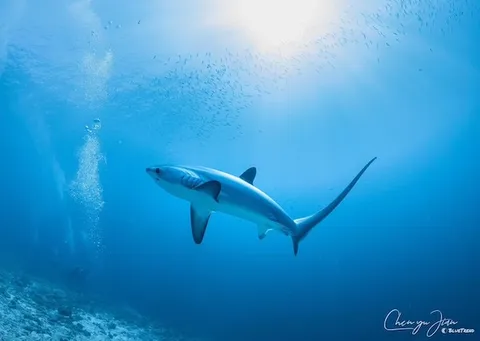
Thresher Shark at Malapascua. photo credit:簡晨宇。
Marine Citizen Science Database Policy
-
The database is for display purposes only; copyright remains with the uploader.
-
Photos cannot be downloaded by right-clicking, protecting copyright. Any third-party wishing to use an image must obtain the uploader's consent.
Join Us as a Marine Citizen Scientist
Since 2021, BlueTrend has been working to build a marine citizen science biodiversity database, harnessing the power of civil society to gradually construct a foundational marine life data record for Taiwan.
This year, courses will be offered in various regions, with the hope that more people will join the ranks of marine citizen scientists. Together, let's protect that shimmering, azure sea!
Further Reading: