![[Diving with Datou Shi] 3 Steps to Reading the Windy App — Judge Ocean Conditions for Diving on Your Own](/_images/efb3448a1075-1440w.webp)
Contents(3)
"Instructor, can we dive at Chao Jing tomorrow?" "Boss, the wave height tomorrow looks like 1.5m — does that mean we can't dive at Chao Jing?"
After becoming a dive instructor, Datou Shi has been teaching full-time at a dive shop this year and leading Fun Dive guests who come specifically to dive at Chao Jing. The two questions above come in almost every day before an activity. Bad weather always makes diving uncomfortable, yet for a diver who has been cooped up for a long time and finally gets a day off, being unable to get in the water and breathe underwater is truly gutting. So this time, Datou Shi wants to share how to judge whether conditions are suitable for diving in just 3 simple steps.
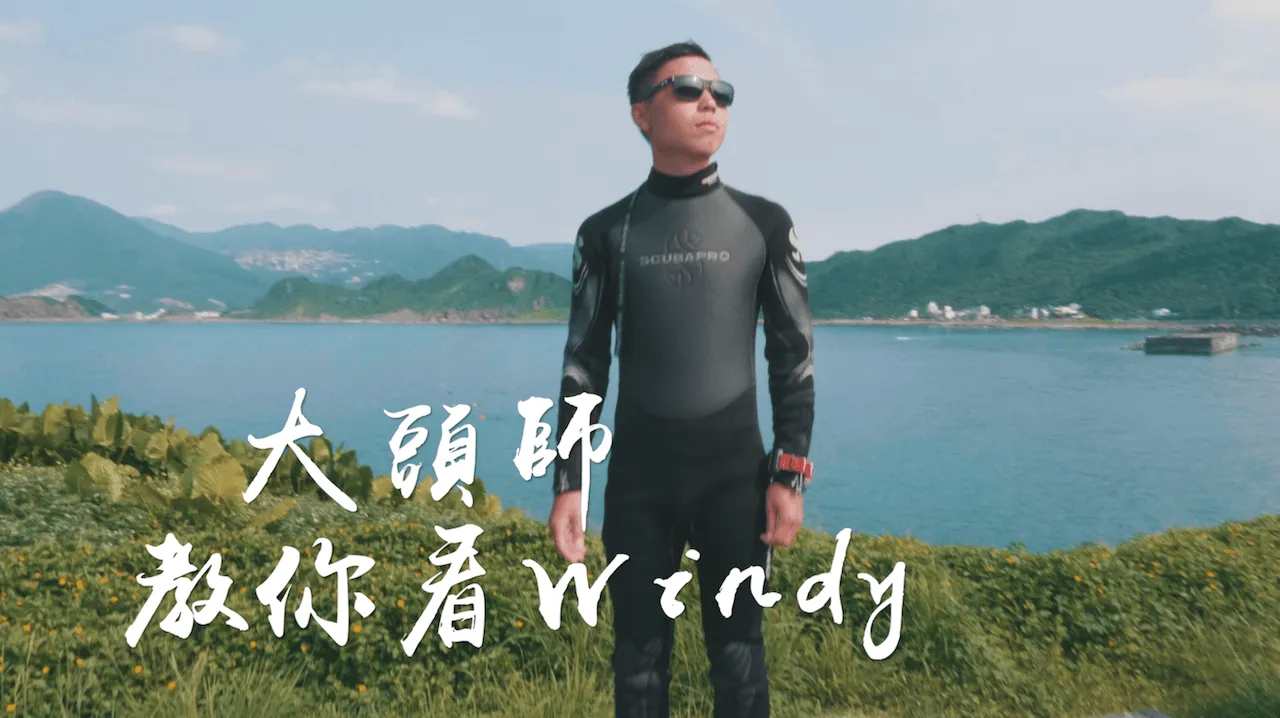
Step 1: Identify Your Diving Area
Obviously — you'll have decided where you're diving ahead of time! Hold on, hold on. What we're talking about here is the concept of the broader area, because the terrain makes a huge difference to whether diving is suitable or not!
Let's take Green Island as an example. Green Island's water temperature is comfortable and it's actually suitable for diving year-round, but dive shops still decide which dive sites to use based on the direction of the seasonal winds. For instance, when the northeast monsoon starts blowing in winter, the northeastern side is not suitable for entering the water. Conversely, when the southwest airflow is strong in summer, the southwest side of Green Island is generally avoided.
That said, this is still a broad overview. Let's use Wanghaixiang Bay (Chao Jing Bay), where Datou Shi is often found, as a more specific example. The diving season each year is roughly May to September — an even easier way to remember it is from after the Dragon Boat Festival to before the Mid-Autumn Festival, when both water temperature and wave conditions are more suitable for divers.
Once we know our diving area, we can narrow things down to specific dive sites.


Step 2: Terrain + Windy App — A Combined Assessment of Dive Sites and Entry/Exit Points
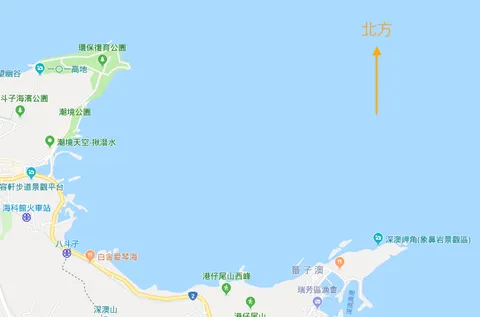
Let's get into the details using Datou Shi's home turf. First, let's establish one key concept: Wanghaixiang Bay opens toward the northeast.
Next, please download the Windy App.
If you're searching for it, note that there are 2 Windy apps — make sure you download the blue one on the right!
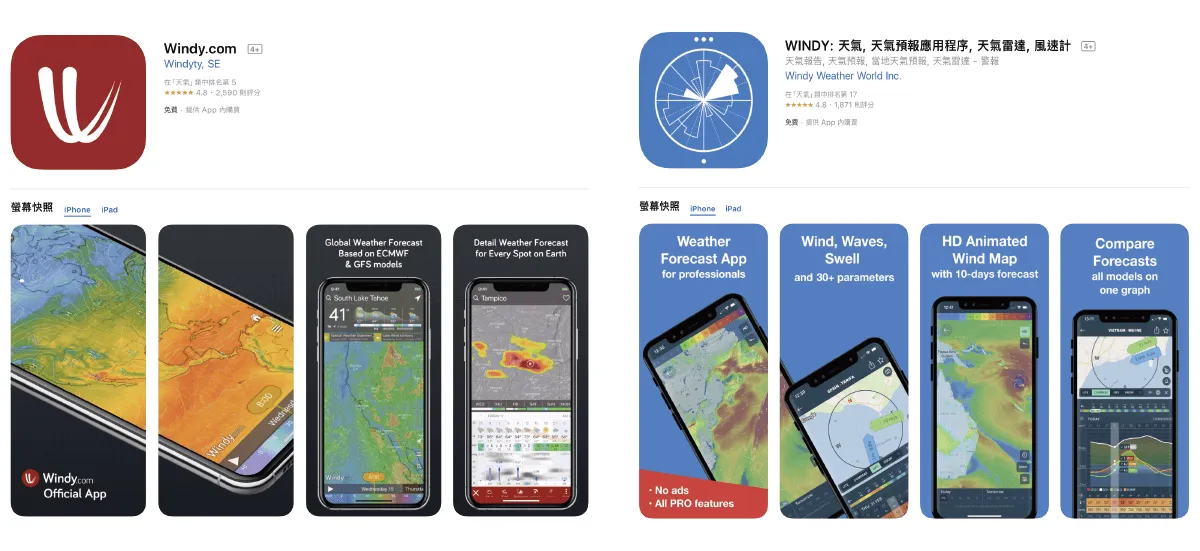
After downloading Windy, you can select your location. Search for Taiwan — Chao Jing Park, tap to open it, and you'll see various pieces of information sorted by time. The three data points divers need to pay most attention to are:
-
Swell, m
-
Swell size, m
-
Swell period, s
Swell size, m: Wave Height
As a general rule, we advise against diving when the wave height exceeds 1m. For boat dives, the vessel can rock heavily on the surface; for shore dives, it makes entry and exit difficult and risky, and divers waiting on the surface are prone to seasickness. But it's never quite that simple — if we closed up shop every time it exceeded 1m, the poor Northeast Coast would barely have any days to operate!
Swell, m: Swell Direction
The devil is in the details! Remember how we mentioned that Wanghaixiang Bay opens toward the northeast? That means when the northeast monsoon starts blowing, northeast swells build up enormous energy and pound straight into the exposed face of the bay — making it unsuitable for diving. However, sites directly across from Chao Jing, such as Shen'ao and Crystal Palace, may actually be sheltered enough to dive.
So when the southwest airflow strengthens in summer, certain dive sites in Kenting and Xiaoliuqiu may become unenterable, while Wanghaixiang Bay — sitting on the sheltered side — could be as calm as a lake.
For example, at the time of writing (2019/7/3), opening Windy to check Saturday's sea conditions showed a seemingly alarming wave height of 1.6m — but because the swell was coming entirely from the south, conditions that day were reasonably assessed as quite suitable for diving! (Forecasts are for reference only — always evaluate actual on-site conditions.)
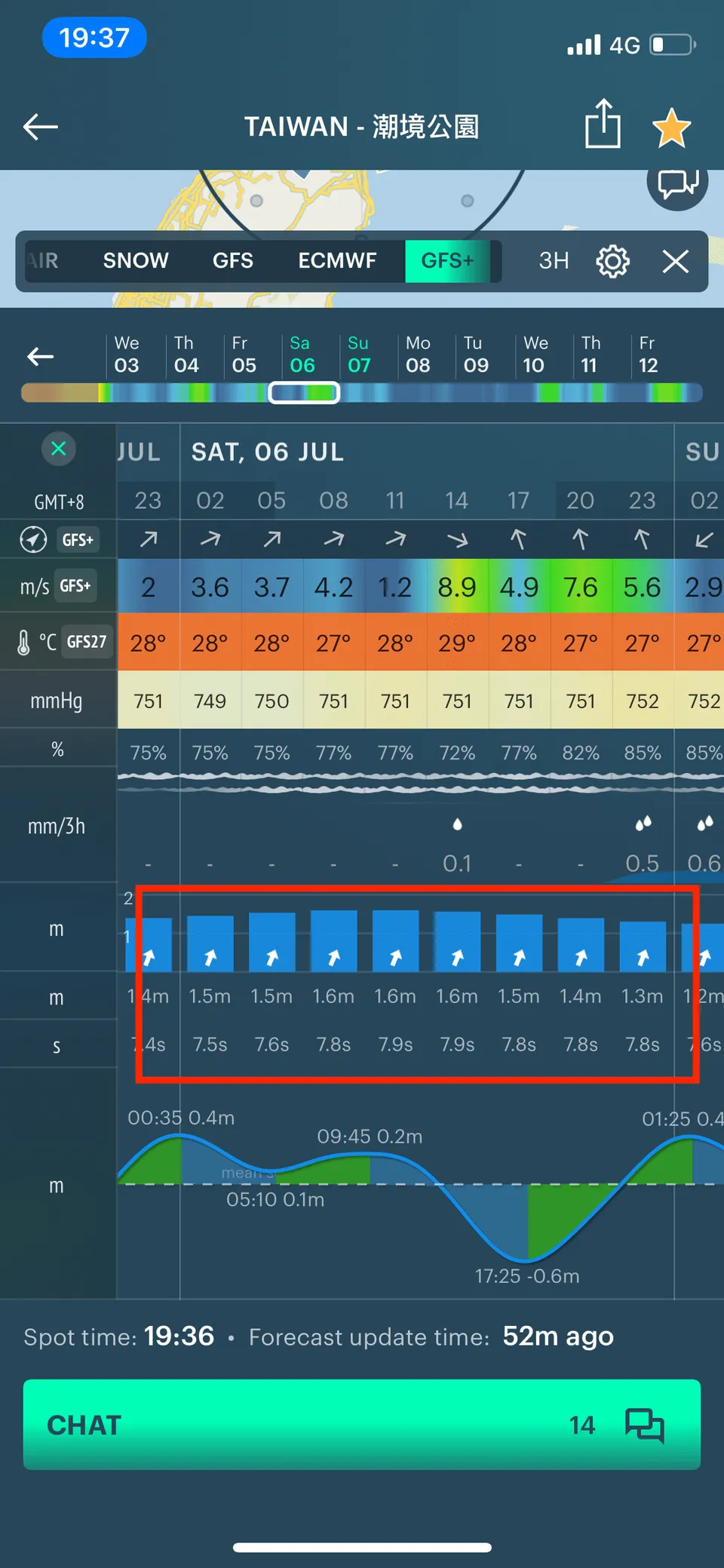
Even though the wave height forecast is 1.6m, you can still dive — kisses!
There's also the finer detail of choosing your entry and exit points. Those who have been to Wanghaixiang Bay will know that the standard entry point at Chao Jing is next to a metal frame, using a giant-stride entry, and the exit point is usually through the sea channel beside the metal frame — fins are removed before walking ashore. That channel runs in a southeast direction, so if the swells are coming from the southeast, powerful wave energy will surge into the channel and create a back-and-forth surging motion, making entry and exit extremely hazardous for divers carrying heavy gear. We often see freedivers getting knocked around and ending up scraped on the shoreline.
Conversely, the other entry point at the Fishing Reef has a channel mouth facing directly northeast — so when there is a northeast swell running, we try not to use that point for entry or exit.
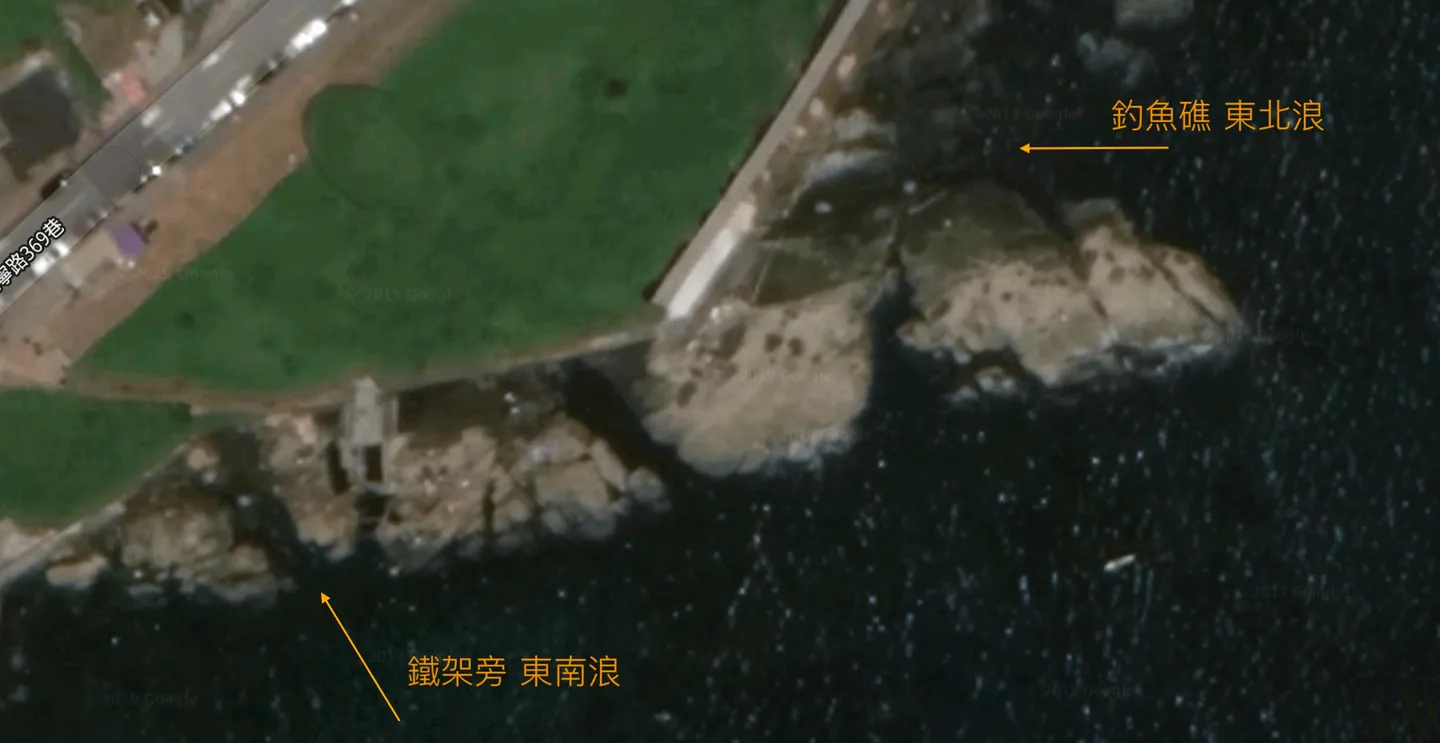
There's a trick to choosing your entry and exit points
Swell period, s: Wave Period
If you still remember your Open Water course, you'll recall that the wave period is the distance between the crests of two successive waves. Most waves are driven by wind and their influence is limited to the surface layer. However, when powerful typhoon winds push across the open ocean from a great distance toward shore, long swells — also commonly called groundswells — are formed. Marine scientists generally consider a swell period of 10 seconds or more to be a groundswell; Taiwan's Central Weather Bureau defines a groundswell as a wave height exceeding 1.5m with a mean wave period of over 8 seconds, and issues warnings accordingly.
Groundswells carry significant energy and affect deeper water, so divers underwater will often feel a distinct back-and-forth surging. If you've just entered the water, moving to deeper depths will reduce the effect. If you're about to exit and can't avoid the surge, stop kicking when the swell pulls you back, then kick actively when the next swell pushes you forward — this lets you make efficient progress. When moving between reef sections, be careful not to be thrown against the rocks by the surge.
Putting on and taking off your fins is critical — never linger in the wave zone while slowly fussing with your fins. Build the habit of practicing fast fin changes during entry and exit.
Step 3: Choosing the Best Time to Enter the Water
Once you've selected your dive area and dive site, everyone wants to know when the current will be smallest, when visibility will be best, and so on. This is where your Open Water course knowledge comes in handy again.
The 1st and 15th day of each lunar month are the days of the spring tides, when the tidal range is at its greatest. More water needs to move in and out of the same space in the same amount of time, which naturally means stronger currents. So if you have flexibility in your schedule, aim for days with neap tides!
Additionally, there are two high tides and two low tides every day. Based on experience, currents are at their weakest and visibility at its best around the moment of high water slack and low water slack. The first incoming tide of each day brings suspended particles up from the depths and reduces visibility, so visibility after the first flood tide tends to be poor.
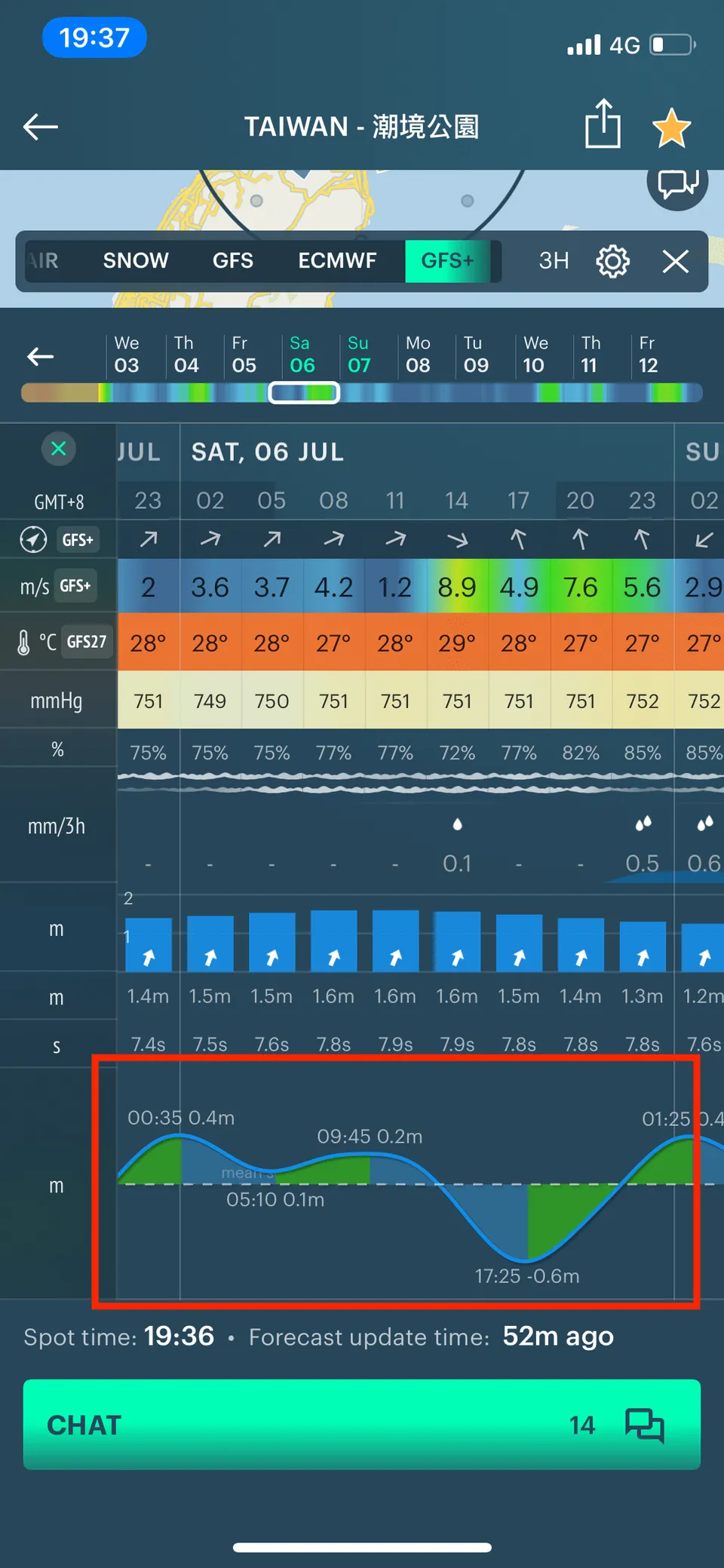
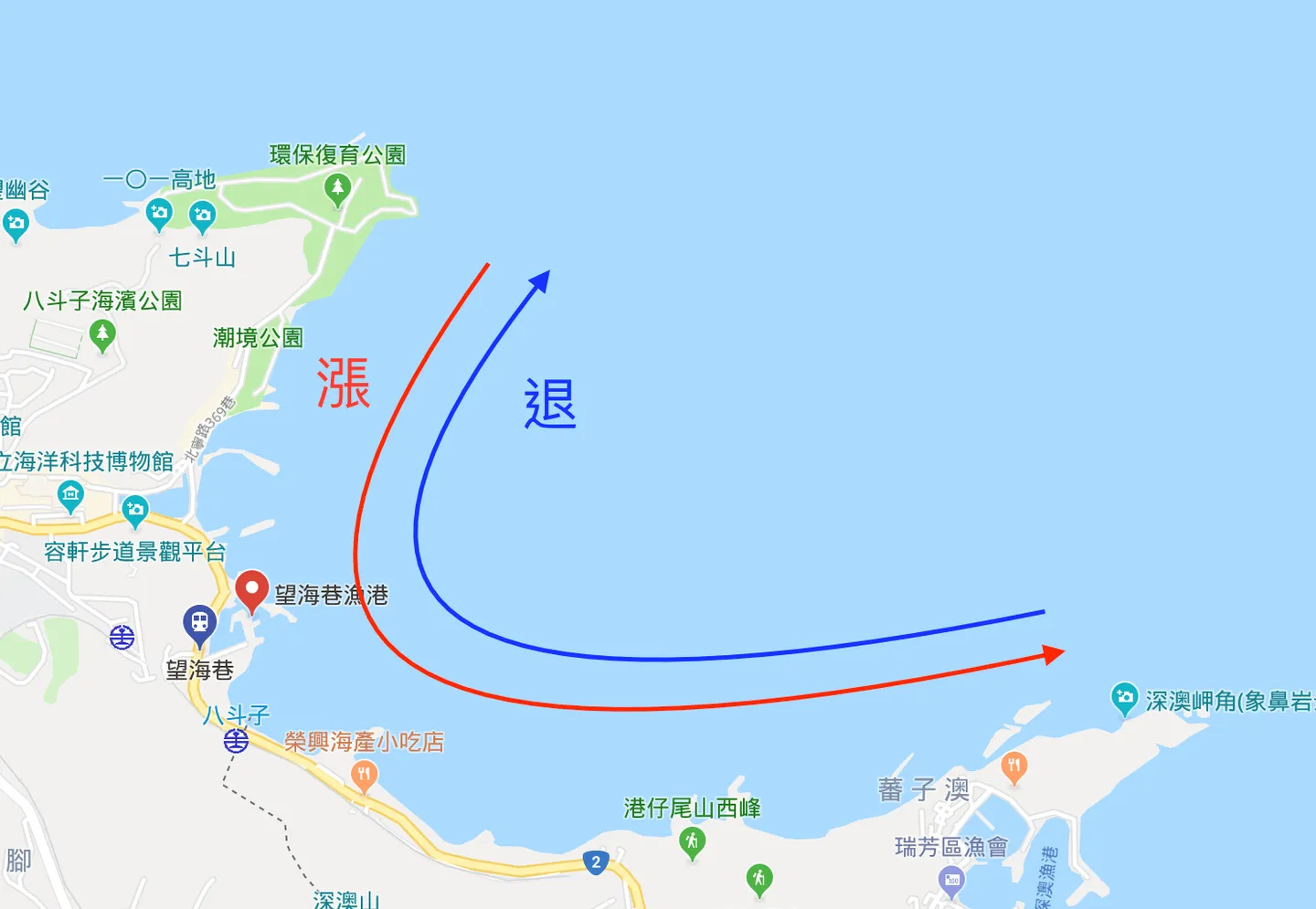
Finally, in Wanghaixiang Bay the incoming tide floods in from the northern mouth of the bay, so when diving in the marine reserve, the current will carry you inward. Conversely, the outgoing tide will pull you outward. You can use this to plan your dive and estimate whether you'll be going with or against the current. Example: during a spring tide flood, we typically choose to enter at the Fishing Reef and drift with the current back to the metal-frame exit point.
The experience shared above is based on what we've learned diving at Wanghaixiang Bay, and it can broadly be applied to other dive sites. But — the hydrography and topography varies greatly from place to place, so if you're unfamiliar with the terrain, we strongly recommend hiring a local professional dive guide to ensure a great time! (We've heard veterans share stories of sites where the surface current and the bottom current run in completely opposite directions, or where the actual tide is an hour later than the forecast.)
One more thing: while the above experience is generally applicable, nature has the final say. Even when we hit the perfect combination — neap tide, one hour after slack water, and before the first flood tide of the day — we can still get in the water and find visibility under 1m. Therefore, solid training and thorough pre-dive planning are the one true formula for making diving safer and more enjoyable!

![[Diving with Da-Tou Shi] How to Organize a Safe Ocean Cleanup Dive](/_astro/%E8%9E%A2%E5%B9%95%E5%BF%AB%E7%85%A7-2019-08-04-%E4%B8%8B%E5%8D%889.24.17-e1564925237369_Z2mHAub.webp)