Contents(5)
- Regulator Series 1 - Poseidon Xstream
- Regulator Series 2 - The Poseidon Second Stage Regulator
- Regulator Series 3 - Why Most Rental Regulators Use a Piston First Stage
- Regulator Series 4 - Where Can You Find a Regulator with Stable Intermediate Pressure?
- Bonus Section - Common Hearsay That's Just Plain Wrong
Regulator Series 1 - Poseidon Xstream
Let's take a look at the Poseidon Xstream regulator — a first stage regulator that stands out from the crowd the moment you lay eyes on it. The first thing you'll notice is the cage-like top. Inside sits a set of springs, and this design allows more water to flow around the springs to prevent freezing. However, this makes the top structure somewhat fragile — I once witnessed an Xstream regulator hit the ground and literally fall apart.
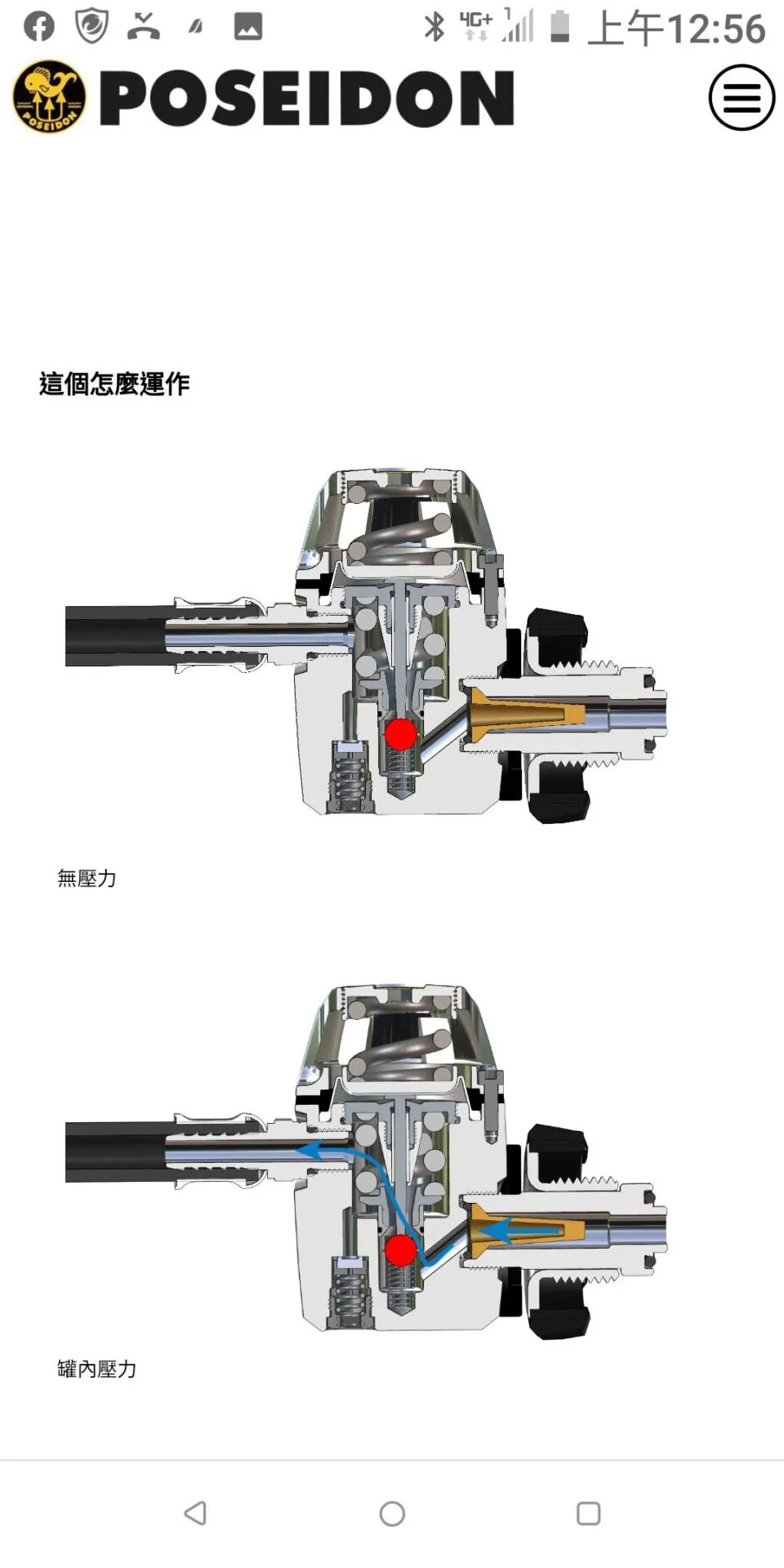
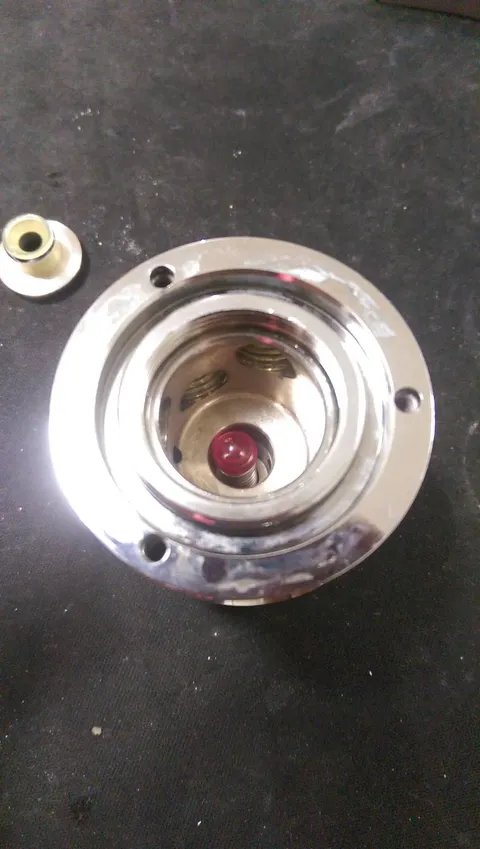
Next, there's something special inside: a remarkable red ball. In natural geometry, a sphere is the easiest shape to self-center. Imagine placing a ping-pong ball inside a funnel — it naturally rolls to the very center without any deviation. This replaces the conventional sharp-edged seat-to-flat high-pressure seat design. The smooth spherical surface doesn't score the contact area, so unlike a conventional regulator, it won't fail due to wear causing intermediate pressure (IP) creep. On top of that, this design provides a very high airflow rate (2,100 L/min). This is critically important for extreme-depth diving — paired with the Poseidon second stage regulator, the system holds a 200-meter ultra-deep diving certification (Norsok - U101). In plain language: it's extremely durable and virtually indestructible.
Inside the first stage regulator there is also a thick, heavy-duty spring whose job is to stabilize the intermediate pressure. As scuba tank pressure drops, the thick spring pushes the red ball seat downward; the spring supporting the red ball from the bottom is compressed, generating greater force to push the red ball upward and compensate for the reduced differential between high pressure and intermediate pressure. In personal testing, the intermediate pressure remained constant regardless of tank pressure.
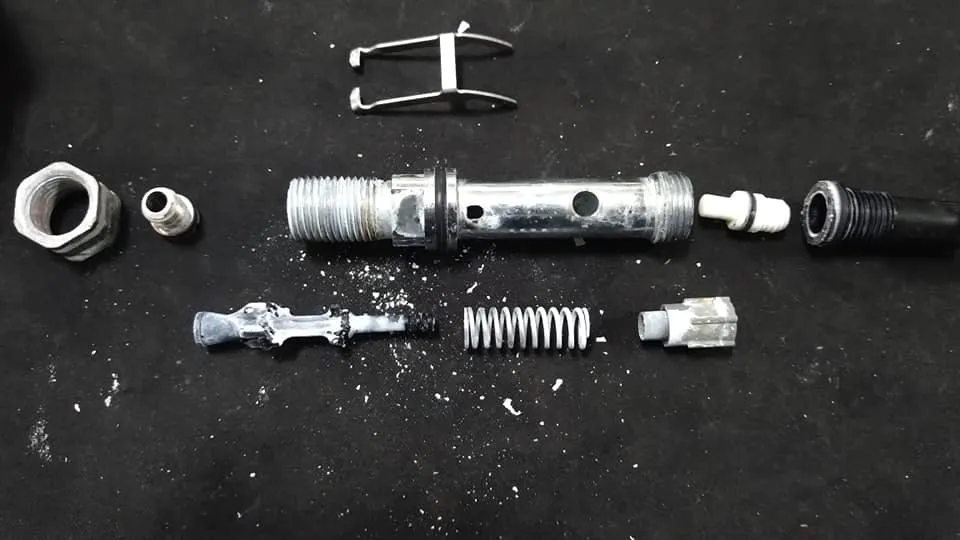
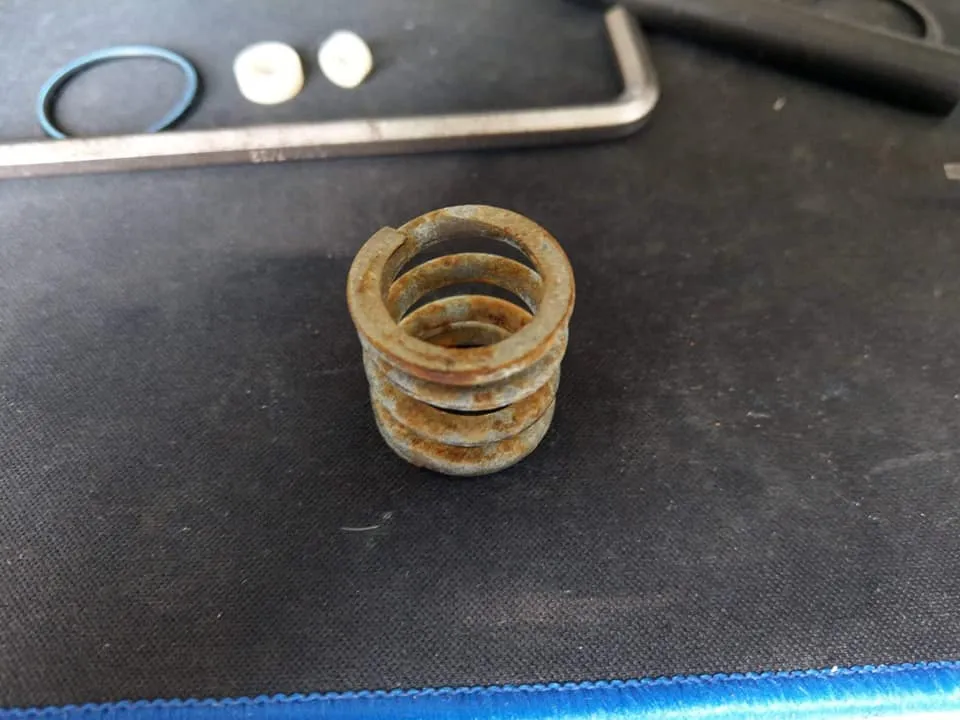
At the bottom of the first stage regulator there is also a pressure-relief (burst) valve. This relates to another unique feature of the Poseidon second stage — when IP runs too high it becomes more sealed rather than leaking, and IP exceeding 500 psi could rupture the hose, so a burst valve was designed to vent excess pressure. Most people overlook its existence entirely, and neglecting to clean it properly can cause it to seize with corrosion and lose all function. The Xstream's intermediate pressure is slightly lower than that of conventional regulators, with a rated value of 8.5 Bar.
Feel free to share this with friends who use Poseidon gear. The design principles behind the second stage regulator will be covered in the next installment.
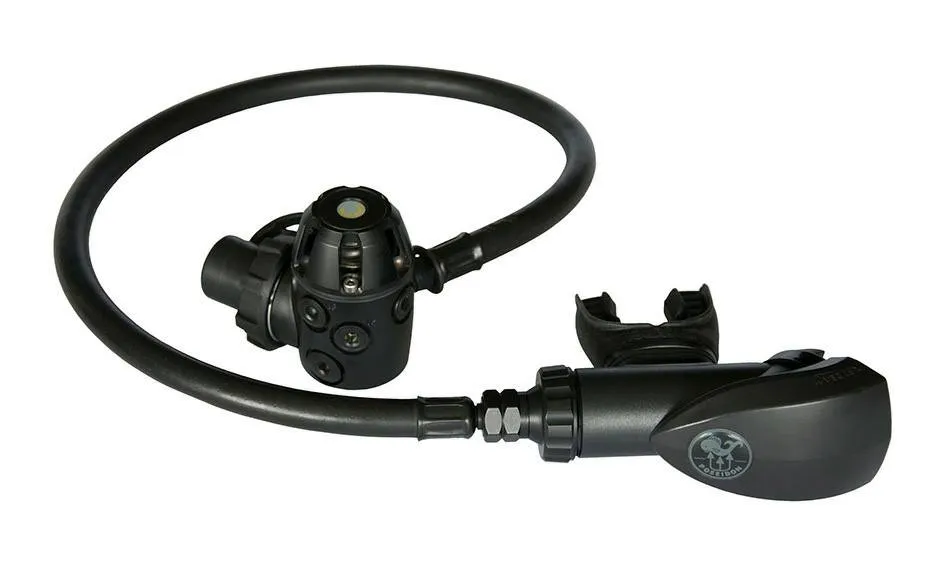
Poseidon second stage regulator
Poseidon second stage regulator
Poseidon second stage regulator


Regulator Series 2 - The Poseidon Second Stage Regulator
The Poseidon second stage regulator doesn't have the typical round, bulbous shape of a conventional second stage — it looks more like a harmonica.
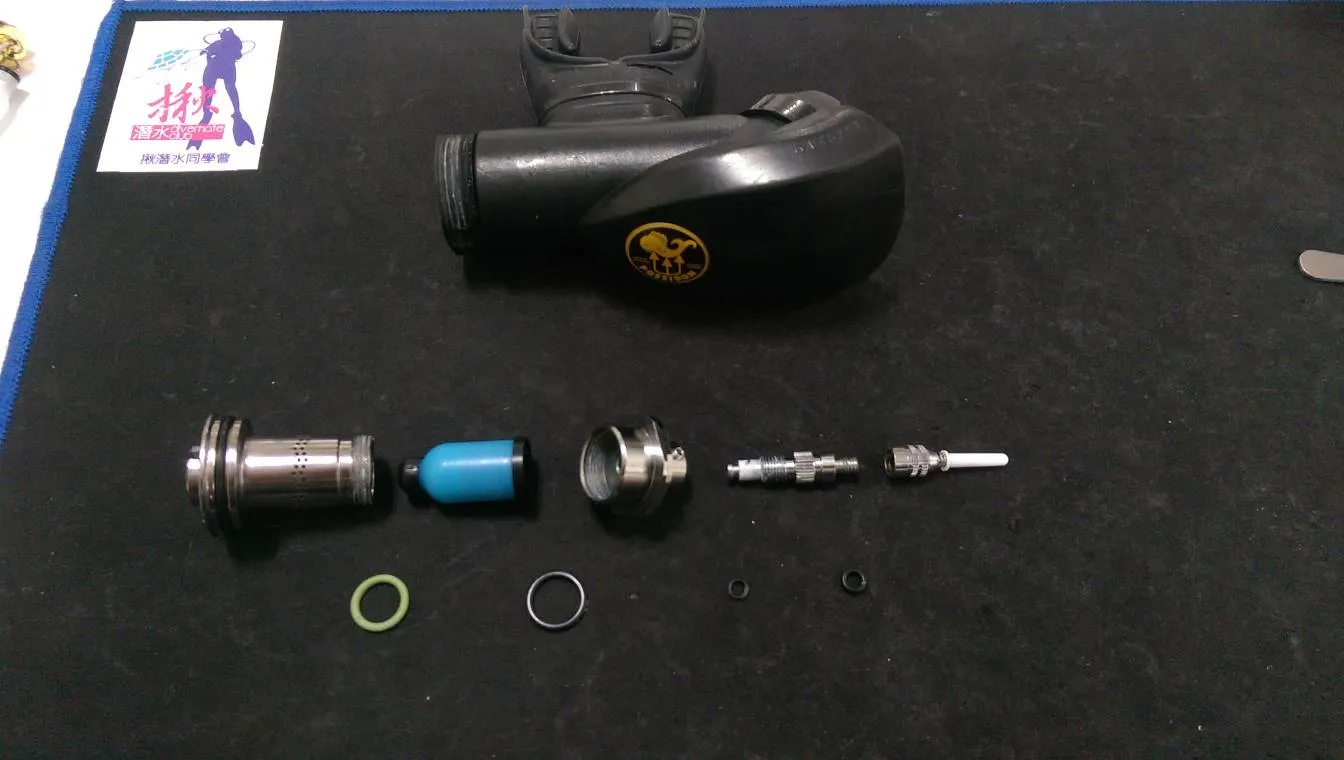
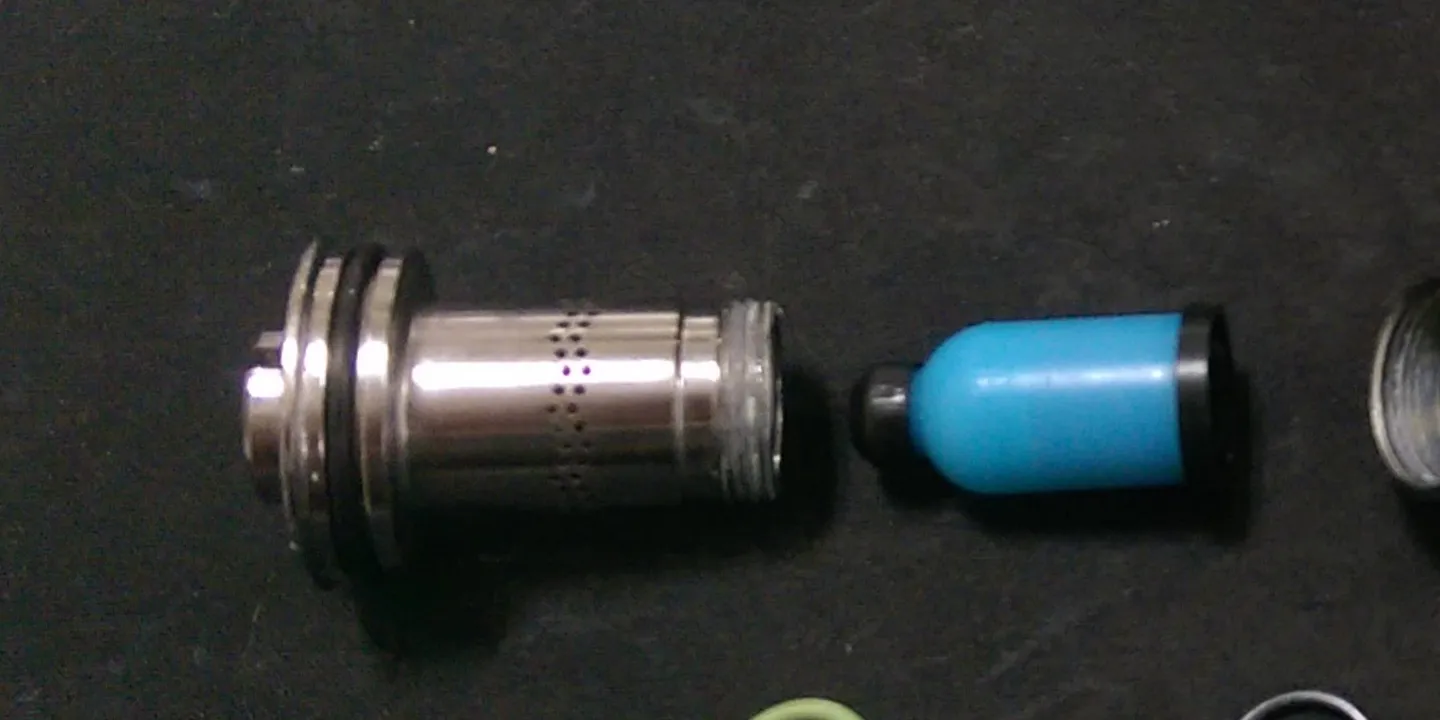
Its internal structure is also completely different: there is no second stage intermediate pressure diaphragm/seat in sight. A conventional second stage uses a spring to press a silicone seat against a valve seat to stop airflow. Long-term compression causes the seat to degrade and leak, or spring fatigue can reduce clamping force and also cause leaks. Neither of these problems exists with the Poseidon. Instead, Poseidon drills numerous small holes around a cylinder and inserts a balloon-like bladder. The many small holes provide a large air outlet area. When the bladder inflates, its expanded surface blocks the holes and stops the airflow. The tail end of the bladder connects to a small exhaust valve: when the valve seat is depressed, the bladder deflates, the holes are no longer blocked, and air flows out. This design works much like a power-assisted steering system — a small input force produces a large output through pressure. As a result, only a very small diaphragm area is needed to trigger the exhaust valve and initiate airflow. This makes the regulator extremely sensitive; to prevent ambient water pressure from affecting it, an elegant cover is fitted over the diaphragm.
This is yet another design that is durable and resistant to failure.
When swapping scuba tanks and pressing the second stage purge, be careful never to press too deep — it's very easy to deform the delicate exhaust valve stem.
Also, when first opening the tank valve, the second stage may free-flow briefly. This is because the pressure inside the bladder hasn't yet risen enough to seal the holes; as pressure gradually builds, the leaking stops. The higher the pressure, the better the seal — which is the exact opposite of a conventional regulator. So be mindful not to dive a tank down below 10 bar, as insufficient pressure will cause all the air to escape freely.
The adjustment method is also unique: because there is no conventional valve seat, all traditional tools are useless here. Sensitivity is set by adjusting the gap between the exhaust valve stem and the diaphragm contact point.
The horizontal mechanism design places the exhaust port on a single side, which happens to be well away from directly in front of the mask — exhaled bubbles won't obstruct your line of sight. Feel free to share this with fellow Poseidon divers so they understand how it works.
Poseidon second stage regulator
Poseidon second stage regulator
Regulator Series 3 - Why Most Rental Regulators Use a Piston First Stage
Think back — have you ever had this experience? When you were first learning to scuba dive, the regulator always seemed harder to breathe from on the way back, as if it was getting progressively heavier.
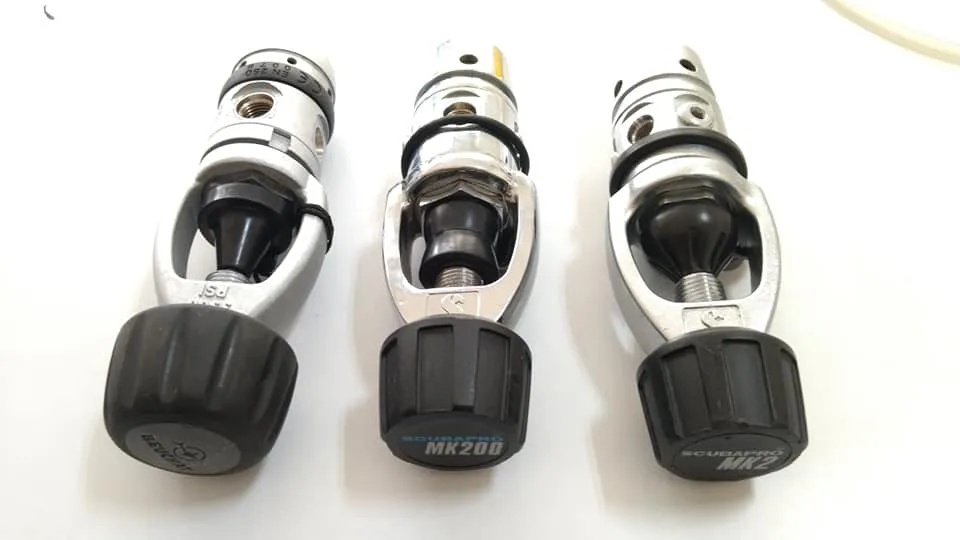
That's not an illusion. It happens because most training gear uses a piston-style first stage regulator. The advantages of a piston first stage are: one, it's cheap; two, the construction is simple; and three — it's cheap and simple to build. That's precisely why it dominates the rental equipment market. The most common models in Southeast Asia are the Aqua Lung Calypso and the Scubapro MK2.
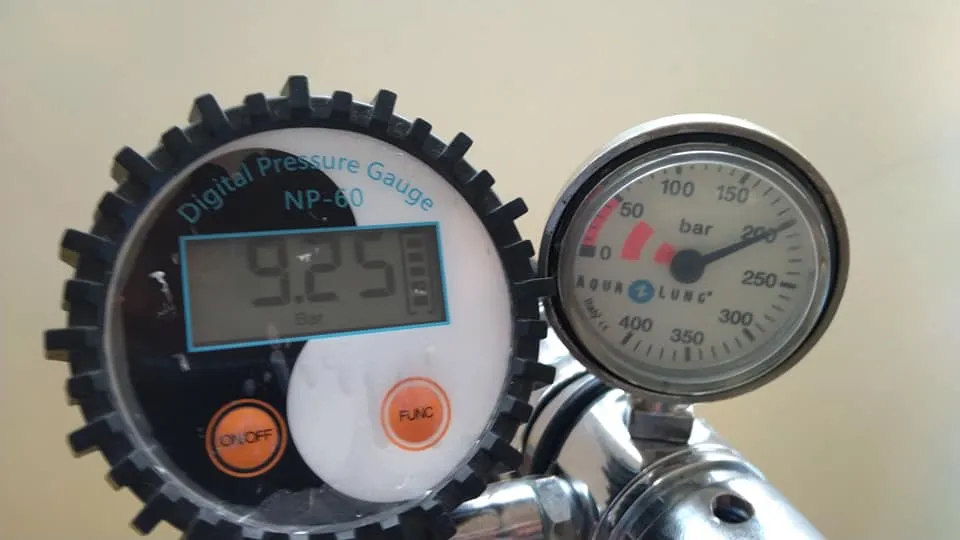
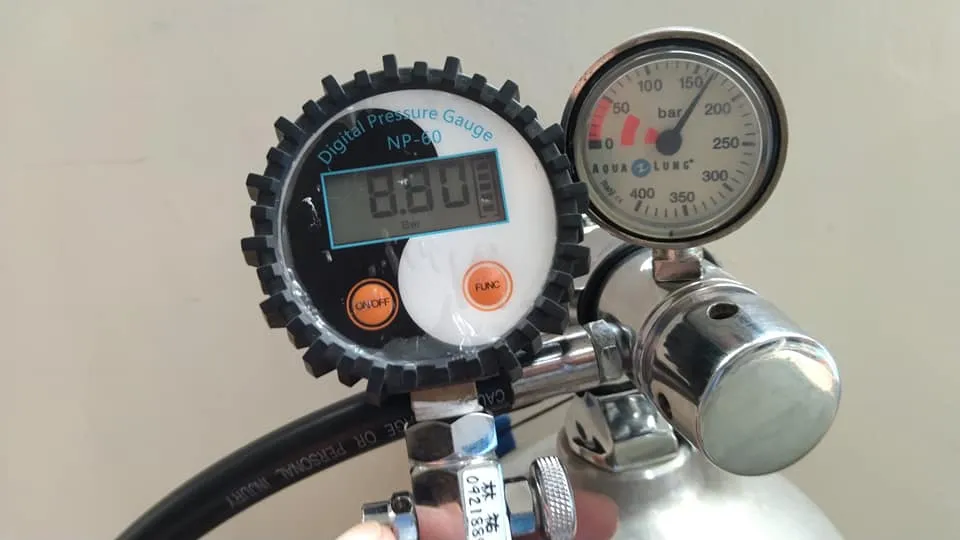
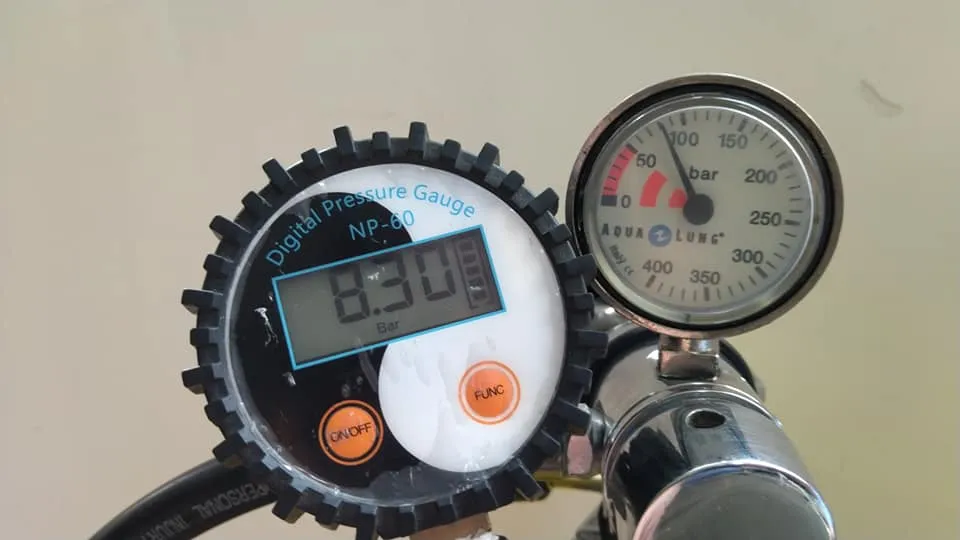
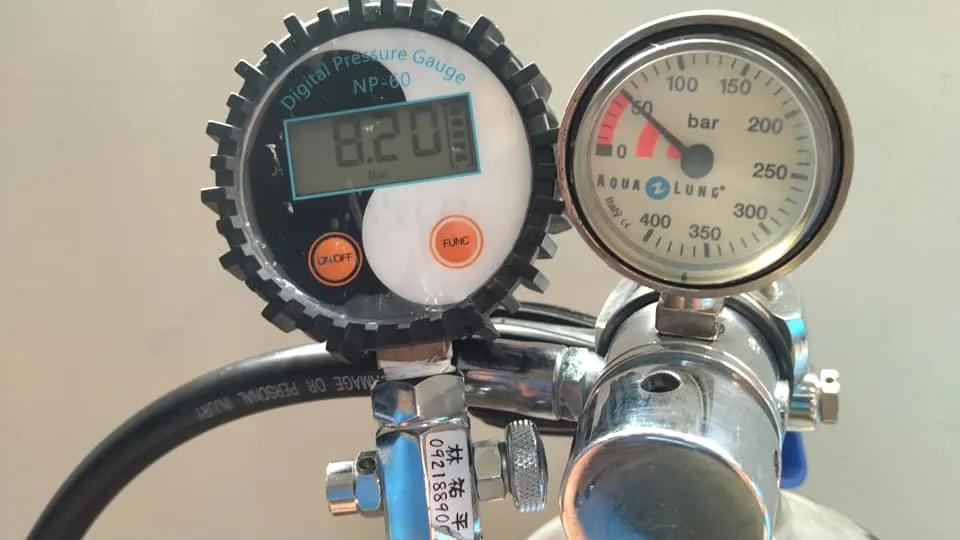
This design has an inherent flaw: the intermediate pressure drops as scuba tank pressure drops. I recently took an MK2 through a complete service — replacing all consumable parts (high-pressure seat) and using the manufacturer-specified lubricant — then connected it to tanks at various pressures and measured the intermediate pressure:
-
200 bar > 9.25 bar
-
170 bar > 8.8 bar
-
80 bar > 8.3 bar
-
50 bar > 8.2 bar
The change is clearly visible. And with rental gear that sees heavy use and irregular servicing, the gap will be even larger. Beyond the shifting intermediate pressure, there's the added issue of low airflow volume, because the orifice is literally about the size of a ballpoint pen tip. This is another critical factor — it means air delivery at depth is not as smooth as it could be. That's why a piston first stage will never make it onto my shopping list.
How do you identify a piston first stage? The simplest way is to look at the shape — a long, elongated body is the telltale sign.
Regulator Series 4 - Where Can You Find a Regulator with Stable Intermediate Pressure?
In the previous installment, we covered how a piston first stage's intermediate pressure drops as scuba tank pressure falls. Many divers wondered: isn't there a regulator with stable IP? Of course there is. There are also regulators marketed as "balanced" that still exhibit IP drift — but saying that out loud tends to upset manufacturers, so don't ask me to name names.
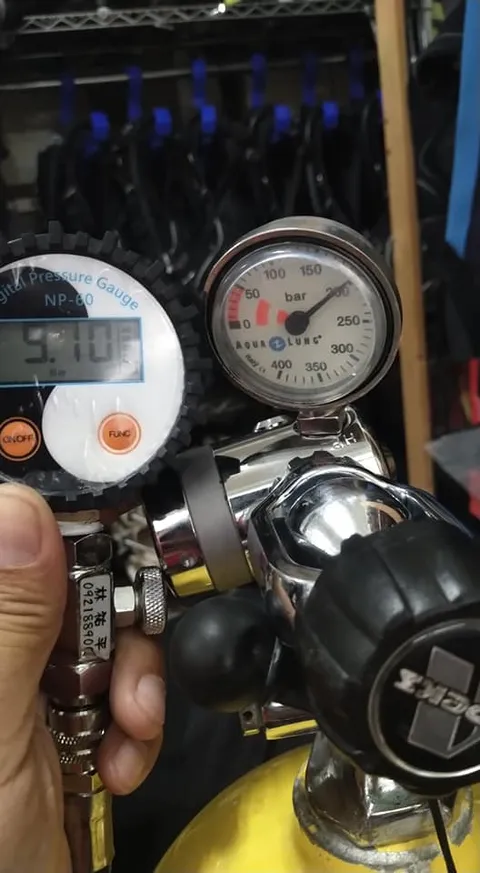
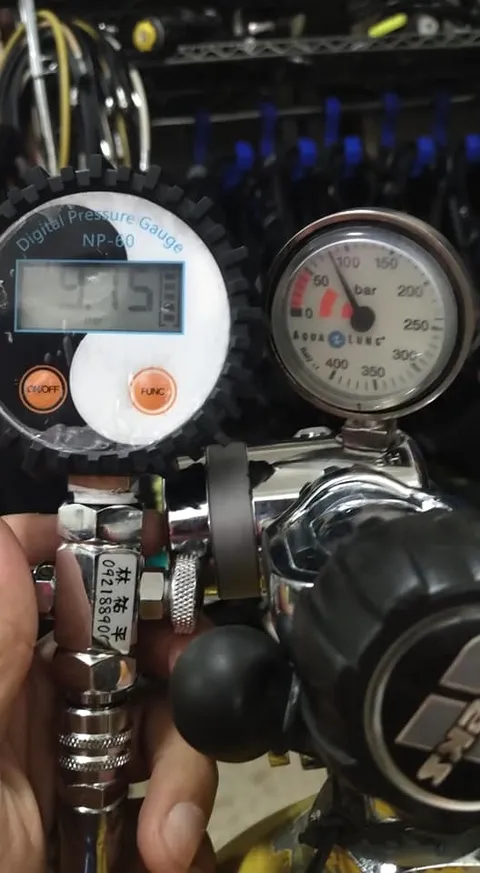
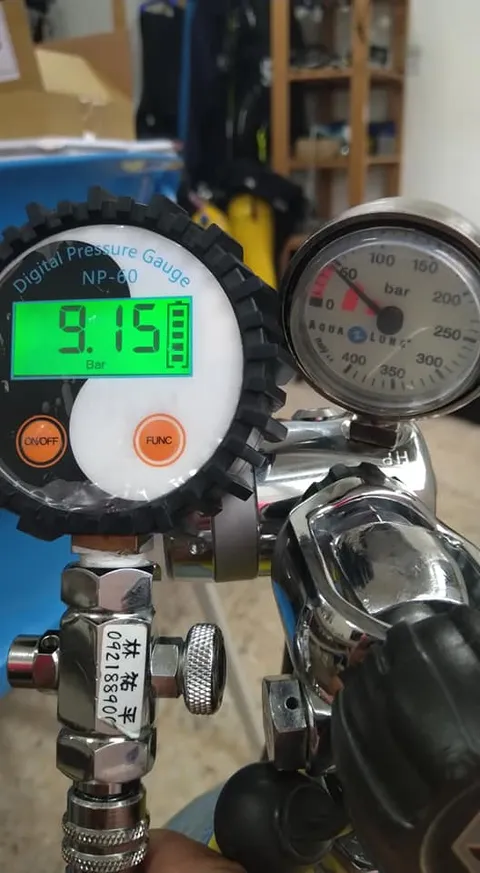
Today I tested the Scubapro MK25 (balanced piston) and the Apeks XTX40 (diaphragm) first stages.
Results are as follows (digital pressure gauge minimum resolution: 0.05 bar):
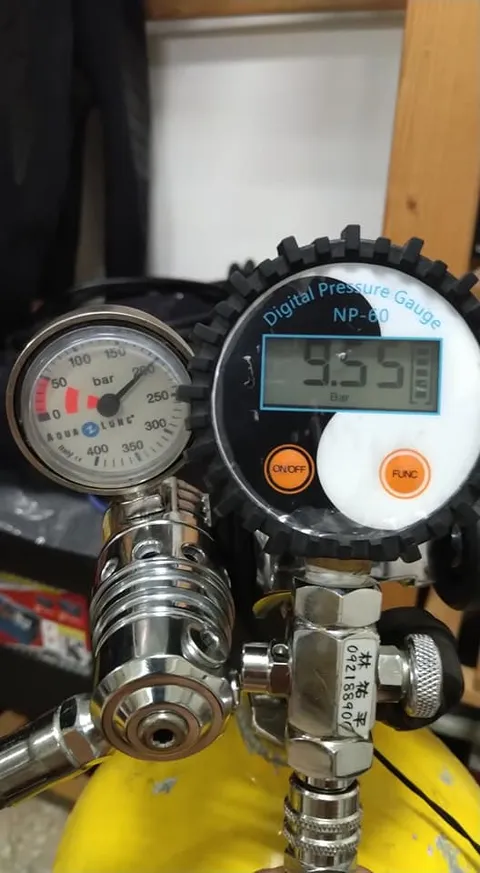
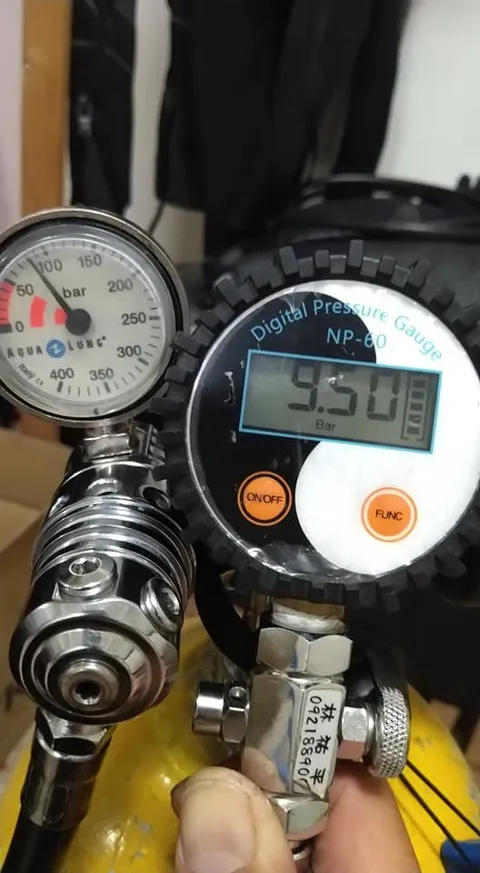
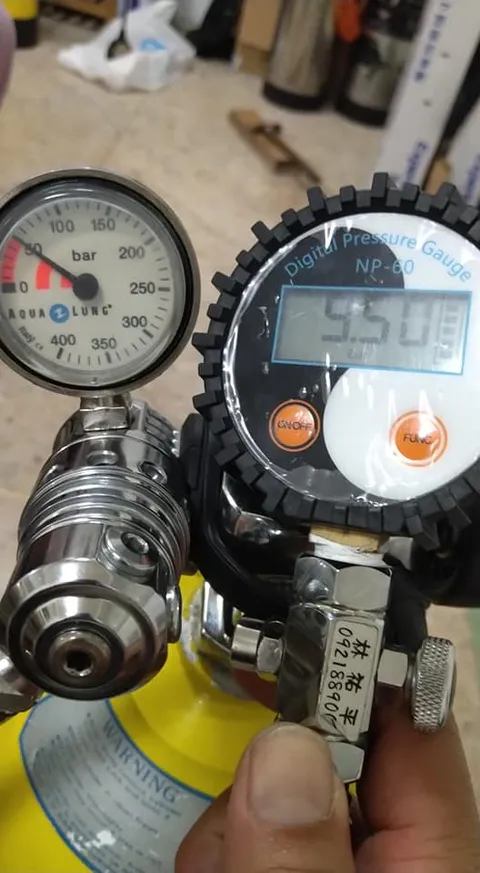
The MK25 is one of the few balanced piston models with truly stable IP output:
-
200 bar — 9.55 bar
-
80 bar — 9.5 bar
-
50 bar — 9.5 bar
-
30 bar — 9.5 bar
XTX40:
-
200 bar — 9.1 bar
-
80 bar — 9.15 bar
-
50 bar — 9.15 bar
-
30 bar — 9.2 bar
Different manufacturers have their own clever approaches to stabilizing IP output, and even piston-style first stages can achieve stable IP with the right engineering (Sherwood, for example). But IP stability isn't the only performance factor — airflow volume is the other major consideration. At the very least, when buying a regulator, you should know what tier and price point you're purchasing at, rather than just picking something based on price alone.
Don't forget your annual regulator service — find a reputable shop and dive with greater peace of mind.
Bonus Section - Common Hearsay That's Just Plain Wrong
First: always rinse your regulator in fresh water. Stop believing the myth that it can't be submerged. As long as the dust cap is securely in place, no water will get in. Think about it — the inside of the first stage runs at 9 bar or more at any given time, equivalent to a depth of eighty meters. A bucket of water that's only a few dozen centimeters deep is absolutely nothing by comparison.
Second: don't neglect your octopus / alternate second stage. Most octopuses go unused during every single dive. That means the internal mechanism never gets any exercise, making it even more prone to seizing up with salt deposits. Make a habit of pressing the purge button on it regularly! If you have access to a scuba tank, you can even press it underwater in a bucket of fresh water, then attach the tank and purge it with air to blow out any remaining water.
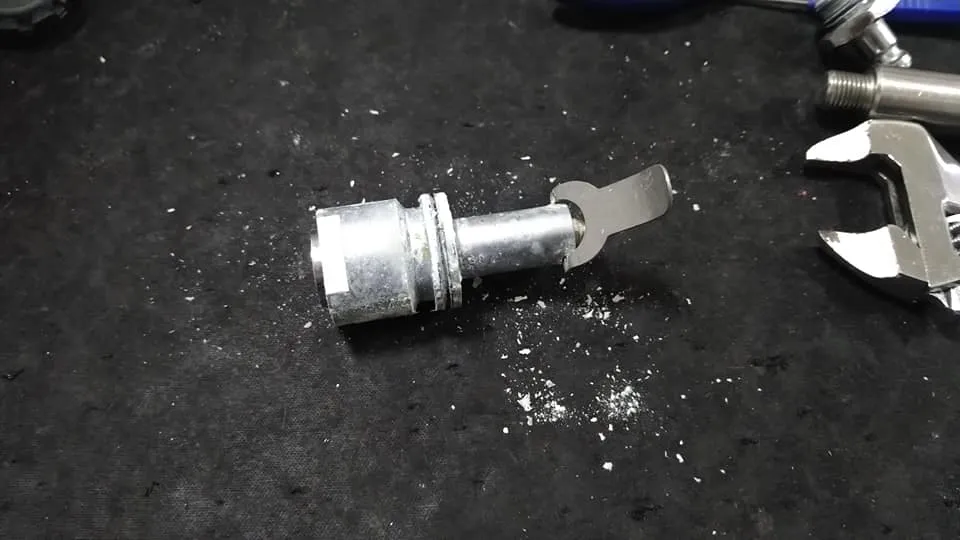
Third: when removing the first stage regulator from the scuba tank, always point the inlet port downward. This is the moment when water most easily enters the regulator. Saltwater on the body of the regulator and on your hands can drip straight into the inlet at this point. Regulator metal components are mostly chrome-plated brass — once the protective chrome layer is corroded through or peeled away, the damage is irreversible. Consistent, thorough rinsing is the best maintenance you can give your gear.
Further Reading: