

![[Marine Debris Special] 3 New Ways of Thinking About Plastic Reduction That Every Ocean Person Should Know](/_images/708d355e1c19-1440w.webp)
Contents(9)
- Where It All Began...
- Ocean Cleanup Changed the Way I See the Sea...
- Marine Debris Through the Editor's Lens in 2019 — Penghu's South Four Islands
- Marine Debris Through the Editor's Lens in 2019 — The Plastic Bottle Sea at Keelung's Heping Island
- Reducing Plastic in Daily Life the Right Way — That Is the Real Answer!
- TIP 1: Get Actively Involved in Beach Cleanups and Ocean Cleanups
- TIP 2: Before You Use It, Stop and Think!
- TIP 3: Alternatives to Plastic Products — Once You Have Them, Actually Use Them!
As 2019 draws to a close, the Editor considers this year the inaugural year for marine debris coverage since BlueTrend launched. While the Editor has long participated in beach cleanups and ocean cleanups alongside many mentors, after making a rather extravagant investment in underwater photography gear early in 2019 — roughly equivalent to the cost of a premium motorcycle — the Editor has shifted to documenting the underwater devastation through the camera lens. We are deeply grateful for your continued support; every marine debris-related video consistently attracts a large number of shares, allowing us to draw broader attention to the challenges our oceans face. Thank you to Air 空氣吸管 for sponsoring this [Marine Debris Special] on plastic reduction methods. Head over to zeczec crowdfunding and show your support for the ocean with action! Crowdfunding link: http://bit.do/fdRTX

Special sponsor: Air 空氣吸管 — Crowdfunding countdown in progress
Where It All Began...
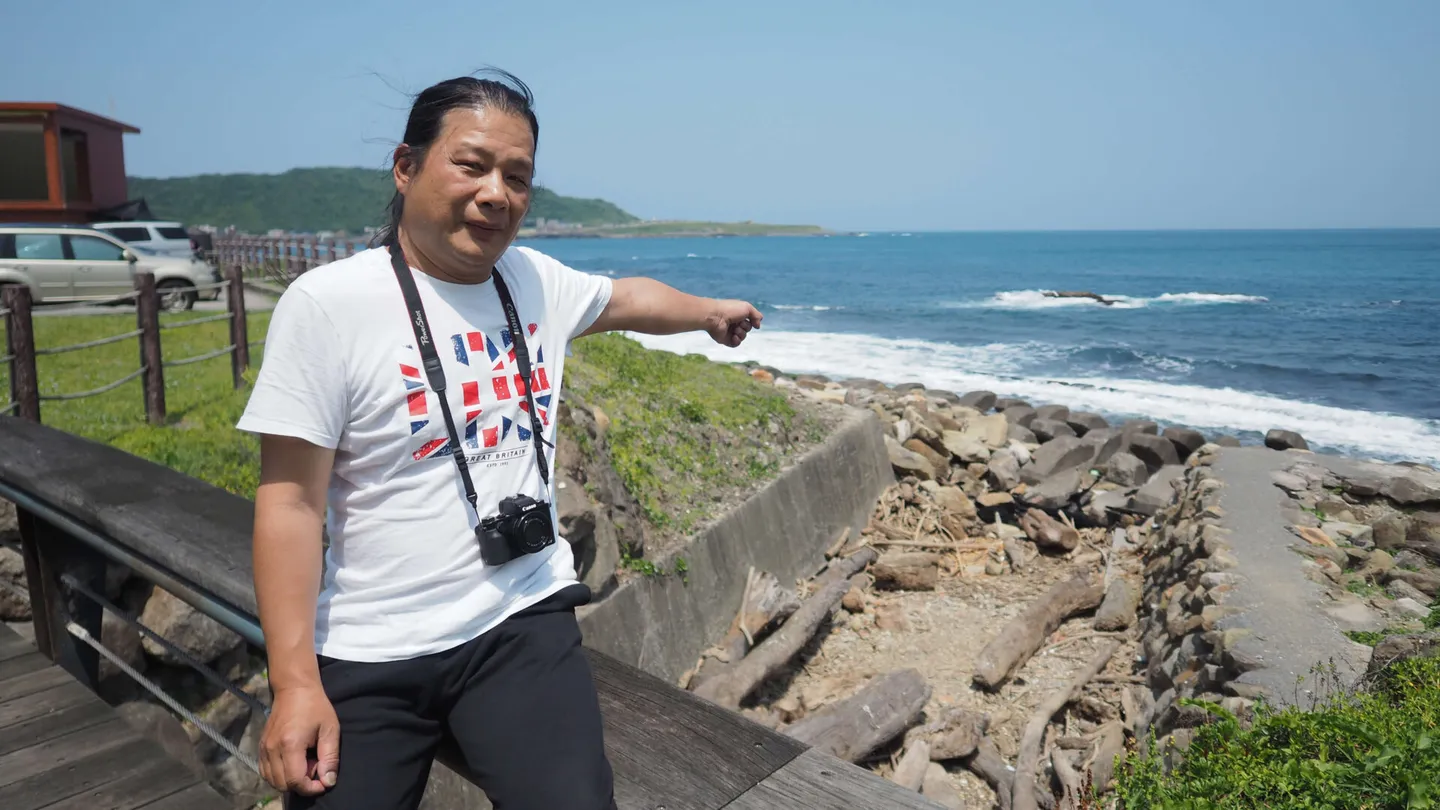
Chen Xin-Zhu is arguably the mentor who first inspired the Editor to get involved in beach cleanup activities. Without any corporate sponsorship whatsoever, he built the "Hands-On Love Taiwan" community group from scratch — rallying people online time and again to join beach cleanup events. From a humble gathering of just 3 participants at the start, his events now regularly draw over a hundred people each time. That kind of persistence and dedication is something we younger generations would do well to learn from.
Chen Xin-Zhu: A beach cleanup is not the end point for marine debris — it is the starting point for rethinking the relationship between people and the ocean.
Ocean Cleanup Changed the Way I See the Sea...

If Chen Xin-Zhu is the face of beach cleanups on land, then underwater ocean cleanup belongs to Instructor Lin You-Ping. Shortly after the Editor completed a scuba diving course, we turned to our dive instructors with a pair of puzzled questions: why are there so few fish in Taiwan's waters? And why is there so much underwater trash? Yet these instructors, whose livelihoods depend on the sea, had no answers. Eventually, the Editor heard about an instructor actively promoting ocean cleanup efforts at Chaojing in Keelung — and that was how the Editor first met Instructor Lin You-Ping, launching a three-year journey of underwater ocean cleanup.
Instructor Lin You-Ping: What we need to clean is not the ocean — it's the human heart!
Marine Debris Through the Editor's Lens in 2019 — Penghu's South Four Islands
The weather in early summer around Penghu's South Four Islands is still unpredictable. The Editor pressed on through Force 8 gusts and 2-metre swells to reach the islands with one goal: to remove with bare hands the layers of abandoned fishing nets and rubbish that had accumulated on the seafloor for years. How many Taiwanese have never set foot on these remote secondary islands? But do you know that Penghu South Four Islands National Park boasts one of the highest coral coverage rates in Taiwan's history, and that its underwater ecosystem rivals world-class international dive sites? The harsh reality, however, is that underwater rubbish is everywhere.
Under the leadership of Wu Zu-Xiang (Shark Brother), chairman of the #Penghu South Four Islands Conservation Association, and with the assistance of Ye Sheng-Hong from Island Ao 77, and set to an original composition 【你可以】 by 許秀琳, the camera brought the beauty and heartbreak beneath Penghu's waters to friends in Taiwan and around the world.
Marine Debris Through the Editor's Lens in 2019 — The Plastic Bottle Sea at Keelung's Heping Island
Keelung is the Editor's summer diving base. The underwater trash at Chaojing Park, where we dive frequently, has largely been cleared away by our efforts (laughs). But another spot, Heping Island — packed with tourists on the surface — has not been so fortunate. Thanks to its distinctive flat bay topography, the area easily accumulates drifting marine debris, particularly PET bottles, and calling it a "sea of plastic bottles" is no exaggeration given how widely they are spread. To echo Instructor Lin You-Ping's philosophy: what we need to clean is not the ocean, but the human heart. When you strap on over 20 kg of scuba gear and manage to retrieve only a negligible amount of rubbish, the next time you reach for a single-use plastic item, you will naturally stop and think twice about whether you really need it.
Special sponsor: Air 空氣吸管 — Crowdfunding countdown in progress
Wake up! Tossing your rubbish in a bin is actually where the harm to our planet begins!
Whenever the Editor gives a sharing session or a talk, there is always someone in the audience who says, quite innocently: "I always put my rubbish in the bin — so marine debris has nothing to do with me, right?" NO~ NO~ NO! This question actually opens up a cascade of systemic issues that even a dissertation of tens of thousands of words could hardly address adequately.
Simply put, leaving aside the question of whether landfill waste might one day find its way into the ocean, if your rubbish is "lucky" enough to travel through the proper channels and end up in an incinerator, the dioxins produced when plastic burns become an even more serious environmental problem. Take PET bottles as another example: while Taiwan boasts one of the highest PET bottle recycling rates in the world, the recycling process itself consumes enormous amounts of water. And the bottle caps and labels cannot be recycled at all — it is said that there are mountains of PET bottle labels piling up somewhere in Taiwan with no way to process them. Every time you buy a bottle of water because you are thirsty, you are creating a piece of rubbish that cannot be properly dealt with!
Reducing Plastic in Daily Life the Right Way — That Is the Real Answer!
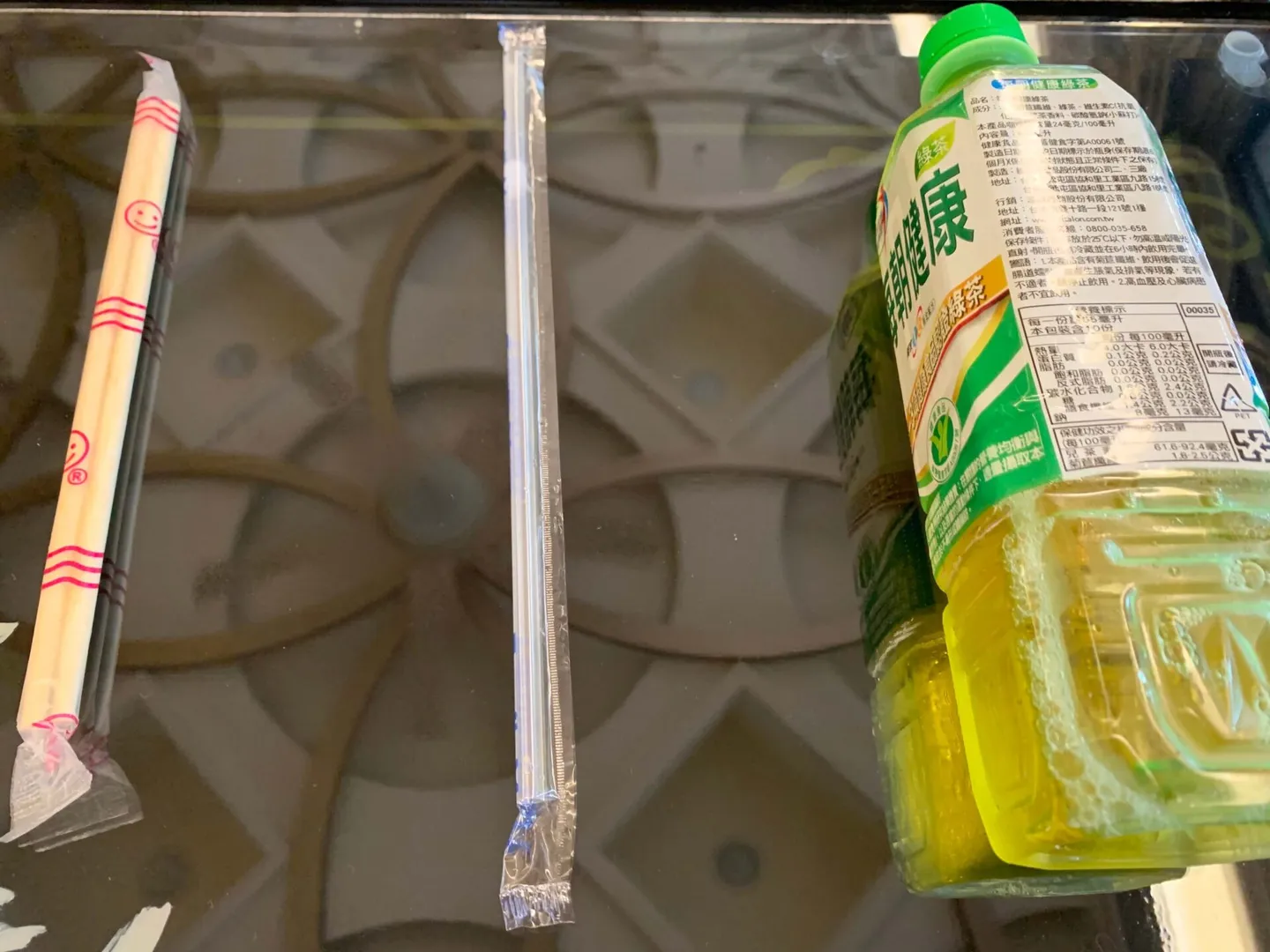
The three most common plastic offenders in everyday life
The image above shows the plastic items we encounter most in our daily lives. As environmental awareness has grown, the use of plastic bags has decreased ever so slightly — but the consumption of disposable chopsticks, straws, and PET bottles has skyrocketed alongside the rise in eating out. Plastics were invented during World War II and widely adopted in civilian life, undeniably advancing human civilisation in a big way. Yet perhaps the three suggestions below can help us gradually reduce our dependence on plastic products in everyday life.
Special sponsor: Air 空氣吸管 — Crowdfunding countdown in progress
TIP 1: Get Actively Involved in Beach Cleanups and Ocean Cleanups
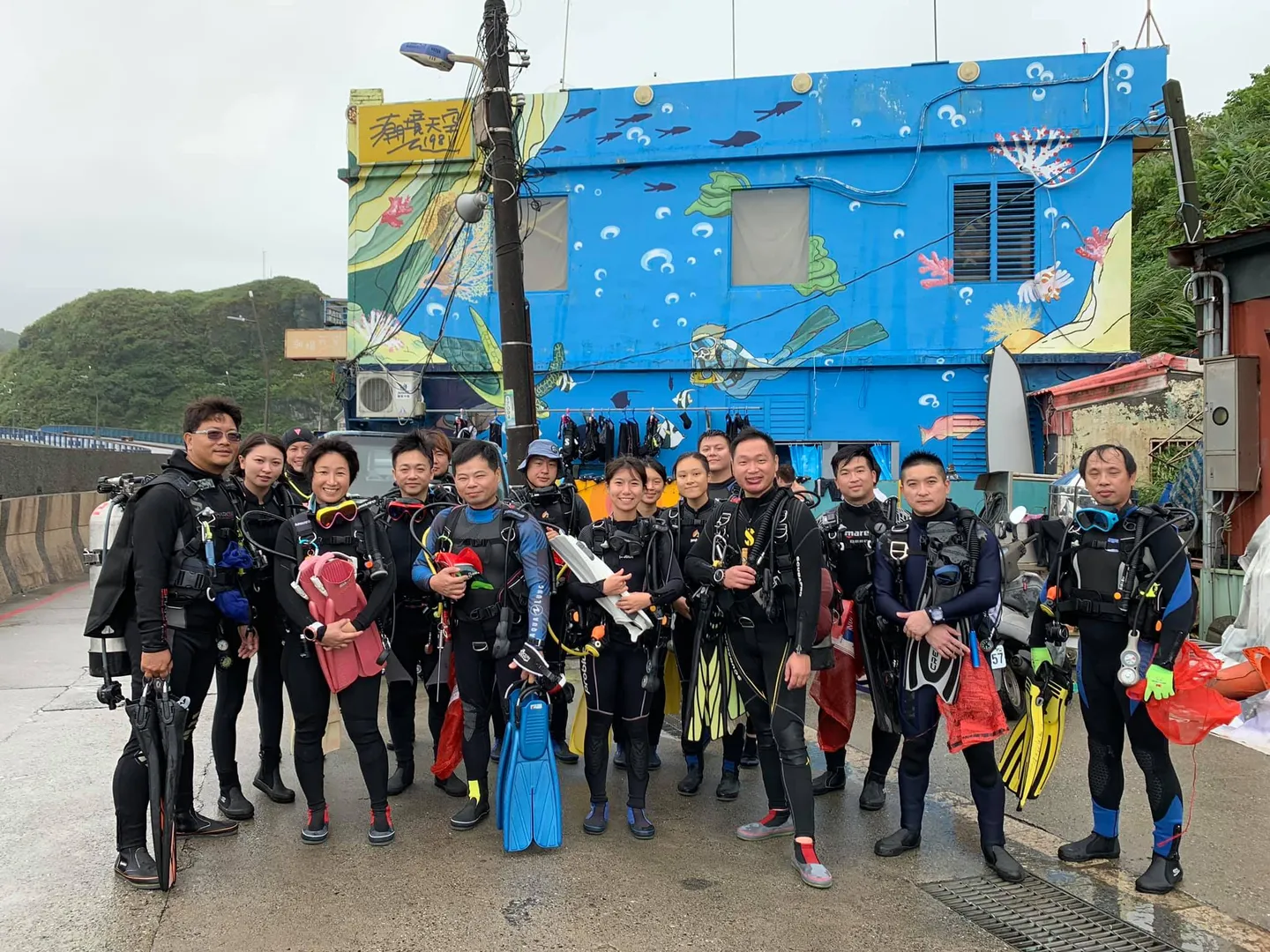
Many community groups organise beach cleanup and ocean cleanup events
Office workers spend their weekdays cooped up in a corner of the workplace, crushed under the weight of job stress, with the concrete jungle pushing nerves to the breaking point. Why not roll up your sleeves on a fine day and join a beach cleanup or ocean cleanup? The concept of working holidays, popular abroad in recent years, has been gradually making its way into East Asian society, giving people the chance to look beyond the everyday goals of work and money — letting a sense of purpose and social impact become another positive force in society.
Although we keep emphasising that beach cleanups and ocean cleanups are never the ultimate answer to marine debris, each time you participate you begin to reflect on the relationship between humanity and nature. In a society that pursues rapid growth, is the relationship between humans and nature really a one-way street of extraction? Or can we also give something back to nature? In fact, we ought to make amends to nature — returning everything that humanity has imposed upon it back to its origin.
And don't forget: after taking part in a beach cleanup or ocean cleanup, snap a photo and show it off! Doing good should be widely known. Through the spread of social media and self-media, your social influence quietly and steadily grows, touching the lives of the people around you.


TIP 2: Before You Use It, Stop and Think!
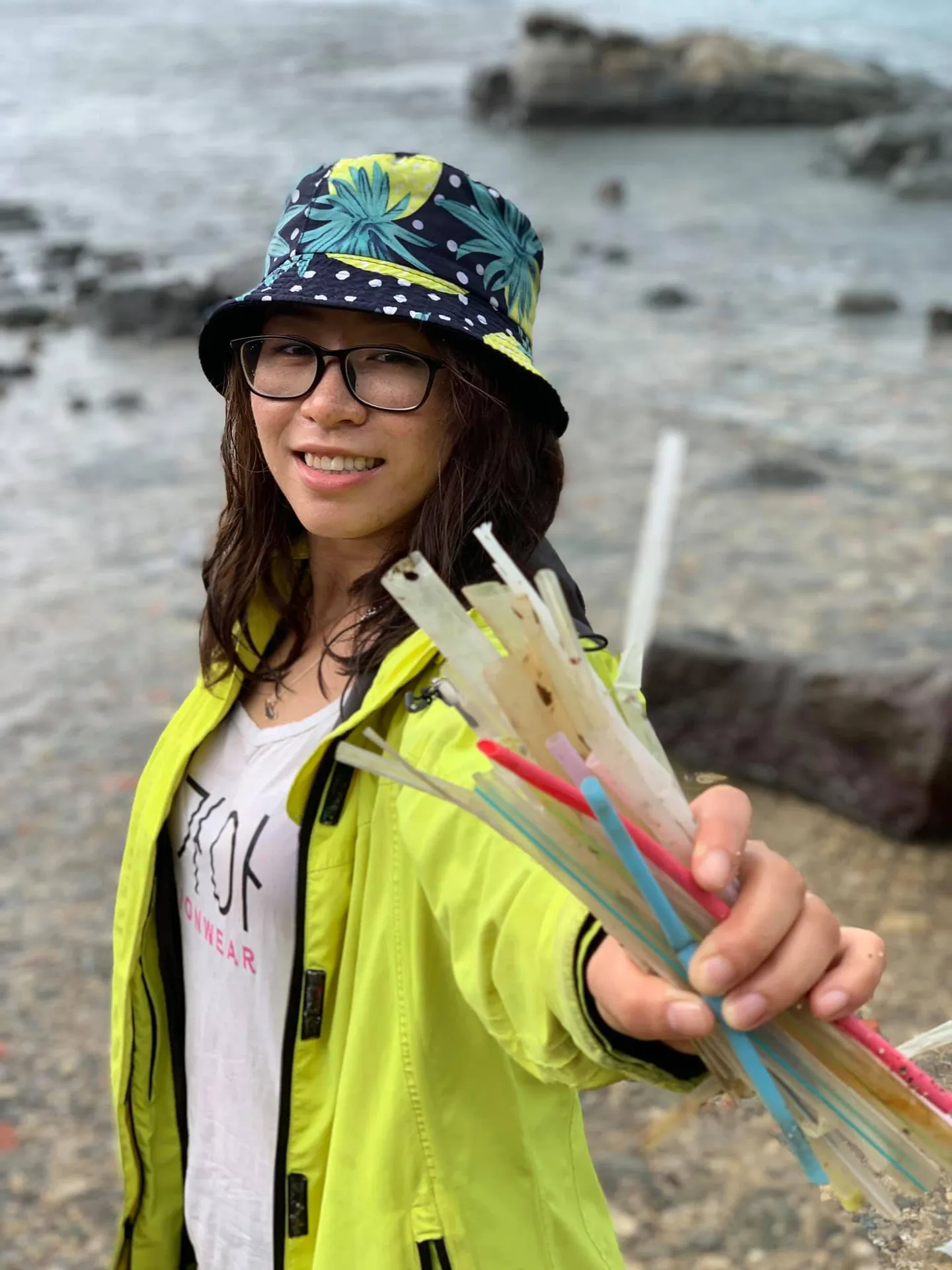
If you have ever taken part in a beach cleanup and picked up hundreds of straws along the shoreline in just an hour, the next time you reach for a straw you will stop and think — do I really need this? Instructor Lin You-Ping once shared an experience: on an overseas dive trip, he saw a fellow diver using a straw to drink juice. He told them directly: "You can drink beer straight from the bottle — so why do you absolutely need a straw for juice?" Perhaps it is the ingrained habits of a lifetime of upbringing that has led everyone to associate juice and Yakult with straws.
Similar examples are endless. Take buying breakfast on the go — from purchase to finishing the meal might be a mere 10 minutes, yet it requires a plastic bag + a plastic carrier bag + a plastic cup + disposable chopsticks + a straw and more. Stop and think — do you really need all of that?
TIP 3: Alternatives to Plastic Products — Once You Have Them, Actually Use Them!
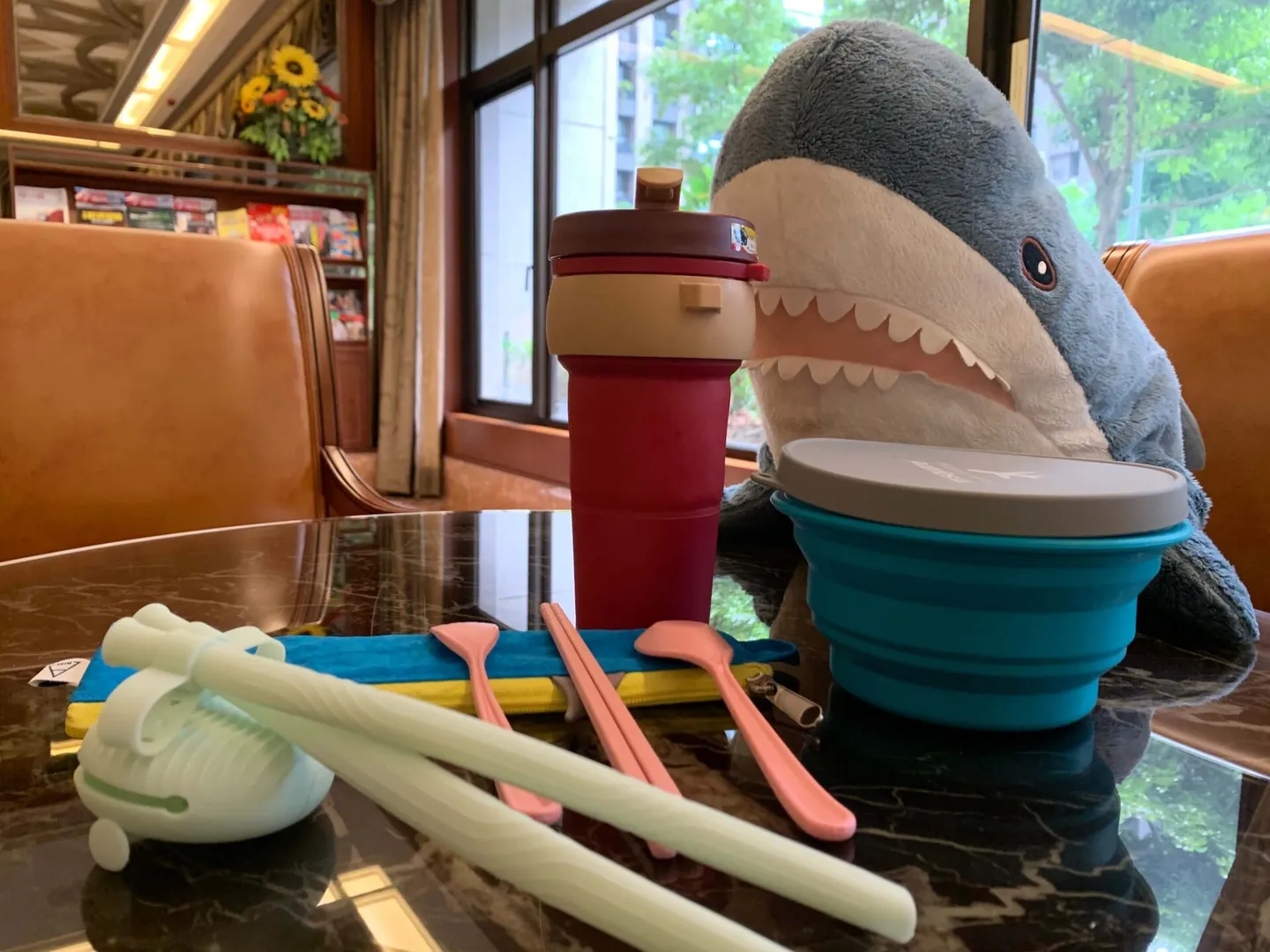
A variety of plastic alternatives available on the market — great choices for reducing plastic in daily life
As conservation issues gain more attention, an increasing number of alternatives to plastic products have come to market. Beyond ensuring that the materials are durable and easy to clean, the most important thing is actually this: "Use them — often!" The Editor knows many friends who have bought all sorts of plastic alternatives, only to leave them sitting in their bags and rarely use them — still reaching for disposable chopsticks and cups when they go out. If products made in the name of environmental protection are never actually used, they fail to fulfil the role they were designed to play, and simply become another form of wasteful production.
Reducing plastic is a lifestyle attitude — but don't force your friends to live by your standards, because plastic reduction only becomes a true mission for the environment when it comes from genuine conviction within.
Finally, once again, a heartfelt thank you to Air 空氣吸管 for sponsoring this [Marine Debris Special]. Their campaign on zeczec crowdfunding has entered its final countdown. If you too want to start cutting down on plastic in your daily life, go and support them with action now!
-
Air 空氣吸管 zeczec crowdfunding link: http://bit.do/fdRTX
-
Air 空氣吸管|The Convenient Aesthetic of Eco-Friendly Straws — Fan Page

Special sponsor: Air 空氣吸管 — Crowdfunding countdown in progress

![[Bending Down for 825] A Group of Divers Taking Action to Protect Taiwan's Macro Diving Mecca](/_astro/DSC_6308_M2oaq.webp)

![[NCCU Diving Club] Reflections on a Beach Cleanup: A Little Inconvenience for Us, Infinite Opportunities for the Ocean](/_astro/94387669_2786902881408514_3988714893476888576_o_mQFSh.webp)