Contents(5)
BlueTrend says: Designating marine protected areas (MPAs) is widely recognized around the world as the simplest and most effective way to advance marine conservation, safeguard biodiversity, and restore fishery resources. At the same time, many experts and scholars have repeatedly stressed that sound operational management is the real key to making an MPA work.
Taiwan currently has 46 marine protected areas. Among them, the Wanghaixiang Bay Chaojing Resource Conservation Area (hereafter "Chaojing") and the Ruifang Aquatic Flora and Fauna Breeding Conservation Area (hereafter "Shen'ao") are both classified as Level 3 conservation areas — yet they differ enormously in management measures and enforcement intensity. In addition to a blanket ban on all fishing activities throughout the entire zone, Chaojing also benefits from a patrol team and conservation volunteers who help maintain the area, making enforcement particularly rigorous.
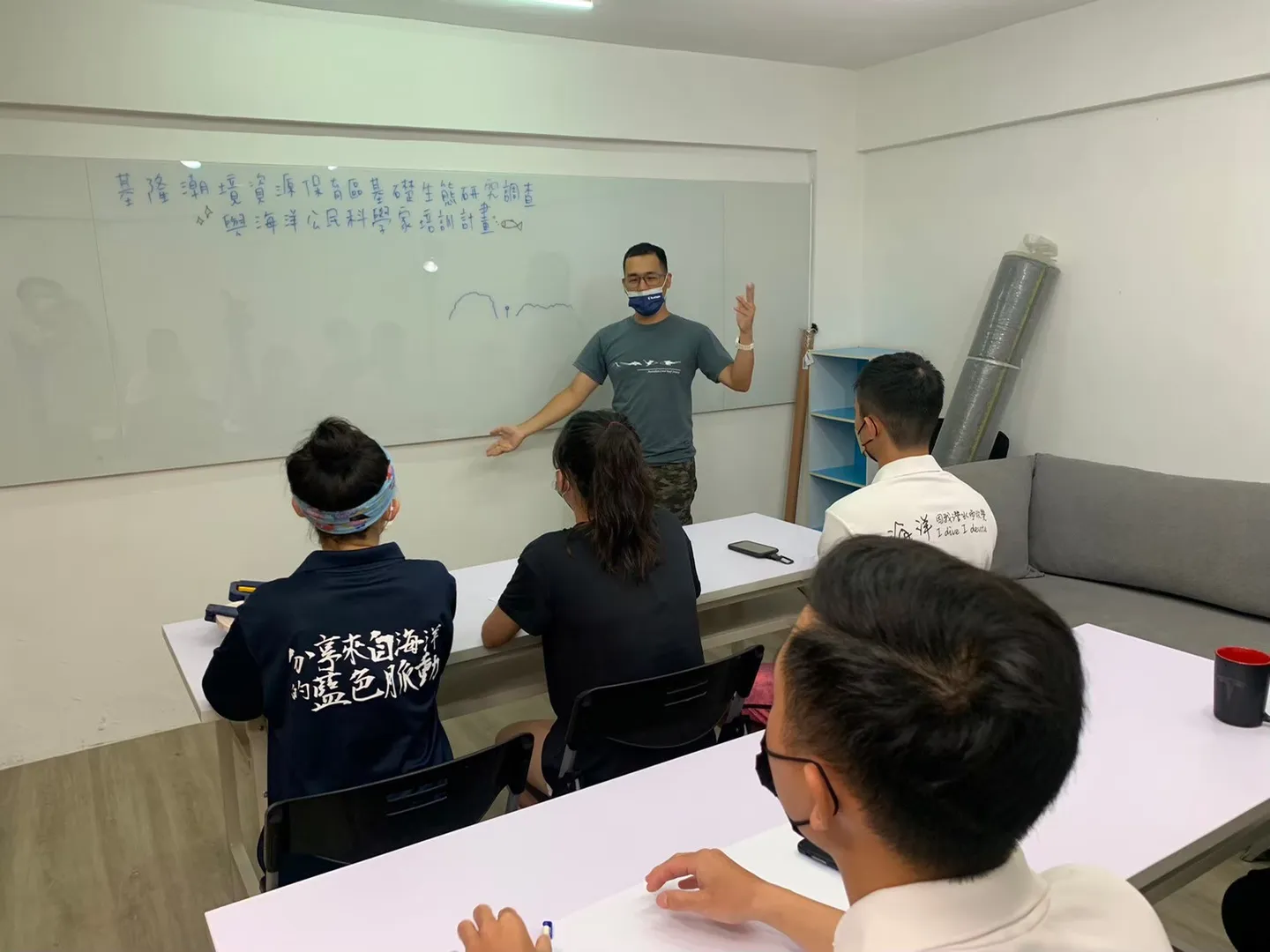
Underwater quantitative surveys follow strict protocols. Before every dive, procedures must be reviewed and briefed again to minimize sampling error.
By contrast, Shen'ao has no designated no-fishing zone, no patrol team, and no conservation volunteers, leaving enforcement largely ineffective. To compare the ecological differences between the two sites, a research team conducted ecological surveys in 2022. The results showed that although the two sites share a highly similar species composition, Chaojing significantly outperformed Shen'ao in hard coral coverage, fish diversity, individual abundance, and biomass — demonstrating that effective management is the true key to a successful marine protected area!
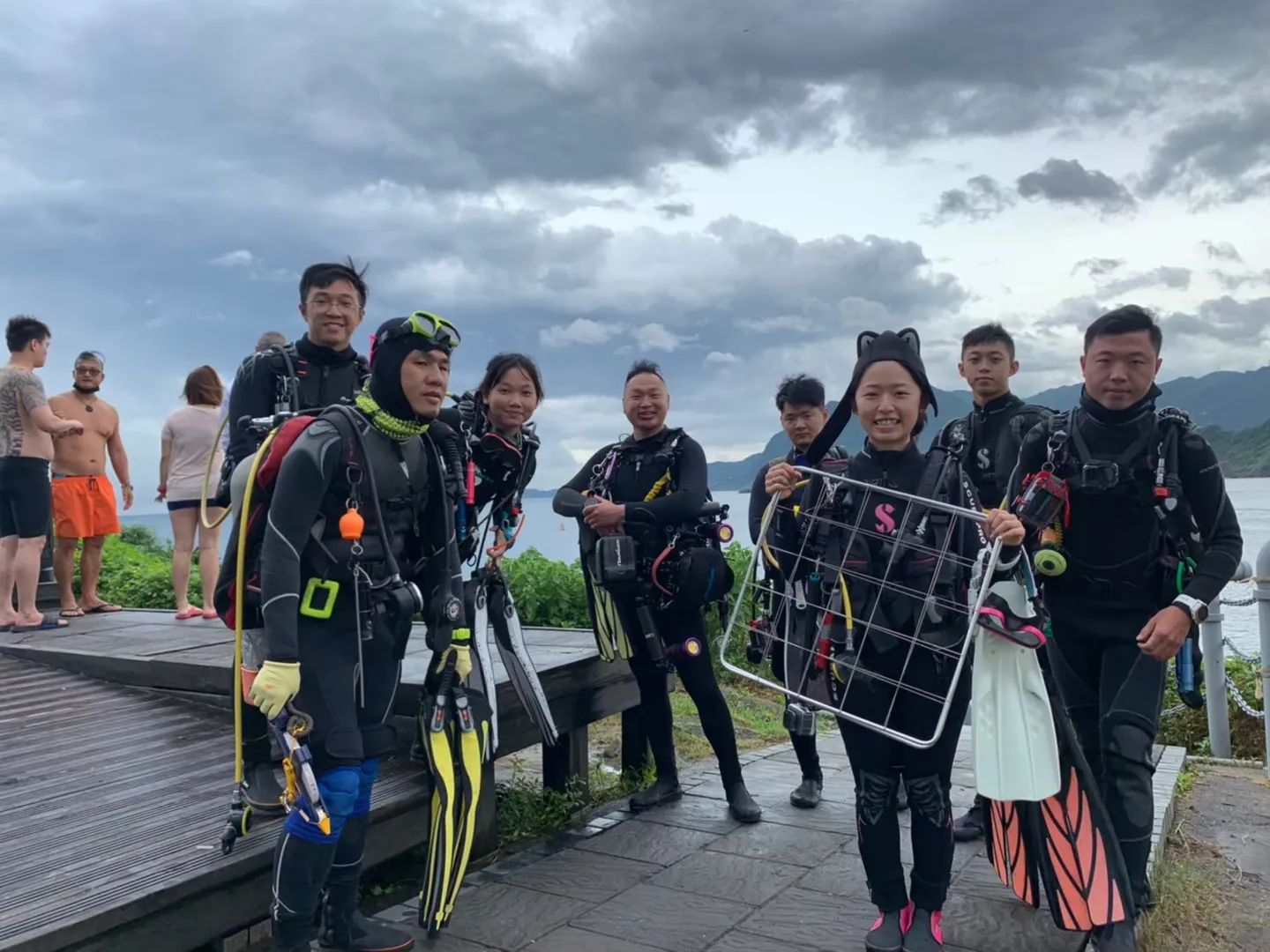
The research team prepares to begin survey operations at the Wanghaixiang Bay Chaojing Resource Conservation Area.
How Did the Research Team Do It?
To understand how the biological communities in the two MPAs differ, BlueTrend and the research team established two sampling stations in each MPA at depths of 5 m and 10 m. At each station, three transects measuring 30 m long and 2 m wide were laid out, and surveys were conducted along these transects covering three main categories: seafloor substrate, invertebrates, and fish.
To document the seafloor substrate in detail, the team custom-fabricated 50×50 cm stainless-steel frames. Underwater, these frames were placed along each transect at 5 m intervals to photograph the substrate below. Each frame was divided into 25 small grids to record substrate type and proportion. For invertebrate and fish surveys, the team used underwater visual census and photography to record species, individual counts, and fish body length.
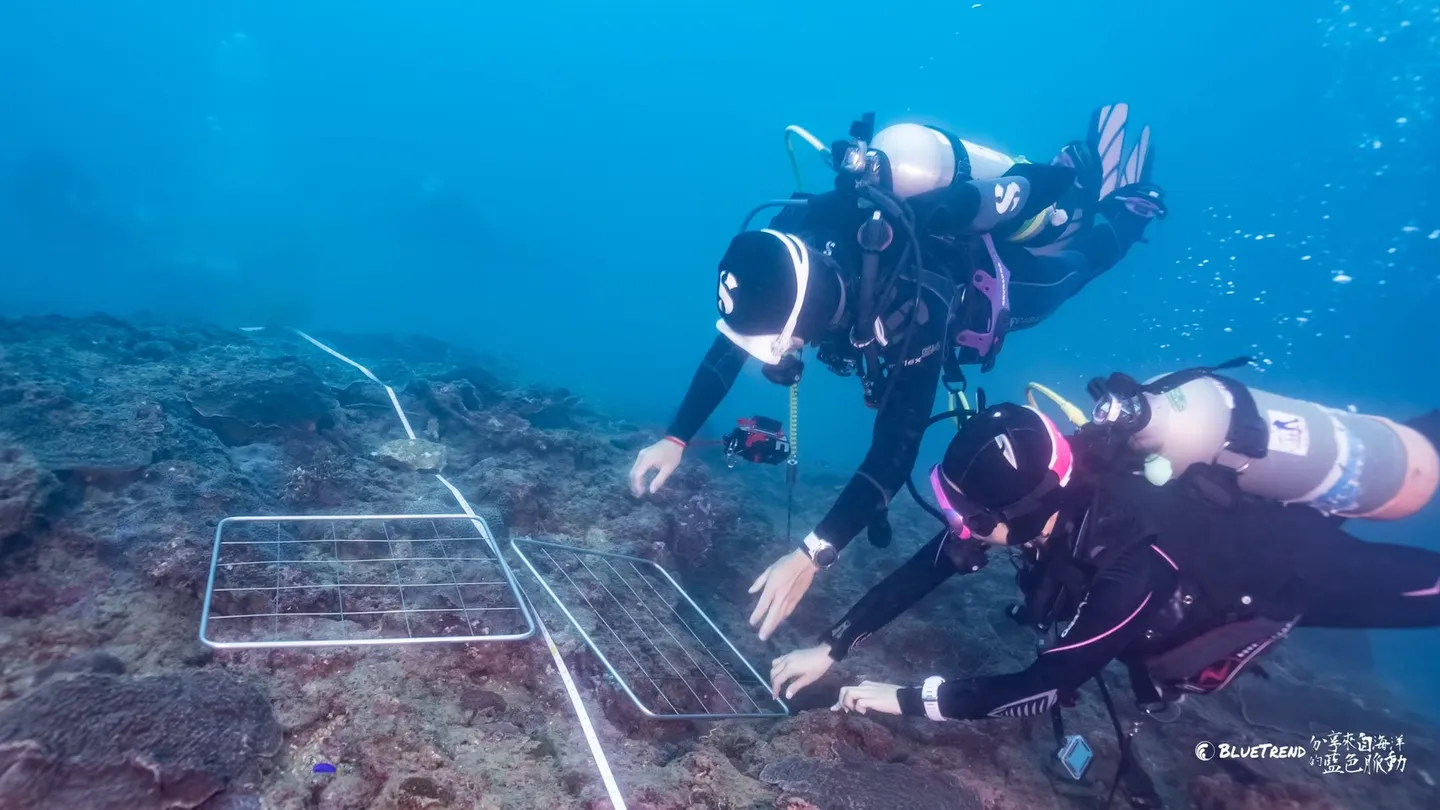
The custom-made 50×50 cm stainless-steel frame, photographed toward the substrate every 5 m along the transect line.
In addition to daytime surveys (quantitative surveys), the team also arranged night diving surveys (qualitative surveys) to more comprehensively document local biodiversity. From June to September 2022 (ROC Year 111), the team conducted a combined total of 16 dives across 8 survey days at both Chaojing and Shen'ao, covering both day and night sessions.
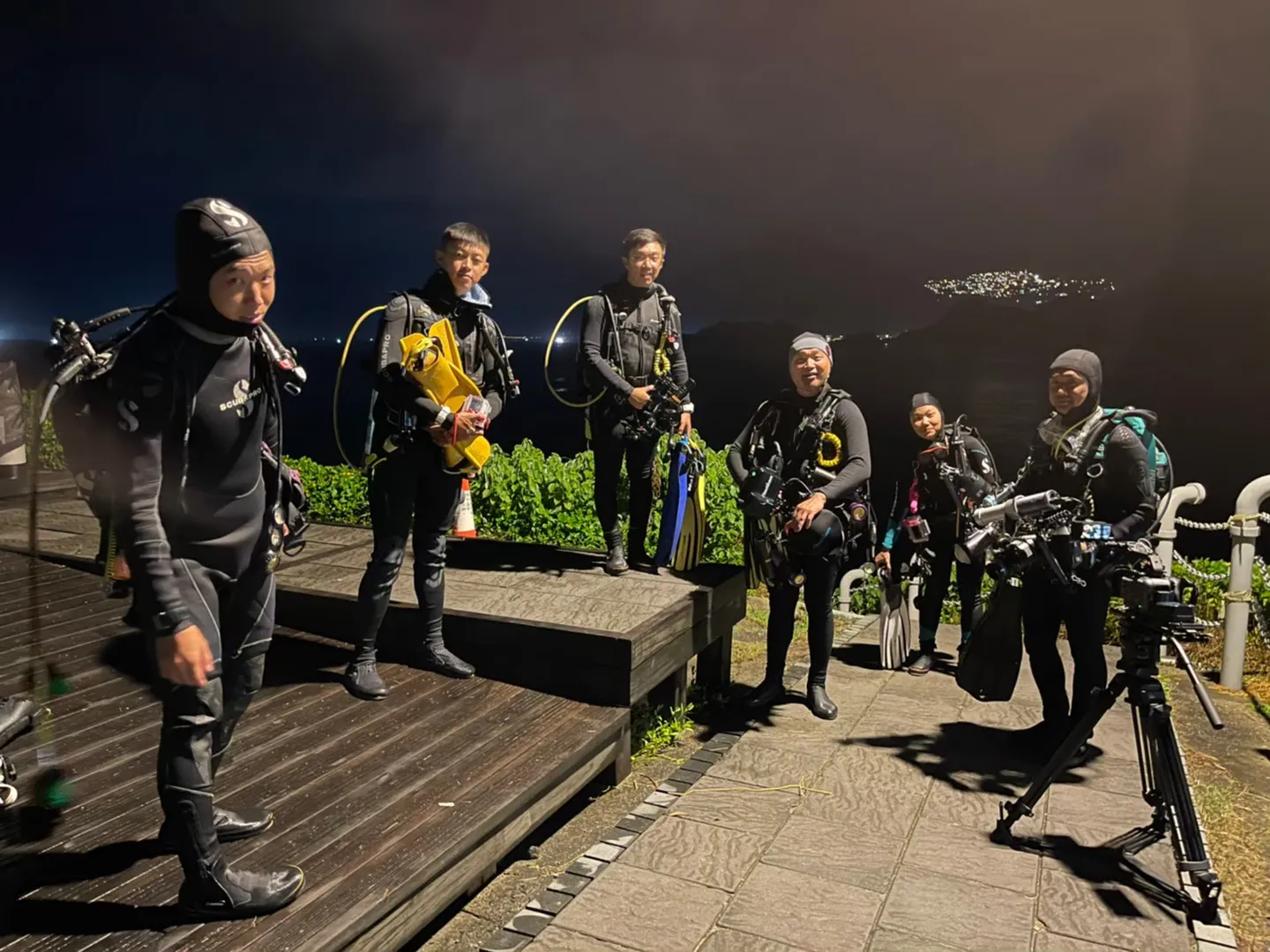
A night survey at the Chaojing conservation area — those glittering lights across the water are the famous Jiufen Old Street.


What Did the Substrate Survey Find?
Following Reef Check standards, substrate types were classified into ten categories: hard coral, soft coral, dead coral, macroalgae, sponge, gravel, sand, rock, rubble/mud, and other.
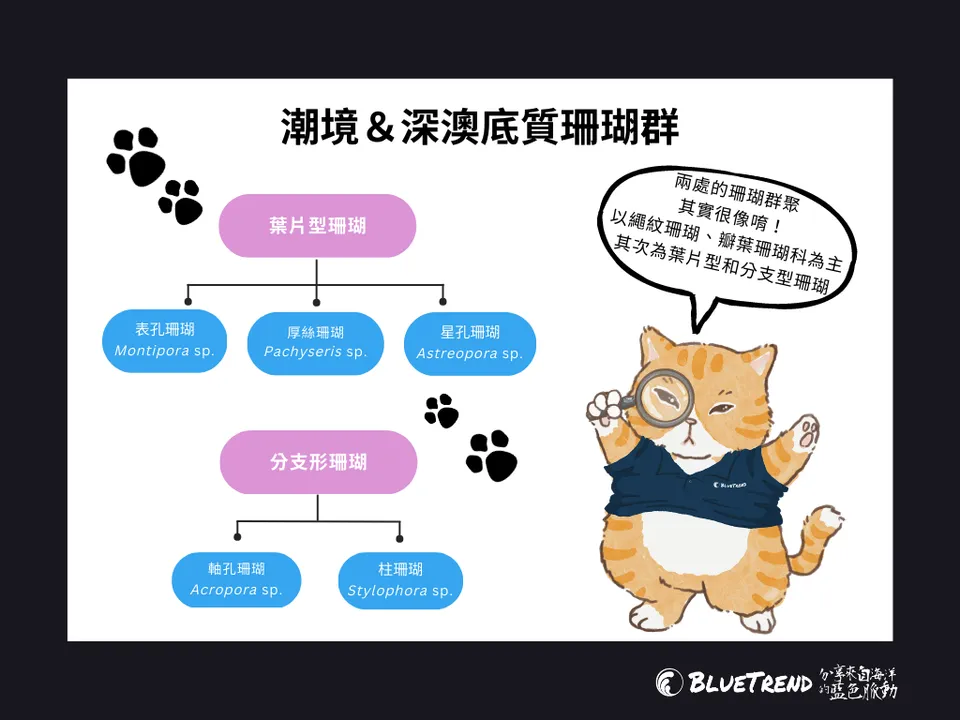
After comparing the substrate at Chaojing and Shen'ao, BlueTrend found that the coral communities at both sites are very similar, dominated by Merulinidae and Lobophylliidae, followed by foliose and branching corals. The foliose corals are primarily Montipora sp., Astreopora sp., and Pachyseris sp., while the branching corals are mainly Acropora sp. and Stylophora sp. In addition, parts of the rocky reefs in both areas are densely covered by the encrusting zoanthid Palythoa tuberculosa, forming distinctive micro-habitats.
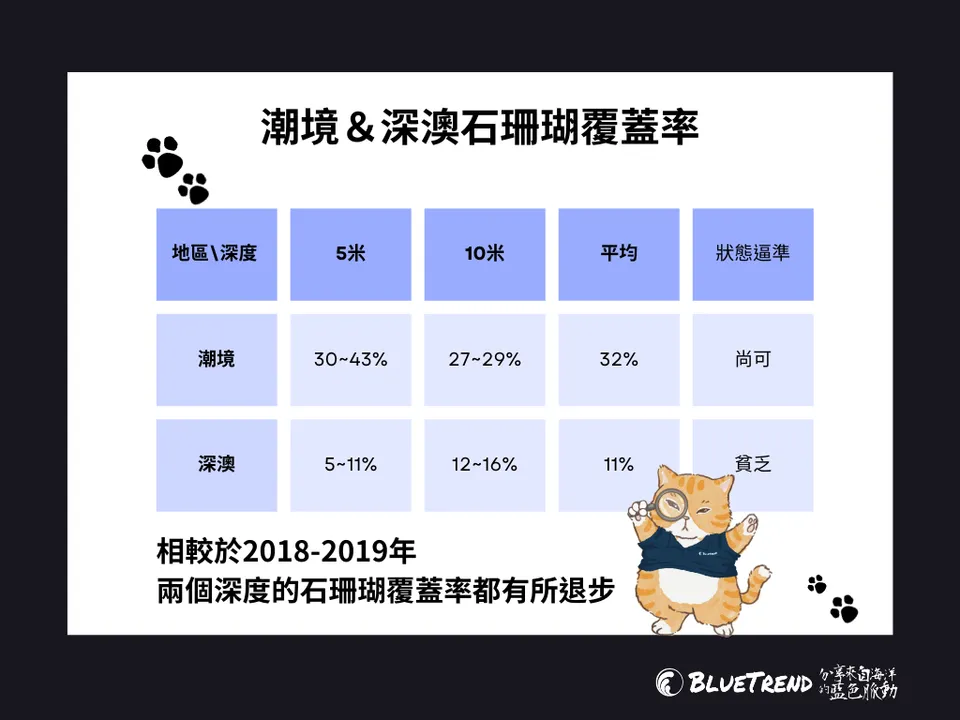
A closer comparison of hard coral cover revealed that at Chaojing, coverage at 5 m depth ranges from 30–43%, and at 10 m depth from 27–29%, with an average of 32% — meeting the international "Fair" standard for coral reef assessment. Compared with the 2018–2019 survey results, Chaojing's coverage at 5 m depth showed little change, while hard coral coverage at 10 m depth rose from 20% to 27–29%.
At Shen'ao, on the other hand, hard coral cover at 5 m depth was only 5–11%, and at 10 m depth 12–16%, with an overall average of 11% — classified as "Poor."
Moreover, compared with 2018–2019, hard coral cover at both depths declined (from 16% and 22%, respectively).
Beyond coral, the dominant algae at both sites were primarily Zonaria diesingiana, Pterocladiella capillacea, Eucheuma serra, and filamentous cyanobacteria.
What Did the Invertebrate Survey Find?
Invertebrates are enormously diverse; the research team specifically selected several indicator species with defined ecological functions known to help maintain the stability of coral reef ecosystems.
Survey results showed that indicator invertebrate numbers were low at both sites, largely because many invertebrates are nocturnal and therefore difficult to observe during the daytime surveys mandated by the project protocol. Future surveys could adjust methodology to allow for more precise recording. In terms of overall indicator invertebrate abundance per unit area, Shen'ao recorded higher counts; however, in terms of species diversity, the number of invertebrate species at Chaojing at 10 m depth in summer exceeded that of Shen'ao.
What Did the Fish Survey Find?
The research team recorded a total of 150 fish species across both sites — 139 at Chaojing and 66 at Shen'ao. The dominant species shared between the two areas were Pomacentrus coelestis, Stegastes obreptus, Chromis notata, and Halichoeres melanochir. The top six dominant fish species at 5 m depth at both sites were Pomacentrus coelestis, Stegastes obreptus, Halichoeres melanochir, Stethojulis terina, Chromis notata, and Thalassoma lunare. At 10 m depth, the top six were Pomacentrus coelestis, Chromis notata, Chromis fumea, Halichoeres melanochir, Thalassoma lunare, and Chromis cinerascens. Although the dominant species at both sites are similar, after analyzing fish species composition and abundance, the research team found clear differences in fish community structure between the two areas and across different depths.
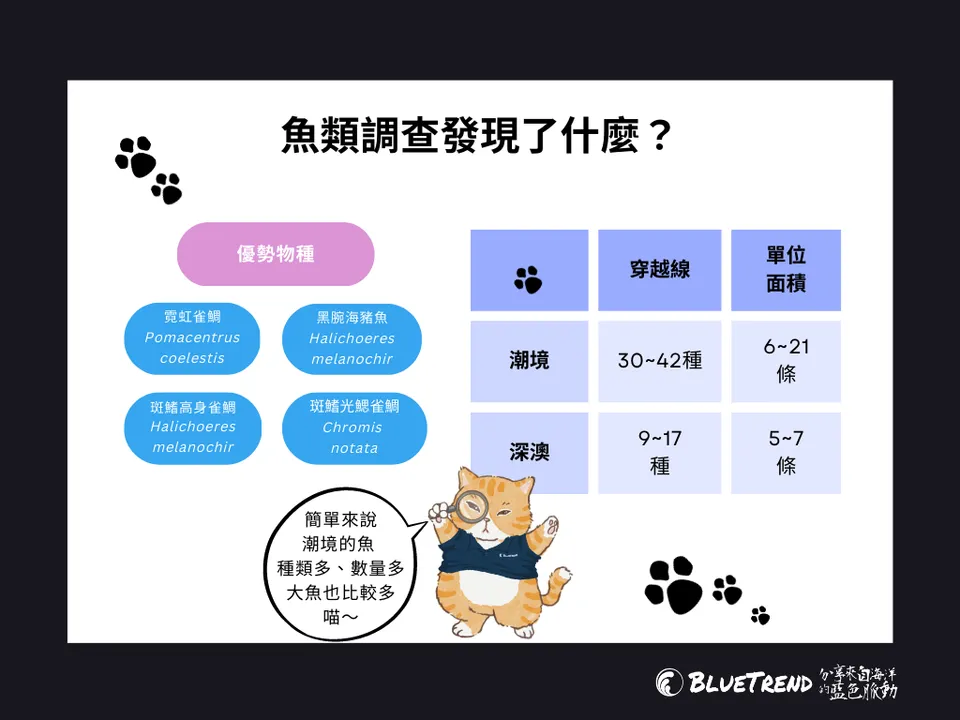
In terms of species richness, each transect at Chaojing recorded 30–42 fish species, while Shen'ao recorded only 9–17.
In terms of abundance, Chaojing had 6–21 fish per unit area compared to only 5–7 at Shen'ao, with fish density in some parts of Chaojing exceeding Shen'ao by more than twofold.
In terms of biomass, Chaojing also recorded far more large fish exceeding 30 cm in body length — such as Grouper, sweetlips (Haemulidae), and moray eel (Gymnothorax spp.) — with biomass at Chaojing reaching up to 5–9 times that of Shen'ao (Fig. 38). In short, Chaojing has more fish species, more individual fish, and more large fish.
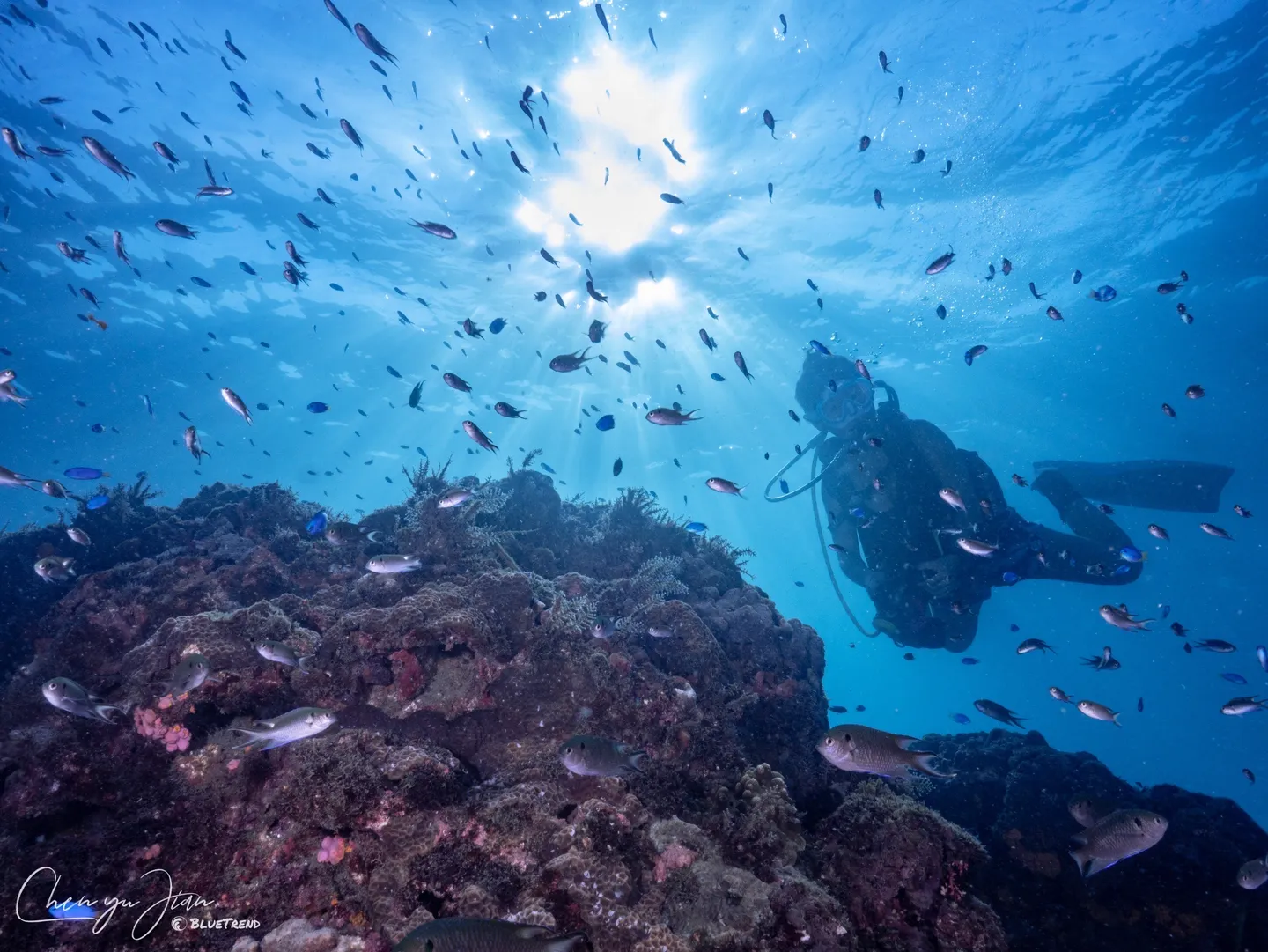
Sunlight filtering down through dense schools of fish — like a painting. photo credit:簡晨宇
A further comparison of fish ecological functions also reveals that Chaojing supports more herbivorous fish capable of removing algae from the reef, such as surgeonfish and parrotfish, which help keep algae from overgrowing coral. Chaojing also harbors more large predators — including snappers (Lutjanidae), sweetlips (Haemulidae), Grouper, and moray eels — with large individuals exceeding 30 cm in body length frequently recorded at 10 m depth, indicating a resource-rich and ecologically stable environment. Butterflyfish, which serve as indicators of coral reef health, were most abundant at Chaojing's 10 m depth, where 9 species were recorded — with greater numbers than in the Shen'ao area.
Research Team Conclusions
The survey results show that although Chaojing and Shen'ao are geographically adjacent, share highly similar species composition, and have comparable dominant fish species, Chaojing significantly outperforms Shen'ao in coral growth, fish diversity, abundance, and biomass. This clearly demonstrates that effective management is one of the most critical factors determining the success of a marine protected area.
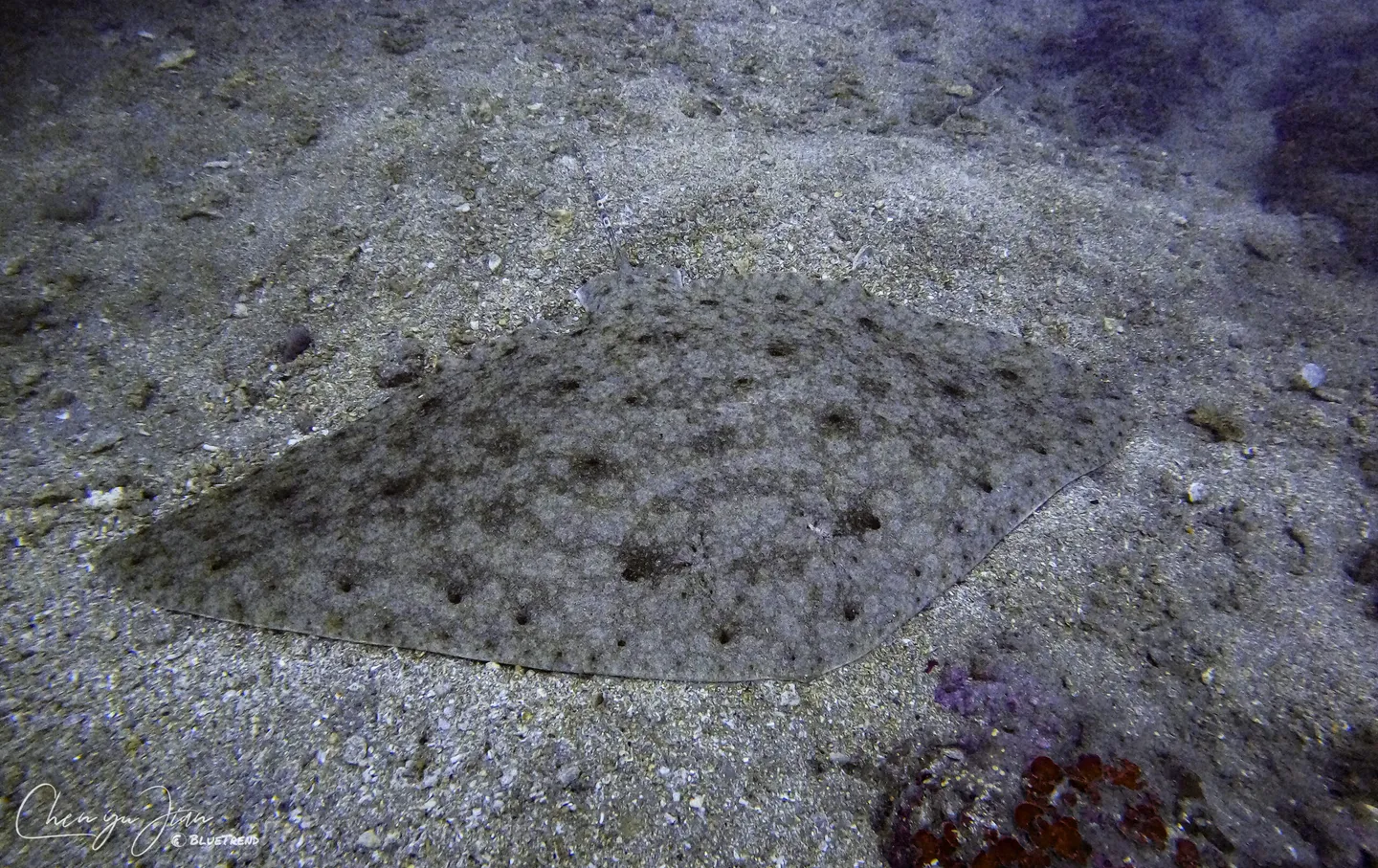
Gymnura japonica, a Japanese butterfly ray first recorded at Chaojing through a citizen science program. photo credit:簡晨宇
The Wanghaixiang Bay Chaojing Resource Conservation Area was established in 2016 (ROC Year 105). In just six short years, it has restored a spectacular underwater ecosystem and built one of Taiwan's most successful MPAs — a achievement made possible through the participation and dedication of various agencies, local residents, and visitors alike. As the area's reputation grows, however, so does the pressure from recreational use and the challenges that come with it. For the sustainable development of Chaojing, we recommend implementing a comprehensive zoning management system within the protected area to guide visitors to appropriate zones for different ocean-based activities. This would not only reduce damage to the marine environment but also help fulfill the very purpose for which the conservation area was established.
References:
- Ocean "quasi-protected areas" can outperform poorly managed marine protected areas in conservation outcomes!
- Marine Protected Area Management Effectiveness Assessment and Guidance Program
- Taiwan Marine Protected Areas
Further Reading:

![[Video] Change and Continuity in Chao Jing — A Fishing Village in Transition: First Prize Documentary, 2019 Chao Jing Bay Festival](/_astro/%E8%9E%A2%E5%B9%95%E5%BF%AB%E7%85%A7-2019-08-02-%E4%B8%8B%E5%8D%8812.56.29_ZGwc8e.webp)