Contents(3)
Last year, I snagged a spot in the Keelung Marine Citizen Scientist "Basic Underwater Training" course (Year 111) at lightning speed. Participants learned to identify different marine species and master underwater photography techniques — everyone left with a wealth of knowledge. As a result, spots for the Year 112 "Advanced Underwater Training" course were snapped up the moment registration opened. Fortunately… I still managed to get in.
This course was designed to guide divers who had already completed the introductory level through indicator species surveys, deepening their understanding of underwater ecology — so that recreational divers could contribute meaningfully to academic research and marine ecosystem improvement.
The curriculum was built around three main pillars. First, instructor WOX introduced the significance of indicator species and key survey points, covering two main categories: invertebrates and fish.
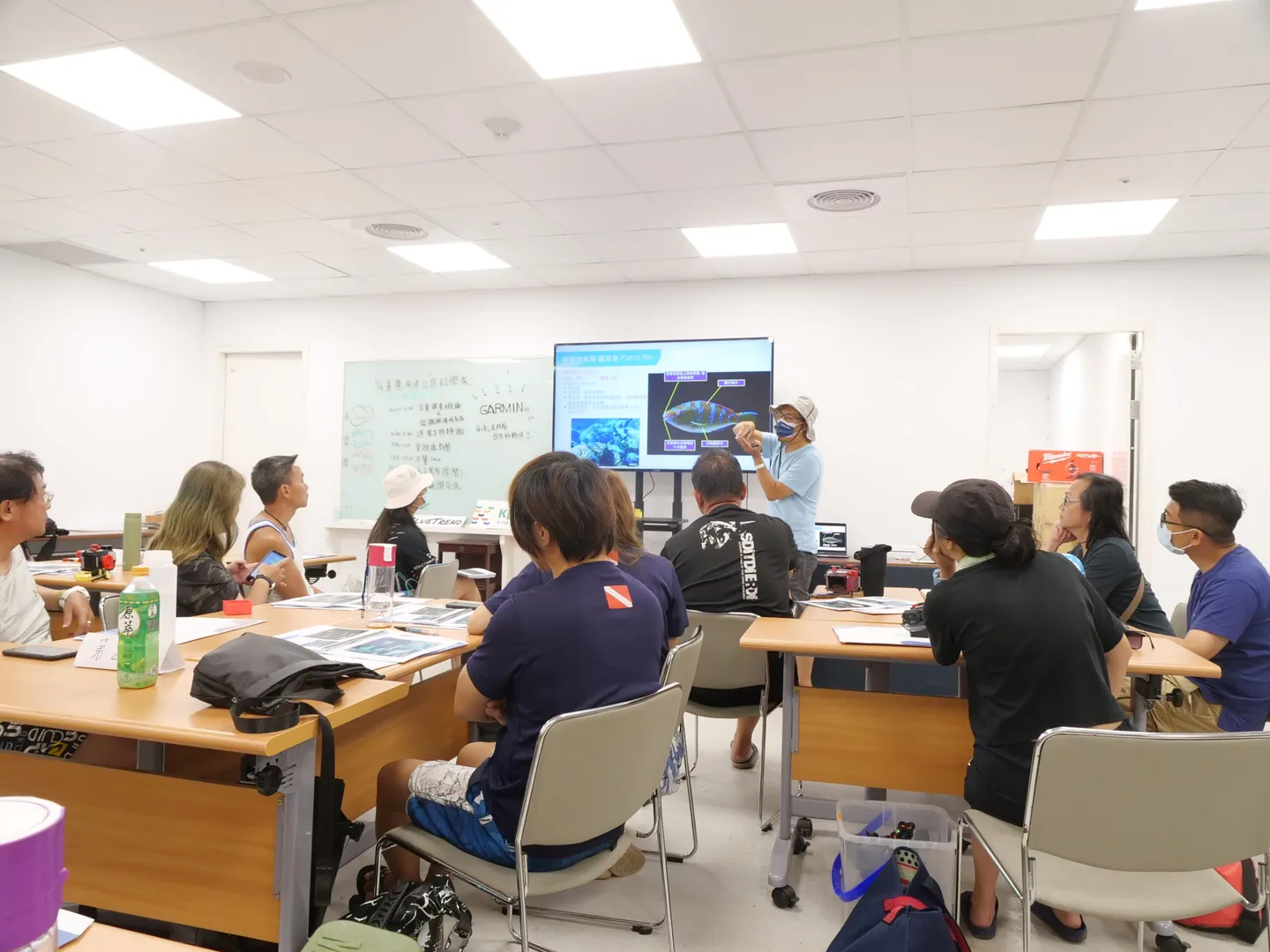
Instructor WOX explains the ecological significance of each indicator species
What Are the Indicator Species?
Indicator invertebrates include slipper lobsters, lobster, Thenus orientalis, diadema sea urchins, crown-of-thorns sea stars, slate pencil urchins, collector urchins, sea cucumber, giant tritons, top shells, turban shells, and giant clams.
Among these, diadema sea urchins and crown-of-thorns sea stars are considered harmful because they feed on coral. Lobster and slipper lobsters, being of high economic value, can serve as overfishing indicators. Slate pencil urchins, collector urchins, top shells, and turban shells graze on algae and are therefore regarded as organisms that help coral reef growth. Sea cucumber and giant tritons assist in cleaning the substrate; in particular, the giant triton is critically important for coral reef conservation because it preys on crown-of-thorns sea stars. The strikingly beautiful giant clam can build reefs, help purify water quality, and create habitat for smaller organisms.
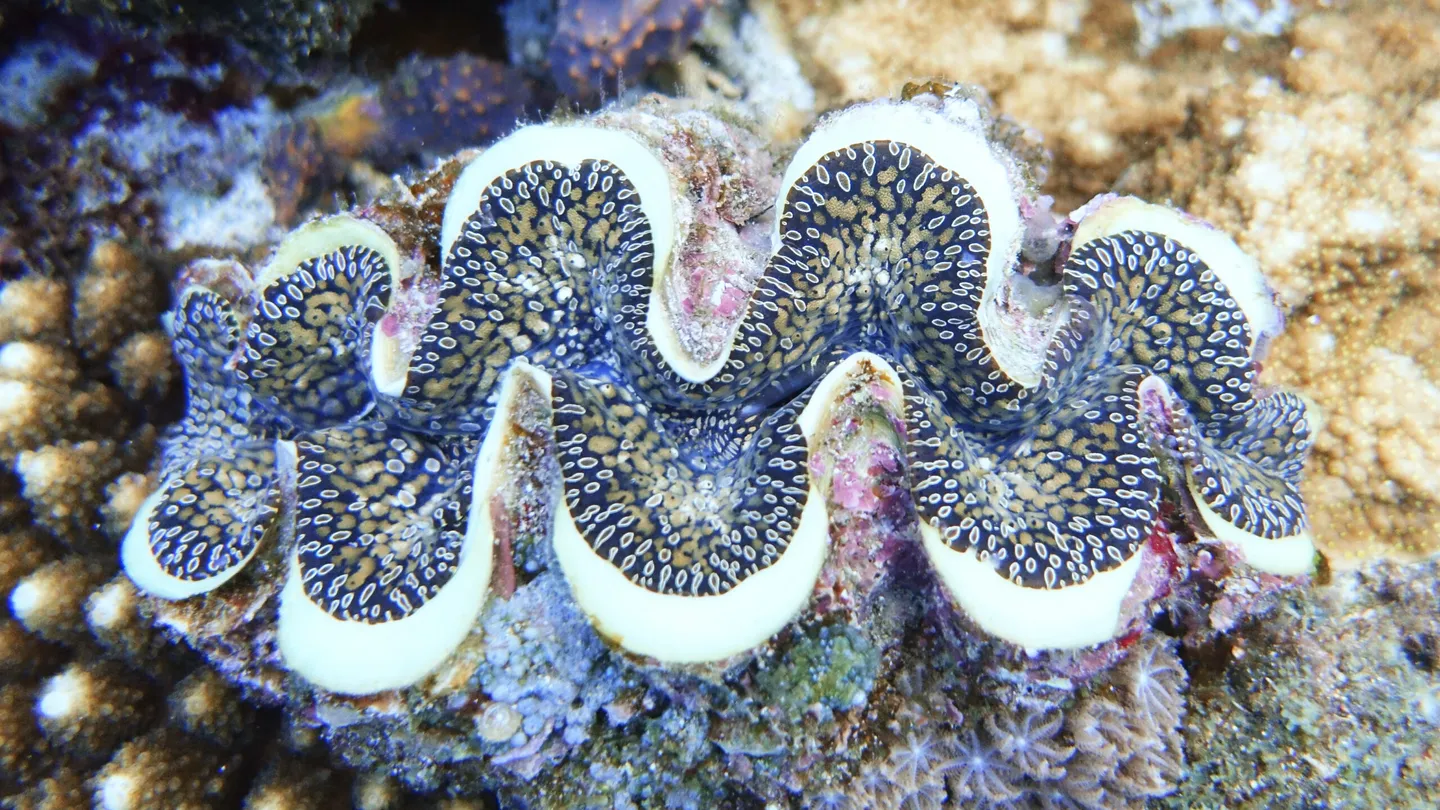
Giant clams are not only beautiful — they play a vital role in maintaining marine ecosystems
Sadly, nearly all of these coral reef-friendly organisms are of high economic value and are therefore popular targets for human harvest. This means that beyond serving as reef health indicators, they are also almost universally recognised as indicators of overfishing.
Indicator fish species include moray eels, Grouper, humpback grouper, sweetlips, snappers, humphead wrasse, butterflyfish, and parrotfish. With the exception of butterflyfish and parrotfish, all of the above are apex predators — their presence signals that the local ecosystem is sufficiently rich, with enough mid- and low-level prey to sustain them.
Butterflyfish rely on coral reefs for survival and thus serve as indicators of reef health. Parrotfish help remove algae and break down substrate, making them essential fish for coral reef maintenance; the humphead parrotfish is especially valuable, as it is simultaneously an apex predator and therefore a critical gauge of overall ecological health. However, due to overfishing, these fish species often show a trend toward smaller body sizes. Their abundance — or lack thereof — and body size are both useful for assessing whether a given area is being overfished, and their presence is a key indicator of coral reef continuity.
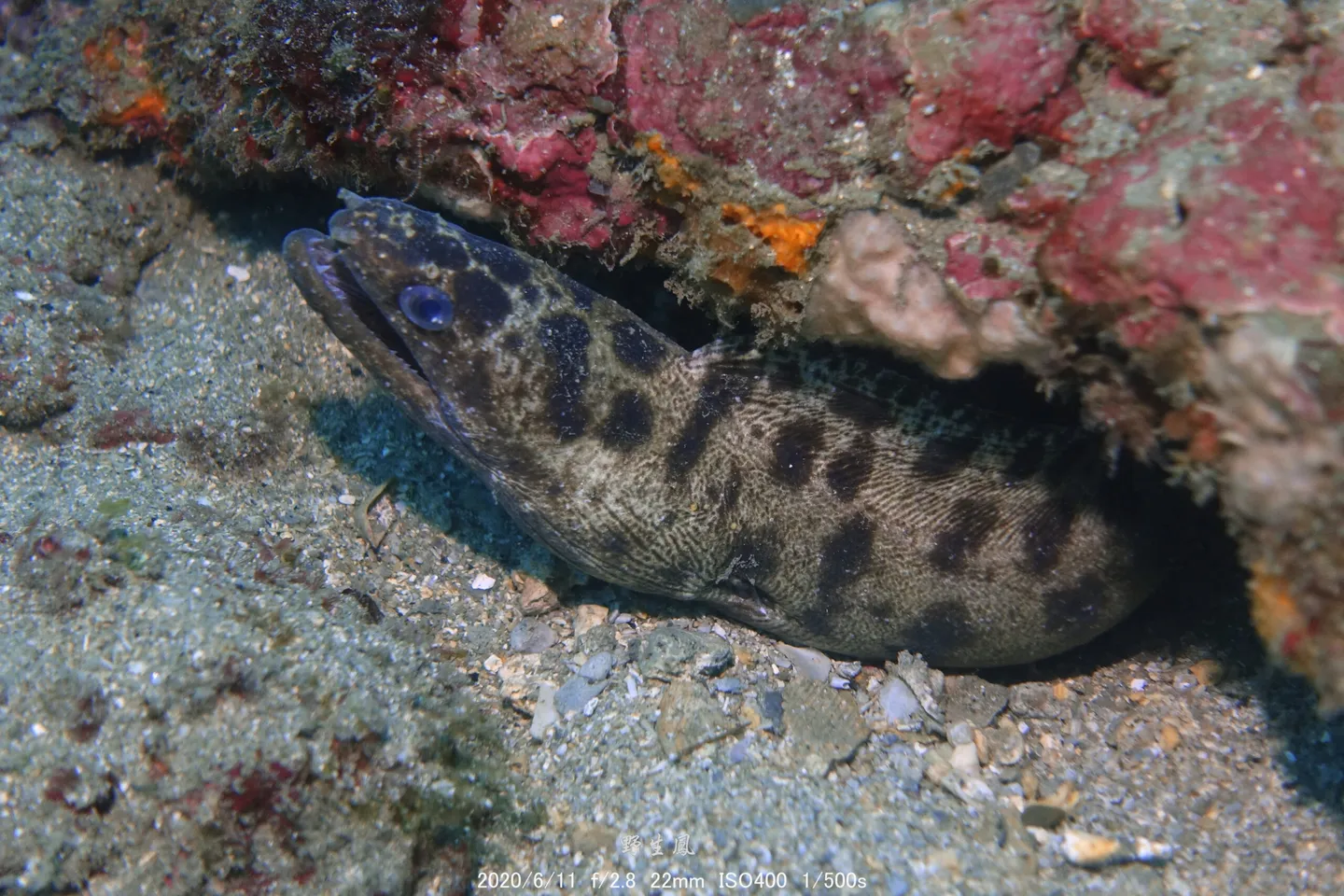
Though the moray eel looks fierce, its presence is a sign of a healthy local ecosystem
Instructor WOX noted that in addition to the above indicator species, individual sites may also designate certain specific organisms as indicators based on factors such as their influence on substrate succession and their ability to reflect the extent of fish harvesting activity.


How Is an Underwater Survey Conducted?
The second major pillar of the course was taught by instructor Axian, who walked everyone through the steps of conducting an underwater survey, as follows:
- A professional first lays out a 30-metre transect line underwater using a measuring tape.
- Working in groups of four, one person conducts a fish survey, one conducts a benthic organism survey, and the remaining two are each responsible for carrying a 25-grid frame and a camera — one positions the frame along the transect line while the other photographs it.
- One minute after the professional has laid the measuring tape, the group sets off in sequence along the tape. The survey area covers 2 feet on either side of the tape.
- The order of departure is: fish surveyors first, followed by the benthic organism surveyors, and finally the substrate surveyors. This prevents the sediment stirred up when the substrate surveyor places the 25-grid frame from interfering with the subsequent surveyors.
- Upon surfacing, everyone fills in a "Survey Record Form," documenting the day's weather, tidal conditions, dive depth, and recorded species, completing the record for that dive.
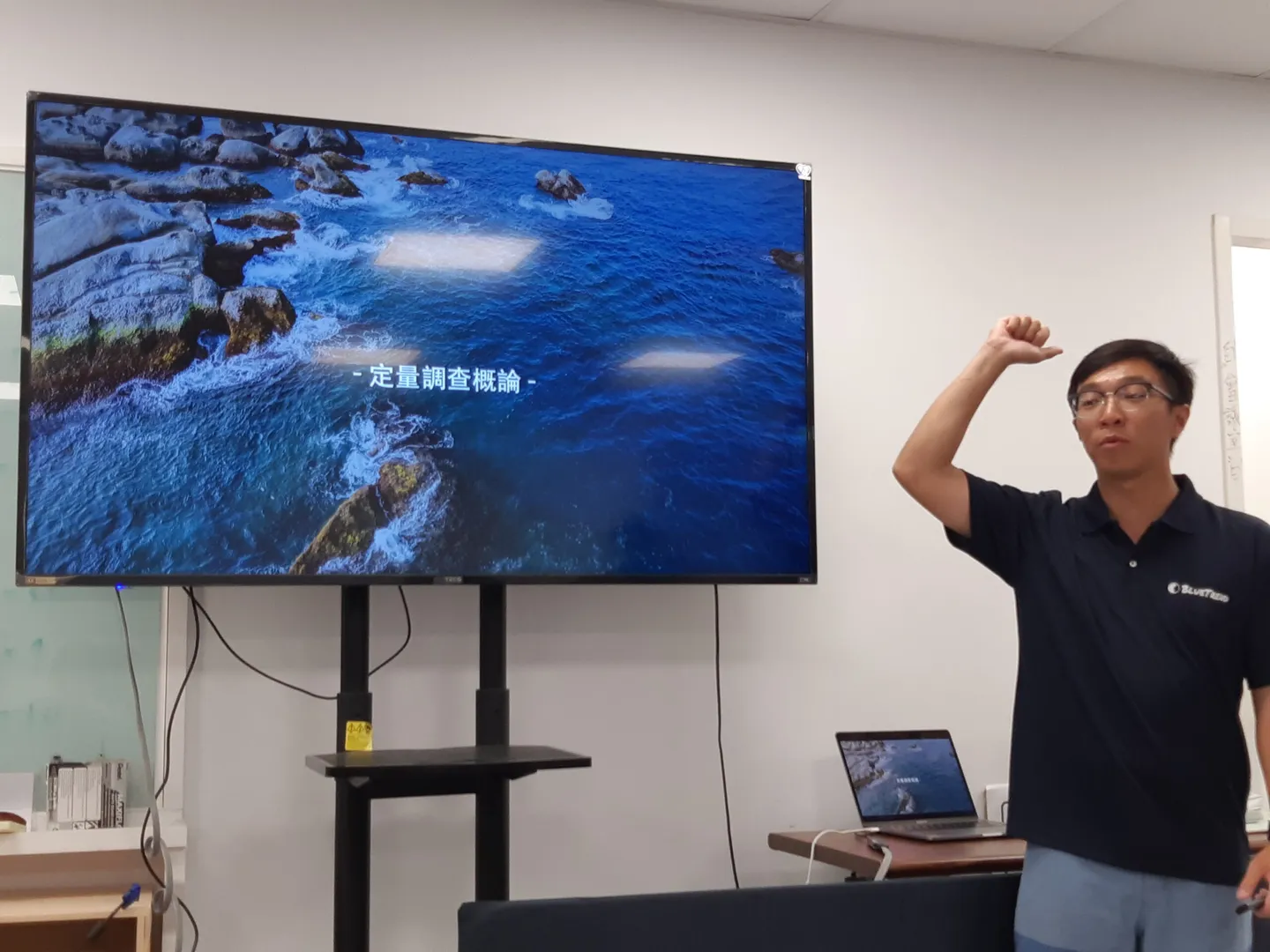
Instructor Axian carefully explains each step of the underwater ecological survey
Instructor Axian reminded everyone of the key points to keep in mind during the survey:
- Fish surveyors should be careful not to count fish twice. When encountering a large school, quickly count 10 fish first, then use that as a reference to estimate the total number in the school, and write the result in the underwater notebook.
- Benthic surveyors, when they encounter snails or shells, should remember to flip them over and photograph the aperture (opening) for the record — this is essential for accurate identification.
- Substrate surveyors should ensure the 25-grid frame is placed flat before photographing, so that subsequent analysis is possible. The analysis categorises substrate as rock, gravel, or fine sand, and vegetation as green algae, red algae, brown algae, coral, or sponge.
My write-up may read as neatly organised, but the reality before diving in was rather chaotic, as everyone had different mental images of how things would work. Fortunately, instructor Axian explained everything with great patience, and in the end the group descended in good order for the grand finale — the underwater survey. On that day, 12 participants divided into 3 groups of 4, each conducting their survey along a separate transect line.
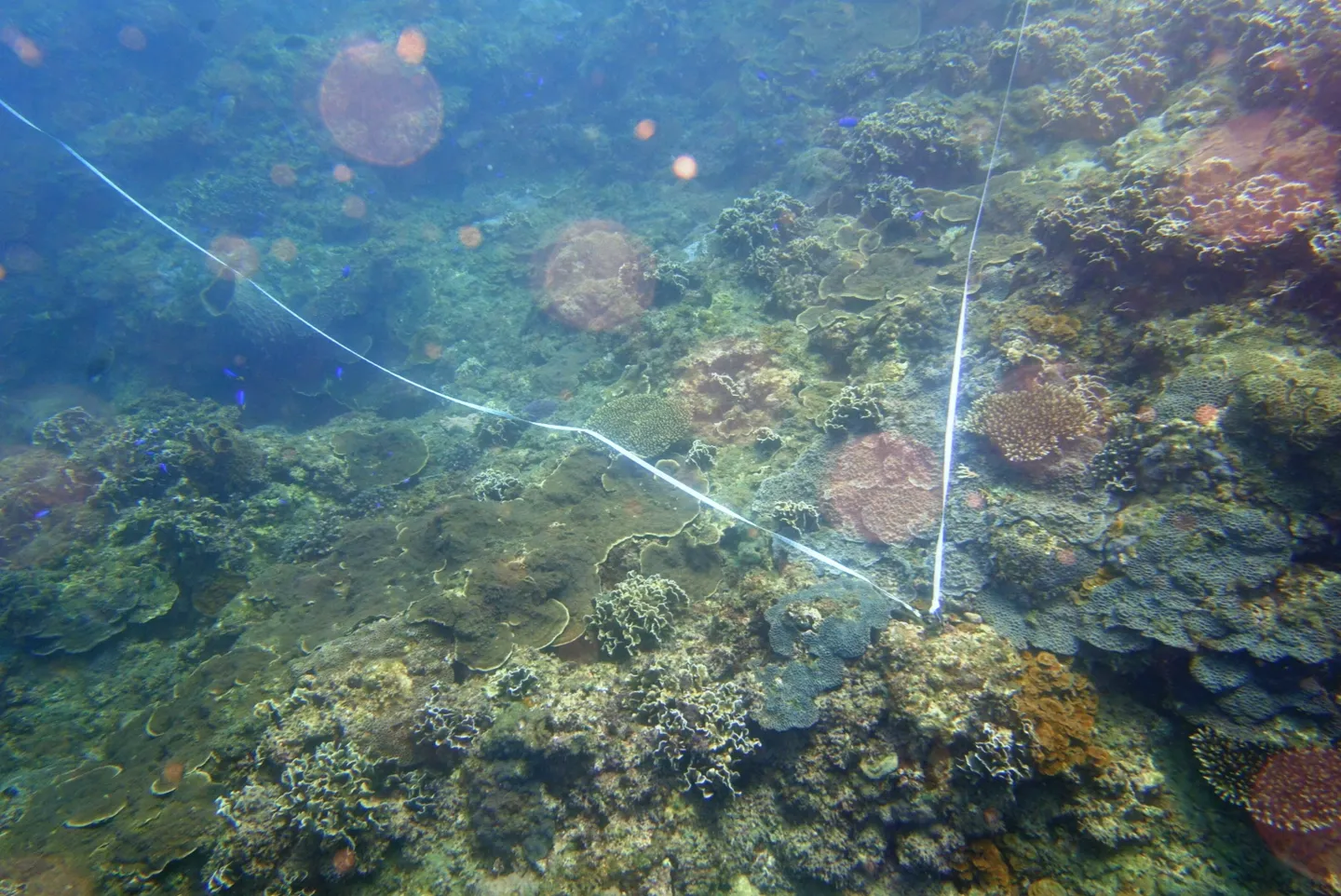
All 3 groups set off along their respective transect lines
The Underwater Survey Begins!
The underwater survey went remarkably smoothly overall. With the transect line in place, navigation was no problem at all. A dive instructor patrolled back and forth along the line, and everyone's diving was stable — making the whole activity very safe and allowing each person to focus calmly on their survey work.
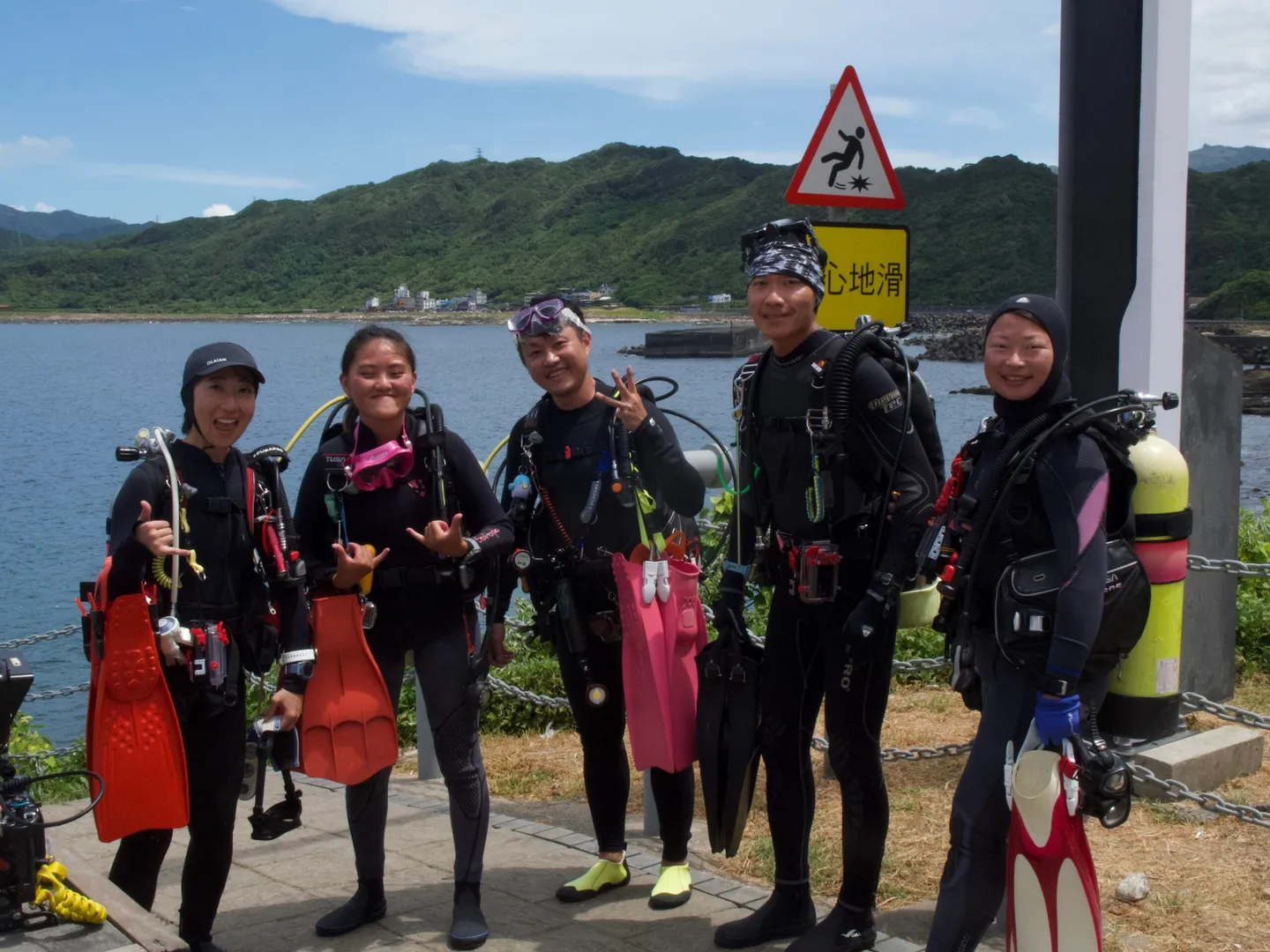
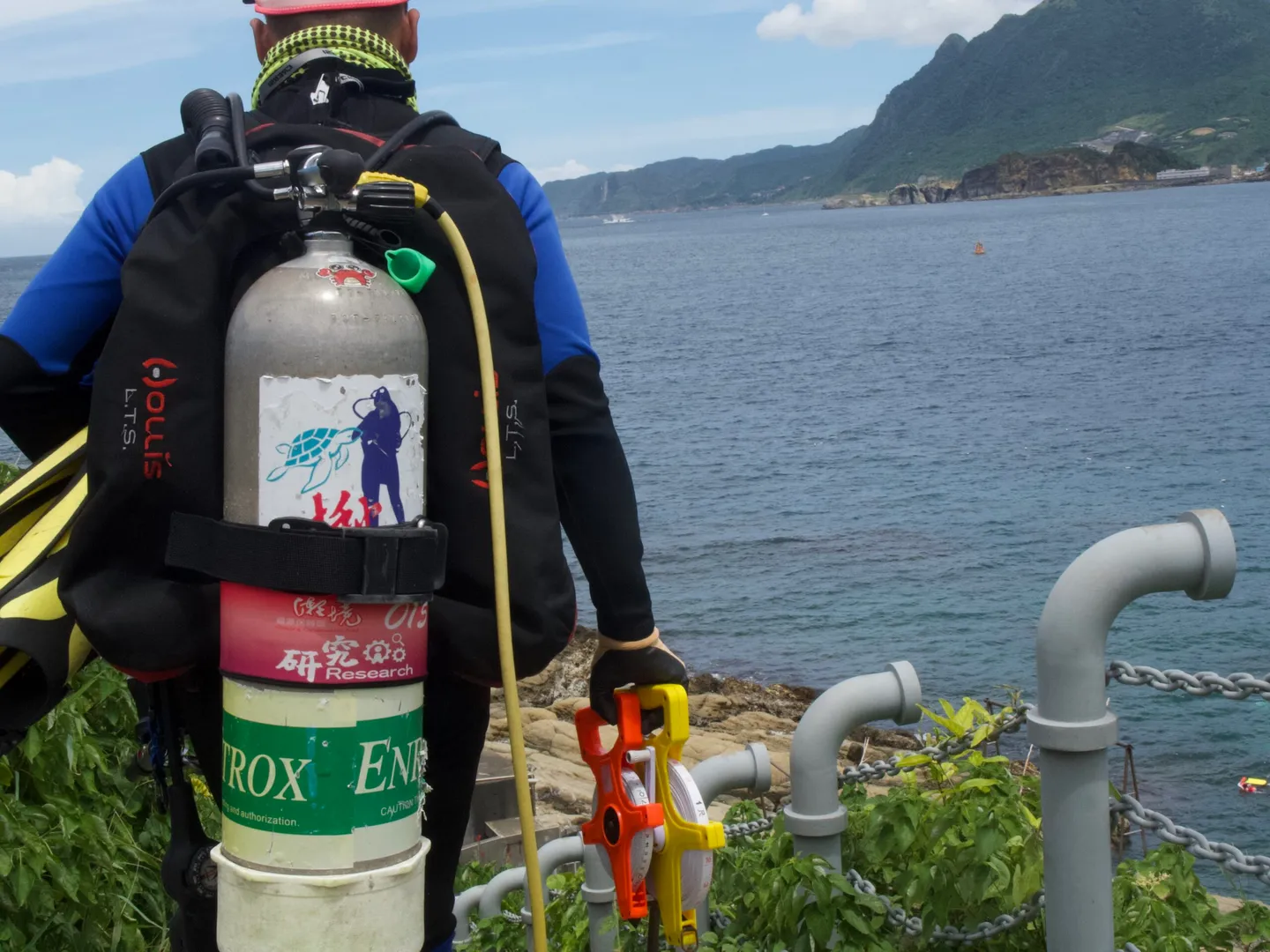
Geared up and ready to dive.
Once everyone surfaced, however, the individual challenges each person had faced came to light. The classmate recording fish said she was simultaneously filming with a GoPro, counting fish, scanning a full 360°, and keeping track of whether she was double-counting — she was absolutely frantic!
I was responsible for recording benthic organisms, but when I first descended I couldn't find a single snail or sea urchin, which was a little embarrassing. It was only when I remembered that it was daytime — and that they would all be hiding in the rock faces — that I slowly tracked them down one by one and got them recorded. Instructor WOX also reminded the students photographing benthic life: after flipping a snail over to photograph its aperture, remember to flip it back! He spotted a snail that couldn't right itself on its own, leaving its flesh exposed and nearly getting it pecked by a fish. Quick-eyed and quick-handed, he turned it back over and saved the little creature's life.
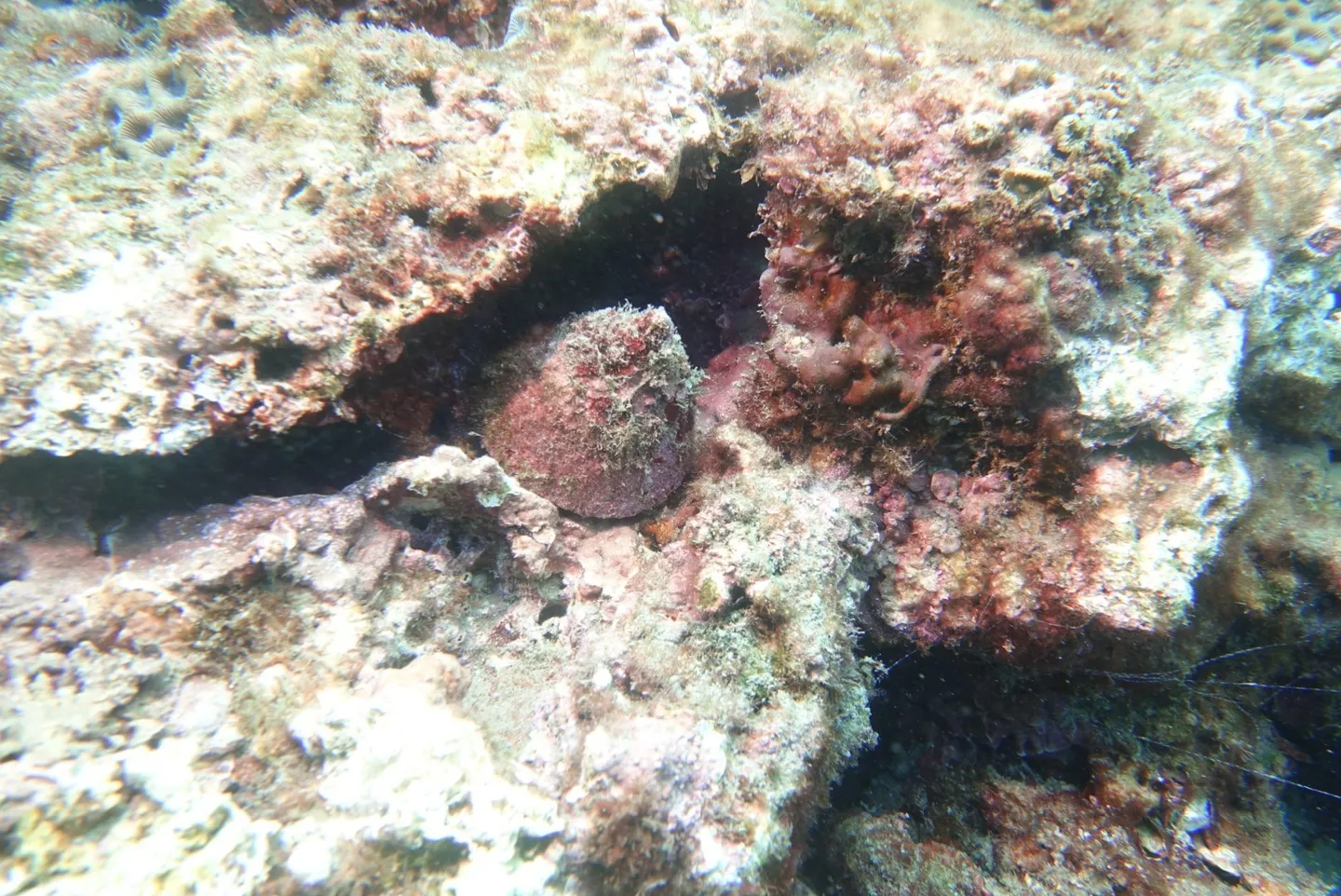
Shell surfaces are often too heavily encrusted for precise identification, so photographs of the aperture are taken as supplementary reference
The substrate recording team — two people working together for the first time — faced their own challenges. The protocol called for a photo every 5 metres: at each point, one flat shot of the 25-grid frame to the left and one to the right of the transect line, continuing at 10 m, 15 m, and so on. What was supposed to be a 30-metre transect ended up being photographed all the way to 50 metres.
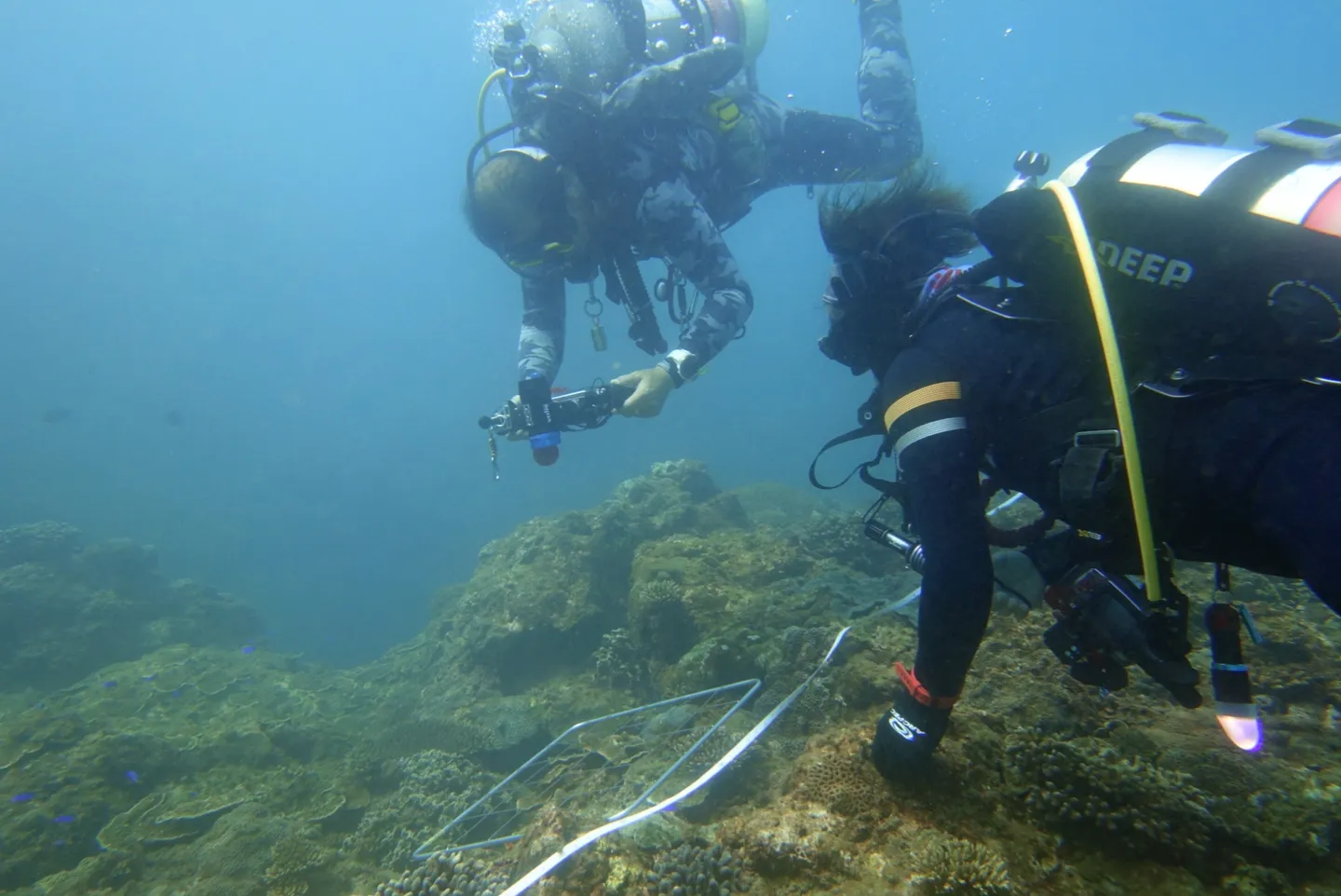
The substrate survey pair need good teamwork — one positions the 25-grid frame while the other takes the photograph
Instructor WOX revealed that, as an extra challenge for the substrate survey team, he had deliberately run the transect line over a particularly uneven section of terrain — to see how they would manage to take a level photograph without moving the line.
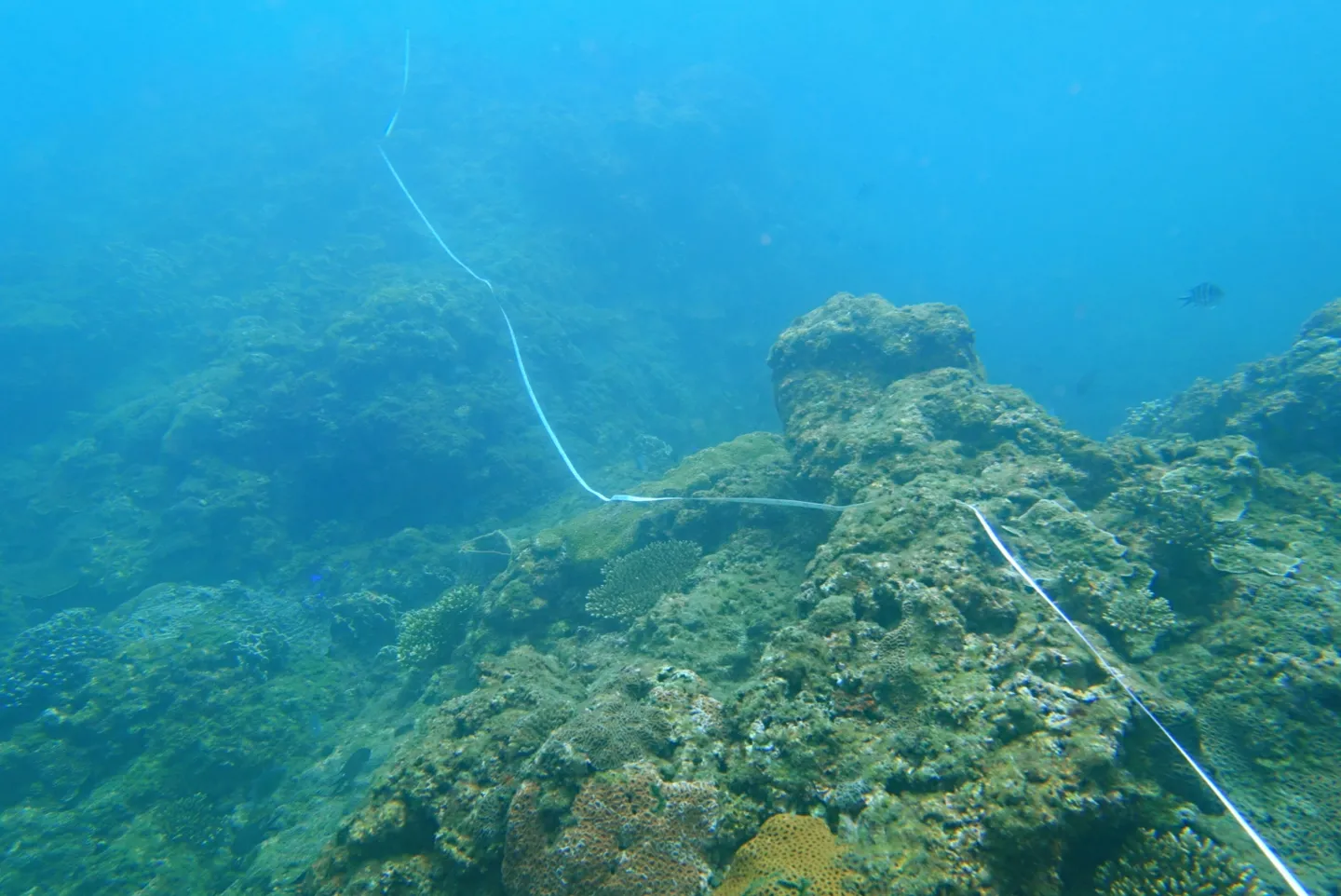
Instructor WOX deliberately ran the transect line over uneven terrain to test the substrate survey team
When reviewing the survey photos, the substrate team laughed and said they had passed the test — only to notice that a small fish had casually wandered into the bottom-right corner of one frame, nearly rendering that image unusable.
Instructor WOX explained that substrate photographs must be steady, free from reflections (which means no strobe can be used during shooting), and free from obstructions — such as fish — as these would interfere with analysis. Fortunately, the fish was small enough that the impact was minimal.
One of the most entertaining moments of the course came when, reviewing everyone's photos, instructor WOX shared fascinating biological knowledge inspired by what participants had recorded — including a crab that hides inside a sea urchin's anus, and a baby ovulid snail that mimics a flatworm.
The most important lesson learned was how to use indicator species to make well-reasoned, evidence-based assessments of an area's ecological status — and how to reduce behaviours that harm the marine ecosystem. For example: stop eating collector urchins and parrotfish! Let them eliminate algae, and our coral reefs will have a real chance to recover.
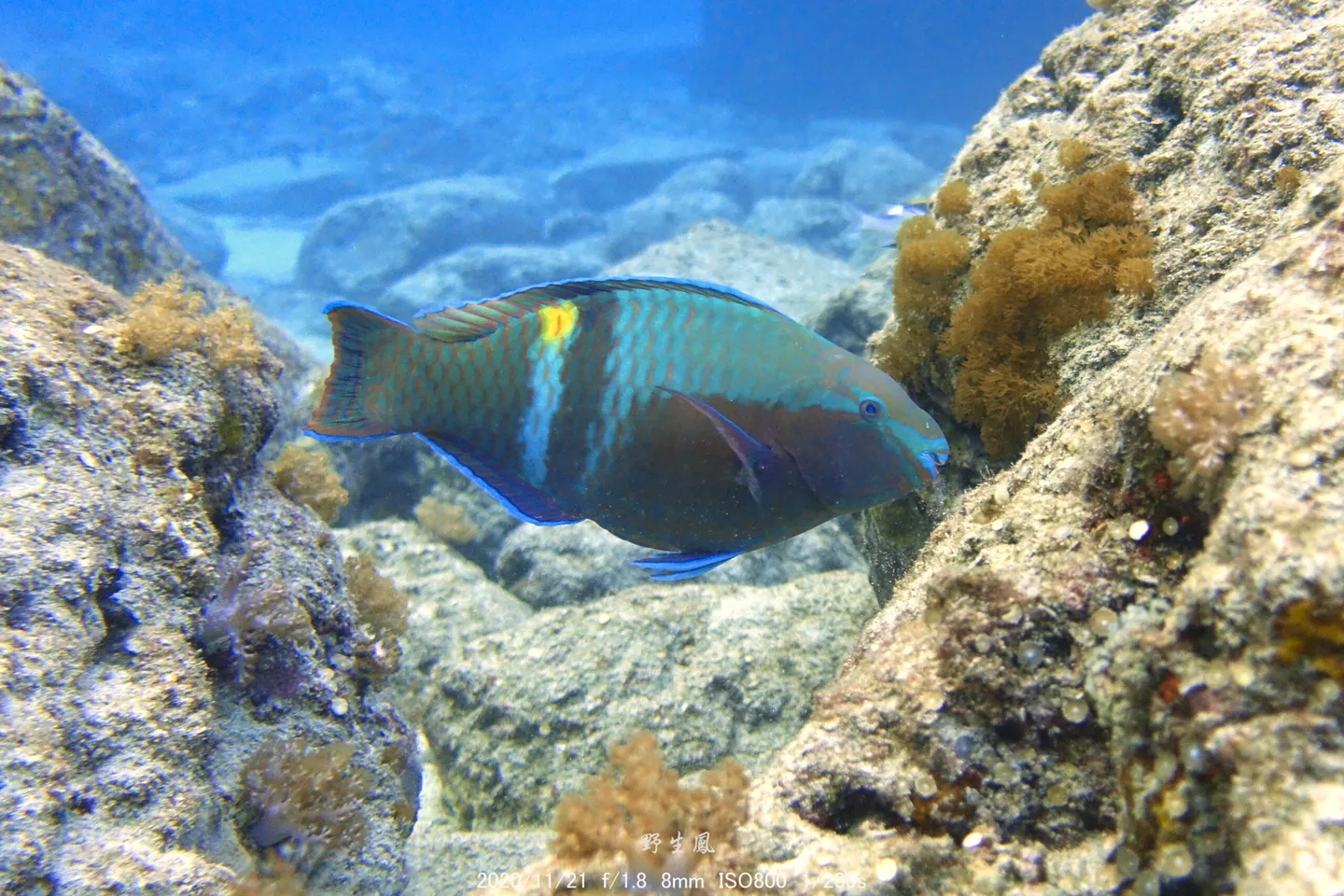
The vibrantly coloured parrotfish is a vital species for the long-term survival of coral reefs
The greatest hope after completing the course is that, in the future, we can apply what we learned in the classroom so that what began as purely recreational divers can translate into meaningful support for academic surveys and marine conservation — leaving an enduring promise of life and vitality in the deep blue we love most.
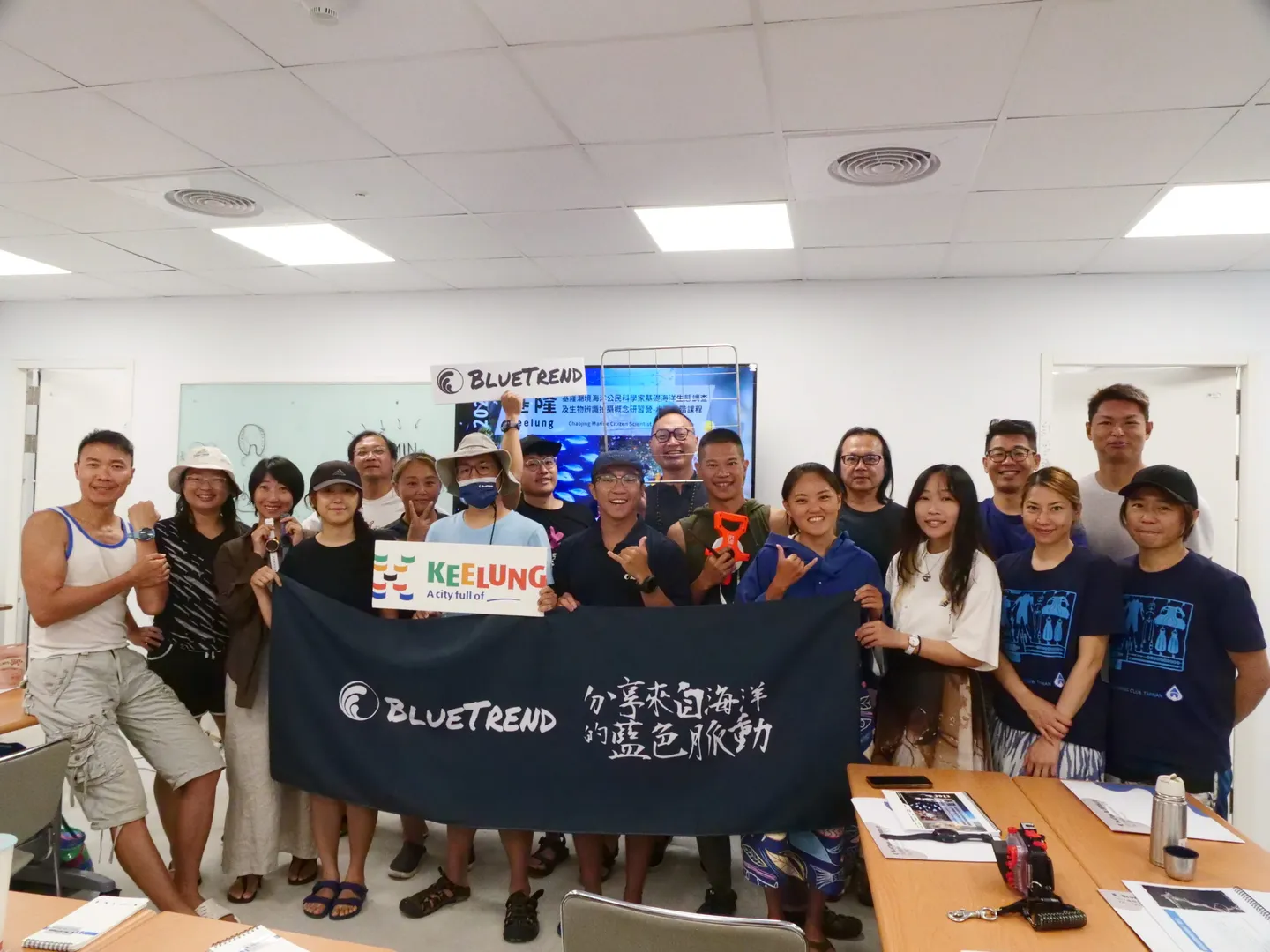
Through this course, every diver can give back to the beautiful ocean with what they have learned.
Further Reading: