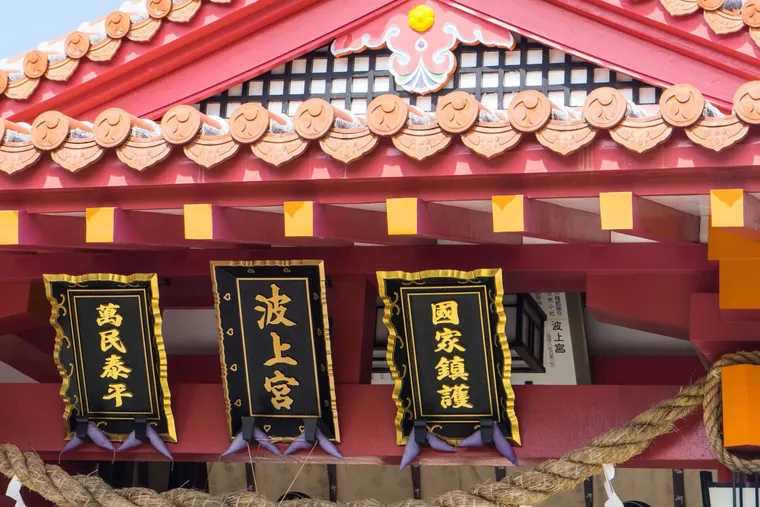
The Story Behind 35 Coffee's Founding
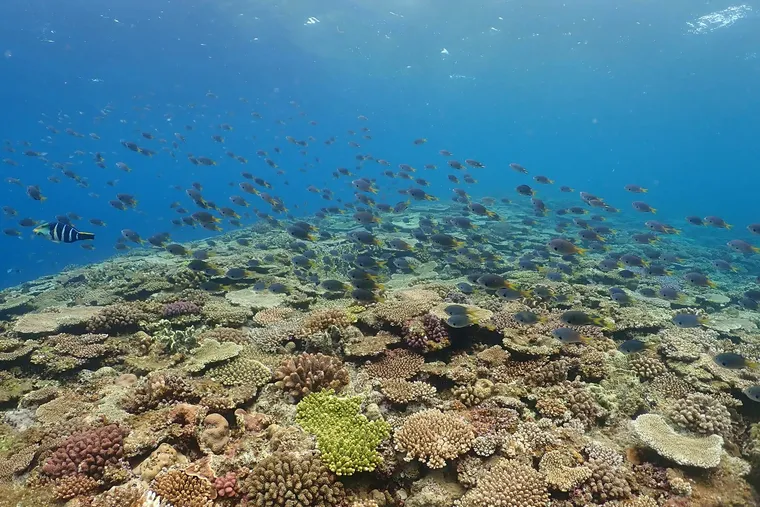
The south-central part of Okinawa was largely formed by uplifted coral reefs, and approximately 200 species of coral have been confirmed to live here. Due to rising sea temperatures caused by global warming, coral populations have declined rapidly over the past decade. Founder Muneyoshi Oshiro witnessed these swift environmental changes and began asking himself: shouldn't he do something for his hometown? How could future generations still enjoy this beautiful scenery?
In 1993, 35 COFFEE was officially founded in Okinawa with the goal of "longevity Okinawa tourism," aiming to spread the idea that "a single cup of coffee in your daily life can help improve the ocean environment — born from coral, and given back to coral."
"Our greatest wish is that when children grow up, they will still be able to see the beautiful coral reefs of Okinawa." — 35 COFFEE
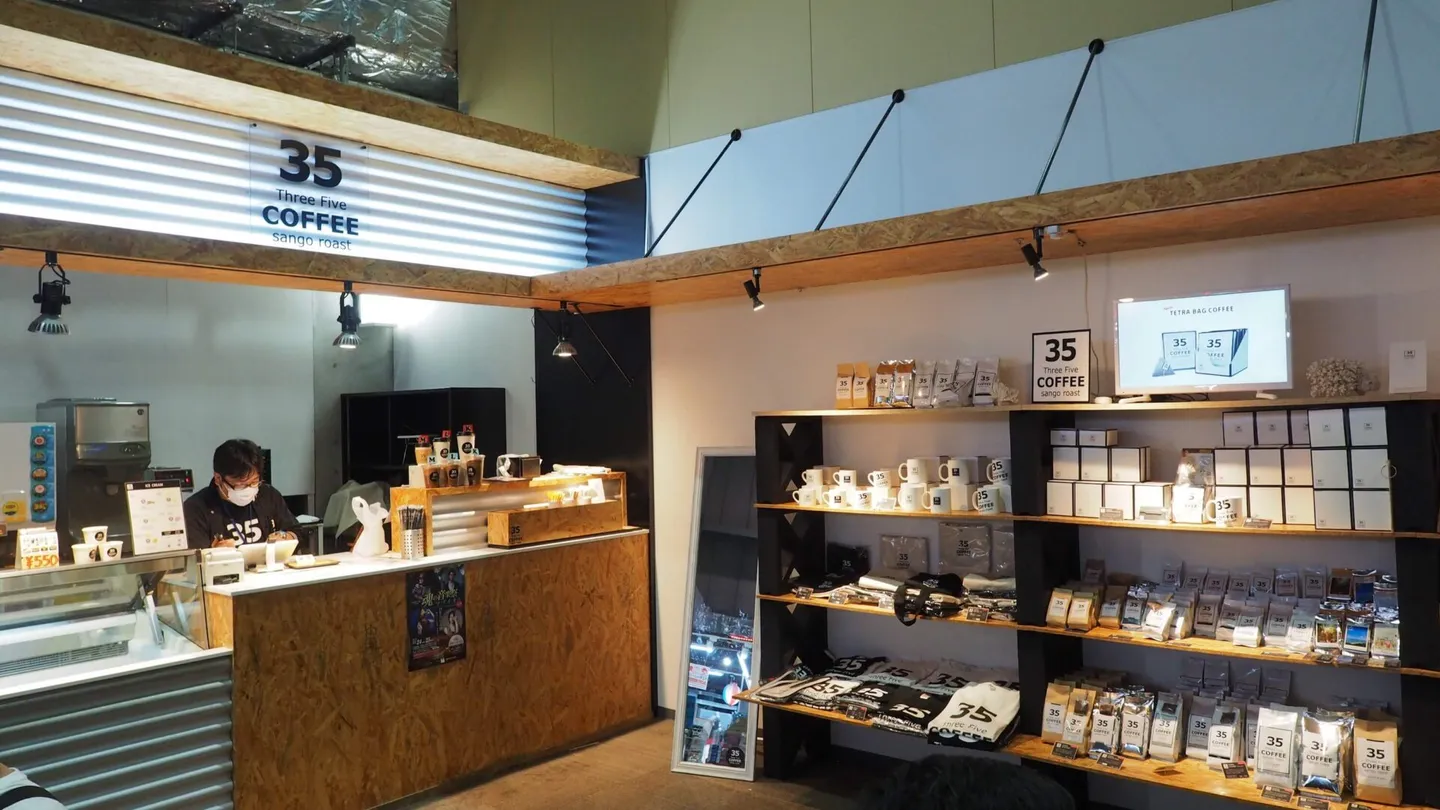
35 coffee booths can be spotted at many tourist spots around Okinawa
WHY? One of a Kind, Okinawa Only
What makes coral coffee special isn't the coffee itself — it's the story and origin behind it. The word for coral in Japanese (サンゴ, sango) sounds similar to the number 35. Weathered coral is white before roasting, then turns deep black after roasting, which is why the brand's signature color scheme is black and white. This pairing also carries meaning: black represents the gravity of coral bleaching caused by environmental damage, while white conveys a sense of pure-hearted compassion.
Furthermore, under Okinawa's fishery laws, natural coral — even dead coral — is prohibited from being taken out of Okinawa. That's exactly why 35 Coffee is a truly one-of-a-kind, Okinawa-exclusive product!
The Role of Coral in the Coffee
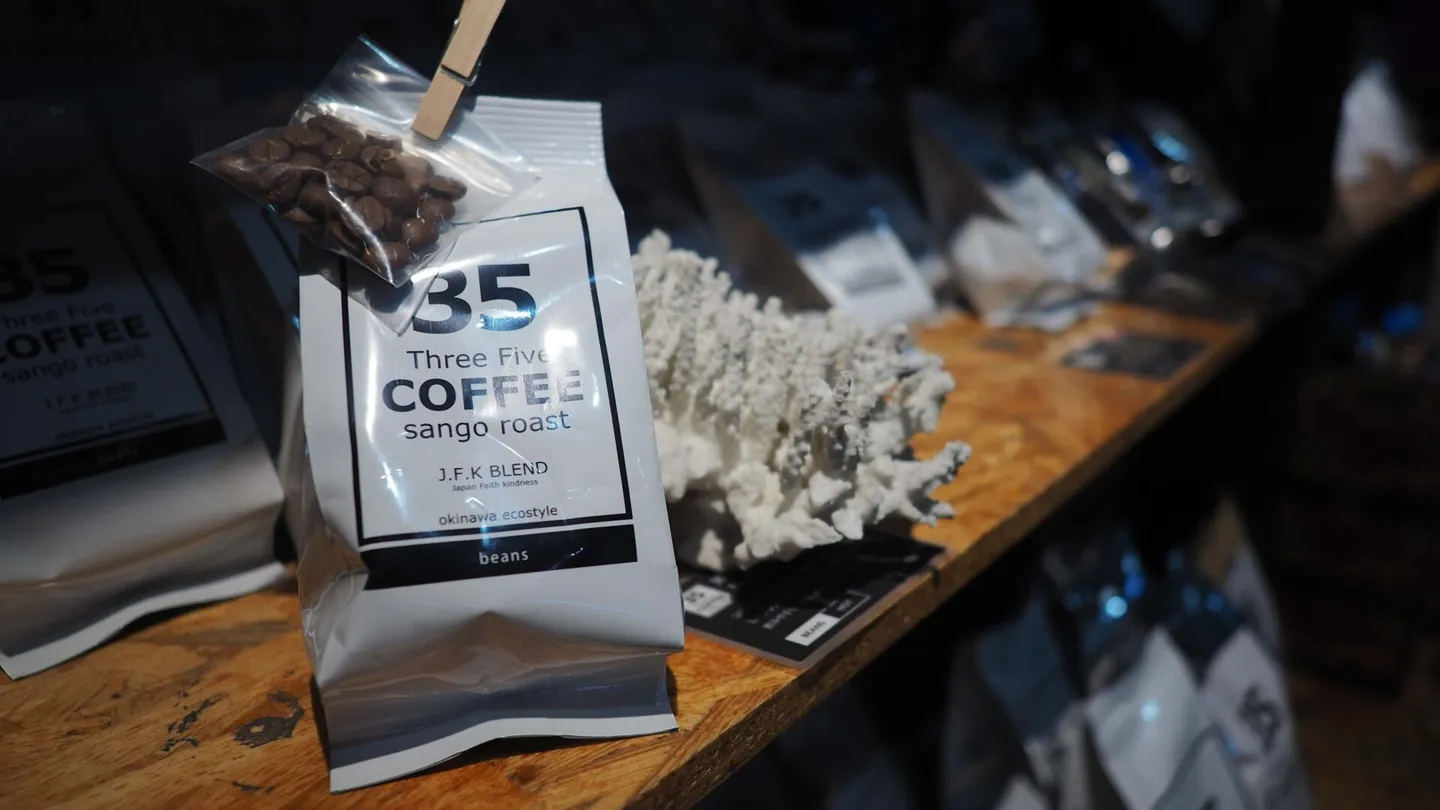
Every coffee bean is roasted using coral
35 Coffee sources weathered coral from a specialist company operating under special government permits, and uses it in the roasting process. Rather than adding coral directly to the coffee, the green beans are placed inside a heat-fired roasting chamber, while the weathered coral is placed on a tray outside the chamber. The coral is heated to 200°C, slowly roasting the beans through conduction, convection, and radiation. Under the resulting chemical changes, the coffee's inherent rich aroma is drawn out.
Taken from Coral, Given Back to Coral
"For every cup of coffee sold, 3.5% of the proceeds are donated to coral planting initiatives." In partnership with other businesses, 35 Coffee has established a baby coral nursery, raising coral seedlings until they are ready to graduate and be successfully transplanted into the sea. The brand's official website publishes transplantation numbers and progress reports twice a year, along with regular updates of the coral babies' growth photos and event records. Monitoring has shown that transplants in April and October have the highest survival rates — over 80% of approximately 2,000 coral seedlings have successfully graduated!
In addition, they collaborate with local businesses to launch co-branded products, helping people with disabilities find employment, and partner with social welfare organisations to handle product packaging.
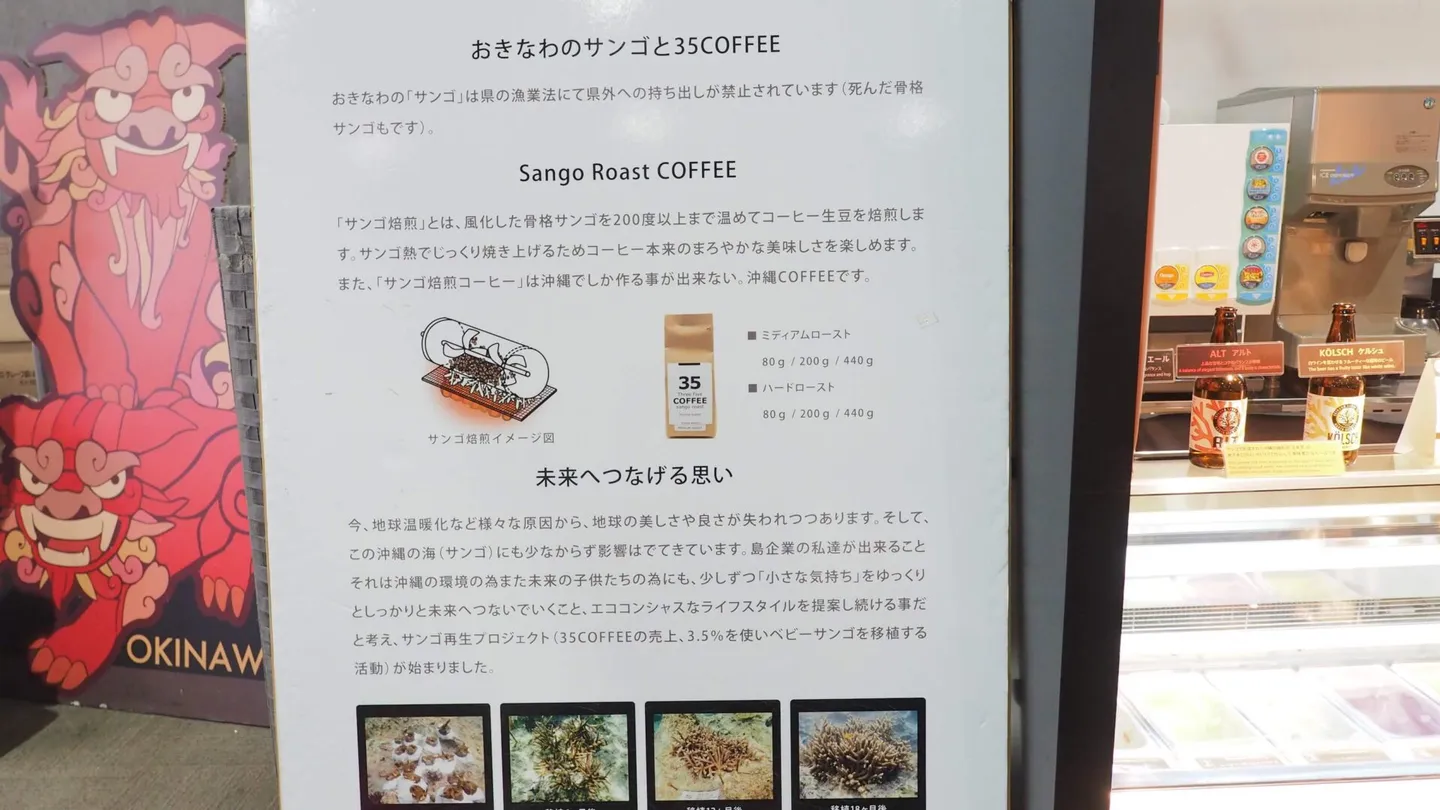
A business philosophy of taking from coral and giving back to coral
A Café Beneath Stalactites
This local Okinawa chain café offers not only coffee but also other beverages and ice cream. Its most distinctive branch is a stalactite cave café located directly across from the Gyokusendo Kingdom Village — and best of all, no admission ticket is required! According to reports, ancient human bones and stone tool relics were once discovered here. If you have a flair for history and archaeology, come and sip a rich, ocean-flavoured cup of coffee surrounded by millennia-old stalactites, and soak in the timeless, unhurried atmosphere.
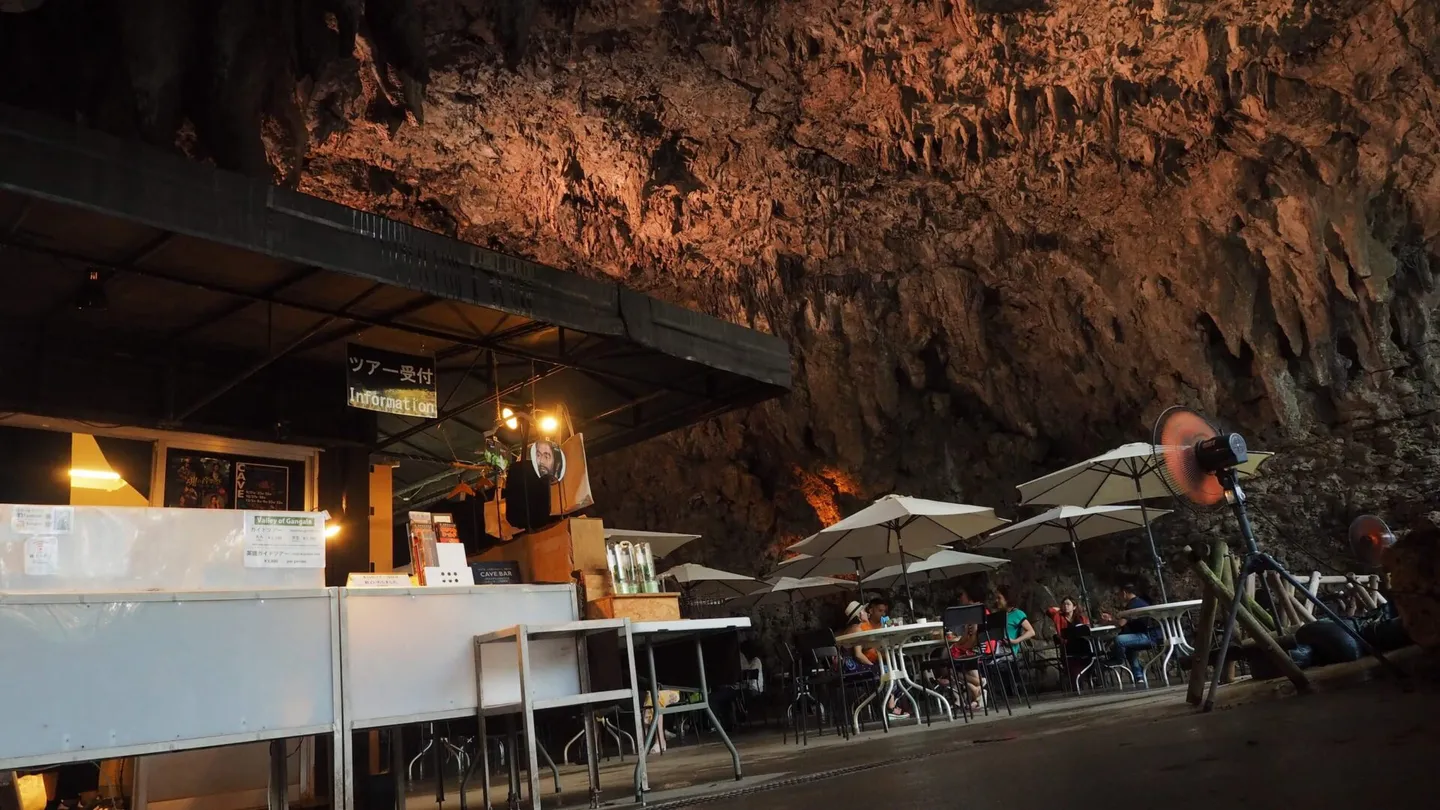
Enjoying coral coffee inside a unique stalactite cave is an experience you won't soon forget
If you ever get the chance to visit Okinawa, grab a cup of 35 COFFEE and support their coral conservation efforts!
Further reading:
Frequently Asked Questions
How is a BlueTrend dive trip different from an unknown, no-name dive group?
Choosing us means full peace-of-mind protection and a smooth experience from start to finish. Every trip we run holds to three things.
First, full legal protection and a professional dive leader: we strictly follow Taiwan's travel regulations and provide complete travel-agency liability insurance, travel insurance, trip-inconvenience insurance and dive insurance. Every group is accompanied by a certified, foreign-language dive leader who joins you on both the dives and the land itinerary, liaising seamlessly with local dive shops and operators on your behalf to keep things running smoothly — the person our travellers trust most.
Second, fully licensed with secure payments: every payment goes into a licensed travel agency's account, with multiple safe payment channels (bank transfer, credit card and more) and a legal collect-and-remit receipt, so every transaction is open, transparent and protected, avoiding the fraud and dispute risks of transferring money privately to an individual.
Third, hand-picked quality we vet in person: every trip, dive site and partner shop is scouted on the ground by our own team, from the guides' professionalism and safety standards to the food, lodging, environment and service details on land, all vetted by us so you don't get caught out.
I want to sign up for a dive trip. Are there certification-level or logged-dive requirements?
Each dive site is different, so the entry bar varies. 'Bali Tulamben', for instance, is relatively beginner-friendly. 'Malapascua in the Philippines' is also beginner-friendly, but since thresher sharks tend to cruise between 20 and 30 metres, we recommend AOW certification with 20+ logged dives to enjoy this trip comfortably. For 'the Maldives' or 'Palau', we suggest AOW with 50+ logged dives for a more relaxed experience. If you're not sure whether your experience fits the trip you want, message us and our dive editors will assess it and help you find the trip you'll feel safest on.
Can I join if I'm signing up alone? How are rooms arranged?
Plenty of our travellers sign up solo! For rooms and beds, we prioritise pairing you with a same-gender traveller, and if you'd rather have your own space you can pay the difference to upgrade to a single room. For the diving, our professional leader will pair you with a suitable buddy, and with the happy vibe on our trips you'll quickly make a great group of dive friends. Many people sign up alone, make new friends, and end up organising the next trip together!
Does the trip fee include dive insurance, gear rental, taxes and instructor tips?
It depends on the trip, the destination's regulations and the local operators. Every BlueTrend dive trip has a detailed web page with a clear 'included / not included' list, transparent and with no hidden charges. All payments are collected by a licensed travel agency, with a standard-form contract for your protection.
I'm a new diver / haven't dived in a long time — will I fall behind the group?
Before you complete your booking, our team assesses a suitable trip based on your certification level and experience. Before departure, we strongly recommend taking time to refresh in Taiwan with an instructor, or a fun dive to get your feel back. On the trip itself, our professional dive leader groups and pairs everyone by experience, keeps a close eye underwater on travellers who need extra care, and steps in to help right away.
Will the photos and videos taken during the trip be shared with us?
During the dives, 'safety' is always the leader's top priority, so whenever it's suitable and safe the leader will capture great shots and record the best moments. During or after the trip, we compile a cloud album for all travellers to download, so you go home loaded with memories!
Besides your scheduled trips, can you arrange a private group charter or independent travel for me and my friends?
Absolutely! Besides group trips, we also arrange private group charters and independent travel. We can communicate, enquire and coordinate services with local operators based on your needs, saving you time and effort and taking the language barrier off your plate, to tailor the smoothest, most reassuring dive trip just for you. Contact our LINE support and our editors will arrange it for you!

![[Shopping Guide] 6 Okinawa-Exclusive Marine Souvenirs You'll Want to Bring Home](/_astro/PA091082_wm4Ig.webp)