

Okinawa, Japan, sits along the Ryukyu Island chain that connects the island of Taiwan to the Japanese mainland.
A budget airline round-trip ticket costs under NT$4,000, and the flight takes less than 1.5 hours — yet here we were, stubbornly choosing to skipper a 45-foot (approximately 13-metre) heavy sailboat across the Ryukyu Trench, spending a full three days riding the wind and the Kuroshio Current, counting the days and nights, calling roll beneath the Milky Way each evening, drifting all the way to Okinawa. We wanted to find out for ourselves whether this bone-deep, soul-searing way of travelling could confirm what Taiwanese media has been proclaiming — that Okinawa is so breathtaking and so hard to leave behind that going to Kenting simply cannot compare.
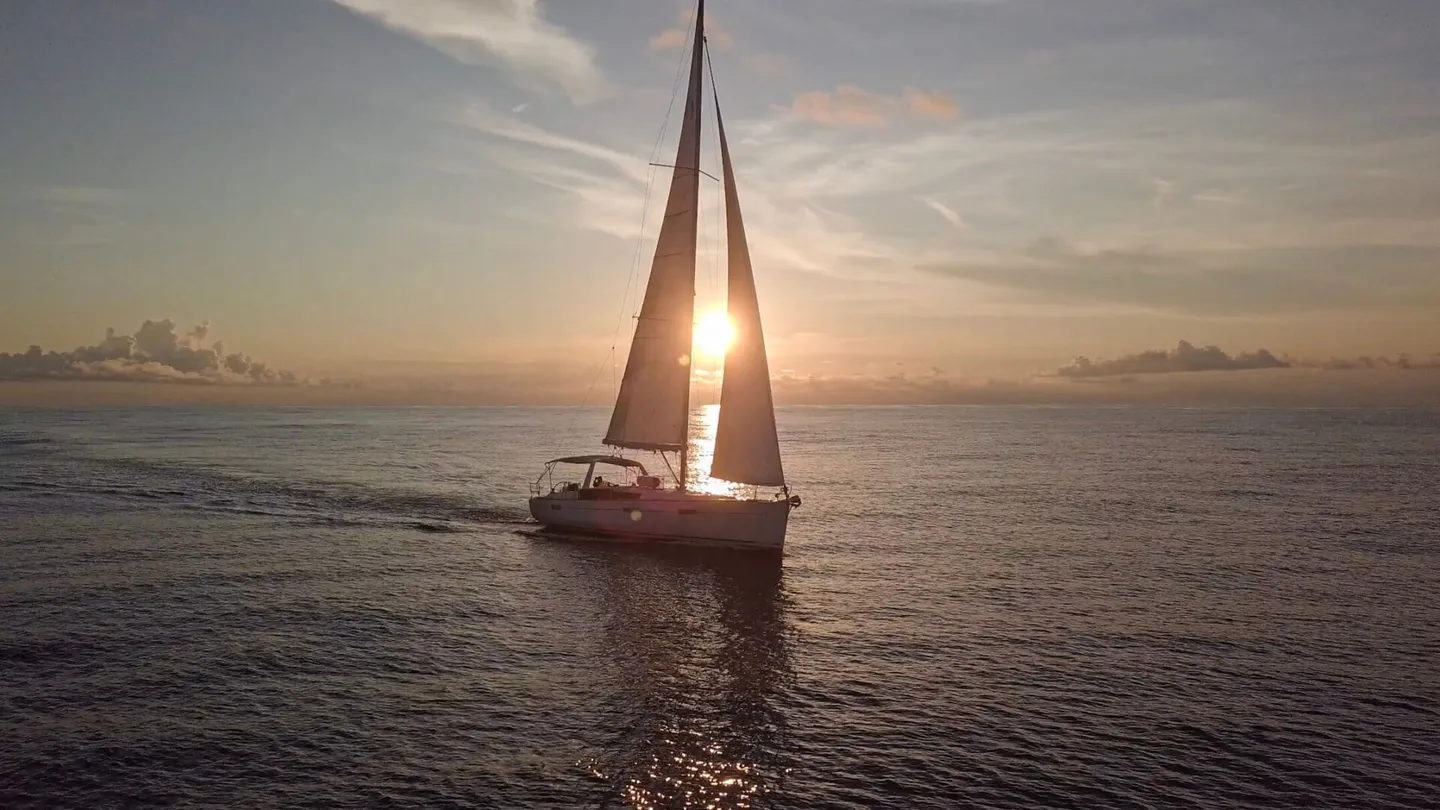
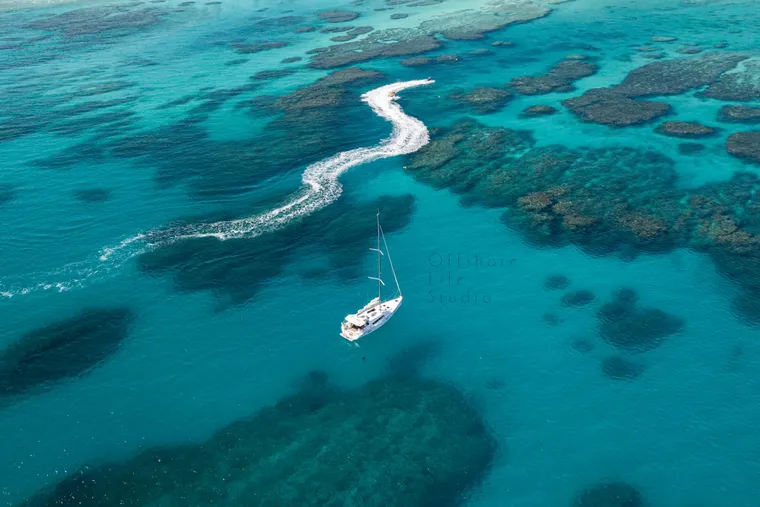
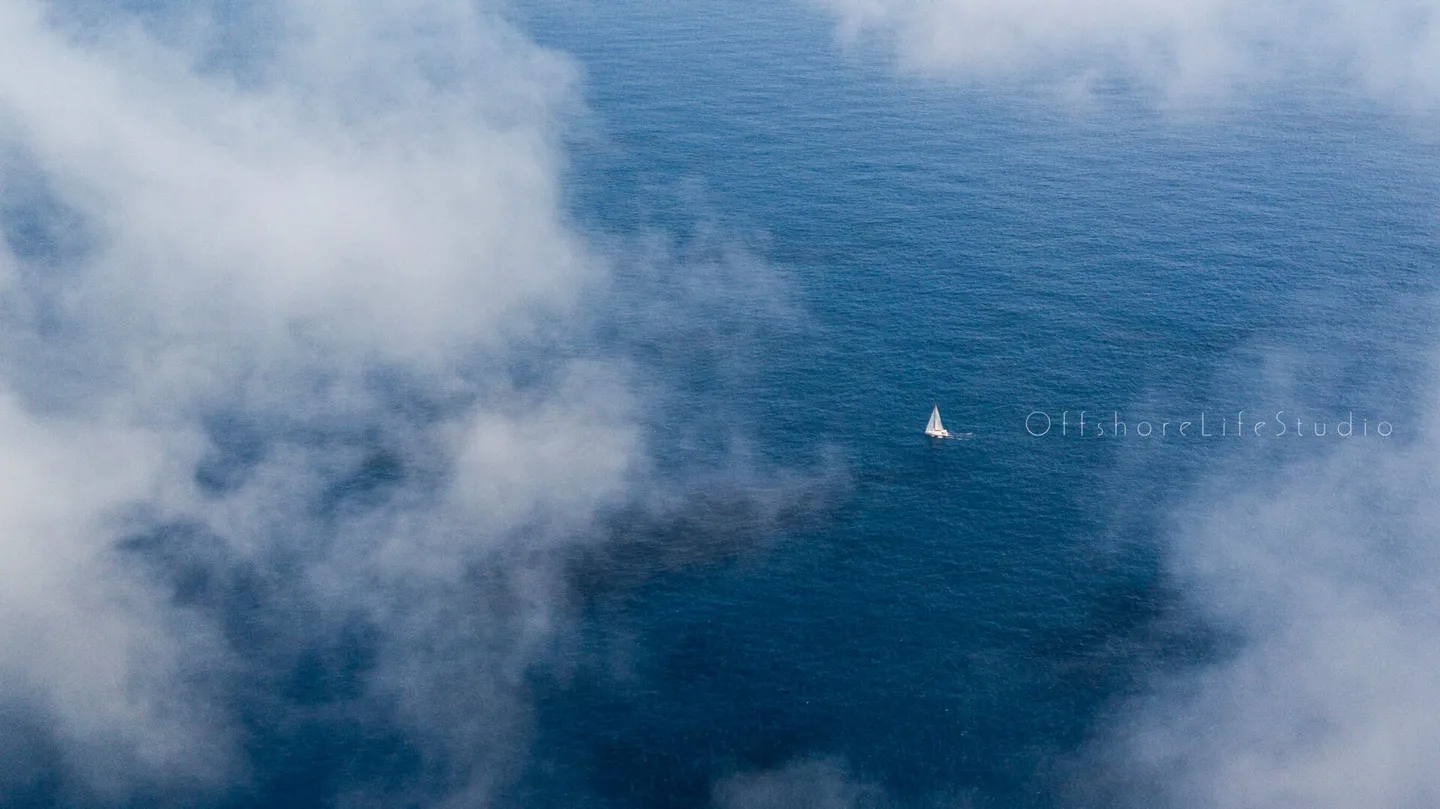
A lone vessel on the open ocean
When I set out on long passages with friends or senior sailors, the usual routine is: get the briefing, wait for a weather window, and cast off — rarely do we draw up a schedule and sail by the calendar. By late September, sea conditions are already as unpredictable as a girlfriend's mood, so this Okinawa trip followed the same playbook: maximum efficiency, gather up, and go. Everyone aboard is a seasoned mariner with a ready-to-grab go-bag at home at all times. Sailing with people you trust means the voyage should be easy and enjoyable — whatever the ocean throws at us, we'll deal with it out there.
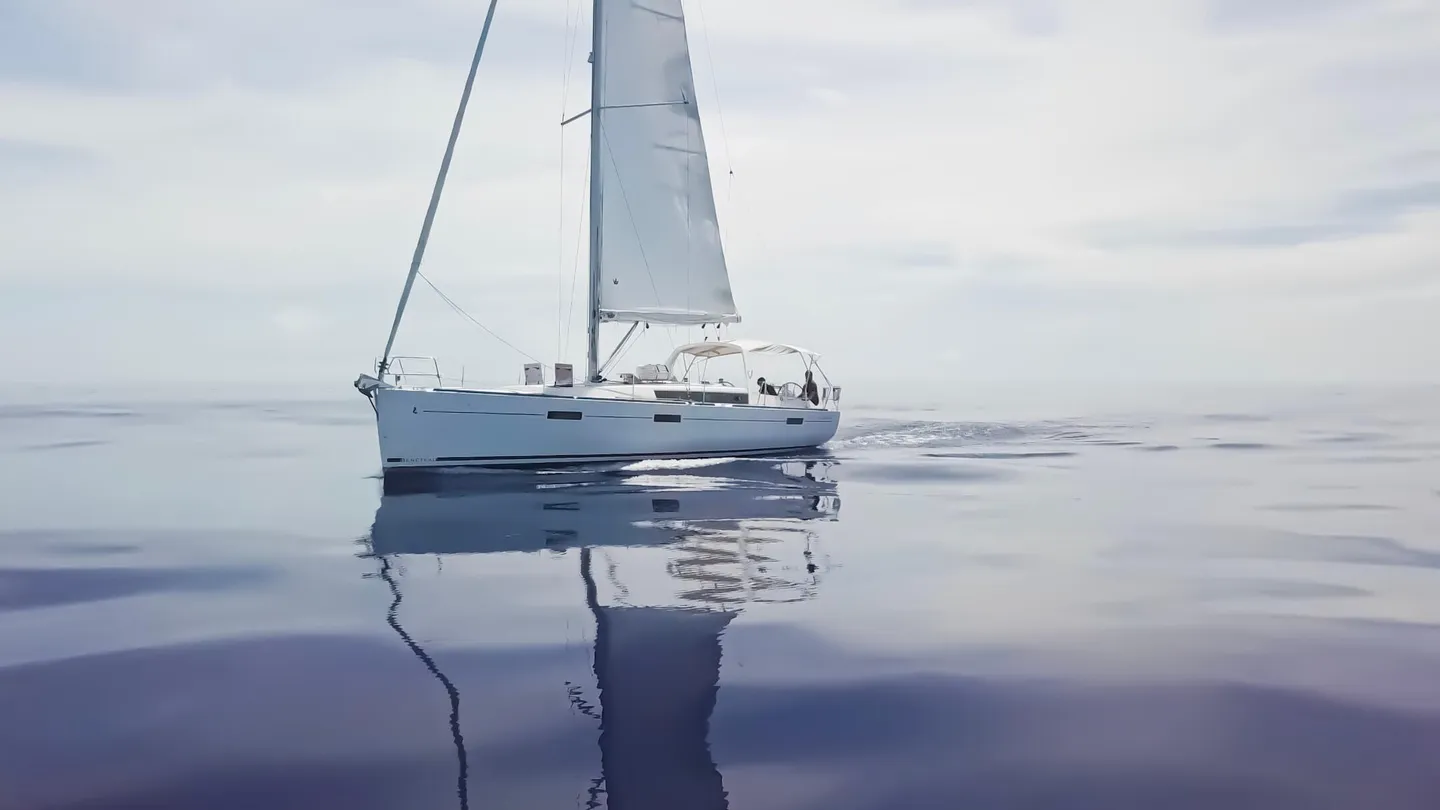
The Pacific after sunrise — almost windless, a haze hanging on the horizon, sky and sea merging into one in a perfect mirror
Departing from Houbihu in Kenting, the course is approximately 55 degrees over 450 nautical miles. If the Kuroshio Current pushed us along as planned, we could make better speed — optimistically calculating at 7 knots, that's 65 hours, or 2 days and 17 hours to reach the waters near Naha, Okinawa. We confirmed both weather and vessel conditions were ideal for departure. The only remaining thing to figure out was estimating fuel and provisioning for four people. Three days of light to no wind meant fuel — we'd need to carry plenty. As for four big men eating and drinking: when we checked out at the PX Mart, we racked up 77 reward points. That should tell you everything about our appetites.
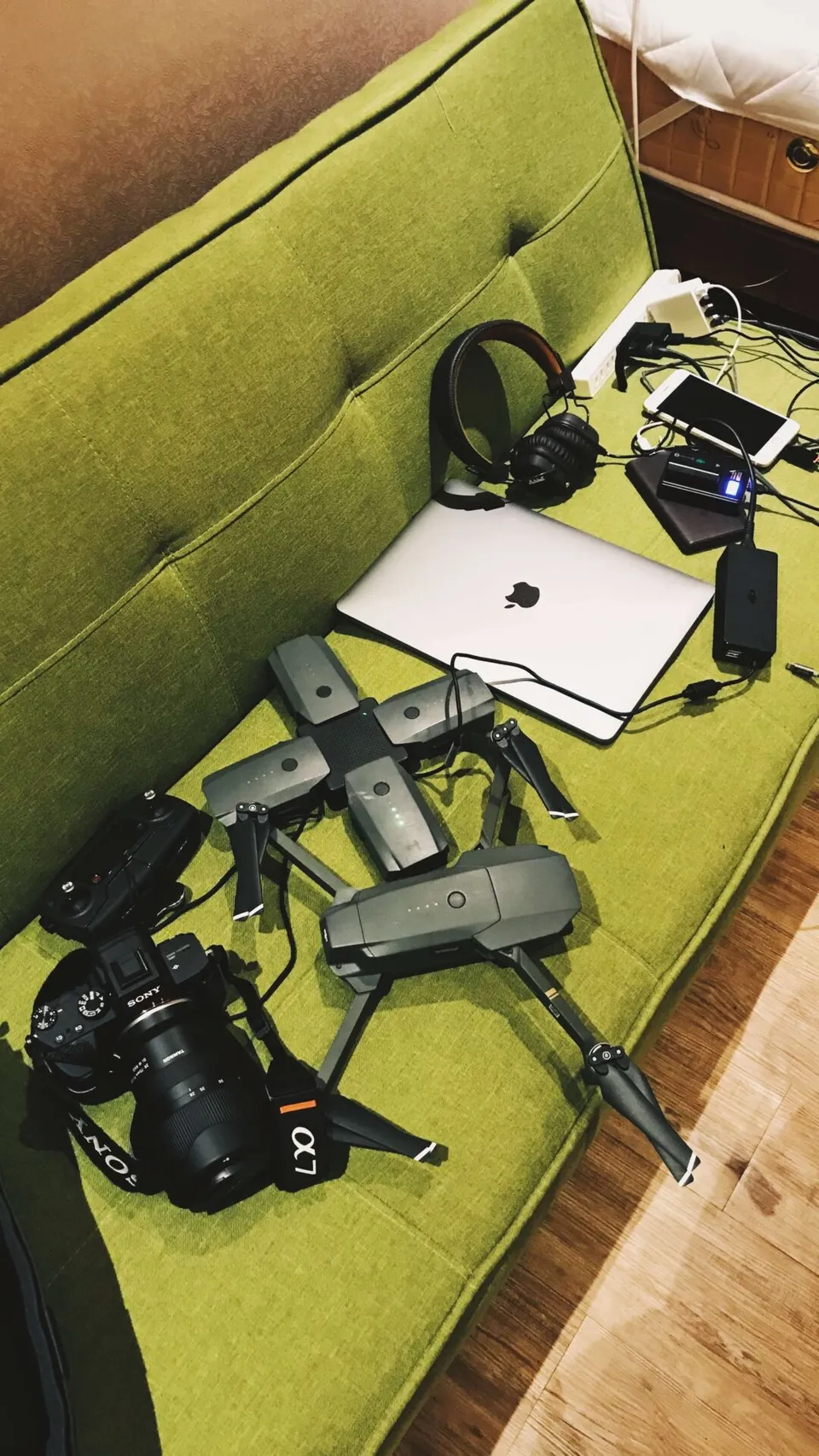
Because every crew member on this passage was highly experienced, I could happily take on the role of documentarian — chasing photography, a lifelong money pit

After buying all of this, we had enough points to redeem prizes at PX Mart
Life at sea is nothing like the comfort of shore. Knowing we'd be spending three consecutive days on the water after departure, we kept food and freshwater consumption strictly rationed — no lavish meals every sitting, and no daily showers. So on the morning of departure I woke early, enjoyed one last precious wash on land, and arrived at the dock refreshed and ready to complete the final preparations before casting off.
A three-day passage is no great hardship for us, but sailing is still a rare pursuit for most Taiwanese families. So beyond our four-person crew, friends from Hengchun all showed up at the dock to wave us off and wish us safe passage.
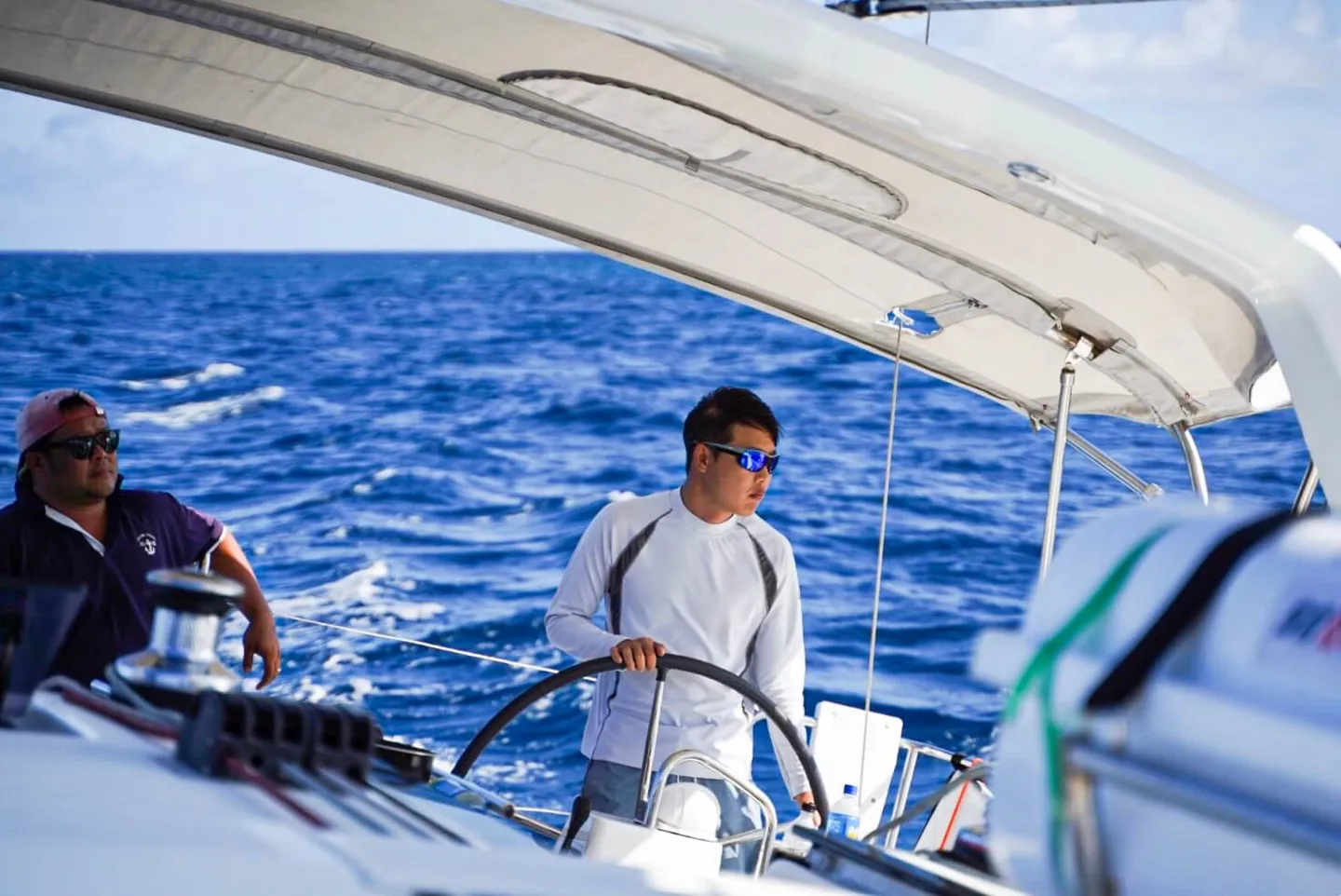
Each crew member doing their part
Eluanbi, at the southeastern tip of Taiwan, is notorious for treacherous waters. The outer circulation bands of a typhoon had still been affecting the area a few days before we left, so rounding Cape Eluanbi was the most harrowing stretch of the entire voyage — but it lasted only about half an hour, hardly worth dwelling on. Once we cleared Taiwan's southeastern headland, we watched the island slowly recede behind us, turned to face the Pacific, set our heading for the Okinawa island group, and began counting down the nautical miles.
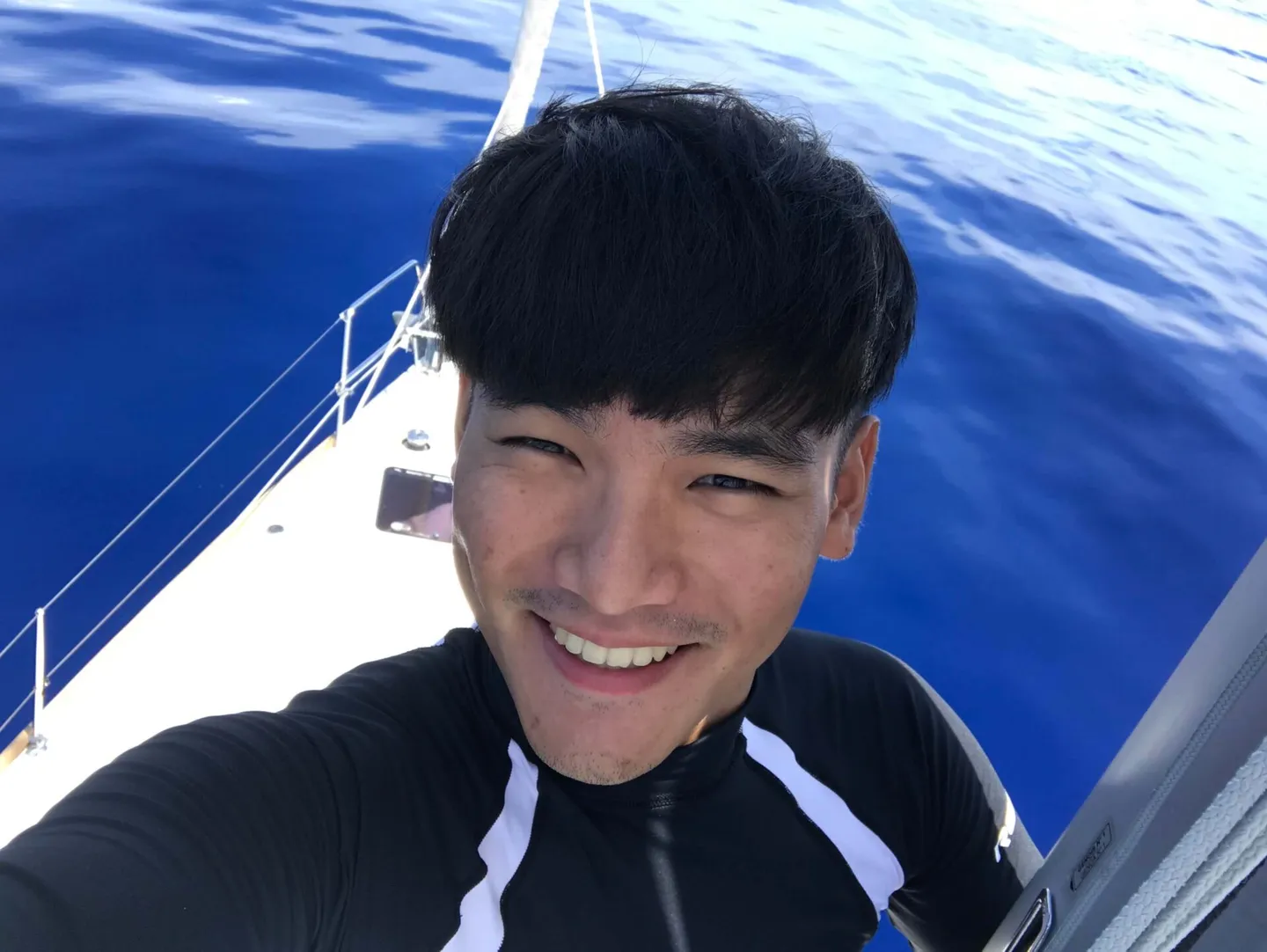
200 nautical miles offshore, the Kuroshio waters plunge 5,000 metres deep — and they are exactly this shade of blue
Green Island and Orchid Island off Taiwan, and Miyako-jima in Okinawa Prefecture, Japan — these were the islands we would pass close enough to pick up a signal and reconnect with the world. After spending consecutive days and nights alone with yourself on the open ocean, learning to read the wind and the waves, I had no great urge to reconnect with everything at once. I sent a quick safety update, downloaded a few favourite songs, then rolled over and returned my focus to the sea.
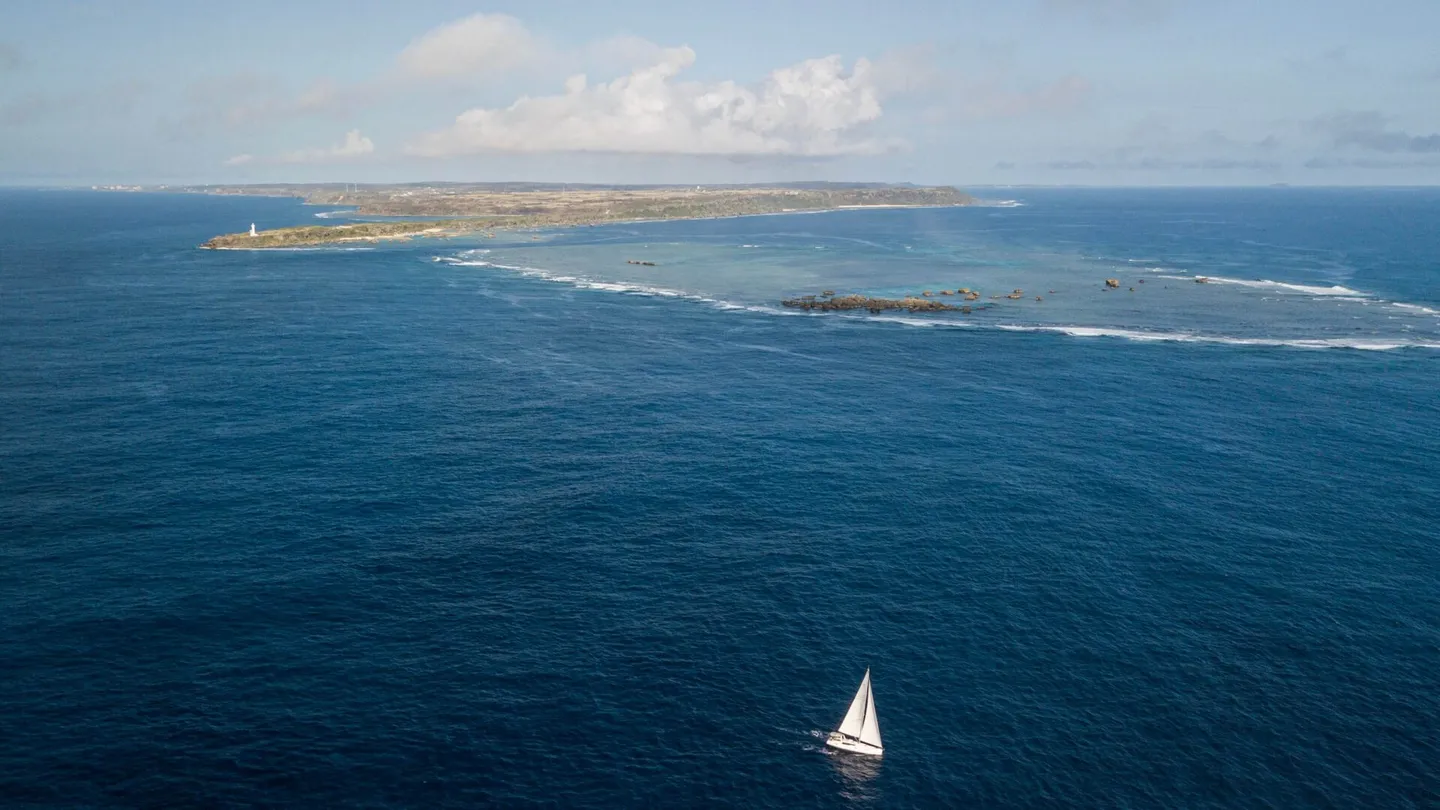
The southeastern tip of Miyako-jima, Japan — Higashi-Henna Cape
The sailing conditions on Taiwan's east coast, in the open Pacific, differ completely from those on the west coast along the Taiwan Strait. The western shore sits right alongside mainland China, with constant traffic from large commercial vessels and fishing boats. Taiwan's development is concentrated in the west, so at night the light pollution is intense enough to cast the silhouette of a boat onto the sea surface. The east is the complete opposite. A hundred metres from the coastline, the seabed plunges sharply to depths of 500 metres; only large migratory species venture here. Unless you're crossing all the way to the US West Coast, there is virtually no land on Taiwan's eastern Pacific horizon, so commercial shipping is comparatively sparse. Night sailing is more relaxed, if slightly solitary — but being wrapped in a clear, brilliant Milky Way overhead made it feel far more peaceful than lonely.
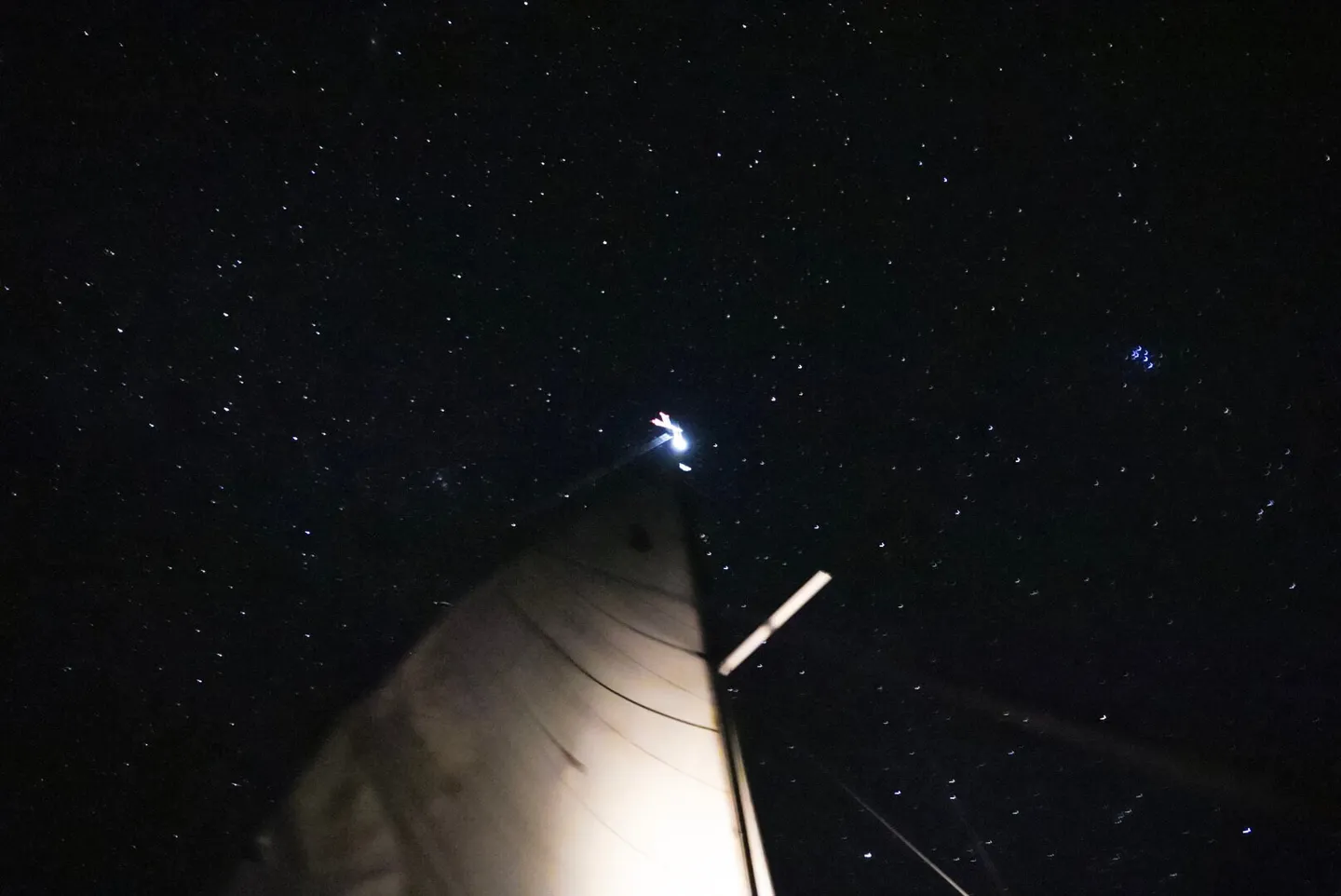
Falling like a star, falling in love.
In the darkness, with vision reduced, my instincts kick in and I let my other senses expand. In that moment I become sharper. Humanity is infinitesimally small — yet standing inside the whole universe, I feel like I am infinite.
It was not my watch when we reached the waters near Okinawa early that morning, so what woke me was the noise of my seniors working on deck. I'll admit I was a little grumpy inside — sighting land is something everyone looks forward to, and I thought: how could they not have woken me for this special sunrise? But I snapped awake efficiently, with no time to sulk. I grabbed the drone and launched it into the sky.
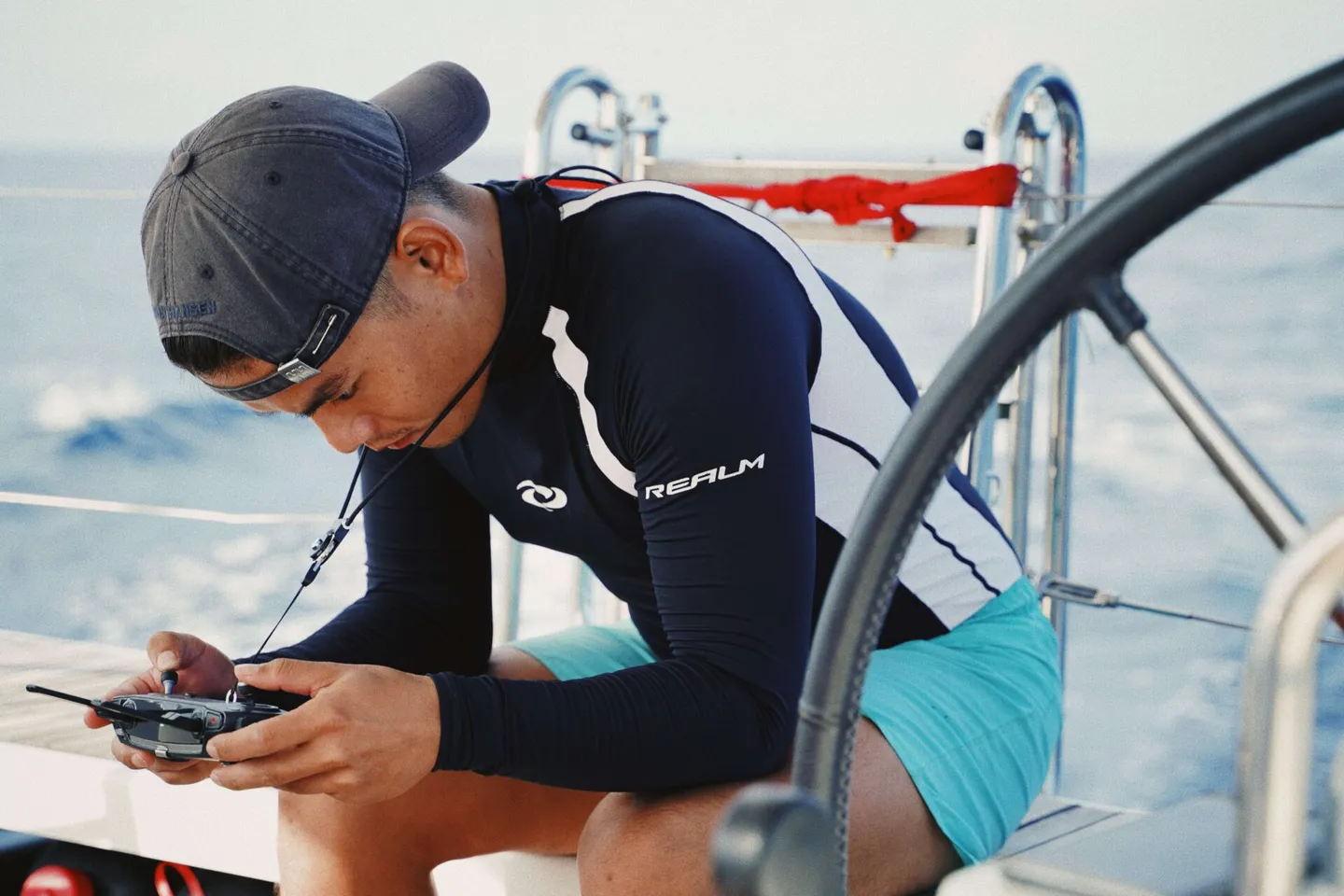
Aerial shooting demands total concentration — at that moment I was capturing footage above the cloud layer, 450 metres above the water, which also produced the cover photo for this article
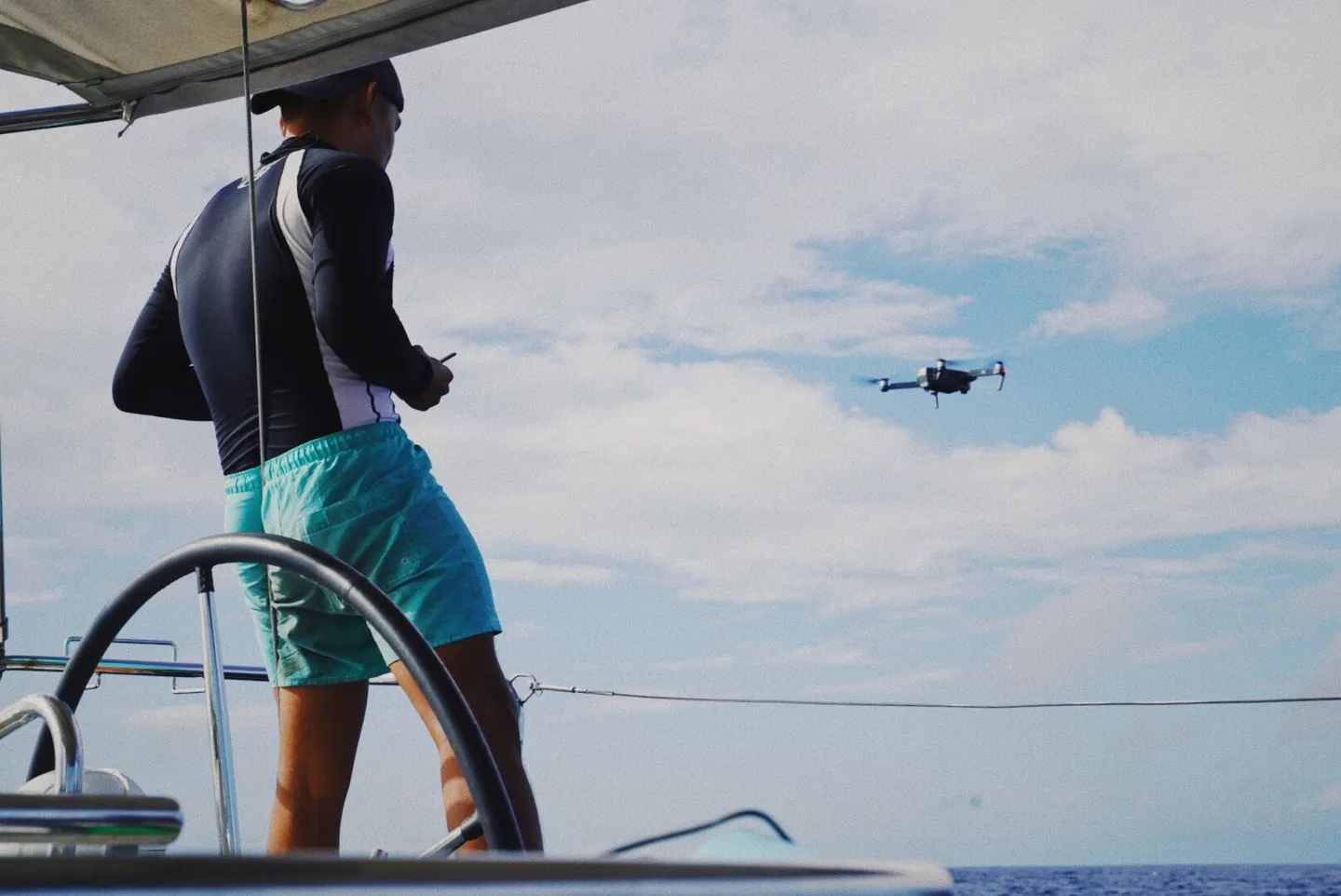
Hand-launching and hand-catching the drone is a skill that requires nimble execution at sea
This was a special shot. Going aloft on the mast for rigging work is not unusual in sailboat maintenance, but doing so on the open ocean with the sails actively drawing is a different matter — it takes experience and skill. Being able to capture this moment of perfect teamwork and technique from the air gave us all a real sense of pride and satisfaction.
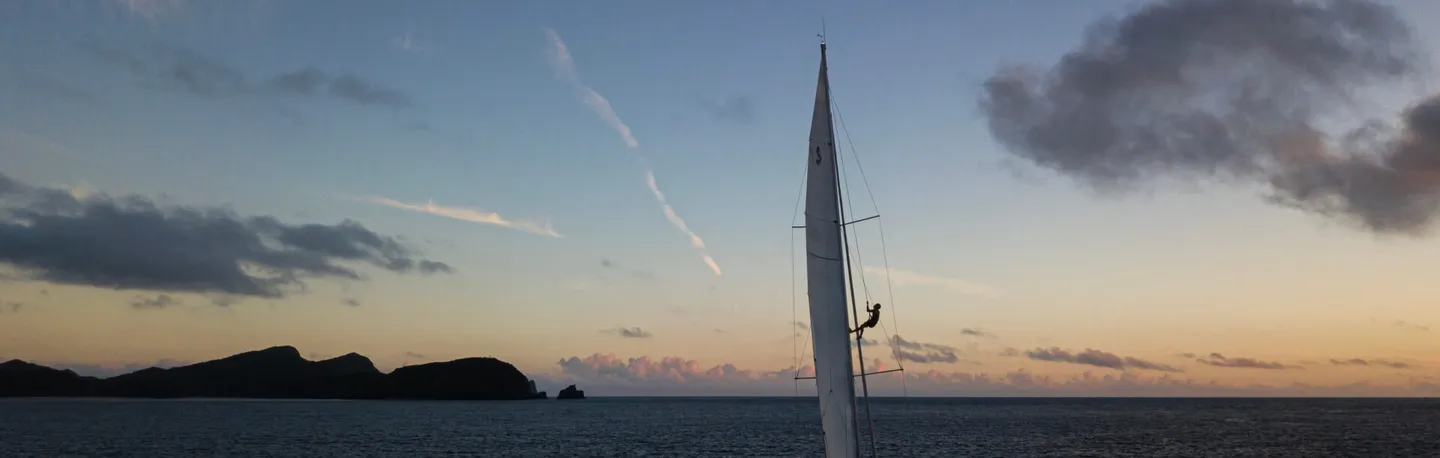
Beauty of sailing.
On the afternoon we arrived in Okinawa, after we had docked and secured the lines, Japanese customs and coast guard officers were warm and helpful in processing our entry. The excellent marina facilities and friendly officials were a genuinely heartwarming welcome for a crew that had just completed a long ocean passage. The feeling of solid ground beneath our feet again released all the accumulated tension. After a dinner of Japanese specialties, everyone quickly cleaned up, cracked open an Orion beer, toasted the safe completion of the passage — then, barely able to hide our exhaustion, retreated to our bunks and promptly fell fast asleep.
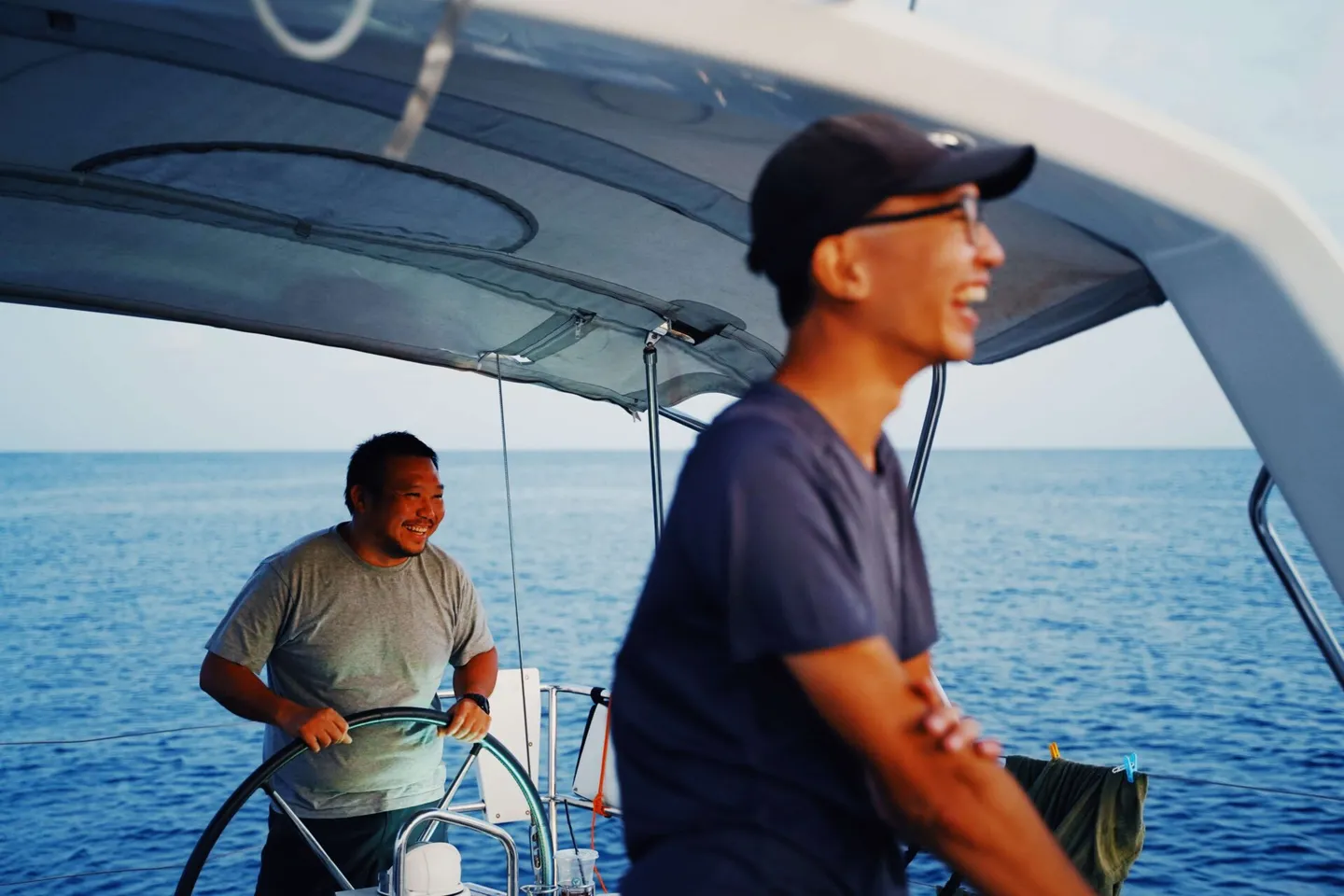
The most genuine smile
After completing the passage, we had planned several days of island-hopping around the Okinawa outlying islands aboard the sailboat — I'll share all of that in the next article. And as for whether Okinawa truly possesses some magical quality that compels Taiwanese people to loudly declare "Kenting can't hold a candle to Okinawa" — my personal verdict will be revealed there as well!
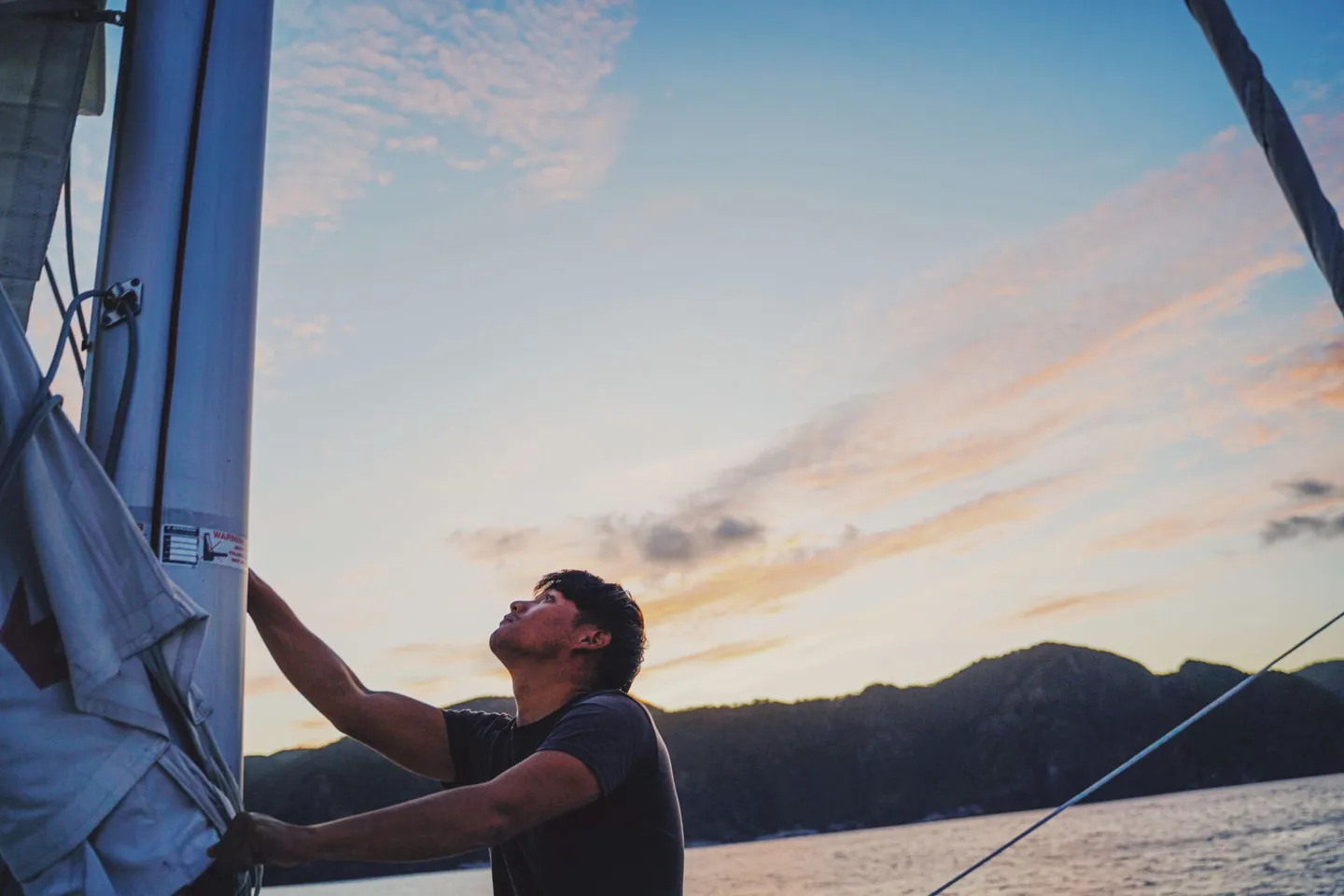
A moment of total focus
Related links:
Frequently Asked Questions
How is a BlueTrend dive trip different from an unknown, no-name dive group?
Choosing us means full peace-of-mind protection and a smooth experience from start to finish. Every trip we run holds to three things.
First, full legal protection and a professional dive leader: we strictly follow Taiwan's travel regulations and provide complete travel-agency liability insurance, travel insurance, trip-inconvenience insurance and dive insurance. Every group is accompanied by a certified, foreign-language dive leader who joins you on both the dives and the land itinerary, liaising seamlessly with local dive shops and operators on your behalf to keep things running smoothly — the person our travellers trust most.
Second, fully licensed with secure payments: every payment goes into a licensed travel agency's account, with multiple safe payment channels (bank transfer, credit card and more) and a legal collect-and-remit receipt, so every transaction is open, transparent and protected, avoiding the fraud and dispute risks of transferring money privately to an individual.
Third, hand-picked quality we vet in person: every trip, dive site and partner shop is scouted on the ground by our own team, from the guides' professionalism and safety standards to the food, lodging, environment and service details on land, all vetted by us so you don't get caught out.
I want to sign up for a dive trip. Are there certification-level or logged-dive requirements?
Each dive site is different, so the entry bar varies. 'Bali Tulamben', for instance, is relatively beginner-friendly. 'Malapascua in the Philippines' is also beginner-friendly, but since thresher sharks tend to cruise between 20 and 30 metres, we recommend AOW certification with 20+ logged dives to enjoy this trip comfortably. For 'the Maldives' or 'Palau', we suggest AOW with 50+ logged dives for a more relaxed experience. If you're not sure whether your experience fits the trip you want, message us and our dive editors will assess it and help you find the trip you'll feel safest on.
Can I join if I'm signing up alone? How are rooms arranged?
Plenty of our travellers sign up solo! For rooms and beds, we prioritise pairing you with a same-gender traveller, and if you'd rather have your own space you can pay the difference to upgrade to a single room. For the diving, our professional leader will pair you with a suitable buddy, and with the happy vibe on our trips you'll quickly make a great group of dive friends. Many people sign up alone, make new friends, and end up organising the next trip together!
Does the trip fee include dive insurance, gear rental, taxes and instructor tips?
It depends on the trip, the destination's regulations and the local operators. Every BlueTrend dive trip has a detailed web page with a clear 'included / not included' list, transparent and with no hidden charges. All payments are collected by a licensed travel agency, with a standard-form contract for your protection.
I'm a new diver / haven't dived in a long time — will I fall behind the group?
Before you complete your booking, our team assesses a suitable trip based on your certification level and experience. Before departure, we strongly recommend taking time to refresh in Taiwan with an instructor, or a fun dive to get your feel back. On the trip itself, our professional dive leader groups and pairs everyone by experience, keeps a close eye underwater on travellers who need extra care, and steps in to help right away.
Will the photos and videos taken during the trip be shared with us?
During the dives, 'safety' is always the leader's top priority, so whenever it's suitable and safe the leader will capture great shots and record the best moments. During or after the trip, we compile a cloud album for all travellers to download, so you go home loaded with memories!
Besides your scheduled trips, can you arrange a private group charter or independent travel for me and my friends?
Absolutely! Besides group trips, we also arrange private group charters and independent travel. We can communicate, enquire and coordinate services with local operators based on your needs, saving you time and effort and taking the language barrier off your plate, to tailor the smoothest, most reassuring dive trip just for you. Contact our LINE support and our editors will arrange it for you!