

Contents(12)
- Common reasons a diver may panic underwater include:
- 1) Getting separated:
- 2) Psychological factors:
- 3) Equipment malfunction:
- 4) Unfamiliar dive sites:
- 5) Sea conditions:
- 6) Pushing beyond your limits:
- 7) Inability to equalize:
- 8) Marine life encounters:
- 9) Entanglement:
- 10) Running out of compressed air:
- When you encounter a panicking diver, the dive buddy system — which so many people overlook — becomes a lifesaver.
The Editor says: Every summer when dive season begins, tragedies inevitably occur at the water's edge. In most cases, however, accidents are the result of a chain of errors rather than a single mistake — which is why it's critically important for divers to build the right mindset around dive risk management. This article is reproduced in full from the valuable insights shared by Zhuichisha John Goh, administrator of the 国际潜水爱好者聚集群.
There was recently an incident in which an underwater panic diver drowned. Never mind where it happened, which dive shop was involved, or whose fault it was — what's done is done, and that no longer matters. What does matter is: could it happen again? Could someone else still panic underwater? Panic refers to an uncontrollable surge of anxiety and fear, typically accompanied by problems managing safety equipment, irrational thinking and behavior, and an overwhelming sense of dread that spirals out of control.
Even experienced divers can find themselves in this situation. There are many triggers for this kind of panic: unfamiliar equipment, forgetting gear, poor weather conditions, diving in a completely new location, losing your dive buddy underwater, and more. (Definition of panic adapted from https://m.sohu.com/n/455437313/?wscrid=32576_1)
Common reasons a diver may panic underwater include:
1) Getting separated:
Every pre-dive briefing covers this: if you get separated, do a 360-degree search for your buddy at depth for one minute, and if you can't find them, ascend safely to the surface. A safe ascent means not exceeding the maximum ascent rate of 18 m per minute, performing a safety stop if necessary, looking and listening carefully for boat traffic before surfacing, inflating your BCD when you reach the surface, and deploying your surface marker buoy (SMB) to signal for pickup. My Open Water Diver instructor once told me: as long as you can still breathe, nothing is really that serious.
2) Psychological factors:
If you already experience panic in everyday life, you really should see a doctor and obtain medical clearance before diving again. Otherwise, your issues could easily drain the resources of your dive guide or instructor, and indirectly compromise the safety of other divers in the group.
3) Equipment malfunction:
The probability of dive equipment failing underwater is generally low, and most equipment emergency procedures are already covered in your Open Water Diver (PADI/SSI cert) course. I've said it more than once: during your 3-minute safety stop at 5 m, instead of just floating there, use the time to review OW skills with your dive buddy. Practicing never hurts.
4) Unfamiliar dive sites:
Humans naturally fear the unknown — and that applies doubly underwater, where visibility, depth, downwellings, washing-machine currents, drop-offs, and other challenges all come into play. New divers already feel overwhelmed managing the basics underwater; pile on all those unknowns and it can be the straw that breaks the camel's back. This is precisely why diving with a local dive guide allows you to complete your dive more safely and with far less stress.
5) Sea conditions:
Simply put: visibility, water temperature, swell, and current. You don't even need conditions to deteriorate suddenly — even in moderate current, if you're busy ear equalizing, desperately clutching your mask to keep out a single drop of water, and somehow wishing you had a third hand to hold your second stage regulator, you're going to lose your buddy. I always say: diving requires commitment — you have to be willing to invest time and money to dive. The highest level of that commitment is knowing when to call it off when you're not feeling well or conditions turn bad.
6) Pushing beyond your limits:
If you don't exercise regularly and aren't a confident swimmer, even the most expensive fins won't propel you efficiently. As you watch everyone else pull further and further ahead, and the visibility drops, the fear that creeps in when you find yourself alone and out of your depth is often where panic begins. Think of it like an insurance policy: once you exceed the limit, the claim is void.
7) Inability to equalize:
Water pressure affects eardrums differently from person to person. Some people naturally equalize without even pinching their nose; others pinch and blow for ages with no result. I've seen divers bolt for the surface because of ear pain — and once that pain takes over, they forget everything else that matters. If you know you have sinusitis or a cold, don't dive.
8) Marine life encounters:
Speaking from personal experience — I was once stung by a blue-spotted stingray, and ever since, sandy seabeds make me uneasy. You don't need a massive predator to trigger panic; I've had a student panic simply because a large school of damselfish surrounded her — she has trypophobia. Communicate openly before each dive, and don't head to a site where you know you might panic.
9) Entanglement:
Abandoned ghost nets, kelp and other marine growth, or even your own surface marker buoy (SMB) line can wrap around a diver. The more you panic and struggle, the tighter the entanglement becomes. If you have no cutting tool on you, panic becomes almost inevitable. Always carry a dive knife on every dive — and mount it somewhere both hands can reach.
10) Running out of compressed air:
The last thing any diver wants is to find themselves unable to breathe. How do you avoid running out of air? Simple: check your pressure gauge (SPG) regularly. Also, maintain a parallel distance of 2–3 m from your dive buddy at all times — if either of you runs low, the other's octopus / alternate second stage is right there. If you're alone when your air runs out, the likelihood of full-blown panic is very real.
How do you avoid panic? Until you can dive independently with confidence, dive with an instructor, hire a private dive guide to look after you, or pair with a truly reliable dive buddy. Work to develop your skills as quickly as possible so you can handle typical dive situations on your own — because once you know you can take care of yourself underwater, panic is far less likely. The vast majority of divers dive safely; if that weren't true, why would scuba diving remain so wildly popular around the world? Alternatively, you can follow my wife's famous words of wisdom: "Why do you think I married a dive instructor?" (Dive instructors everywhere should thank me for negotiating this benefit on your behalf.)
When we examine the causes of tragedies, almost all of them can be traced back to one or more of these ten triggers. Now that we understand the causes, we can manage the risks at the source. For example, if you haven't dived in a long time and are eager to get back in the water, shouldn't you first find a qualified instructor for a refresher? To reduce the risk of ghost net entanglement, shouldn't you research local hydrography and fishing activity before planning your dive — and always carry at least two cutting tools?


When you encounter a panicking diver, the dive buddy system — which so many people overlook — becomes a lifesaver.
In everyday life, distrust is so common that it's hard to put your life in someone else's hands. But underwater, your dive buddy is your backup air source. Even a complete stranger: if you draw a finger across your throat (the "out of air" signal) in front of them, would they really ignore you? A dive buddy is simply the diver who stays parallel to you, within 2–3 m, at all times. In practice, many divers on day trips fail to maintain this.
Even in the closest family relationships, one person tends to be more impatient, swimming ahead of the other — or one has a camera and the other doesn't. I've said it before: the most disciplined dive buddy I've ever had underwater was my own sister. No matter which direction I turned, she was always on my right. Thank goodness for that — she once grabbed the second stage regulator right out of my mouth underwater.
Very often, your dive instructor is your dive buddy. There's an enormous sense of security and comfort in having someone interlock fingers with you underwater when you're nervous, which is why some female students end up developing romantic feelings for their instructor. I often joke that a dive instructor is officially licensed to hold students' hands underwater — but if you're considering getting your instructor certification just for that perk, think again: what happens when a male student needs his hand held? Are you up for that? That's why I rarely let students cling to me; I usually hold them by their first stage regulator or BCD instead.
That said, having a reliable dive buddy doesn't mean you can stop taking care of yourself — diving carries inherent risks. Make sure you are personally prepared with all your dive gear, including a self-rescue surface marker buoy (SMB), dive torch, surface/underwater signaling devices, a signal mirror, dive knife, and laser pointer. Keep yourself physically fit; at a minimum, being able to swim 1 km at the surface is a baseline reserve for emergencies.
Practicing until you can confidently execute every self-rescue skill is an act of responsibility — to yourself and to your dive buddy. If you think my suggestions are harsh, just remember: in a real emergency, even being fully prepared sometimes isn't enough.
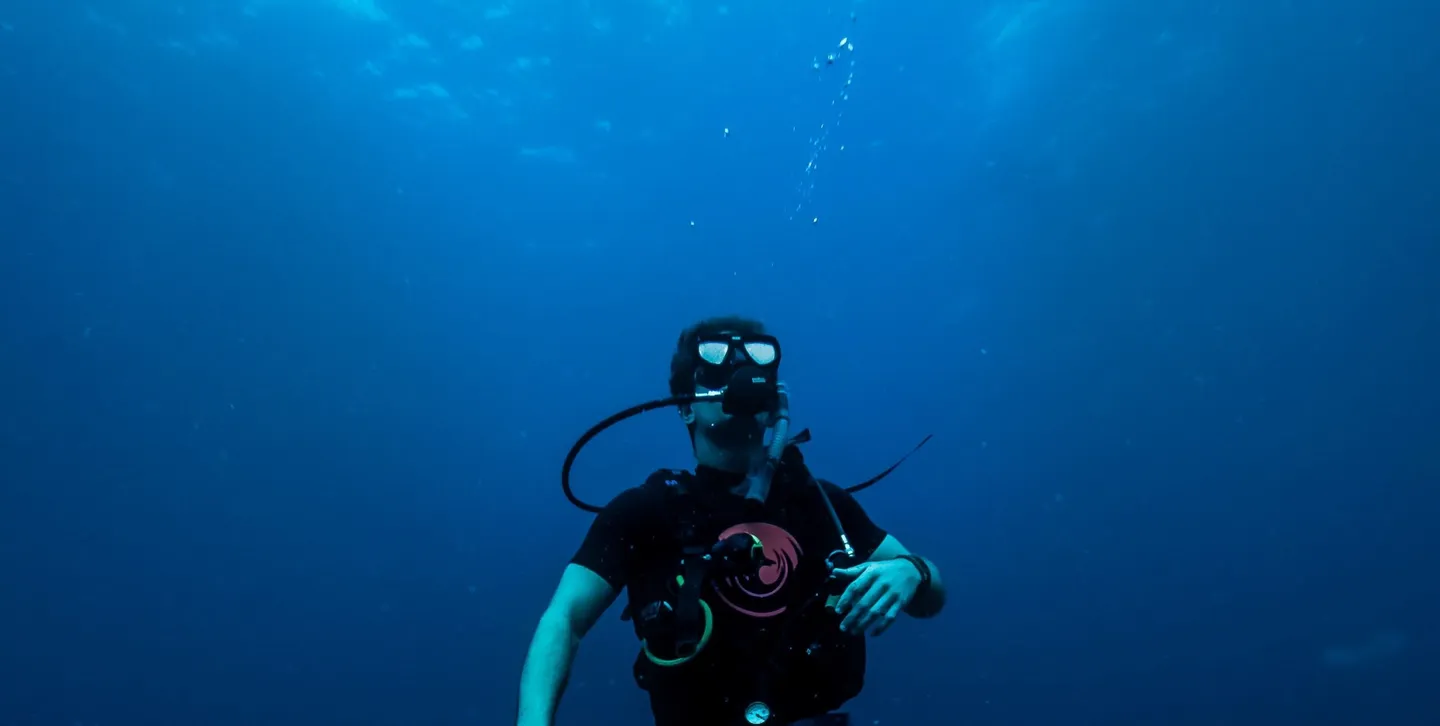
Cover photo: Photo by Tom Bixler on Unsplash
Further reading:


![[Freediving] Someone Almost Died in the Ocean](/_astro/%E8%87%AA%E7%94%B1%E6%BD%9B%E6%B0%B4bo-scaled_2ms8Tx.webp)