Contents(6)
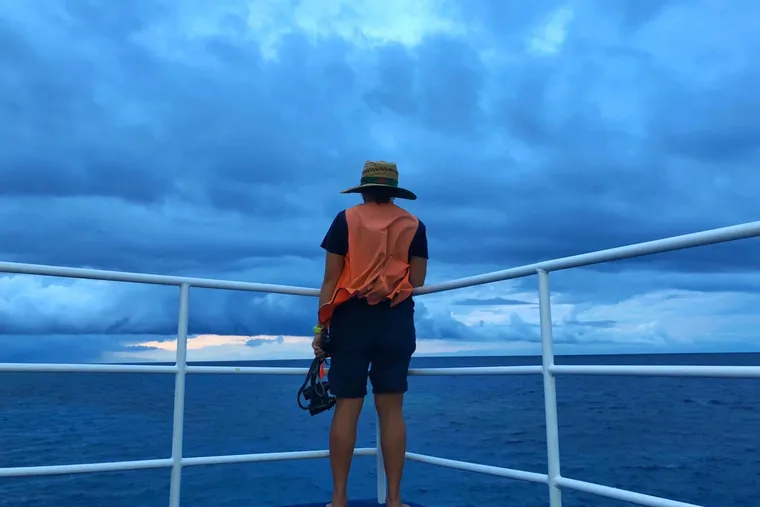
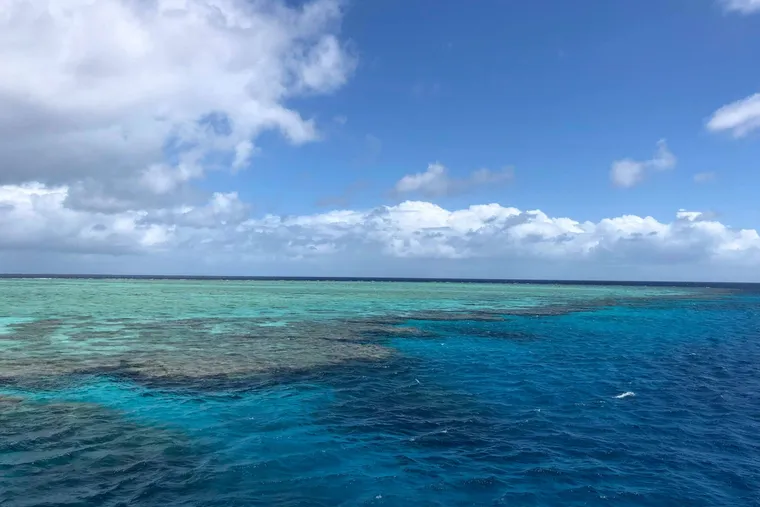
Strongly recommended by my captain and colleagues, the S.S. Yongala was a dive site I had long been eager to visit. Taking advantage of the dive off-season in Cairns at the end of October, I finally had the chance to make the trip.
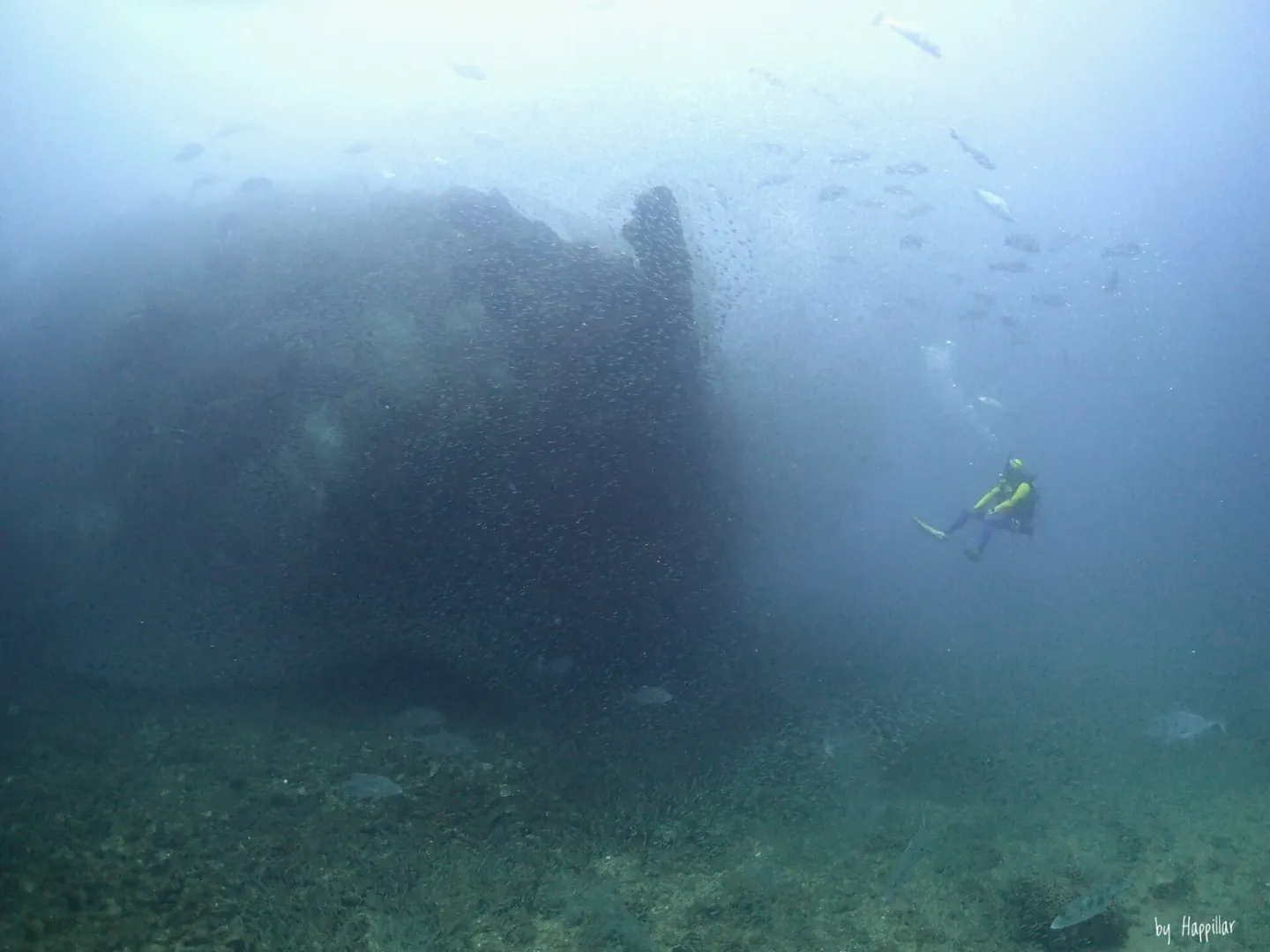
Me and the Yongala
About S.S. Yongala — A True Shipwreck
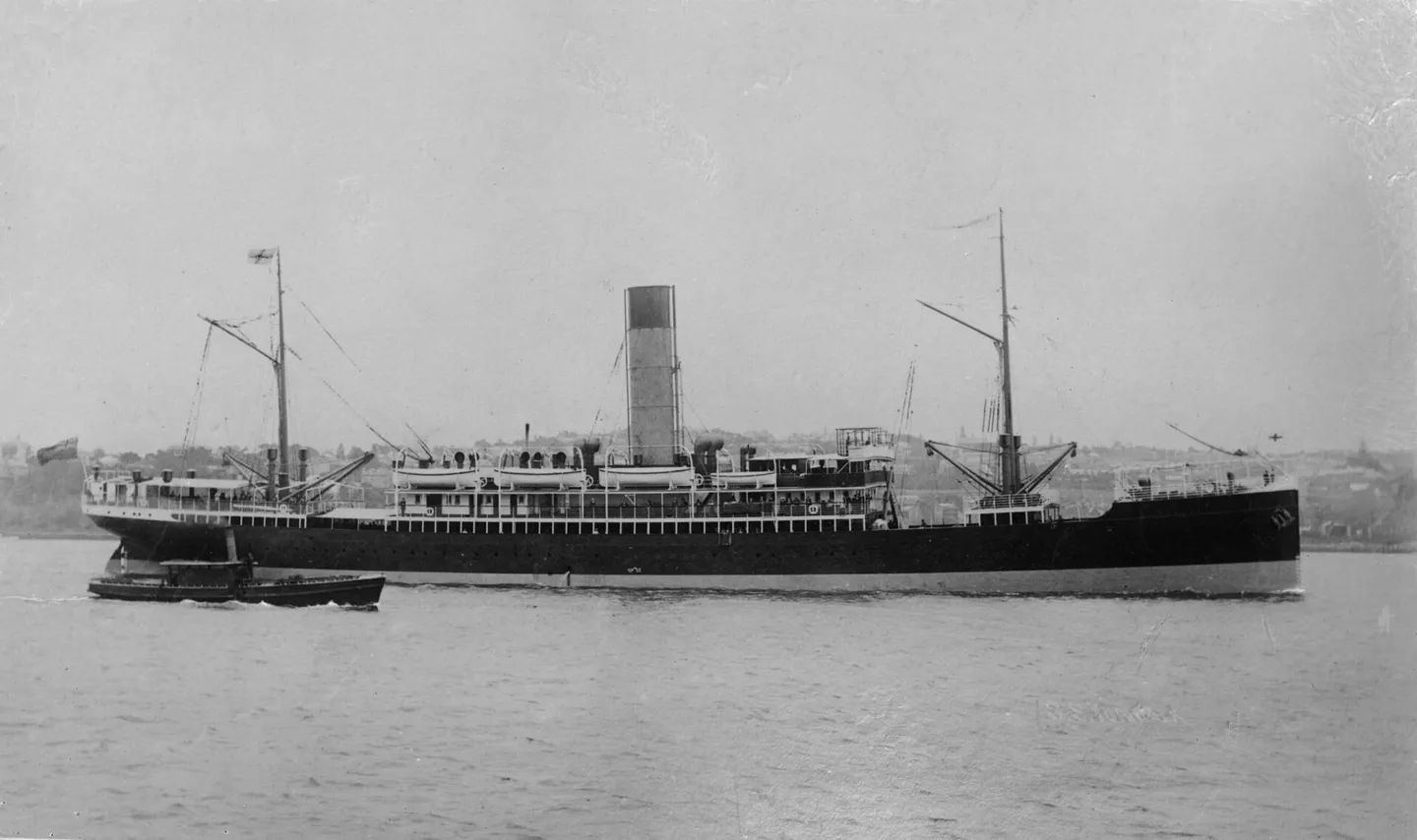
The S.S. Yongala is a genuine shipwreck resulting from a real maritime disaster, not an artificial reef intentionally sunk.
The story unfolds a year before the Titanic sank. On 20 March 1911, the Yongala docked in Brisbane, where most passengers disembarked, leaving only a handful of new passengers to continue along the Queensland Coast stops. On 23 March, the Yongala arrived in Mackay and, after loading and unloading passengers and cargo, set off northward toward Townsville carrying 49 passengers, 73 crew members, and 617 tonnes of cargo. Five hours later, the lighthouse keeper at Dent Island Light spotted the Yongala heading in the direction of Whitsunday Island.
That was the last time anyone saw the Yongala intact.
Not long after she left Mackay, the signal station received a telegraph warning of a tropical cyclone between Mackay and Townsville. Ships docked in Mackay observed the warning flags, and those equipped with wireless radio also received the message. Unfortunately, the Yongala was already too far from shore to see the warning flags — and had not yet been fitted with wireless radio.
At the time, no one knew what had become of the Yongala, nor whether she had sunk.
It was not until 1958 that a wreck was located south of Townsville. A barnacle-encrusted safe was raised from the wreck, and by cross-referencing the safe's model and serial number, the vessel was confirmed to be the Yongala.
It is believed that the Yongala succumbed to the tropical cyclone on 24 March 1911, taking 122 lives with her to the bottom of the sea.
(The information above is translated from Wikipedia. For those interested in the full story, I recommend looking it up there.)


Diving the Yongala
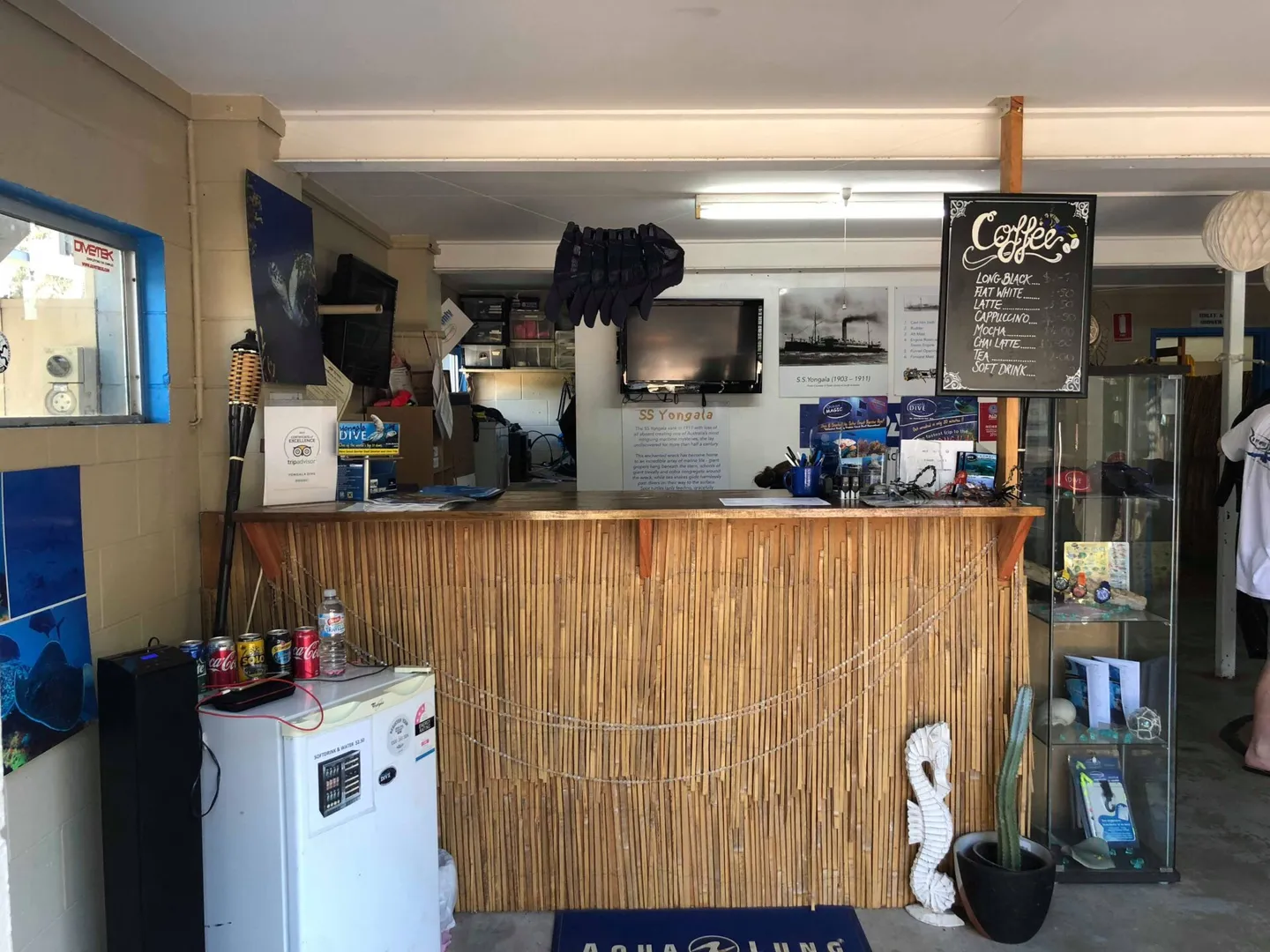
The check-in counter
The dive shop my colleague and I visited this time was called "Yongala Dive."
Since we brought our own gear, we decided to rent a car — the drive from Cairns, where we were staying, takes about five hours. Public transport takes roughly the same amount of time, and lugging equipment from place to place is a real hassle. To avoid all that stress, I strongly recommend gathering a few friends and renting a car.
Address: 56 Narrah St, Alva QLD 4807
Phone: (07)47831519
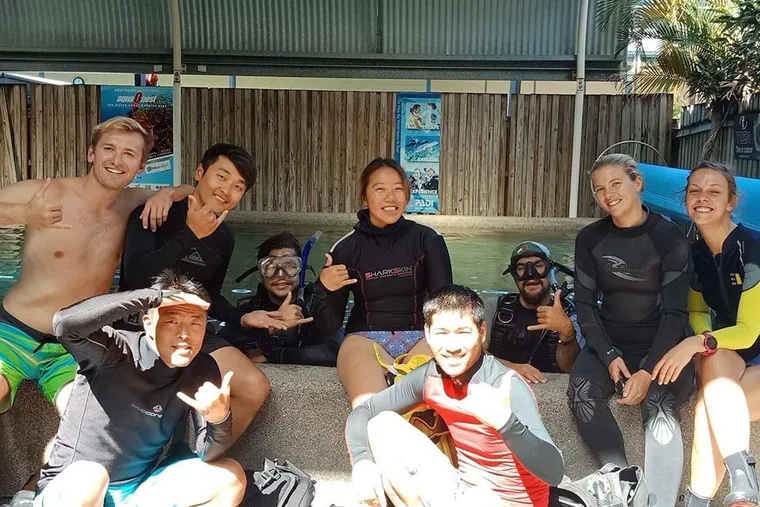
Yongala Dive has dormitory-style accommodation available. My Korean instructor colleague, the Hong Kong Divemaster, and I decided to do a two-day, four-dive itinerary here (yes, you read that right — four dives at the same site!). The standard package here is two dives per day, with breakfast and a BBQ lunch included. After breakfast each morning, check-in takes place; divers prepare their gear, get their nitrox oxygen concentration tested, and then everyone gathers at the BBQ area for the dive briefing. Divers who have arranged for a dive guide will find out who their guide is at this point. The dive shop runs things very smoothly, and everyone knows exactly what to do next.
After the briefing, the shop's staff drive everyone down to the water, where all divers board the boat together. The Yongala site is about a 30-minute boat ride away.
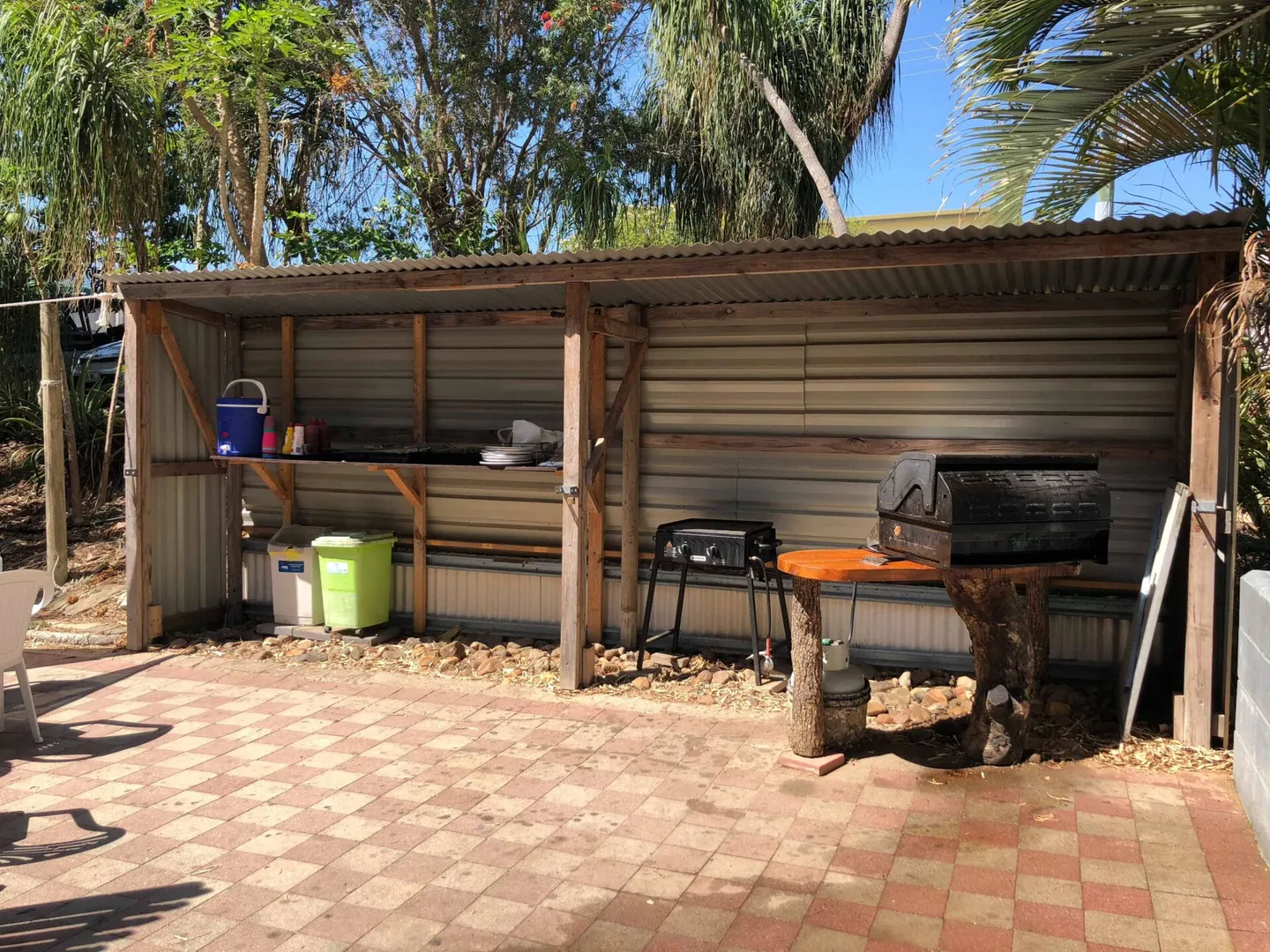
The BBQ area
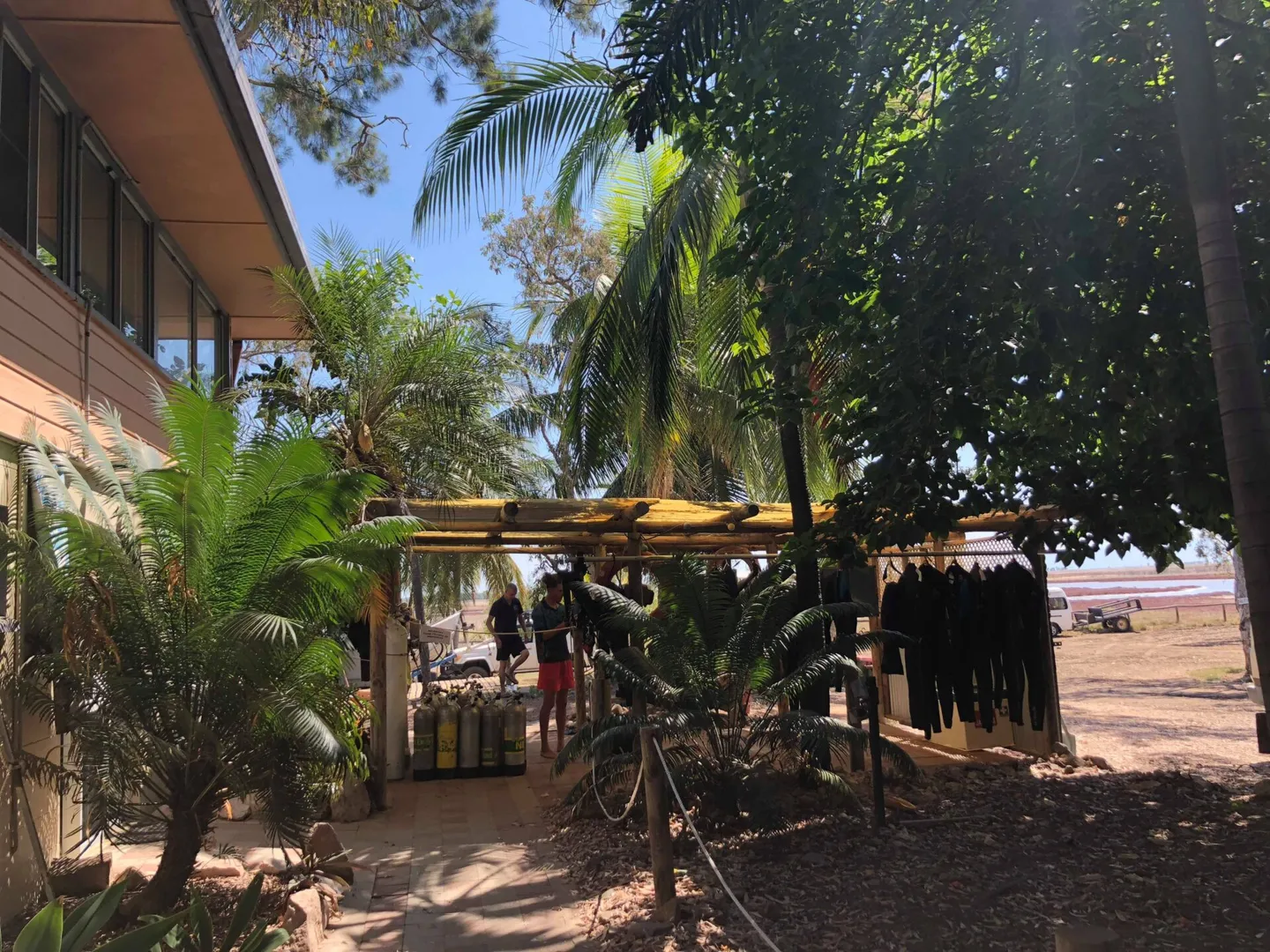
The gear area
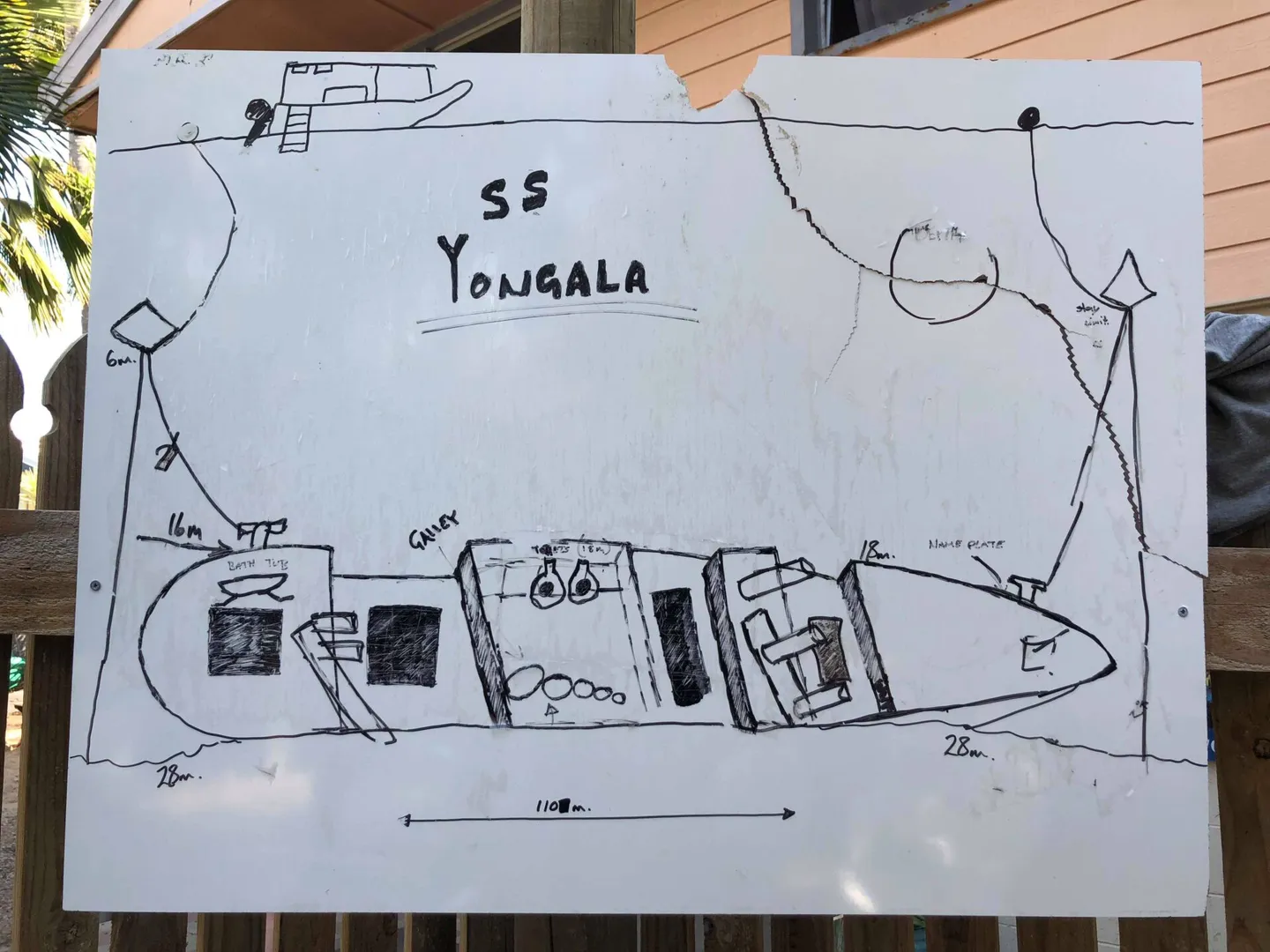
The dive site map used during the briefing
Day One
My two colleagues and I decided to use enriched air nitrox (EANx) cylinders for all four dives. On the very first dive of day one, we encountered a powerful current the moment we hit the water. A current line was tied to the stern of the boat, running from there along the mooring line all the way to the mooring block next to the Yongala. During the descent, we had to pull ourselves down in a "carp streamer" position all the way to the wreck. Visibility at the Yongala site was around 10 to 15 metres. The first sight of the Yongala drew a muffled gasp through my regulator — the entire surface of the wreck was blanketed by tens of thousands of glassfish. These tiny fish flowed in perfect formation along the contours of the ship, moving in sync with the current. More precisely, you couldn't really see the hull at all; the fish and coral covered every inch of it. You had to fan the water gently to scatter the fish before you could glimpse the steel beneath.
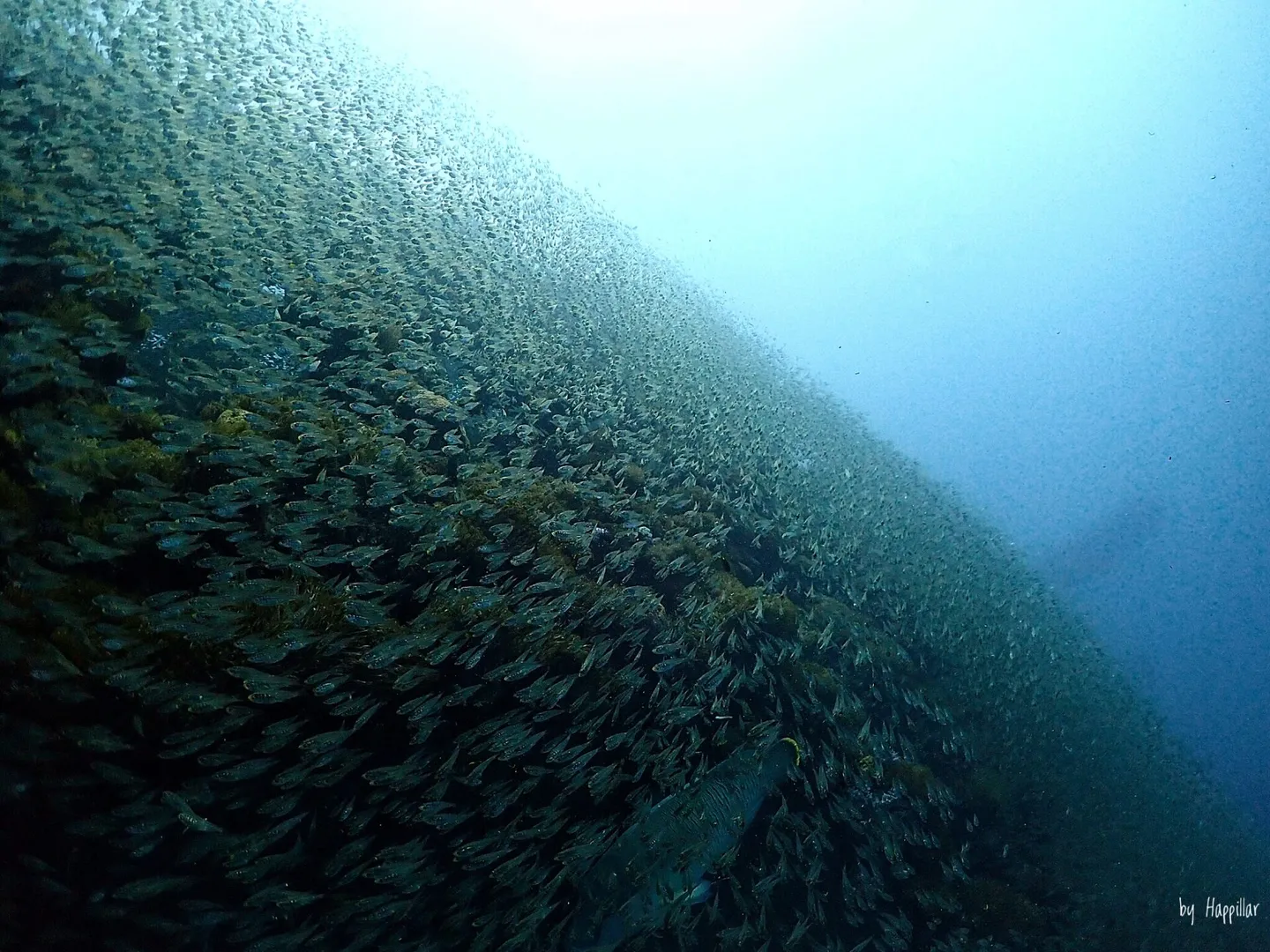
So many fish you could barely see the hull
On the first dive, we followed the standard convention of heading into the current first. Water temperature was around 25°C. After descending to about 28 metres, we kicked from the bow toward the stern — the Yongala is approximately 110 metres long — though we turned back before reaching the stern on that first dive. The current was simply too strong, so we spent the second half of the dive around the bow area. Since both of my dive buddies love photography, we took some time hunting for shots.
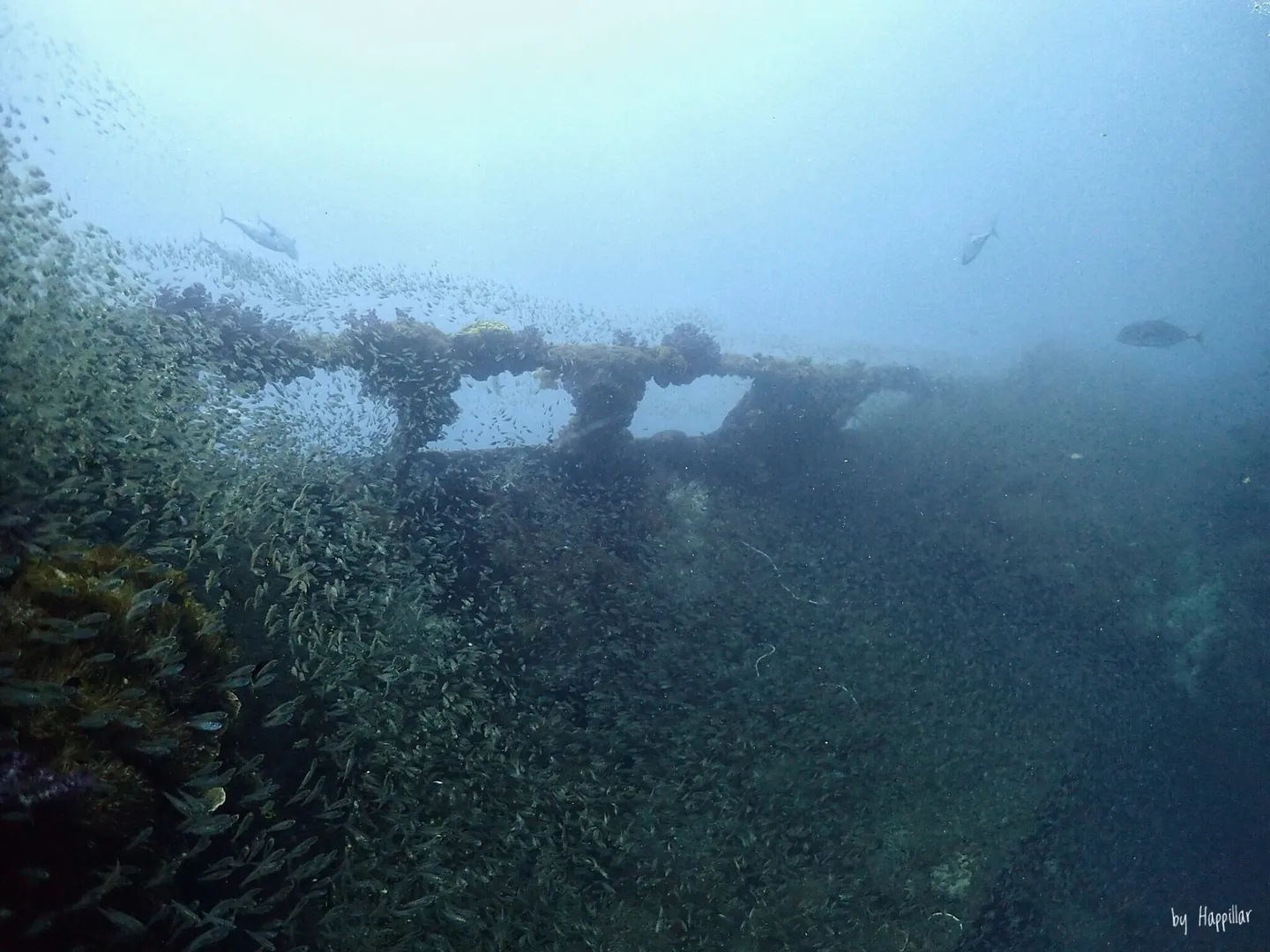
For the second dive, after discussing it with the crew, we decided to change our plan and go with the current first. Since all three of us are Divemasters or instructors, and we had spoken with the crew beforehand, we felt comfortable making that call (if you're thinking about a similar plan, I'd encourage you to have a chat with the crew first). The crew gave us a few key reminders — for example, not to swim past the stern of the vessel, to loop up and over to the port side, and then fight the current back to the bow; on the return, the current would be very strong, so stick close to the hull.
Once in the water, we happily began our drift dive. I sat back and let the current carry me all the way to the stern, finning occasionally to nudge the glassfish aside. Midway along I spotted a Guitar Shark resting inside the wreck, but by the time I tried to signal my dive buddies, the current had already swept them a bit further ahead. After drifting to the stern, we started kicking hard back toward the bow. In the first few seconds I found I wasn't making any progress at all, but by tucking in closer to the hull I managed to move forward. Around midship, I was carefully studying what looked like a funnel section when someone behind me tugged on my fin and pointed up above the Yongala. I looked up — a group of rays! I later asked the crew, and they told me they were Small-eyed Rays. The Hong Kong Divemaster said they looked like a fleet of pancakes cruising past — a description I found remarkably apt.
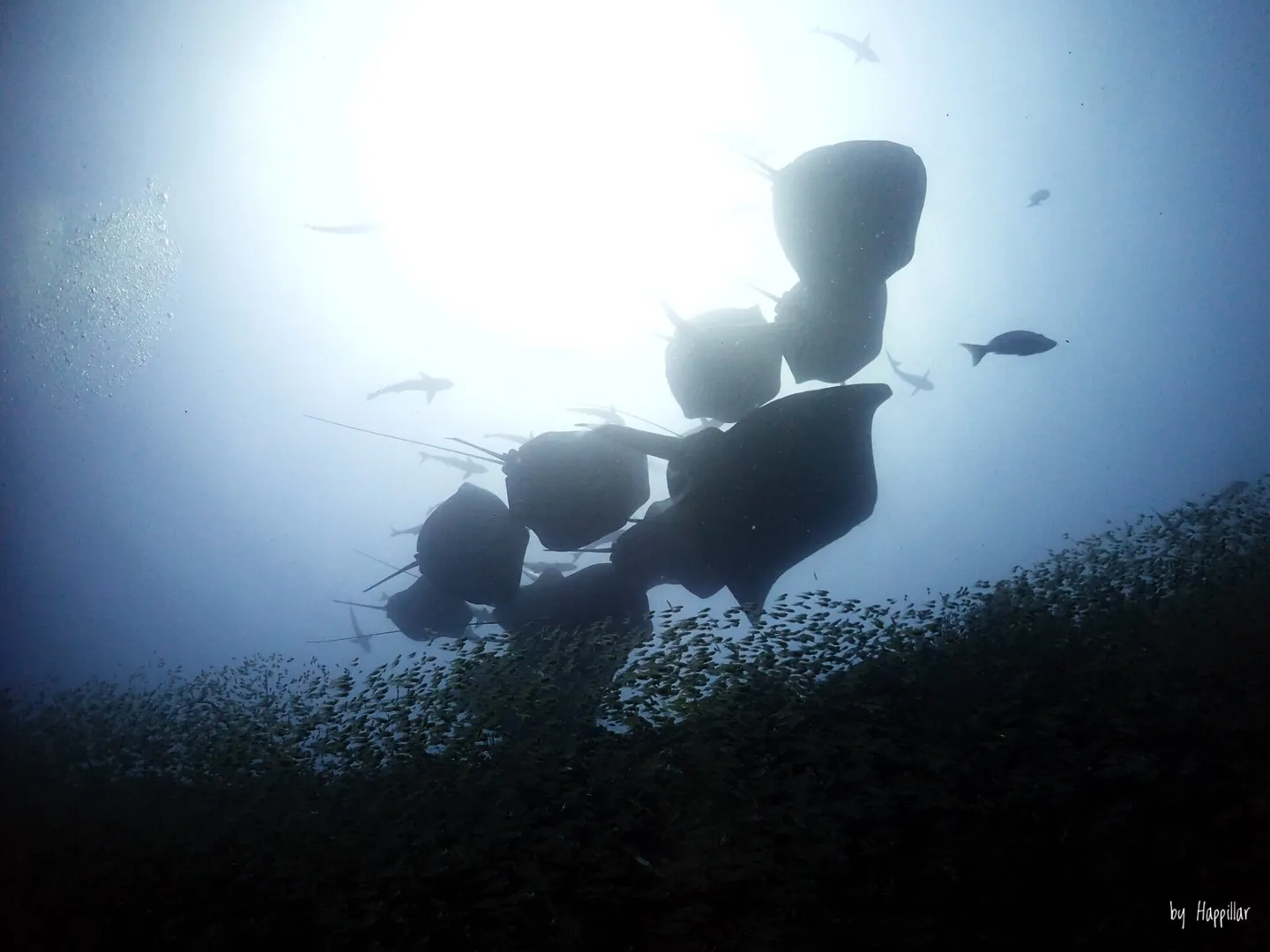
Small-eyed Rays that looked like pancakes
Both dives on day one came in at around 45 minutes each. Reportedly, most other divers on the boat surfaced after only 25 to 35 minutes — a clear sign of how much the current was affecting everyone's air consumption. My buddies and I were chasing our no-decompression limits all the way up, so using nitrox cylinders is strongly recommended.
After the first day's dives, we returned to the dive shop, where the Divemaster on staff began preparing the BBQ lunch. Those staying on settled in to rest, sort through photos, and get ready for the next day.
Day Two
Day two followed essentially the same format as day one, except the boat moored at the stern end of the wreck. On the first dive we kicked back toward the bow, since my Korean dive buddy wanted to photograph the bow section. This time we spent more time closely examining the coral and marine life encrusting the hull. A few leisurely Humphead Wrasse drifted by in striking contrast to our own determined battle against the current.
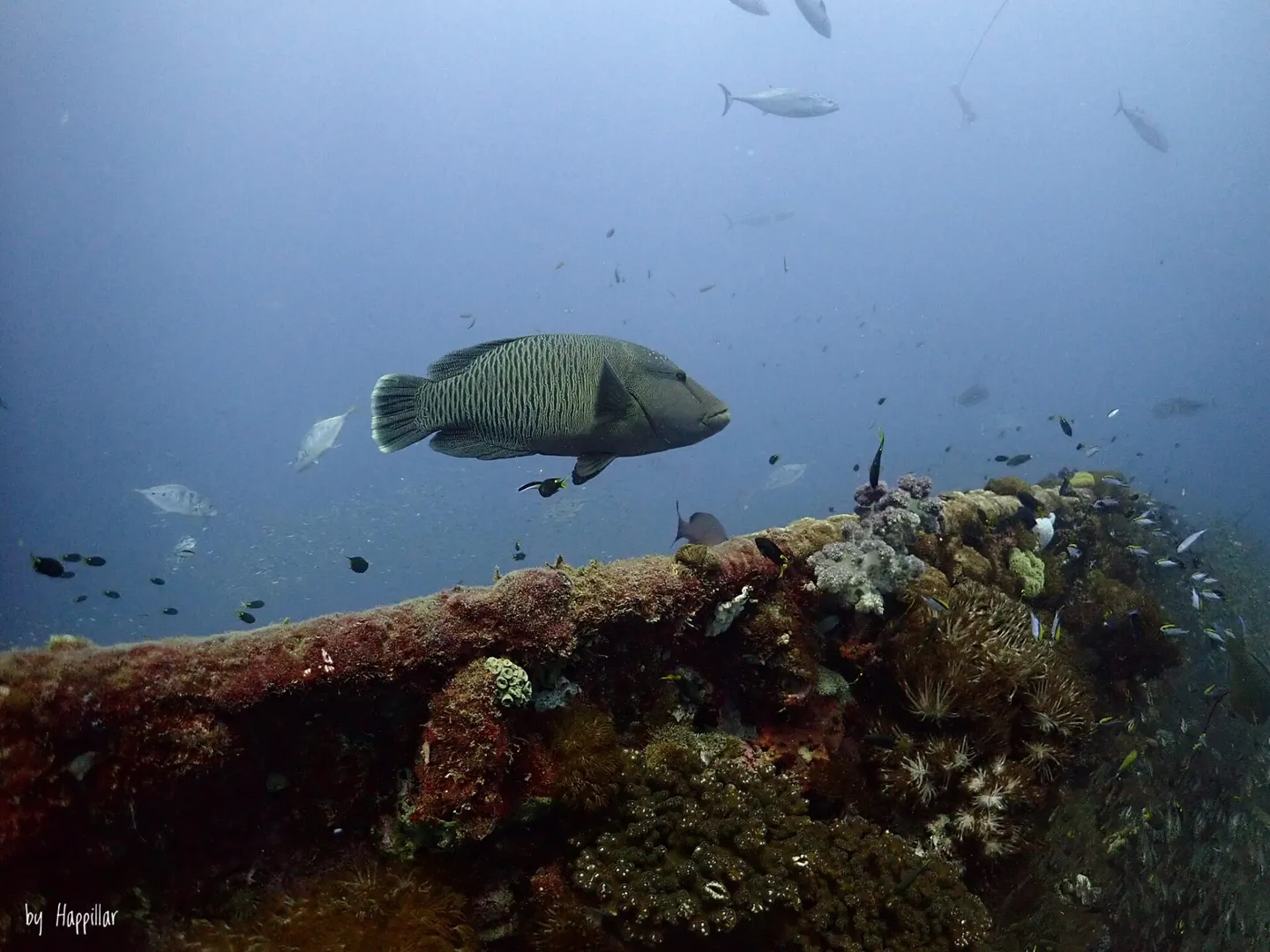
A laid-back Humphead Wrasse
On the second dive, something rather alarming happened. The Korean instructor entered the water first, holding the line and waiting for us. When it was my turn to do a back-roll entry, I somehow missed the current line. By the time I realised what had happened, I had already been swept past the mooring line. The correct response at that moment would have been to descend immediately and grab the mooring line to wait for my buddies — but I hesitated. And so the current carried me further and further away until I was an estimated 50 metres or more from the boat, with the gap still widening. At that point I did something truly foolish (I want to share this because, in the quiet of late nights since, I still find it hard to believe I did it): instinctively feeling that diving deeper would reduce the current's effect on me, I started to descend. While that logic might hold at some dive sites, around the Yongala there is no surrounding reef, and the current at depth is just as fierce. By submerging, I caused the crew — who were trying to come and retrieve me — to lose sight of me, leaving them unable to safely move the boat.
Every time I think back on this incident, I'm reminded that even as an instructor, I still have a long way to go in terms of accumulated experience. Before heading to Australia, a senior Taiwanese dive professional told me: "In my view, a dive instructor should have at least 200 dives of experience. Not 200 dives at the same site racking up cylinders, but 200 dives across different environments and dive sites, building up the experience to handle emergencies." I had kept those words in my heart — but it wasn't until this moment that they truly sank in.
After being retrieved by the crew, my two dive buddies continued the dive and found the Guitar Shark I had spotted the day before.
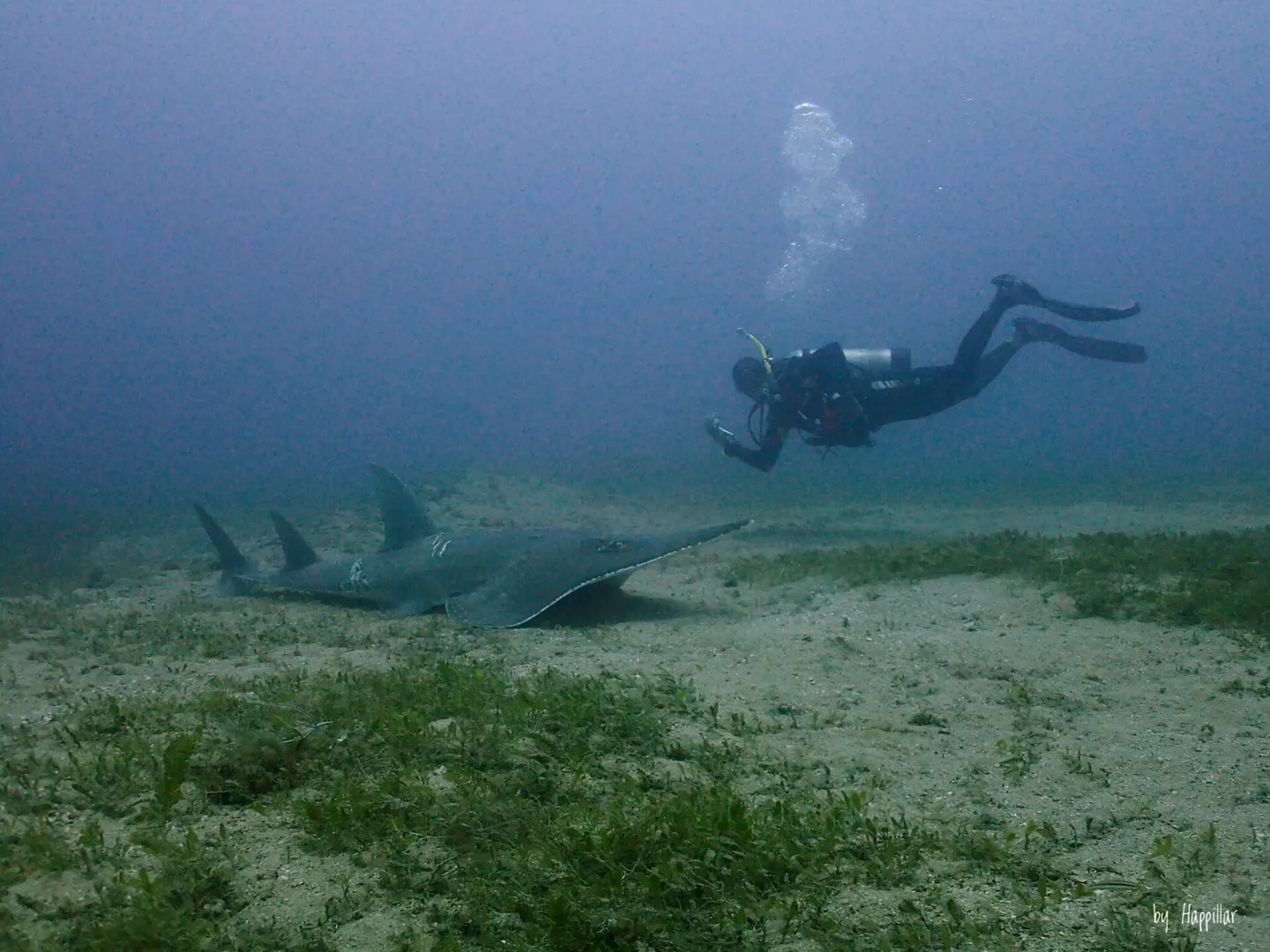
The Hong Kong Divemaster with the Guitar Shark
Wreck Diving Reflections
If you're living in Australia, diving the Yongala is an experience well worth trying — the sensation of diving in strong currents here is completely different from diving the Great Barrier Reef. It's worth noting that although this is a wreck dive, the Yongala is now over a century old; for both safety reasons and out of respect for the lives lost, no diver is permitted to penetrate the interior of the wreck. Additionally, instructors and Divemasters working in Australia can present a payslip to receive a discount on the package price.
About the Photos
Most of the photos in this article were provided by Korean instructor Happillar. The camera used was an Olympus TG5. If you'd like to see more of his work, you can find him on Instagram at happillar_kyeongjoo — feel free to follow or leave him a comment (he'll be thrilled).
Related links:
If you're interested in more Australia diving stories, check out these three articles!
-
Swimming with Minke Whales on the Great Barrier Reef — A Dream Australian Voyage You Must Experience
-
Looking for Purpose in Life? Come Do an Unforgettable Dive Working Holiday in Australia!
(Cover image source: wikidata)
Frequently Asked Questions
How is a BlueTrend dive trip different from an unknown, no-name dive group?
Choosing us means full peace-of-mind protection and a smooth experience from start to finish. Every trip we run holds to three things.
First, full legal protection and a professional dive leader: we strictly follow Taiwan's travel regulations and provide complete travel-agency liability insurance, travel insurance, trip-inconvenience insurance and dive insurance. Every group is accompanied by a certified, foreign-language dive leader who joins you on both the dives and the land itinerary, liaising seamlessly with local dive shops and operators on your behalf to keep things running smoothly — the person our travellers trust most.
Second, fully licensed with secure payments: every payment goes into a licensed travel agency's account, with multiple safe payment channels (bank transfer, credit card and more) and a legal collect-and-remit receipt, so every transaction is open, transparent and protected, avoiding the fraud and dispute risks of transferring money privately to an individual.
Third, hand-picked quality we vet in person: every trip, dive site and partner shop is scouted on the ground by our own team, from the guides' professionalism and safety standards to the food, lodging, environment and service details on land, all vetted by us so you don't get caught out.
I want to sign up for a dive trip. Are there certification-level or logged-dive requirements?
Each dive site is different, so the entry bar varies. 'Bali Tulamben', for instance, is relatively beginner-friendly. 'Malapascua in the Philippines' is also beginner-friendly, but since thresher sharks tend to cruise between 20 and 30 metres, we recommend AOW certification with 20+ logged dives to enjoy this trip comfortably. For 'the Maldives' or 'Palau', we suggest AOW with 50+ logged dives for a more relaxed experience. If you're not sure whether your experience fits the trip you want, message us and our dive editors will assess it and help you find the trip you'll feel safest on.
Can I join if I'm signing up alone? How are rooms arranged?
Plenty of our travellers sign up solo! For rooms and beds, we prioritise pairing you with a same-gender traveller, and if you'd rather have your own space you can pay the difference to upgrade to a single room. For the diving, our professional leader will pair you with a suitable buddy, and with the happy vibe on our trips you'll quickly make a great group of dive friends. Many people sign up alone, make new friends, and end up organising the next trip together!
Does the trip fee include dive insurance, gear rental, taxes and instructor tips?
It depends on the trip, the destination's regulations and the local operators. Every BlueTrend dive trip has a detailed web page with a clear 'included / not included' list, transparent and with no hidden charges. All payments are collected by a licensed travel agency, with a standard-form contract for your protection.
I'm a new diver / haven't dived in a long time — will I fall behind the group?
Before you complete your booking, our team assesses a suitable trip based on your certification level and experience. Before departure, we strongly recommend taking time to refresh in Taiwan with an instructor, or a fun dive to get your feel back. On the trip itself, our professional dive leader groups and pairs everyone by experience, keeps a close eye underwater on travellers who need extra care, and steps in to help right away.
Will the photos and videos taken during the trip be shared with us?
During the dives, 'safety' is always the leader's top priority, so whenever it's suitable and safe the leader will capture great shots and record the best moments. During or after the trip, we compile a cloud album for all travellers to download, so you go home loaded with memories!
Besides your scheduled trips, can you arrange a private group charter or independent travel for me and my friends?
Absolutely! Besides group trips, we also arrange private group charters and independent travel. We can communicate, enquire and coordinate services with local operators based on your needs, saving you time and effort and taking the language barrier off your plate, to tailor the smoothest, most reassuring dive trip just for you. Contact our LINE support and our editors will arrange it for you!