Contents(6)
- Blood of the Blue Director Hu Says: "I Never Really Had a Dream of Making Films!"
- Blood of the Blue Director Hu: I Want to Prove That Taiwan's Ocean Can Be Filmed Like This
- Blood of the Blue Director Hu: I'm Searching for My Own Treasure in This Vast Ocean — What About You?
- What If Blood of the Blue Doesn't Find Favor at the Box Office?
- Blood of the Blue Trailer:
- Blood of the Blue Theme Song: Performed by Power Station
Anyone who is part of Taiwan's ocean community will surely recognize the name Yuan Xu-Hu (referred to hereafter as Director Hu). He always takes to the stage with a distinctly Japanese-influenced look and an exceptionally gentle voice, year after year presenting precious ocean film works. My connection with Director Hu can be traced back to a 2018 interview I conducted with him for the film Mermaid, and with the release of Blood of the Blue, we were brought together again for an in-depth conversation. 2018 Interview: Projecting Your Own Vision of the Ocean Through the Camera Lens – Mermaid Director Yuan Xu-Hu
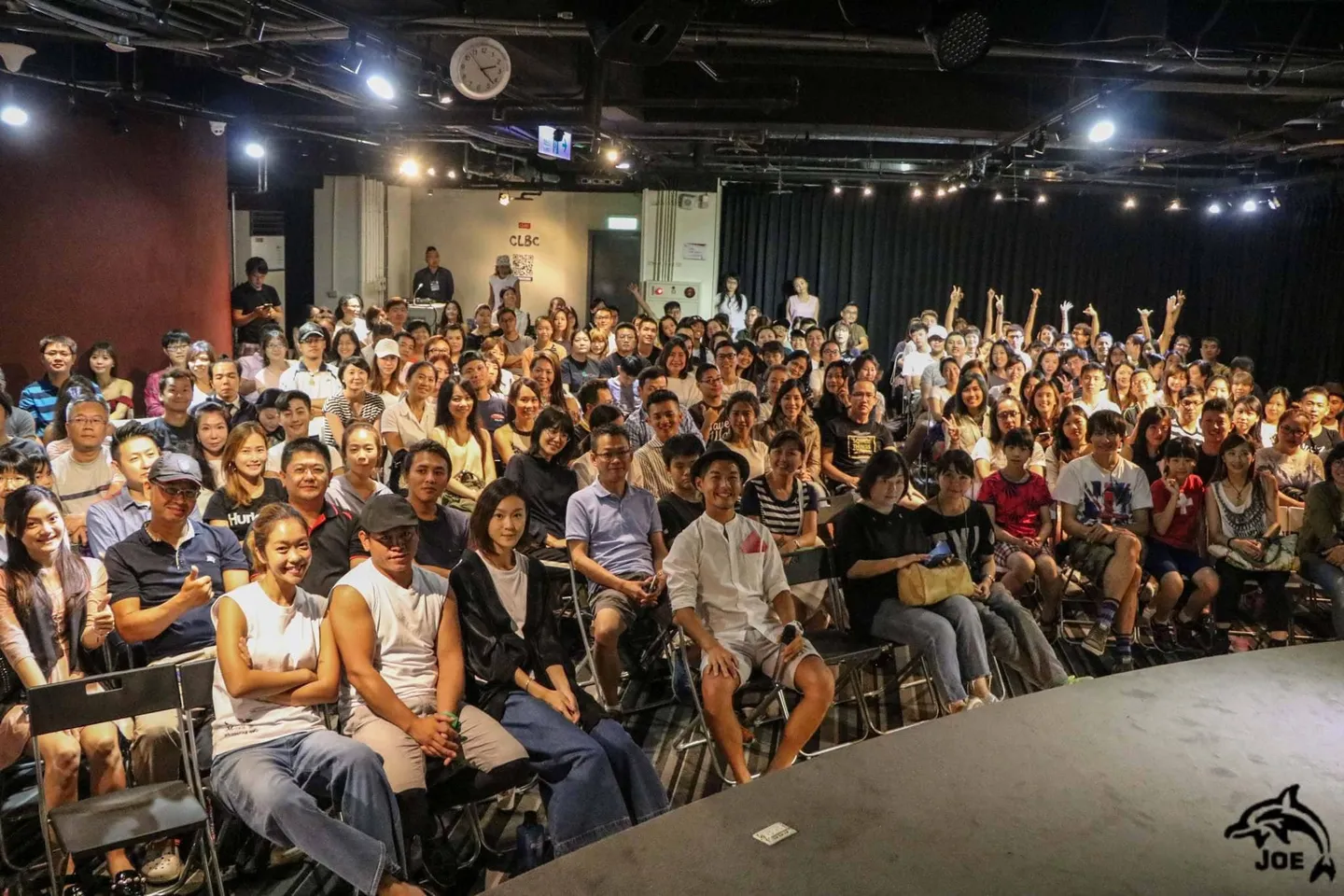
In 2018, Director Yuan Xu-Hu brought us the pure and heartfelt emotion of Mermaid (Photo Credit: Joe Loves Diving)
The storyline of Blood of the Blue had actually been taking shape in Director Hu's mind for a long time. Going back six years from 2021, when Director Hu was still working as a commercial advertising director, a friend jokingly said to him: "You love diving and you know how to make films — why not shoot your own ocean movie?" Those words were what pushed Director Hu toward the world of diving cinema, a concept that sounded almost impossibly abstract at the time.
So Director Hu began crafting the historical backdrop that an ocean film would need. With a free-ranging imagination, he set the story during Japan's Tokugawa shogunate era (16th century), centered on Yan Siqi — the maritime lord who dominated the coastal waters of Japan, Korea, and China. The narrative unfolds from the moment Yan Siqi's Three Islands Uprising (1624) fails and he retreats to Bengang in Taiwan, launching Director Hu's treasure-hunt-on-the-high-seas cinematic universe. Beyond the treasures of the Tokugawa era, the countless legends of treasure left behind by the Japanese military as it withdrew along the First Island Chain at the end of World War II gradually enriched and deepened this ocean-treasure world.
Because the overall story structure was simply too vast, Director Hu drew out portions of it from the mental drawer in his mind, filming them separately as Mermaid in 2018 and Blood of the Blue in 2021.
Blood of the Blue Director Hu Says: "I Never Really Had a Dream of Making Films!"
Before the interview, I assumed Director Hu would be like every award-winning filmmaker — someone who had harbored a grand cinematic dream and spent a lifetime chasing it. But Director Hu had his own definition of treasure when it came to these two films. Director Hu has long hoped to build a professional underwater cinematography team in Taiwan. The goal of filming Mermaid was to prove that the team he led was capable of producing a complete narrative underwater film. The goal of filming Blood of the Blue was to prove that the underwater team could complete underwater footage using decompression diving in conditions involving great depth, strong currents, and low visibility. I'm pleased to say that both goals appear to have been achieved.
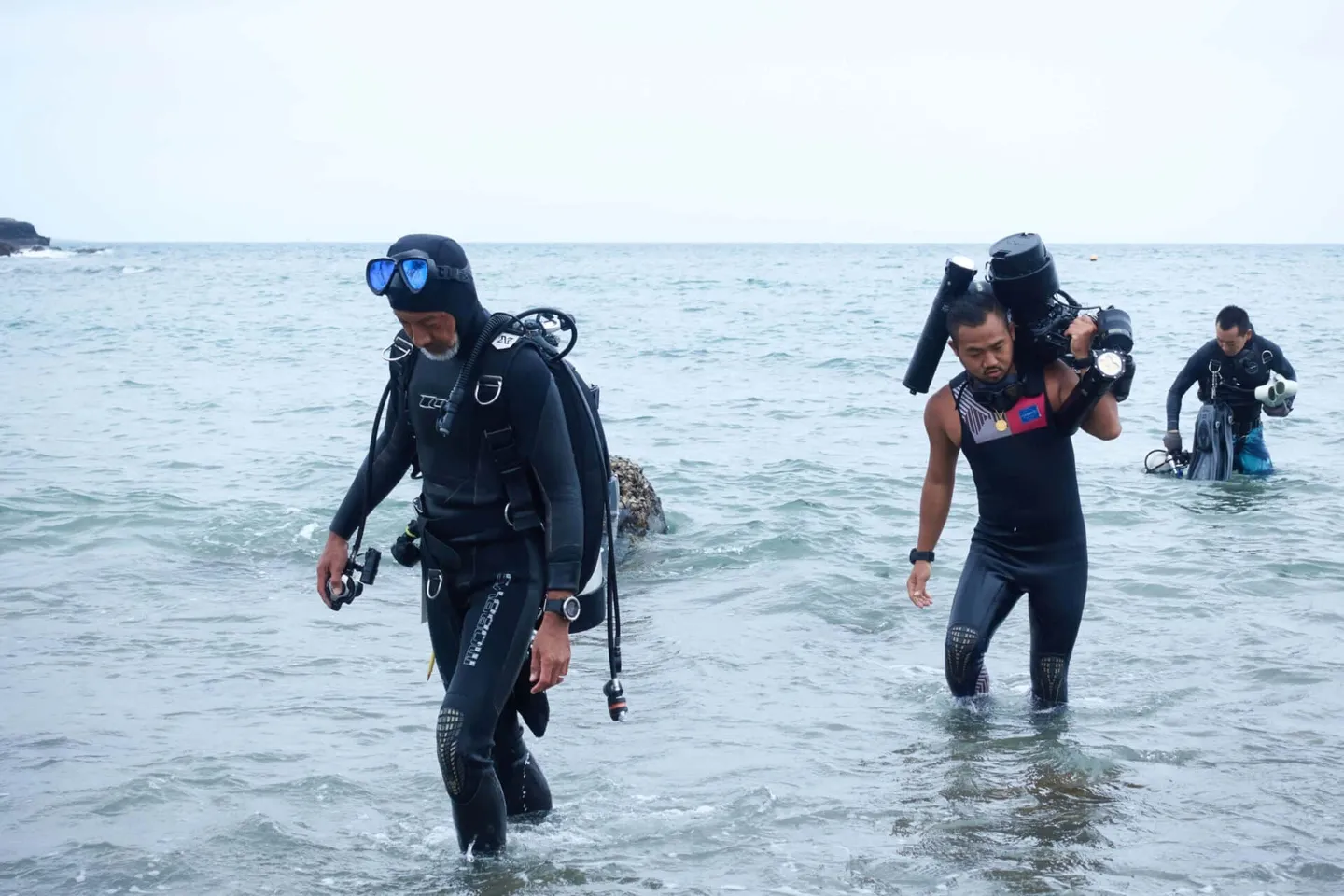
Underwater scooters and twin-cylinder technical diving setups were standard equipment for the underwater cinematography in Blood of the Blue
In addition to the breathtaking underwater marine life footage in Blood of the Blue, one scene was filmed at the wreck of the Lingyun warship in Penghu. Deep diving not only tested the air consumption of every crew member, but the production team also had to split into two groups and take turns filming. While one group was stationed at the bottom at 30 m depth, the other group waited at a decompression stop at 20 m. Once the first group had completed their designated actions, they would ascend to the stop and swap with the second group. After all crew members had finished filming, everyone would return together to a depth of 5 m and switch to pure oxygen tanks to complete the decompression procedure.
Anyone who has dived in Penghu will have firsthand experience of how powerful the currents can be there. Many of the underwater sequences in Blood of the Blue were filmed as drift dives. While the team was swept along in the fast-moving current, everyone had to maintain the formation agreed upon before the dive in order to achieve the subsequent camera angles, positions, and actions. If even one person failed to follow the plan, the whole shot might have to be done over. Since verbal communication is impossible during underwater filming, everything depends on the long-standing chemistry and mutual understanding within the team.
The team is an asset, and one that cannot easily be replaced. When you're underwater and can't communicate in words, a single look or a single gesture is all it takes for the other person to understand what you need.
During the interview, we also discussed the challenges of independent filmmaking in Taiwan. In general, a full commercial film crew should consist of a team of 20 to 30 people, including editors, colorists, subtitle teams, producers, production managers, coordinators, director's assistants, marketing placements, and more. A team of fewer than five people is considered an independent production. But Director Hu went even further — he was genuinely a one-man independent production. From start to finish across the entire filming process, Director Hu personally worked alongside every team at every stage. When I asked why he didn't adopt the professional division of labor typical of commercial productions, he could only smile helplessly: "Because the budget is limited — I had no choice but to jump in myself!" Perhaps that one sentence says everything about the current state of Taiwan's underwater film and television industry.
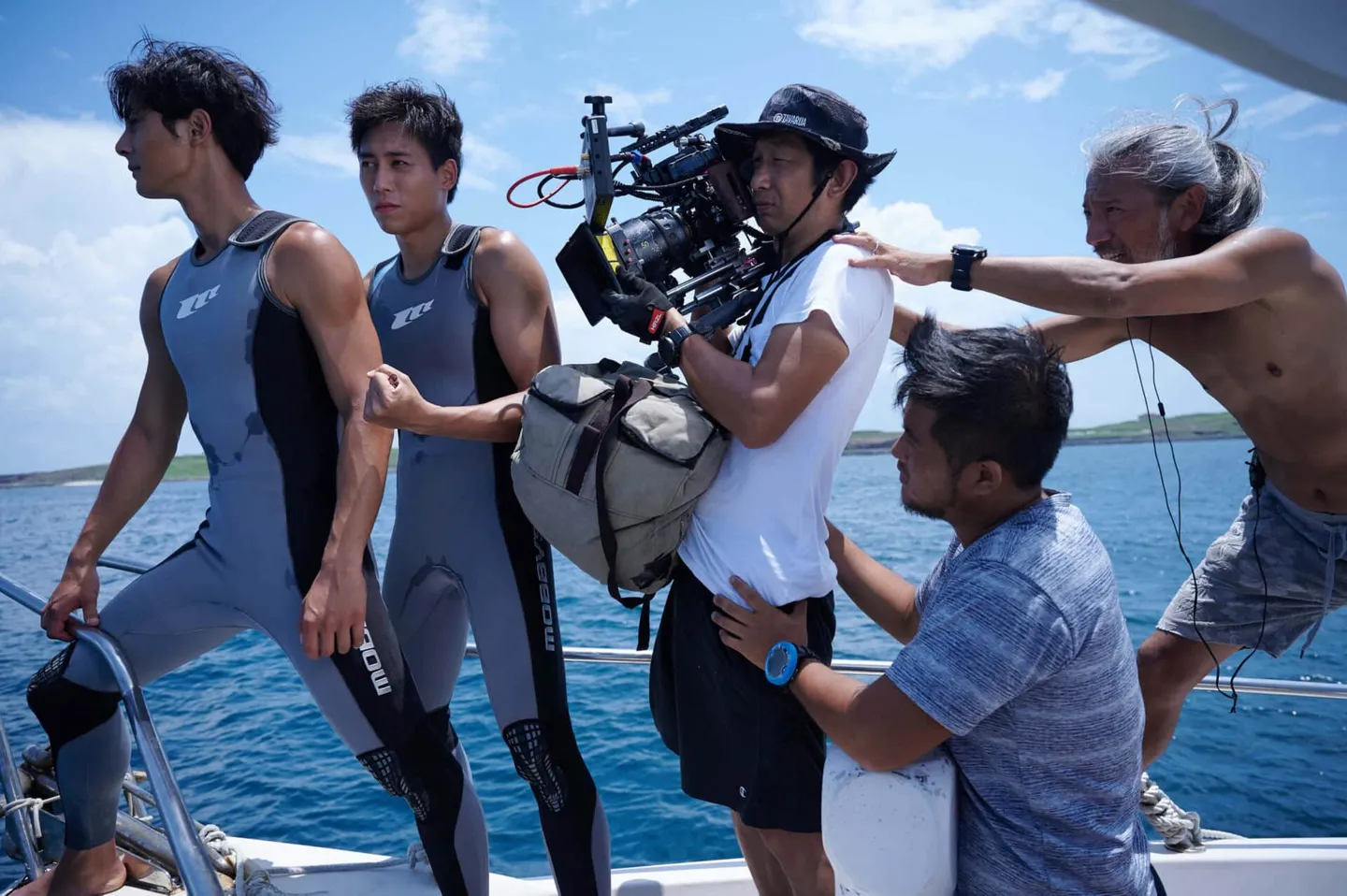
The cinematography team of Blood of the Blue is an asset that cannot easily be replaced


Blood of the Blue Director Hu: I Want to Prove That Taiwan's Ocean Can Be Filmed Like This
Since Mermaid, underwater film and television works from Taiwan have gradually been appearing before the public, including 30 Meters Underwater, Men and Their Sea, and Underwater Runway. For Director Hu, beyond finding filmmaking fun, exciting, and a way to accomplish something together with a group of people, he also hopes to use his own lens to show others what Taiwan's underwater environment is capable of looking like on screen. He also believes that the professionalism of underwater cinematography teams needs to be recognized. Having worked in the film and television industry since graduating, Director Hu has a clear understanding of the going rates for each role — yet underwater cinematography-related work is far too often forced to settle for low wages. This happens simply because producers don't understand diving expertise and assume they can just hire any instructor to stand by as safety cover, ignoring the risks and compromising quality in the process.
On land, a full crew includes dedicated roles for every function (such as cinematographers, camera assistants, production teams, location management, art direction, set dressing, lighting, and so on). So why is the industry currently only willing to hire a single underwater cameraman when shooting underwater? Director Hu wants to establish a standard — a benchmark — so that the entire film and television industry understands what a proper underwater cinematography crew should look like, and what each role deserves to be paid.
Respect the professionals and stop cutting corners! Only then can Taiwan's underwater film and television industry truly move upward.
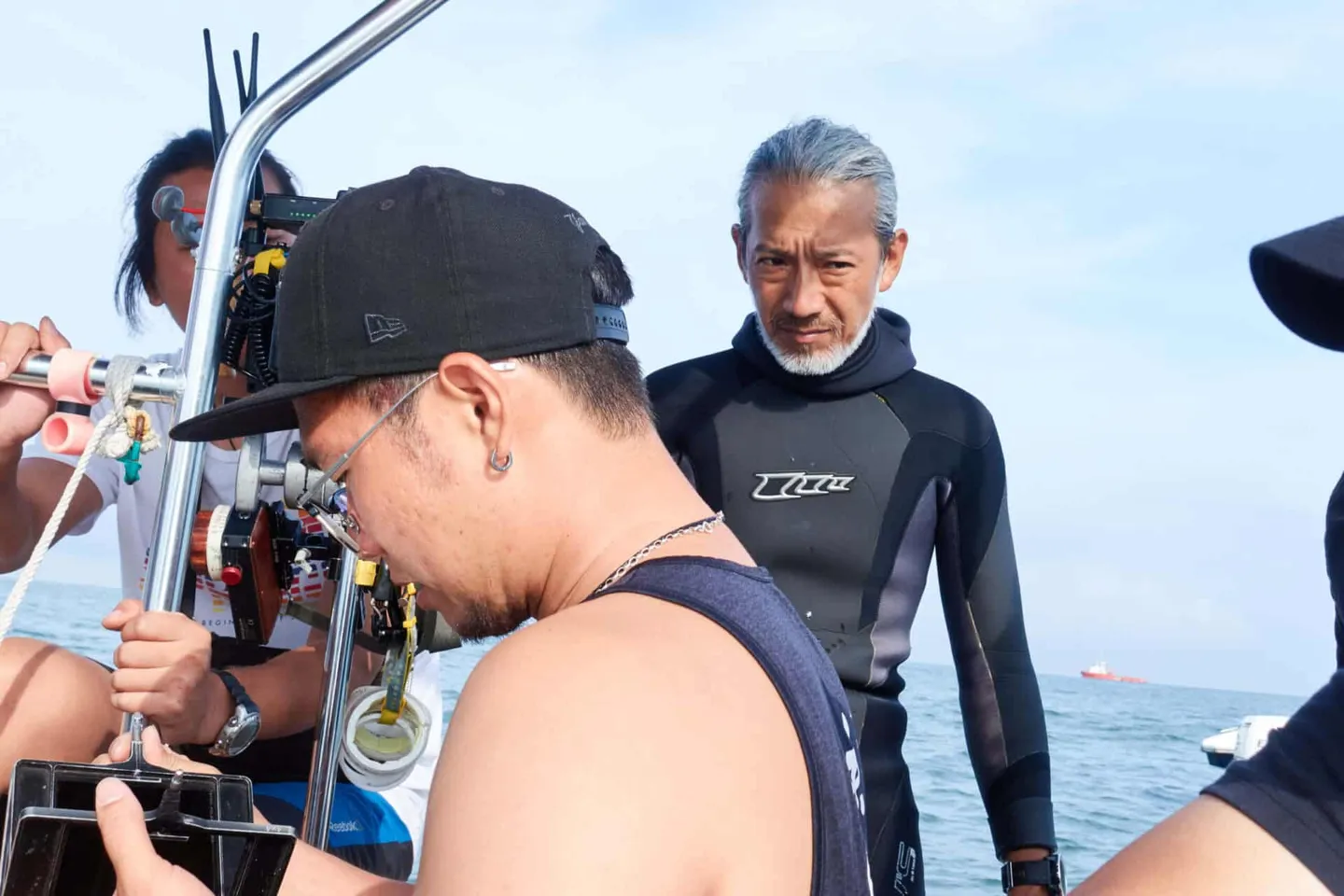
Through every shoot, Director Hu searches for his own treasure — an underwater cinematography team
Through years of quiet dedication and perseverance, Director Hu and his team have gradually built a reputation across the Asia-Pacific region. Mainland Chinese clients have invited them to the Philippines to shoot, and Japanese advertisers have invited them to a dedicated underwater photography studio in Tokyo. Director Hu has consistently insisted on traveling for every shoot with his underwater cinematography team. Looking ahead, he hopes to nurture the team's talent and gradually expand it, with the goal of becoming Taiwan's most complete underwater film production team.
Blood of the Blue Director Hu: I'm Searching for My Own Treasure in This Vast Ocean — What About You?
Throughout the roughly one-hour conversation, Director Hu repeatedly returned to the importance of the team — underwater safety, the unspoken chemistry between members, and the continuous improvement of filming technique. Perhaps Director Hu has already found the treasure he was looking for in his own heart through the process of making these two films. The film uses "treasure" — a worldly and seemingly hollow concept — as its packaging. At first glance it might sound almost amusing, but if you have the chance to watch it in a cinema, you'll understand clearly afterwards what Director Hu was really trying to do: use this film to encourage everyone to find their own goal — their own treasure — and then pursue it with courage.
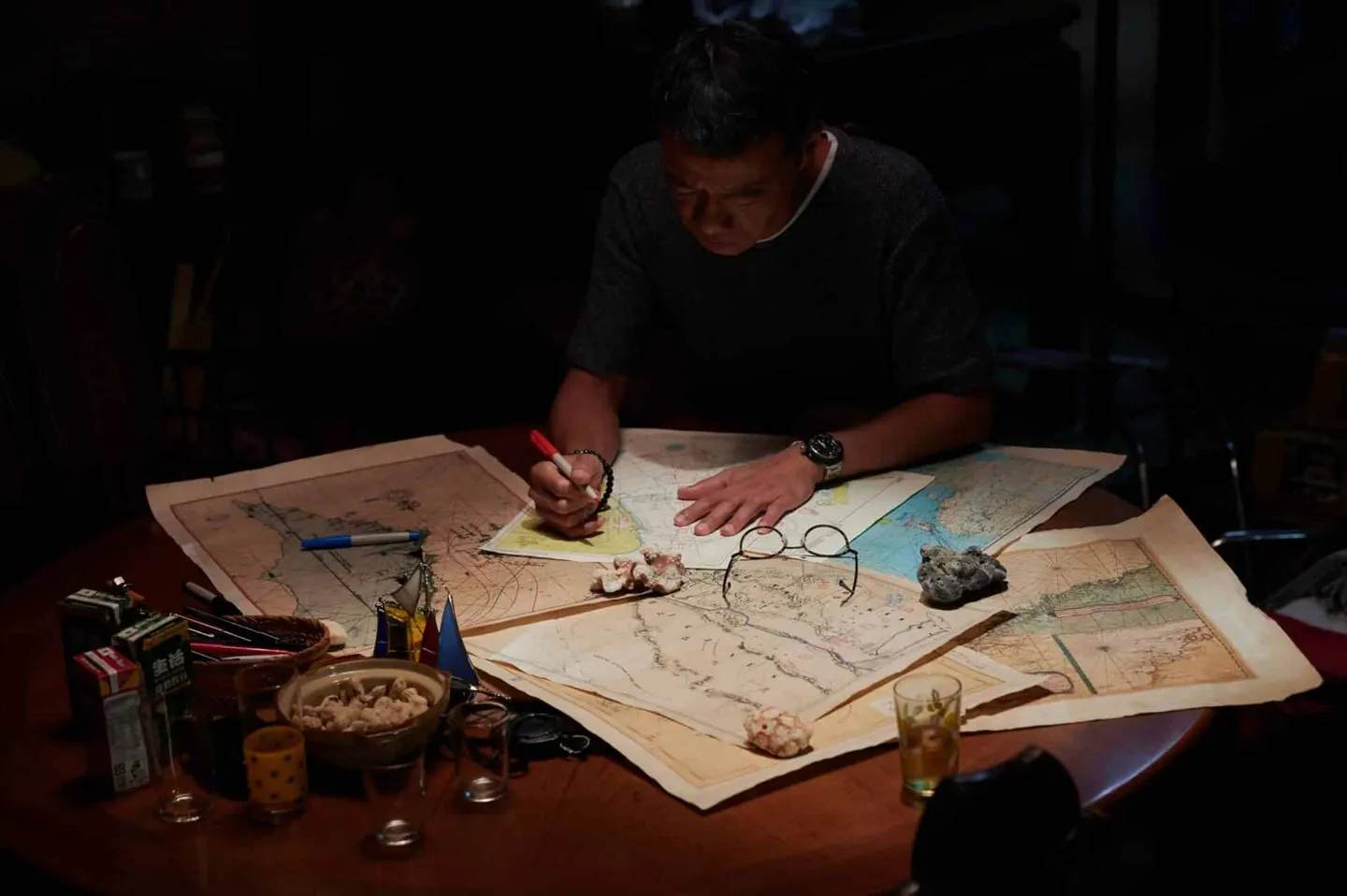
Blood of the Blue aims to capture the idea that everyone has their own treasure waiting to be found
What If Blood of the Blue Doesn't Find Favor at the Box Office?
Director Hu smiled shyly and said: Then perhaps the grand ocean-treasure cinematic universe I've been imagining in my heart will never see the light of day.
Blood of the Blue Trailer:
Blood of the Blue Theme Song: Performed by Power Station
Further Reading:

![[Taiwan Diving – Dylan Chen Column] When Planning a Dive Trip, How to Choose a Dive Shop: 3 Key Dimensions — "Dive, Life, Style"](/_astro/FB_IMG_1618541278834-1_Z2vhciJ.webp)