Contents(6)
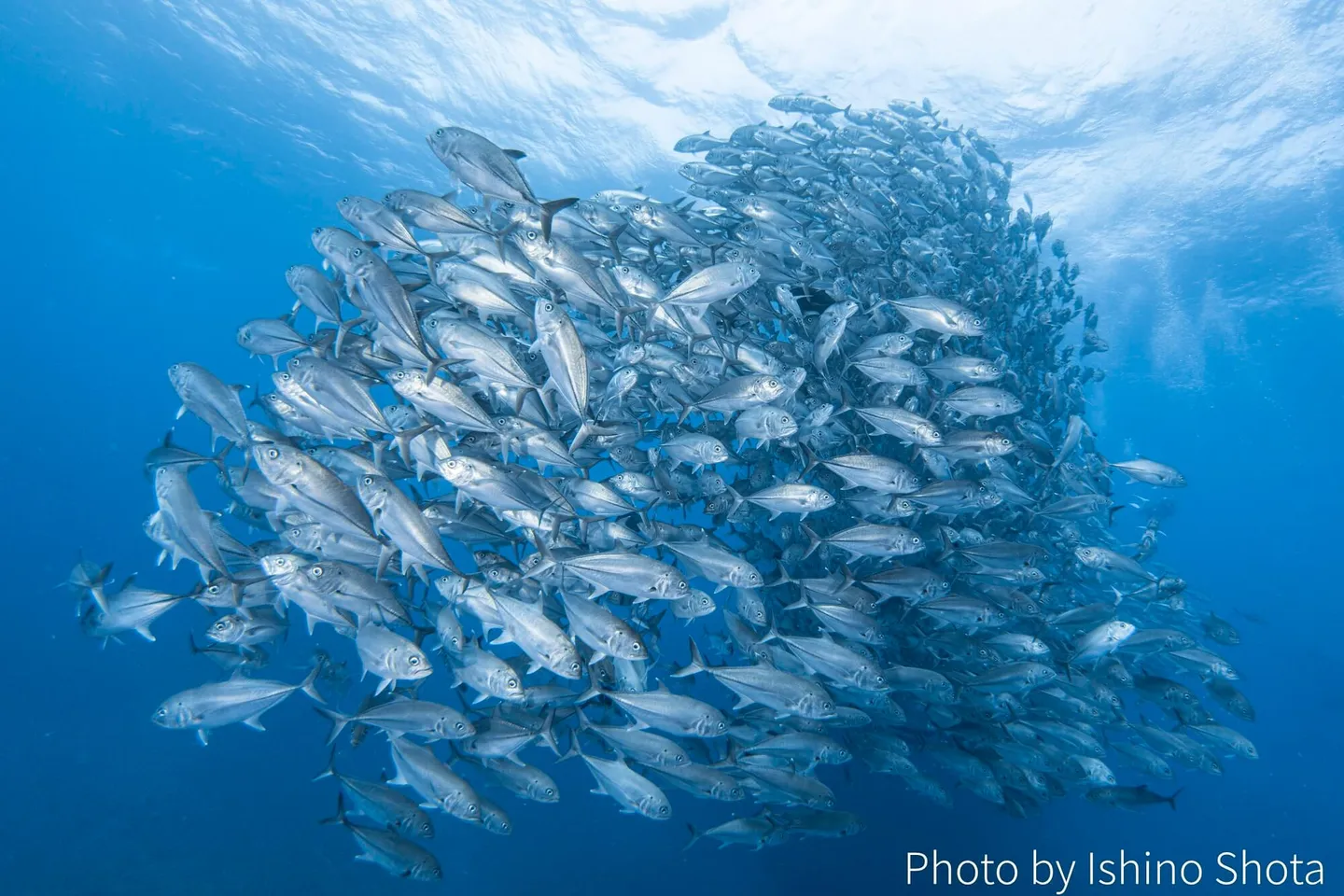
Hello everyone, I'm Ishino, a photographer. "Japan Underwater Odyssey" is a series that follows the rhythm of the seasons to explore the ocean at various locations across Japan. For the fifth installment, I head to Aguni Island — a small island off the western coast of Okinawa.
In early summer, the sea warms gradually, nourished by seaweed, and marine life thrives in abundance. Aguni Island is no exception. Though the island is home to only a few hundred residents and moves at a quiet, unhurried pace, every year between April and June it draws divers from near and far — all chasing the breathtaking "Bigeye Trevally Tornado."
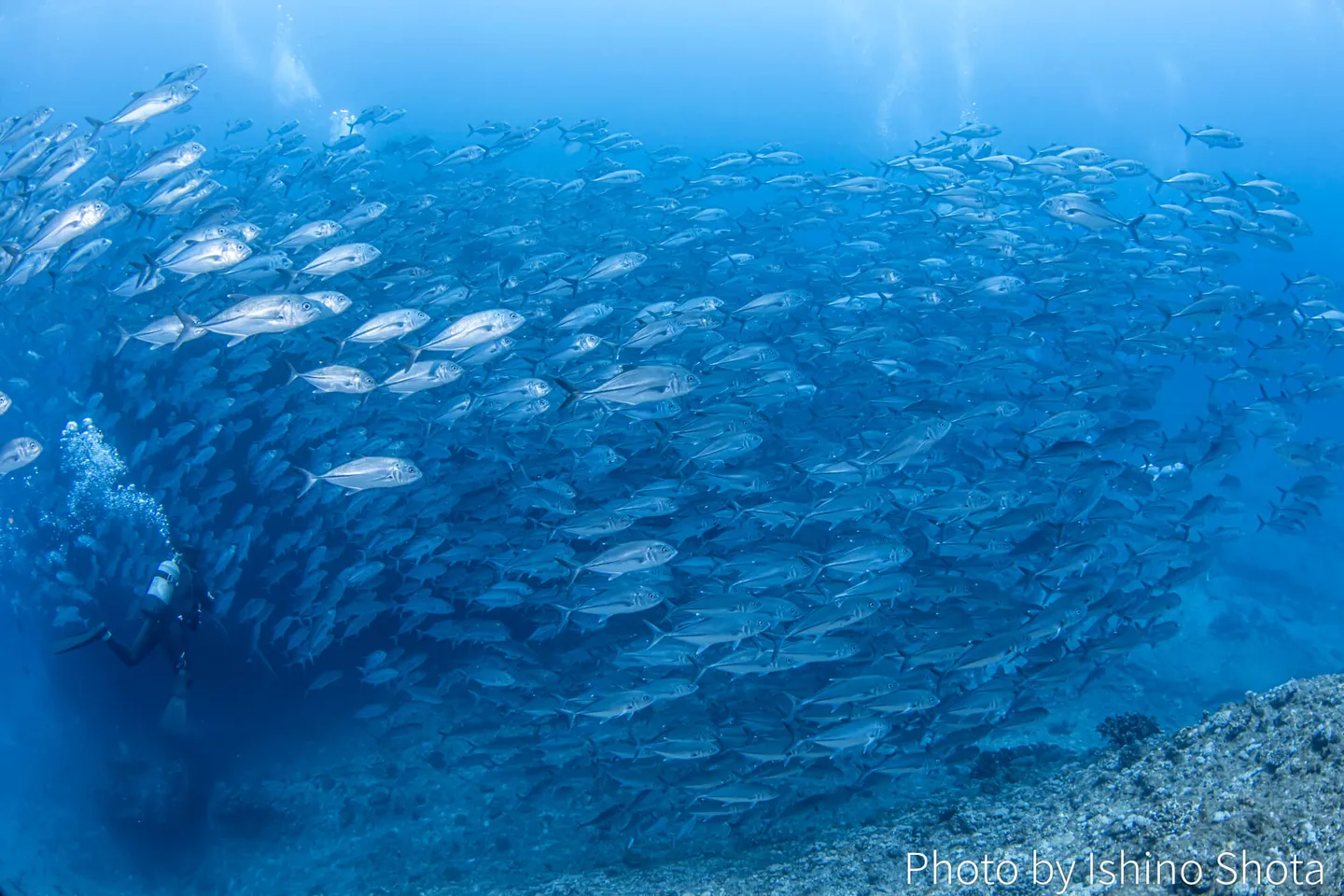
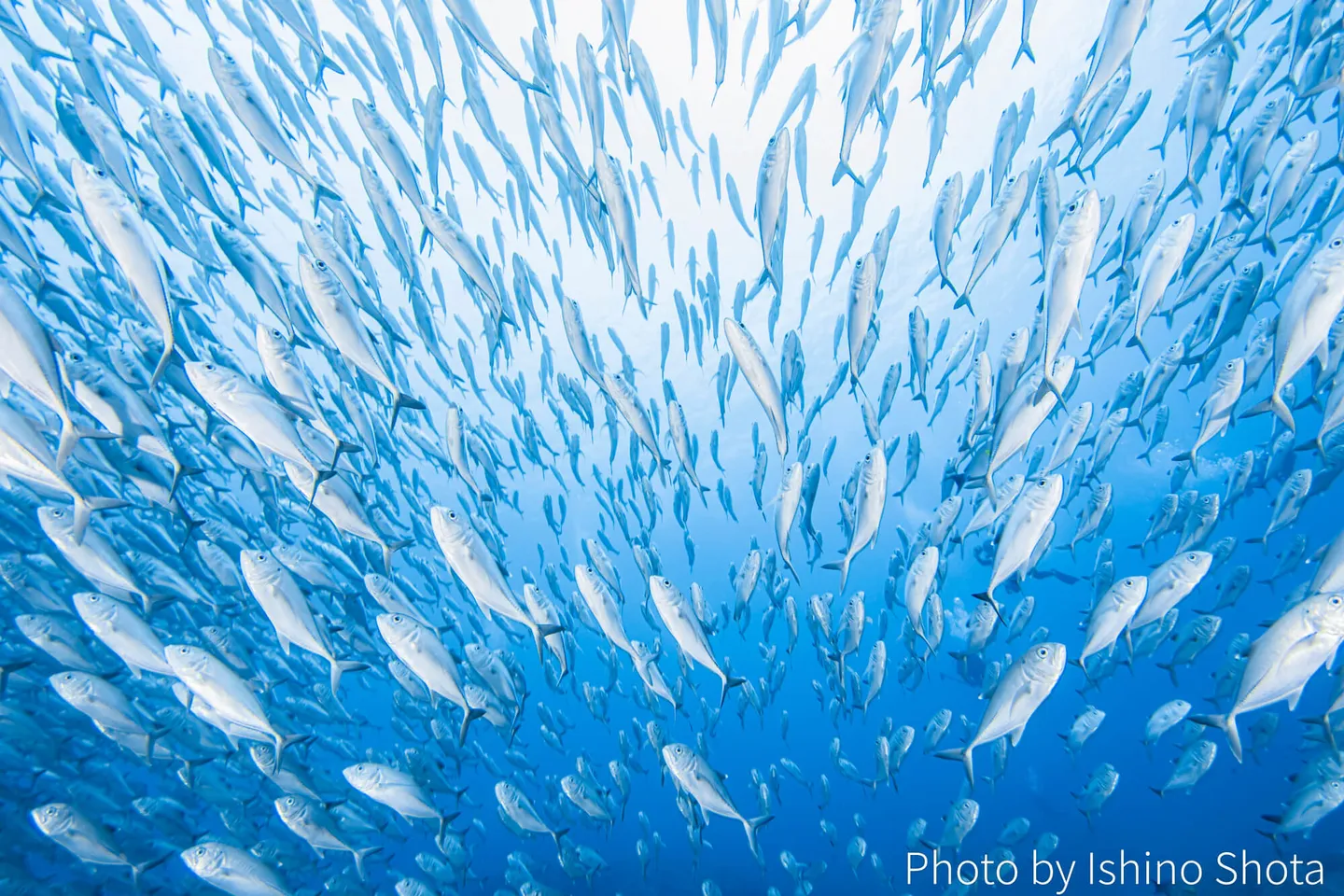
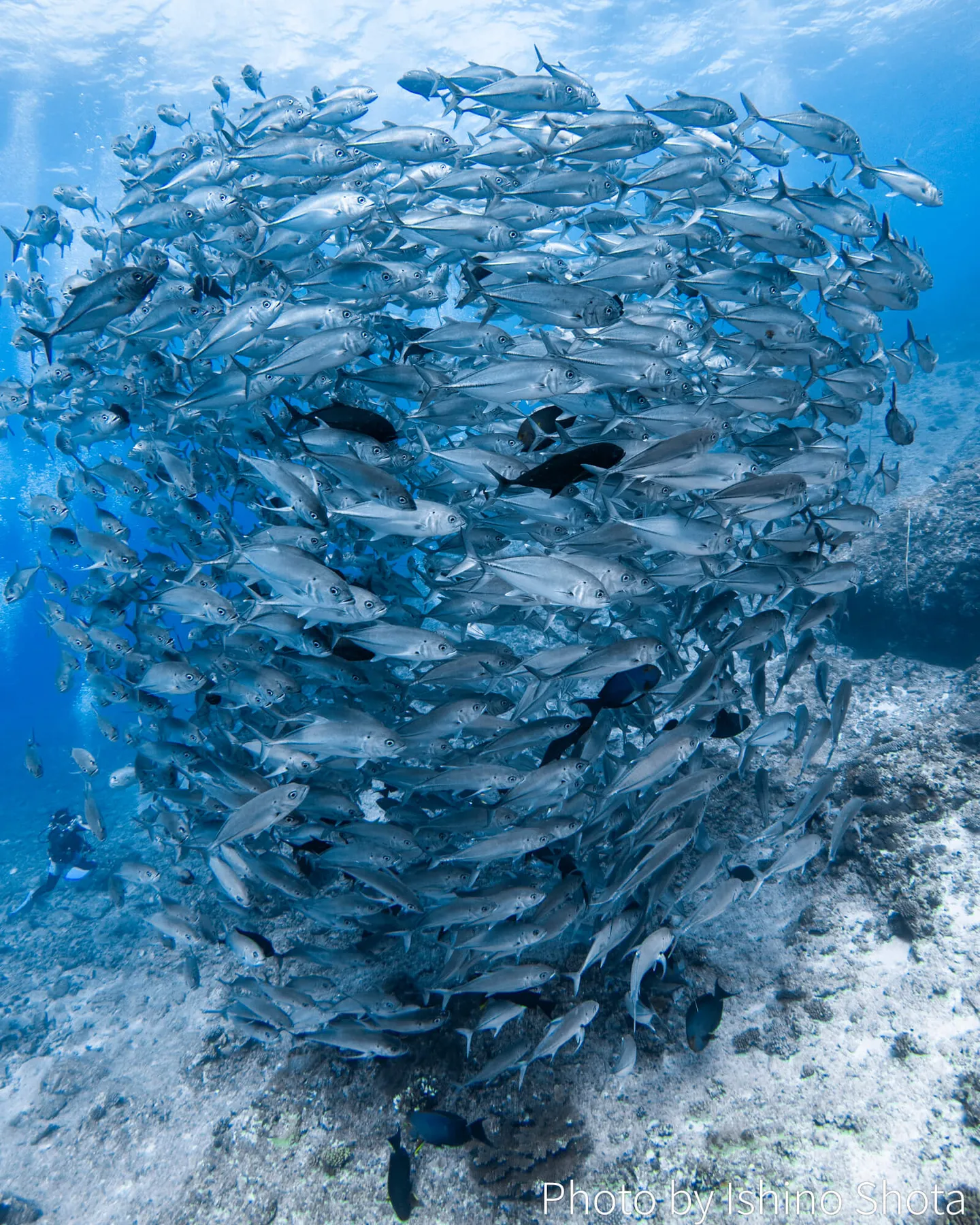
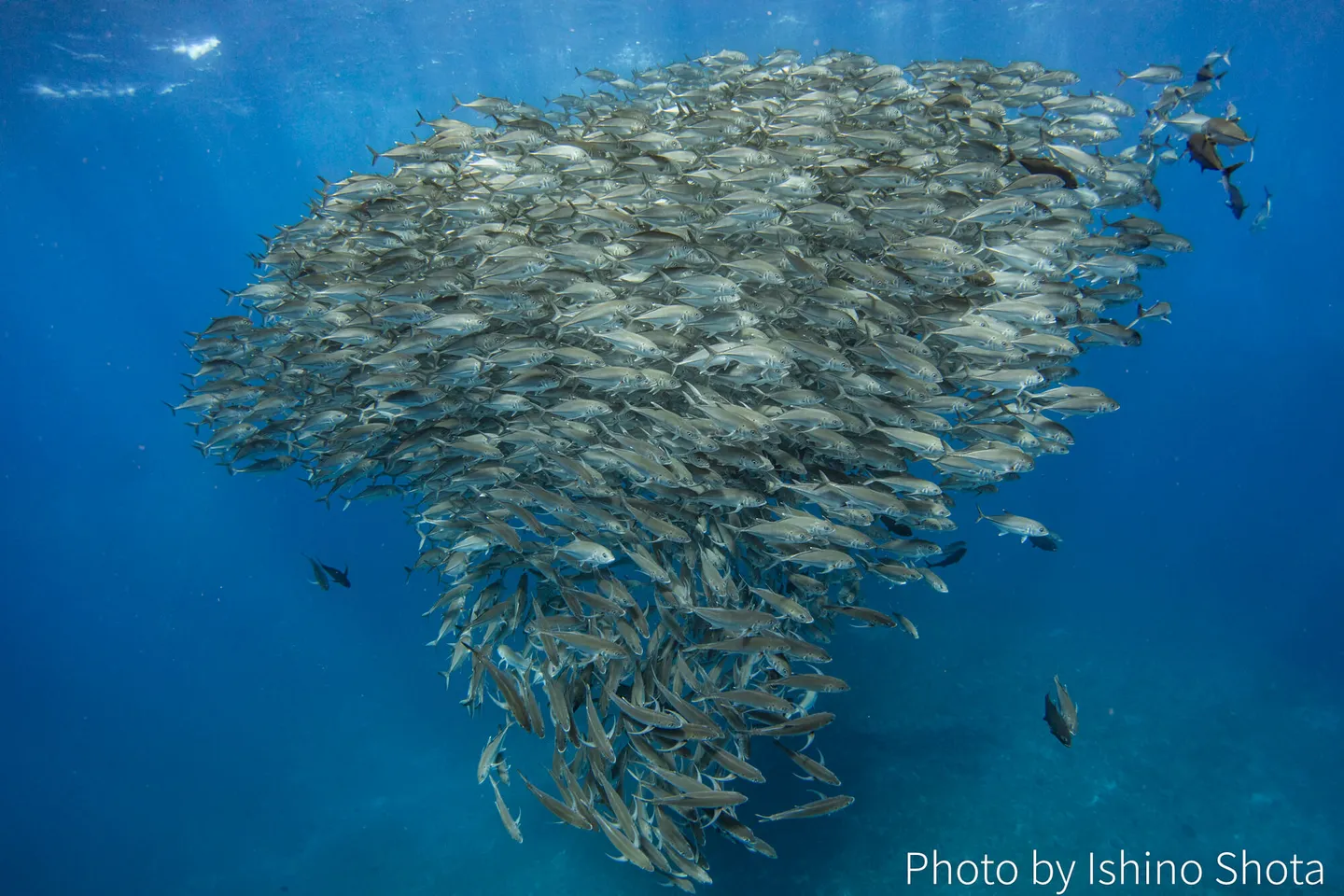
Tens of thousands — sometimes hundreds of thousands — of Bigeye Trevally rise from the seafloor like a living wall, endlessly shifting shape in the water. As time passes, the enormous school continuously transforms, creating what can only be described as a work of art crafted by nature itself.
Encountering Bigeye Trevally at Aguni Island
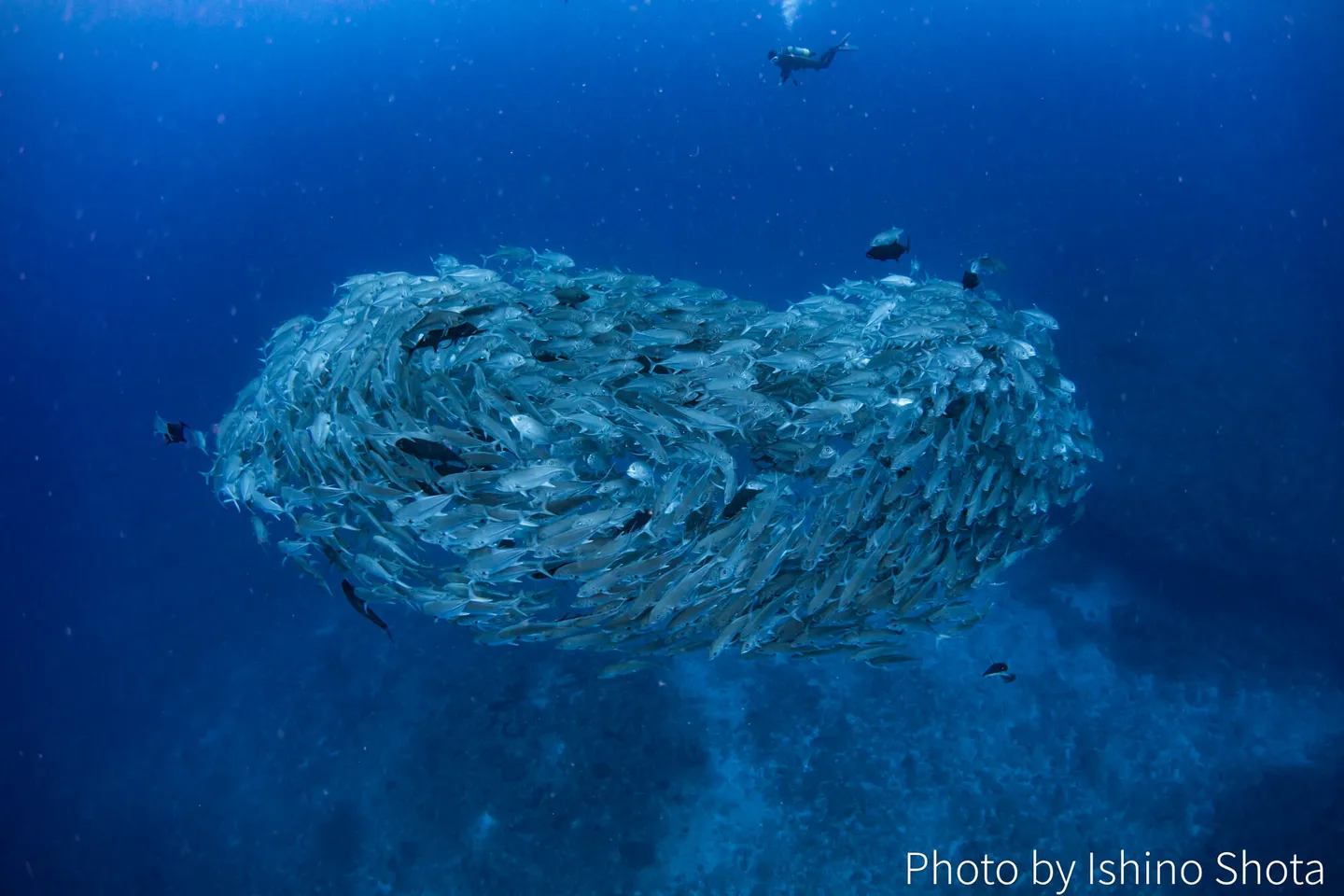
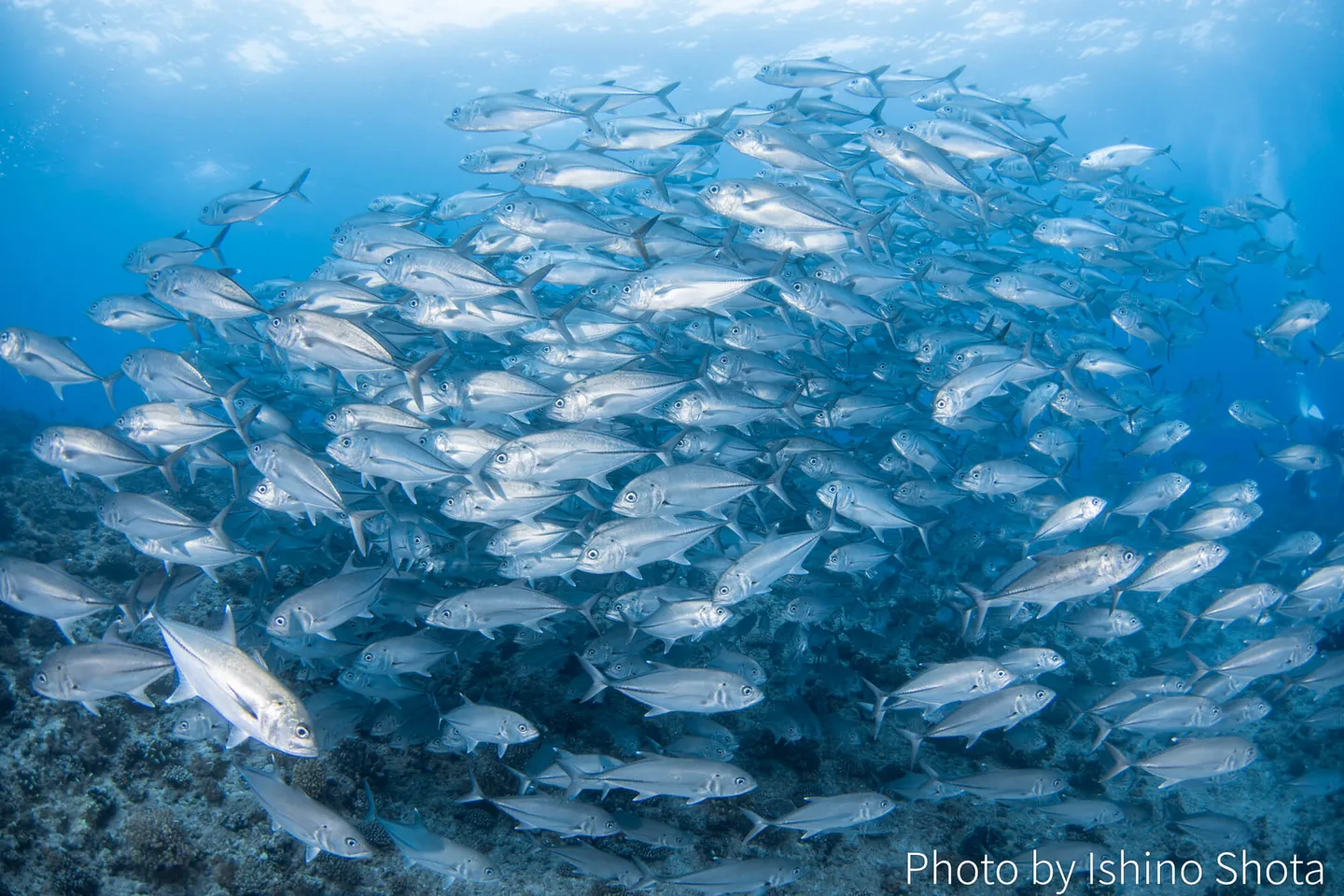
Bigeye Trevally are migratory fish that inhabit warm waters, and the "Fudenzaki" reef off the coast of Aguni Island is a remarkably special site where they gather simultaneously to feed and breed. During this season, the density of Bigeye Trevally is extraordinary — the massive school slowly spirals through the water, and at other times stretches out like a flowing river.
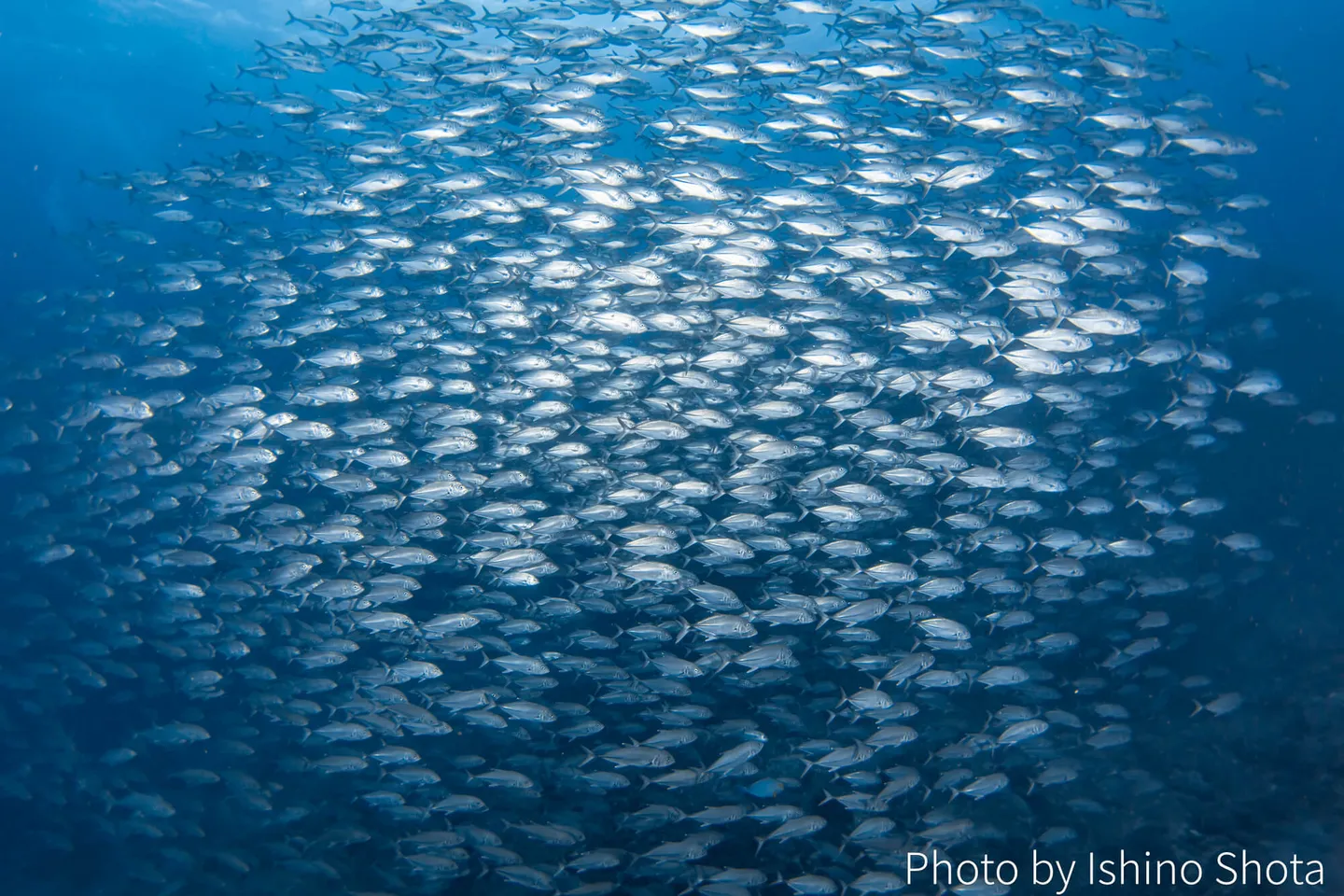
At the center of the school, light is nearly blocked out by the tightly packed fish, while individuals on the outer edge catch the sunlight, their silver bodies glittering with every flick of a fin. When divers approach calmly, the school responds gracefully, slowly shifting shape as if a great creature is turning to face them.
Bigeye Trevally are quite sensitive by nature; if a diver approaches too abruptly or makes aggressive movements, the school can easily scatter. In Aguni, however, they seem accustomed to the presence of divers — maintain a respectful distance, and you may be rewarded with a prolonged encounter. It is precisely this high-probability encounter with the "Bigeye Trevally Tornado" that has earned Aguni Island its outstanding reputation in the diving world.


Two Ways to Dive Aguni Island: Day Trip or Overnight Stay
There are broadly two approaches to diving at Aguni Island.
1. Day Trip from Okinawa's Main Island
This is the most common and convenient option. Departing from Naha, a large dive boat reaches Aguni Island in approximately two hours. With no need to arrange accommodation on the island, it is a highly practical and hassle-free choice.
- No overnight stay required
- Naha serves as your base
- Travel on a large vessel for a relatively comfortable crossing
Accommodation on Aguni Island is extremely limited, and during peak season rooms are nearly impossible to find, making a day trip a sensible alternative. While weather can sometimes affect departures, planning a multi-day itinerary greatly increases the chances of a successful outing.
2. Staying on Aguni Island
Choosing to stay on the island offers an entirely different and deeply appealing experience.
Aguni Island is small and serene. At sunset, the sky and sea are painted in deep shades of crimson; at night, countless stars are scattered across the heavens. Spending time within the island's slow, unhurried rhythm of life feels like a true "remote island holiday." This style of trip is especially popular among divers who want to savour a relaxed atmosphere both in the ocean and on land.
- Dive within the laid-back flow of island life
- Flexible departure decisions based on morning sea conditions
- Enjoy the island's scenery and lifestyle to the fullest after diving
That said, on-island accommodation is extremely scarce, and during peak season some guesthouses have fixed booking-open dates — confirming details well in advance is essential. The unparalleled sense of ease that comes from enjoying both the ocean and the island lifestyle together is simply incomparable.
Why Aguni Island Is the Perfect Place to Observe Bigeye Trevally
The Bigeye Trevally at Aguni Island stand out in terms of numbers, density, and sheer scale.
- High probability of witnessing the tornado formation
- Observable in excellent visibility, crystal-clear blue water
- The school constantly changes shape, making it a highly dynamic spectacle
- The fish are relatively tolerant of divers, ideal for extended photography sessions
For underwater photographers in particular, the sight of sunlight piercing through the core of the school and setting the Bigeye Trevally ablaze with light is truly one of a kind. A wide-angle lens allows you to capture both the depth of the school and the sweeping dynamism of its rotation simultaneously.
Because observing such a large school is strictly seasonal, this is a rare phenomenon that can only be witnessed at a specific time of year. May marks the absolute peak, making it the liveliest period on Aguni Island; by June, schools of hundreds of Dogtooth Tuna may also appear, adding yet another layer of excitement to every dive.
The Mystery of the School
The peak diving season for Bigeye Trevally at Aguni Island falls in early summer — April through June.
During this period, they form these enormous tornado-like schools. But why do they spiral in this way? One widely cited explanation is predator defense. By forming a high-density, continuously rotating aggregation, they make it extremely difficult for predators to lock onto any single individual — a classic example of collective defense strategy.
However, there is another reason that may be even more significant: reproduction. During spawning season, mature males and females need to encounter each other efficiently, and high-density aggregation greatly increases the chances of successful pairing.
Although actual spawning behavior has not yet been directly observed, careful observation of the school reveals that some individuals will suddenly turn a deep, dark black. It is known that male Bigeye Trevally darken their body color during courtship to attract females. This dramatic color change appears only briefly during the breeding season and disappears once it ends — making it a compelling clue that reproductive behavior is actively taking place.
Witnessing a "Moment of Life"
Encountering such a vast aggregation of Bigeye Trevally at Aguni Island in early summer is far more than simply "seeing a lot of fish." It is a rare opportunity to witness firsthand the behaviors these creatures have chosen in order to continue their existence — and to feel, with your whole body, the immense energy contained within the ocean ecosystem.
Next May, I encourage you to make the journey to Aguni Island and witness for yourself the moment this "vortex of life" is born.
Whether you choose a day trip or an overnight stay, a deeply moving underwater experience is waiting for you.
Further Reading
-
Shota Ishino on Instagram: shota_gorillahouse
-
Diving Japan in Spring: A Kelp Forest Adventure in Kagoshima – Japan Underwater Odyssey
-
Where the Kuroshio Passes: Yonaguni Island, Japan's Westernmost Point – Japan Underwater Odyssey
-
The Drift Ice Story Anchored in the Sea of Japan's World Natural Heritage – Japan Underwater Odyssey
Frequently Asked Questions
How is a BlueTrend dive trip different from an unknown, no-name dive group?
Choosing us means full peace-of-mind protection and a smooth experience from start to finish. Every trip we run holds to three things.
First, full legal protection and a professional dive leader: we strictly follow Taiwan's travel regulations and provide complete travel-agency liability insurance, travel insurance, trip-inconvenience insurance and dive insurance. Every group is accompanied by a certified, foreign-language dive leader who joins you on both the dives and the land itinerary, liaising seamlessly with local dive shops and operators on your behalf to keep things running smoothly — the person our travellers trust most.
Second, fully licensed with secure payments: every payment goes into a licensed travel agency's account, with multiple safe payment channels (bank transfer, credit card and more) and a legal collect-and-remit receipt, so every transaction is open, transparent and protected, avoiding the fraud and dispute risks of transferring money privately to an individual.
Third, hand-picked quality we vet in person: every trip, dive site and partner shop is scouted on the ground by our own team, from the guides' professionalism and safety standards to the food, lodging, environment and service details on land, all vetted by us so you don't get caught out.
I want to sign up for a dive trip. Are there certification-level or logged-dive requirements?
Each dive site is different, so the entry bar varies. 'Bali Tulamben', for instance, is relatively beginner-friendly. 'Malapascua in the Philippines' is also beginner-friendly, but since thresher sharks tend to cruise between 20 and 30 metres, we recommend AOW certification with 20+ logged dives to enjoy this trip comfortably. For 'the Maldives' or 'Palau', we suggest AOW with 50+ logged dives for a more relaxed experience. If you're not sure whether your experience fits the trip you want, message us and our dive editors will assess it and help you find the trip you'll feel safest on.
Can I join if I'm signing up alone? How are rooms arranged?
Plenty of our travellers sign up solo! For rooms and beds, we prioritise pairing you with a same-gender traveller, and if you'd rather have your own space you can pay the difference to upgrade to a single room. For the diving, our professional leader will pair you with a suitable buddy, and with the happy vibe on our trips you'll quickly make a great group of dive friends. Many people sign up alone, make new friends, and end up organising the next trip together!
Does the trip fee include dive insurance, gear rental, taxes and instructor tips?
It depends on the trip, the destination's regulations and the local operators. Every BlueTrend dive trip has a detailed web page with a clear 'included / not included' list, transparent and with no hidden charges. All payments are collected by a licensed travel agency, with a standard-form contract for your protection.
I'm a new diver / haven't dived in a long time — will I fall behind the group?
Before you complete your booking, our team assesses a suitable trip based on your certification level and experience. Before departure, we strongly recommend taking time to refresh in Taiwan with an instructor, or a fun dive to get your feel back. On the trip itself, our professional dive leader groups and pairs everyone by experience, keeps a close eye underwater on travellers who need extra care, and steps in to help right away.
Will the photos and videos taken during the trip be shared with us?
During the dives, 'safety' is always the leader's top priority, so whenever it's suitable and safe the leader will capture great shots and record the best moments. During or after the trip, we compile a cloud album for all travellers to download, so you go home loaded with memories!
Besides your scheduled trips, can you arrange a private group charter or independent travel for me and my friends?
Absolutely! Besides group trips, we also arrange private group charters and independent travel. We can communicate, enquire and coordinate services with local operators based on your needs, saving you time and effort and taking the language barrier off your plate, to tailor the smoothest, most reassuring dive trip just for you. Contact our LINE support and our editors will arrange it for you!
![[mic21 Special Feature] Dive Travel in Kerama Blue! Experience 50-Metre Crystal Visibility — Okinawa Kerama Islands Diving Trip](/_astro/%E6%B2%96%E7%B9%A9-%E6%85%B6%E8%89%AF%E9%96%93-mic21-%E6%BD%9B%E6%B0%B417_2dMQS2.webp)