Contents(8)
Back in 2011, when I was still in elementary school, my mom took me to Green Island for a discover diving experience. The vivid, kaleidoscopic world beneath the surface left an impression that I simply couldn't shake. True to our family's action-oriented nature, the very next year we all signed up for Open Water courses together (I was a junior diver back then, mind you). After completing the course, I knew that scuba diving would be a lifelong companion — and over the past 13 years, it truly never has left my side. Whether it was dive travel, working in exchange for certifications, or even my current job, which revolves around diving and the ocean, I've come to realize that I love diving from the bottom of my heart.
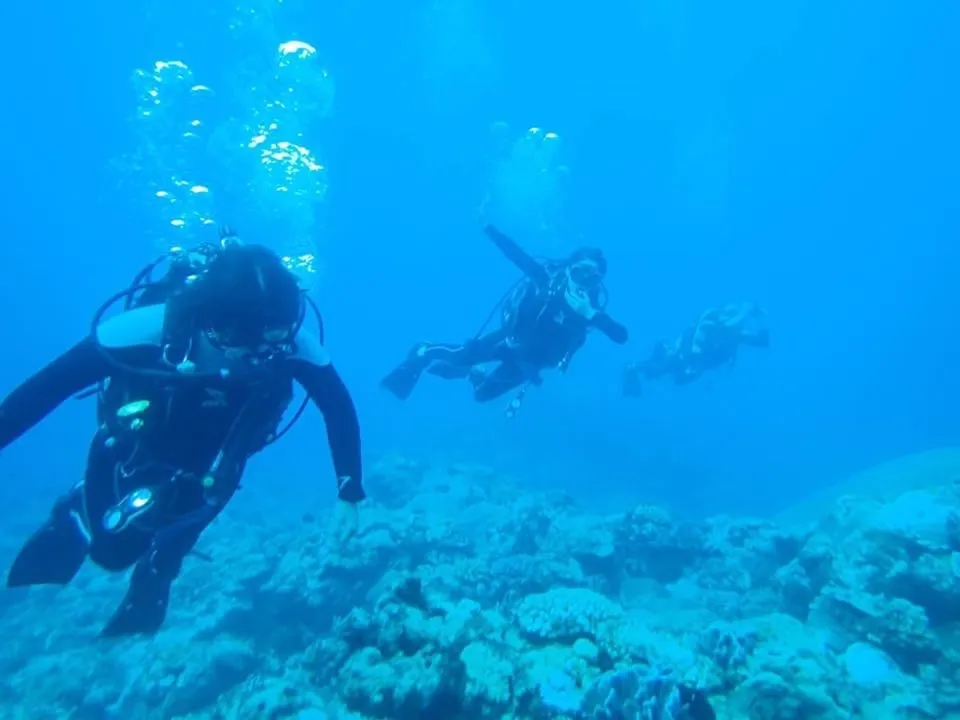
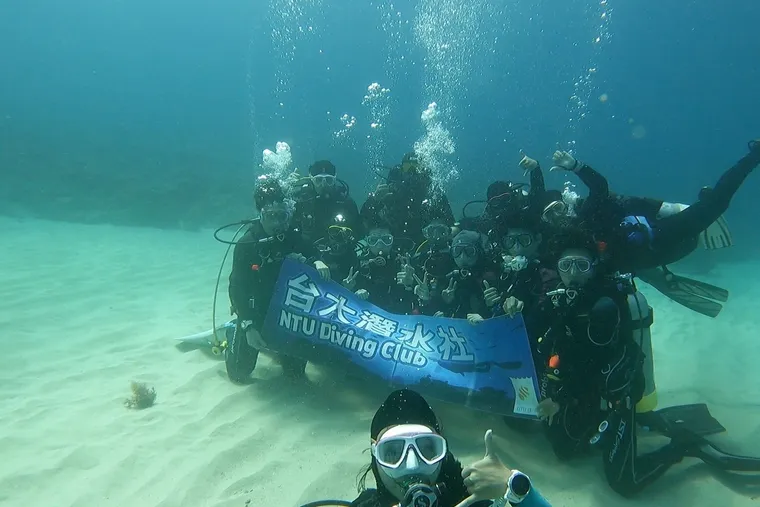
I remember this was the summer right after passing my OW — a diving trip to Green Island.
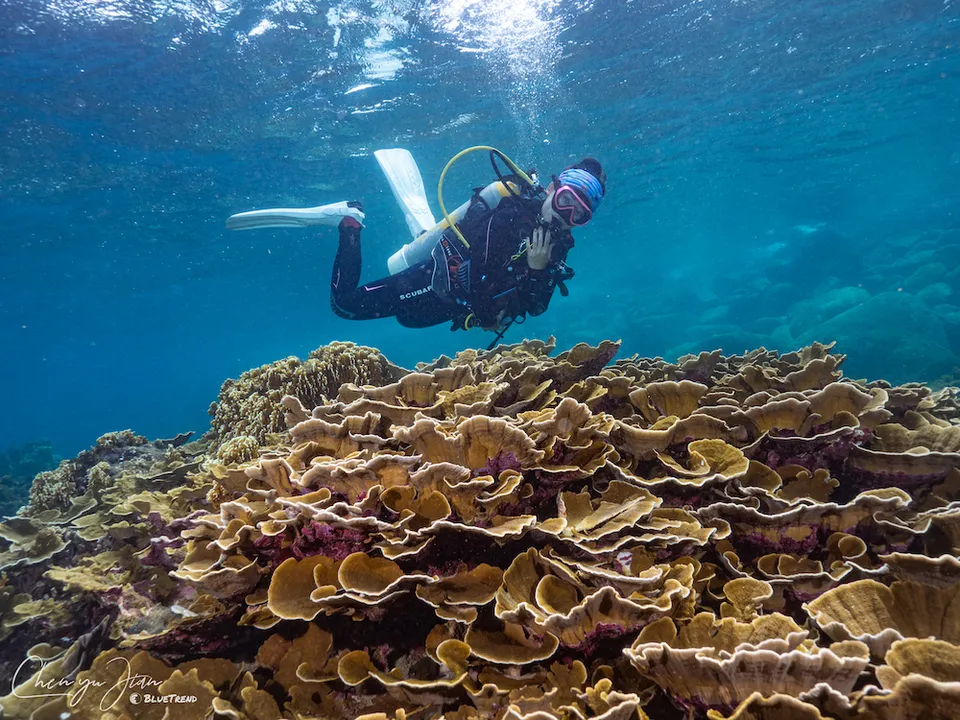
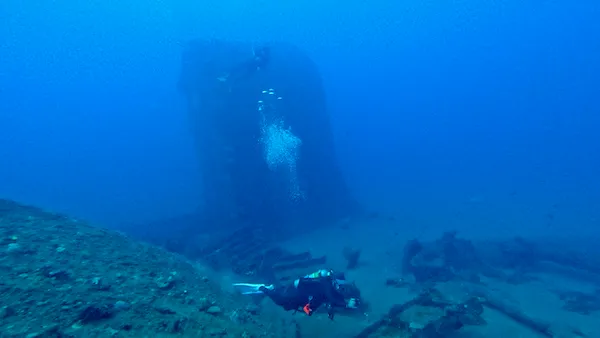
The coral area at Outlet, Kenting.
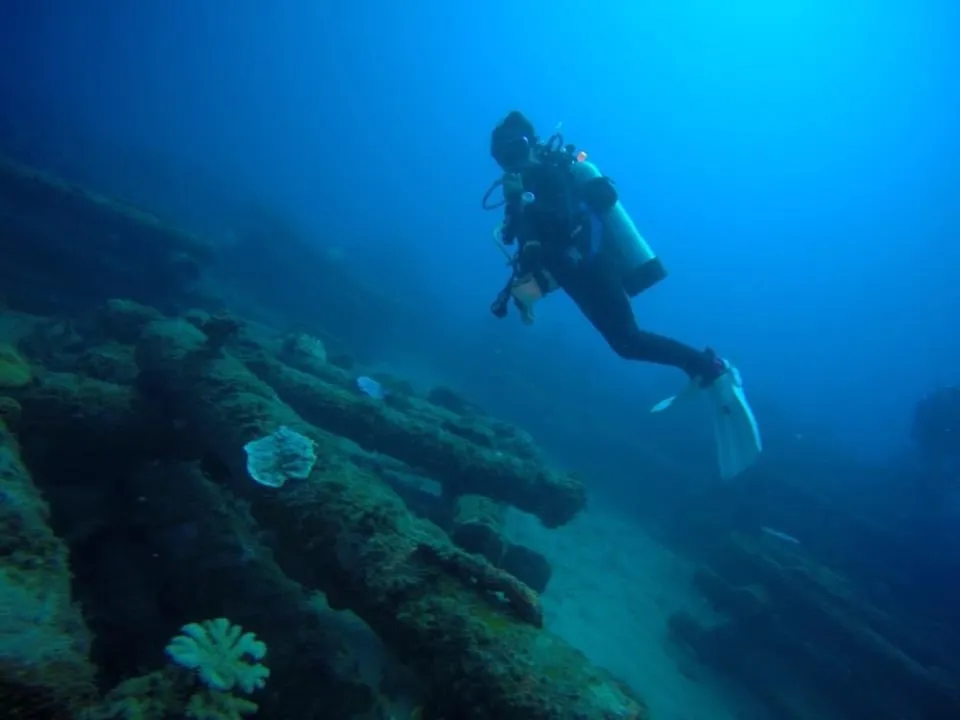
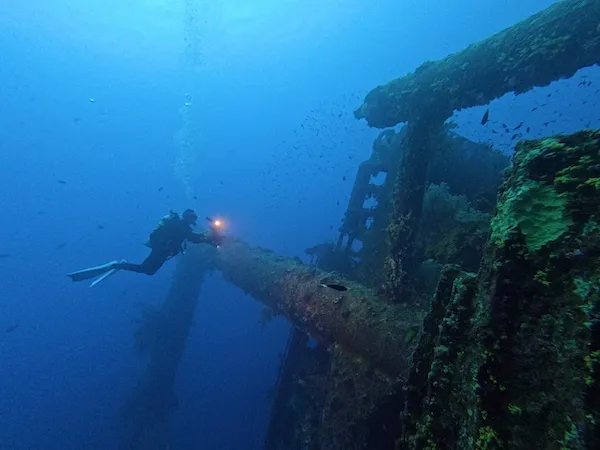
The Telephone Pole Reef at Xiaoliuqiu.
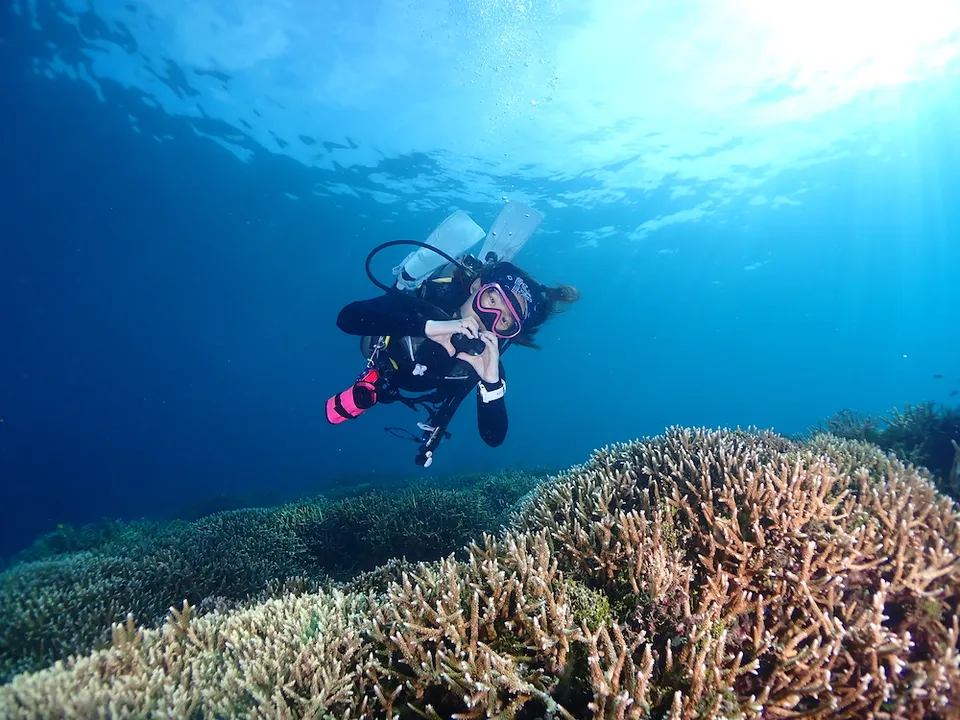
Semporna, Malaysia.
Why Sign Up for a Divemaster Course?
After 13 years of diving, summers always meant heading out with my family for a dive. As time passed and student life gave way to working life, I started saving up to dive around the world. Along the way, I met all kinds of people from different places — and more than a few mistook me for an instructor when they saw how comfortable I was in the water. That's when a little voice in my head spoke up: Maybe it would be worth going further, pushing myself to learn more professional knowledge.
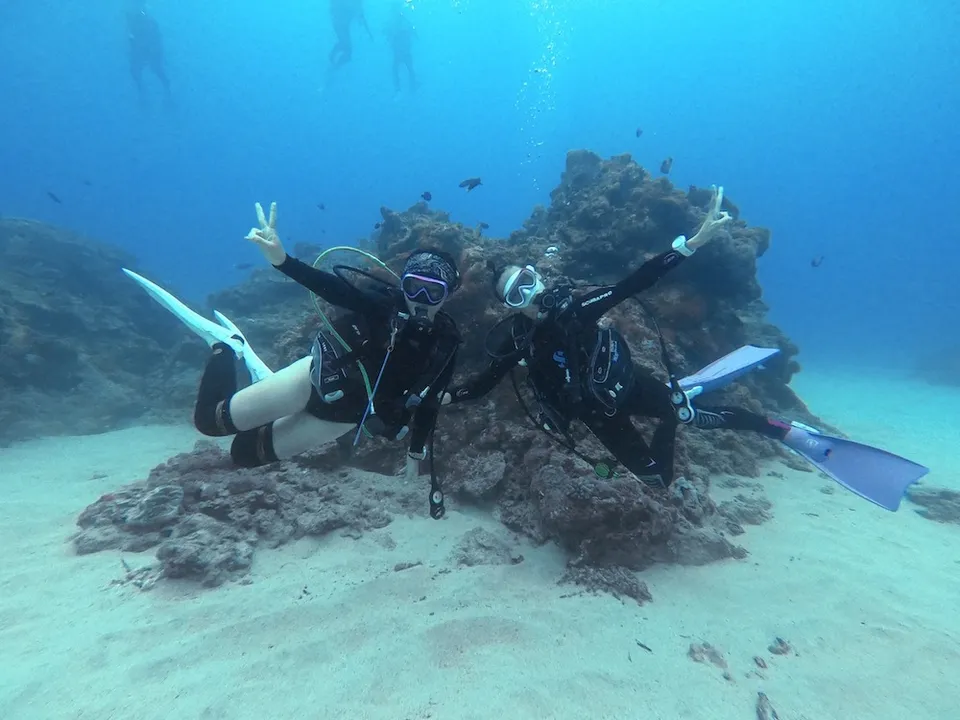
When I was young, it was Mom who took us diving — now it's our turn to lead the way!
The one thing that truly made up my mind, though, was my mom. That's right — since she was the one who introduced me to diving as a kid, she and my younger sister have always been my dive buddies. Every time we dove, my mom would still get nervous, and I'd have to keep reassuring her and building up her confidence, letting her know that whatever happened, I was right there. And that little voice in my head piped up again: "If I've already completed the Divemaster course and more advanced training, I'll be even better equipped to take Mom diving and ensure her safety."
So in the autumn of 2023, I mapped out my annual leave and days off, and decided to head to Bohol in the Philippines to take my Divemaster course!


Why Choose Bohol, Philippines?
Location
Choosing a location didn't actually take me long at all. From the start, I knew I wanted to take the course somewhere in Southeast Asia — everyone knows diving there is more affordable — so rather than spending roughly the same money and time as I would at home, I figured I might as well go abroad, experience a completely different environment, and dive in conditions unlike anything I'd find in Taiwan. After a process of elimination, I settled on Panglao Island in the Philippines (on the southwest side of Bohol) — the closest base to Balicasag, a UNESCO-recognized marine protected area!
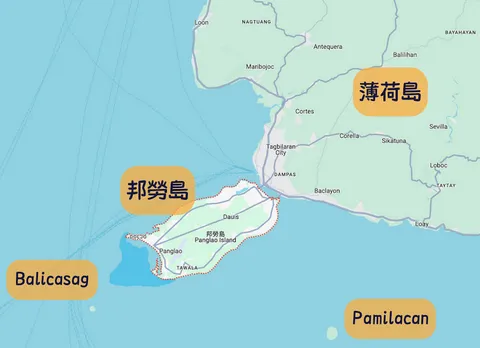
Dive Shop
There were even more choices when it came to picking a dive shop — Panglao Island alone has around 25 or more. After a lot of browsing and deliberation, I landed on the PADI (certification agency) Five-Star Instructor Development Center, "海島瘋 (EnjoyIslands)." There were three reasons that ultimately led me to choose EnjoyIslands:
-
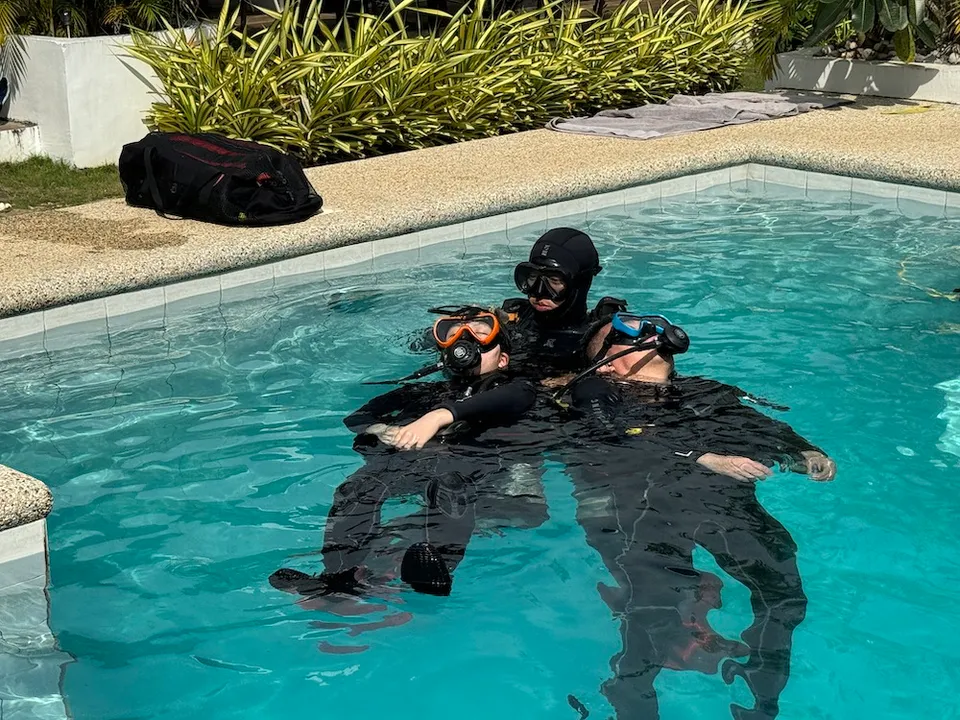
The dive shop has its own swimming pool, so I could practice skills repeatedly in calm, controlled water.
-
The dive shop also has its own accommodation — meals and lodging all taken care of in one place, with the beach just a 2-minute walk away.
-
Most importantly, EnjoyIslands is a PADI (certification agency) Five-Star Instructor Development Center, meaning it could provide me with a higher level of professional knowledge and training.
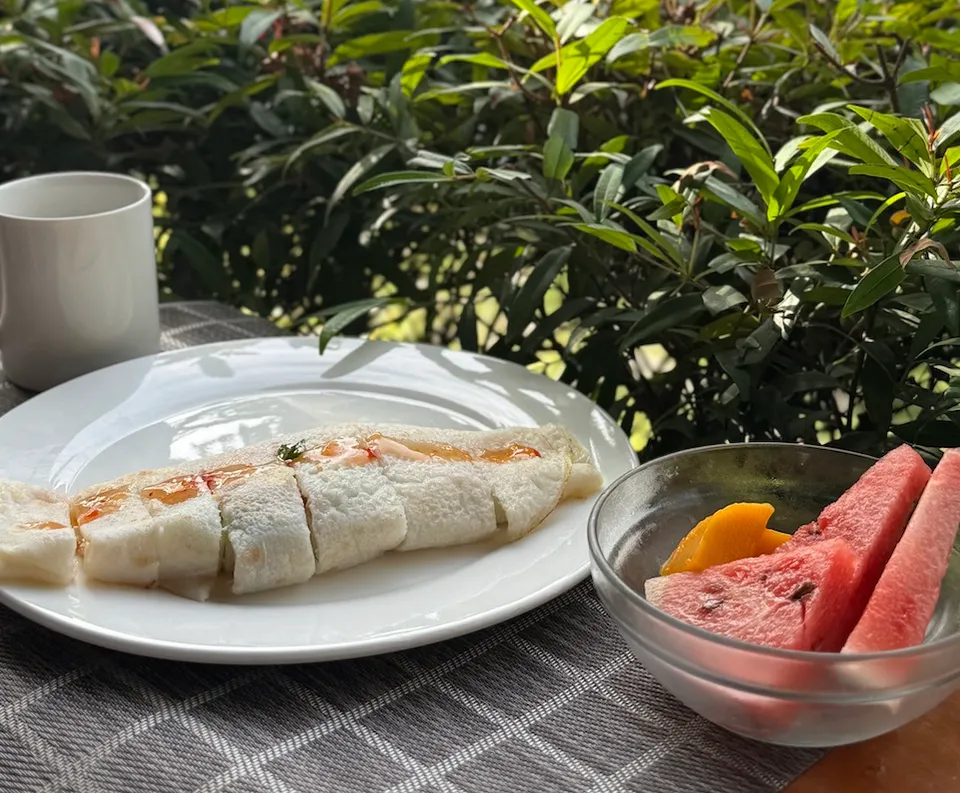
Breakfast was amazing — something different every single day!
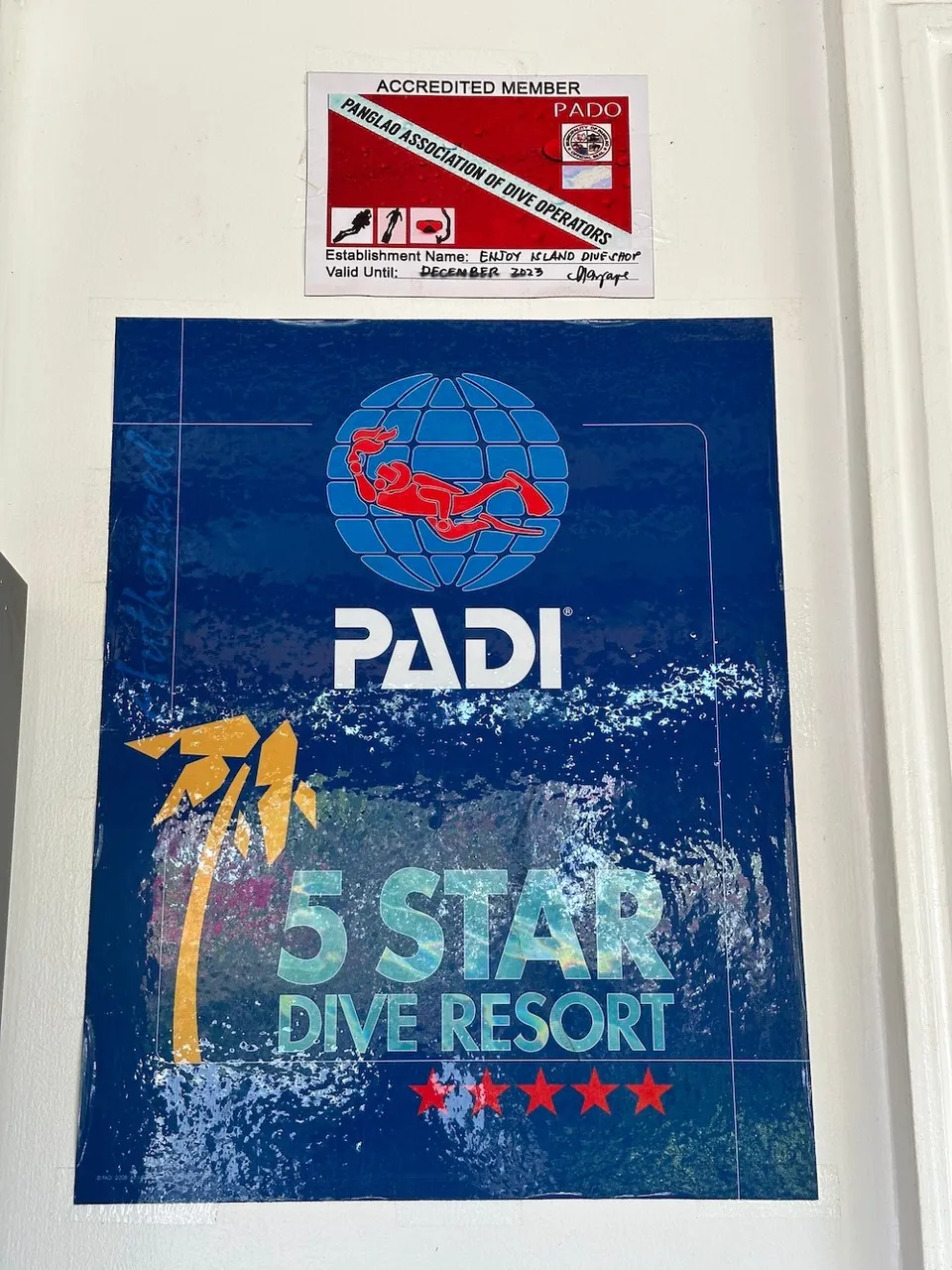
EnjoyIslands — a PADI (certification agency) 5-Star Instructor Development Center.
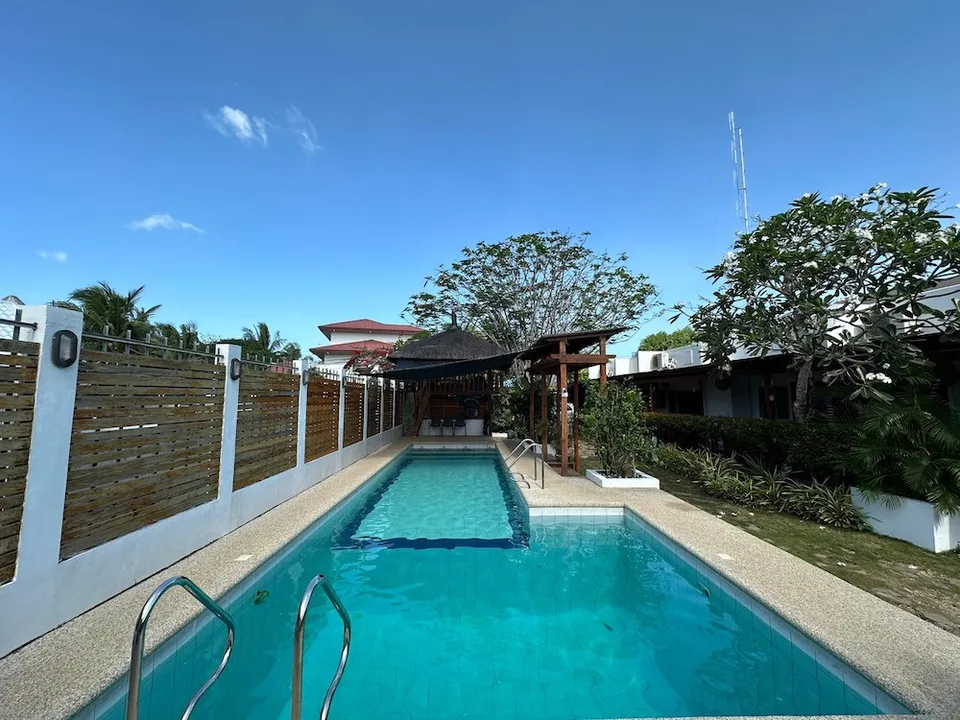
The pool has both a shallow end and a deep end.
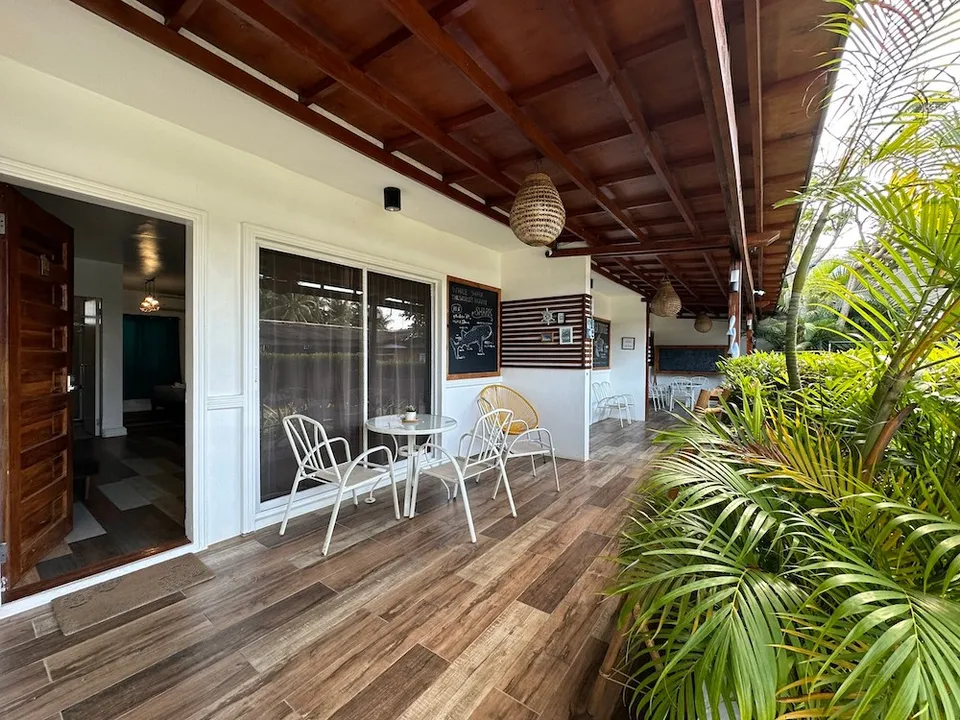
There are also tables and chairs outside the rooms — a great spot to sit and read.
Pre-Course Preparation for the Divemaster Course
In recent years, many diving agencies — in response to environmental concerns — have shifted their heavy academic materials to online formats (E-Learning), allowing students to study in advance before arriving. Any questions can then be addressed in person, saving everyone time. The Divemaster course is no exception: once I had enrolled and paid, I immediately received the E-Learning materials along with a set of 24 skills demonstration videos from my Course Director, with instructions to complete all the questions and run through all 24 skills before my course began.
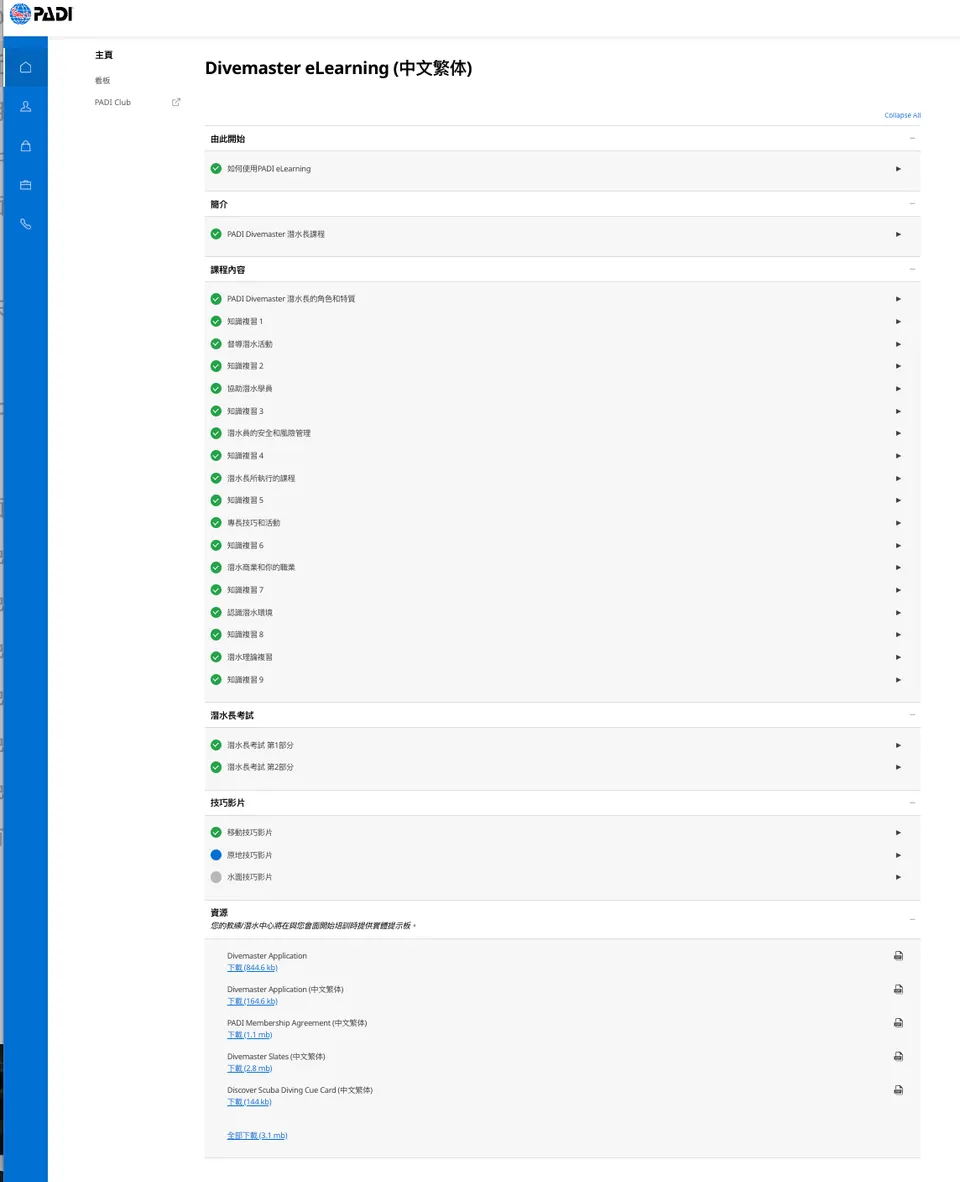
Each chapter also includes a post-lesson review — all of which must be completed before you can take the final quiz.
*I genuinely recommend completing the E-Learning before your course starts. Not only does it save time (you'll be exhausted from daily training and dives — the last thing you want is late-night cramming), it also helps you identify weaker areas so you can focus your efforts accordingly.
Divemaster Course Content
Knowledge Development
The academic content of the Divemaster course is essentially a detailed, advanced version of the Open Water curriculum, with the addition of PADI (certification agency) Divemaster responsibilities, safety and risk management, and more. It is broadly divided into 9 chapters:
-
The Role and Character of a PADI (certification agency) Divemaster / Your Role / Responsibilities / Professionalism.
-
Supervising Dive Activities / Dive Planning / Diver Behavior / Diver Supervision / Dive Briefings / Problem Management.
-
Assisting Student Divers / The Role of an Assistant / Control, Supervision, and Logistics / Demonstrating Skills / Problem Solving.
-
Diver Safety and Risk Management / Definitions / Methods / Tools / PADI (certification agency) Quality Management.
-
Programs Conducted by Divemasters / General Standards / Scuba Review / Discover Local Diving / Skin Diver Course / Discover Scuba Diving / Divemaster-Conducted Specialty Diver Courses.
-
Specialty Skills and Activities / Floats, Buoys, and Signaling Devices / Mapping / Search and Recovery / Snorkeling / Dive Activities.
-
The Dive Business and Your Career / Dive Business Focus / Your Career Focus / Your PADI (certification agency) Membership.
-
Understanding the Aquatic Environment / Why Environmental Care Matters / The Aquatic World: Overview, Marine Life, Physical Characteristics / Project AWARE.
-
Dive Theory Review / Theoretical Knowledge / Heat, Light, Sound, and Water / Pressure, Gas Volume, Density, and Temperature Relationships / Decompression Theory, and more.
Of course, once the academic portion is complete, there's a final exam — a score of 75 or above is a pass!
Practical Skills
- 24 Skills: You may remember that when you took your Open Water course, your instructor taught you a whole range of skills — mask removal and replacement, equipment don and doff, neutral buoyancy control, and so on. When I first watched the videos, I honestly didn't think it looked that difficult, since I could already do all of it myself. But after practicing, I quickly realized that being able to perform a skill and being able to teach it to someone else are two completely different things. How do you show a total non-diver exactly what you're doing underwater? Your movements need to be large, your pace needs to be slow, the steps need to be as simple as possible, and you need to constantly check that the student can see you clearly. There's no secret shortcut — it just takes practice, practice, and more practice.
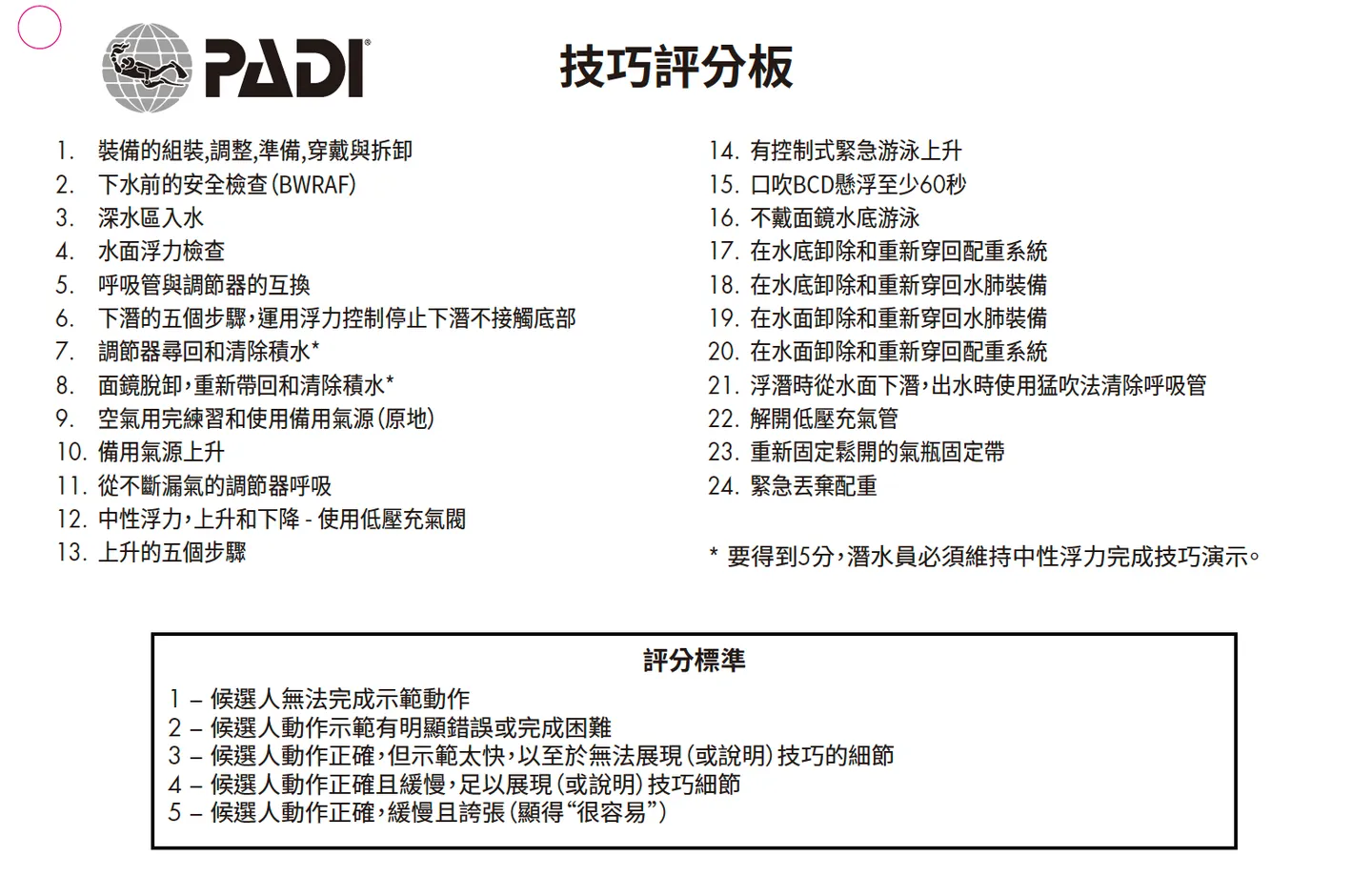
All dive skills are demonstrated and scored (1–5 points). Each skill must receive at least 3 points, the total must be at least 82 points, and at least one in-water skill must receive a perfect 5.
-
Swim Tests: If you're a competent swimmer, there's nothing to worry about here. The test is divided into four scenarios (scored by speed, 1–5 points, with a minimum total of 15 points):
-
400 m surface swim (no fins)
-
15-minute tread water
-
800 m swim with fins and mask
-
100 m tow of an unresponsive diver
-
-
Diver Rescue: Anyone who has been through a Rescue Diver course will tell you it's unforgettable — because it is absolutely exhausting. In open water, you must tow an unresponsive diver back to the boat, providing rescue breaths every five seconds throughout the entire process, and then remove both their equipment and your own once back at the surface. Passing this assessment should earn you the right to sleep for three days straight.
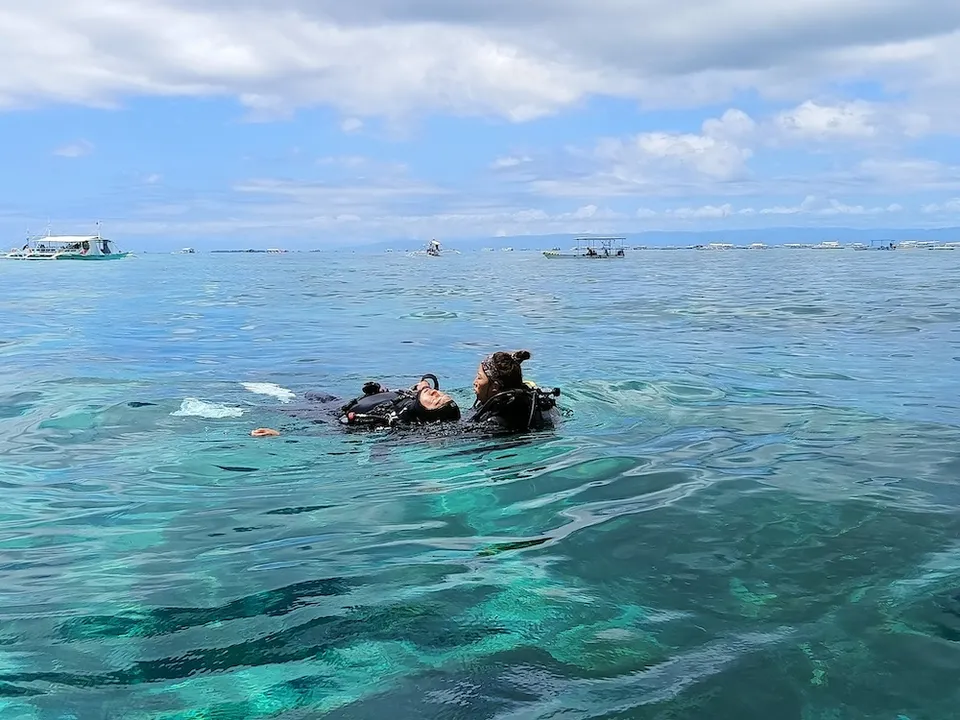
Towing an unresponsive diver back to the boat in open ocean — utterly exhausting!
- Internship / Course Assistance: The most important component of the Divemaster course is the hands-on internship. From Open Water to Advanced courses, you need to be thoroughly familiar with the curriculum, provide assistance to the instructor at the right moments, deliver pre-dive briefings, handle post-dive logistics, and act as a solid bridge between students and the instructor — all of it genuinely matters. On top of that, there's Discover Scuba Diving and Fun Dives: how to lead a group, how to brief and explain, how to navigate — all of this is built up through repeated experience, each session making the next one run a little more smoothly.
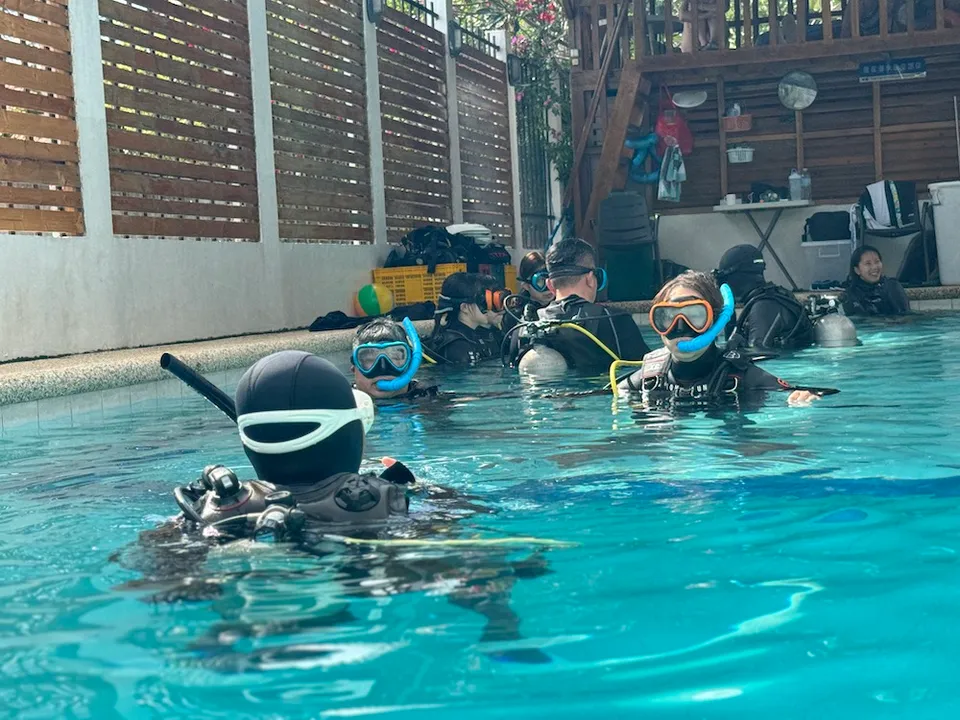
During internship, whenever the instructor needs assistance, you step in immediately.
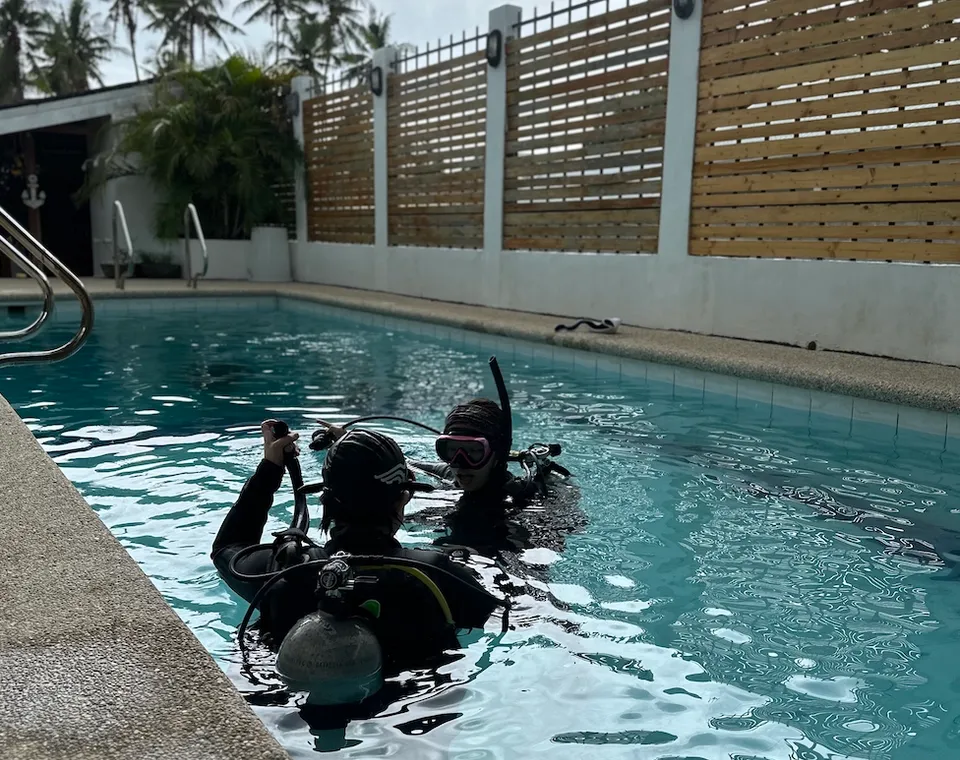
Students who are less confident with certain skills get individual focused practice, so they don't slow down the pace of the whole class.
Want to know more about the highs and lows, the sweat and the tears of the Divemaster course? Stay tuned for Part 2 — coming soon!
Further Reading: