Contents(9)
- How Did Chao Tien-lin Help Push for Better Diving Insurance, and What Challenges Did He Face?
- Facilitating Cross-Ministry and Cross-Agency Coordination
- Tackling the Key Points of Contention Head-On
- Ongoing Refinement and Adjustment
- The Next Legislative Step: Chao Tien-lin Recommends Including Freediving in the Regulatory Framework
- Freediving vs. Snorkeling: Moving Toward a Clear Legal Distinction
- Chao Tien-lin's Dive into the World of Diving Began with an Invitation from Palau
- What Diving Has Given Chao Tien-lin
- Learning from Palau's Approach to the Ocean
In the past, regulations only required "businesses with a commercial registration" to purchase liability insurance for water recreation activities. Many freelance dive instructors were unable to obtain insurance, leaving divers and students without protection — until July 2023, when individual dive instructors were finally able to purchase insurance coverage for their divers and students. Driving this change required solutions at the regulatory level. The BlueTrend editorial team sat down with one of the key advocates behind this reform, Legislator Chao Tien-lin, for an exclusive interview to look behind the scenes at the coordination process, the challenges faced, and what next steps are planned to make the diving industry safer and more complete.
How Did Chao Tien-lin Help Push for Better Diving Insurance, and What Challenges Did He Face?
In February 2023, the Tourism Bureau of the Ministry of Transportation amended the Regulations Governing Water Recreation Activities, stipulating that "those who lead clients in water recreation activities on a for-profit basis shall obtain liability insurance." Legislator Chao Tien-lin views this as a major milestone in improving diving insurance coverage — however, "initially, for ease of administration, only 'businesses with a commercial registration' were deemed eligible to obtain insurance, which didn't quite align with the reality of Taiwan's diving industry."
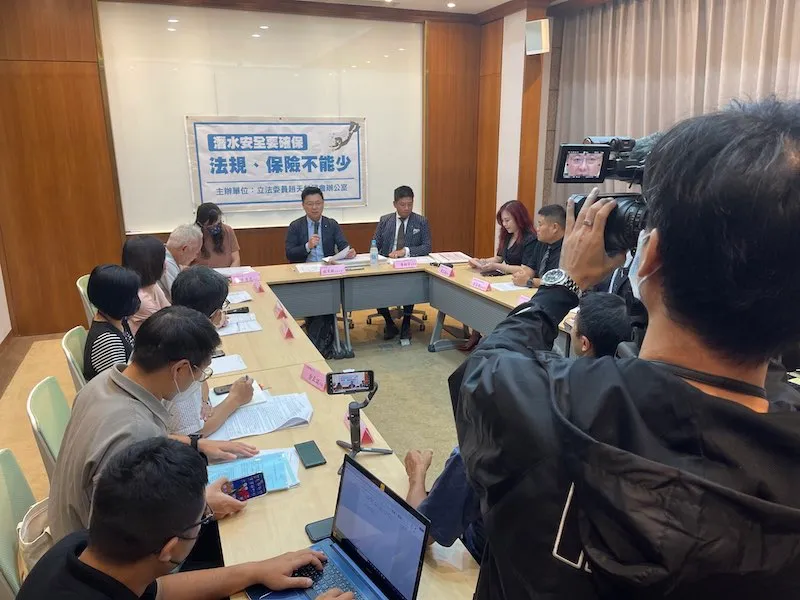
On August 2, 2023, at the Legislative Yuan, Legislator Chao Tien-lin addressed the topic of legislative amendments.
Take scuba diving as an example: more than half of all instructors are freelancers without a commercial registration. Even if they wanted to obtain insurance for their clients, they simply couldn't. Legislator Chao Tien-lin noted that early in the year, the Pingtung County Diving Instructors' Occupational Union had filed a petition stating that "more than half of the country's dive instructors are practicing without any insurance."
So how did Legislator Chao and his parliamentary office team go about pushing for individual instructors to be covered? Read on for the BlueTrend editorial team's highlights from the interview.
Facilitating Cross-Ministry and Cross-Agency Coordination
Legislator Chao Tien-lin:
-
First, we invited the competent authority, the Tourism Bureau of the Ministry of Transportation, to the table;
-
Second, we brought in the Insurance Bureau of the Financial Supervisory Commission to confirm whether such products could be sold;
-
Third, we also invited the Non-Life Insurance Association to confirm whether their member companies were willing to offer the relevant products.
Tackling the Key Points of Contention Head-On
Legislator Chao Tien-lin:
The first point of contention was: "Should a commercial registration be required?" In practice, a registered dive shop might run several groups of clients in a single day, and when the number of clients exceeds the shop's capacity, it brings in freelance instructors to assist — but those freelance instructors couldn't be insured. This created a great deal of disorder. Besides, it's unrealistic to expect individual instructors to go through the process of establishing a commercial registration just to take on dive clients.
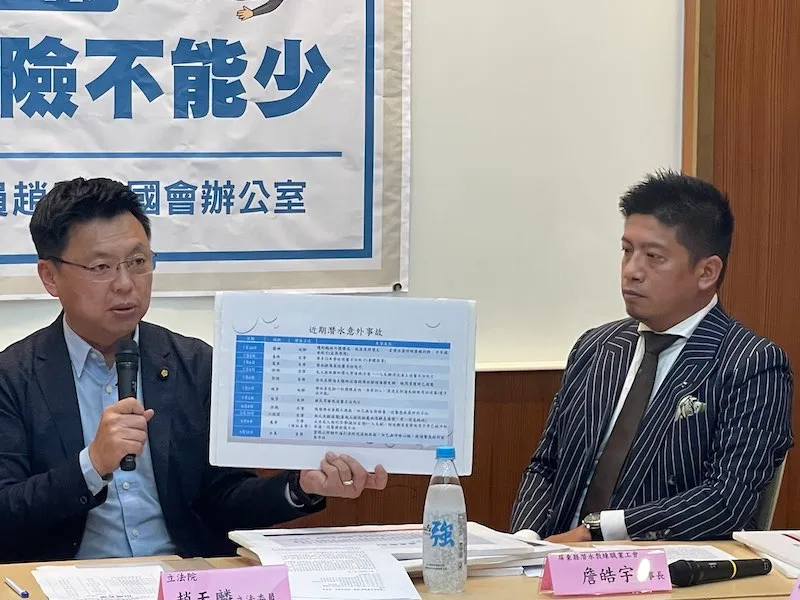
Insurance and commercial registration are two separate matters — businesses must carry insurance and comply with tax reporting requirements.
In order to support and encourage the sport of diving, and given that the industry largely operates on a "freelance instructor" business model, we wanted to bring this model into a formal regulatory framework and ensure protection for both the operators (individual instructors) and the consumers working within it. The Tourism Bureau subsequently issued a clear official interpretation, adjusting the standard so that "any activity of a for-profit nature" qualifies. This provided the Insurance Bureau with a basis to recognise individual instructors as eligible policyholders.
Ongoing Refinement and Adjustment
Legislator Chao Tien-lin:
Some insurers still have reservations about whether an "individual instructor" constitutes a clearly identifiable party to a contract. In response, the Tourism Bureau has also planned to register and manage individual instructors and provide guidance — a process that is still ongoing.
More importantly, we need to help insurance companies understand that a considerable number of people engage in scuba diving domestically, and that the business model, government policy framework, and legal interpretations are all in place. Regardless of whether a scuba diving operator holds a commercial registration, insurance coverage should be available.
We will also remind individual instructors that once they reach a certain level of revenue, they are legally required to register as a business.
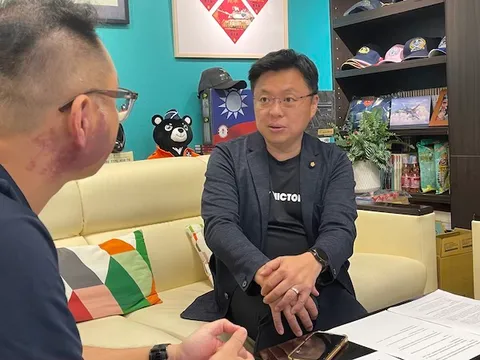
The legislator noted: "If each person puts in a little more effort, a great deal of progress can be made."


The Next Legislative Step: Chao Tien-lin Recommends Including Freediving in the Regulatory Framework
Now that the relevant regulations have been strengthened and both dive shops and instructors can obtain insurance, Legislator Chao Tien-lin and his parliamentary office team have turned their attention to freediving — a discipline whose participant numbers have been steadily growing. Several accidents occurred this year alone, yet freediving was nowhere to be found in the specific provisions of the Regulations Governing Water Recreation Activities.
Freediving vs. Snorkeling: Moving Toward a Clear Legal Distinction
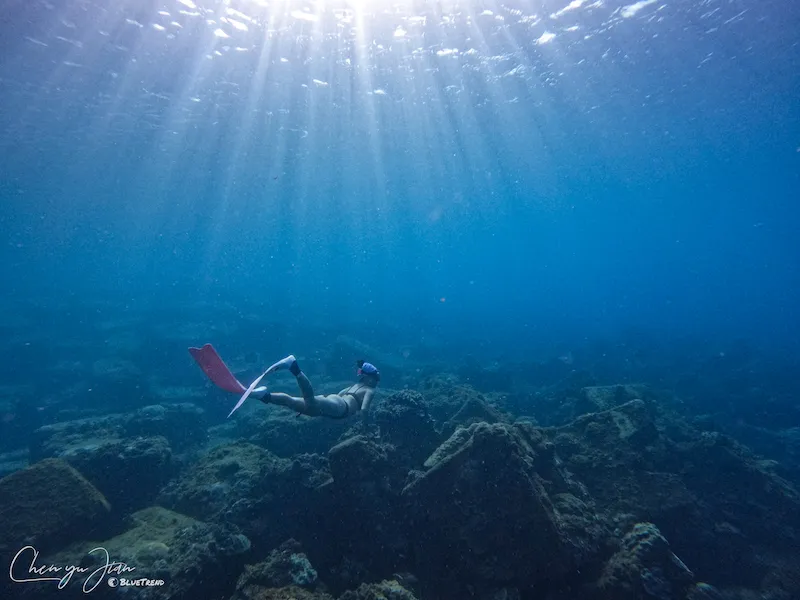
A legal definition for freediving has yet to be included in the Regulations Governing Water Recreation Activities. photo credit: 簡晨宇
Under Chapter 2, Section 2 of the Regulations Governing Water Recreation Activities — which details actual operational requirements — diving activities are defined as "activities involving snorkeling or scuba diving in the water." Freediving is not included, meaning it falls outside the regulatory framework entirely.
Legislator Chao Tien-lin mentioned that the Tourism Bureau is planning a fundamental amendment to the legislation, directly establishing a legal definition for "freediving." The process has already entered the public hearing stage, with deliberations covering how to distinguish between snorkeling and freediving. The legislator revealed that depth is likely to serve as the dividing criterion — activities beyond a certain depth would be classified as freediving — and he also advocates for the introduction of a dive guide requirement. He hopes the amendment can be completed by year-end, bringing scuba diving, freediving, and snorkeling each under their own detailed provisions within the Regulations Governing Water Recreation Activities.
Chao Tien-lin's Dive into the World of Diving Began with an Invitation from Palau
Legislator Chao Tien-lin, who has been championing these legislative reforms, is himself a novice diver. So how did he come to take up diving? It all started with a warm invitation from Palau's President Surangel Whipps Jr. An avid marathon runner, Chao had previously visited Palau for marathon diplomacy, during which President Whipps invited him to return someday and explore the underwater world. To honour that invitation — and to better understand Taiwan's oceans and the challenges facing the diving industry — Legislator Chao took up diving, bringing his eldest son along to dive into the sea together.
What Diving Has Given Chao Tien-lin
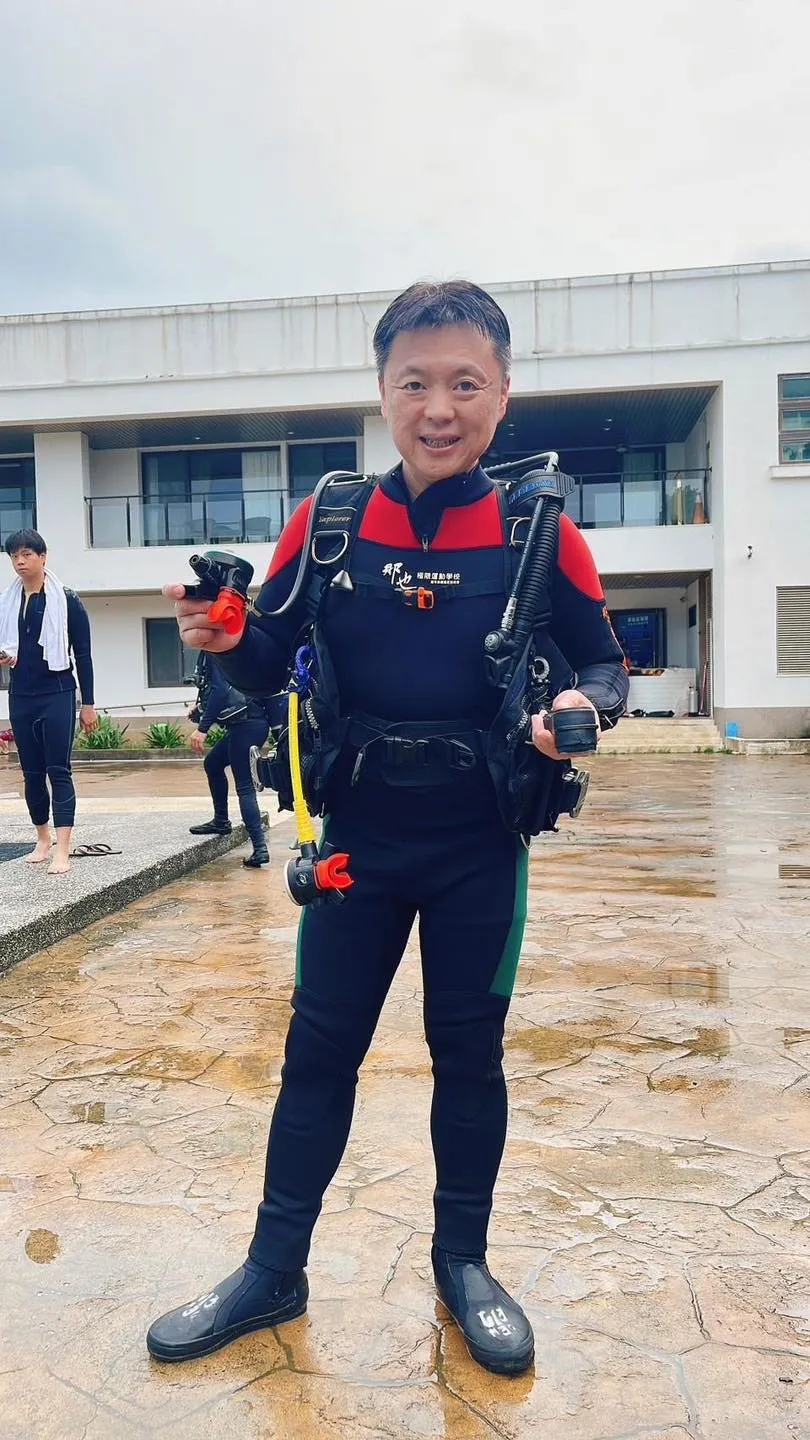
After learning to dive, the legislator fell in love with the ocean. Photo source: Chao Tien-lin Facebook.
Descending to just over ten meters, the marine life and ecosystems he encountered were enough to leave Legislator Chao deeply awestruck. He said: "This was a world I had never experienced before. It's filled with countless living creatures, and it made me feel that we truly need to approach the ocean with much greater humility."
"The greatest reward was my teenage son — he fell in love with diving and came back asking me again and again, 'When are we going diving together? When can I learn the advanced course?' It has definitely brought us closer as father and son." Chao also laughed, saying his son picked it up faster than he did and moves with much more agility in the water.
Taking up diving not only gave him common ground with his eldest son, it also added a new tool to his diplomatic repertoire. "It also connects with my region — our mayor is a mayor who loves diving (Kaohsiung Mayor Chen Chi-mai). As his partner, in addition to conducting diplomacy together, I very much hope to have the opportunity to dive with him someday."
Learning from Palau's Approach to the Ocean
Legislator Chao Tien-lin visited Palau again this year and was once again deeply impressed by the country's "ocean-embracing" culture — including the fact that Palau's president requires every ambassador stationed there to learn to dive. "They are very confident in their identity as an ocean nation. 'Don't be afraid of the ocean' — that is something we need to learn from them."
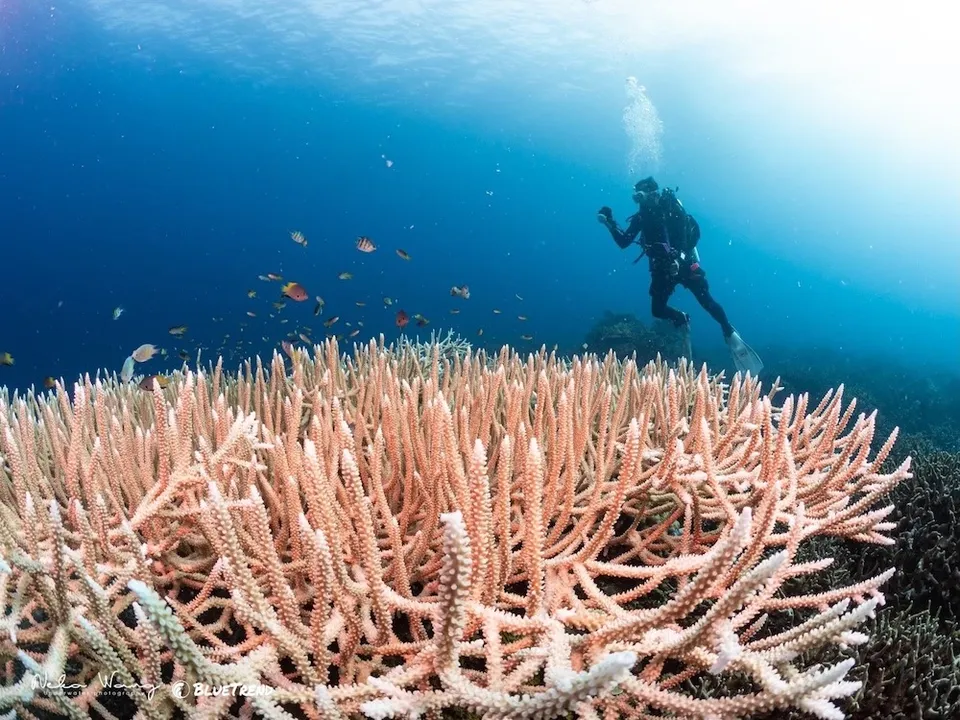
Palau's marine ecosystem speaks for itself. photo credit: Neko Wang.
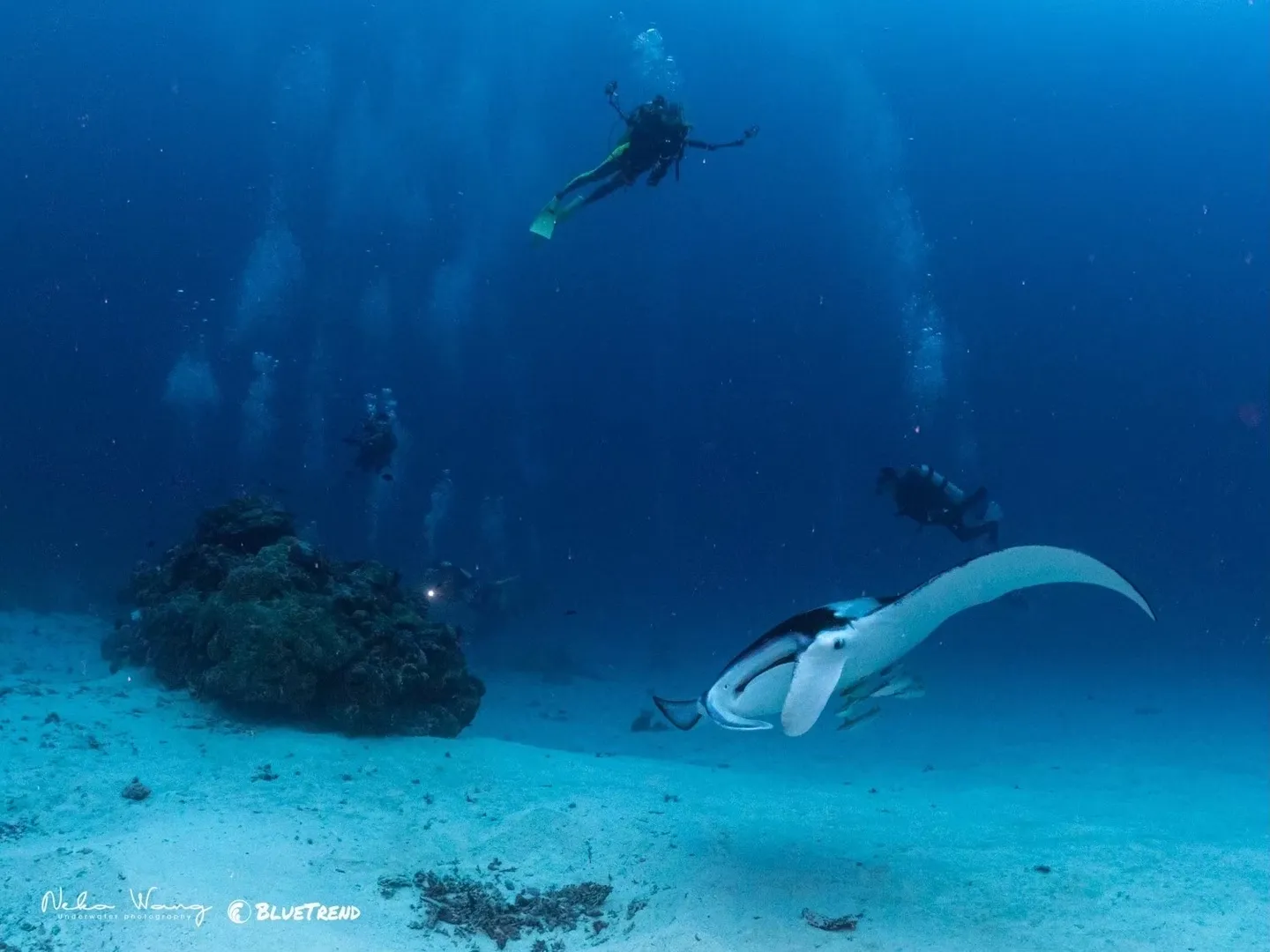
Manta rays are a frequent sight here. photo credit: Neko Wang.
Beyond that, Legislator Chao was struck by the high degree to which marine conservation is actually practiced in Palau. "The entire country of Palau — its operators and individual instructors alike — are all meticulously careful about which activities are permitted in which waters." He observed that local dive operators and instructors in Palau effectively serve as both conservation officers and tourism ambassadors.
Reflecting on Taiwan through the lens of the Palau experience, Legislator Chao noted that Taiwan has a tendency to follow trends in a rush — when mermaid swimming and freediving became popular activities, there were initial economic benefits, but "people generally lacked a comprehensive mindset for water conservation. It became a race to undercut competitors, casting a shadow over 'water access,' and making people question whether opening up access was actually a good thing."
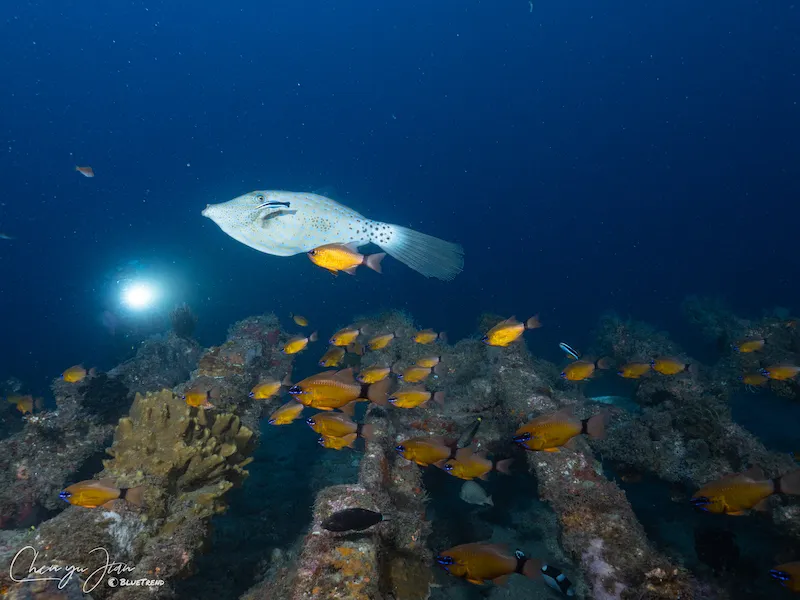
Taiwan is blessed with rich marine resources — resources all the more worth treasuring. photo credit: 簡晨宇, photographed at Kenting Hejie.
On the subject of the ocean, Legislator Chao summed up two key points: "First, don't be afraid of it. Second, don't plunder it." He advocates for a more holistic view of Taiwan's seas, saying: "We can start from diving — conducting an island-wide inventory of underwater resources in every part of Taiwan, and deepening our engagement with marine conservation as a whole. This includes turning education about which waters are open to activities and which are not into part of the public education curriculum, and conducting an inventory of underwater ecological resources to promote Taiwan to the world."
Through the experience of reforming diving insurance and related regulations, Legislator Chao Tien-lin believes that this successful process of communication has given all stakeholders a chance to revisit the meaning of the ocean to the people of Taiwan.
"We have begun to re-examine how we can make use of our marine resources, and what regulatory gaps need to be addressed. That is the meaning I see in starting from 'diving.' Diving is a small thing; developing a culture of being an ocean nation is a very big thing."
This interview gave the BlueTrend editorial team a much deeper appreciation of just how difficult it is to advance a single policy — with countless rounds of coordination and communication happening behind the scenes across many different agencies. We also look forward to seeing more legislators engage with the marine industry in the future, working together to make the relevant regulations more comprehensive and robust.
Further Reading: