Contents(4)
- Conservation Efforts Bear Fruit: Marine Park Authority Has Already Assessed Ecotourism Plans for Dongsha Island
- Developing Ecotourism Requires Improving Island Infrastructure and Establishing Comprehensive Regulations
- Issue Clarification: Focusing on Supporting Measures for Dongsha Island Ecotourism
- Breakout Groups Recommend Strengthening Marine Conservation Capacity
The Editor says: I've long heard from many veterans that the underwater ecosystem of Dongsha Atoll National Park is truly remarkable — lemon shark pups can be spotted schooling right at the edge of seagrass beds in knee-deep water, and the coral reef ecosystem below the surface is impressively intact. In 2018, the Ocean Affairs Council tabled the proposal "Should Dongsha Island be opened to tourism?" at an Open Government Contact Person working meeting, inviting relevant stakeholders to discuss whether Dongsha could, beyond its national defense role, be transformed into an opportunity to develop the marine recreation industry. Many thanks to PDIS's Lin Yu-Tsang for his comprehensive record of the key meeting points — we hope this can carry our aspirations forward, step by step! Original source
The following is reprinted in full from the article written by PDIS's Lin Yu-Tsang. Original source.
On August 6, 2018, the Ocean Affairs Council tabled the proposal "Should Dongsha Island be opened to tourism?" at an Open Government Contact Person working meeting, with the aim of using a collaborative conference to take stock of and understand the current situation on Dongsha Island and assess the feasibility of opening it to ecotourism. Following a vote at the monthly meeting, the proposal became a collaborative conference topic. On October 26, PDIS co-hosted a collaborative conference with the Ocean Affairs Council and the Ministry of the Interior at the Ocean Affairs Council's Kaohsiung office to discuss issues related to opening Dongsha Island to tourism and to further explore possible ecotourism options.
Conservation Efforts Bear Fruit: Marine Park Authority Has Already Assessed Ecotourism Plans for Dongsha Island
When the Executive Yuan approved the "Dongsha Atoll National Park Plan" in 2004, an official directive stipulated that priority should be given to resource restoration, monitoring, and ecological research, and that ecotourism and environmental education activities should only be considered after restoration had reached a certain level of success. The Dongsha Atoll National Park Plan itself also designated the first five years after establishment as a conservation and restoration period, during which the park would not be opened to the general public for tourism, so that resource surveys, environmental restoration, and planning for related facilities and management could take place. After five years, an assessment would be made based on management outcomes as to whether small-scale ecotourism and environmental education activities should be permitted.
Survey and monitoring results in 2017 showed that coral coverage on the outer reef of Dongsha averaged over 50%, with a maximum coverage of 80%, indicating that restoration efforts had achieved considerable results. The Marine National Park Management Office therefore began assessing ecotourism development plans, commissioning Professor Ou Sheng-Rong in both 2009 and 2017 to lead the Dongsha Atoll National Park Ecotourism Development Plan. Future plans include implementing a carrying-capacity management system to develop refined, boutique ecotourism experiences.
The motivations for opening ecotourism include the success of local restoration efforts — ecotourism should be developed to allow more members of the public to understand the importance of local ecological conservation. Furthermore, the increase in local visitors and ecotourism operators following the opening could help deter illegal fishing by foreign vessels crossing into the area. At the same time, attracting more domestic and international visitors through ecotourism could strengthen Taiwan's influence in the South China Sea.
Through our issue mapping process, we found that many tasks — including strengthening local facilities and developing ecotourism plans — were already in the Marine Park Authority's pipeline. How should this collaborative conference address these issues? Through internal discussion, working from a double-diamond framework, we reformulated the HMW Challenge: "How can we, while achieving the goals of conserving the local ecosystem and increasing Taiwan's influence in the South China Sea, allow domestic and international visitors to come to Dongsha and understand the importance of ecological conservation?" We then posited "opening ecotourism" as the solution, focusing the conference discussion on the question of "whether the currently planned ecotourism can meet the goals of ecological conservation or enhancing Taiwan's influence in the South China Sea."
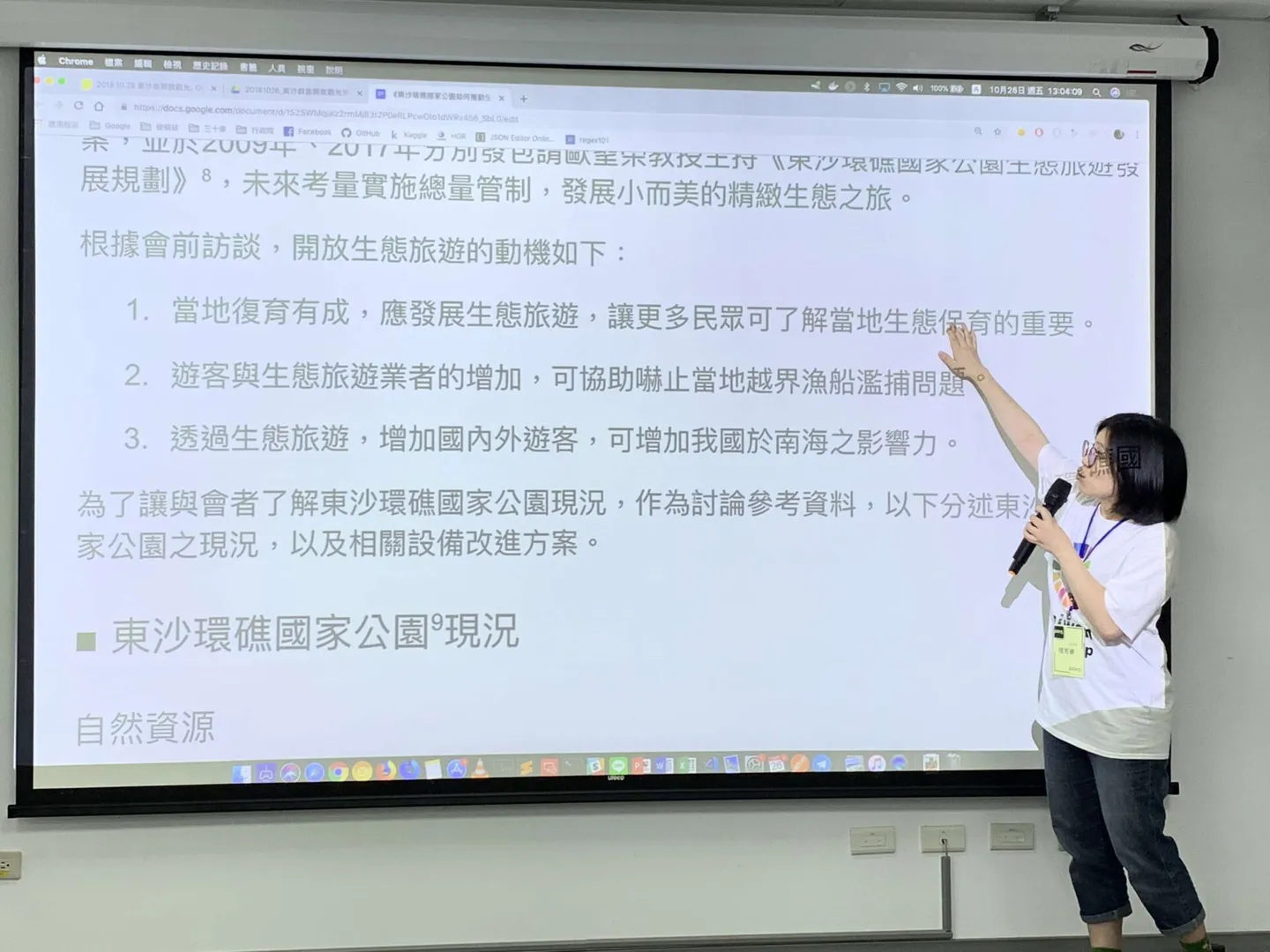
The moderator presents the conference topic


Developing Ecotourism Requires Improving Island Infrastructure and Establishing Comprehensive Regulations
At the outset of the meeting, the Ocean Affairs Council noted that its Minister, Huang Huang-Hsiung, in an interview with the Central News Agency, stated that the ocean — like sunlight, air, and water — is a public good, and that everyone should set aside self-interest to allow public goods to deliver maximum benefit. He expressed hope that plans could be made to allow family members of military and civilian personnel stationed on Dongsha and Nansha to visit the islands, and to open short-term leisure tourism.
The Marine National Park Management Office of the Ministry of the Interior's Construction and Planning Agency noted that Dongsha Island is closer to Hong Kong and Shantou than to Taiwan. In the past, steel-hulled vessels from mainland China have frequently crossed into the area to fish illegally, and yachts from Hong Kong have also come there to dive. Dongsha Island is home to many distinctive species, including coral reef ecosystems, the feathertail stingray (Pastinachus sephen), the lemon shark (Negaprion acutidens), and the fierce swimming crab (Charybdis ferox).
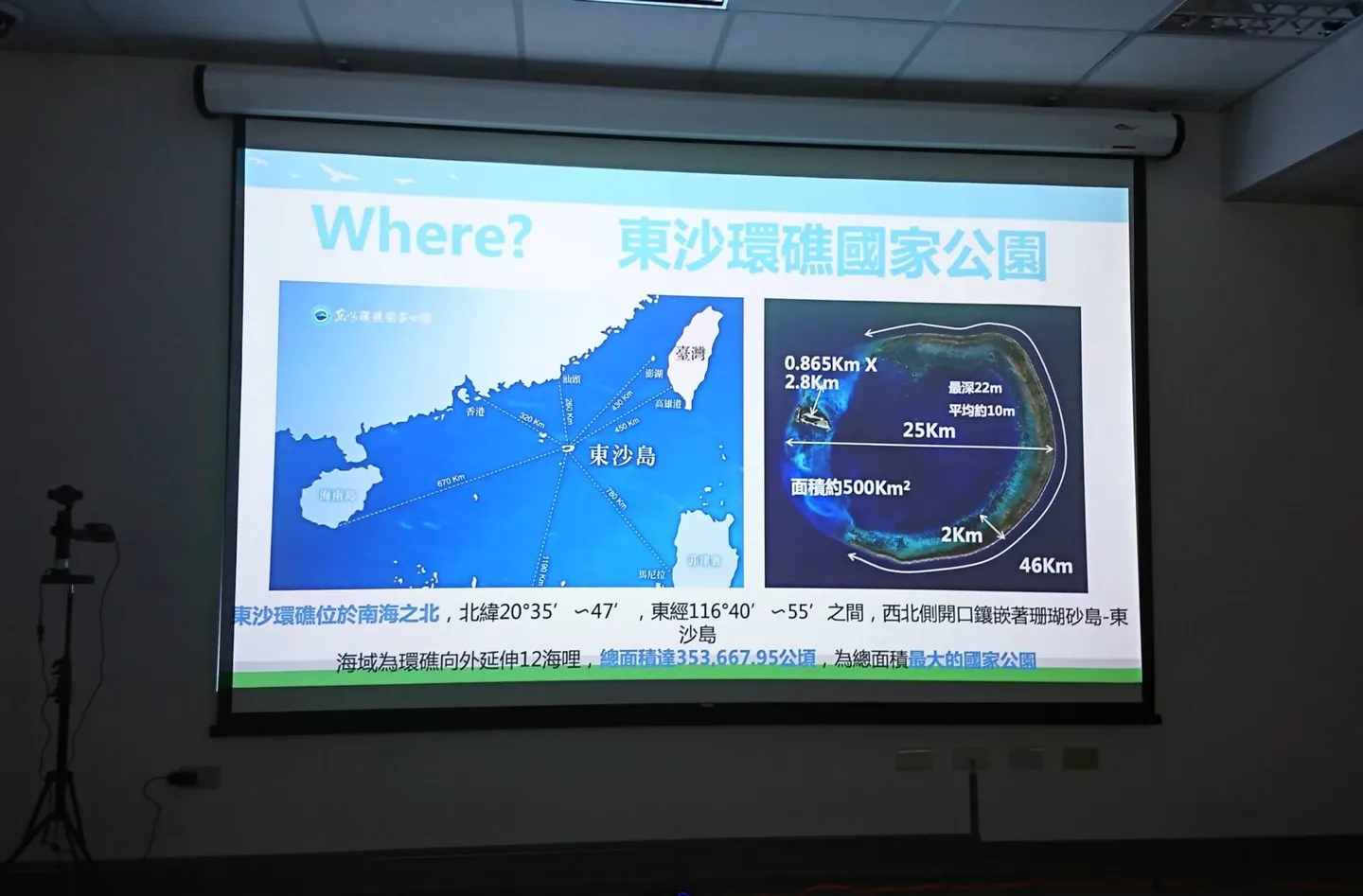
The Marine Park Authority explains the location of Dongsha Island
Currently, Dongsha Island is served by one civilian flight per week, which can carry 70 passengers; military aircraft fly only once a month, primarily for the rotation of garrison troops and staff on and off the island. Food, daily necessities, and equipment parts for the island's personnel must all be transported by resupply vessels. Although resupply ships can reach the outer rim of the atoll, the shallower waters inside the atoll mean that flat-bottomed transfer vessels are still needed to bring cargo to Dongsha Island's pier. The current maximum resupply capacity is 17 containers per voyage, including refrigerated containers. To strengthen local resupply operations, the Coast Guard Administration hopes to dredge a shipping channel, though this may have some impact on local species and is currently under further evaluation.
On the premise of functional compatibility and compliance with ecological carrying capacity, the Marine Park Authority aims to make Dongsha a sustainable ecological island with quality recreation services. The overall development strategy is guided by the principle of low-impact development to improve existing island facilities and enhance the quality of life on the island. In the short term, a professional organization will be commissioned to manage ecotourism operations. Participants will be able to take part in activities such as coral planting, invasive species removal, beach cleanups, environmental education experiences, and stargazing. The goal is to use ecological experience and working holiday models to expand the number of visitors and service capacity in preparation for mid- and long-term development. The short-term phase is set as a pilot period of approximately three years. In the medium term, the plan is to expand from land-based activities outward to aquatic activities, offering more diverse recreation experiences including scuba diving, underwater photography, and boat dives. For the long term, the vision is to develop Dongsha Island into a destination of high-quality recreation and service, with innovative island landscapes and sustainable development — encompassing activities such as international sailing, liveaboard diving, glass-bottom boat experiences, semi-submarines, and beach activities, as well as floating marine platforms, underwater cycling, and underwater walking.
However, developing ecotourism may face a number of challenges. To do so responsibly, carrying-capacity controls, ecotourism performance indicators, and permanent monitoring zones will need to be established. At the same time, clear boundaries between ecological protection zones and recreation zones must be delineated. Once these regulations are in place, a professional contractor will need to be commissioned to implement them, and the island's facilities will require ongoing improvement.
The Taiwan Yacht Industry Association shared its vision for yacht-based ecotourism, suggesting that self-sufficient yachts — which carry their own supplies — would be an ideal vehicle for the operation, recommending a liveaboard-plus-diving model for Dongsha ecotourism.
During the issue-clarification phase, ecological scholars expressed the hope that relevant government documents from this conference would be made publicly available. After discussion, participants recommended that the Marine Park Authority add the label "draft" to the relevant materials before proceeding with their public release.
Issue Clarification: Focusing on Supporting Measures for Dongsha Island Ecotourism
One attending academic shared that there are many patch reefs near Dongsha Island and that, without LiDAR charts of the relevant waters, vessels could easily run aground. Unfortunately, such LiDAR data is classified, and he hoped it could be used effectively to make navigation in the area safer. He also noted that the area is affected by the northeast monsoon, and that May through September is likely the most suitable period for tourism.
Another academic shared that Boracay had previously been closed for six months and reopened with zoned restrictions on many activities after recreational carrying capacity was exceeded. He recommended that Dongsha Island conduct detailed assessments by zone and by season in response to climate change impacts, which would be more conducive to sustainable long-term management.
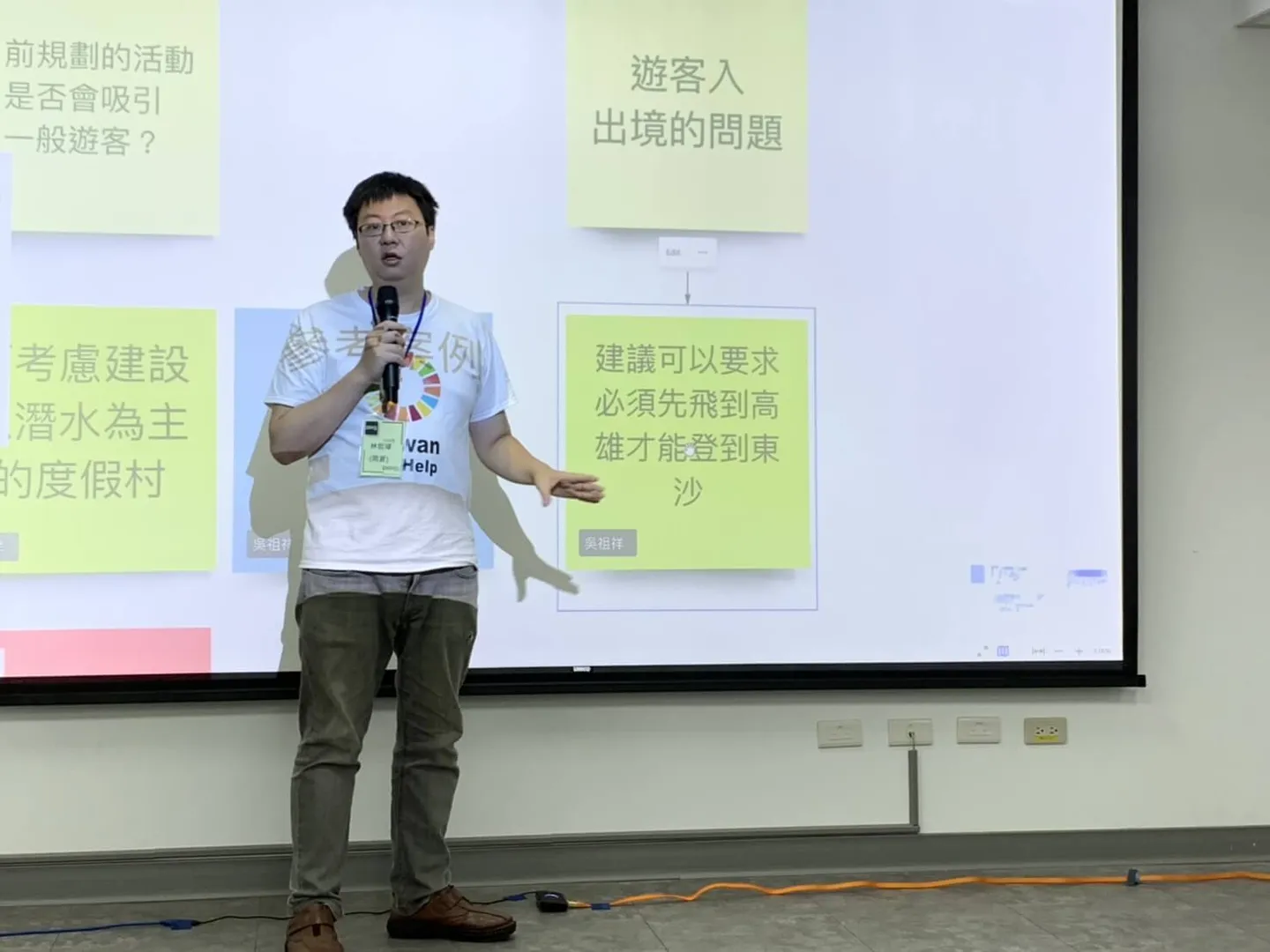
The moderator confirms facts and clarifies points of contention
Regarding liveaboard diving, one participant suggested opening the area to five to ten liveaboard dive vessels operating simultaneously, departing from Kaohsiung Port to pick up diving guests before heading to Dongsha for recreation. The Kaohsiung City Government also expressed support for the Yacht Association's view, saying it would be possible to first conduct a trial voyage to Dongsha for liveaboard diving. The Kaohsiung City Government noted that Dongsha Island is an excellent dive site, and that, given Taiwan's high-quality yacht manufacturing, using yachts for liveaboard diving would also benefit Taiwan's yacht industry. The Kaohsiung City Government proposed establishing a special project centered on Dongsha Island to pilot liveaboard diving there.
The Kaohsiung City Government also shared that Kaohsiung currently has two privately operated yacht marinas that are already running smoothly, with facilities more than adequate for the purpose, and expressed hope that a liveaboard diving trial voyage could be arranged as soon as possible.
Some participants expressed concern about opening the area to ecotourism. One cautioned that if the planners and managers do not understand how ecotourism should be conducted, there would be significant risks — citing, for example, Sipadan Island in Malaysia, which had to be depopulated due to improper wastewater management. Others noted that in many places abroad where diving is permitted, in addition to carrying-capacity controls, fees are also charged. Some national parks collect an ecological tax, which is ring-fenced for local ecological conservation, with vessel access restricted based on tonnage. Ecological experts in attendance noted that some locations engage citizen scientists to conduct regular coral reef health checks, and that sites are closed when the coral reef is found to be in poor condition. One participant also suggested that the "Leave No Trace" concept could be adopted, with professional guides leading ecological tours and interpretation sessions and encouraging visitors to take their rubbish with them when they leave.
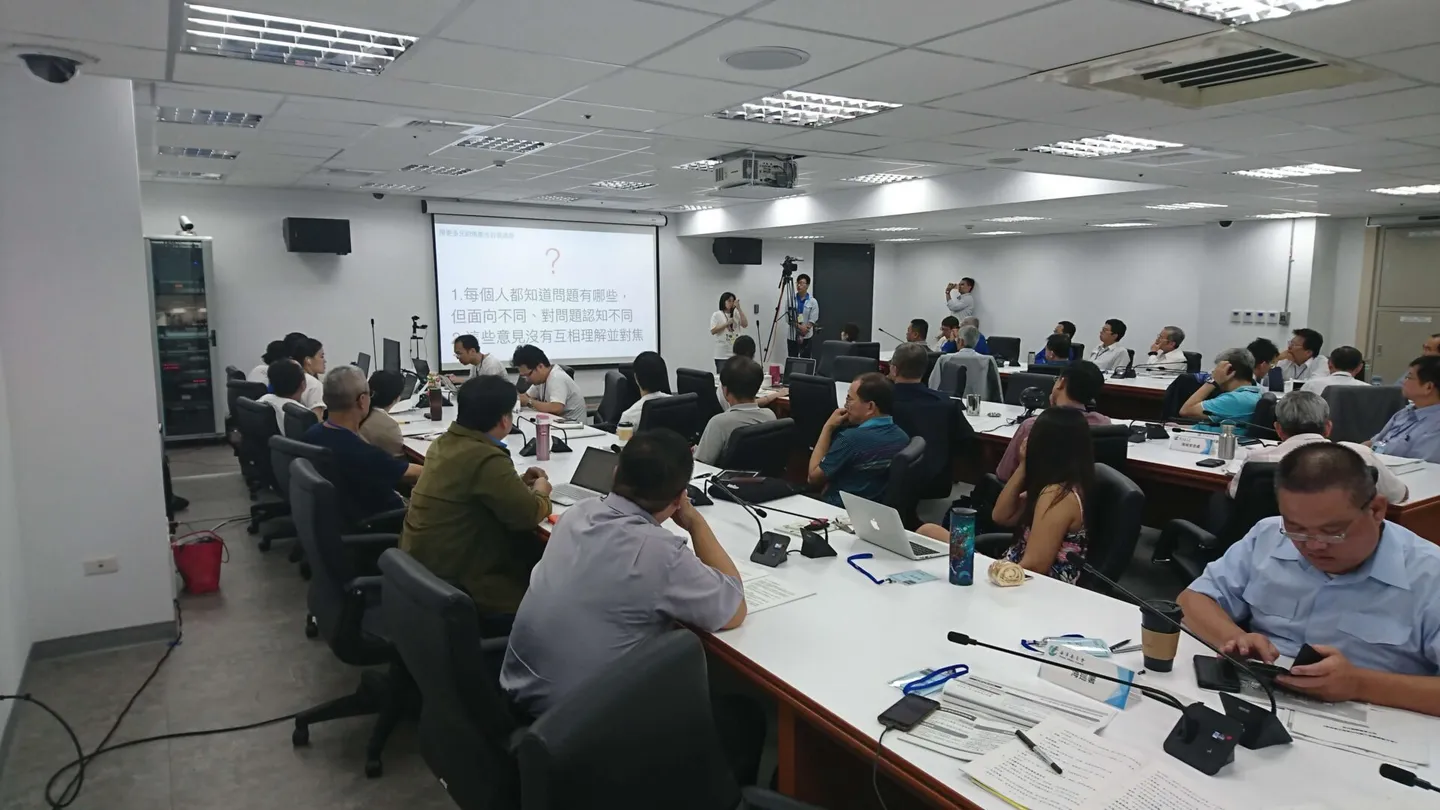
The conference discussion in session
The condition of Dongsha Island's lagoon was also a key topic of discussion. An attending academic shared that every April, adult lemon sharks measuring around 3 metres come to the lagoon to give birth, and large numbers of Stingray also appear — making the area an important foraging habitat for pup sharks and Stingray alike, which is a major highlight. He noted that water circulation in the inner lagoon is not very good, and that if vessels — or even jet skis — were to anchor or linger there, engine oil and other heavy fuel residues could cause significant damage. He urged careful assessment of any dredging activities to avoid severe impacts on the local environment.
The Marine Park Authority noted that lemon sharks have been spotted not only around Dongsha Island itself but also increasingly along the outer reef in recent surveys. However, the Authority is deeply conflicted: steel-hulled vessels from China and Vietnam, weighing 200 to 300 tonnes, use bottom trawl nets in the area, causing devastating damage to the local coral reefs. The Coast Guard's current patrol vessels are unable to deal with these steel-hulled ships — boarding them is extremely dangerous. As a result, some degree of compromise may be necessary: dredging the Dongsha shipping channel to allow larger vessels to anchor there and deter illegal fishing by Chinese and Vietnamese vessels, thereby protecting the local ecological resources. The Marine Park Authority said the Coast Guard has done everything possible to minimize the impact on the local ecological environment, hoping to use the smallest possible footprint to improve future law enforcement capacity.
Regarding the strengthening of local infrastructure, the Marine Park Authority stated that current plans include only the addition of a visitor center, a sewage treatment plant, and a waste disposal facility — all of which are essential for developing ecotourism and maintaining the ecological environment of Dongsha Island's waters.
Tourism operators suggested that in the future, mooring buoys should be installed at stable, dive-suitable locations to prevent vessels from dropping anchor and damaging coral reefs when they stop for diving. They also mentioned that in the future, if they spot Chinese fishing vessels illegally fishing in the area during their visits, they will report this to the Coast Guard to assist with law enforcement and reduce the burden on the agency. However, they expressed the view that the current 45-day vetting period imposed by the Ministry of National Defense on individuals wishing to travel to Dongsha may be too long and could be a significant obstacle, and suggested it be revised. The Ministry of National Defense responded that the matter would need to be escalated to senior officials to determine whether adjustments might be possible in the future.
Breakout Groups Recommend Strengthening Marine Conservation Capacity
Following the morning's discussions, the afternoon session divided into two breakout groups to discuss the question of "whether the currently planned ecotourism can meet the goals of ecological conservation," with "marine conservation capacity" as the central theme. To train civil servants in facilitation skills, National Development Council colleagues served as table facilitators for the breakout groups, with PDIS members assisting in a supporting role.
After discussion, Group 1 concluded that the Marine Park Authority could develop more robust management regulations when issuing future tenders, allowing ecotourism to simultaneously meet ecological conservation needs. Additionally, the group suggested consulting with Indigenous communities to learn how to live in harmony with nature. While participants strongly recommended planning ecotourism around liveaboard diving, the Marine Park Authority expressed concern that liveaboard diving would be difficult to manage.
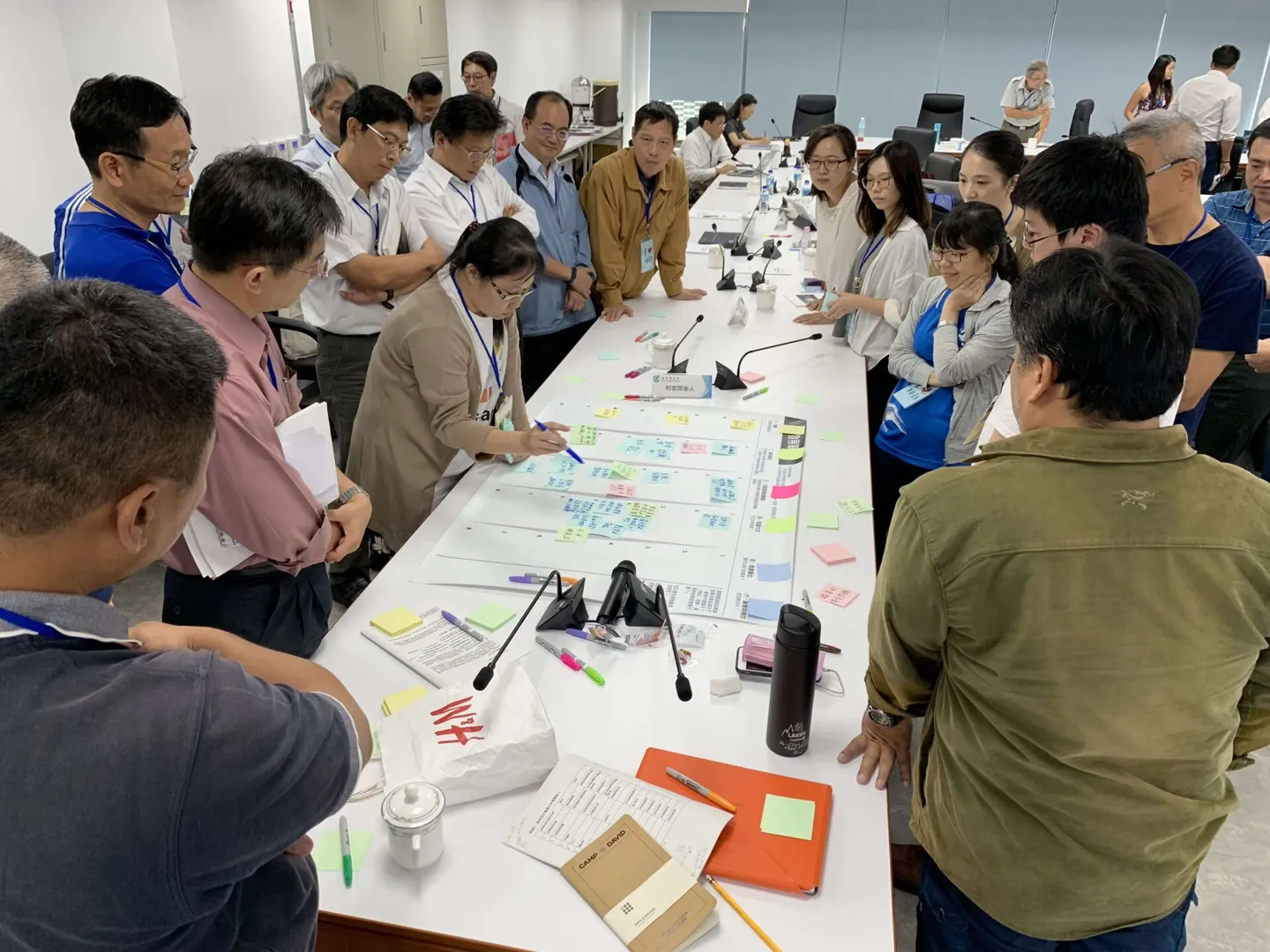
Breakout group discussion in progress
Group 2 raised the issue of dive insurance: currently, there is no insurance product in Taiwan specifically designed for diving activities. While some insurance policies can be extended to cover diving, coverage applies to medical evacuation and is not diving-specific insurance.
On the issue of illegal fishing, one member of Group 2 argued that since the year 2000, with the assistance of the Coast Guard and the Marine Park Authority, while cross-boundary fishing vessels still exist, the incidence of illegal fishing has already decreased significantly, and felt that the issue of illegal fishing should therefore be set aside. Group 2 also raised the issue of rubbish and conservation on the island: cleaning up floating marine debris requires a vessel, and the cost far exceeds that of land-based waste removal. However, budget allocation may be done on an equal-share basis, resulting in insufficient funding for marine conservation work. Group 2 also specifically discussed the issue of strengthening 4G signal coverage in the area, recommending the use of satellite mobile phones as a solution.
The Ocean Affairs Council concluded the day by sharing that since the Coast Guard Administration was established in 2000 and deployed maritime capacity at Dongsha, illegal fishing has improved significantly, and sustained long-term enforcement has already produced a deterrent effect. The Coast Guard Administration noted that liveaboard operators could assist by photographing and collecting evidence to support Coast Guard enforcement operations. However, there remains an ongoing issue of insufficient funding. The Coast Guard Administration pointed out that plastic waste in the ocean can only break down into smaller fragments — it cannot decompose. Once ingested by shellfish or fish, it enters the food chain and may ultimately be consumed by apex predators or humans, causing significant harm. "Even though fish don't have voting rights, we must take their situation seriously." In the future, the Ocean Affairs Council will work in accordance with the Ocean Basic Law to establish a Marine Sustainable Management Fund as a mechanism for building up ocean-related funding to maintain and conserve the marine ecological environment.
After a full day of discussion, Minister without Portfolio Audrey Tang will report the day's outcomes at the following week's ministerial meeting, to serve as a reference for the Premier and heads of relevant ministries in future governance and policy planning. The issue handbook, mind map, and verbatim transcript related to the meeting will also be made publicly available online for the public's reference.
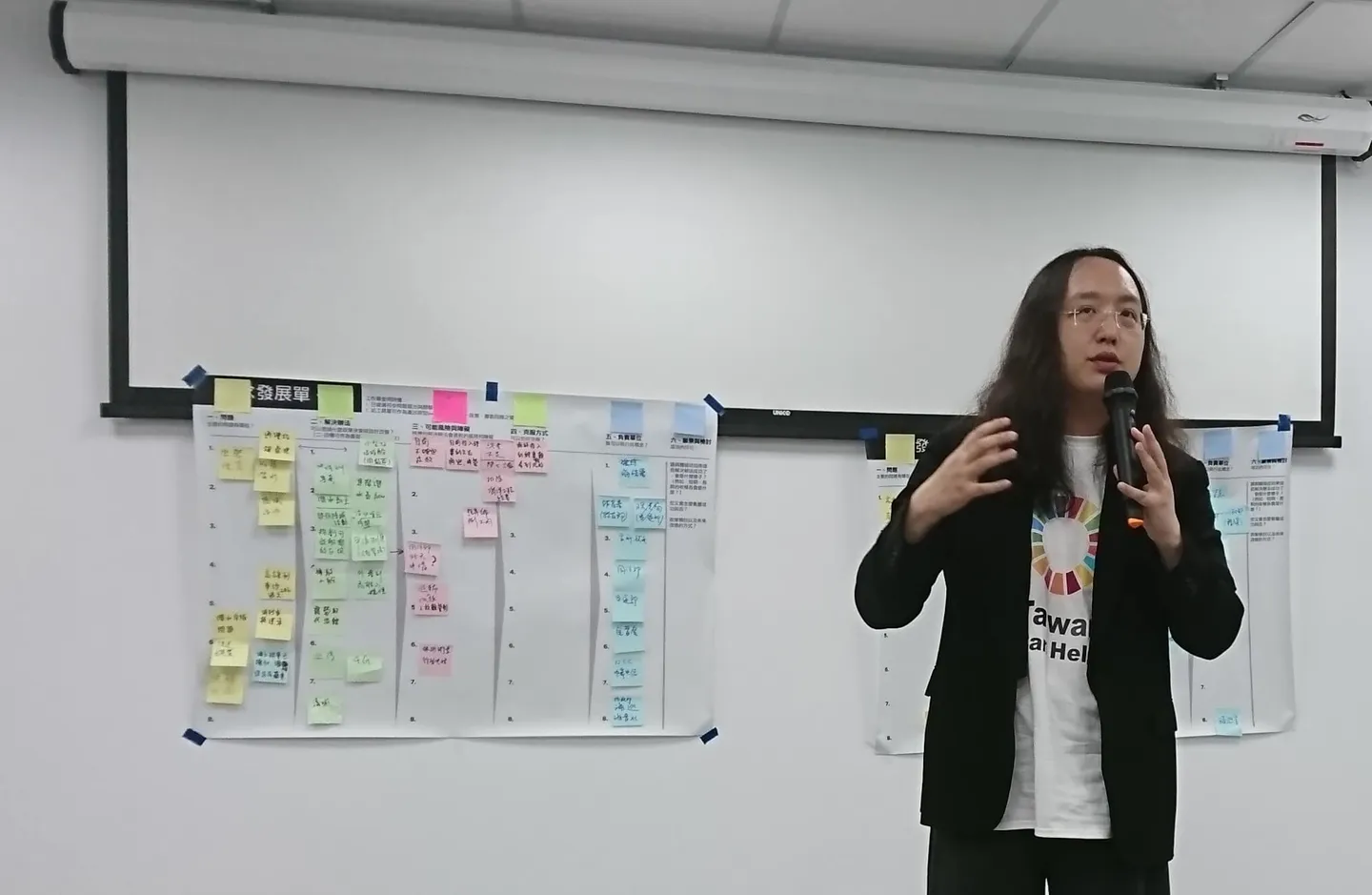
Minister without Portfolio Audrey Tang delivers the closing summary
Breakout Facilitators Performed Well; Wider Stakeholder Diversity Recommended
Some participants noted that certain key figures from relevant ministries were absent today — such as the relevant case officers from the Ministry of National Defense — causing some issues to be left unresolved. Other participants pointed out that some attendees' thinking was still rooted in land-based planning, and that they lacked an understanding of the marine recreation mindset. These participants suggested that other attendees should be given the opportunity to experience liveaboard diving firsthand, so that discussions could be grounded in concrete, practical situations.
Some participants felt that the National Development Council colleagues who served as breakout group facilitators performed quite well — when discussions became unfocused, the facilitators were able to steer them back on track, clarify the points being made, and incorporate relevant plans into the discussion to ensure it stayed focused. The mind map format also helped participants think comprehensively; the only shortcoming was the absence of action items, which made it difficult to reach conclusions in the short time available.
Civil servant participants noted that many of the discussion dynamics had been anticipated beforehand, and that the various considerations raised by the different stakeholders all needed to be incorporated. However, since this is currently a feasibility assessment, the input from this collaborative conference can be factored in for subsequent adjustments, and it can also help all parties to mentally prepare for what lies ahead. He also cautioned, however, that while yacht operators themselves place great emphasis on safety, from a government agency's perspective, not all operators share that same level of concern — some operators with low barriers to entry may not take responsibility for safety, and this may be an issue that requires appropriate clarification during future discussions.
One participant observed that because only liveaboard operators had been invited this time, the discussion naturally gravitated toward the liveaboard diving ecotourism model. Perhaps it would be worth considering whether a broader and more diverse range of stakeholders — such as ecological tourism operators — could be brought into future discussions to allow a wider variety of perspectives to be heard.
(This article is reprinted from a piece written by PDIS's Lin Yu-Tsang, with BlueTrend's consent to write an editorial introduction and revise the title. The original title was 'Can Dongsha Island Be Opened to Ecotourism? Participants Recommend Starting with Liveaboard Diving'. Cover image source: Pxhere, CC licensed.)

![[BlueTrend Mini Classroom] Beautiful Predators — A Shark Field Guide](/_astro/sea-water-ocean-animal-underwater-biology-1153301-pxhere.com-2_1JHxjW.webp)
![[BlueTrend Mini Classroom] Getting to Know the Legendary Life of a Mother Octopus Through a Guide to Cephalopods](/_astro/IMG_6618_Z199Jz9.webp)