![[Fall in Love with Sailing with a Young Captain] Confidently Say "I'm an Open-Water Drone Pilot!" — A Practical Aerial Photography Guide](/_images/3e656b5dbeae-1440w.webp)


In recent years, drones have become increasingly widespread, thanks to the unique perspectives that aerial photography offers. No matter what environment you're shooting in, today I'd like to share some hard-won experience in one of the most unforgiving arenas for aerial work — open-water flying.
I'll say it without fear of embarrassment, and I think many of you will relate: it's no secret that going out to sea to shoot anything is a grueling task. Rolling swells, strong winds, saltwater spray, restricted spaces — and on top of all that, you have to keep your eyes glued to the monitor to watch your footage. Very few photographers step back onto dry land with a smile on their face. Sailing makes it even harder: the complex rigging systems and sail surfaces create serious flight obstacles, and launching or retrieving a drone from a heeling hull is a balancing act all its own. These challenges are why I've witnessed more than a few drones go freediving over the years. But you have to agree — aerial footage of any water-based activity is so breathtakingly beautiful that many people consider it worth the risk of losing their aircraft to the sea.
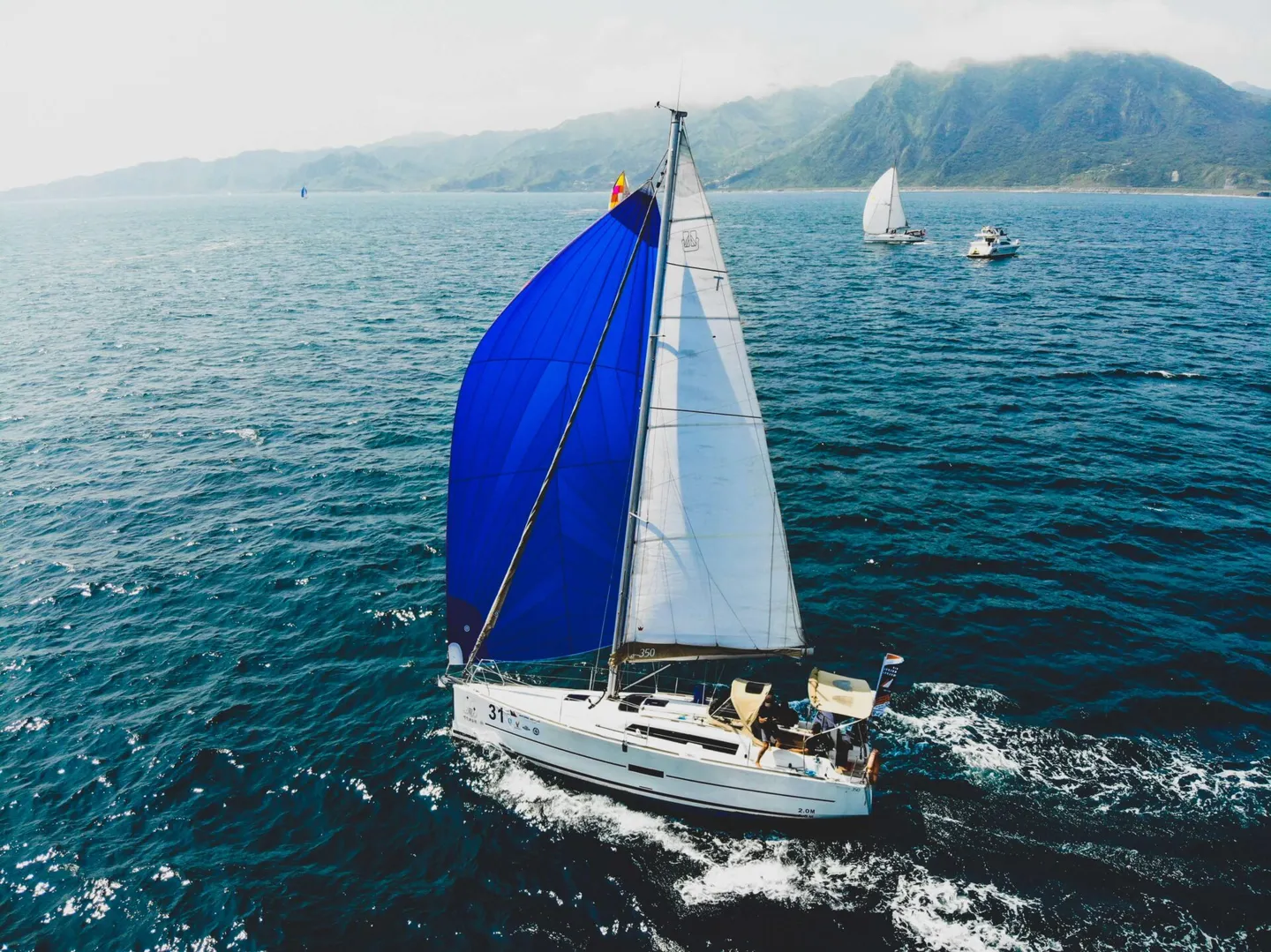
Start of the 2018 Taiwan-Ryukyu Cup International Sailing Invitational
Let's start with what aerial photography brings to the sport of sailing:
-
First and foremost, it delivers awe-inspiring, spectacular visuals.
-
Second, in countries where sailing is widely popular, aerial footage serves as a broadcast medium for races — invisible course boundaries and virtual racing lines become instantly clear from above.
-
Third, many professional sailing race teams use aerial footage as training analysis material, since the elevated vantage point gives a far more comprehensive view of the action.
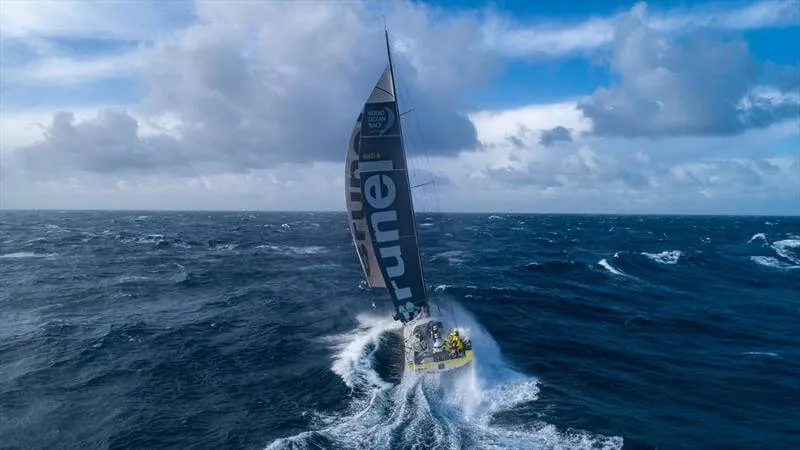
Former cover of the Volvo Ocean Race official website, by photographer Yann Riou
The footage captured every year by the Volvo Ocean Race — the world's premier offshore sailing event — is celebrated globally. Since aerial drone cameras became part of the VOR's coverage toolkit, the extreme imagery they produce has become a hotly discussed topic among photographers everywhere.
Experiencing the race's slogan, "LIFE AT THE EXTREME," through the official YouTube channel footage is the most perfect interpretation of those words.
Behind every one of those shots worth watching over and over again, the hand-launch and hand-catch — taking off and landing by hand — are the most critical moments. They're also the point at which many pilots have sent their drones freediving.
Spectacular aerial footage of Volvo Ocean Race entry Team Brunel in the Southern Ocean. Reports indicate that wind speeds at the time reached 40 knots (74 km/h) with wave heights of 5 m.
The Golden Gloves Award goes to Team Brunel helmsman Kyle Langford.
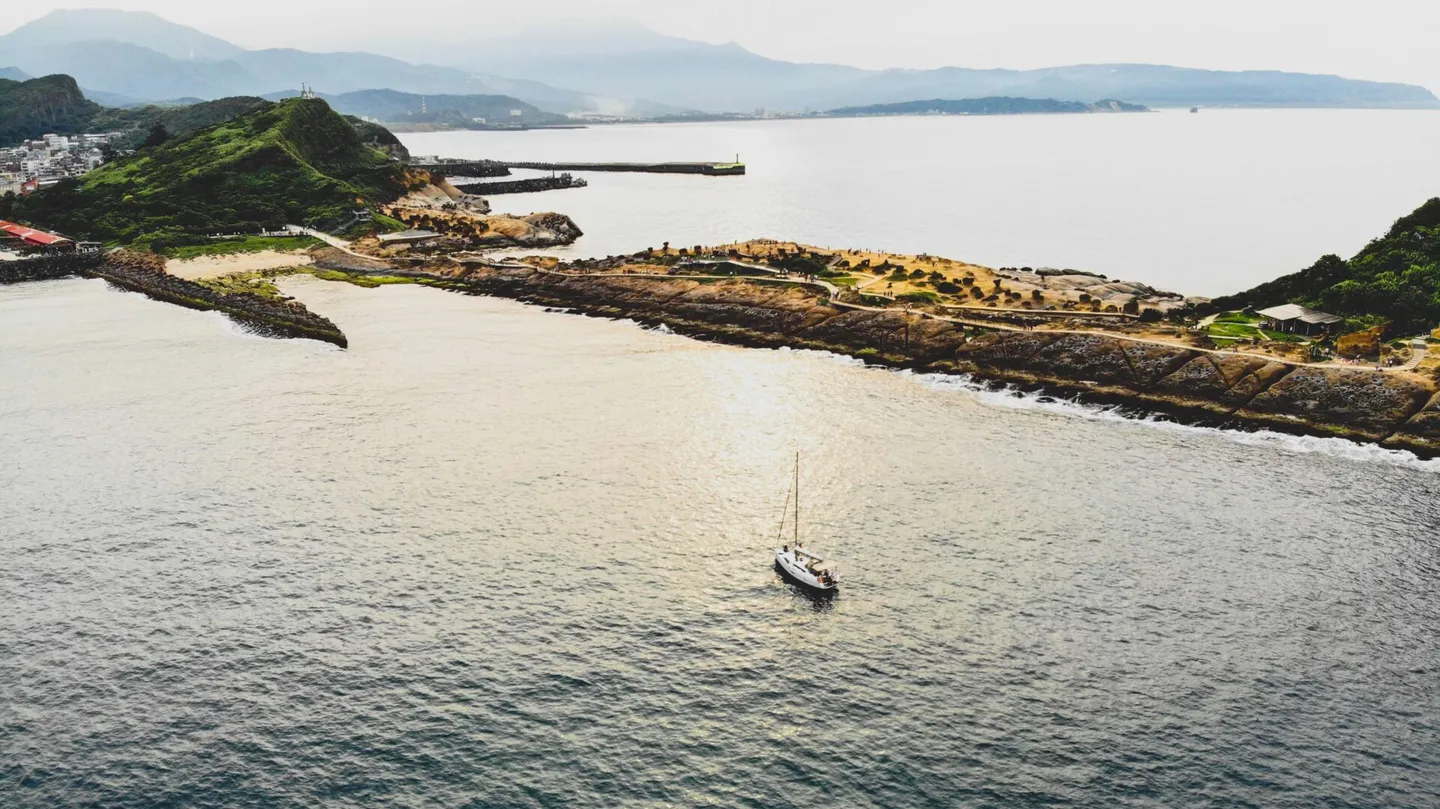
Yehliu Geopark
Alright, wipe the drool off your chin and let's get back on topic. What exactly do you need to keep in mind when flying in open water?
Before Taking Off
-
Confirm your GPS signal. A strong signal ensures stable flight control — you won't be flying with your heart in your throat.
-
Think carefully about and adjust your maximum distance and altitude parameters. Don't get so lost in the moment that you exceed your set range — the aircraft will hover in place and wait for you to come back and get it. (The editor speaks from personal experience.)
Launching the Drone
-
Pay close attention to the wind direction. Whenever possible, launch from a clear, downwind area to ensure the drone won't clip the rigging or sails as soon as it leaves your hands.
-
Point the camera away from yourself, so that all drone movements feel intuitive and in sync with your controls.
-
Keep a constant eye on the distance between the drone and the racing vessel, and refresh the home point regularly. Because the boat is always moving, the home point shifts continuously after the drone is airborne. Refreshing it means that even if the drone loses signal, it can automatically return to somewhere near the vessel, reducing the chance of losing the aircraft.
-
Watch your altitude. Know the height of the mast to avoid striking it or the rigging during low-altitude shots.
Landing and Retrieval
-
Retrieve in a clear, downwind area; fly the drone backward with the camera facing away from you, keeping all movements intuitive and in sync.
-
It is recommended to first bring the drone down to a height level with the hull to make retrieval easier.
-
Keep an eye on battery levels. If the battery drops below 10%, it is advisable to position the drone directly above the boat's footprint before it shuts down, reducing the chance of it falling into the water.
Invaluable Tips from Hard Experience
-
If a large portion of the vessel is made of metal, flying is not recommended — metal interferes with signal transmission and dramatically increases the risk of failure.
-
Flying downwind is the safest angle when you're not confident the drone can fight its way back into a headwind.
-
When the drone is returning home, it is recommended to disable all obstacle-avoidance functions. Glare off the water's surface can cause the downward-facing sensors to misread the environment; the rear obstacle-avoidance sensors can also interfere with the retrieval process when you're trying to catch it. Re-enable all sensors immediately after the drone is safely in hand.
-
Back up your footage frequently — don't let all that precious material be lost in a single sinking incident.
Everything above comes straight from the heart, but my sincere advice to all pilots is this: get comfortable flying your drone on land first, then step into the world of open-water aerial photography. Respect the ocean — and your wallet.
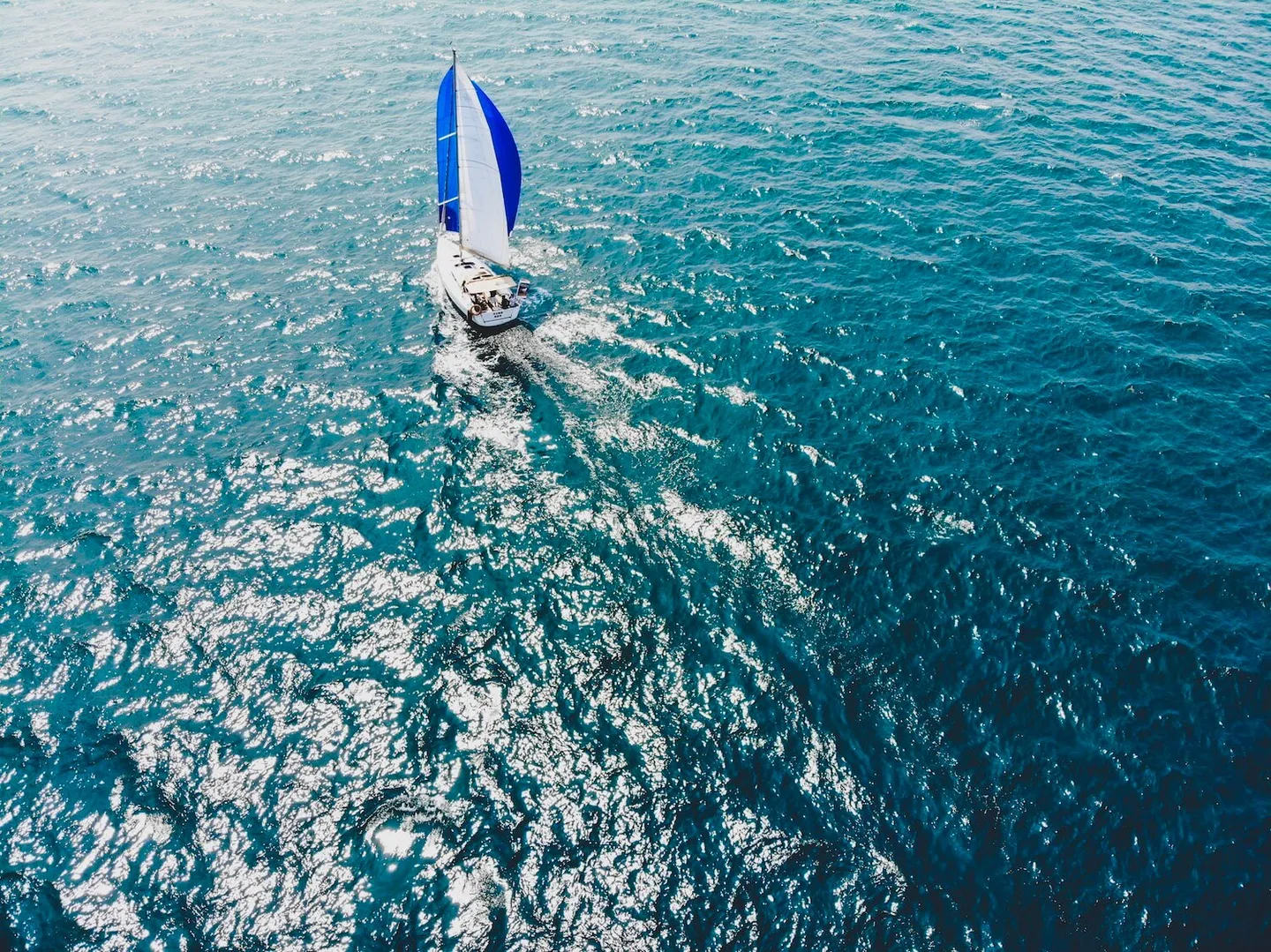
The Beauty of the Spinnaker
Related links:

![[Falling in Love with Sailing Through a Young Captain's Eyes] Sailing — What Exactly Is It?](/_astro/S__28418104_2jkuLN.webp)