The Editor says: Freediving is a sport that requires a thorough understanding of your own body. Compared to scuba diving, the descent is brief, making every breath all the more precious — and ear equalization is the very first challenge every freediver must overcome. Many of us, just like the Editor, were completely confused between the two equalization methods (Valsalva and Frenzel) when first starting out. We'd like to thank Free corner 自由潛水 for producing this wonderful video that clearly illustrates the difference between the two!
The following video and text are excerpted from the Free corner 自由潛水 Facebook page.
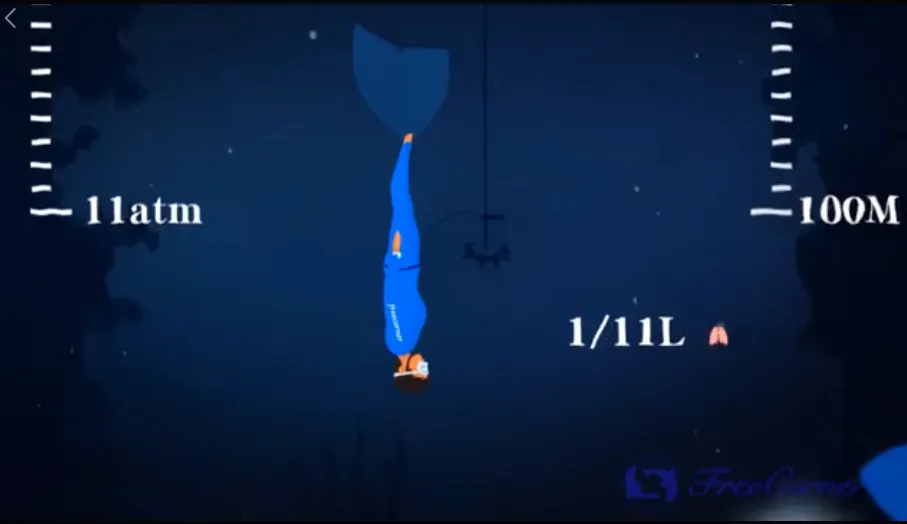
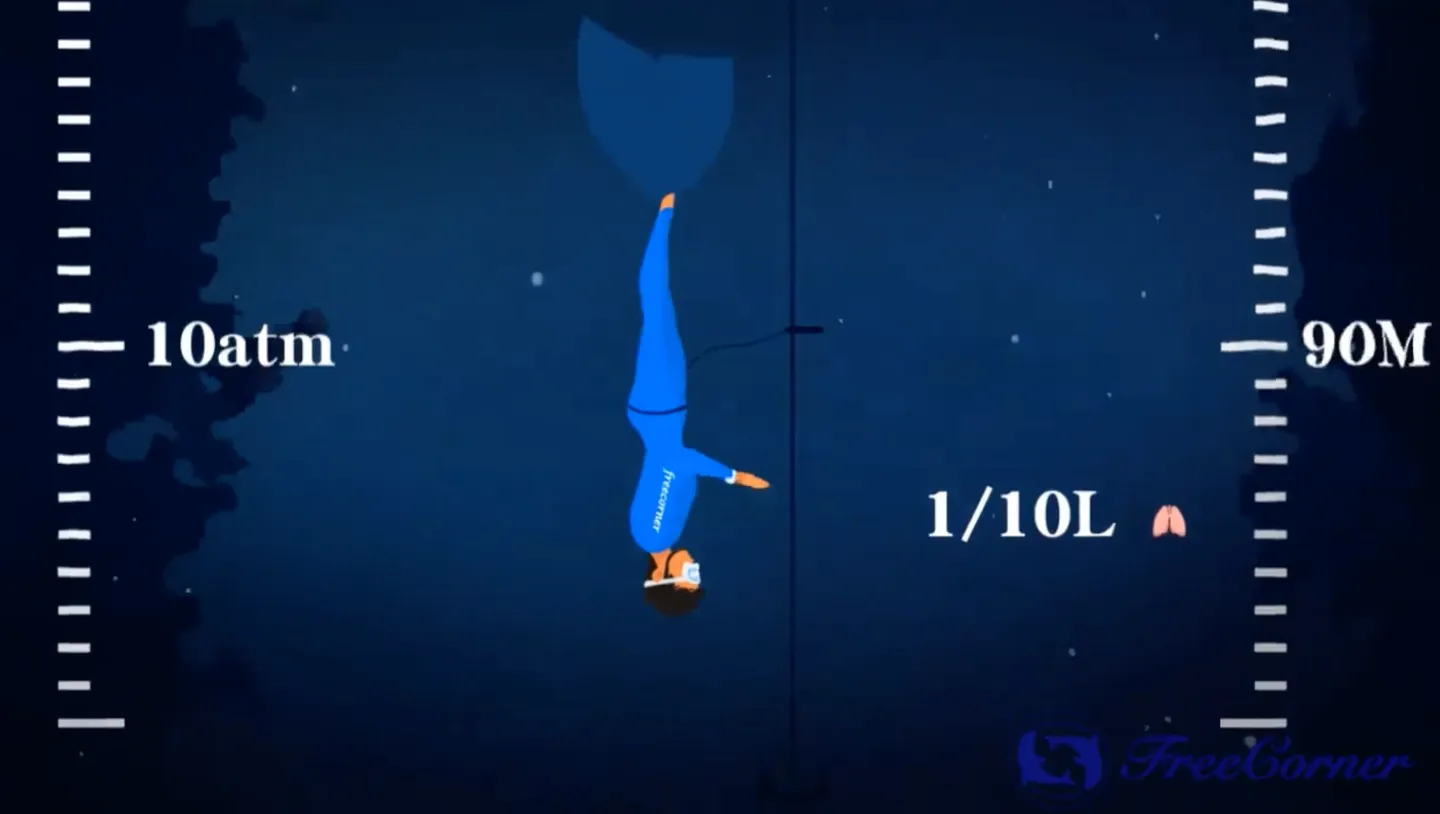
The video opens with a vertical descent from the surface, illustrating the water pressure and degree of gas compression a freediver faces at various depths. At ten metres, lung volume is compressed by pressure to half its original size; beyond thirty metres, the weight of water means the freediver enters a freefall without any physical effort. Thirty metres is also the point at which to perform a mouthfill, packing air into the oral cavity. By the time the diver reaches maximum depth, the mouth and chest cavity are nearly empty from air compression — underscoring the importance of the diaphragm in bearing pressure and the consumption of oral air through ear equalization.
Valsalva vs. Frenzel
The two most common equalization methods in freediving are Valsalva and Frenzel. Although both require pinching the nose to direct airflow toward the Eustachian tubes, they work in very different ways. Valsalva uses the breathing muscles to compress the lungs and generate positive pressure, while Frenzel relies primarily on the muscles at the base of the tongue to push air within the oral cavity. The video clearly demonstrates both equalization methods — their respective air sources, the muscle groups involved, and the opening and closing of each anatomical structure — along with an animated visualization of air flow during equalization.


The Story Behind This Equalization Tutorial Video
This video was independently produced by Astrid. Every frame was hand-drawn and rendered as animation — a task that typically requires an entire team, yet she accomplished it alone. Behind her professional skills, however, her journey into freediving has been anything but easy.
When Astrid first started freediving last year, she was repeatedly unable to descend smoothly due to difficulties with ear equalization. She spent a long period using Valsalva before eventually learning Frenzel, during which she would often get stuck at three to five metres before her equalization held her back. Yet she was always smiling, breathing up, and trying again. I wouldn't presume to say how much she loves the ocean or freediving, but the fact that she made multiple round trips between Miaoli and Kenting just to practice says everything. Once, unable to help myself, I asked, "Why do you love freediving so much?" Astrid replied, "What do you do when you're feeling low? I watch freediving videos, one after another. Sometimes I even find myself getting emotional — eyes welling up, heart racing.
I truly love how it feels to be underwater, even though I'm not particularly good at it and can't dive very deep." I smiled and said, "Your soul must be a fish. Trust me — with a bit more practice, your body will catch up."
In the course of a few casual conversations, I discovered that Astrid is a professional animator. The first time she showed me her work, I didn't hesitate: "Could FreeCorner commission you to make a video about ear equalization? It won't be cheap, but we've never had teaching materials that help students truly understand the different equalization methods — this might be something we can create together." "No problem, but it'll take some time because there's a huge amount of work involved," Astrid said with a surprisingly cheerful ease. That conversation was already last year.
Even a short animation requires countless rounds of communication and consensus — completing it is genuinely difficult and time-consuming. As Astrid went abroad to study this year, and since I firmly believe that good work should never be rushed, progress seemed increasingly open-ended. Then, just a few days ago: "Agu, I've poured all my longing for the ocean into this video — take a look and let me know what still needs fixing." Astrid said this with great emotion, then shared that she had spent a tremendous amount of her spare time while abroad to complete the items on the checklist...
Looking at this animation, what you may see is a tutorial on ear equalization — but for FreeCorner, it is a profound reminder that the love of freediving expresses itself in many ways, and goes far beyond the descent itself. Thank you, our mermaid Astrid: outside of freediving, you taught me an invaluable lesson.
Further reading: