![Diving Abroad But Can't Speak Diving English? The Essential English Guide for Divers Part 3 — [Divemaster / Instructor Edition]](/_images/4ec149d68cf6-1440w.webp)
Contents(12)
Following the first two installments of the diving English series for divers — the Vocabulary Edition and the Practical Edition — this third part is written specifically for Divemasters and dive instructors! It is strongly recommended that anyone at the Divemaster level or above read the first two parts before diving into this one. Of course, this article is also suitable for Divemasters who want to learn how to conduct briefings in English.
If you are a regular diver, feel free to read along and pick up some English along the way — though some of the manuals mentioned later on are really only relevant to Divemasters and above, so feel free to skip those sections.
Unlike the first two parts, the Divemasters or instructors who need to use diving English are likely doing so because they are hosting foreign guests and need to practice delivering briefings, among other things. Before getting into the article, I want to share one key mindset: English is just a tool. Even if your grammar isn't perfect, as long as it's reasonably close, most foreign guests will understand you. My recommendation is that if you need to deliver a briefing in English, first refer to the vocabulary in the Vocabulary Edition and try writing your own version. The reason is that content you generate yourself is much easier to remember — so when you're actually using it, the words will flow naturally instead of getting stuck trying to recall a memorized script. Once you've written a draft, have someone review it, then start practicing. As I mentioned in my piece about my journey to becoming a dive instructor, practice it so many times that you can even tell a joke fluently. I'd also suggest recording yourself and using it as a reference.
Here's a brief look at how I practiced delivering dive briefings — the approach works for both Chinese and English (honestly, this is how I first started practicing for IELTS too). Of course, with enough experience, improvisation becomes second nature. In the beginning, I would write out everything I wanted to say, go through it once or have a friend review it, then highlight the key points of each paragraph. I'd pick the single most important sentence or concept from each section, and after a few practice rounds, I'd choose one "keyword" from that sentence and write it in red in the margin beside that paragraph. I'd practice repeatedly — from reading the full text, to just reading the sentences, until finally I only needed the keywords to jog my memory. Sometimes when delivering a briefing I'd write the keywords in order on a whiteboard, which also helped keep things organized and made the whole thing sound more professional.
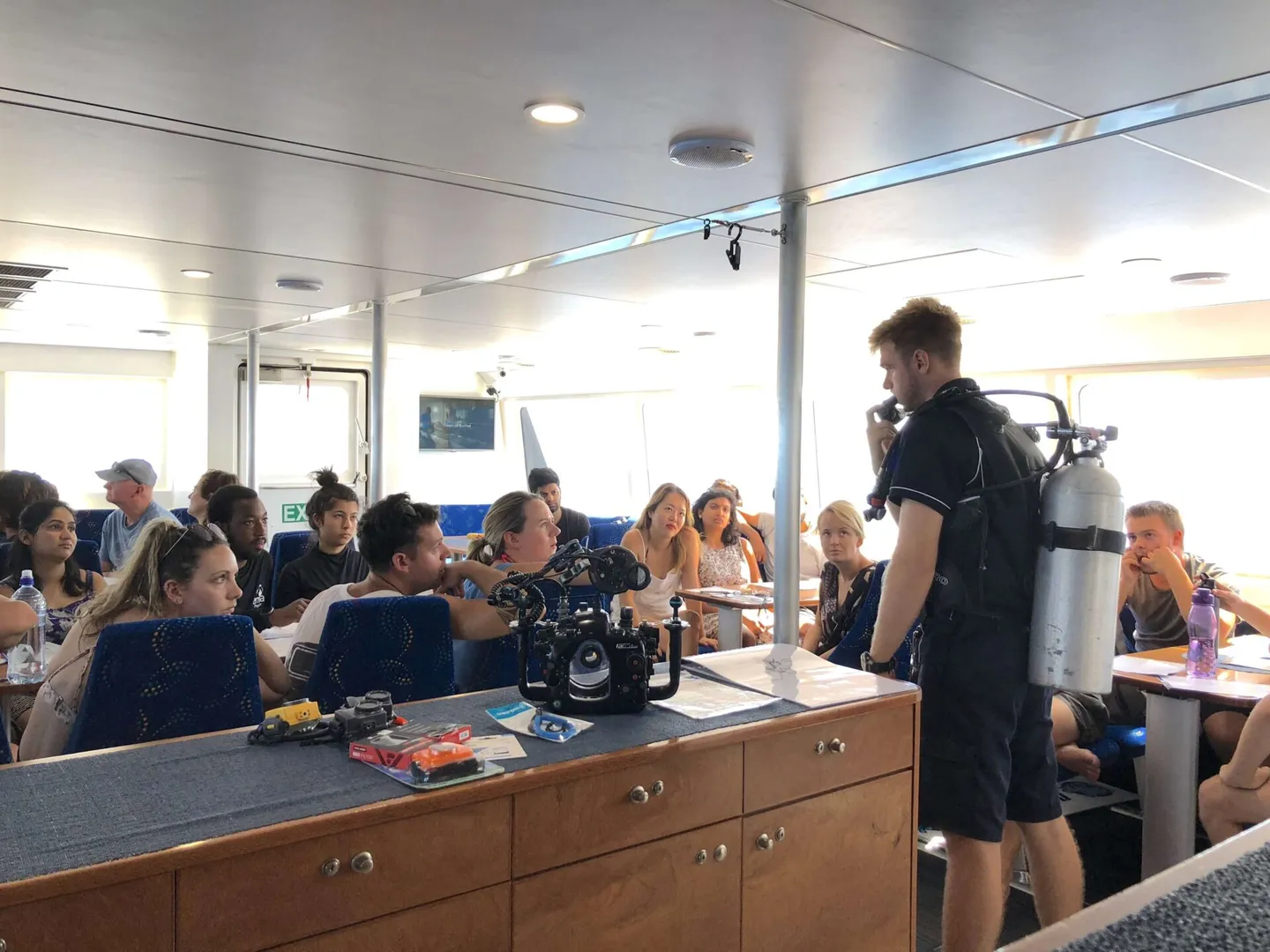
My colleague delivering a briefing
In this article, I'll cover what to say before a briefing, the dive briefing itself, and finally how to prepare for teaching a dive course in English. I've once again called in a favor from my friend Scuba Strider 潛旅**·**行者 to help proofread the English and refine the direction of this article! If you want to improve your English, give his page a follow. He was originally an English teacher in Hong Kong who, wanting to help students learn English through diving, went and got his instructor certification. All content on his page is available in both Chinese and English — highly recommended!
在簡報之前 Before A Briefing
In addition to welcoming students, it's important to warm up with your guests before a briefing. Introduce yourself, ask guests to fill in paperwork, and give them an orientation to the facilities. If you're a friend looking to work as an instructor in Australia, before the formal dive briefing there will be a Safety Briefing that covers on-boat safety procedures (which will vary depending on the dive shop). It is also highly recommended that during this stage you chat with your divers about their past experience, so you can assess and adjust the plan accordingly.
介紹自己 Introduce yourself
嗨大家好,我是Jen。我今天將會是你們的潛水教練**/**潛水長/導潛
Hey guys, I'm Jen. I will be your dive instructor/divemaster/dive guide today.
請幫我把文件填寫完成
Please fill in the paperwork.
介紹環境 Introduce your Surroundings
緊急出口**/AED/**急救箱 的位置在這間屋子的角落
The emergency exit/AED/first aid kit is located at the corner of this room.
廁所和盥洗的位置在這棟屋子的旁邊**/**在二樓
The toilets and shower rooms are just beside this building/on the second floor.
二樓是乾區,如果你還在滴水的話請留在一樓
The second floor is the dry area. If you are still dripping please stay on the first floor.
這裡將是你吃午餐的區域
Here is the area where you will have your lunch.
請自由地使用水管清洗你的裝備,而且你可以將你的裝備吊在曬裝備的區域。
Feel free to use the hose to wash your gear. And you can hang your equipment in the drying area.
行程 Schedule
這是我們的時程表
This is our timetable.
早上七點會是我們第一潛的簡報時間。請確保你人在這裡並且已經準備好能出發潛水
Our first dive briefing will be at 7am. Make sure you are here with your swimsuit on, and ready for the dive.
我們在兩潛之間會有一小時的水面休息時間
We will have a one-hour surface interval between two dives.
下午一點將會是我們的午餐時間
Lunchtime will be at 1pm.
出發前的噓寒問暖Customer Service
你們容易暈船嗎?你們有吃暈船藥了嗎**?**
Are you prone to sea sickness? Have you taken seasick pills?
昨天有睡好嗎
Did you sleep well last night?
你們今天早上有沒有喝夠水?
Did you drink enough water this morning?
你們潛過幾潛?
How many logged dives do you have?
How many dives have you done?
你們以往的潛水經驗如何?
How was your dive experience?
有沒有什麼是我需要特別注意的?
Is there anything I should be aware of?
Jen's aside: After returning to Taiwan, I went on a few dives and noticed that local dive guides tend to move quite quickly — something I found hard to adjust to. So I'd suggest using the warm-up chat as an opportunity to gauge whether your group prefers a brisk tour of the dive site, or if they're more into photography and would appreciate a slower pace. At the same time, ask about everyone's experience level and when they last dived, to see if the dive plan needs any tweaking.


潛水簡報 Dive briefing
The logic behind a dive briefing
A dive briefing essentially walks through every detail from the boat (or shore), into the water, underwater, back on the surface, and finally back onto the boat. When delivering a dive briefing, simply take your guests through all of these steps in order. If a particular briefing calls for a more concise approach, feel free to trim it accordingly. As you read through the following sections, notice that my descriptions follow this sequence — doing so makes the briefing sound more logical and easier to absorb.
潛伴檢查 Buddy Check
BWRAF- Bring Women Roses And Flowers
試看看充氣洩氣和口吹BCD,檢查你的BCD看看是否有漏氣或是會不會自己充氣
B:BCD. Try to inflate, deflate and orally inflate your BCD. Make sure your BCD is not leaking and it won't self-inflate.
幫你的潛伴檢查是否有帶適量配重,並且確認配重帶是否為右手脫除
W:Weights. Please check your buddy is properly weighted and the weight belt has right-hand-release.
檢查你和你的潛伴背帶都有弄緊且扣子有扣好
R:Releases. Make sure your buddy has fastened the straps and buckled up
請檢查你和潛伴都有將氣瓶打開,是滿瓶。另外試著吸看看潛伴的備二,確認能夠正常使用
A:Air. Please check your buddy have opened the tank all the way and it is a full tank. Try to breathe through the octopus, making sure it is working.
最後檢查你和你的潛伴相機、面鏡、蛙鞋都有帶,另外確認你們有滿滿的正能量準備去潛水
F:Final check. Make sure you and your buddy have brought the camera, mask, fins, and positive vibes for the dive.
手勢 Hand Signals
這些是這一潛可能會用到的手勢
These are the hand signals we might use during the dive.
沒問題 OK
有問題 Problem
往上/往下 Going up/Going down
不能耳壓平衡 Cannot equalize
檢查殘壓 Check your air(How much air you left?)
數字 Numbers
殘壓很少(通常是低於50 bar) Low on air
沒有氣了(通常是0 bar)Out of air
五米三分鐘停留 safety stop
好棒 Awesome
Jen's aside: I'd recommend confirming hand signals with foreign guests before the dive — especially for numbers. Americans, for instance, often use pressure gauges calibrated in PSI, and different instructors may teach slightly different number signals (though most follow the same general system). It's important to confirm before getting in the water. Here's a YouTube video I think does a great job covering hand signals: 107 Hand signals for scuba divers (click to watch)
緊急事件 Emergency
如果你發現自己離船太遠了請用浮力袋或是朝船揮舞雙手
If you find yourself too far away from the boat, please wave at the boat or even use your SMB to signal the crew for help.
我們會請人去接你
We will send someone to pick you up.
如果你和潛伴失散,請在原地找尋不超過一分鐘後上升到水面和潛伴會合
If you lose your buddy, please search for no more than one minute and try to reunite with your buddy on the surface.
Jen's aside: When I was working in Australia and conducting discover scuba diving sessions, we would always brief guests on what to do if the instructor became unresponsive underwater. Let go of the instructor, keep breathing, slowly kick up, inflate and ditch the weight belt (being careful not to drop it on the instructor), then call for help. So during try dives, it's especially important to once again explain how and when to inflate and deflate.
潛點介紹Dive site introduction
我會是你們的導潛,Jen,我會穿一身小小兵的防寒衣
My name is Jen. I will be your dive guide and I will wear a Minion wetsuit.
Jen's aside: Don't forget to tell your divers your most distinctive feature, so they don't end up following the wrong person. Also, for newly certified divers, some may not know what "the sound of a tank banger" is — it's worth giving them a quick reminder.
潛水船會帶我們去這個地方,我們會在這裡入水
The dive boat will bring us to this place. We will jump into the water from here.
建議可以用跨步式**/**背滾式入水
I will recommend using giant stride/back-roll to get into the water.
下水之後請抓住游泳繩,把自己拉向錨繩的地方
After your entry, please hold the swim line and pull yourself towards the mooring line.
會在水面聚集之後才會一起下潛
We will gather on the surface and descend together.
下潛的時候請記得要注意自己的浮力,同時不要忘記做耳壓平衡
When you are descending, make sure you check your buoyancy and don't forget to equalize.
通常水流會是這個方向的,所以在潛水的一開始,我們要逆流而行
The current usually goes this way. Therefore, at the beginning of the dive, you will need to go against the current and swim this way.
此時珊瑚礁會是在你的左手邊
The reef will be on your left-hand side.
我們順著珊瑚礁走,最大深度大約會是25米
We will swim along the reef, and the max depth will be 25m.
我們可能會在這塊礁石附近看到蘇眉。這個地方有住小丑魚
We will probably see a Maori Wrasse near this bommie. You can find Nemos living in this area.
Jen's aside: Mention briefly what you might see on this dive. Even though many divers are seasoned veterans (and I understand the pressure of guiding someone with hundreds or thousands of dives), don't forget that plenty of people are still delighted by the little everyday critters. I personally have a soft spot for Christmas tree worms, and some people love practicing their photography on Clownfish (Nemo). So even if something seems mundane to you, your divers might love it — and pointing things out gives them that feeling of "we actually found something on this dive."
當任何一個人剩下100bar的時候,或是潛超過20分鐘時我們會開始走回程
When the first person reaches 100 bar or when our dive time reaches 20 mins, we will need to turn around.
所以當你剩100 bar的時候請告訴你的導潛**/**潛伴
So when you have only 100 bar left, please tell your dive guide/buddy.
最後我們會在這個地方做三分鐘安全停留
We will do our 3-minute safety stop here.
注意,等待上船時請不要待在其他潛水員的下方(避免潛水員失平衡跌下來砸到你)
Please keep in mind. Don't stay underneath any diver when you are waiting to go back onto the boat (or they might land right onto your face if they lose balance).
輪到你上船時才脫蛙鞋
Only remove your fins when it is your turn to get back onto the boat.
A photo I took at sea — a Cyclone on its way in
關於課程的潛水英文
I had originally considered writing out all the English for dive courses in full, but that would essentially be copying PADI's course materials word for word.
For diving English related to course instruction, I recommend looking up the instructor manual for your certification system. Here I'm providing links to the 2017 PADI Instructor Manual and the 2014 PADI Guide to Teaching, both of which are available online.
PADI教練手冊 PADI instructor Manual
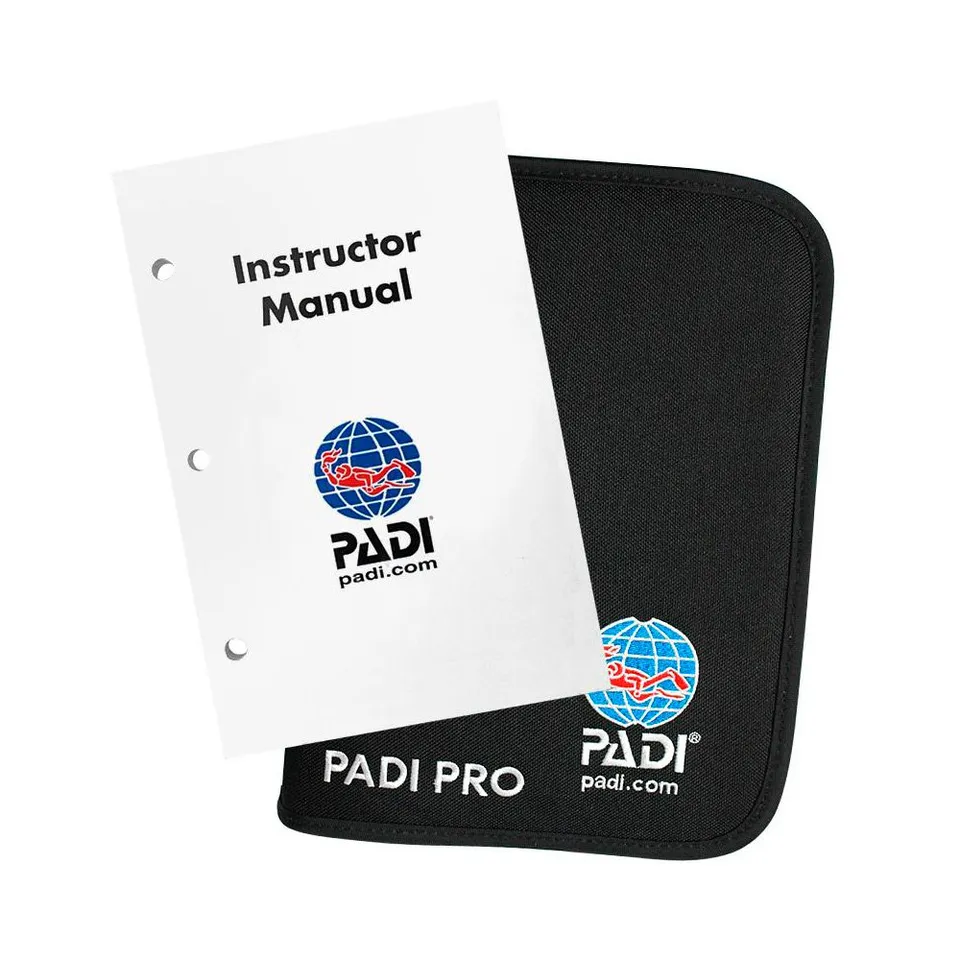
PADI Instructor Manual
This is the book that every PADI (certification agency) instructor has thumbed through until the pages fall apart. A quick note: the version linked here is the 2017 edition found online, provided purely for reference when it comes to the English language content. If you need to look up specific regulations, please refer to the latest edition. I recommend finding the course you plan to teach in English, then locating that course's outline, going through the English terminology for each skill, and practicing how to explain those skills.
2017 PADI Instructor Manual link: http://www.idckohtaothailand.com/wp-content/uploads/2017/03/PADI-Instructor-Manual-2017.pdf
If I were about to teach an Open Water course, I'd open the Contents, navigate to Course/Program Guides, then find the Open Water Diver Course — which is on page 51 of that linked document. From there, look for the "Performance Requirements" section, which lists all the skills required for each dive and the criteria for passing them. Going through this section tells you the English names for all the skills in each dive. Also worth noting: the Open Water Diver course is divided into Confined Water Dives and Open Water Dives — 5 confined water dives and 4 open water dives — so make sure you review both. One more thing: for non-native English speakers, it's easy to mix up "Open Water course" (referring to the certification course) and "Open Water dive" (referring to diving in open, natural water). If you're working as an instructor abroad, keep these straight so there's no confusion when discussing with instructors from other countries.
Once you can talk through the Open Water course, everything else is a piece of cake!
2014 PADI Guide to Teaching link:
https://drive.google.com/file/d/1dh7OItVQMklVQo9ztIeplrK1iUoPqYVO/view?usp=sharing
Serious instructors and Divemasters, please follow along and open the link above, then turn to page 202. This is something I highly recommend to everyone! "Commonly Encountered Problems" — setting aside the diving English aspect entirely, when I was studying for my IDC, my classmates and I would quiz each other using this section. For new instructors, it's an absolute goldmine. If you want to teach in English, you also need to know how to describe student errors in English — and this is a fantastic resource. Go through each problem and practice explaining it in English on your own. Once you've worked through all of them, there's very little that can trip you up.
I've also recently noticed that some WeChat public accounts have been republishing my articles without permission, claiming them as original content for commercial purposes. Please respect creative work. These articles were written to help everyone, so if you'd like to share them, please credit the original author — don't make partial modifications and claim them as your own original work.
Finally, I want to say: please don't be afraid to use simple English to get your point across. Many Europeans may not have perfect English either, and even if you use a very impressive word, you might still encounter a foreign guest who doesn't know it. After all, we're here to teach diving, not English — so speak up bravely! Let's spread the blue addiction we love to the whole world!
Cover photo credit: Photo by Mael BALLAND on Unsplash
Hope you found this helpful!
-
Diving Safety Is Non-Negotiable — The Diver's Guardian: The Lookout
-
Tired of the Great Barrier Reef? Head to Melbourne and Swim with Pipefish and Seals
-
Exploring Australia's Mysterious Shipwreck in Strong Currents — S.S. Yongala
-
Looking for Purpose? Come Do an Unforgettable Dive Work-and-Certification Trip in Australia!
-
Encountering a Dwarf Minke Whale on the Great Barrier Reef — Australia's Must-Do Dream Voyage

![Can't Speak Diving English Abroad? The Essential Diving English Guide for Divers — Part 2 [Practical Conversation Edition]](/_astro/LRG_DSC00874_7dl44.webp)
![Diving Abroad But Can't Speak Diving English? The Essential Diving English Guide Part 1 — [Nouns]](/_astro/mael-balland-hx73qL8rOOo-unsplash-2_Z1JBwHj.webp)