Contents(7)
Ever since watching UNDER PRESSURE - Diving Deeper with Human Factors, I've been deeply inspired. I started binge-watching the Mayday (Air Crash Investigation) series and taking notes, trying to bring aviation concepts into my diving instruction. For example, when teaching buoyancy control, I use the aviation terms Pitch, Yaw, and Roll to define the three axes, which makes it much easier to explain what Trim means. I also draw on the analogy of a captain calculating passenger and cargo weight, load distribution, and the aircraft's center of gravity before takeoff — to encourage students not only to figure out the right amount of weight, but also to think carefully about where the weights are positioned. If your fins are very heavy (like the Sporasub Record, for instance) and you place all your weights on a waist belt, you'll naturally end up Pitch-Up underwater — like a seahorse — head light, feet heavy, creating enormous drag and making your movement highly inefficient.
Because aviation accidents inevitably claim many precious lives, every major incident triggers multi-national governmental investigations. Add to that black box data, air traffic control radar records, and eyewitness accounts, and post-accident analysis is typically far more thorough and comprehensive than what's possible after a diving incident. So while aviation accidents are complex, their complete and varied case studies can, to a meaningful degree, be applied by analogy to diving. This line of thinking is well worth digging deeper into. For instance, when people ask me about freediving vs. scuba diving, I can almost always find an aviation parallel: freediving is more like flying a fighter jet — it demands a higher baseline of physical fitness, and the theory leans heavily on anatomy, physiology, and psychology; scuba diving is more like flying a commercial airliner — you need to master the operation of complex systems and understand mechanical principles and fluid dynamics.
You ask whether students who learned freediving first are easy to teach when they come to scuba? I'd say a student who has already passed a freediving course is like a military pilot transitioning to civilian aviation — they already have a solid physiological and psychological foundation. Most can sail through the recreational diving stages, because completing a freediving course means they already have a baseline in water comfort, snorkeling skills, duck-diving, mask skills, swimming, equalization, line work, and buddy awareness. That said, they won't necessarily be able to handle the procedures of technical diving or CCR, the complex hand-eye coordination involved, or the emergency response techniques. In other words, they might manage the propeller-plane stage of flight school just fine, but may not necessarily go on to pass the training for large commercial aircraft.
I'll continue with some video examples — they'll make it easier to understand why I use aviation to teach diving:
- The Longest Gliding Distance | Lao Gao and Xiao Mo https://www.youtube.com/watch?v=iUhj8s83w3M
- Captain Crazy James | Learning About Air Crashes with Lao Gao... Air Transat Flight 236 — The Real Story! https://www.youtube.com/watch?v=wUybOX4s3r0
The above two YouTube videos feature Lao Gao discussing aviation accidents, with an expert then using their professional knowledge to correct the errors in Lao Gao's account. Both videos are highly instructive — not least as a reminder that a content creator who tells a compelling story online doesn't necessarily get every fact right. If you want to learn about diving, watching videos by social media influencers who have dived is certainly one way to absorb information, but such videos are often riddled with inaccuracies. It's always more reliable to seek answers from a qualified dive instructor. This particular episode covers the Air Transat Flight 236 accident (which also appears in Season 1 of the National Geographic series Mayday). I won't go into the details here — please watch it for yourself.
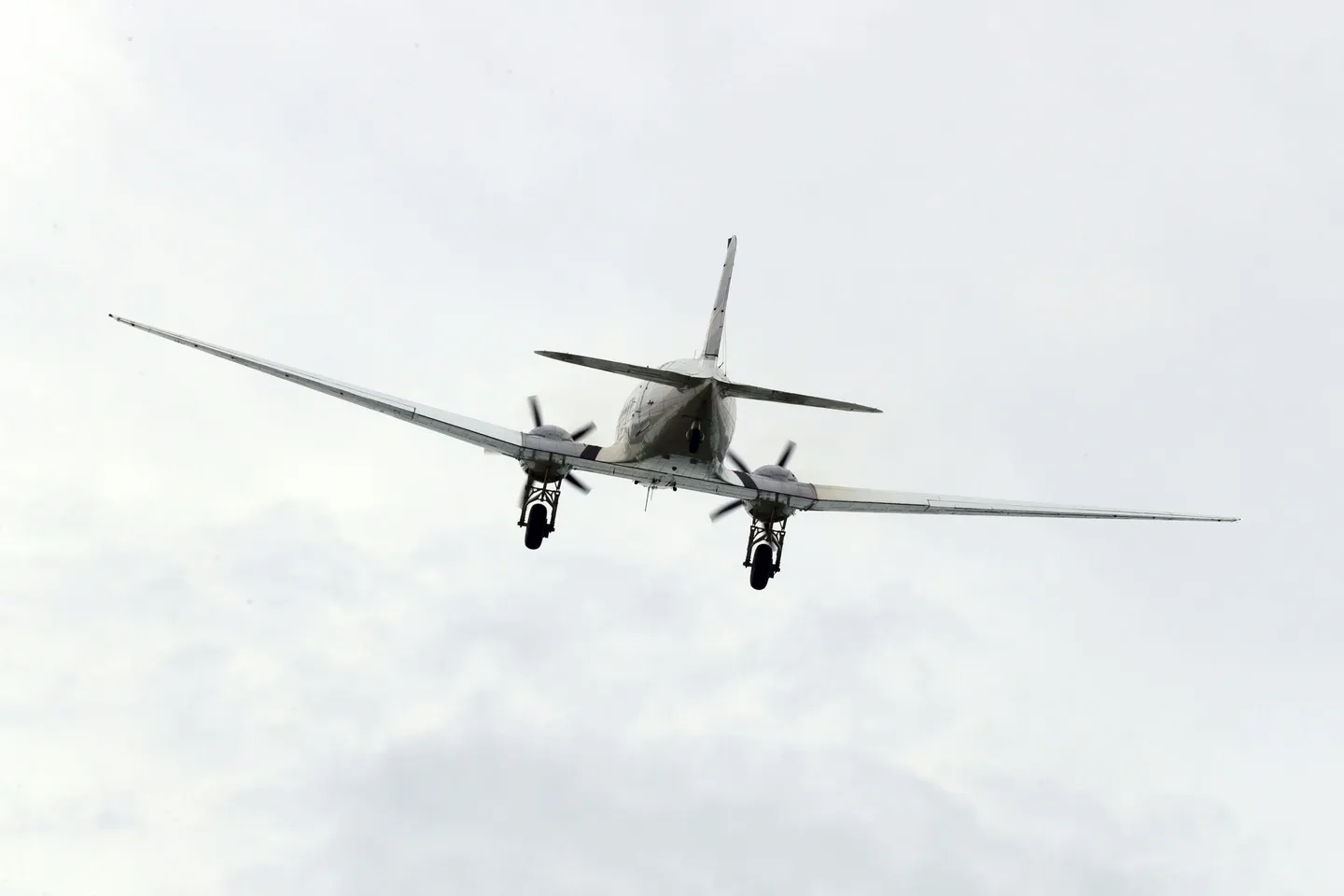
Photo by Randy Fath on Unsplash
The expert carefully explained several concepts that Lao Gao had misunderstood:
1. Crossfeed — Fuel Transfer Between Tanks
When the fuel imbalance between the left and right wing tanks becomes too great, the system triggers a "Fuel Imbalance" warning. According to standard operating procedure, the crew must first confirm that the imbalance is not caused by a fuel leak before performing a "crossfeed" — transferring fuel to equalize both tanks so the aircraft doesn't bank to one side. This isn't something you need to think about when diving with a single cylinder, but once you move to twinsets, a very similar concept comes into play. The aircraft analogy is more like diving with a back-mounted twinset where the manifold valve is closed, and you breathe from both cylinders' second stages simultaneously at half the rate each. In practice with a back-mounted twinset, crossfeed is the default — you only switch to the "no crossfeed" configuration if one cylinder or valve develops a problem. With sidemount, on the other hand, there is no crossfeed — you must manually switch which cylinder's second stage you are breathing from, alternating between left and right to keep the pressure readings as even as possible, so your body stays balanced and doesn't Roll to one side. My personal practice is to use my Shearwater dive computer set to sidemount mode: once transmitters are installed on both first stages, the computer alerts me when the pressure difference between the two cylinders reaches a set number of bar, prompting me to switch to the other cylinder — achieving "Fuel Balance."


2. How Do You Know If There's a Fuel Leak?
Fuel leak or no fuel leak? There are actually many ways to check. For example, you can carefully log the fuel readings at each waypoint and compare them against your original flight plan; that gives you a fairly clear picture of whether fuel consumption is running significantly higher than expected. The same concept exists in diving. Why do we measure our SAC rate? Why do we make a dive plan? One key reason is that when your air consumption is much higher than anticipated, you need situational awareness — you need to know what's happening and decide whether to end the dive early or turn back. In cave diving, when we complete the complex navigation required for a Full Cave certification — the final challenge being a Circuit route — we note our pressure on the main line with a REM slate when we reach our turn pressure on the first dive, then turn back. On the second dive, we approach from the other direction: if we encounter the REM marker from the first dive before reaching our own turn pressure, we know it's safe to continue and complete the circuit. This mechanism allows you to judge whether to turn back or press on, particularly if higher-than-expected air consumption — caused by equipment issues or other factors — changes the calculation.
In the diving world we often say "expect the unexpected" — a concept taught in risk management courses. The more you think about it, the more unsettling it becomes: if you don't know what to expect, how will you even notice when something unexpected happens, let alone respond in time? But if you know your SAC rate, if you've done a dive plan with rough pressure readings at each waypoint, and if you check your pressure gauge regularly underwater, then when your pressure drops faster than anticipated, you have the awareness to act promptly.
3. Why an Aircraft Descends
How high a plane can fly — its so-called Service Ceiling — is determined by many factors, just as in diving. In this particular accident, the reason the pilots descended was not what Lao Gao had assumed: that "air density is higher at lower altitude, providing more lift and making the aircraft easier to control." Rather, it was because an engine had failed, making it impossible to maintain the previous altitude; the crew then had to calculate the appropriate descent altitude based on the aircraft's weight. Testing how deeply someone understands scuba diving often comes down to questions like: "How deep can you dive?" or "Why are depth limits set at xx metres for a given certification level?" A common example is the social-media claim that "learning nitrox lets you dive deeper" — which reveals a fundamental misunderstanding of MOD (Maximum Operating Depth) and NDL (No Decompression Limit) parameters. In other words, you can gauge a student's depth of understanding by asking them to explain why specific technical parameters are set the way they are — requiring quantitative understanding, not just qualitative familiarity. This is central to the oral assessments I give students who have completed their academics online. For example, ask a student: after earning an Open Water Diver (PADI/SSI cert) certification, what is the maximum depth limit, and why? If they don't know the depth, or give the wrong reason, it shows they're guessing — like Lao Gao — using the common sense of someone who has never flown a plane to reach an incorrect conclusion.
4. Bending Relief
The engines mounted on the wings actually suppress the upward lift on those wings — this is known as Bending Relief, preventing the wings from bending upward so forcefully that they snap. When teaching beginner scuba divers, we must also mention that as you consume the air inside your scuba tank / cylinder, it gradually becomes lighter, and the bottom of the cylinder starts to float upward. You therefore need tank bands — and sometimes additional weights — to provide your own "Bending Relief." This effect is even more pronounced with a back-mounted twinset: if the cylinders aren't weighted down properly, maintaining good Trim becomes very difficult.
4. Dive Logistics Matter
The final concept: equipment isn't just about looking cool. How easy is it to service? How readily available are spare parts? Does it use proprietary sizes or non-standard components? scuba diving is an activity that relies so heavily on equipment that logistics are, as you might imagine, critically important. It's just like the story the expert shared about a particular flight: everything was going smoothly until the crew was called back by the airline — a component that should have been installed had been found missing on the tarmac, creating a potential safety hazard such as a fuel line detachment. Many beginner scuba divers are only concerned with whether their gear looks good, or whether they have the "top-of-the-line" setup. But because they've never serviced a regulator with their own hands, it's hard for them to think about equipment selection from a logistical standpoint — and it's usually only when something goes wrong that they truly appreciate the importance of regular, professional servicing at a reputable dive shop.
The above reflects some of my recent thoughts on teaching. If you agree, please share.
Related Links
Photo by Jason Rosewell on Unsplash
Further Reading