Contents(6)
In early December, "heavy oil pollution" was discovered along the Youzhu Lake coastline on Green Island, Taitung. Black oil was found clinging to the rocky reef shore, and crabs were also covered in thick crude. This was far from an isolated incident — oil pollution subsequently appeared along the coasts of Chaojing in Keelung, Magang in New Taipei, Dali in Yilan, and Jiupeng in Pingtung.
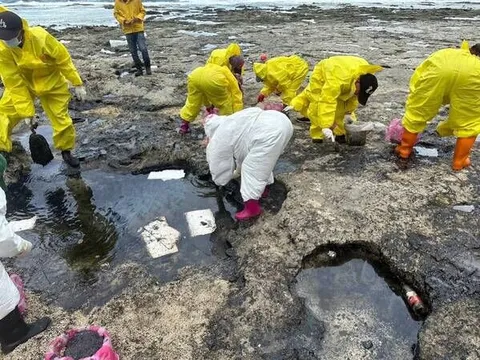
Oil cleanup on the sea-erosion platform in Dali District, Yilan County. Photo credit: Ocean Conservation Administration (OCA)
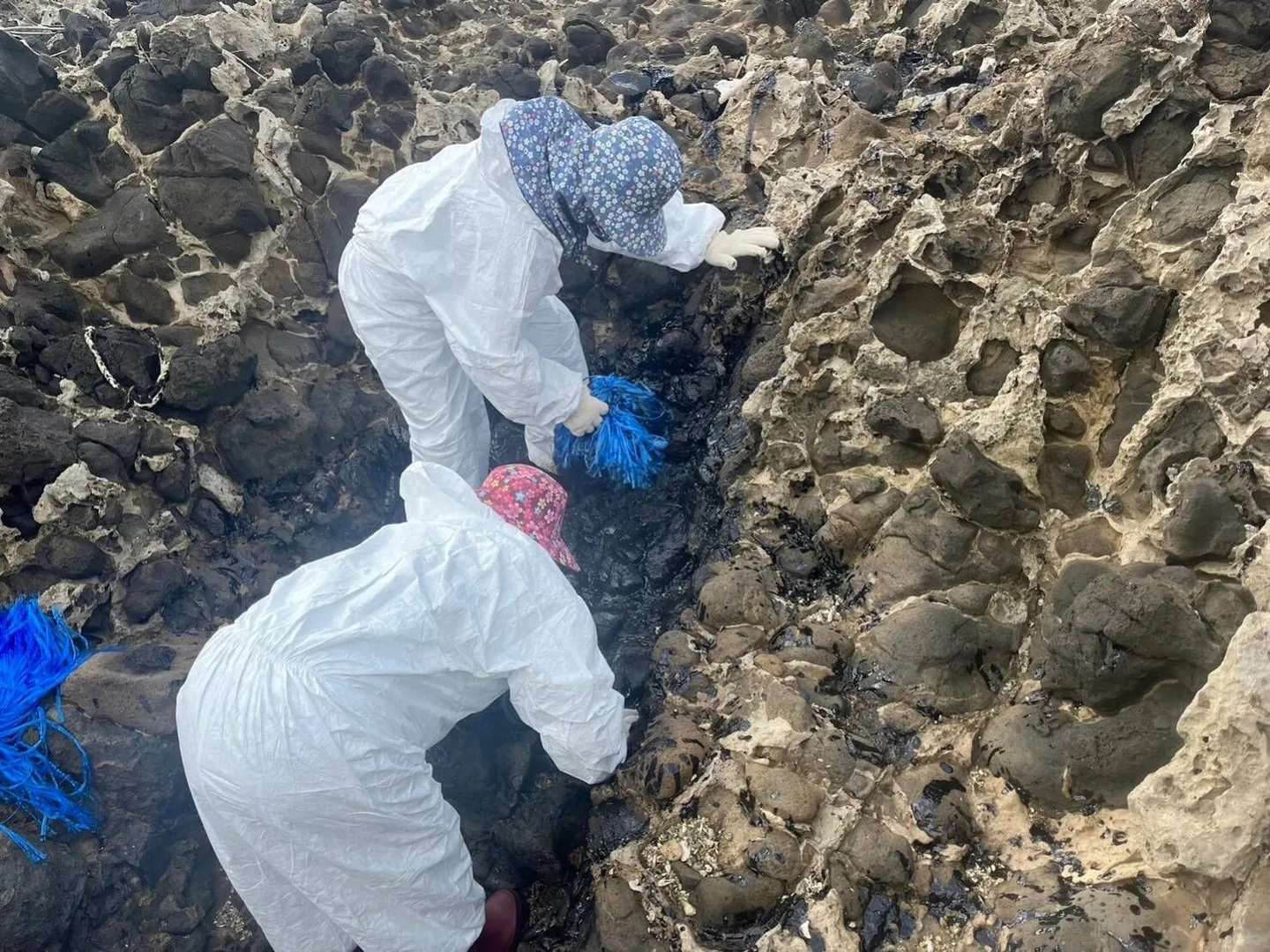
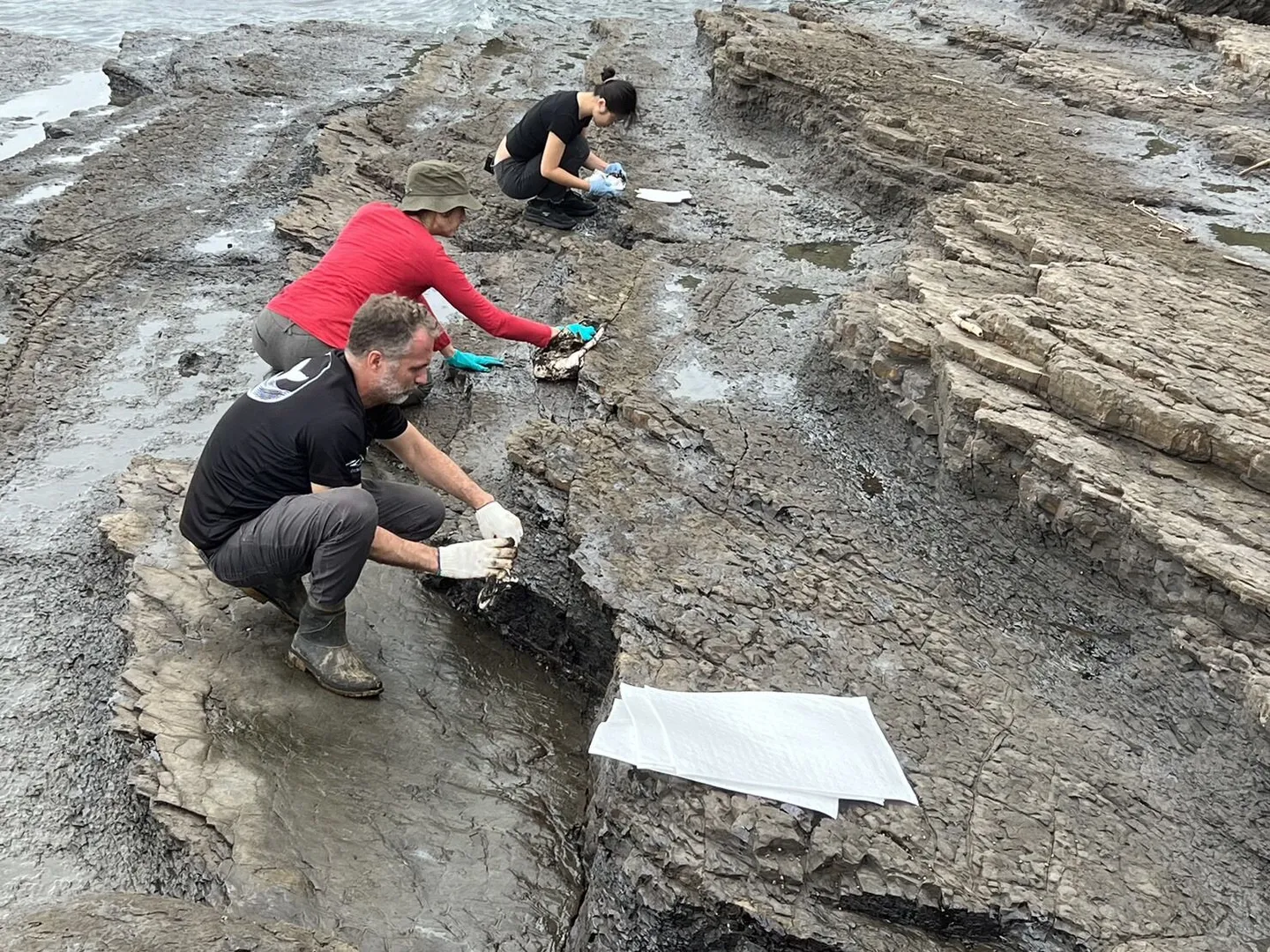
Shoreline cleanup near Green Island Lighthouse. Photo credit: Ocean Conservation Administration (OCA)
In a bid to minimise damage to the ocean, the Ocean Conservation Administration (OCA) and local governments mobilised more than 400 people by December 16, clearing oil pollution at 16 sites and removing a total of 2,705 kg of waste — including oil-absorbent cotton and sand and gravel. In this article, BlueTrend will walk you through how to handle an oil pollution incident, where oil pollution might come from, and how authorities track down the source. Read on!
What Should You Do When You Spot Oil Pollution?
If members of the public witness an oil pollution incident, the first step is to report it to the nearest port authority or maritime search-and-rescue unit, or to call the local county or city environmental protection bureau directly. Once a report of a "marine pollution incident" is received, the competent authority will launch emergency response operations based on the location of the incident, its severity, and the extent of the oil pollution.


Two Key Priorities in Managing Oil Pollution
When faced with oil pollution, the primary steps are to contain the pollution and prevent it from spreading, while also identifying the source as quickly as possible and cutting it off.
Containing the Pollution
-
Corralling and concentrating the oil — Oil booms are deployed to contain and isolate the slick, preventing the polluted area from expanding. Satellite imagery and drones may also be used for large-scale aerial monitoring, tracking current directions to get ahead of any spread. Deploying oil booms requires careful consideration of location and sea conditions. In this particular series of incidents, oil pollution occurred mainly in the intertidal zone, necessitating the use of "intertidal oil booms" — inflated on the upper half and ballasted with water on the lower half. At high tide, they float on the surface to block the spread of surface oil; at low tide, the water weight in the lower section keeps them firmly grounded on the beach, making them less susceptible to wave action.
-
Removing the oil — To remove oil, it must first be absorbed using specialised materials. Oil-absorbent cotton pads are commonly used, and in recent years some newer eco-friendly absorbent materials have emerged that draw oil into their pores and lock it in, improving removal efficiency. For oil pollution on rocky reef areas, for instance, eco-friendly absorbent materials can penetrate deep into crevices in the rock. Thanks to their hydrophobic properties and buoyancy, seawater can then be used to flush them into nearby tidal channels where the material can be collected and removed.
-
Disposing of oil-saturated waste — Whether it is recovered oil or oil-soaked boom materials, absorbent pads, and other waste, disposal must be handled carefully to avoid secondary contamination. Oil-containing waste is typically bagged and transported away from the affected area. In environments where removal is particularly difficult, straw or organic materials may be laid down and left to decompose naturally.
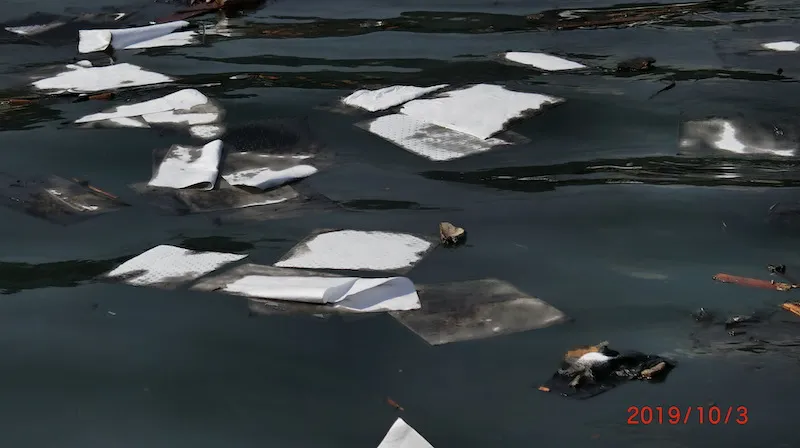
Oil-absorbent cotton pads in use. Photo credit: 巨晶複材科技股份有限公司
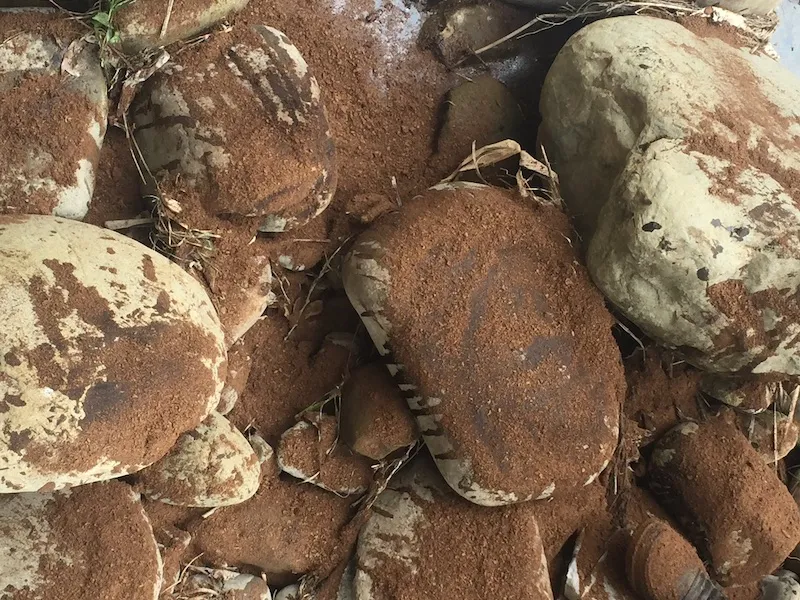
The advantage of eco-friendly absorbent materials is their rapid oil absorption, which quickly reduces slipperiness and allows cleanup personnel to work safely. Photo credit: 巨晶複材科技股份有限公司
Tracing and Controlling the Source
The OCA and local environmental protection bureaus collect evidence and take samples at the scene, while also employing "ocean current back-tracking simulation technology" and the Automatic Identification System (AIS) to investigate vessels that passed through the waters near the affected areas as potential pollution sources.
In order to minimise damage when incidents do occur, the OCA and local governments regularly conduct marine pollution response drills, familiarising relevant personnel with procedures for boom deployment, oil absorption, and post-incident cleanup — as well as the correct use of cleanup equipment.
In addition, each pollution incident requires a careful assessment of local environmental sensitivity and ecological resources to plan appropriate emergency response measures. When resources are limited, ecologically sensitive areas are given priority — which is why long-term ecological surveys and the accumulation of environmental data are also critically important.
Oil Spills on the Rise — Penghu Also Hit by Oil Pollution
Beyond the string of unidentified oil pollution incidents across five counties and cities, Penghu has also recently experienced an oil spill. A Cameroonian cargo vessel suffered a main engine failure, lost power, drifted, and ran aground at Houliao, Baisha, Penghu. On December 18, oil was found spreading along the coastline, with the diesel slick covering an area of approximately 10×300 metres. The Penghu County Environmental Protection Bureau, Coast Guard Administration, and OCA all mobilised in force, and local organisations also called for volunteers to join the cleanup effort.
Where Does Oil Pollution Come From?
The Penghu spill had a clear source, which enabled a faster and more effective response to contain the pollution and limit further impact. However, the origin of the multiple oil pollution incidents across the five counties and cities is still under investigation. There are widespread concerns that without being able to cut off the source of contamination promptly, relying solely on shoreline cleanup could consume enormous amounts of manpower and resources.
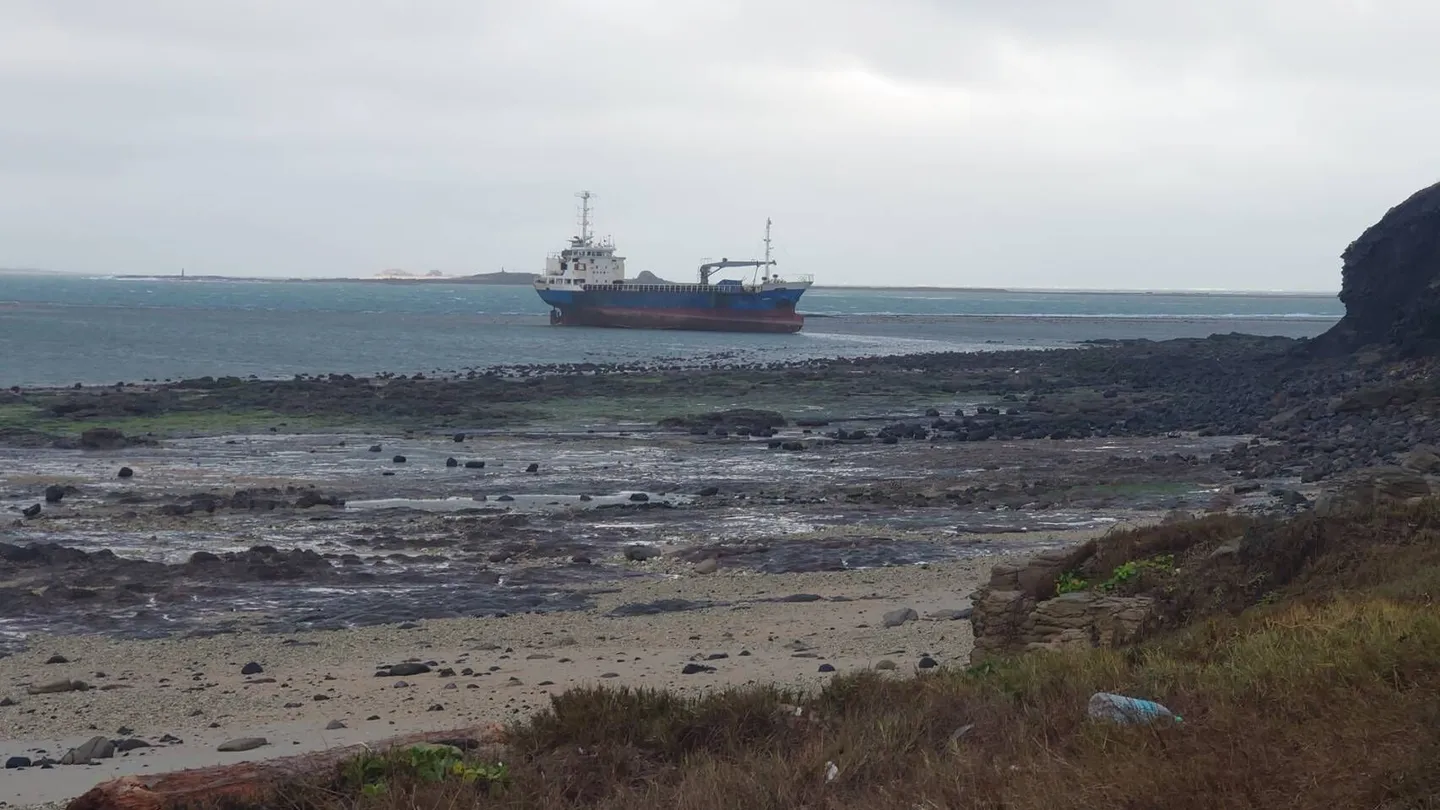
On the 17th, the Cameroonian cargo vessel "HAI SHOU" ran aground in the waters off Houliao, Baisha, Penghu. Photo credit: Ocean Conservation Administration (OCA)
Marine oil pollution can arise from many causes. BlueTrend has compiled four common types of oil pollution scenarios:
-
Maritime accidents: Ships transporting chemicals are subject to domestic and international regulations. However, if a vessel carrying chemical cargo suffers a maritime accident, marine pollution can result.
-
Oil transfer facility leaks: There are broadly two methods of oil transportation — offshore buoy transfer and in-port transfer. For offshore buoy operations, the subsea pipelines and equipment used can pose a latent risk of leakage if not properly maintained. In-port transfer requires careful monitoring of pipeline integrity and transfer pressure to ensure safe, leak-free operation.
-
Land-based pollution: When storage tanks or oil reservoirs malfunction, spilled oil can flow into rivers and ultimately enter the ocean, causing marine environmental pollution.
-
Illegal discharge of waste oil from vessels: With large numbers of vessels — commercial ships, cargo ships, passenger ferries, cruise ships, and more — comprehensive monitoring is extremely difficult. Illegal dumping of waste oil at sea from these vessels is also a potential source of pollution.
The OCA has warned that anyone caught illegally discharging waste oil into the sea can face a maximum penalty of NT$30,000,000 under the Marine Pollution Control Act.
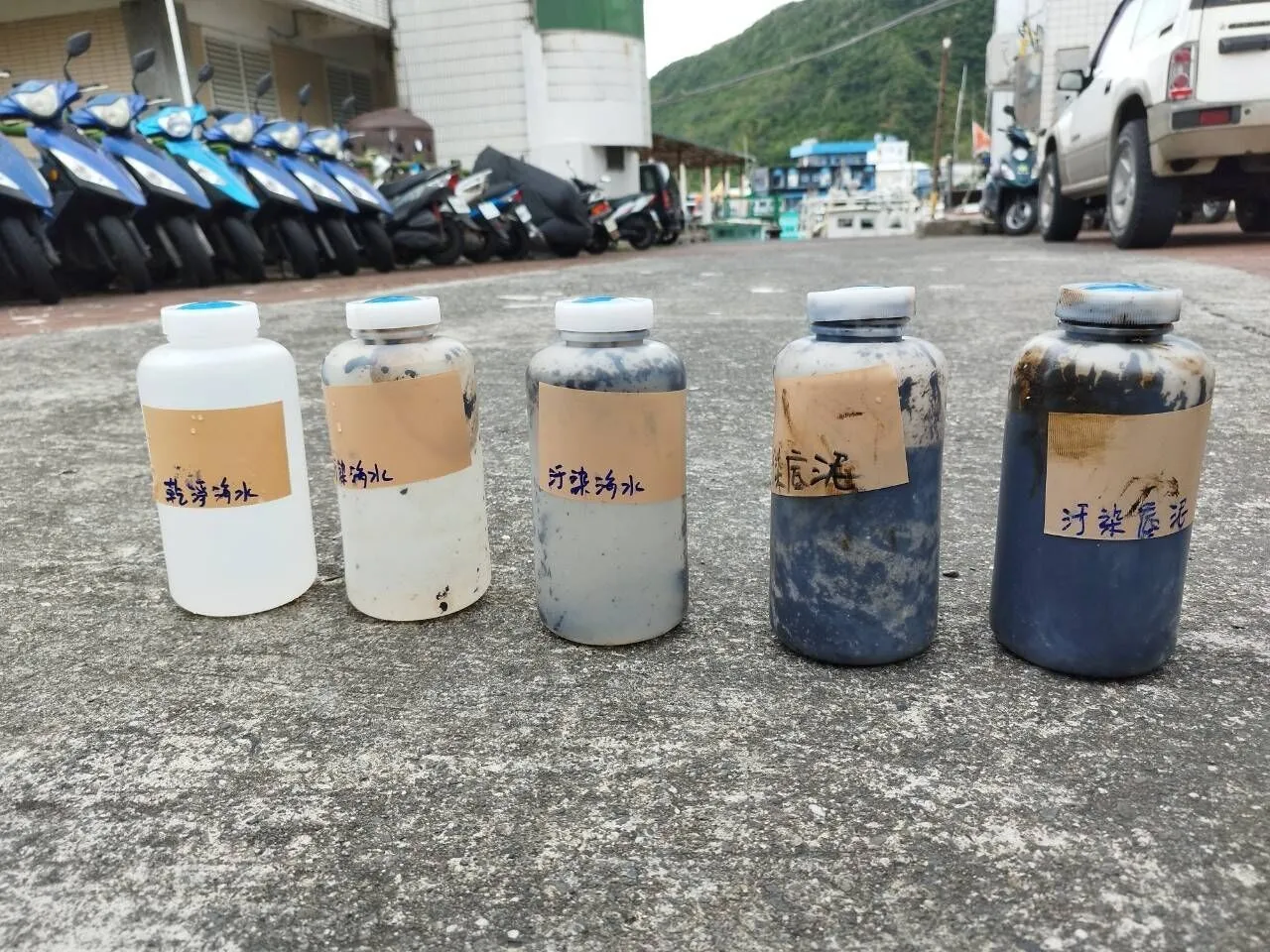
On December 2, the OCA conducted marine water quality sampling operations. Photo credit: Ocean Conservation Administration (OCA)
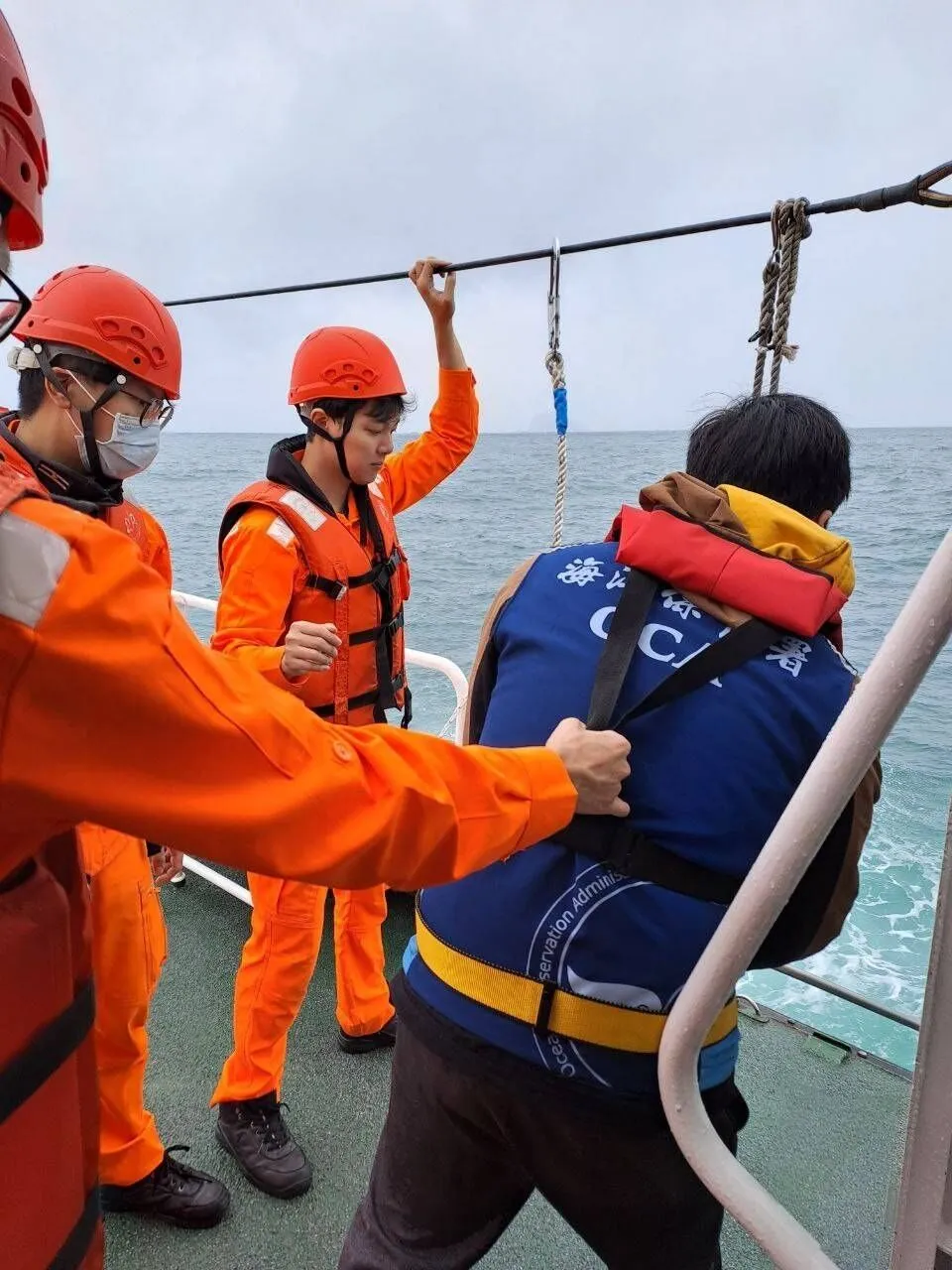
Coast Guard personnel joined the OCA to collect water samples in Wanli District, New Taipei City. Photo credit: Ocean Conservation Administration (OCA)
Removing oil pollution requires enormous amounts of manpower and resources. In addition to the OCA, county and city governments, and other relevant agencies working at full capacity, local organisations and environmental groups have also joined the cleanup effort — and in New Taipei and Yilan, divers and ocean enthusiasts have even headed to the shore voluntarily to help with the cleanup. BlueTrend reminds everyone: if you genuinely want to do your part and help remove oil along the coast, please reach out to local organisations or relevant environmental groups first. Always pay close attention to sea conditions and prioritise your personal safety — do not go on your own.
Any organisations in need of oil-absorbent materials are welcome to contact 巨晶複材科技股份有限公司, which is offering materials free of charge in hopes of helping to complete the cleanup more quickly. For enquiries regarding "German ESG eco-friendly oil-absorbent materials," please contact 巨晶複材科技股份有限公司 directly.
-
Contact: Li Yu-yan
-
Phone: 04-23055677
-
Email: info@synergytechnik.com.tw
References: