Contents(9)
- A Brief Introduction to the Humpback Whale
- Humpback Whale Population Decline — What Scientists Say
- Changes in Humpback Whale Population
- The Underlying Causes of Humpback Whale Decline
- Why Humpback Whale Conservation Matters
- Humpback Whale Research — Ocean Citizen Scientists as Unsung Heroes
- Humpback Whales Have Been Spotted in Waters Around Taiwan
- Related Links
- Further Reading
Whale watching ranks among the most talked-about pursuits in the diving community, and the humpback whale holds a special place as a dream encounter for many ocean lovers. A new study now reveals that between 2012 and 2021, the North Pacific humpback whale population declined by 20% — roughly 7,000 individuals — with scientists pointing to marine heat waves and elevated ocean temperatures as the likely primary cause.
This article offers a brief introduction to humpback whales, takes a closer look at the new research and the role ocean citizen scientists played in it, and shares some whale-watching tips drawn from past humpback sightings in waters around Taiwan.
A Brief Introduction to the Humpback Whale
The humpback whale, Megaptera novaeangliae, also known as the big-winged whale or humpback whale, belongs to the family Balaenopteridae.
- Physical characteristics: Adults measure approximately 14–17 metres in length; adult females are 1–1.5 metres longer than adult males.
- Behaviour and lifestyle:
- They feed on krill, various small fish, and cephalopods; their natural predators are orca and large sharks.
- They blow bubble nets underwater to encircle and herd prey before lunging forward with their mouths wide open to engulf large shoals of food.
- Common behaviours include breaching, pec-slapping, and tail-slapping.
- Male humpbacks sing during the breeding season, likely to attract mates.
- Sexual maturity is reached between ages 5 and 10; females reproduce every two years, and lifespans can reach 50–77 years.


Humpback Whale Population Decline — What Scientists Say
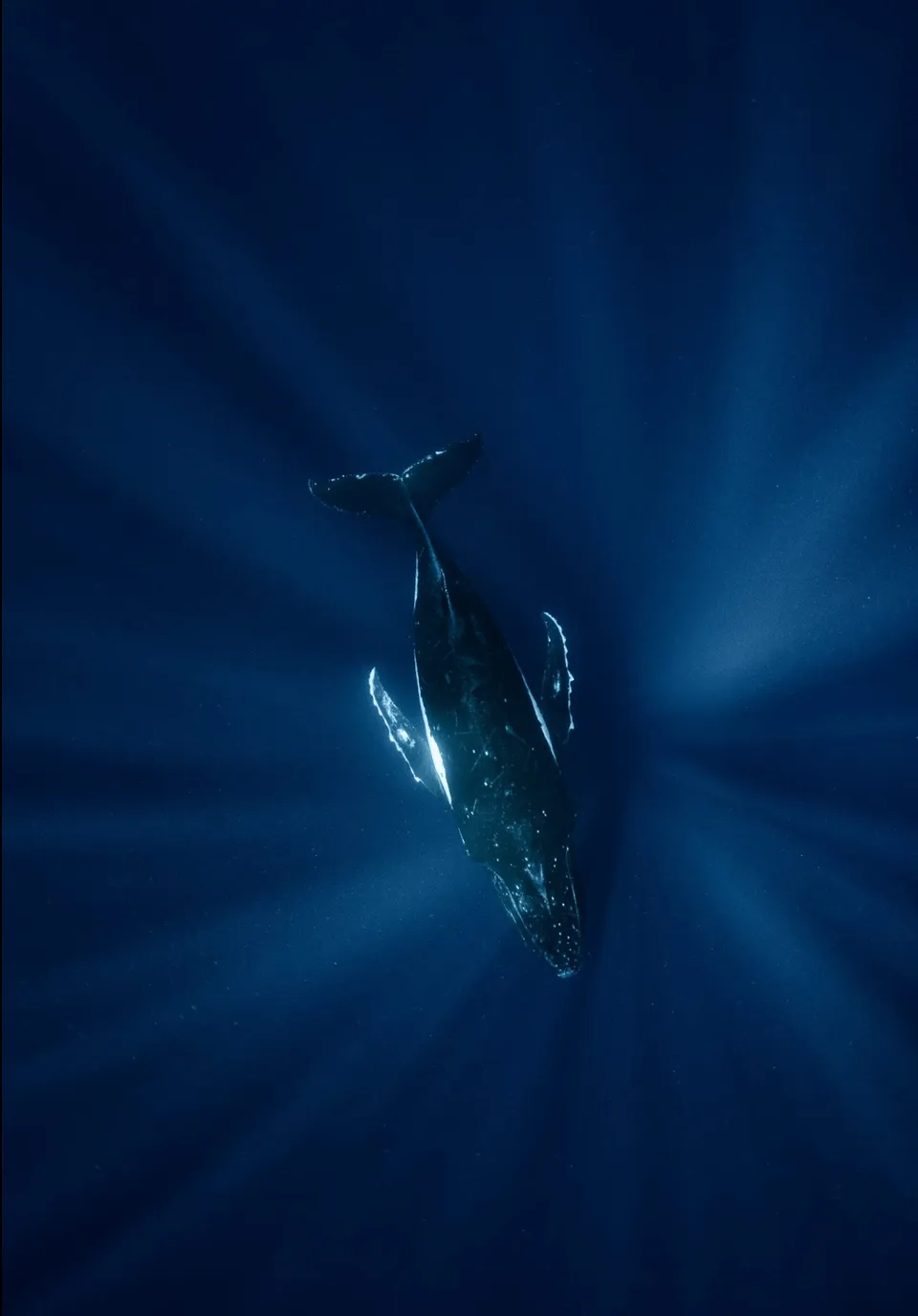
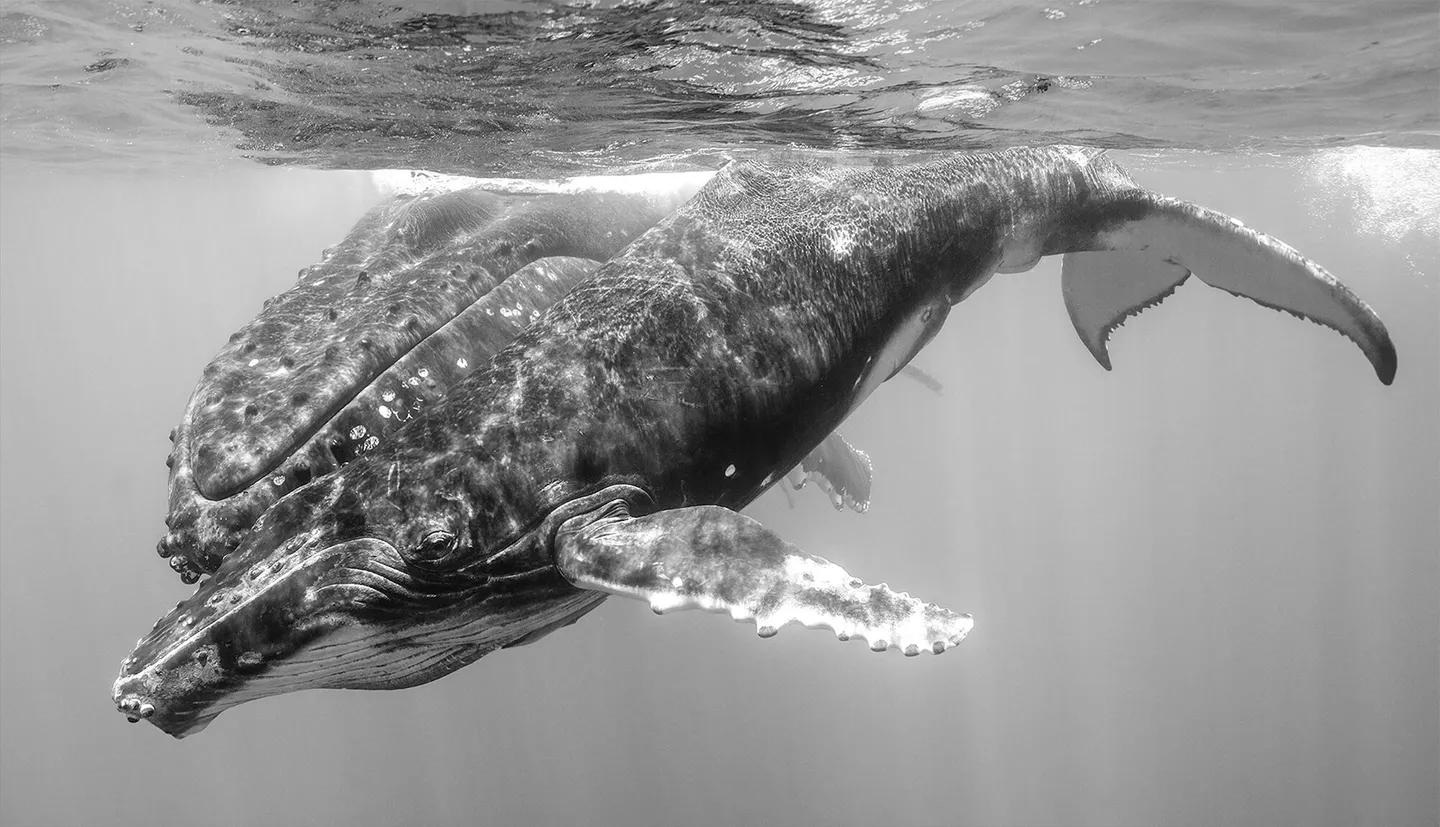
Humpback whales are facing an existential crisis. Photo credit: Zola Studio 左拉影像工作室
The latest research, published in Royal Society Open Science, saw researchers mine data from ocean citizen science databases to track changes in humpback whale populations over nearly two decades and estimate North Pacific humpback numbers across different periods.
Changes in Humpback Whale Population
- 2002 to 2012: numbers grew from 16,875 to 33,488 — nearly doubling.
- 2012 to 2021: numbers fell from 33,488 to 26,662 — a loss of nearly 7,000 individuals.
Going back even further, until the late 20th century humpback whales were still the target of large-scale commercial whaling in the North Pacific. Human hunting threatened the species' survival; data cited in the study estimated that only around 1,000 individuals remained in 1976. It was not until the International Whaling Commission (IWC) banned commercial whaling in 1982 that the humpback whale's slide toward extinction was reversed.
The hunting ban clearly allowed humpback whale numbers to recover significantly. However, because earlier population figures cannot be calculated precisely, it is difficult to define how many individuals would constitute a true "recovery." The research team had initially expected that, under the protection of the ban, humpback populations would continue to grow before levelling off — yet they found that numbers have instead declined in recent years.
The Underlying Causes of Humpback Whale Decline
Beyond the known threats of vessel strikes and entanglement in fishing gear, the study highlights an unprecedented marine heat wave between 2013 and 2016 as a major additional threat. Rising ocean temperatures altered the species composition and abundance of plankton communities, leading to reduced ocean productivity as well as lower fish reproductive rates and survival.
Humpback whales feed on small fish and crustaceans such as krill and herring, so a shrinking food supply has placed their survival under serious pressure. Researchers noted a sharp decline in calf numbers, an increase in "skinny" whales, and a rise in strandings.
Researchers are sounding the alarm: as human-caused global warming intensifies, marine heat waves are no longer isolated events. As they become more frequent, they are likely to cause increasingly severe harm to both wildlife and ecosystems.
Why Humpback Whale Conservation Matters
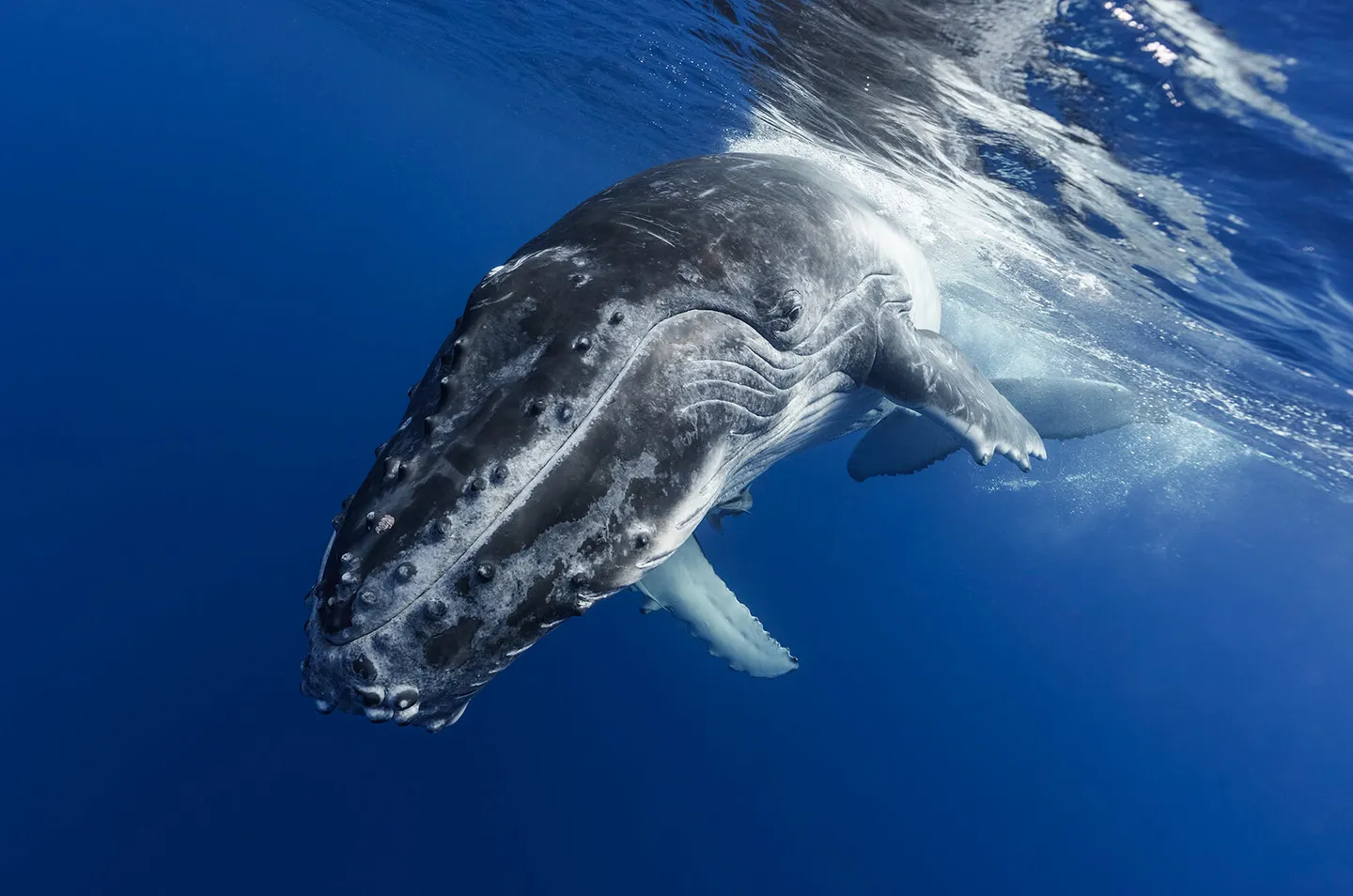
Humpback whales play a vital ecological role. Photo credit: Zola Studio 左拉影像工作室
Protecting humpback whales ultimately means protecting the ocean food chain — and the marine ecosystem as a whole. What other crucial ecological functions do humpback whales and other whales serve? Read on to find out.
- Ocean pump: As whales move vertically through the water column — surfacing to breathe and releasing waste — they act like a pump, transporting nutrients from the deep ocean to upper layers and promoting plankton growth.
- Carbon sequestration: Scientists have found that whales capture carbon from the atmosphere and store it in their bodies. When a whale dies and sinks to the seafloor, that carbon is not released back into the atmosphere. A 2019 report by the International Monetary Fund (IMF) noted that each large whale stores an average of 33 tonnes of CO₂ — equivalent to 1,513 times the annual absorption of a single tree.
- Warning signal: The numbers and health of humpback whales and other cetaceans are a key indicator of marine ecosystem health, just as the study described above is sounding the alarm that our ocean ecosystem is in distress.
Humpback Whale Research — Ocean Citizen Scientists as Unsung Heroes
This study brought together contributions from multiple organisations and scientists to produce its significant findings, but much of the credit also belongs to the many ocean citizen scientists who made it possible.
The study drew extensively on data accumulated by the ocean citizen science platform Happywhale — photos uploaded by more than 4,000 ocean citizen scientists, combined with AI technology. As of late April 2024, the platform had accumulated over 820,000 photos and identified more than 112,000 individual whales.
Happywhale
By using photos uploaded by ocean citizen scientists as a key reference for researchers, this reflects exactly the direction BlueTrend has been steadily cultivating. Since 2021, the team has been building an "Ocean Citizen Biodiversity Database"; to date, more than 8,000 ocean citizen scientists have participated, contributing over 12,000 marine life photos. AI-powered identification was gradually introduced in 2023, with the goal of expanding the impact of ocean citizen scientists through an "AI Ocean" data-driven approach.
Humpback Whales Have Been Spotted in Waters Around Taiwan
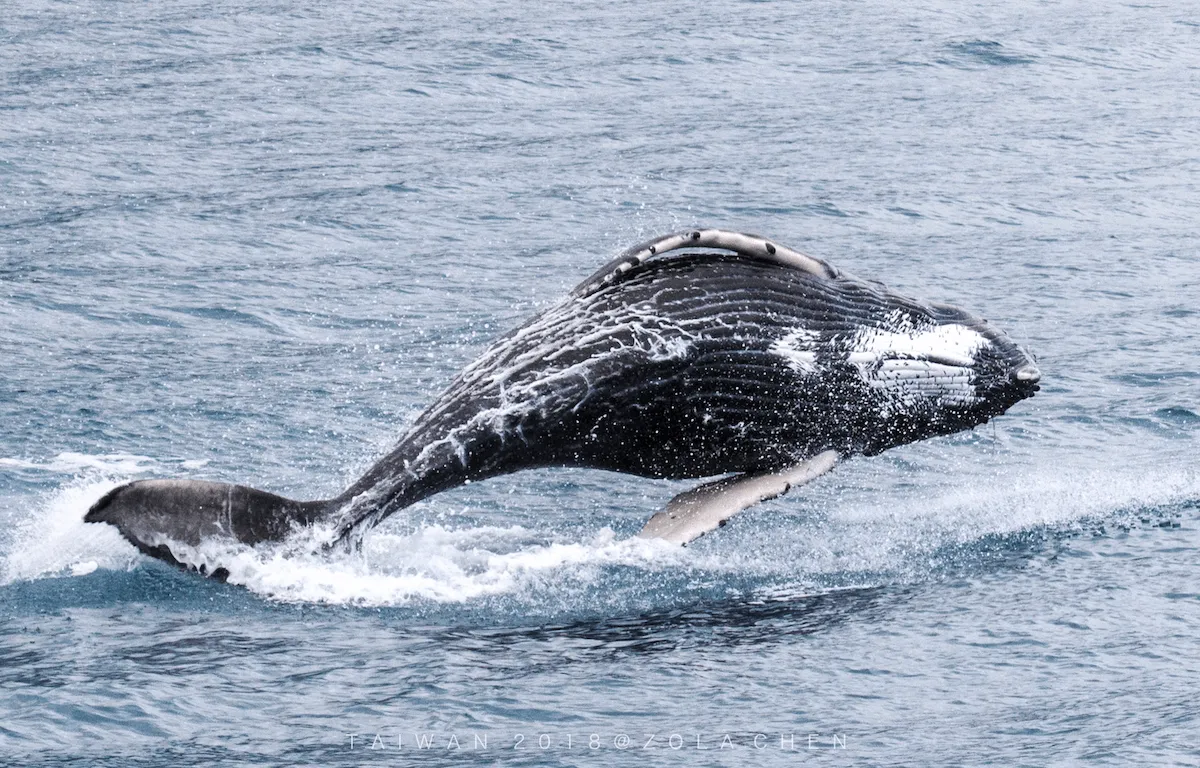
In Taiwan, you too have a chance to spot a humpback whale. Photo credit: Zola Studio 左拉影像工作室
Of the more than 80 species of cetaceans found worldwide, nearly 30 have been recorded in waters around Taiwan — most of them small cetaceans, with large whale sightings accounting for less than 10% of encounters. Fortunately, in recent years humpback whales have been spotted by members of the public near Orchid Island and Green Island, drawing a number of divers to those waters hoping to catch a glimpse of these giants. However, multiple boats converging on a whale, or divers attempting to approach a humpback underwater, can cause the animal significant stress; and without familiarity with humpback behaviour, it is difficult to anticipate risks, leaving both humans and whales at a higher risk of injury.
While Taiwan does not yet have comprehensive whale-watching regulations — only the Taiwan Whale-Watching Guidelines serving as the main reference — harassing cetaceans may still constitute a violation of the Wildlife Conservation Act, carrying penalties of up to one year's imprisonment, detention, or a fine of between NT$60,000 and NT$300,000.
Should you be fortunate enough to encounter a humpback whale, keep a few basic principles in mind: do not feed or touch the animal, and respect its natural behaviour; do not discard any man-made objects into the sea; do not intentionally chase or encircle cetaceans. And of course, don't forget to upload any precious photos to the "Ocean Citizen Biodiversity Database" and contribute your part to the AI Ocean initiative.
Related Links
-
Is Swimming with Sperm Whales Legal in Mauritius? What You Need to Know Before Joining a Tour
-
World Whale Day: A Formal Survey of the Deep Sea's Most Mysterious Visitors Has Begun!
Further Reading