Contents(5)
- "Long-Line Fishing" — Too Hard to Prove Deliberate Poaching of Humphead Wrasse?
- The Unfound Speargun — Justice for the Humphead Wrasse Remains Elusive
- Why Should We Protect the Humphead Wrasse?
- The Humphead Wrasse's International Conservation Status
- Beyond the Humphead Wrasse — Where Are the Marine Conservation Laws It Depends On?
In February 2021, residents on Orchid Island in Taitung were found to have caught a Humphead Wrasse, posed with a thumbs-up, and uploaded photos to a LINE group used for buying and selling farm and fishing produce. After an investigation by prosecutors and police, the individuals involved were charged with violating the Wildlife Conservation Act. The Taitung District Court has since handed down its verdict — both defendants were found not guilty.
A precious and rare Humphead Wrasse ended up as a catch, with what appeared to be a wound near the base of its pectoral fin, yet a conviction was impossible due to insufficient evidence. Where has Taiwan's marine conservation legislation fallen short in the battle to protect endangered species?
"Long-Line Fishing" — Too Hard to Prove Deliberate Poaching of Humphead Wrasse?
Reading the court ruling carefully, the key to the not-guilty verdict was the defendants' claim that they had been fishing at night using a rod and long line.
During the investigation, the Taitung District Court consulted the Ocean Conservation Administration, National Taiwan Ocean University, and the Taiwan Coral Reef Society to understand the habits of the Humphead Wrasse. Because the species is diurnal and rarely appears in shallow nearshore waters, the court concluded it was unlikely to be caught by "night shore fishing" — and used this reasoning to further infer there was "no clear criminal intent to illegally poach," resulting in acquittals.
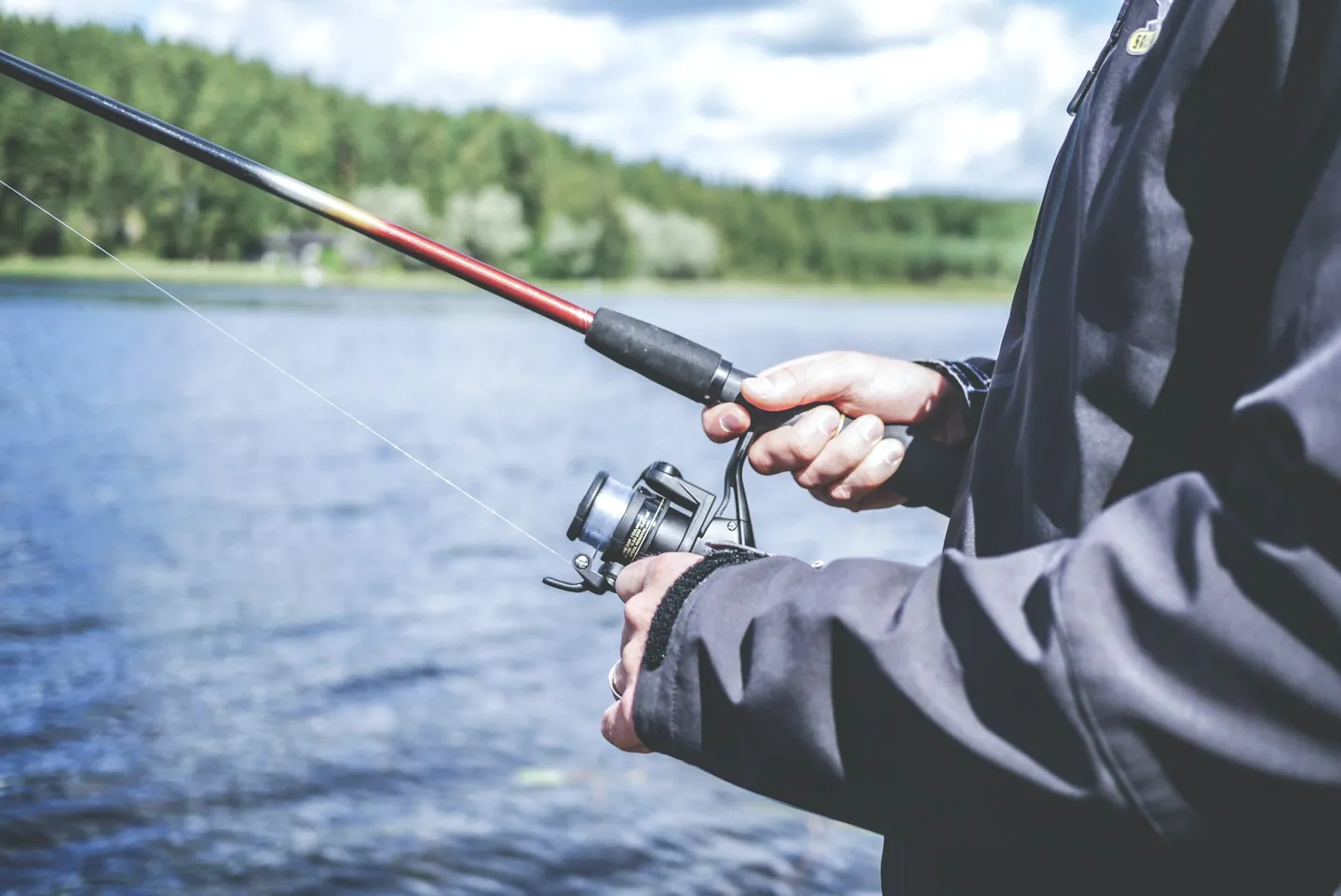
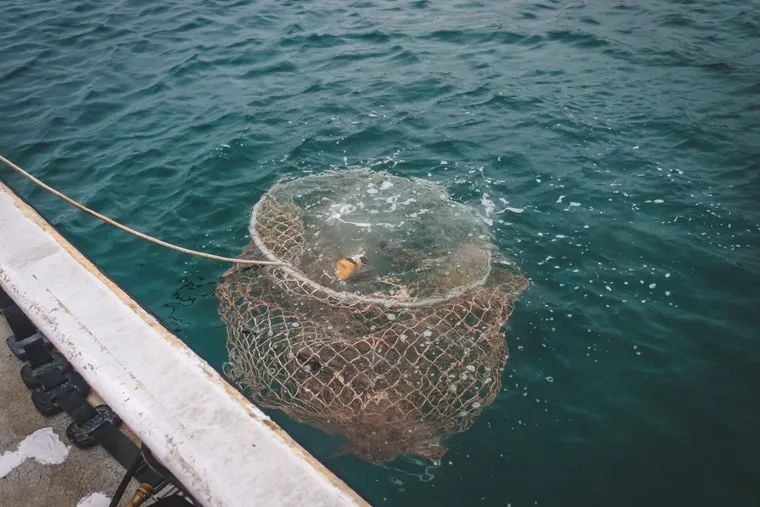
photo credit:Lum3n
However, what if the two men did not "deliberately fish for the Humphead Wrasse" but caught it by some other means? After all, looking at the photos from the time, the man was wearing a wetsuit (hardly attire for fishing), and the Humphead Wrasse at his feet appeared to have injuries. Yet the ruling stopped at "not caught intentionally by fishing."
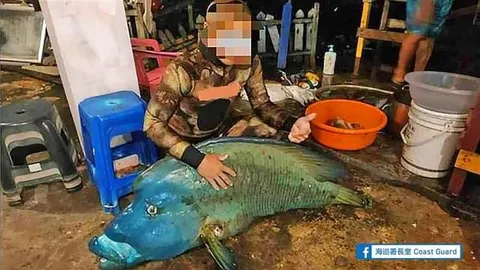
Residents on Orchid Island in Taitung caught a Humphead Wrasse, posed with a thumbs-up, and uploaded the photos to a LINE group for buying and selling farm and fishing produce. photo credit:海巡署長室


The Unfound Speargun — Justice for the Humphead Wrasse Remains Elusive
The poached and deceased Humphead Wrasse bore wounds close to vital organs including the heart and liver. However, during the trial the court argued that the fish itself was never seized as evidence and only an iron fork used for catching cuttlefish was found — making it impossible to determine from photographs alone whether the Humphead Wrasse had been killed by a sharp implement.
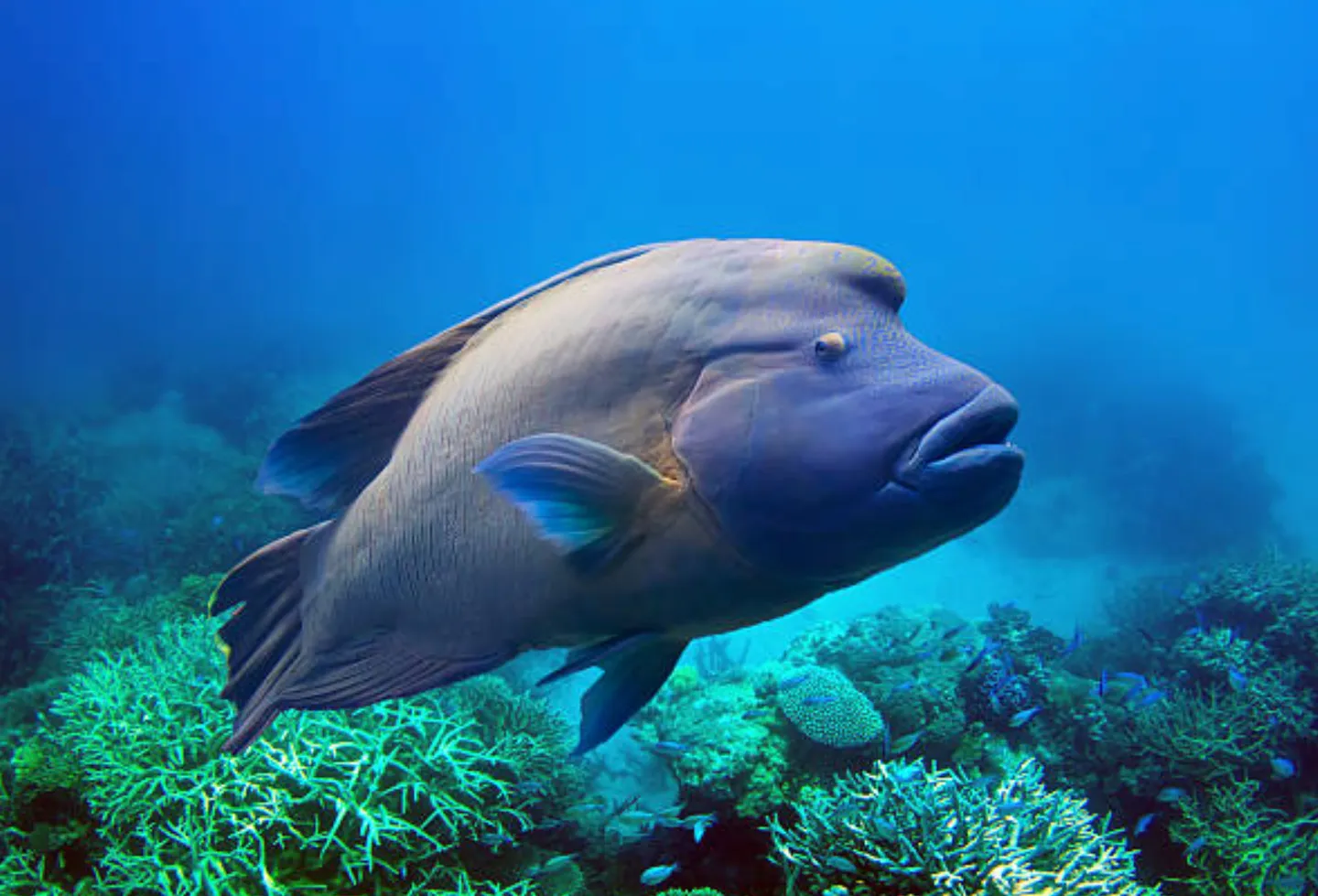
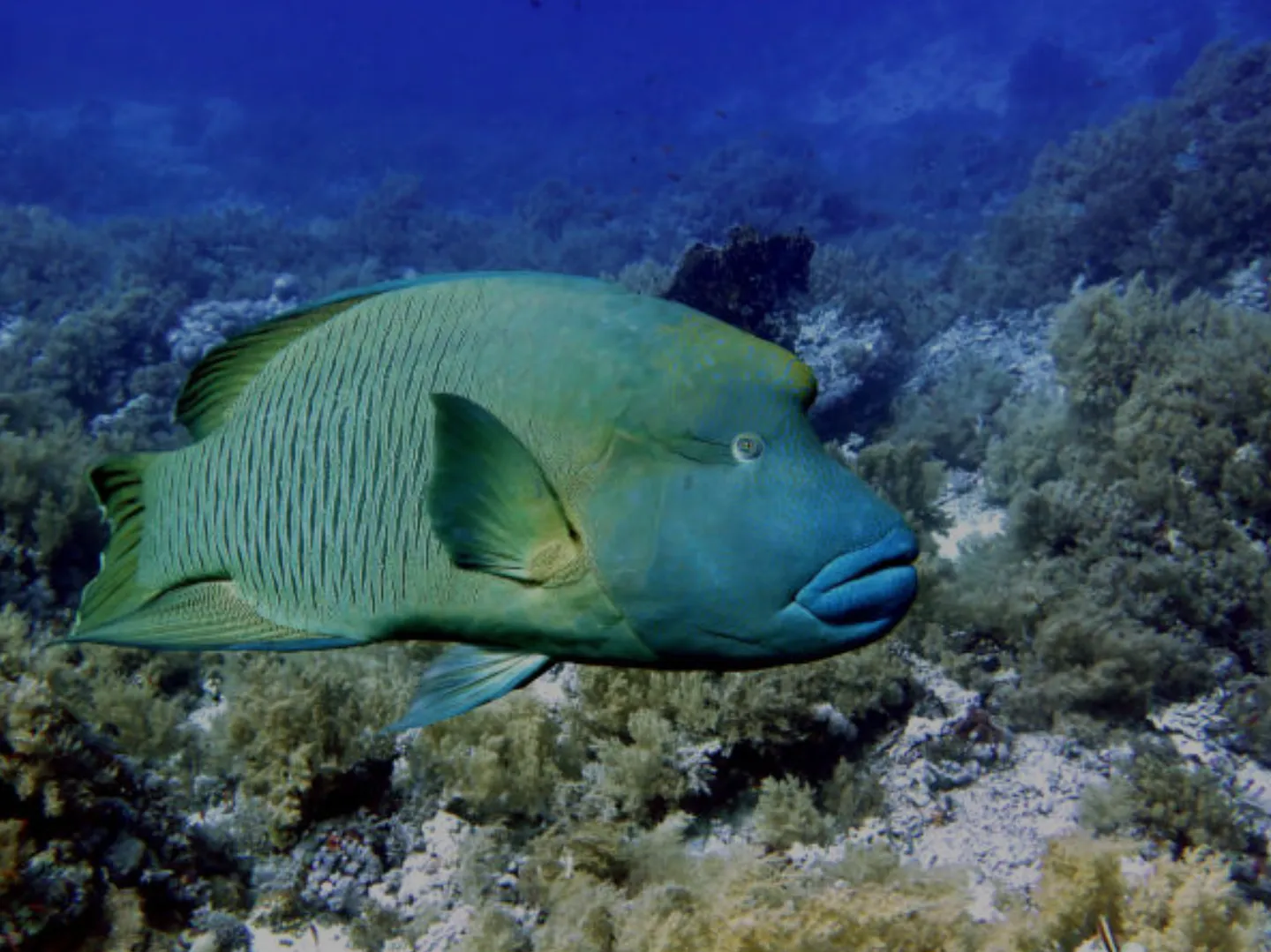
The precious and rare Humphead Wrasse. photo credit:hypergurl
This highlights the immense difficulty of gathering evidence in the marine realm. If a poacher discards their speargun into the sea after a catch and the weapon cannot be seized, a conviction is nearly impossible even when a Humphead Wrasse bears obvious wounds. Posting photos to a LINE group for buying and selling farm and fishing produce also failed to trigger penalties under the Wildlife Conservation Act.
Why Should We Protect the Humphead Wrasse?
The Humphead Wrasse — commonly known as the Napoleon Wrasse or Dragon King Wrasse — has the scientific name Cheilinus undulatus and belongs to the family Labridae within the order Perciformes.
According to surveys by the Taiwan Coral Reef Society, fewer than 30 Humphead Wrasse remain in the waters surrounding Taiwan, and the number continues to decline each year. Feeding primarily on crustaceans and mollusks, the Humphead Wrasse sits high in the food chain and serves as an indicator species for coral reef ecosystems. A continued decline in its numbers threatens the ecological balance of the entire marine environment.
The individual that was unfortunately poached measured approximately 110 cm in length and weighed around 26 kg. Based on calculations and estimates drawn from published research and FishBase, the fish was estimated to be approximately 16–18 years old — a creature that had taken years to grow to such a size, only to meet its end in the waters surrounding Taiwan.
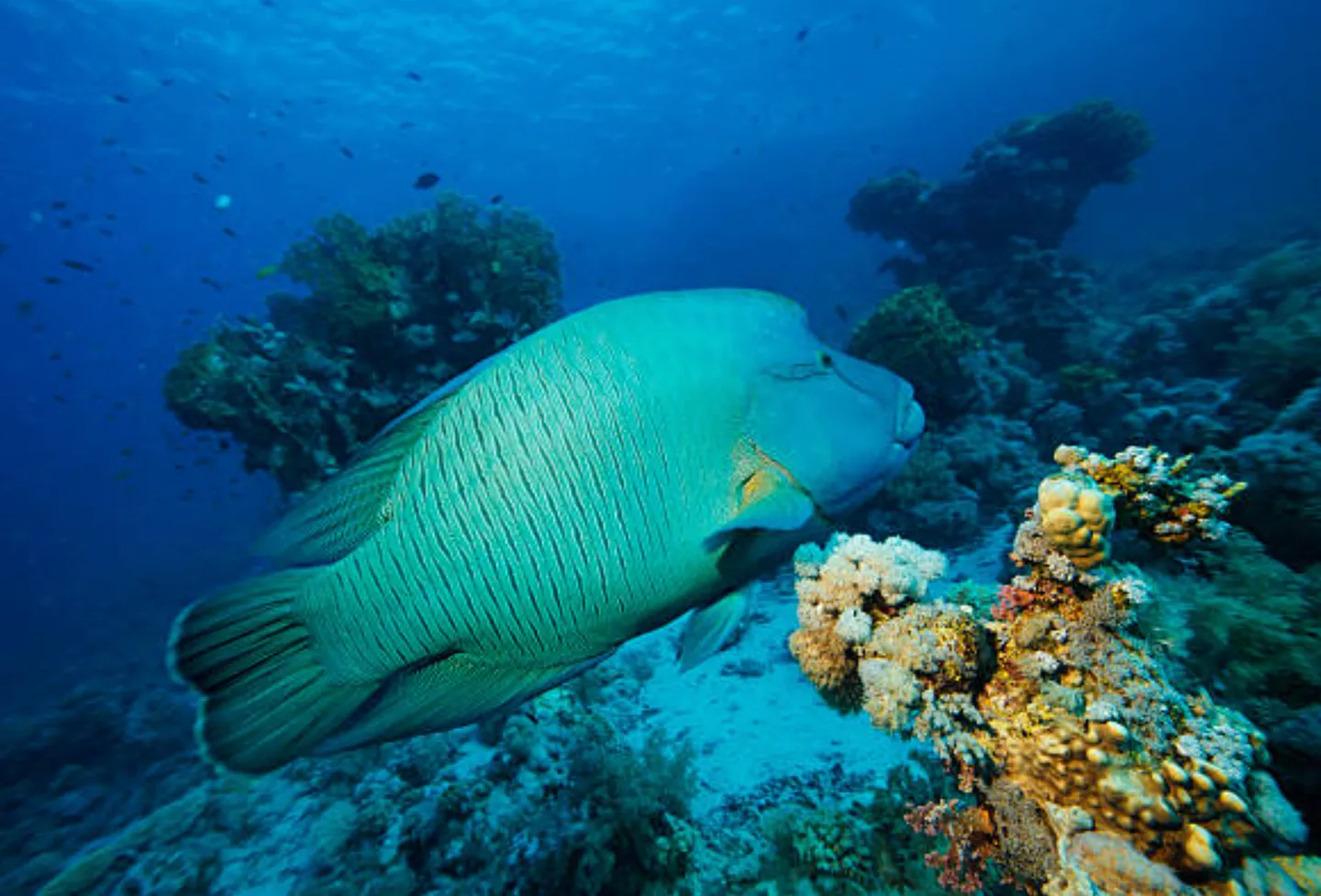
A healthy Humphead Wrasse can grow to as long as 200 cm. (Image for illustrative purposes only.) photo credit:ultramarinfoto
The Humphead Wrasse's International Conservation Status
The International Union for Conservation of Nature (IUCN) classified the Humphead Wrasse as an endangered species as early as 2004. It is also protected under the Convention on International Trade in Endangered Species of Wild Fauna and Flora (CITES), listed under Appendix II, which designates it as a second-level precious and rare wild animal — meaning that ownership, management, and trade of the species are all subject to regulation.
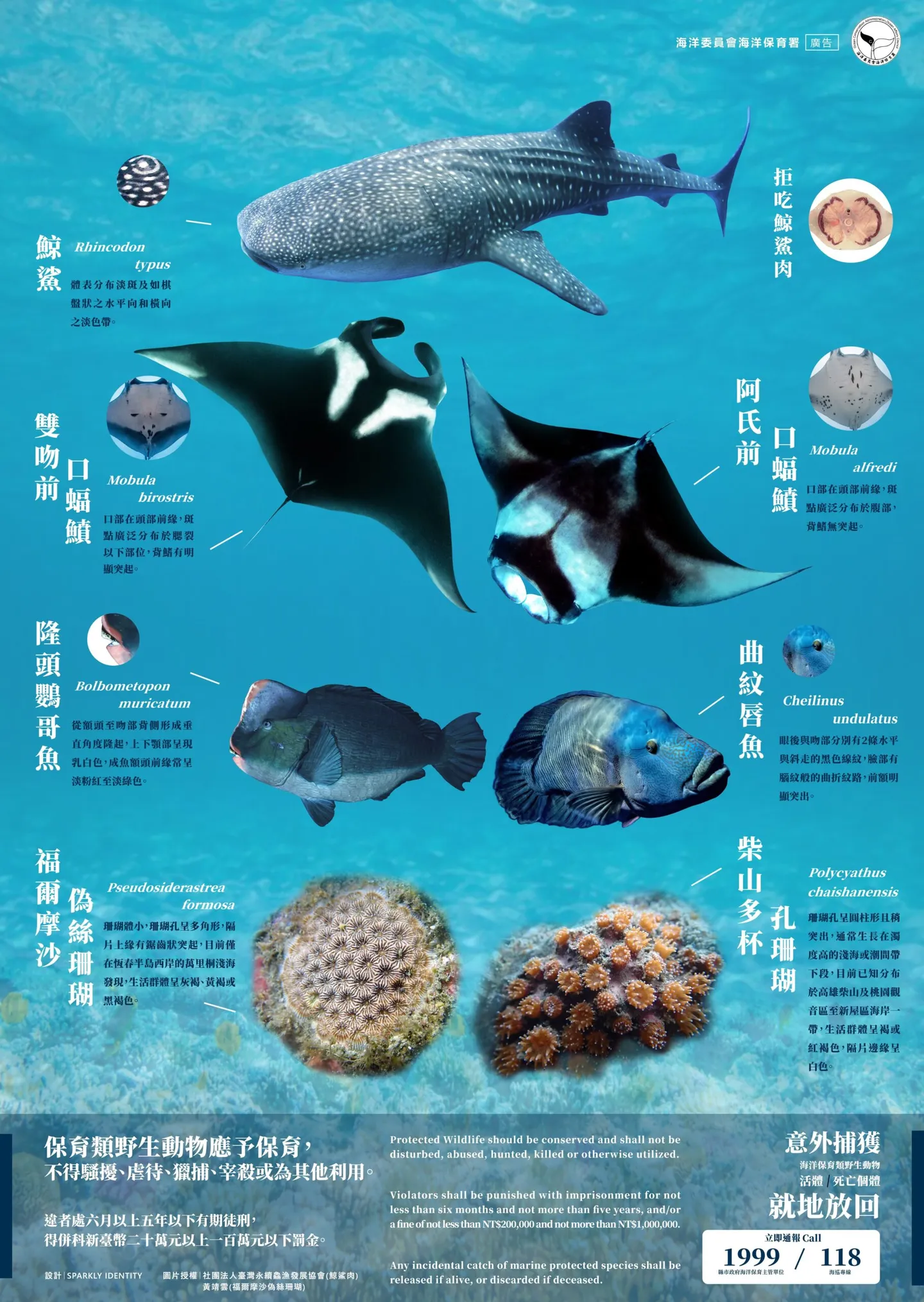
Protected wildlife announced by the Ocean Conservation Administration of the Ocean Affairs Council. Image source:Ocean Conservation Administration, Ocean Affairs Council
Beyond the Humphead Wrasse — Where Are the Marine Conservation Laws It Depends On?
Taiwan is surrounded by ocean on all sides. In addition to strengthening public conservation awareness, the country also needs marine conservation legislation that can effectively deter inappropriate behavior. Without laws and penalties that keep pace with the times, poaching incidents involving the Humphead Wrasse are unlikely to stop recurring.
Further reading:
- Worried that lights mislead sea turtles, Heron Island in Australia adopts a "lights out" culture — what about Xiaoliuqiu?
- A comprehensive survey of marine protected areas (MPAs): Chaojing outperforms Shendao! Uncovering the differences in management measures and intensity.
- Poaching of protected Humphead Wrasse on Orchid Island and Green Island keeps happening — what's the root of the problem?