Contents(7)
Hello everyone, I'm Ishino, an underwater photographer. Starting from last month, I embarked on a series called "Diving the Japanese Archipelago." In the first episode, I traveled to Ishigaki in southwestern Japan in search of manta rays. This February, I journeyed to the "edge of the world" in northeastern Japan — the Shiretoko Peninsula.
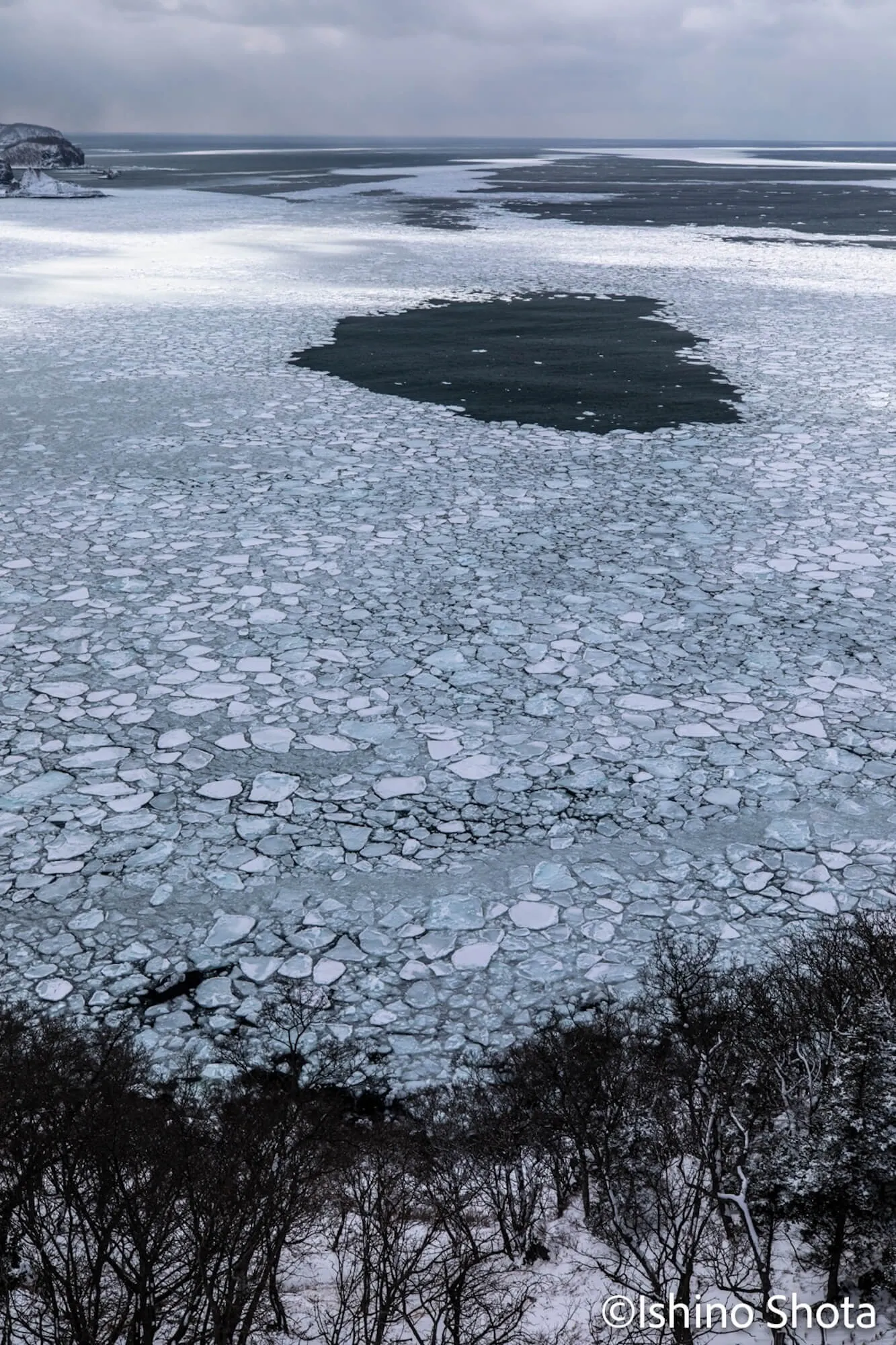
Cape Puyuni in Utoro, Shiretoko, near the drift ice mooring point
Shiretoko is one of Japan's five UNESCO World Natural Heritage Sites and the southernmost point in the Northern Hemisphere where drift ice can reach. It earned its World Natural Heritage designation because of its intact ecosystem, where the ocean, rivers, and forests form a complex food chain and energy cycle driven by drift ice. However, as the environment changes, there are growing concerns that drift ice may no longer be able to reach Shiretoko in the future.
Over the past four years, I have been traveling to Shiretoko, hoping to document the drift ice before it disappears. Every year from late January to early March, I spend about five weeks continuously photographing this ever-changing sea ice. Diving in Shiretoko is a battle against the bitter cold — water temperatures drop to -2°C, causing dive equipment such as regulators to freeze and even camera buttons to seize up. So why do I continue to dive here under such demanding conditions?
The Spectacular View Beneath the Drift Ice
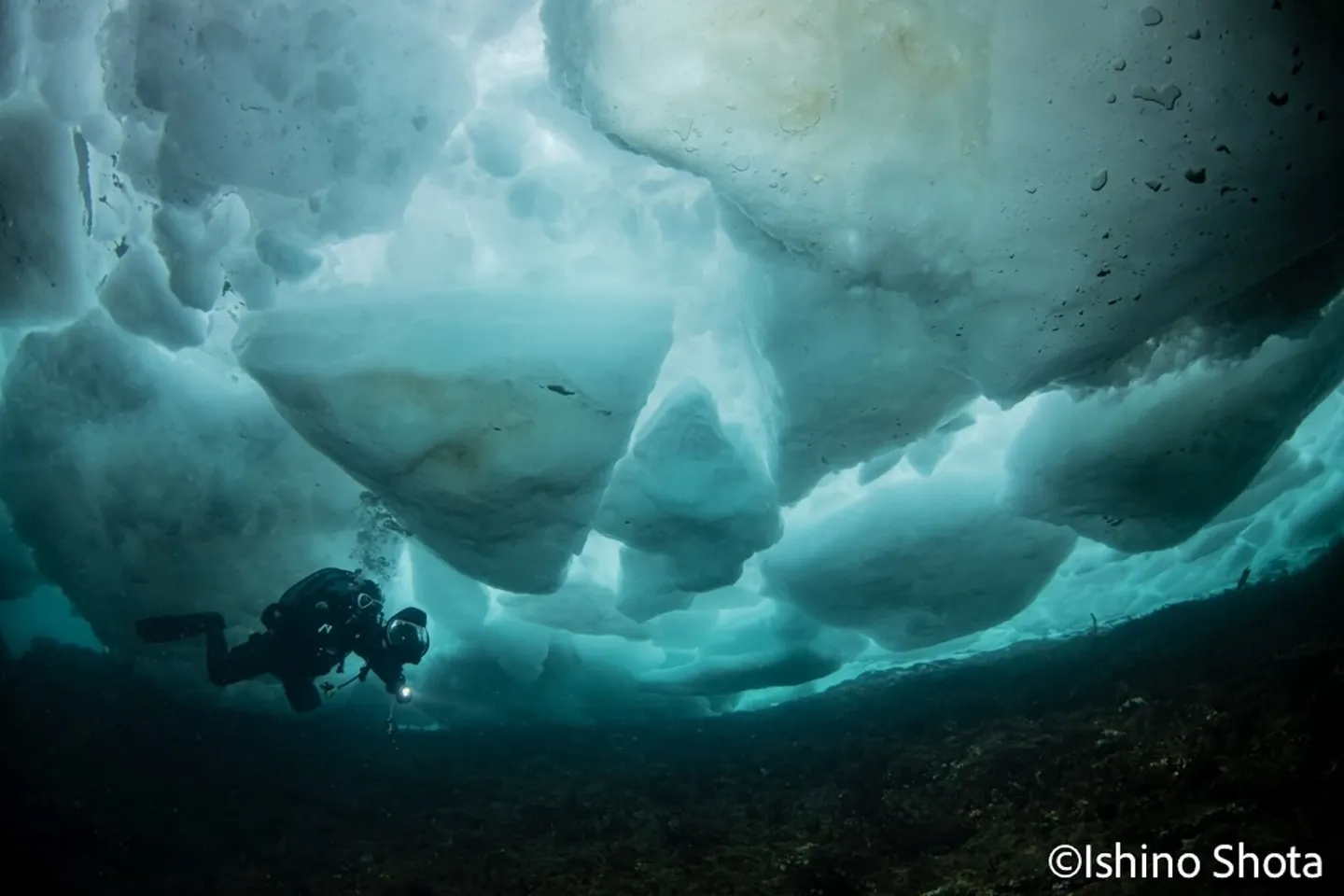
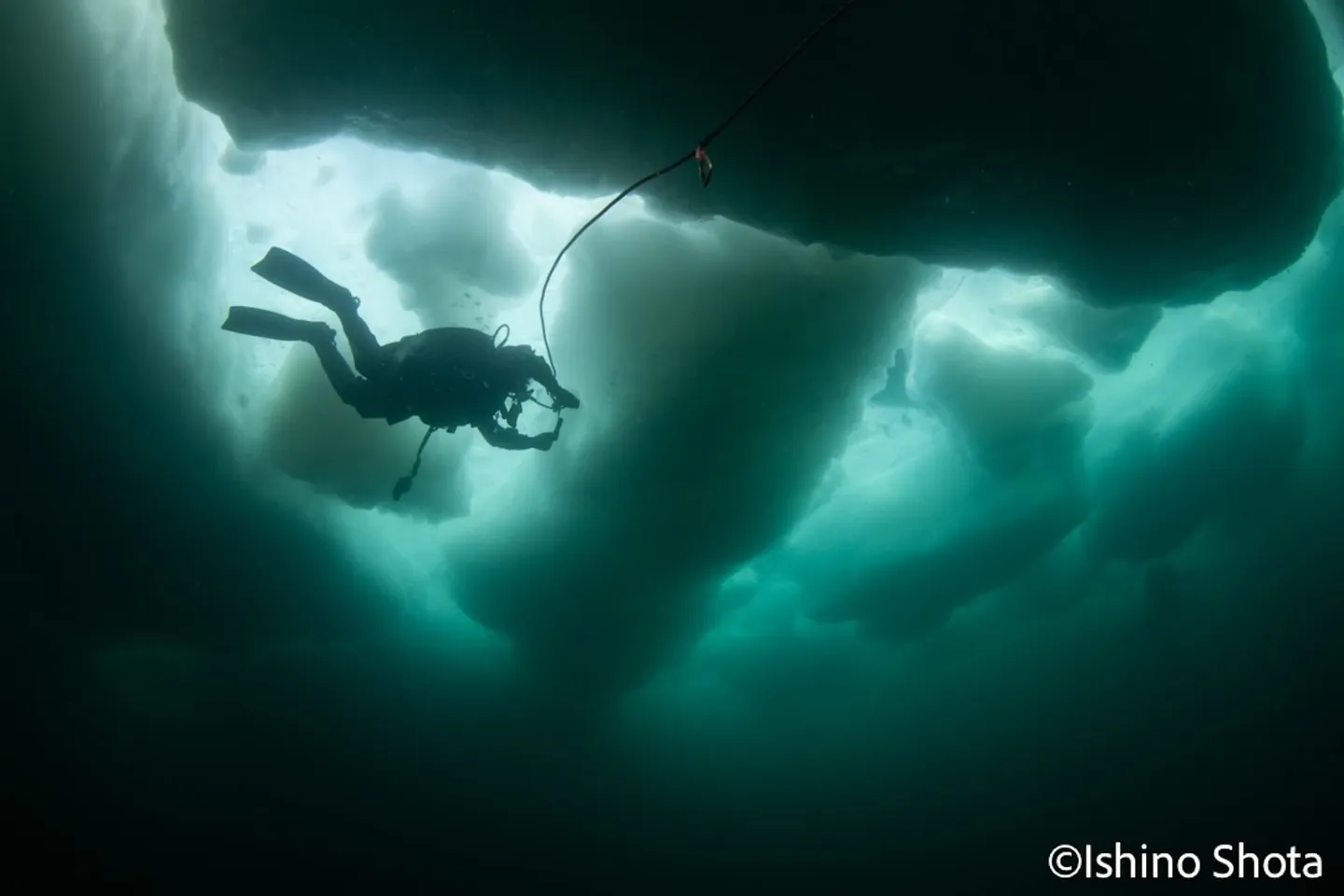
One of the most captivating aspects of ice diving is, without question, the sheer scale of the sea ice. Originating in the Sea of Okhotsk, the ice drifts under the influence of wind and ocean currents. Along the way, the floes collide with one another, growing ever larger before finally reaching Shiretoko. The drift ice often piles up and overlaps, forming spectacular pressure ridges.
Diving beneath these massive ridges is an absolutely thrilling experience. For me, one of the most enjoyable things is photographing divers under the drift ice.


Lush Kelp Forests
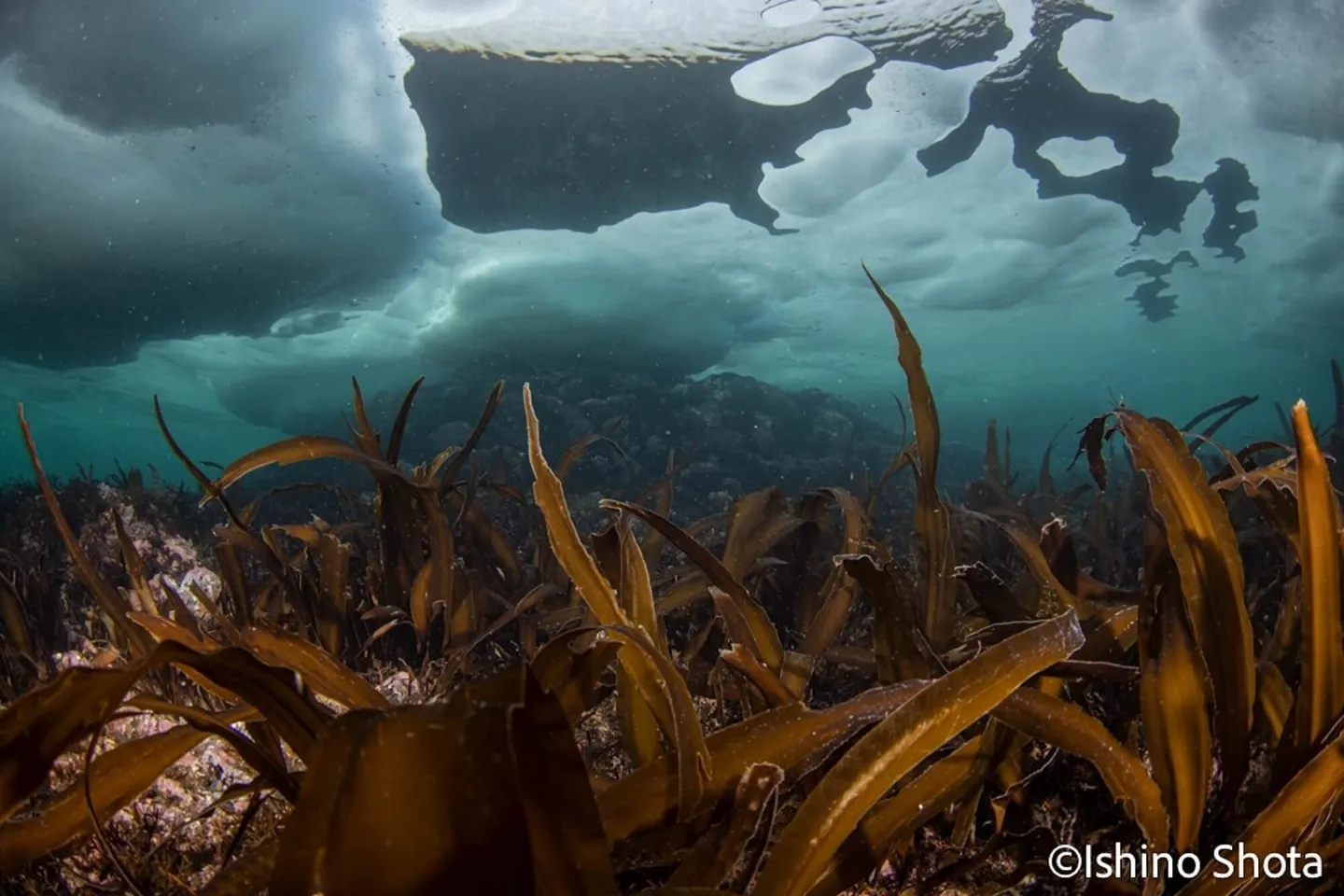
In the northern seas, vast kelp forests grow in dense abundance. Because kelp can absorb large quantities of carbon dioxide, it plays an important role in the concept of blue carbon. Beyond that, it serves as habitat, spawning ground, and feeding area for many fish species, providing a vital living environment for marine life.
For someone like me who usually dives in southern waters, every time I plunge into this kelp-filled sea it fills me with tremendous excitement. During ice dives, you even have the opportunity to photograph drift ice and kelp together in a single frame — a uniquely precious experience.
Ice Crystals
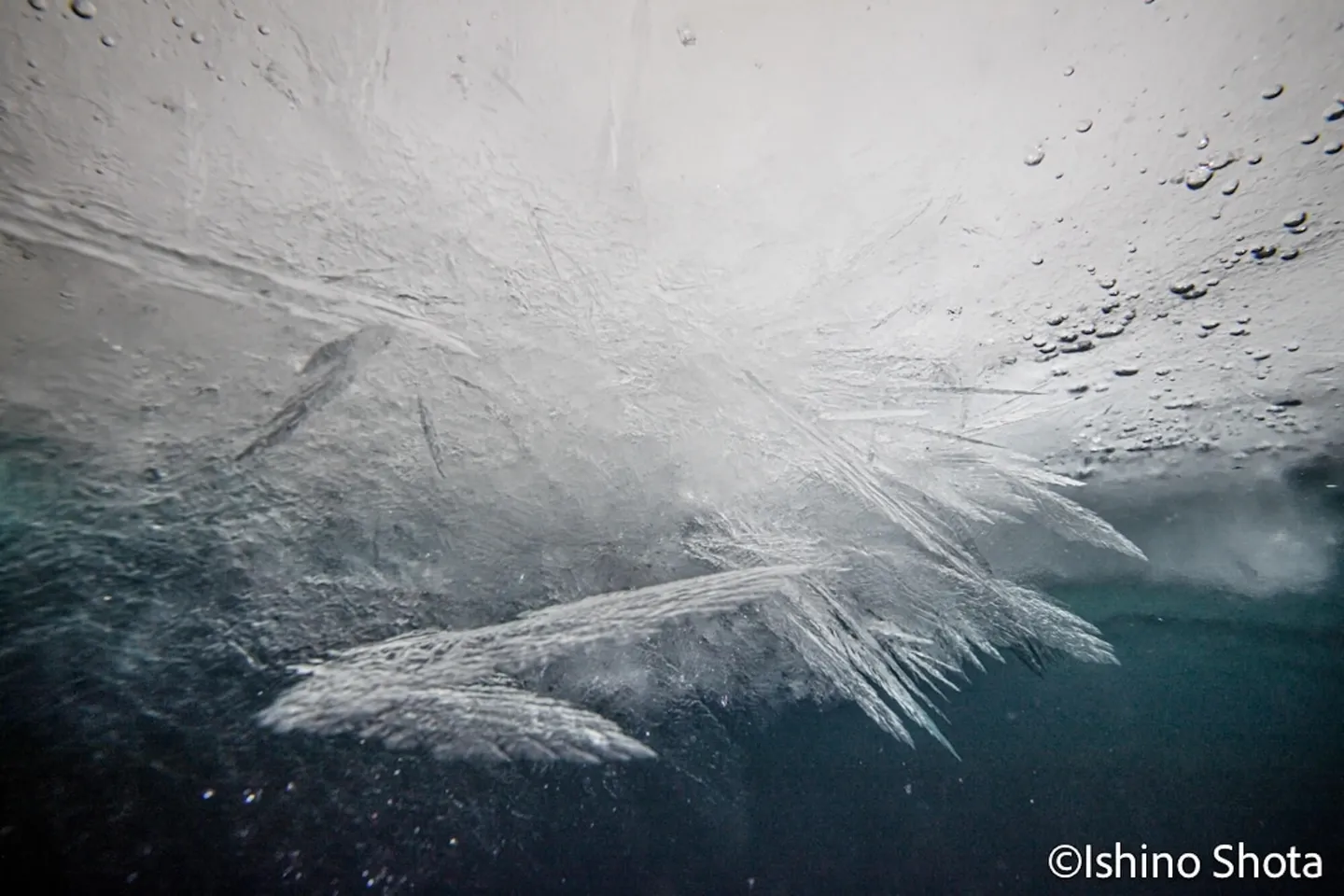
In the extreme cold of -2°C, some truly astonishing and beautiful natural phenomena emerge. One of them is the formation of ice crystals; these crystals may take needle-like or dendritic shapes, attaching themselves to drift ice, kelp, or other surfaces to create breathtakingly beautiful scenes.
Beneath the drift ice, diatoms known as Ice Algae are also trapped. As spring approaches and sunlight intensifies, these ice algae photosynthesize and multiply rapidly. The originally pale-blue drift ice gradually turns brown, completely transforming the underwater landscape.
Inside the drift ice itself, brine — seawater with an extremely high salt concentration — is present, and as it melts and seeps through the ice it forms distinctive channels. If you are lucky enough to witness droplets falling from the tips of these channels, it is a truly rare miracle. These phenomena arise from a combination of many conditions and cannot be seen at any time, which only adds to their mystique. Unfortunately, I was not able to capture this phenomenon on camera this year.
Marine Life Living in the Cold Sea
Although the cold northern ocean may seem barren, it actually nurtures an extraordinarily rich ecosystem. Smooth lumpsuckers and lumpfish are prime examples. The northern seas are home to many fascinating creatures — especially my favourite plankton. Let me introduce a few:
Sea Angels (Clione)
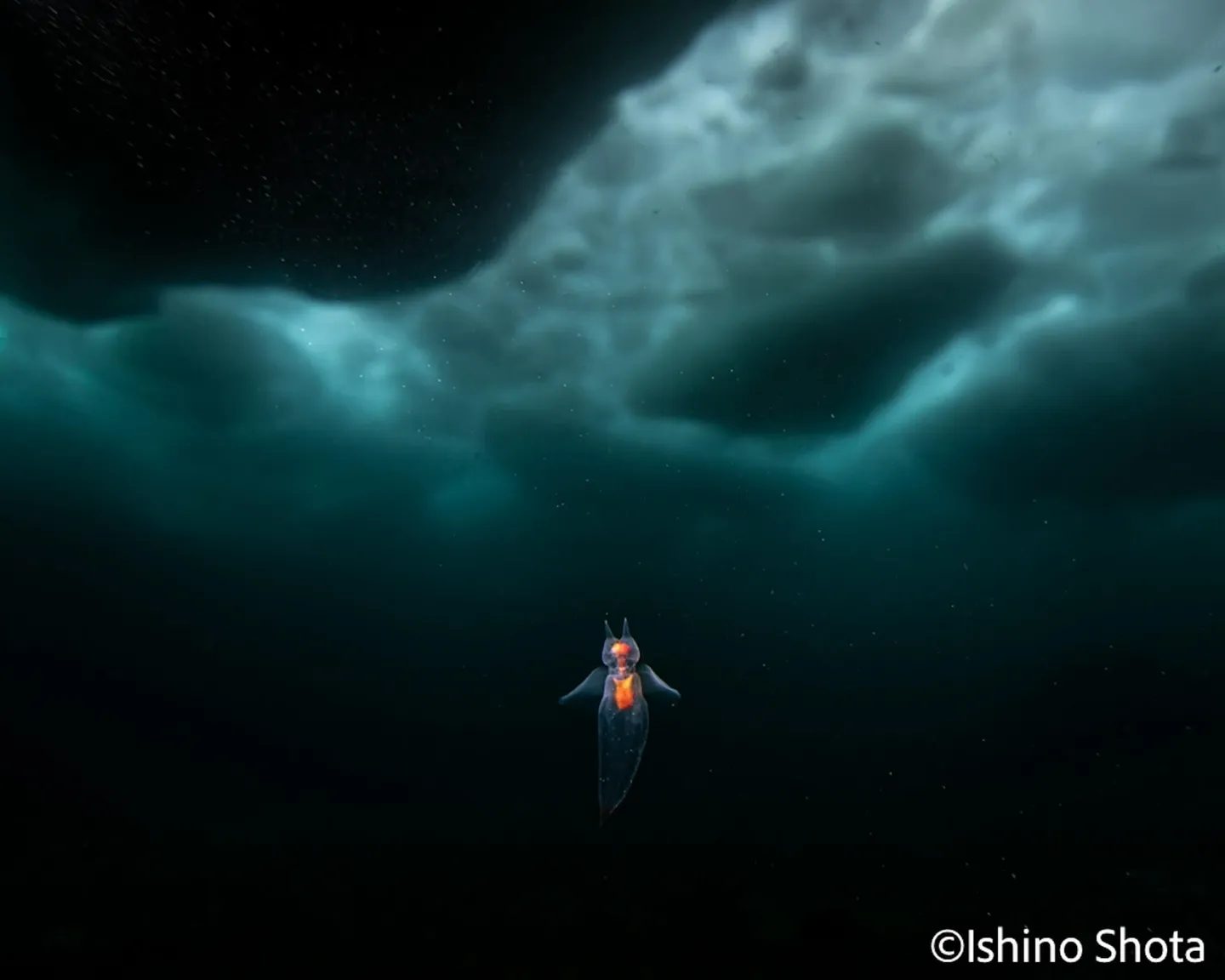
The most popular are sea angels, often called "ice angels." The "wings" they flutter as they drift with the current create an utterly charming spectacle.
Sea Butterflies (Limacina helicina)
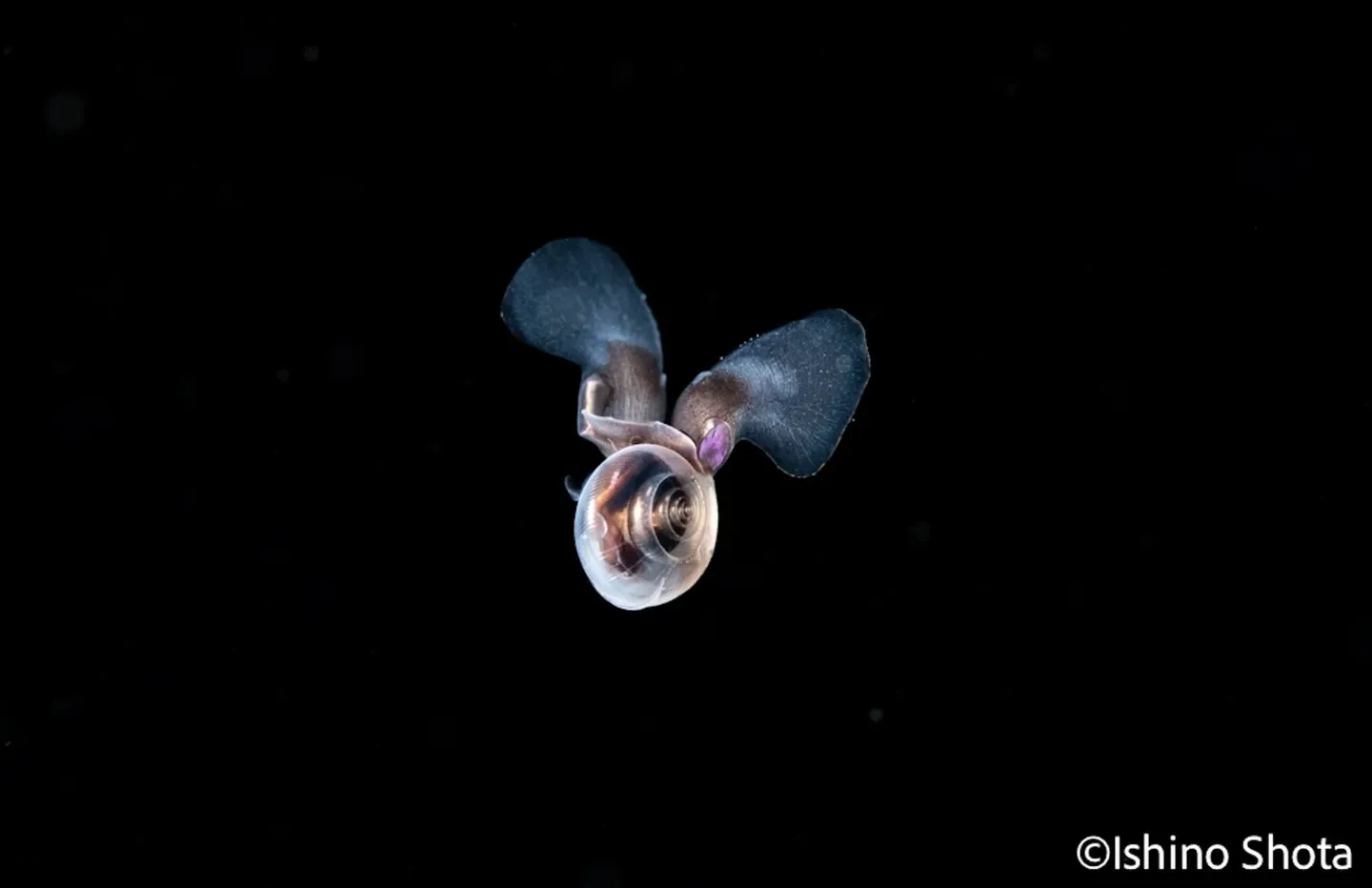
Like sea angels, sea butterflies are plankton that drift through the ocean — and they happen to be the sea angel's favourite food. However, as one of the first organisms to be highly sensitive to ocean acidification, their decline makes survival increasingly difficult for sea angels as well.
Brownbanded Moon Jelly
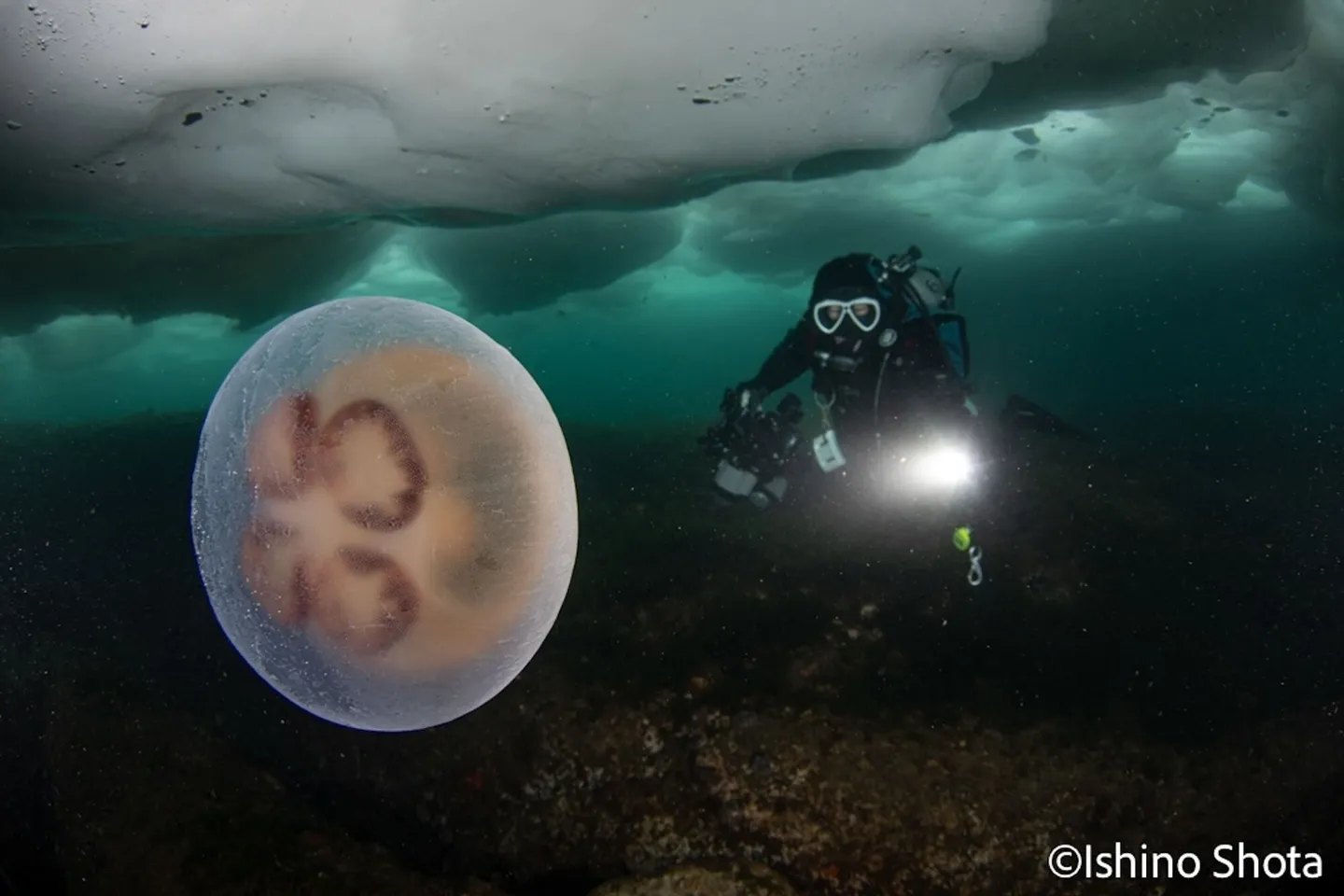
This jellyfish lives primarily in northern waters and can even be found in the deep sea. It is one of the largest jellyfish species, capable of growing up to 25 cm, and has historically bloomed in large numbers, causing problems for the fishing industry.
Lion's Mane Jellyfish
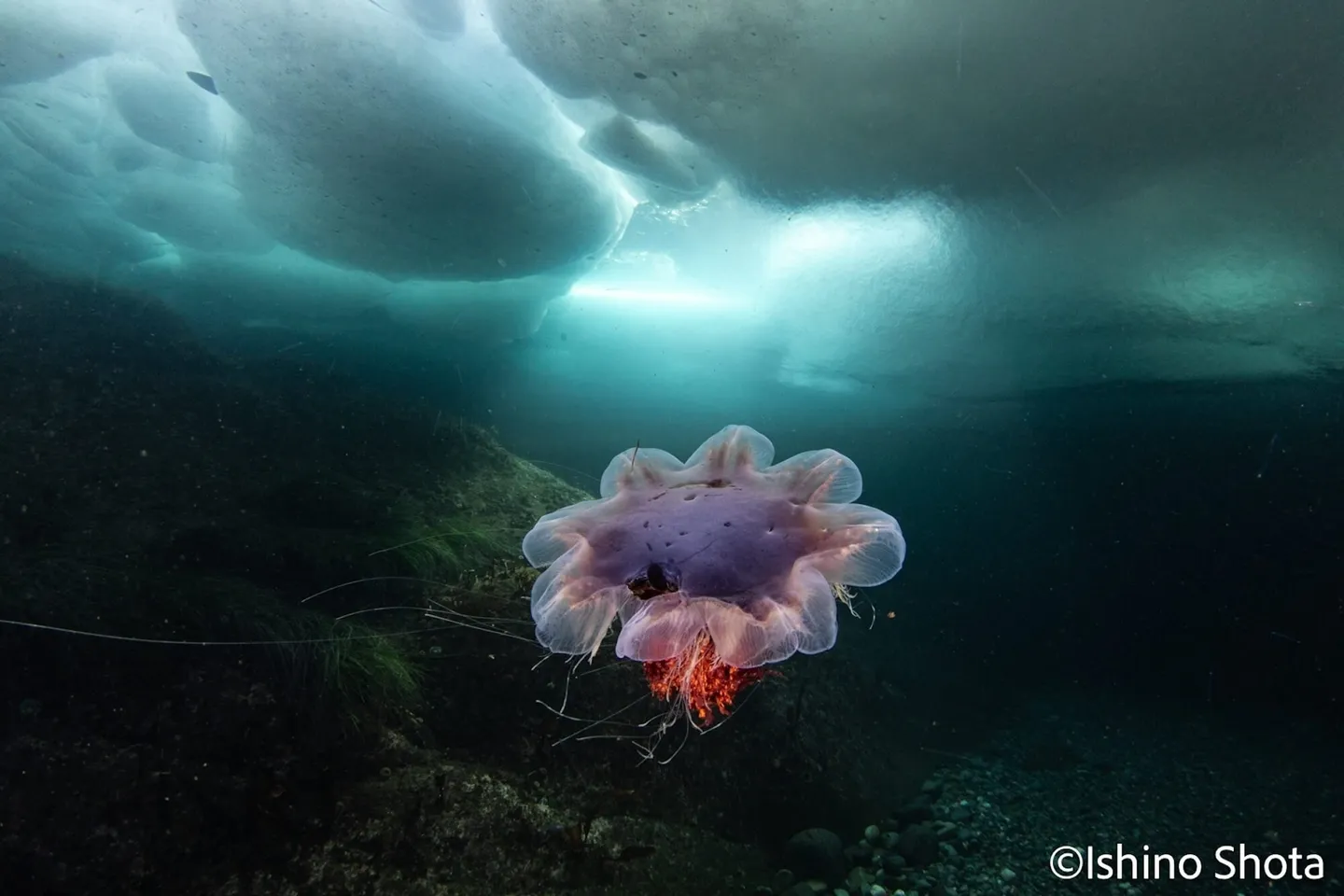
The bell of this jellyfish can reach up to 40 cm in diameter, divided into 16 lobes, eight of which are petal-shaped. It is highly venomous and will even attack and consume other jellyfish.
Drift Ice That Constantly Changes — As Though It Were Alive
From the time the drift ice arrives to when it melts spans roughly one month, and the transformation it undergoes during that period is nothing short of astonishing. For example, as ice algae absorb sunlight and multiply prolifically, the color of the drift ice shifts from blue to yellow and finally to ochre red.
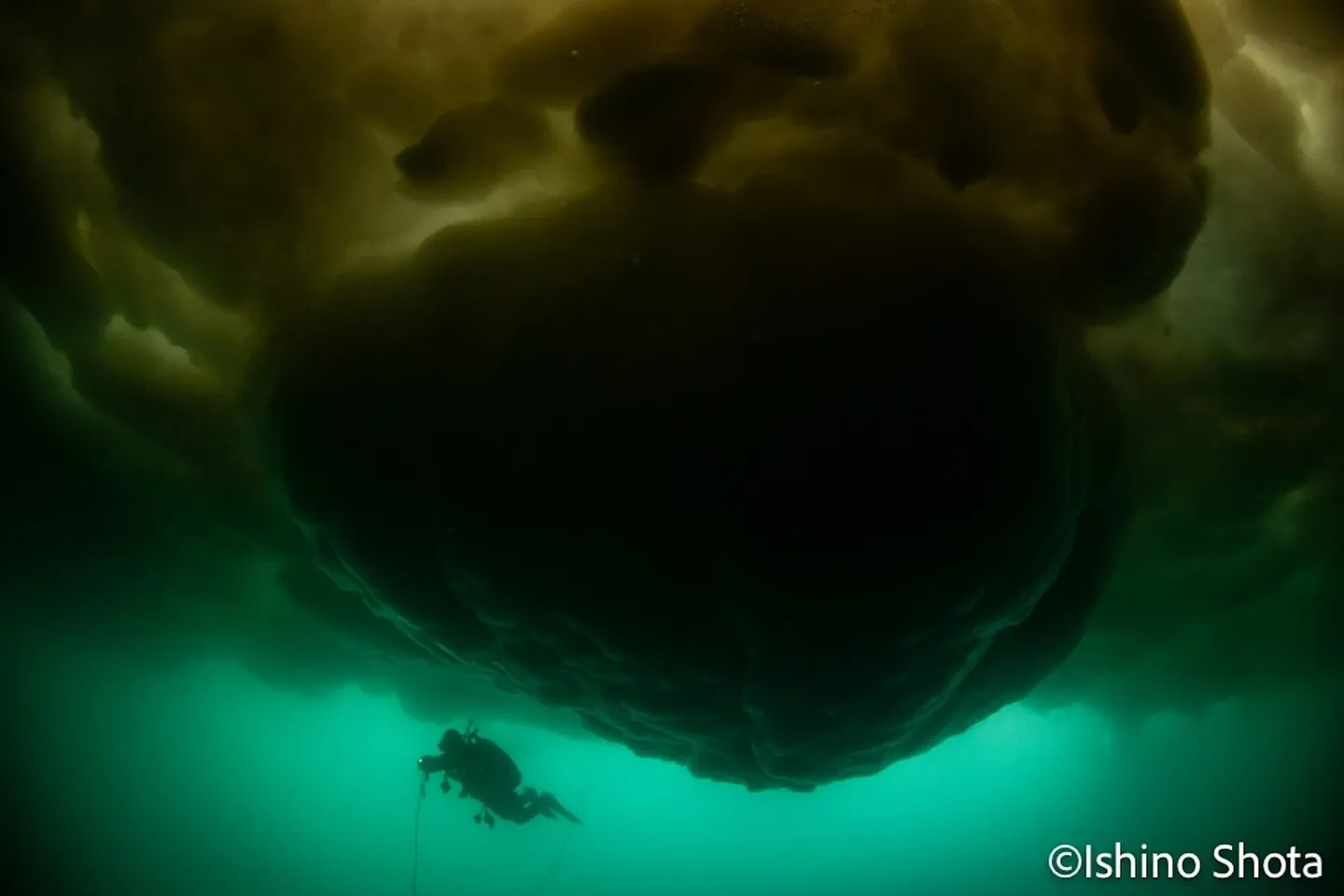
The yellow area at the top of this photograph is ice algae. Trapped within the drift ice, the algae absorb sunlight to photosynthesize and reproduce. As nutrients accumulate, vast numbers of zooplankton such as copepods begin to appear, and the underwater world comes alive once more. These zooplankton attract fish — such as salmon — which in turn are eaten by birds. Salmon also migrate into rivers, where they are consumed by land animals in the forest; nutrients are carried into the forest through their droppings. Moreover, as salmon spawn or die, they are broken down by microorganisms in the river, and the nutrients cycle directly back into the sea.
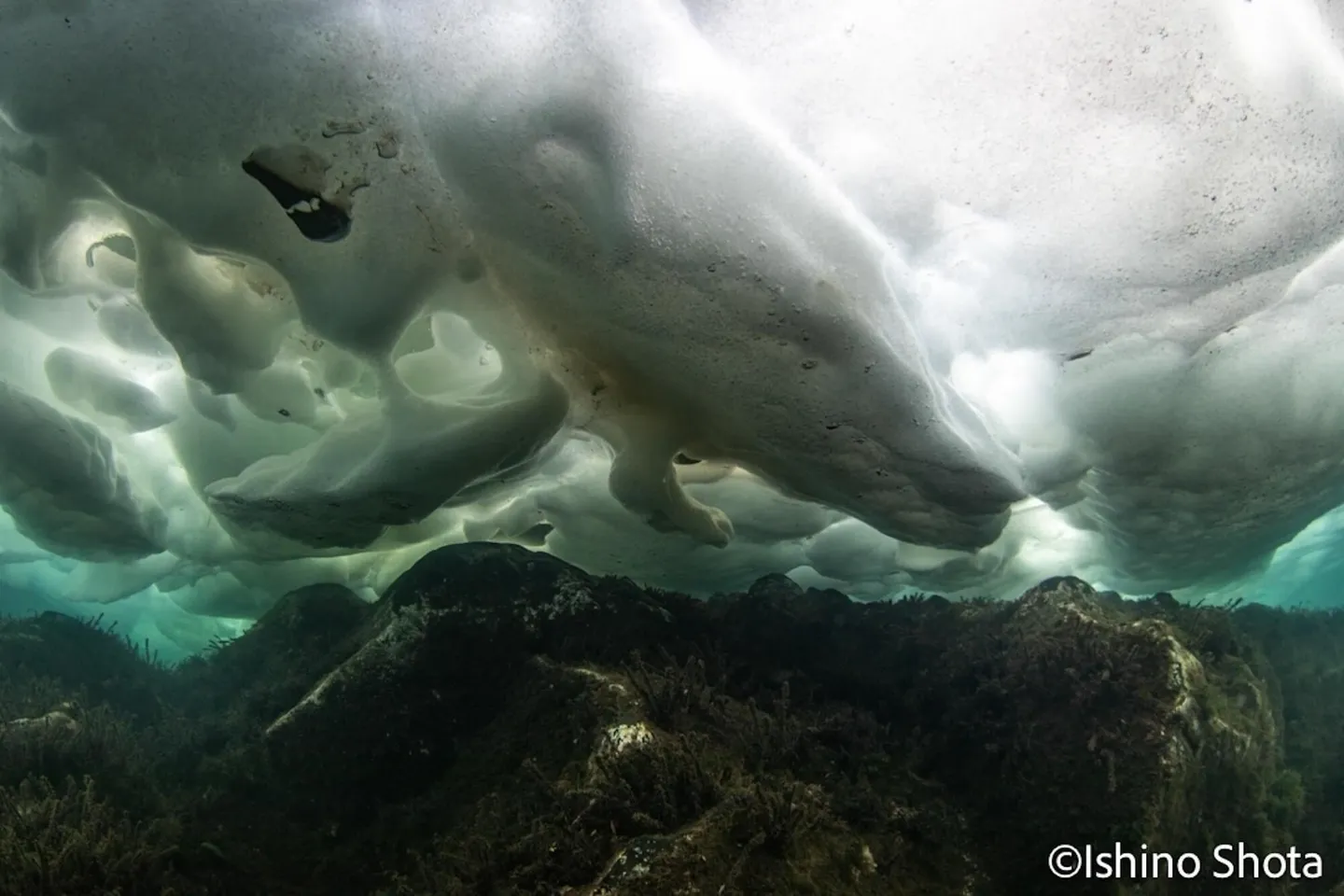
Drift ice doesn't just change in color — its shape evolves too. When it first arrives, the surface is rough and uneven, but after prolonged exposure to sunlight it gradually melts and becomes more rounded.
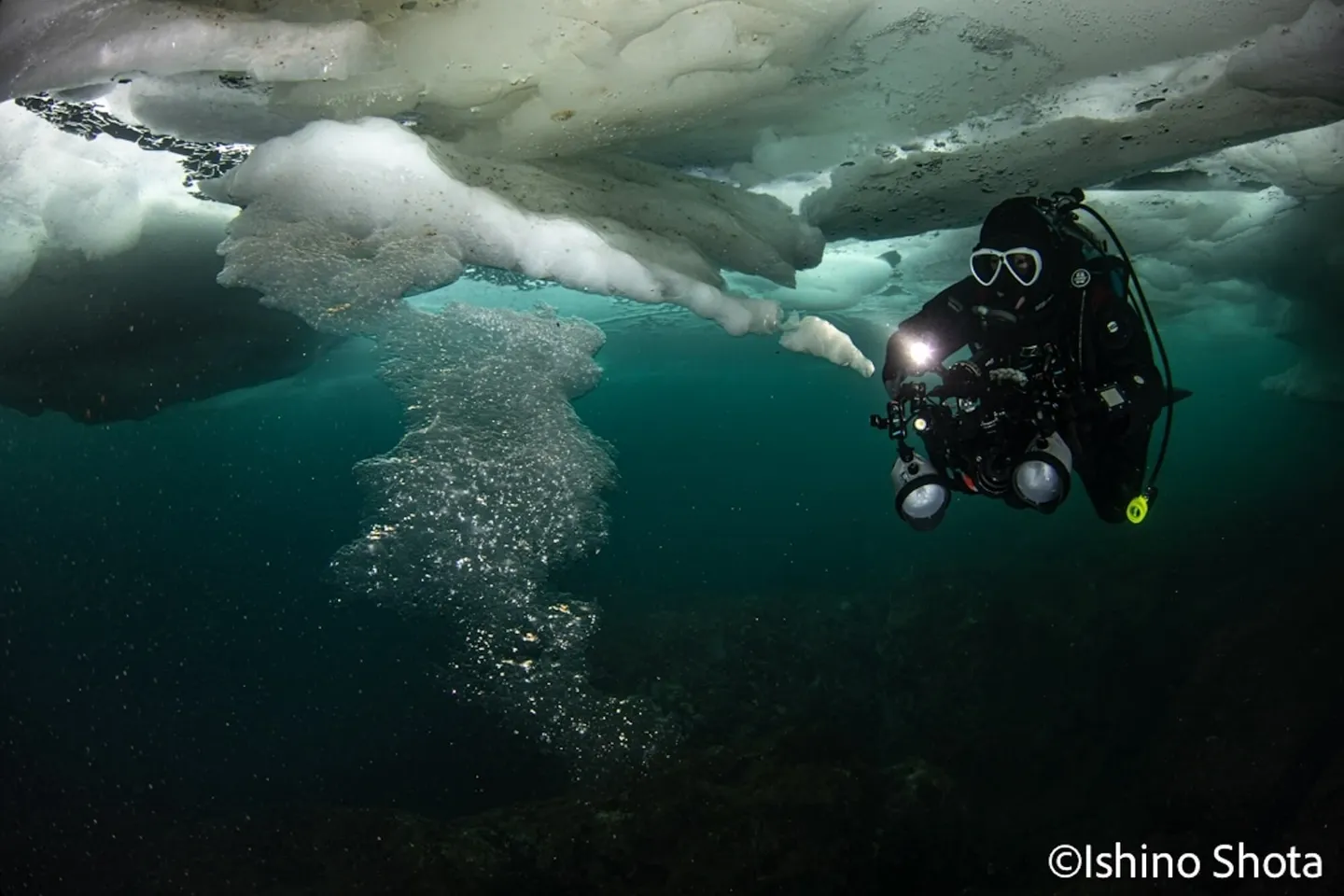
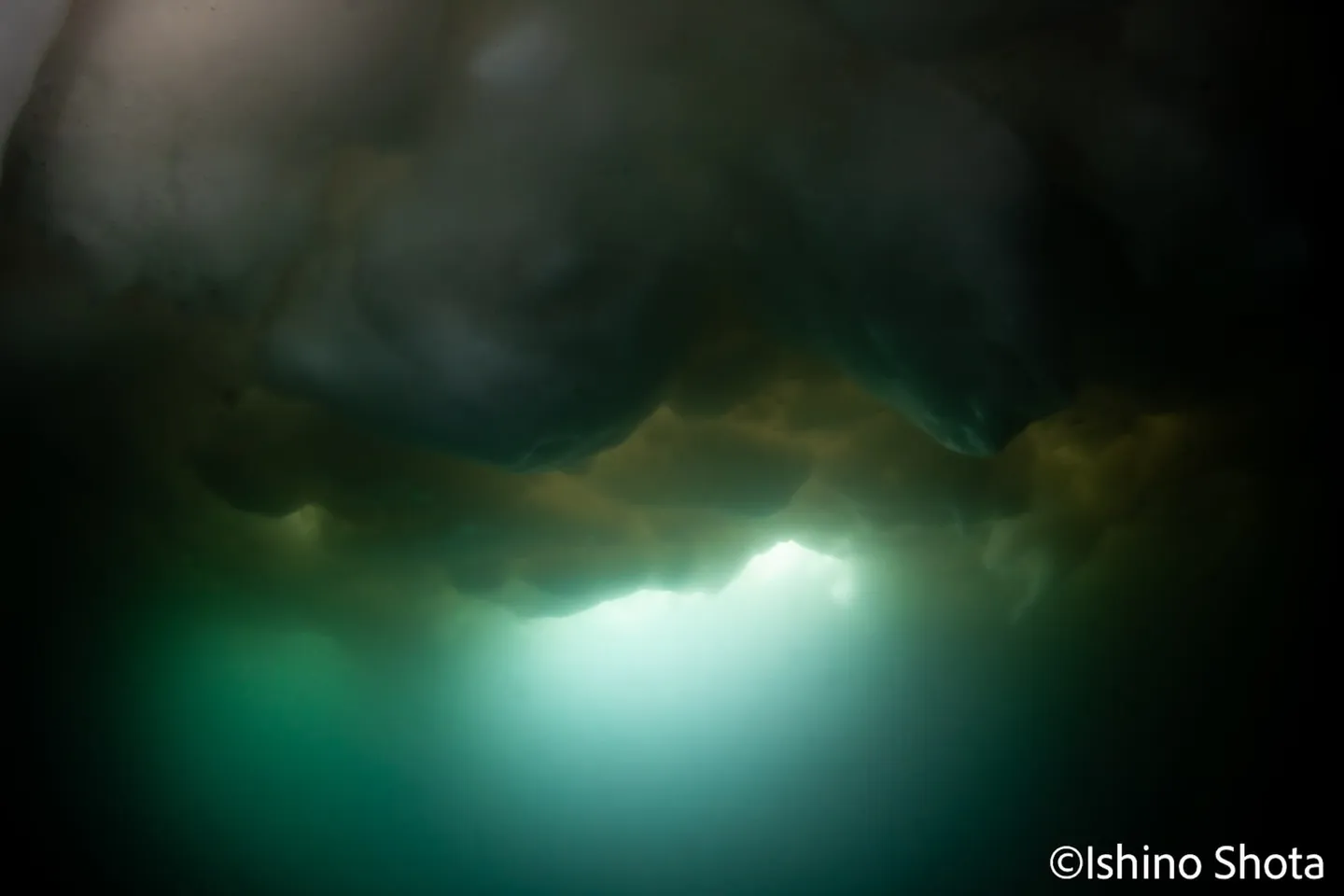
Furthermore, under different weather conditions and temperatures, the drift ice takes on entirely different appearances. When temperatures plunge extremely low, beautiful ice crystals form. On clear days, sunlight filters through the gaps in the drift ice and spills down to the seabed in a spectacular display. When it snows, because the water temperature is lower than the snow, the snowflakes land on the sea surface without melting, adding a layer of pure-white snow over the ocean.
By spending extended time here, you can witness a remarkable variety of phenomena; depending on when during the ice-diving season you visit, the scenes you encounter will be completely different.
Things to Know Before Ice Diving
During ice dives, the water temperature is around -2°C, and the air temperature can drop below -10°C — an extremely harsh environment. To combat the cold, divers must wear heavy undergarments, and additional weight must be added, making movement both underwater and on land considerably more difficult.
Participating in ice diving requires a minimum of 100 logged dives in a drysuit. If you have no experience, it is essential to receive professional training in advance — particularly by choosing a dive shop that specialises in ice diving.
According to research by the Institute of Low Temperature Chemistry, drift ice is gradually losing contact with the Shiretoko Peninsula; due to climate change, drift ice may no longer reach Shiretoko in the future.
For that reason, I will continue to point my camera at this magnificent sea for as long as the drift ice remains.
Further Reading
- Shota Ishino on Instagram: shota_gorillahouse
- Winter Diving on Ishigaki and an Encounter with a Manta Ray - Japan Underwater Odyssey
Frequently Asked Questions
How is a BlueTrend dive trip different from an unknown, no-name dive group?
Choosing us means full peace-of-mind protection and a smooth experience from start to finish. Every trip we run holds to three things.
First, full legal protection and a professional dive leader: we strictly follow Taiwan's travel regulations and provide complete travel-agency liability insurance, travel insurance, trip-inconvenience insurance and dive insurance. Every group is accompanied by a certified, foreign-language dive leader who joins you on both the dives and the land itinerary, liaising seamlessly with local dive shops and operators on your behalf to keep things running smoothly — the person our travellers trust most.
Second, fully licensed with secure payments: every payment goes into a licensed travel agency's account, with multiple safe payment channels (bank transfer, credit card and more) and a legal collect-and-remit receipt, so every transaction is open, transparent and protected, avoiding the fraud and dispute risks of transferring money privately to an individual.
Third, hand-picked quality we vet in person: every trip, dive site and partner shop is scouted on the ground by our own team, from the guides' professionalism and safety standards to the food, lodging, environment and service details on land, all vetted by us so you don't get caught out.
I want to sign up for a dive trip. Are there certification-level or logged-dive requirements?
Each dive site is different, so the entry bar varies. 'Bali Tulamben', for instance, is relatively beginner-friendly. 'Malapascua in the Philippines' is also beginner-friendly, but since thresher sharks tend to cruise between 20 and 30 metres, we recommend AOW certification with 20+ logged dives to enjoy this trip comfortably. For 'the Maldives' or 'Palau', we suggest AOW with 50+ logged dives for a more relaxed experience. If you're not sure whether your experience fits the trip you want, message us and our dive editors will assess it and help you find the trip you'll feel safest on.
Can I join if I'm signing up alone? How are rooms arranged?
Plenty of our travellers sign up solo! For rooms and beds, we prioritise pairing you with a same-gender traveller, and if you'd rather have your own space you can pay the difference to upgrade to a single room. For the diving, our professional leader will pair you with a suitable buddy, and with the happy vibe on our trips you'll quickly make a great group of dive friends. Many people sign up alone, make new friends, and end up organising the next trip together!
Does the trip fee include dive insurance, gear rental, taxes and instructor tips?
It depends on the trip, the destination's regulations and the local operators. Every BlueTrend dive trip has a detailed web page with a clear 'included / not included' list, transparent and with no hidden charges. All payments are collected by a licensed travel agency, with a standard-form contract for your protection.
I'm a new diver / haven't dived in a long time — will I fall behind the group?
Before you complete your booking, our team assesses a suitable trip based on your certification level and experience. Before departure, we strongly recommend taking time to refresh in Taiwan with an instructor, or a fun dive to get your feel back. On the trip itself, our professional dive leader groups and pairs everyone by experience, keeps a close eye underwater on travellers who need extra care, and steps in to help right away.
Will the photos and videos taken during the trip be shared with us?
During the dives, 'safety' is always the leader's top priority, so whenever it's suitable and safe the leader will capture great shots and record the best moments. During or after the trip, we compile a cloud album for all travellers to download, so you go home loaded with memories!
Besides your scheduled trips, can you arrange a private group charter or independent travel for me and my friends?
Absolutely! Besides group trips, we also arrange private group charters and independent travel. We can communicate, enquire and coordinate services with local operators based on your needs, saving you time and effort and taking the language barrier off your plate, to tailor the smoothest, most reassuring dive trip just for you. Contact our LINE support and our editors will arrange it for you!