Contents(4)
- Uncovering the Current State of Xiaoliuqiu's Intertidal Zone and Highlighting the Hidden Threats Behind the Tourist Crowds
- Communication and Coordination: Building Management Consensus
- Step by Step: Improving the Management of Xiaoliuqiu
- Protecting Xiaoliuqiu's Ecological Environment Requires Your Support
The Editor says: Surveys have found that the average number of species and individuals inside the guided tour zones of Xiaoliuqiu is about 30% lower than outside those zones, and biological density is about 80% lower. Beyond sampling variation and broader climate change, the environmental impact of tourist crowds is a contributing factor. The Pingtung County Government has enacted relevant management regulations in hopes of mitigating the impact of tourism. Join the Editor in exploring what more we can all do together to help Xiaoliuqiu gradually recover its once-thriving ecological vitality! Full article reprinted from: Professor Chang Shui-Kai et al. — Saving Xiaoliuqiu's Deteriorating Intertidal Zone: Please Support Gradual Improvements to the Management System
Xiaoliuqiu has long been a favourite destination for Taiwanese travellers. Its rich intertidal marine life and endearing sea turtles have made it famous, and tourist numbers grow year after year. To address the environmental impact of massive tourist crowds, the Pingtung County Government announced the "Liuqiu Fishery Resource Conservation Zone" in 2014, and the following year jointly declared five intertidal areas as "Natural and Cultural Ecological Scenic Zones" with the Tourism Bureau, establishing management regulations aimed at reducing the impact of tourism.
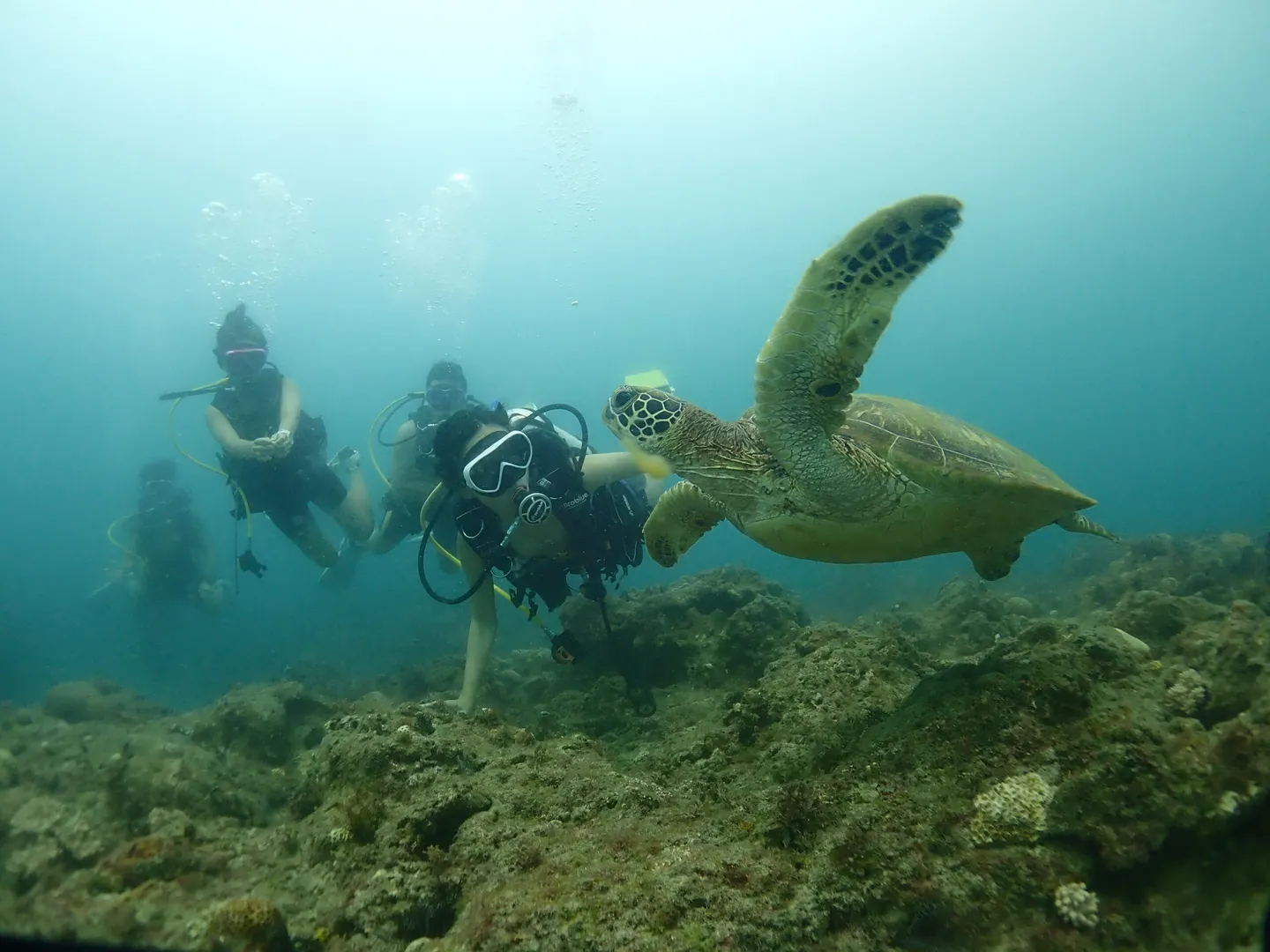
Sea turtles that show no fear of humans are one of the key attractions drawing visitors to Xiaoliuqiu. photo credit:Jenny Tsai
Currently, only two scenic zones — Shanfu and Yuchengwei — have control stations, using flow management to limit simultaneous visitors to 300 and 500 respectively (with a maximum of 30 people per group). However, over the past few years, the establishment of these control stations has not produced the expected results for the intertidal zone. Instead, they have heightened visitor curiosity. During peak season, tourists flock in droves, and tour guides, driven by commercial interests, frequently violate the 30-person-per-group limit to accommodate the overflow. Control station staff, reluctant to cause friction, often fail to enforce headcount properly. During peak periods, scenes of wall-to-wall crowds are no exaggeration. Over the past three years, daily visitors to Shanfu Intertidal Zone during peak season have regularly exceeded 2,000, with nearly 25,000 in a single month. Combined with Yuchengwei Intertidal Zone, the total for July 2019 alone surpassed 30,000. That many people — 60,000 feet — plus groping and grabbing hands, not only flattened the intertidal substrate but crushed marine life underfoot. Such crowds have been likened to "dumpling soup," and the management measures have been criticised as little more than window dressing.
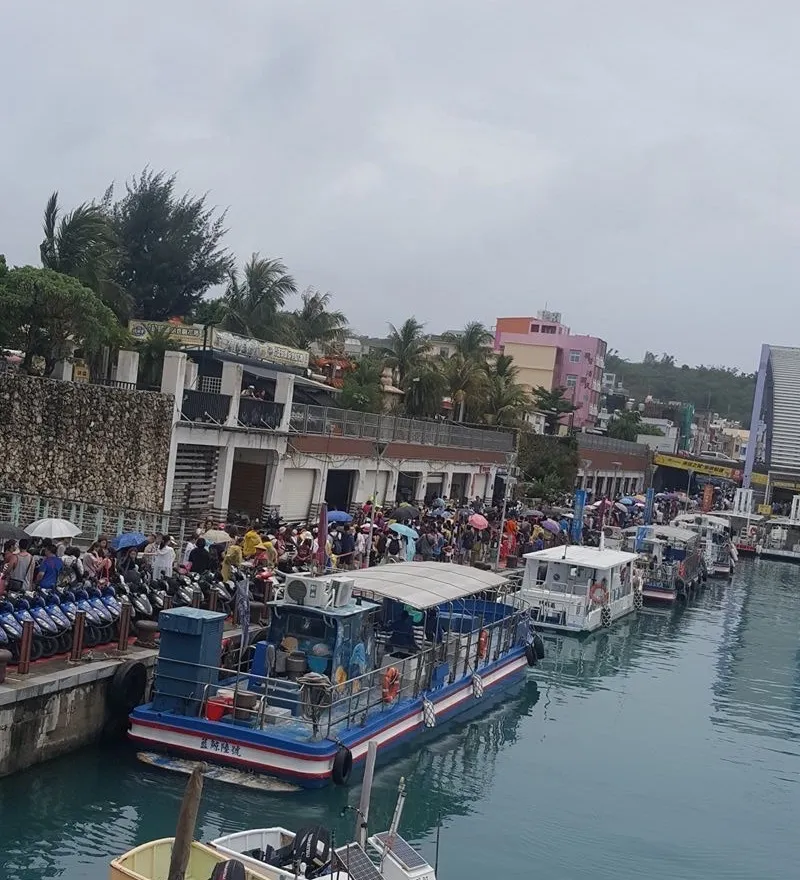
During peak season at Xiaoliuqiu, just waiting for the ferry eats up a huge amount of time. photo credit:Jenny Tsai

Xiaoliuqiu in August — packed with wall-to-wall crowds. photo credit:Jenny Tsai
After years of advocacy, the chaos in the intertidal zone has gradually drawn attention from various sectors and government agencies. During this period, the Pingtung County Government carried out ongoing assessments and, in June of last year, announced plans to revise the conservation zone boundaries and management regulations. It also proposed designating Duzaiping Intertidal Zone — one of the five major Natural and Cultural Ecological Scenic Zones — as a conservation demonstration area, making it a year-round no-entry seed-stock protection zone. The hope was that, through robust protection, ecological resources within the zone would produce a spillover effect that could help restore the decline of biological resources in other intertidal areas. However, this proposal triggered local backlash, with multiple articles appearing in the media debating intertidal zone management. One piece — "Controversy Over Xiaoliuqiu Intertidal Zone Controls: Local Operators Demand Review of Management Regulations" — highlighted the points of contention, and noted that some local residents questioned whether management regulations lacking scientific data to support them could command public acceptance. As a result, the Pingtung County Government secured funding last year and commissioned a research team from National Sun Yat-sen University to begin scientific surveys of the Shanfu and Yuchengwei intertidal zones starting in June, and to develop management plans to serve as a reference for the county government.
Uncovering the Current State of Xiaoliuqiu's Intertidal Zone and Highlighting the Hidden Threats Behind the Tourist Crowds
The research team conducted surveys of benthic invertebrates at Shanfu and Yuchengwei between July and October 2019. While definitive conclusions will require more time, some important preliminary findings are already worth noting. Key findings include: the average number of species and individuals inside the guided tour zones — where masses of tourists tread — is about 30% lower than outside those zones. In addition, comparing biological density at both intertidal sites to survey results from the same period in 2014 (conducted by a team led by Associate Professor Lo Liu-Chih and Assistant Professor Chen Wen-Rou), the numbers are approximately 80% lower. In other words, the tourist crowds of the past five years have caused a marked decline in biological abundance. Even accounting for sampling variation and the effects of broader climate change, a reduction of at least 50% is estimated. This comparison uses five years ago (2014), when Xiaoliuqiu received approximately 400,000 visitors, as a reference point. If we look back ten years to 2009, when visitor numbers were only around 200,000, the scale of biological decline would undoubtedly be even more heartbreaking.
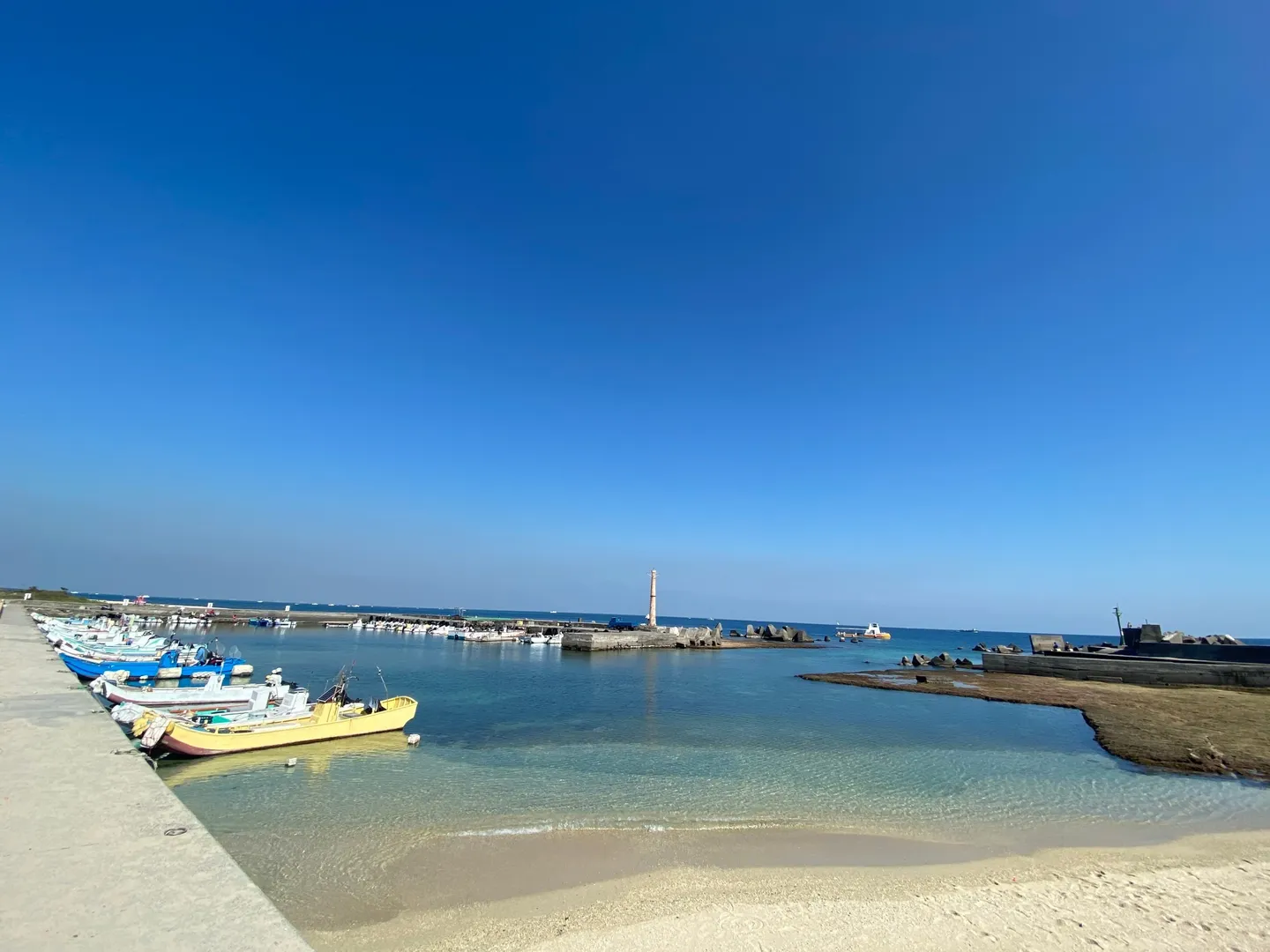
The waters around Yuchengwei Fishing Harbour may look clear, but the coral and ecosystems below the surface are gradually bleaching. photo credit:Jenny Tsai
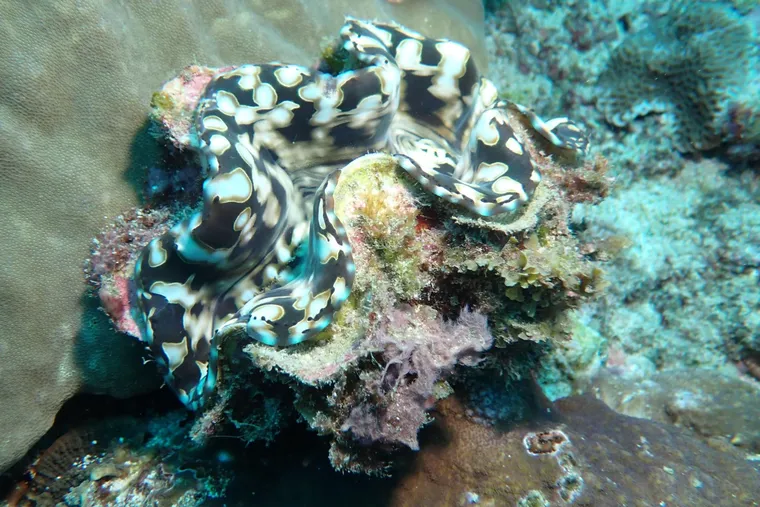
Water quality surveys also revealed that chlorophyll-a concentrations at the southeastern monitoring station of Xiaoliuqiu were higher than at other sampling points. Coral reef surveys showed algal coverage to be four to five times — or even more — that of coral, likely reflecting the impact of excessive wastewater discharged from guesthouses. In September, coral bleaching was also observed in giant clams at Yuchengwei. All of this signals that the natural environment is becoming increasingly "unfriendly" to intertidal organisms. If intertidal zone management is not strengthened promptly to reduce recreational pressure and physical trampling, and ecological degradation is left unchecked, it is only a matter of time before the damage becomes irreversible.


Communication and Coordination: Building Management Consensus
The problems facing Xiaoliuqiu's intertidal zone are long-standing. There are external pressures — unmanageable visitor volumes and a proliferation of guesthouses — as well as internal challenges, including divided opinions among local tour guides and a lack of coordination among government agencies. Although management regulations exist, they are riddled with loopholes and poorly enforced, issues that have been widely discussed (e.g., Lai Chih-peng, 2017). Some have suggested simply letting things deteriorate until everyone is motivated to seek solutions together. Others argue that the problem with the intertidal zone is not a regulatory problem but a human one — and that no amount of rule-changing will help unless the human element is addressed. Looking abroad, many cases of ecological damage caused by over-tourism have gradually been reversed following integrated government intervention.
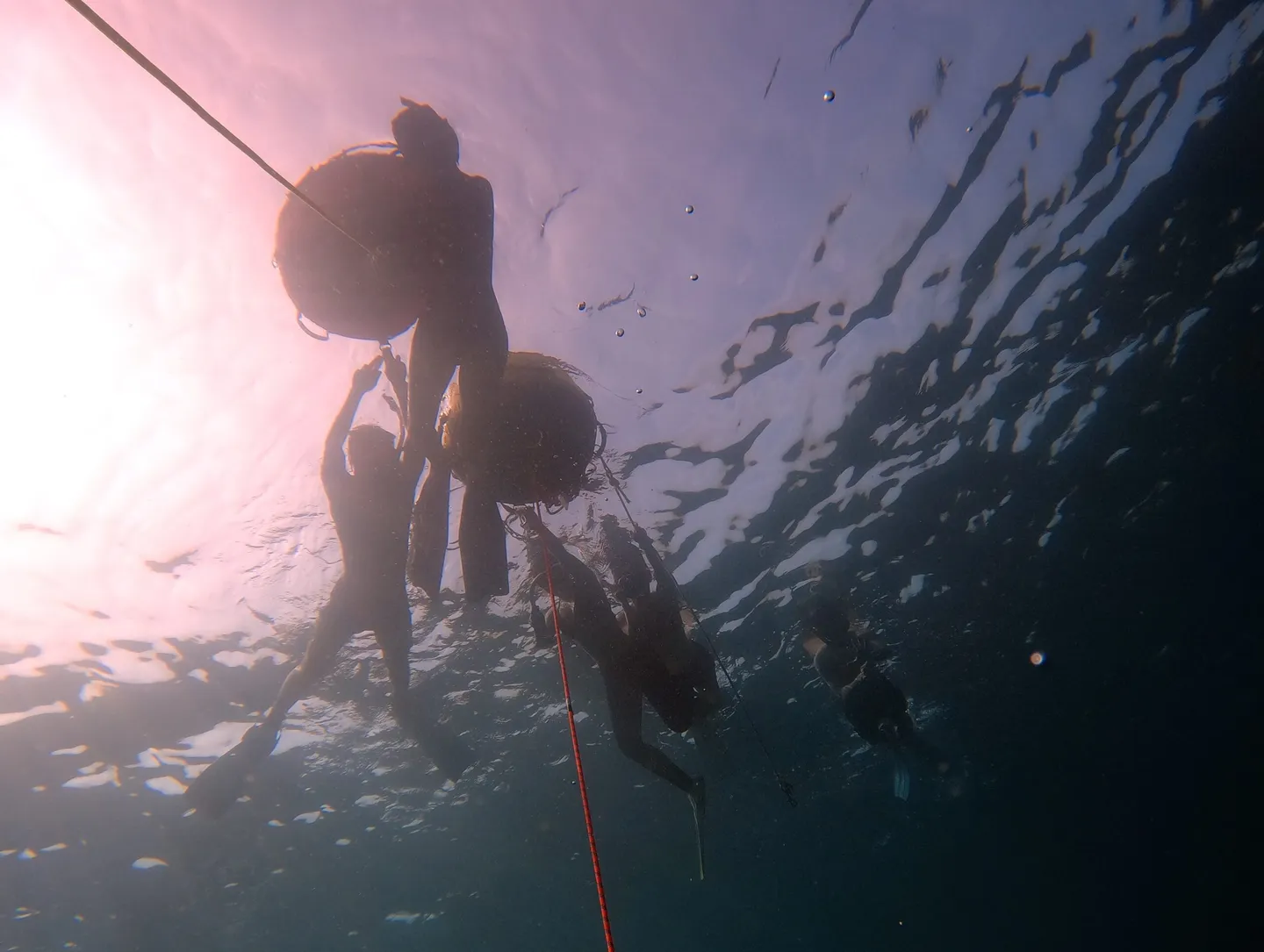
Pushing these measures forward requires effort from everyone. photo credit:Jenny Tsai
Does Xiaoliuqiu have a chance? After years of conflict and internal friction, there is hope but little momentum. The county government has now taken the first step toward turning things around. The research team has communicated with local tour guide representatives and relevant government officials based on three principles, reaching a management consensus and beginning implementation. Those three principles are: "Set aside disputes" (such as the controversy over managing Duzaiping Intertidal Zone); "Separate people from issues" (first negotiate feasible management regulations); and "Proceed at different speeds for the simple and the complex" (don't try to solve everything at once — start with what's straightforward). In other words, begin with the less contentious and more actionable management measures, and gradually work out the "human" element as consensus is built and pilot programmes take shape.
Step by Step: Improving the Management of Xiaoliuqiu
Through a synthesis of case literature and practical experience and suggestions provided by local tour guides, the research team identified five major categories of management issues (intertidal zone regulations, visitors, control stations, guides, guesthouses and others) encompassing 17 specific issues (over 40 proposed measures). These were then discussed with tour guides during workshops. "Human" issues were set aside, and measures that were academically or practically unworkable (including technical considerations and impacts on operators) were removed. The remaining measures were classified into three groups for the county government's reference: "can be implemented now and strengthened later," "can be planned now," and "pending discussion." Due to space constraints, the following briefly outlines the four key consolidated recommendations.
-
Recommend zoned management of the intertidal zone and the establishment of ecological viewing corridors. Within each of the Shanfu and Yuchengwei intertidal zones, designate a protected area where organisms can reproduce and thrive, strictly prohibiting any human interference. By protecting reproduction within these zones, conditions are created for a "seed dispersal" spillover effect that can benefit surrounding areas. Ecological viewing corridors restrict the area that visitors may walk through — sacrificing a small section to protect the surrounding environment. This is one of today's most commonly used win-win approaches for conservation and economic interests (for example, the ecological viewing corridor at Fushan Reserve in Taitung), achieving the dual goal of not diminishing the visitor experience while giving intertidal life room to breathe.
-
Recommend banning night tours during the intertidal organisms' breeding season. Night-time is when most organisms reproduce, and night observation also carries a high risk of organisms being accidentally trampled. While there have been calls for a complete ban, no consensus has been reached, so the recommendation is to first prohibit night tours during the breeding season. For night tours outside the breeding season, the use of red-light sources is recommended to minimise the impact of artificial light on marine life.
-
Recommend strengthening flow management in the intertidal zone. Although many international cases have proven the effectiveness of total visitor cap controls (such as Sipadan Island in Malaysia), and many Xiaoliuqiu operators also support such controls, given that the current hardware and software infrastructure is not yet in place, improving strict flow management is a feasible first step. Since the daily time window for entering the intertidal zone is naturally limited, this approach can also serve as a temporary substitute for daily total visitor caps. In addition, future plans could include diverting visitors to other land-based or marine activities to reduce the number entering the intertidal zone, and even developing reservation and package tour systems to offer a more comprehensive and refined travel experience.
-
Recommend studying the feasibility and supporting measures for collecting conservation and guiding fees. Charging conservation fees can use pricing to regulate visitor numbers and generate revenue for conservation management and scientific surveys — a strategy well demonstrated by many successful ecotourism cases overseas. This is a form of "additive management" for operators (tour guides, guesthouse operators), increasing and formalising their income, as opposed to other management measures that constitute "subtractive management" by limiting certain operator freedoms. It can also effectively reduce the crowd influx generated by guesthouses offering complimentary tour packages. A reasonable "user pays" approach can lower visitor pressure, while the revenue generated can be applied to control station operations, resource surveys, and restoration of scenic zones — making the concept of sustainability truly actionable.
Protecting Xiaoliuqiu's Ecological Environment Requires Your Support
Regarding the establishment of ecological viewing corridors, the county government invited the Penghu Marine National Park Headquarters, the Natural and Cultural Ecological Tourism Association, and academics to conduct site inspections at the Shanfu and Yuchengwei intertidal zones at the beginning of this year (2020), and consensus has been reached on the boundaries of protected areas, utilisation zones, and tour paths. The ban on night tours during the breeding season and the requirement to use red-light sources at night will also be implemented. The control station staffing arrangements that were previously criticised have been changed from monthly township office hires to dedicated appointments commissioned by the county government through the association. The first refresher training for dedicated tour guides is also about to begin. The county government has also secured support from the Ocean Affairs Council to include the contentious Duzaiping Intertidal Zone in a scientific survey programme, providing a basis for future management decisions.
In addition to the county government's support, the Penghu Marine National Park Headquarters plans to install a seawater siphon system at the Shanfu Intertidal Zone so that visitors can rinse their feet before leaving, retaining the coral sand that clings to tens of thousands of feet. It has also begun exploring and discussing with local communities the feasibility of collecting conservation fees. The issue of improper conduct by certain tour guides, frequently raised in the media, will also be addressed by the Penghu Marine National Park Headquarters through broad consultation and the gradual development of tour guide management standards. The latter two are sensitive and thorny issues that require both courage and time.
Success requires consensus first. Over the past six months of negotiations, we must thank the many local tour guides — who prefer to remain anonymous — for their dedication to protecting the ecology, as well as the government agencies for their perseverance. Many technical issues remain to be resolved, and the "human" dimension of management — concerning the responsible managing body — has been set aside for now. Moving forward will require greater wisdom, ongoing communication, and political resolve from the government, as well as the support of all tour guides and guesthouse operators. Conservation of Xiaoliuqiu's intertidal zone has moved forward another step. We hope that local residents, tour guides, and public officials who have spoken up, pushed for change, and quietly supported the protection of local ecology will not lose heart — and will continue to stay engaged and offer their assistance from the sidelines. We also hope that individuals and visitors who have advocated in various ways for the conservation of Xiaoliuqiu's intertidal ecosystem will support the positive development of the management system, and offer greater encouragement to the government and the tour guides and groups working alongside them.

Protecting Xiaoliuqiu starts with you and me. photo credit:Jenny Tsai
Responsible Editor: Jenny Tsai
References:
-
Li Yu-qin (2019) Controversy Over Xiaoliuqiu Intertidal Zone Controls: Local Operators Demand Review of Management Regulations. Environmental Information Center
-
Lai Peng-chih (2017) Multiple Management Problems in Pingtung Xiaoliuqiu Natural and Cultural Ecological Scenic Zones
Further Reading: