Contents(6)
the Editor says: Taiwan is surrounded by the sea on all sides, yet for decades martial law kept people away from the coastline. Only after martial law was lifted did Taiwanese society begin to truly explore its maritime culture. Chen Kuo-tung, a research fellow at the Institute of History and Philology, Academia Sinica, has spent his career studying Ming-Qing economic history and East Asian maritime history, unearthing countless ocean stories along the way. He also underscores the vital role that memory plays for both individuals and society, urging everyone to protect and share these precious historical memories. This article is reprinted in full from: Research at Academia Sinica (研之有物).
In the film Avatar: The Way of Water, a line rings out: "The sea is around you and inside you" and "Before birth and after death, the sea is your home" — conveying the inseparable bond between humanity and the ocean. Does Taiwan, an island surrounded by the sea on all sides, have its own profound maritime stories to tell? Academia Sinica's "Research at Academia Sinica" (研之有物) sat down with Chen Kuo-tung, a research fellow at the Institute of History and Philology, a man who truly knows "the way of water." His research spans the Qing-era Guangdong Maritime Customs, Canton merchants, and maritime trade, extending into ancient and modern knowledge of ships, navigation, and islands. Want to discover more of Taiwan's own "way of water"? Dive into the ocean of memory with Chen Kuo-tung!
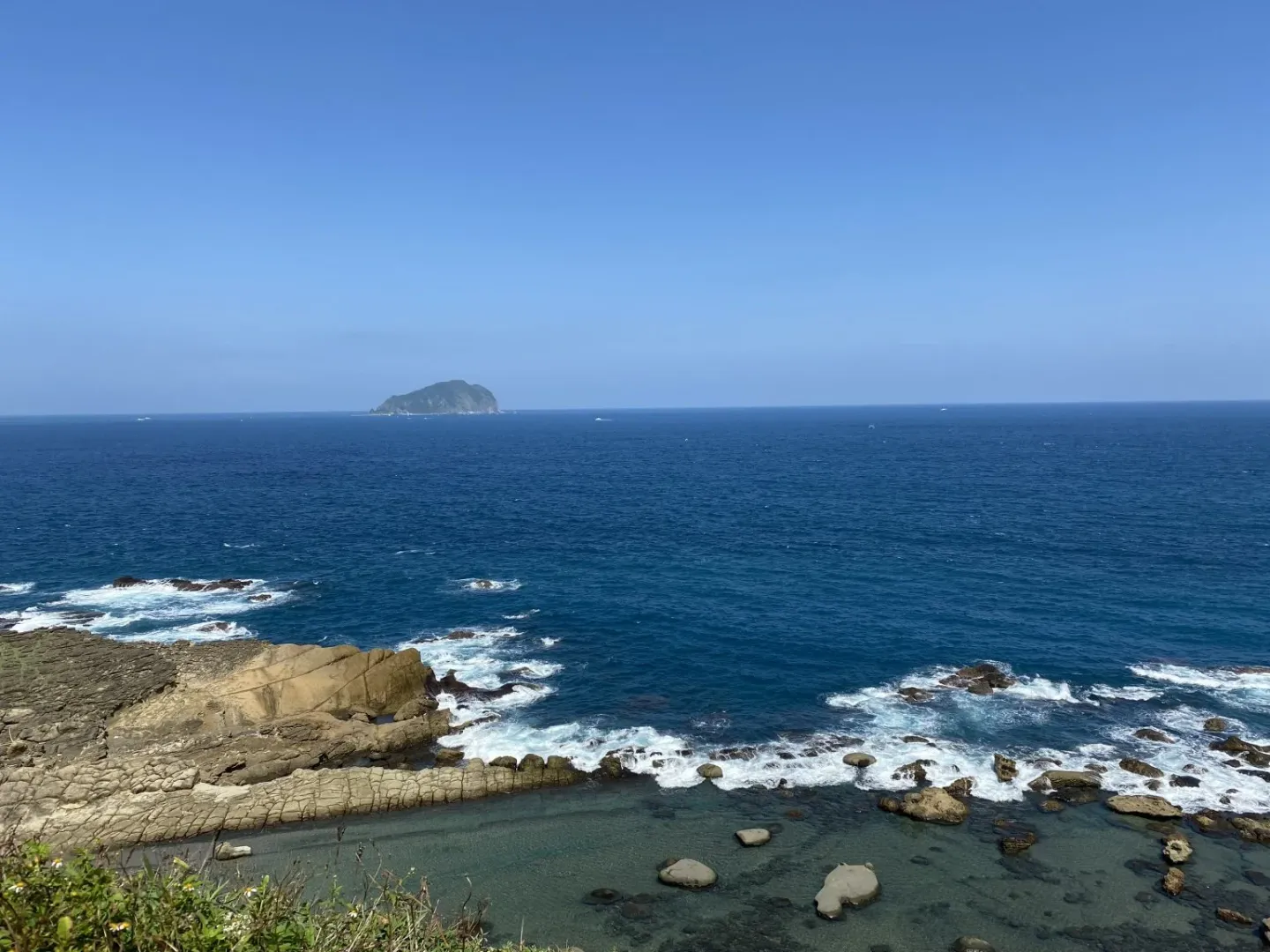
The coast of Badouzi, Keelung. Photo | Research at Academia Sinica
The Greatest Distance: The Ocean
How long has it been since you last drew close to the sea? Taiwan is surrounded by water on all sides — the coast is, on average, just an hour's drive away — yet it is hard for most of us to claim that we are a maritime people who truly know the sea. For a long stretch of Taiwan's history, "the ocean" was, paradoxically, the greatest of distances.
Cast your mind back to the martial law era of 1949–1987. To guard against military and civilian incursions from across the strait, the government simultaneously restricted ordinary citizens from approaching the shoreline. The law required people to apply for permission before entering or leaving coastal zones, effectively turning Taiwan's coastline into a forbidden no-man's-land. Only after martial law was lifted did people gradually gain the freedom to get close to the sea and explore Taiwan's maritime culture.
On a languid, memory-stirring afternoon, we visited Chen Kuo-tung at the Institute of History and Philology, Academia Sinica. Having grown up by the sea as a child, and having gone on to research Ming-Qing economic history, East Asian maritime history, and the history of crafts and fine arts, he spoke freely and warmly about his ocean memories and the fascinations of his research. Now — dive into the ocean of memory alongside Chen Kuo-tung!


Front-Row Sea Views! Remembering Life by the Shore
Chen Kuo-tung spent his childhood in a village called "Huiyaozi" along the North Coast highway. He laughed as he recalled that people today covet seaside properties, dreaming of front-row ocean views and unobstructed vistas — but only those who have actually lived by the sea understand just how inconvenient it really is.
Salt-laden sea winds erode houses; walking on the rocky shore can easily leave you cut and bleeding. Very few fishing-village residents find joy in living by the sea — children being the one exception.
"When we were little, we were very good at entertaining ourselves!" Chen Kuo-tung has vivid memories of the plants that grow along the shore — especially the sea hibiscus (Talipariti tiliaceum) and screwpine (Pandanus tectorius), common sights on Taiwan's coast, both wrapped in childhood memories and historical stories.
In the 1950s, during the early years of the Nationalist government, many American soldiers were still stationed in Taiwan. Children would stick the pointed tip of a sea hibiscus stamen to their noses, mimicking the "raised noses" of Westerners. Or they would use a razor blade to trim away the sharp edges of screwpine leaves, weaving them into flutes, pinwheels, and other little toys.
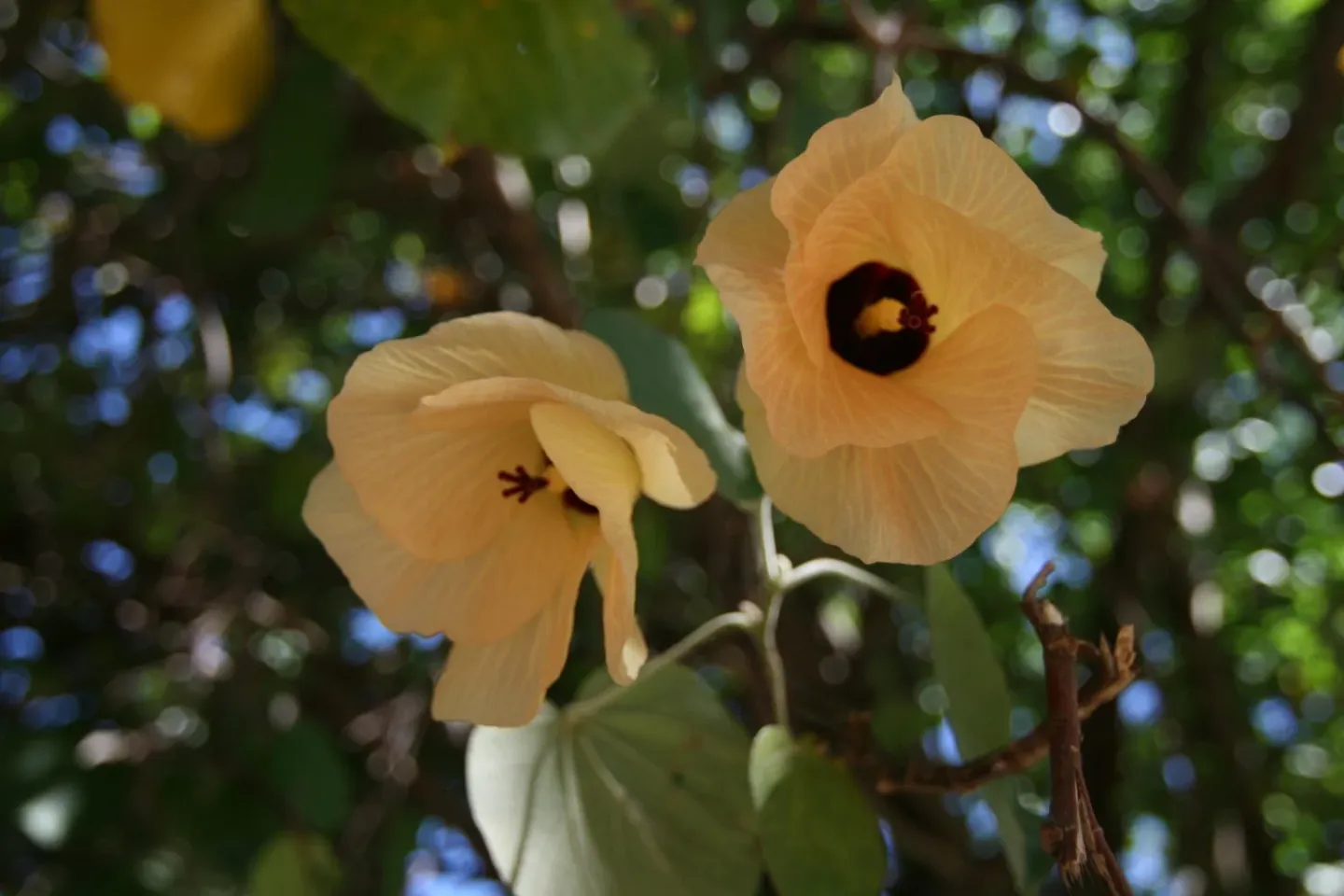
Sea hibiscus (Talipariti tiliaceum), family Malvaceae, is an excellent windbreak species along coastlines. Its leaves can be used as a lining for steamed rice cakes; its bark yields rope fiber; and its roots have fever-reducing and emetic properties. Photo | Wikimedia
These coastal plants also once served as a natural line of defence against foreign invaders. In 1883, the Sino-French War broke out, and in October of the following year French troops landed near Tamsui, where they had to push through stretches of screwpine and sea hibiscus along the shore.
The leaf edges of the screwpine are lined with tiny sharp spines that cut into anyone who passes through; the dense groves of sea hibiscus scattered and disoriented the French ranks. The advancing troops were ultimately defeated in an ambush by the defending forces. The Qing army had used Taiwan's "natural barrier" to win one of the rare victories of that conflict.
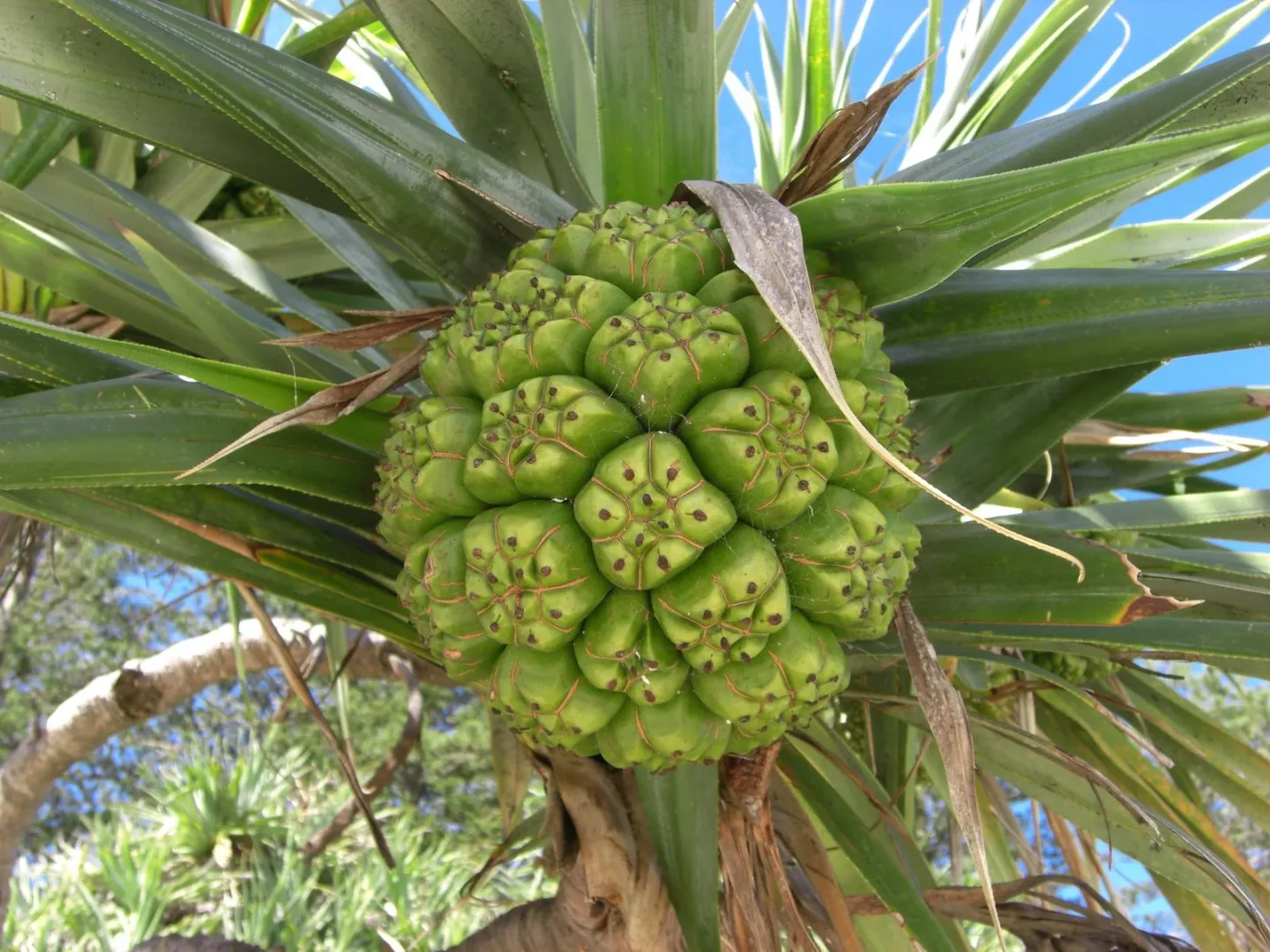
Screwpine (Pandanus tectorius), family Pandanaceae, sends out long, thick aerial roots that anchor it firmly in the ground even in fierce coastal winds, making it a common windbreak and sand-fixing plant on Taiwan's shores. Its fruit and the tender heart at the end of the trunk are edible; the Tao (Dawu) people of Orchid Island use its aerial roots to make the lines on which flying fish are hung to dry. Photo | Wikimedia
Although Chen Kuo-tung left his coastal village at the age of ten, his connection with the sea never quite ended — his research into Ming-Qing trade history brought him back to the ocean once again. To solve the puzzles he encountered along the way, he began collaborating with scholars from other fields, delving into shipbuilding, navigation, islands, and other areas of maritime knowledge, and collecting ocean stories from across the ages and around the world.
At one point during our conversation, Chen Kuo-tung reached into what seemed like a bottomless carry bag and produced one historical document after another related to the sea, transporting us back to the Age of Sail and Taiwan under Qing rule, narrating story after story of life adrift on the waves.
A Woman Adrift at Sea
Mid-conversation, Chen Kuo-tung recited a short poem called "Hairdressing" (理髮), preserved in the anthology Complete Poems of Taiwan (全臺詩):
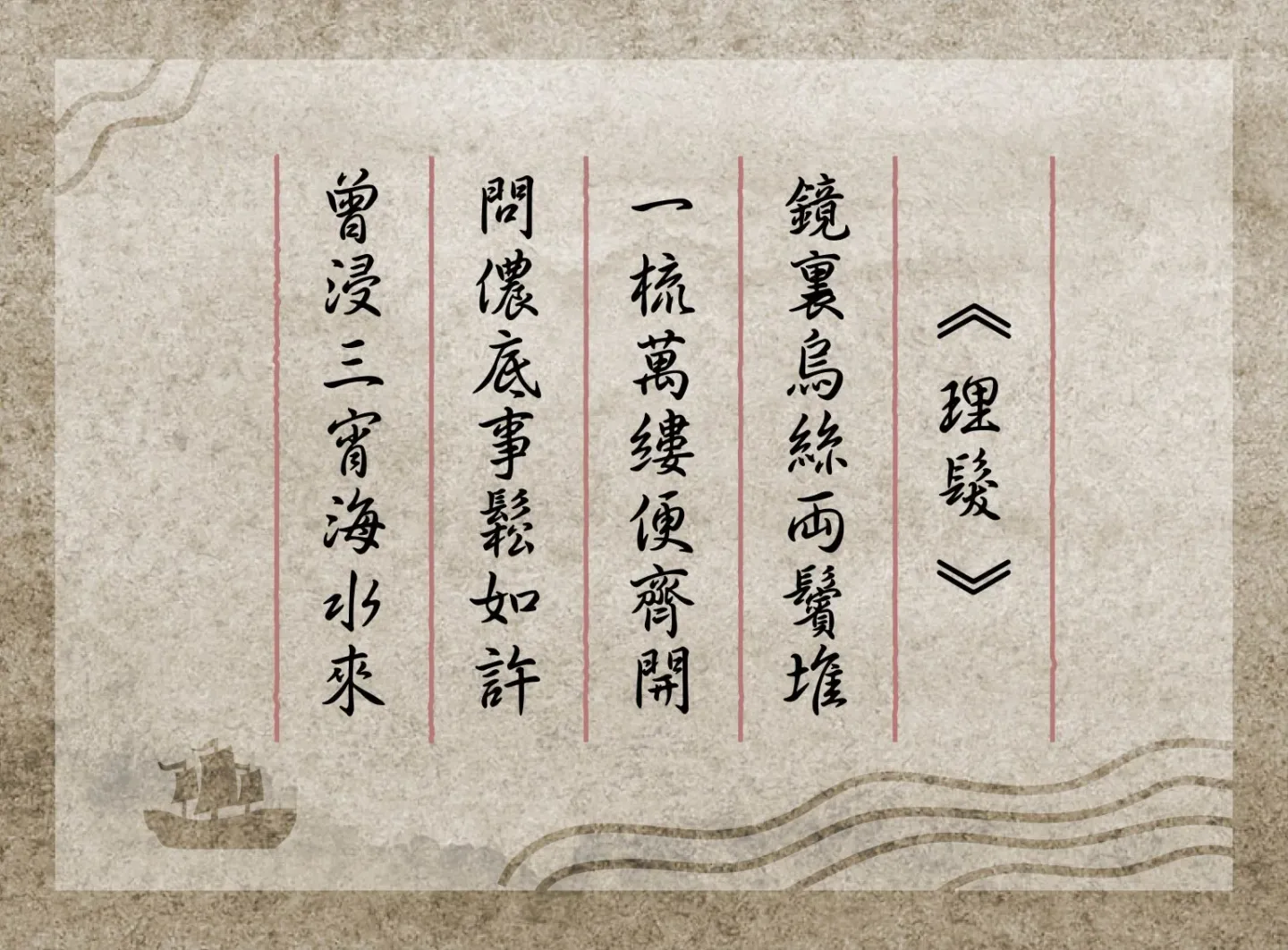
Photo | Research at Academia Sinica
The poem's author was Xie Caifan, daughter of Xie Jinluan of Houguan, Fujian. During the Qianlong reign, she accompanied her father on an official posting to Taiwan, and the experience of crossing the sea by ship inspired her to write.
Women in earlier times wore their hair tightly bound. To dress it, they first had to wet it with water — but fresh water was the scarcest commodity on a ship. With no choice but to soak her hair in seawater for three nights running, her hair had come completely loose by the time the journey was over, leaving her looking rather bedraggled.
Unlike the tales of maritime Silk Road trade, pirates, or the sorrowful crossings to Taiwan that dominate surviving historical records, this poem captures a warm, everyday scene — and what makes it all the rarer is that it is a memory of the sea left behind by a woman.
Traditionally, there were taboos surrounding women boarding ships or working aboard them. Chen Kuo-tung notes that the problem lies in the fact that many of these superstitions were recorded by literary men who held the power of the written word; the taboos may well reflect Confucian thinking that discouraged women from being seen in public, let alone venturing out to sea.
Yet in real life, women who wielded authority or labored strenuously were a common sight along the shore. In the 19th century, Western ships passing by Taiwan recorded their astonishment at seeing so many women hard at work out on the water.
There is even a Taiwanese saying: "Penghu women, Taiwan oxen" (澎湖查某,臺灣牛) — likening the women of Penghu to oxen in their endurance and industry. Chen Kuo-tung has heard tell of an island in Penghu where women largely ran the household on their own. In an age when seafaring was unreliable and dangerous, men who set out to sea did not always come home safely; women had to go to the shore to catch fish, shrimp, and shellfish to feed the whole family.
Hard as life on the sea could be, when household survival was urgent enough, gender ceased to be the most important consideration.
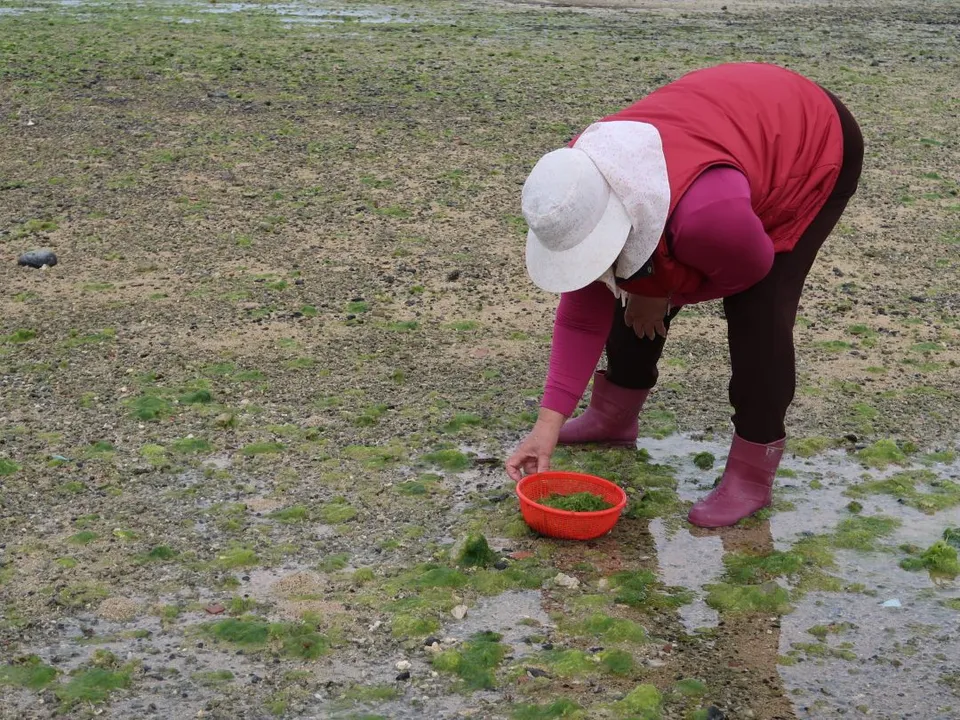
Women gathering seaweed in the intertidal zone of Beiliao Village, Penghu. Photo | Institute of Taiwan History, Academia Sinica
Documents Like Ancient Ciphers! Why Did a Qing Dynasty Ship Fly the Dutch Flag?
Before long, Chen Kuo-tung pulled several more documents from his bag. At first glance they appeared to be richly illustrated records — but on closer inspection, although the characters resembled the Chinese script we know, they were utterly incomprehensible.
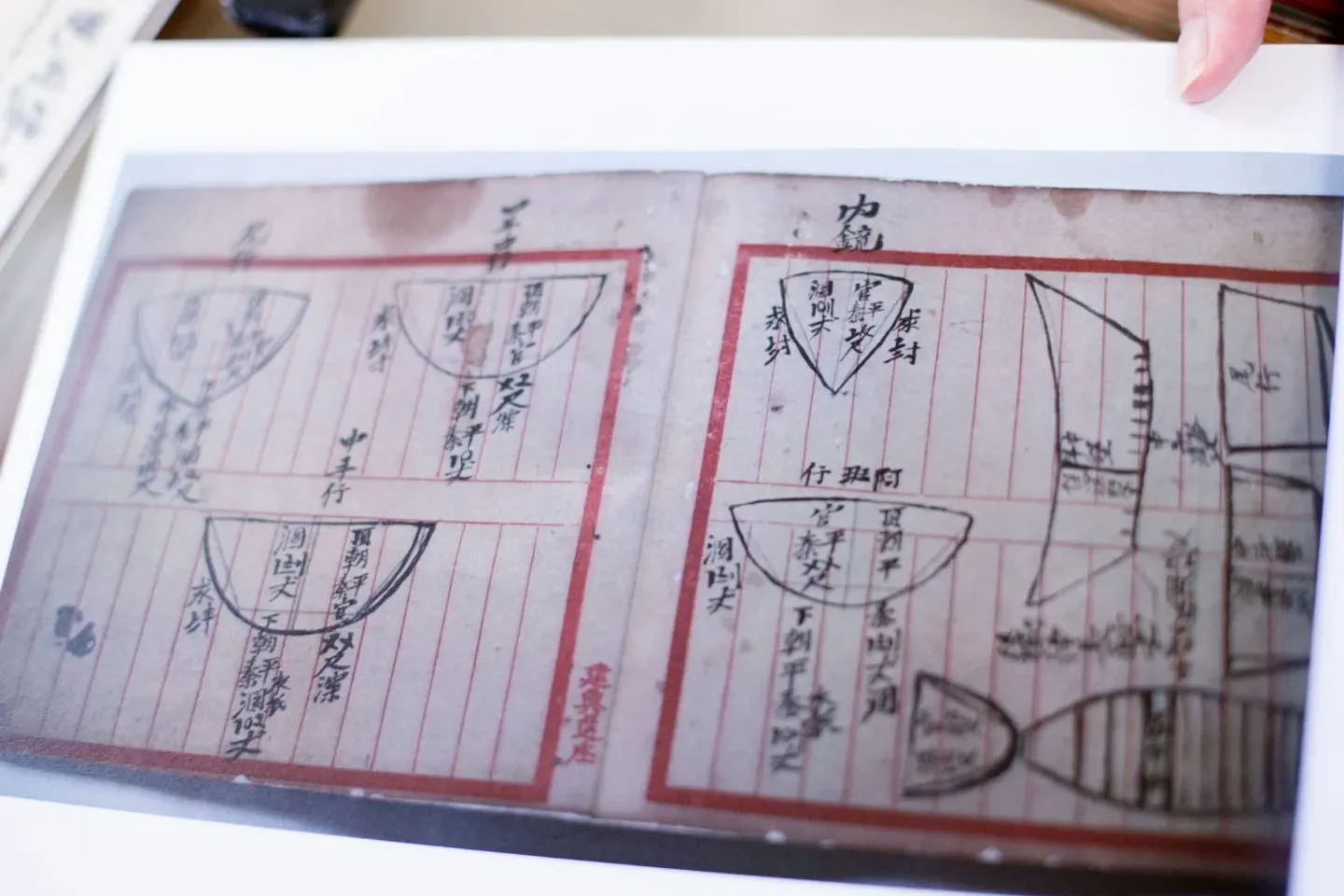
Can you guess what this document records? Photo | Research at Academia Sinica
It turned out these documents recorded shipbuilding methods. Master craftsmen had written the specifications for different parts of a sailing junk in traditional account books (數簿仔, siàu-phōo-á), covering everything from the construction of the keel to the methods for calculating dimensions and proportions — but they chose to write in symbols only insiders could decipher.
This gave historians no end of headaches. Cracking these codes requires consulting additional historical sources and collaborating with other shipbuilding experts.
Chen Kuo-tung then produced another document — a painting from the National Palace Museum collection titled Diagram of Tong'an Shuttle Boat No. 1 (〈一號同安梭船圖〉). This is a design drawing of a warship built by the Qing navy in the style of the Tong'an junk, annotated with detailed measurements including hull length and beam width.
What looks at first like an ordinary ship diagram conceals a historical mystery. Look carefully at the masthead on the far left of the vessel — flying there is a Dutch flag, composed of red, white, and blue horizontal stripes. But wasn't this supposed to be a Qing dynasty warship? Why on earth was it flying the Dutch flag?
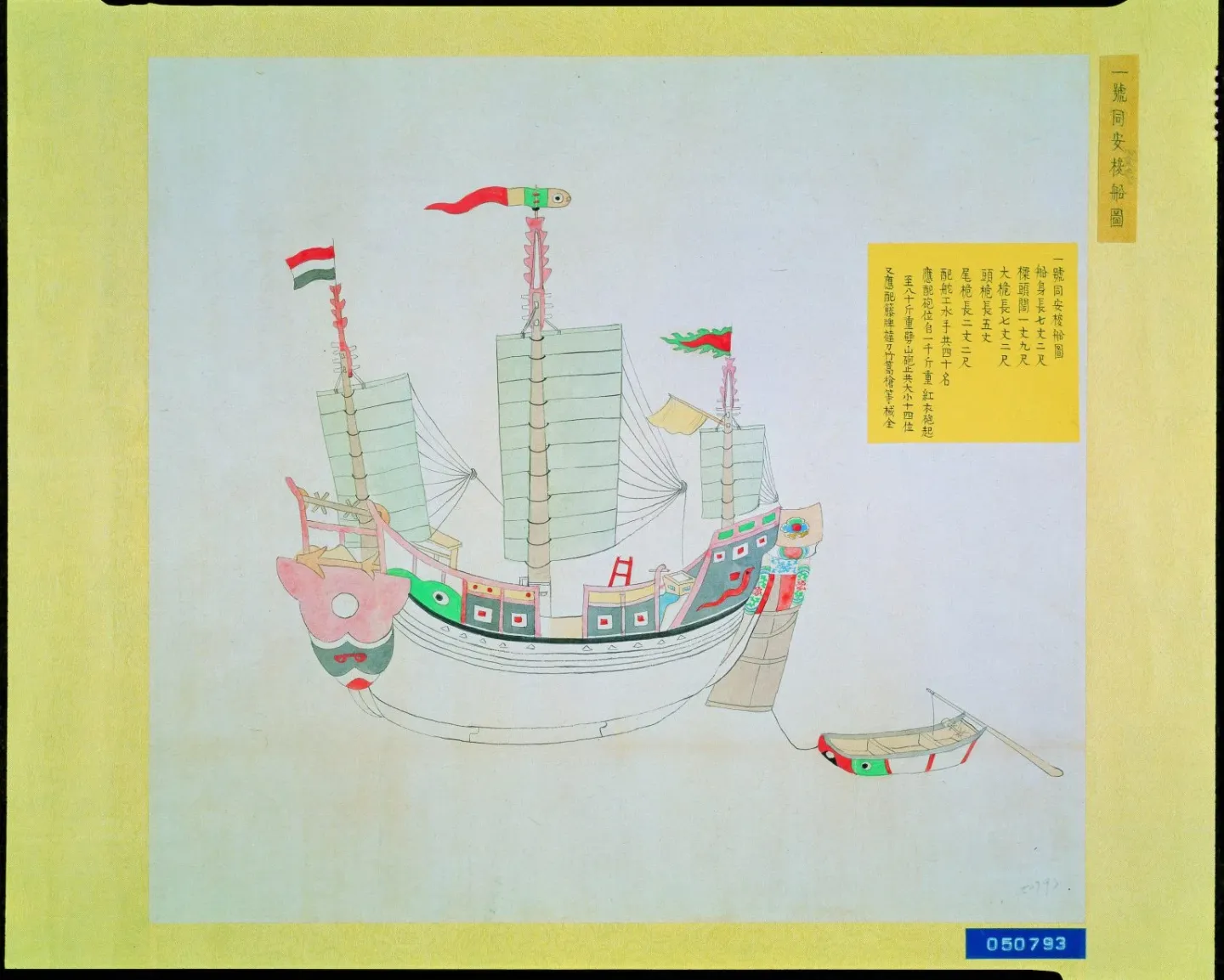
Diagram of Tong'an Shuttle Boat No. 1. Photo | National Palace Museum
Before revealing the answer, let us return to the turbulent East Asian seas of the 16th and 17th centuries.
The undisputed maritime superpower of that era was the Dutch East India Company (VOC). Ships from neighboring maritime nations, eager to avoid being plundered by the Dutch and to borrow the prestige of their name to intimidate rivals, began hoisting the Dutch flag on their masts.
Intriguingly, in 1627 — the year before Zheng Zhilong (father of Koxinga) surrendered to the Ming dynasty — vessels under his command were already sailing the seas flying the Dutch flag, committing acts of piracy under that banner. More than thirty years later, in 1662, Koxinga expelled the Dutch from Taiwan — yet the Dutch flag did not disappear. It could still be seen flying from Qing sailing junks as late as the mid-19th century.
In truth, as Dutch sea power gradually waned, flying the Dutch flag had long since lost any practical function as self-protection or a show of borrowed prestige. Seafarers had simply come to regard it as a decorative pennant — a symbol of good fortune and victory.
Chen Kuo-tung holds these documents, so many of which remain to be deciphered, in great esteem. Because most people in East Asia have been shaped by continental culture and their lived experience has been largely land-based, maritime knowledge has always been only half understood — even when seafarers' records do survive, they are difficult to interpret.
Beyond that, each document is a hard-won cultural treasure. Although the Qing period saw a steady flow of Chinese officials, examination candidates bound for the capital, and other educated travelers crossing the strait by ship, those who were genuinely motivated to record maritime culture and the experience of navigation were very few indeed.
"Many people probably started vomiting the moment they boarded — naturally, there wasn't much they could remember while drifting in and out of seasickness!" Chen Kuo-tung said with a laugh. As he told these tales of ships and the sea, ancient maritime memories seemed to sail in on a junk and join the conversation in the 21st century.
Sharing Memories as Deep as the Sea

Chen Kuo-tung, Research Fellow, Institute of History and Philology, Academia Sinica. Photo | Research at Academia Sinica
When talking with Chen Kuo-tung, it is easy to lose oneself, almost without noticing, in the whirlpool of history and memory. In one of his books he wrote: I have lived through life, and so I treasure memory and hold history dear.
This naturally made us curious: what special significance does "memory" hold for a historian? Chen Kuo-tung started from the moment he entered Academia Sinica forty years ago, drawing us once again into the currents of the past.
Before joining the Institute of History and Philology, Chen Kuo-tung had first worked on economic history at the Institute of Economics. Some of his colleagues at the time were members of the first generation of mainlanders who had come to Taiwan with the Nationalist government; in their daily memories, they differed greatly from native Taiwanese. They always loved chatting with Chen Kuo-tung about life back in China.
"They probably felt that talking to me, a historian, would get them a more engaged response!" he said with a smile. "As people get older, they grow more and more interested in the past." This experience of working alongside those elders led Chen Kuo-tung to reflect on what "memory" and "recollection" mean for human beings.
In Chinese, both 記憶 (memory) and 回憶 (recollection) can be rendered as "memory" in English — but there is another, more precise English word for the latter: "recollection," which refers to memories stored deep in the mind that are retrieved again at some particular moment in time.
"You have to have memory in order to be able to recollect." Chen Kuo-tung stressed memory's importance:
Because of memory, you can understand your place in history and in a particular stretch of time and space. Through memory, you feel the reality of your own existence — you know where you came from. Recollecting all of this gives you a sense of peace.
Chen Kuo-tung emphasized that both individual and collective social memory matter deeply. We often hear our grandparents tell stories from a distant time and place; across the generations, through word of mouth, a shared family and national memory is built that we can all revisit together — and it is through this process that we come to shape our own sense of identity.
Yet in this era of rapid change, the traditional ways in which memory is constructed are under threat. Many memories vanish before they can ever be preserved. This may deepen the difficulty of sharing memories and finding common ground across generations, widening the gulf between the young and the old.
As a historian, Chen Kuo-tung counts himself fortunate — not only has he been able to hold on to his own memories, but he has had far more opportunities than most to encounter and record the memories of other communities.
On that warm afternoon, we shared with Chen Kuo-tung a stretch of ocean story belonging to Taiwan and the seas of East Asia. What unique memories do you hold between yourself and the sea? Perhaps find a moment to write them down — and share them with others.
What unique memories do you hold between yourself and the sea? Find a moment to write them down and share them with others! Pictured: the view from Sizihwan toward the mouth of Kaohsiung Harbor. Photo | Research at Academia Sinica
References
- Research at Academia Sinica: Does Taiwan Have Its Own "Way of Water"? Maritime Historian Chen Kuo-tung Dives into the Ocean of Memory
- Chen Kuo-tung — Personal Webpage
- Chen Kuo-tung (2020). Memory, the Ocean, and Everyday History. New Taipei City: Tamkang University Press.